The CEO Fired Me For Sleeping At My Desk—She Didn’t Know I’d Been Fighting A War.
Part 1
The first morning Olivia Bennett officially ran Aurelius Pay, she walked into the operations center looking for blood. She was twenty-nine, sharp-edged, and desperate to prove she wasn’t just the founder’s granddaughter. She wanted to move the company from “comfortable to accountable,” and I was her first target.
I was slumped over the center console, my head resting on my forearms. Around me, two dozen monitors stayed alive with scrolling alerts and amber warnings. To a suit, it looked like negligence. To me, it was the only way I could keep my eyes from bleeding after forty-eight hours of manual hot-patching.
Aurelius Pay wasn’t just a fintech firm; it was a high-speed wire transfer machine handling millions of dollars every hour. The infrastructure was an ancient, brittle beast of legacy code and fragile API layers. I was the only one who knew where the load-bearing walls were.
“This company does not pay anyone to sleep on the job,” Olivia’s voice cut through the hum of the cooling fans. I jolted upright, my brain a fog of dry eyes and caffeine tremors. I tried to steady myself, recognizing her from the corporate emails.
“You need to hear what I have to say about the core payment cluster,” I rasped. My voice felt like sandpaper. I needed to tell her about the intrusion, the dormant triggers, and the fact that the system was currently a ticking time bomb.
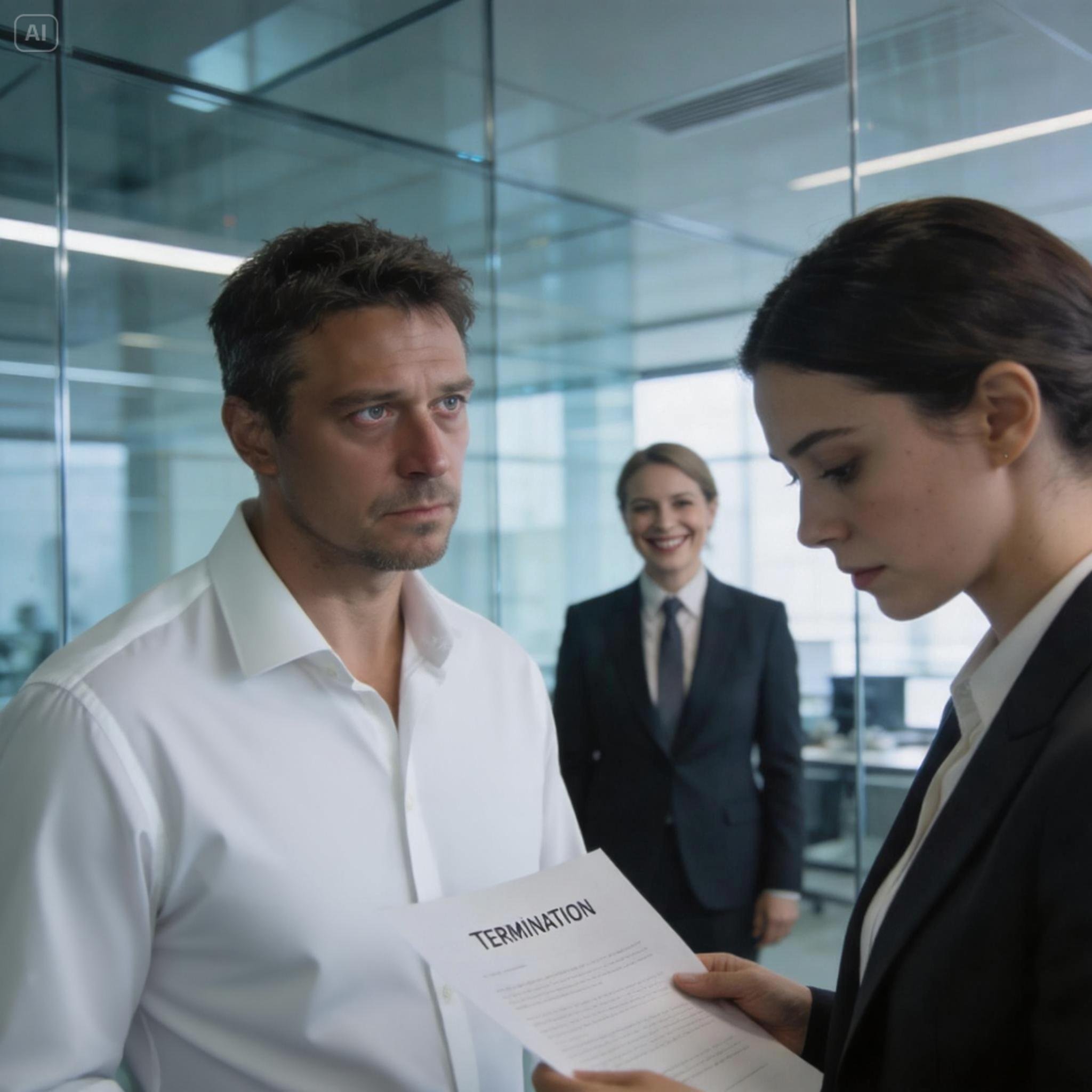
She didn’t let me finish. She didn’t even look at the screens. “I don’t need to hear anything on my first morning. Security, collect his access card. HR, initiate termination immediately.”
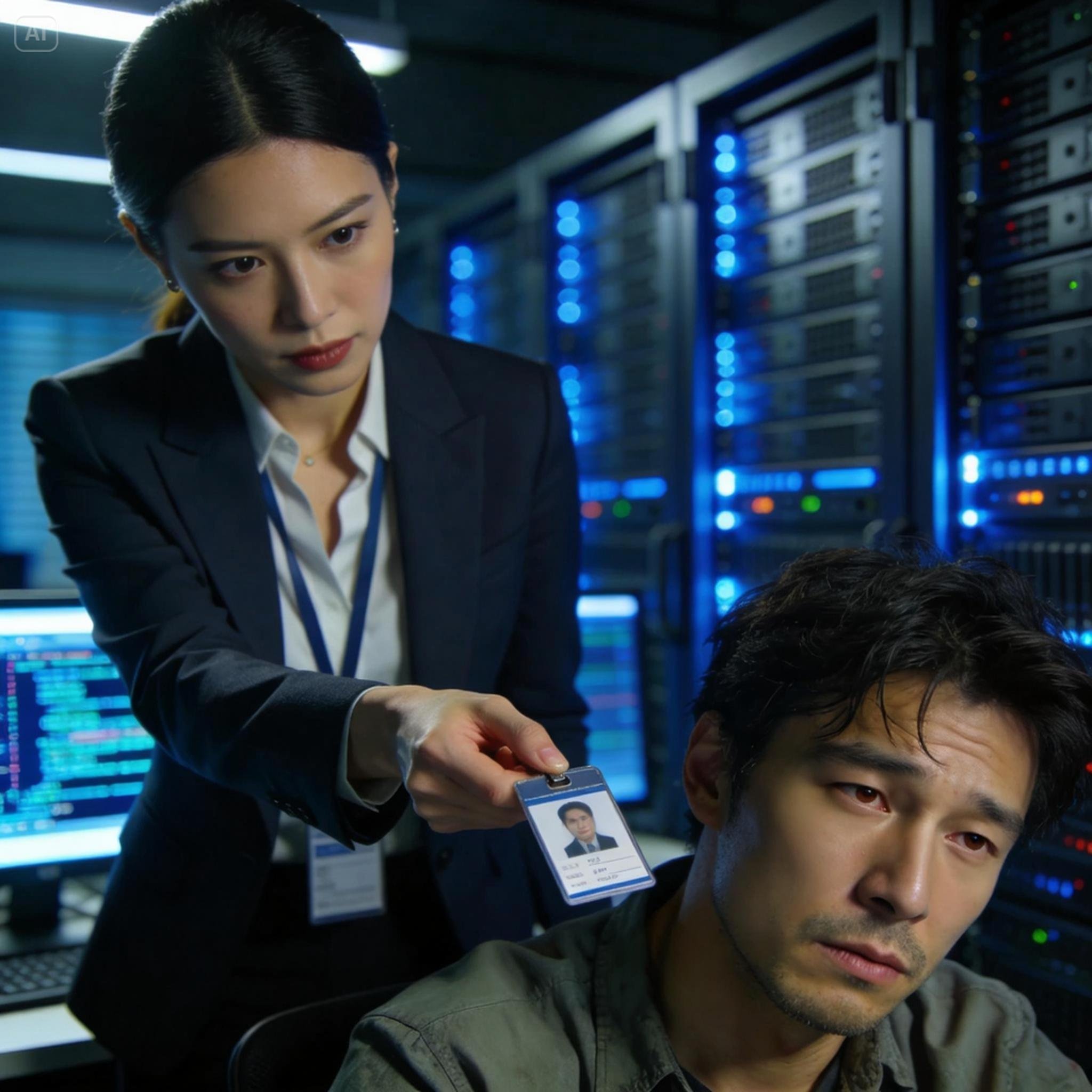
The tech floor went dead silent. My colleagues, people I’d worked with for years, looked at their keyboards. They knew I’d been there since Tuesday. They knew I was the only thing standing between the company and a total collapse. But nobody wanted to cross the new boss on her first hour.
I handed over my badge. I didn’t beg. I didn’t scream. I was too tired to fight a woman who had already decided I was a ghost. As I walked toward the exit, I caught the eye of a junior engineer.
“Do not restart the system,” I said clearly. He looked at me with a mix of pity and confusion. I knew the supervisors would ignore it. They always went for the easy fix when things slowed down.
I walked out into the bright morning sun, my legs feeling like lead. I had no job, no health insurance for my daughter, and a laptop full of warnings no one would read. I headed home to wait for the sirens.
Part 2
The drive home was a blur of gray asphalt and the kind of existential dread that settles in the pit of your stomach when you realize your life has just been dismantled by a woman who doesn’t even know your middle name. I walked into my apartment, and the silence hit me like a physical weight. My seven-year-old, Chloe, was at the kitchen table, her brow furrowed as she attacked a page of long division. She didn’t look up, but she knew. Kids like Chloe—kids who have lost a mother and seen their father turn into a caffeinated ghost—always know when the air in the room changes.
“You’re home early,” she said, her voice small.
“Yeah, bug. Just a change in the schedule,” I lied. I hated lying to her, but how do you explain corporate restructuring to a kid who still sleeps with a stuffed rabbit? I sat on the sofa, the leather cool and unforgiving against my back. I didn’t even take my jacket off. I just flipped open my laptop, my fingers moving by instinct to the remote monitoring dashboard. I was fired, sure, but I was still the only one with the keys to the kingdom, and the kingdom was currently being raided by ghosts.
I watched the metrics. It was like watching a slow-motion car crash in digital ink. The latency in the core payment cluster was creeping up—50 milliseconds, 100, 300. That was the sound of the system choking. At Aurelius Pay, 300 milliseconds was an eternity. It meant transactions were stacking up like a 5:00 PM pileup on the 405. I knew exactly what the supervisor, Greg, was thinking. Greg was a “turn it off and back on again” kind of guy. He lacked the surgical patience required for legacy code. He saw a bottleneck; he wanted a flush.
I checked my phone. It was vibrating every thirty seconds with messages from the “Old Guard”—the engineers who had been in the trenches with me.
Daniel: Dude, she really did it. Everyone’s losing their minds. Greg is talking about a hard restart on the authentication nodes.
Me: Tell him no. If he restarts, the dormant script fires. It’ll bypass the local filters and dump the routing tables to the external IP I flagged. The whole ship goes down.
Daniel: I told him. He’s not listening, man. He says you’re “disgruntled” and trying to gatekeep the tech. Olivia is standing right behind him.
I threw the phone onto the cushion. Disgruntled. I’d spent forty-eight hours without sleep, eating stale vending machine Cheetos and vibrating from espresso shots, just to keep their Christmas bonuses from being siphoned off by a hacking collective in Eastern Europe, and I was the “disgruntled” one. The arrogance of the C-suite never failed to amaze me. They treated the infrastructure like it was a utility—like water or electricity—something that just worked because they paid the bill. They had no idea it was a living, breathing, dying organism held together by duct tape and my own personal sanity.
I must have drifted off. The kind of sleep that isn’t rest, but a temporary coma. I dreamt of scrolling green text and Olivia’s cold, blue eyes. When I woke up, the sun had shifted across the floor, and Chloe was standing over me with a glass of water.
“Dad? Your computer is making a weird noise,” she whispered.
I lunged for the laptop. The dashboard was a sea of crimson. The restart had happened. 12:47 PM. I looked at the synchronization logs. The token service had gone asynchronous immediately. The isolation barriers I’d spent two days building—the “sandboxes” where I was trapping the malicious traffic—had been wiped clean by the restart. The system had come back up “clean,” but without my manual patches, it was like opening the front door and inviting the burglars in for tea.
I saw the outbound routing tables shift. A subset of corporate wire transfers—the big ones, the $500k-plus moves—were being redirected to a masked endpoint. It was happening silently. To the frontend, the transactions looked “Pending.” To the bank, they looked “Authorized.” To the company, they looked like a total catastrophe in the making.
I sat there, powerless. I was a spectator to my own professional murder. I had the fix. I had the script sitting in a local directory that could sever the connection in six seconds. But I didn’t have a badge. I didn’t have a login. I was just a guy on a couch in a rumpled shirt while the world burned.
The knock on the door came two hours later. It wasn’t the polite tap of a neighbor. It was a frantic, heavy pounding. I looked at Chloe, who had retreated to her room. I walked to the door, my heart hammering against my ribs.
I opened it, and there she was. Olivia Bennett. The CEO. The woman who had treated me like a cockroach that morning.
She wasn’t looking so polished anymore. Her hair was frizzed from the humidity, and her expensive blazer was wrinkled. Her eyes were wide, vibrating with a frantic energy I recognized instantly. It was the look of someone who had just realized they were standing on a trapdoor.
“Andrew,” she said. No “Mr. Foster.” No corporate preamble. Just my name, delivered with a desperation that tasted like iron.
“You’re trespassing,” I said. My voice was flat. I wanted to feel a surge of triumph, a “told-you-so” that would echo through the hallway, but I was too tired for ego. I was just empty.
“The system,” she gestured vaguely behind her, as if the office were right there. “It’s… it’s not working. Everything you said. The restart. We did it, and now we’ve lost visibility on three thousand transactions. The enterprise clients are calling. They’re threatening to pull out by the end of the business day.”
“I told you not to restart it,” I said. I leaned against the doorframe. “I told you it wasn’t a performance issue. I told you it was a staged attack.”
“I know,” she whispered. She actually looked down at her shoes. “I didn’t listen. I thought… I thought you were just another lazy veteran who had checked out. I was wrong. I was catastrophically wrong, Andrew. Please. The engineers… they can’t find the bridge you built. They say the documentation is missing.”
“The documentation isn’t missing, Olivia. It was never written because I was too busy keeping the servers from melting to fill out your TPS reports,” I snapped. The anger was finally bubbling up, a hot, oily sludge. “You wanted ‘accountability’? Well, here it is. You fired the only guy who knew how to fight this, and you did it in front of the whole floor for a power trip. How’s that working out for your first day?”
She didn’t flinch. She took it. That was the first thing she did that actually impressed me. Most execs would have started gaslighting me, telling me it was my fault for not being “clearer.” But she just stood there and bled.
“I’ll pay you whatever you want,” she said. “A consultant fee. A bonus. A new contract. Just… come back. Fix it. If this goes public, the company is dead. Thousands of people lose their jobs because I was an idiot this morning. Don’t let them pay for my mistake.”
I looked past her to the kitchen. Chloe was peering around the corner, clutching her rabbit. She saw the CEO of a multi-million dollar firm begging her dad in a hallway that smelled like yesterday’s laundry and floor wax.
I thought about the customers. The small businesses waiting for their settlements to pay their own employees. The corporate treasurers who trusted us with their payroll. Olivia was right—they shouldn’t have to suffer because she was a shark who didn’t know how to swim in deep water.
“I’m not doing it for the money,” I said, grabbing my jacket and my laptop. “And I’m definitely not doing it for you.”
I walked past her to the elevator. She had to jog to keep up with my pace.
“What are you doing it for, then?” she asked, her voice cracking.
“For the load-bearing walls,” I said. “Because somebody has to care about the things you can’t see.”
The drive back to the office was silent. Olivia tried to speak twice, but I just put on my headphones. I needed to visualize the code. I needed to find the entry point the attackers had used to re-establish their foothold after the restart. It was like a game of 3D chess where the board was on fire and the opponent was invisible.
When we walked into the operations center, the atmosphere shifted. It was like the air returned to a vacuum. The engineers—guys like Daniel who had been staring at red screens for four hours—didn’t cheer. They just exhaled. They moved out of the way like the Red Sea parting.
I didn’t go to my old desk. I went straight to the center console—Olivia’s “throne.” I sat down, plugged in my encrypted drive, and felt the familiar hum of the hardware through the desk.
“Daniel, give me the terminal on node four,” I barked. “Greg, get away from the keyboard before you break something else. Olivia, go to your office and stay off the internal network. If you even check your email right now, you might trigger a packet sniff we can’t afford.”
She nodded, her face pale, and retreated. She looked small. For the first time, she looked like a twenty-nine-year-old girl who had inherited a war she wasn’t prepared to fight.
“Okay, boys,” I said, my fingers hovering over the keys. “Let’s see if we can catch these bastards before the wire closes.”
I hit the first sequence. The screen flickered. A wall of scrolling white text began to fly by. I saw the ghost. It was embedded in the kernel-level authentication layer—a “man-in-the-middle” script that was siphoning data every time a user logged in. It was sophisticated. It was beautiful, in a terrifying sort of way.
“They’re using a polymorphic bridge,” I muttered. “Every time we block an IP, it generates a new one using our own internal clock as a seed. That’s why the filters aren’t catching it.”
“How do we stop it?” Daniel asked, leaning over my shoulder.
“We don’t block the IPs,” I said, a grim smile finally touching my face. “We poison the seed. We feed the clock fake data. We make the bridge think it’s three years in the future.”
I started typing. The rhythmic click-clack of the mechanical keyboard was the only sound in the room. For the next three hours, I wasn’t a fired employee. I wasn’t a grieving widower. I wasn’t a tired dad. I was the god of this machine.
I chased the hackers through the sub-directories, cutting off their exits one by one. I saw them struggle. I saw them try to execute a “kill switch” to wipe the servers and hide their tracks, but I had already anticipated that. I redirected their kill command into a virtual loop—a digital cage where it would spin forever, doing nothing.
By 6:00 PM, the red screens started turning amber. Then green.
The latency dropped. The “Pending” transactions began to clear. The “Authorized” signals started flooding back in from the banks. We had saved roughly eighty-four million dollars in redirected transfers.
I slumped back in the chair, my hands shaking. The adrenaline was leaving, replaced by a fatigue so deep it felt like it was in my bones.
Olivia walked back onto the floor. She looked at the screens. She looked at the team. The silence was heavy, but it was different now. It was the silence of a battleground after the smoke clears.
“Is it over?” she asked.
“For now,” I said. “But the walls are still weak. You need a full rebuild. You need someone who knows how to document the ghosts.”
She looked at me for a long time. There were a dozen things she could have said—corporate platitudes, apologies, promises. But she just looked at the man she had fired ten hours ago.
“I need to talk to the board,” she said. “And then I need to talk to you. Privately.”
I didn’t answer. I just closed my laptop and stood up. My work was done. I didn’t care about the board. I didn’t care about her private talks. All I wanted was to go home, tuck my daughter in, and sleep for a thousand years.
But as I walked toward the elevator, I saw the security guard who had taken my badge that morning. He looked at me, then looked away, embarrassed.
“Keep the badge,” I told him as I passed. “I think I’m going to need it tomorrow.”
Part 3
I didn’t move. I didn’t even breathe. I just sat there in the silence of my living room, watching the red bars on my laptop screen dance like digital blood. Olivia was still standing in the hallway, looking at me with a face that had aged ten years since 8:00 AM.
“You have five seconds to tell me why I shouldn’t shut this laptop and go back to sleep,” I said. My voice was a low growl, the kind of sound a dog makes right before it bites.
She stepped inside without being invited. She didn’t look like a CEO anymore; she looked like a passenger on a plane with two dead engines. “Because if you don’t, three thousand people won’t get their direct deposits tomorrow. Small businesses will bounce checks. Mortgage payments will fail. People who don’t even know your name will lose everything because I’m a prideful idiot.”
I looked at Chloe. She was still clutching that rabbit, her eyes darting between us. This was the world I tried to keep her out of—the gritty, high-stakes garbage fire of corporate incompetence.
“Chloe, go to your room and put your headphones on,” I said softly. She didn’t argue. She knew the “Work Dad” voice.
Once the door clicked shut, I turned back to Olivia. “The board is going to eat you alive. You know that, right? Firing the lead engineer in the middle of a Level 1 breach? That’s not a ‘rookie mistake.’ That’s professional suicide.”
“I don’t care about the board,” she snapped, and for a second, I saw a flash of the woman she was supposed to be. “I care about the fact that my grandfather’s legacy is currently being drained into a crypto-wallet in Belarus. Just tell me what you need.”
“I need a coffee that hasn’t been sitting in a vending machine for three days, and I need you to stay exactly six feet away from me at all times,” I said, grabbing my keys. “If you try to ‘manage’ me or give me a pep talk about company culture, I’m walking.”
The drive back to the office was surreal. The city was glowing with that sickly orange hum of streetlights and 24-hour diners. To everyone else, it was just a Tuesday night. To us, it was the end of the world.
When we pulled into the parking deck, I saw the security guard from this morning—the one who had literally escorted me to the curb. He saw Olivia’s car, saw me in the passenger seat, and looked like he’d seen a ghost. He didn’t even ask for my ID. He just waved us through with a trembling hand.
The elevator ride up to the 14th floor felt like it took an hour. Olivia kept checking her watch, her foot tapping a frantic rhythm on the carpet.
“Who’s in the room?” I asked as the doors slid open.
“The CTO, the shift leads, and a bunch of terrified juniors,” she whispered.
“Get them out,” I said. “All of them. Except Daniel. I can’t think with a dozen suits breathing down my neck.”
We stepped onto the operations floor. It was chaos. People were shouting over headsets, someone was crying in the breakroom, and the primary monitors were flashing a “System Critical” alert that I hadn’t seen since the 2018 crash.
Greg, the supervisor who had authorized the restart, was standing at my console. He looked up, his face pale and greasy. “Andrew? What the hell are you doing here? You’re terminated.”
“Move, Greg,” I said. I didn’t even look at him. I just walked to the desk and dropped my bag.
“He’s not moving,” Greg said, looking at Olivia for backup. “The protocols say—”
“The protocols are what got us into this mess!” Olivia screamed. The entire floor went silent. I mean dead silent. You could hear the hum of the server fans two rooms away. “Andrew is in charge of this floor. If he tells you to jump, you ask him how high on the way up. Am I clear?”
Greg sputtered for a second, then slunk away like a kicked dog.
I sat down in the chair. It was still warm. The monitors were a mess—overlapping windows, error logs, and a hundred “Connection Timed Out” prompts. It was like walking into a house that had been ransacked by professionals.
“Daniel, get over here,” I barked. The kid scrambled over, tripping over a stray power cord. “Show me the logs from 12:47. I want to see the exact microsecond the sync failed.”
“It’s bad, Andrew,” Daniel whispered. “The attackers… they weren’t just waiting for the restart. They were using it. The moment the authentication service cycled, they injected a script that overwrote the master routing table. Every outgoing wire is being cloned.”
“They’re using a double-spend exploit,” I muttered, my fingers finally hitting the keys. The familiar mechanical click felt like a heartbeat. “They aren’t just stealing the money; they’re making the system think it was never sent, so it tries to send it again. It’s an infinite loop of theft.”
I looked at the clock. 1:15 AM.
“We have three hours until the East Coast banks open,” I said. I felt that old, familiar coldness settling in. The world outside didn’t exist anymore. There was only the code. “If we don’t sever the bridge by 4:00 AM, this company doesn’t exist by lunch.”
I started typing. For the first hour, I didn’t even look up. I was digging through layers of obfuscated JavaScript, hunting for the “fingerprint” of the intruder. They were smart. They were hiding their traffic inside legitimate pings to the Amazon Web Services cloud.
Olivia was sitting in a glass-walled office twenty feet away, her head in her hands. She looked like she was praying. Or crying. It was hard to tell.
“I found it,” I said, and the tone of my voice made Daniel jump.
“The entry point?”
“No,” I said, a grim smile tugging at my mouth. “I found their heartbeat. They’re still in the system. They’re watching us right now.”
I stopped typing and leaned back. On the screen, a single line of text appeared in the command prompt. It wasn’t code. It was a message.
HELLO ANDREW. WE THOUGHT YOU WERE GONE.
My blood turned to ice. They knew my name. This wasn’t just a random hit on a fintech firm. This was personal.
“Who is that?” Daniel asked, his voice shaking.
“An old ghost,” I whispered. I leaned forward, my eyes narrow. “Olivia! Get in here! Now!”
She ran out of the office, her heels clicking like gunshots on the tile. “What? What happened?”
I pointed at the screen. The message was still there, pulsing like a wound.
“I know who’s doing this,” I said. “And if I’m right, a apology isn’t going to fix this. We’re going to have to burn the entire infrastructure to the ground to stop them.”
“What does that mean?” she asked, her voice trembling.
“It means we shut down the entire network,” I said. “Nationwide. Every card swipe, every ATM, every online payment. We go dark. Now.”
“We can’t do that!” she gasped. “The reputational damage—”
“The reputational damage won’t matter if there’s no company left to have a reputation,” I growled. “They’re inside the core, Olivia. They have the master keys. If we don’t cut the power, they’re going to drain the backup reserves in sixty seconds.”
I saw the internal debate happening behind her eyes. This was the moment. This was the cliff.
“Do it,” she whispered.
I hit the ‘Enter’ key.
The room went black. Every monitor, every LED, every server rack—dead. For five seconds, the only sound was the heavy breathing of twenty people in the dark.
Then, the emergency lights kicked in, casting a sickly red glow over everything.
“Now what?” Olivia asked.
“Now,” I said, pulling a secondary laptop out of my bag—the one I’d kept off the network. “We go hunting.”
The next three hours were a blur of high-velocity coding and sheer, unadulterated terror. I wasn’t just fighting a script; I was fighting a human being on the other side of the world who knew every trick in my book. We were parrying, thrusting, and counter-attacking in a space that didn’t exist.
I felt the sweat dripping down my back. My vision was starting to tunnel. The lack of sleep was finally catching up, turning the edges of the screen into a hallucination.
“They’re trying to bypass the hardware firewall,” Daniel yelled. “They’re hitting the backup generators! They’re trying to force a reboot!”
“Not on my watch,” I hissed.
I bypassed the standard OS and went straight into the machine code. It was like performing surgery on a patient while the hospital was being shelled. I was writing patches in real-time, sending them out into the darkness of the dead network to act as landmines.
“I’ve got them pinned,” I shouted. “Olivia, I need the authorization code for the deep-archive wipe. The ‘Nuclear Option.'”
“Andrew, that will erase everything,” she said, her voice rising in panic. “Ten years of client data, gone.”
“It’s either that or they take it all,” I said. “Choose. Now!”
She closed her eyes. “Alpha-Niner-Seven-Echo-Zulu.”
I typed the code. My finger hovered over the key.
In that moment, I thought about the man I was this morning. The guy who just wanted to keep his head down and provide for his daughter. The guy who was treated like garbage by a woman who didn’t know the difference between a server and a toaster.
I looked at her. Really looked at her. She wasn’t the enemy anymore. She was just another soul caught in the gears.
I hit the key.
The system screamed. A high-pitched digital whine echoed through the speakers, then—silence.
The screens stayed black.
“Is it… is it over?” Daniel asked.
I checked the hardware vitals on my local machine. The outbound traffic had dropped to zero. The “heartbeat” was gone. The bridge was severed.
I leaned back and let out a breath I’d been holding for a lifetime. “They’re out. We killed the connection.”
“But the data…” Olivia whispered.
“I mirrored the client databases to an offline drive before I fired the wipe,” I said, gesturing to the small black box plugged into my laptop. “I might be ‘disgruntled,’ Olivia, but I’m not stupid.”
She sank into a chair, her face buried in her hands. The room began to fill with the sound of sobbing—relief, exhaustion, and pure shock.
I looked at the clock. 3:55 AM.
“I’m going to the breakroom,” I said, standing up on shaky legs. “If anyone touches my console, I will personally throw them out of the window.”
I walked away from the glowing red lights, my mind already drifting toward the image of Chloe sleeping in her bed. I had saved the company. I had saved the CEO’s career.
But as I reached for a cup of lukewarm water, I realized something. The message on the screen—the one that knew my name. It hadn’t come from Russia. It hadn’t come from Belarus.
The IP address it originated from was internal.
Someone inside this building had let them in. And they were still here.
Part 4
I sat in the breakroom, the taste of lukewarm tap water metallic on my tongue. The silence in the ops center was a lie. We had severed the bridge, sure, but that message—Hello Andrew—was still burned into my retinas.
I set the cup down and looked at my hands. They were steady, but my mind was a hive of hornets. I pulled my secondary laptop closer and started tracing the origin of that internal IP. It wasn’t just a spoof. It was coming from a terminal registered to the executive floor.
Olivia was standing by the window, watching the sunrise bleed over the city skyline. She looked fragile, like a piece of glass that had been dropped and glued back together too many times.
“Olivia,” I said. My voice was raspy, a ghost of its former self.
She turned, her eyes red-rimmed. “Is it starting again?”
“No,” I said, rotating the screen so she could see the trace. “But we have a problem. The person who let them in—the person who gave them the master keys—is still in this building. And based on this signature, they’re in your inner circle.”
She walked over, her brow furrowed as she stared at the string of numbers. “That… that’s the terminal in the boardroom. But the board wasn’t even here during the breach.”
“Exactly,” I said. “Which means someone stayed behind. Someone who knew I was the only threat. Someone who probably whispered in your ear that I was ‘sleeping on the job’ before you even walked through that door.”
The color drained from her face. She sank into a plastic chair, the cheap material groaning under her weight. “My grandfather’s Chief of Staff. Marcus. He was the one who briefed me on the ‘personnel issues’ at 7:00 AM. He said you were a liability. He said you were the reason the upgrades were behind schedule.”
“Marcus,” I repeated the name. I knew him. A career politician in a $4,000 suit who didn’t know a server from a microwave. He was the kind of man who built a career on the backs of people like me, then kicked the ladder down once he reached the top.
“Why would he do it?” she whispered. “He’s been with the company for twenty years.”
“Because Aurelius Pay is worth billions, and your grandfather is dying,” I said. “If the company collapses under your watch, the board triggers a forced buyout. Marcus represents the private equity firm that’s been trying to hostile-takeover this place for a decade. He wasn’t trying to fix the company. He was trying to burn it down so he could buy the ashes for pennies on the dollar.”
I stood up. The fatigue was gone, replaced by a cold, predatory focus. I hadn’t slept in fifty hours, but I felt like I could bench press a truck.
“Where is he?” I asked.
“He’s in the observation lounge,” she said, her voice gaining a hard edge. “He said he was staying late to ‘manage the press’ if the news leaked.”
“Stay here,” I said. “And keep your phone on record.”
I walked out of the breakroom and back onto the technical floor. The engineers were slumped over their desks, half-asleep. I didn’t stop. I headed for the private elevator that led to the lounge.
The doors opened to a room that smelled of expensive scotch and cedar. Marcus was standing by the wet bar, a glass of Macallan 25 in his hand. He didn’t look like a man who had just survived a catastrophic cyber-attack. He looked like a man who had just won the lottery.
He turned when he heard the elevator chime. His smile was smooth, practiced. “Andrew. The man of the hour. I heard you performed quite the miracle downstairs. I’ll make sure the board hears about your… temporary reinstatement.”
“Cut the crap, Marcus,” I said. I didn’t move toward him. I just stood in the center of the room, my shadow long and jagged under the dim lighting. “I found the heartbeat. I traced the internal IP. I know it was you.”
His smile didn’t falter, but his eyes went cold. “I have no idea what technical jargon you’re rambling about, Andrew. You’re clearly exhausted. Perhaps a few more weeks of ‘unpaid leave’ is in order.”
“I mirrored the logs,” I said, lying through my teeth with total confidence. “I have the timestamp of the login from your terminal. I have the packet headers showing the master key injection. And I have the message you sent me. Hello Andrew. You shouldn’t have made it personal, Marcus. It made me look closer.”
He set his glass down on the marble counter. The “clink” of the crystal was the only sound in the room. He took a slow breath, his posture shifting from corporate executive to something much more dangerous.
“You’re a talented dog, Andrew,” he said, his voice dropping an octave. “But you’re still just a dog. You think the law matters here? You think Olivia has the spine to take this to the feds? If this comes out, the stock price hits zero by noon. The company dies anyway. If you keep your mouth shut, I’ll make sure you never have to work a 9-5 hell again. Five million. In an offshore account. By sunrise.”
I felt a surge of pure, unadulterated rage. This was the guy. The guy who lived in a mansion while I struggled to pay for my wife’s medical bills. The guy who looked at the lifeblood of thousands of employees as just another column on a spreadsheet.
“My wife died because of people like you,” I said, my voice trembling with the effort to stay calm. “People who decided that profit margins were more important than people. You thought you could buy me? You thought I’d let you hurt my daughter’s future for a paycheck?”
“I’m offering you a life, Andrew,” he said, stepping closer. “Don’t be a martyr for a company that fired you over a nap.”
“I’m not a martyr,” I said. I pulled my phone out of my pocket. The screen was dark, but the recording light was a tiny, pulsing red dot. “I’m a witness.”
His face twisted into a mask of fury. He lunged at me, his hands reaching for the phone.
I was faster. I’d spent twenty years hauling server racks and climbing under raised floors. I wasn’t a suit; I was a worker. I sidestepped him and caught his arm, twisting it behind his back with a crunch that made him scream.
I slammed him face-first into the marble bar.
“Olivia!” I yelled.
The elevator doors opened. She stepped out, her phone in her hand. She had heard everything. The confession, the bribe, the threat.
“I called the FBI,” she said, her voice steady for the first time that night. “They’re in the lobby.”
Marcus started to sob, a pathetic, wet sound that echoed in the luxurious room. “Olivia, please. Your grandfather… he would have understood. It was a business move.”
“My grandfather would have thrown you off this balcony himself,” she said.
Two men in dark suits stepped out of the elevator. They didn’t say a word. They just took Marcus by the arms and led him away.
The silence that followed was different. It wasn’t the silence of a lie. It was the silence of a clean slate.
I walked over to the bar and picked up Marcus’s discarded glass of scotch. I poured it into the sink.
“So,” I said, looking at Olivia. “What now?”
She looked around the room, then at me. “Now we rebuild. For real this time. No more load-bearing walls held up by duct tape.”
“I’m going home,” I said. “I have a seven-year-old who probably thinks I’ve been kidnapped by aliens.”
“Andrew,” she called out as I reached the elevator.
I stopped and looked back.
“Thank you,” she said. “And for what it’s worth… you’re not a dog. You’re the heart of this place.”
I didn’t say anything. I just nodded and let the doors close.
I walked out of the building into the cool morning air. The sun was fully up now, hitting the glass towers of the city with a blinding light. I got into my car and drove home, the windows down, the wind whipping through my hair.
I pulled into my driveway and sat there for a minute, watching a neighbor walk their dog. The world was still turning.
I walked into the house and found Chloe on the sofa. She had fallen asleep with her headphones on, her stuffed rabbit tucked under her arm.
I sat down next to her and gently pulled the headphones off. She stirred, her eyes fluttering open.
“Dad?” she whispered.
“Yeah, bug. I’m here.”
“Is the work fixed?”
I smiled, and for the first time in years, it felt real. “Yeah. It’s fixed. Everything’s going to be okay.”
I tucked her in, then walked to my own room. I didn’t even take my shoes off. I just fell onto the bed and closed my eyes.
The company was safe. My job was secure. Marcus was in a cell.
But as I drifted off, I thought about the code. The beautiful, terrifying, fragile code that runs the world. It’s always there, humming in the background, waiting for someone to look.
I’d be back tomorrow. Someone had to keep the lights on.
FIN.