The $50,000 Daughter
Part 1
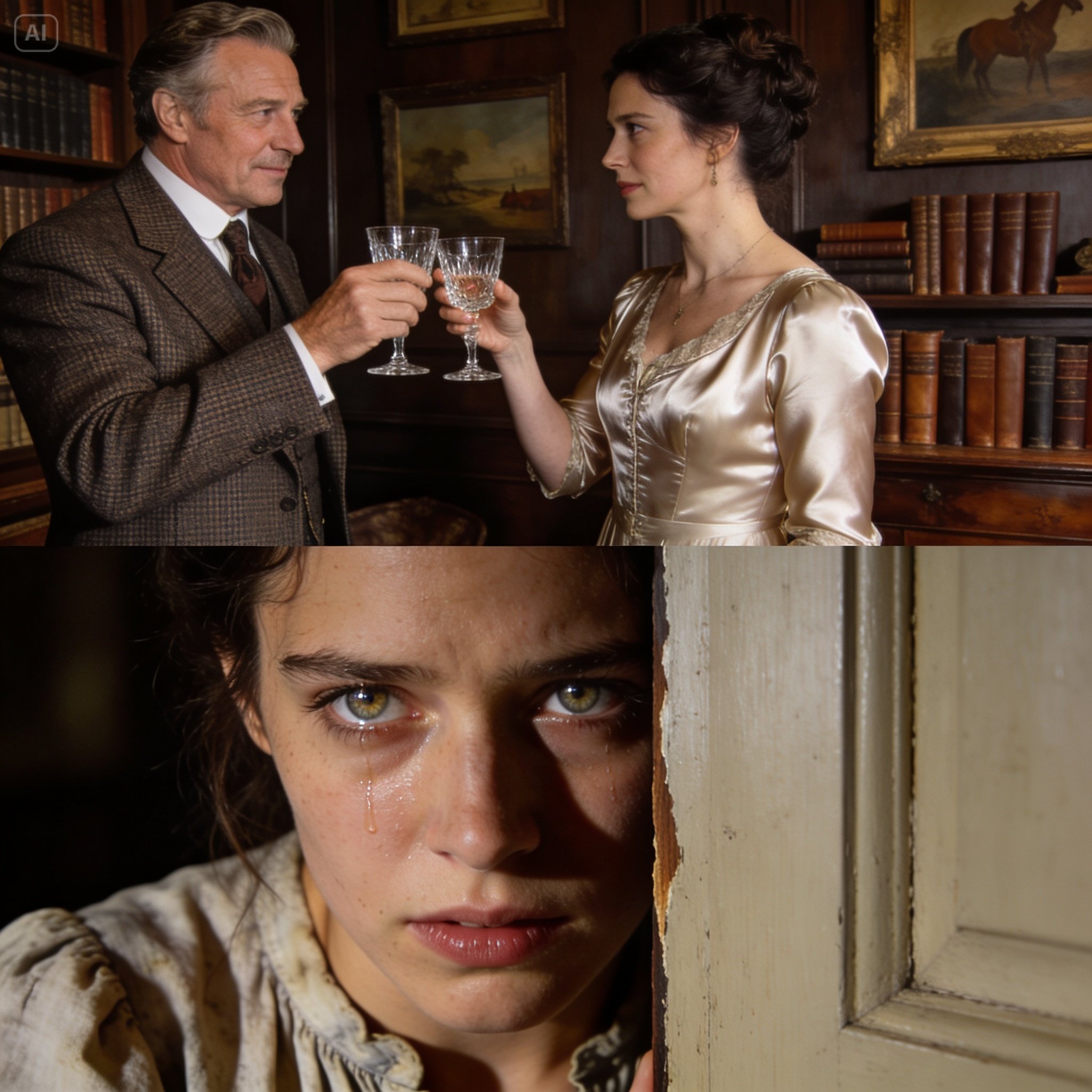
The check on the mahogany desk was for more money than my father had made in three years of cattle ranching, and all it cost him was one daughter he never liked anyway. I stood behind the heavy oak door of his study, my boots still caked in the gray mud of the north pasture, listening to the clink of crystal. They were toasting. My mother’s laugh, sharp and brittle as ice, drifted through the cracks. She was already talking about the silk wallpaper she’d buy for the sitting room once I was gone.
“The poor man has no idea what he’s asking for,” she whispered, the cruelty in her voice unfiltered. “Once she’s up that mountain, she’s his problem. The stubborn streak alone—not to mention the way she argues with everyone. I just hope he doesn’t try to send her back when he realizes she’d rather fix a fence than play the piano.”
My father’s reply was a low, wolfish grunt of satisfaction. He didn’t care if Caleb Mercer sent me back in a crate, as long as the check cleared. To them, I was just a bad investment they’d finally managed to offload onto a fool. I pressed my forehead against the cool wood of the door, my knuckles white as I gripped my shawl. I wasn’t the pretty one like Margaret, or the charming one like Sarah. I was the “ranch hand” daughter, the one with dirt under her nails and a mouth that didn’t know how to lie to powerful men.
Two weeks later, the Mercer men arrived. They weren’t the polished footmen my mother expected. They were leather-tough, smelling of pine smoke and horses, with eyes that had seen things the valley people couldn’t imagine. I didn’t wear the white lace gown my mother had ordered. I walked out in my oldest work dress, my hair in a single, tight braid, and a heavy wool coat that had seen better days. My father didn’t even look me in the eye when he handed me over. He just handed a folder of legal documents to the lead rider and stepped back.
The ride into the high country took three days. The air turned thin and biting, the kind of cold that gets into your marrow. We climbed until the valley was just a memory of green silk below us. When we finally reached the Mercer stronghold—a massive timber fortress built into the side of a jagged peak—my heart hammered against my ribs.
The man who stepped out of the shadows of the porch wasn’t the monster the gossip-mongers had described. Caleb Mercer was a mountain of a man, yes, with a face carved from granite and eyes the color of a storm-tossed sea. He looked at my rough clothes, my wind-chapped face, and my defiant stare. Then, he looked at the expensive, useless trunk my parents had packed for me and kicked it off the porch.
“I didn’t buy a doll, Evelyn,” he growled, his voice vibrating in the cold air. “I bought a partner. Now, tell me the truth—did they tell you why I really sent for you?”
Part 2
The mountain air didn’t just bite; it chewed.
It was a primitive, teeth-baring cold that made the valley’s winters look like a mild fever.
I stood in the center of Caleb Mercer’s kitchen, my fingers curled so tightly around the handle of my travel bag that the leather groaned.
He was still sitting there, watching me with an intensity that felt like he was peeling back my skin to see what was underneath.
I’d spent nineteen years being the “problem” child, the one who didn’t fit the Grayson mold of soft silk and even softer silences.
But looking at this man, I realized he didn’t even know what a mold was.
He looked like he’d been forged in a furnace and then left out in the snow to harden.
“I don’t know what game you’re playing, Mr. Mercer,” I said, my voice cracking slightly before I forced it into a steady line.
“But if you think I’m going to be some grateful, wide-eyed waif because you ‘rescued’ me from my family, you’re mistaken.”
He didn’t blink.
“I don’t play games, Evelyn,” he said, his voice dropping an octave, vibrating through the floorboards and up into the soles of my boots.
“Games are for people with too much time and not enough character.”
He stood up, and for a second, the room felt like it shrunk.
He was a literal giant, a wall of muscle and scarred flannel that blocked out the light from the hearth.
He walked toward me, and every instinct I had—every defensive wall I’d built to survive my father’s sneers—told me to flinch.
I didn’t.
I tilted my chin up, staring directly into the dark, swirling storm of his eyes.
“You think you’re difficult?” he asked, stopping just inches away, so close I could smell the scent of cedar, tobacco, and the sharp, clean ozone of high altitudes.
“I think I’m honest,” I countered.
“In my house, those were the same thing.”
A shadow of a smirk crossed his face, disappearing as quickly as a ghost.
“In this house,” he said, “honesty is the currency.”
“You want to know why I paid three times the going rate for a bride who can’t sew a straight line and argues with councilmen?”
He didn’t wait for my answer.
“Because I’m tired of liars, Evelyn.”
“I’m tired of people who say one thing while their hearts are doing another.”
“I watched you in that square three years ago, and I didn’t see a ‘difficult’ girl.”
“I saw a woman who was willing to let the world burn if it meant a poor man got his fair wage.”
He reached out, his hand hovering near my face for a heartbeat before he tucked a loose strand of hair behind my ear.
His touch was surprisingly light, his callouses catching on my skin with a rough, grounding heat.
“I didn’t buy a bride,” he whispered.
“I invested in the only person in this territory who has a spine made of something stronger than vanity.”
I felt a lump form in my throat, a sudden, violent surge of emotion that I didn’t know how to categorize.
Validation?
Terror?
For the first time in my life, someone wasn’t looking at me and seeing a mistake.
They were seeing a weapon.
“My father… he thinks you’re a fool,” I whispered back, the words escaping before I could stop them.
“He thinks he cheated you.”
Caleb’s eyes darkened, a cold, predatory light flickering in them.
“Your father thinks he sold me a piece of property that was losing value,” he said.
“He’s a man who knows the price of everything and the value of nothing.”
“Let him keep his check.”
“He’ll find out soon enough that he didn’t just lose a daughter—he lost the only thing in that valley that was worth keeping.”
He turned away then, as if the conversation was settled, and moved toward the heavy timber door that led further into the house.
“Your room is upstairs,” he said over his shoulder.
“First door on the left.”
“There’s a tub, hot water, and clothes that won’t fall apart if you actually decide to do some work.”
“We eat at sunrise.”
“Don’t be late.”
I stood there for a long time after he left, the silence of the house settling around me like a heavy blanket.
This place didn’t feel like a prison.
It felt like a fortress.
I walked up the stairs, my boots thudding rhythmically on the dark wood.
The room was simple—white-washed walls, a massive bed with a thick wool quilt, and a window that overlooked the jagged peaks of the northern range.
On the bed sat a pile of clothes: sturdy denim trousers, thick flannel shirts, and a heavy leather coat lined with sheepskin.
They were new.
They were my size.
And they were exactly what I would have chosen if I’d ever been given the chance to choose for myself.
I sat on the edge of the bed, burying my face in my hands.
The reality of the last three days began to crash down on me.
I was married to a man I didn’t know.
I was living in a wilderness that wanted to kill anything that wasn’t strong enough to endure it.
And my family was probably at this very moment sitting down to a dinner they didn’t have to share with the “difficult” one.
I felt a tear slip through my fingers, but I wiped it away instantly.
I wasn’t that girl anymore.
I stripped off the dress my mother had hated me in, and I pulled on the clothes Caleb had provided.
The denim was stiff and smelled of new indigo.
The flannel was warm and soft against my skin.
I looked at myself in the small, silver-backed mirror on the washstand.
I looked like a stranger.
I looked like a threat.
I looked like I belonged here.
The next morning, the sun hadn’t even breached the peaks when I walked back down into the kitchen.
Caleb was already there, drinking coffee that smelled strong enough to melt lead.
He didn’t say a word when I walked in, but his eyes swept over my new clothes, and for the first time, he gave me a full, slow nod of approval.
“Coffee’s hot,” he said, gesturing toward a tin mug on the table.
“We have two miles of fence down on the western ridge.”
“The snow is coming, and if the cattle drift into the timber, the wolves will have them by nightfall.”
“Can you ride a mountain trail, or am I going to have to worry about you falling off a cliff?”
I picked up the mug and took a long, burning swallow.
“I grew up in the saddle, Mercer,” I said.
“Worry about the wolves.”
“They’re the ones who are going to have a hard time if they come near me.”
He laughed—a deep, resonant sound that felt like thunder in the small room.
“That’s my girl,” he said.
That’s my girl.
The words should have made me bristle, should have made me snap back about how I didn’t belong to anyone.
But they didn’t.
They felt like a shield.
The ride to the western ridge was grueling.
The horses picked their way through narrow passes where one wrong step meant a thousand-foot drop into the gray mist below.
Caleb rode ahead of me, his back broad and unyielding against the wind.
He didn’t check on me.
He didn’t offer to lead my horse.
He gave me the respect of assuming I could handle it.
When we reached the break in the fence, the wind was howling through the gaps in the rock like a wounded animal.
A massive pine had fallen during the night, crushing the heavy timber posts like they were toothpicks.
Caleb dismounted and pulled a heavy saw and a sledgehammer from his pack.
“Hold the posts,” he commanded.
I didn’t argue.
I stepped into the mud and the slush, gripping the cold, rough wood of the new posts as he drove them into the frozen earth with rhythmic, bone-jarring strikes.
My hands went numb within minutes.
My lungs burned with the thin air.
But every time he looked at me, he didn’t see a girl who was about to break.
He saw a partner.
We worked in silence for hours, the only sounds the rhythmic thud of the hammer and the whistle of the wind.
By the time the fence was patched, the sky had turned a bruised, heavy purple.
Caleb wiped the sweat from his forehead with the back of a gloved hand, looking at the work.
“You’re stronger than you look,” he said, his voice quiet against the wind.
“I’m exactly as strong as I look,” I replied, my voice raspy.
“People just usually look away before they see it.”
He stepped closer, his shadow falling over me.
“They won’t look away up here,” he said.
“Up here, strength is the only thing that’s beautiful.”
We rode back in the dark, the horses navigating by instinct.
When we reached the ranch house, the windows were glowing with a warm, amber light that felt like a sanctuary.
As I dismounted, my legs gave way for a second, the exhaustion finally catching up to me.
Caleb was there before I could hit the ground, his arms catching me, pulling me against his chest.
For a moment, I just leaned into him, breathing in the scent of pine and sweat and the cold mountain air.
He didn’t let go immediately.
He held me, his heart beating a steady, powerful rhythm against mine.
“Go inside, Evelyn,” he whispered into my hair.
“I’ll see to the horses.”
I nodded, moving toward the house, but as I reached the door, I turned back.
“Caleb?”
He paused, his hand on his horse’s bridle.
“Why didn’t you marry a woman from the territory?” I asked.
“There were dozens who would have come up here for the money alone.”
He looked at me, his face half-hidden in the shadows of the porch.
“I didn’t need someone to spend my money,” he said.
“I needed someone who would stand at my back when the winter comes.”
“And Evelyn?”
“The winter is coming.”
The words felt like an omen.
Inside, the kitchen was warm, and a woman I hadn’t seen before was standing by the stove.
She was older, with graying hair pulled back in a severe bun and eyes that looked like they’d seen a century of mountain winters.
“You must be the new girl,” she said, her voice like gravel.
“I’m Martha.”
“I do the cooking and the complaining around here.”
“Sit down before you fall down.”
She pushed a bowl of hot stew toward me, watching me with a skeptical, appraising look.
“He’s a hard man, Caleb,” she said, leaning against the counter.
“He doesn’t have much room for soft things.”
“I’m not soft,” I said, my voice sharper than I intended.
Martha chuckled, a dry, rattling sound.
“No, I suppose you aren’t.”
“You wouldn’t have lasted the ride up if you were.”
“But let me tell you something, girl.”
“There are things in these mountains that are harder than Caleb Mercer.”
“Things that have been here since the world was made.”
“He thinks he can protect this ranch, but he’s just one man.”
She looked toward the window, her expression turning somber.
“There’s talk in the valley,” she said, lowering her voice.
“Your father… he’s been talking to some people.”
“People who don’t like the way Caleb Mercer controls the timber rights.”
I froze, the spoon halfway to my mouth.
“What people?”
Martha shook her head.
“Men with money and bad intentions.”
“They think that because Caleb has a new ‘distraction’ at the ranch, he might be getting soft.”
“They think they can move in on the northern passes while he’s playing house.”
I felt a cold shiver that had nothing to do with the wind.
My father.
He hadn’t just sold me to get rid of a problem.
He’d sold me as a Trojan horse.
He’d sent me here hoping my presence would weaken Caleb, hoping I would be a burden that would keep him distracted while my father and his “associates” stole everything Caleb had built.
The betrayal was so deep, so absolute, that I felt like I was drowning in it.
He’d used me.
He’d used my “difficult” nature to try and destroy a man he was too cowardly to face himself.
“He won’t succeed,” I said, my voice cold and hard as the mountain stone.
Martha looked at me, a glimmer of respect appearing in her eyes.
“You sound sure of that.”
“I am,” I said.
“Because I’m not his daughter anymore.”
“I’m a Mercer now.”
“And if he thinks he can come up this mountain and take what belongs to us, he’s going to find out exactly how difficult I can be.”
The door opened then, and Caleb walked in, bringing a swirl of snow with him.
He looked at me, sensing the tension in the room immediately.
“What is it?” he asked, his eyes darting between me and Martha.
I looked at him—at the man who had seen my value when everyone else saw a flaw.
The man who had given me a home when my own family had turned their backs.
I realized then that I loved him.
Not with the soft, romantic nonsense of my sister Margaret’s novels.
But with a fierce, protective loyalty that made my blood burn.
“My father,” I said, my voice steady.
“He’s coming for you, Caleb.”
“He’s using the marriage as a way to undermine you.”
Caleb didn’t look surprised.
He just set his hat on the table and walked over to me, placing his hands on my shoulders.
“I know,” he said quietly.
I blinked.
“You knew?”
“I’ve known Walter Grayson for a long time, Evelyn.”
“I knew exactly what he was planning the moment he accepted the offer without trying to haggle.”
“He thinks I’m a mountain fool who’s been isolated for too long.”
“He thinks he can play a game of chess with a man who spends his life hunting predators.”
He leaned down, his forehead resting against mine.
“But he made one fatal mistake.”
“What’s that?” I whispered.
“He assumed you were on his side,” Caleb said.
“He assumed you’d be a weight around my neck instead of the blade in my hand.”
“We’re going to let him come, Evelyn.”
“We’re going to let him bring his associates and his plans and his greed.”
“And when he gets here, we’re going to show him exactly what happens to people who try to steal from the mountain.”
I felt a surge of adrenaline, a dark, exhilarating thrill.
This was what I was born for.
Not for tea parties or embroidery or polite conversation.
I was born for this war.
For the next week, the ranch became a hive of activity.
But it wasn’t just ranch work anymore.
Caleb began calling in favors from the men who lived in the high ridges—men who owed him their lives, their land, or their loyalty.
One by one, they arrived on horseback, their rifles slung over their shoulders and their faces grim.
They gathered in the large kitchen, drinking coffee and studying maps of the passes.
Caleb introduced me to each of them as his wife.
He didn’t explain me.
He didn’t apologize for me.
He just told them I was the one who would be managing the logistics from the house if things went south.
I spent my days learning the layout of the ranch from a tactical perspective.
Where the high ground was.
Where the bottlenecks were.
Where a single rider could hold off a dozen men.
Martha showed me how to use the old rifle that hung above the hearth—a heavy, brutal piece of machinery that kicked like a mule but didn’t miss.
“You aim for the center of the chest,” she said, her voice devoid of emotion.
“Don’t think about the man.”
“Think about the mountain.”
“If they’re here, they’re part of the winter.”
“And you have to survive the winter.”
I practiced until my shoulder was bruised purple and the smell of gunpowder was etched into my skin.
I was terrified, but it was a cold, sharp kind of fear that made me feel more alive than I’d ever been.
One evening, as I was cleaning the rifle by the fire, Caleb sat down across from me.
He’d been quiet for days, his mind clearly working through a thousand different scenarios.
“Evelyn,” he said, his voice soft.
I looked up.
“If this gets bad… if it looks like they’re going to break through…”
“There’s a tunnel under the cellar.”
“It leads to a hidden pass on the north face.”
“James will take you there.”
I set the cleaning cloth down and stared at him.
“You think I’m going to run?”
“I think I want you to live,” he said, his eyes filled with a raw, desperate kind of tenderness.
“I didn’t bring you up here to die in a land war.”
“You brought me up here to be your partner,” I snapped.
“And a partner doesn’t run when the wind picks up.”
“If you’re staying, I’m staying.”
“I’m a Grayson by birth, Caleb.”
“I know exactly how these men think.”
“I know where they’re weak.”
“I know that my father won’t lead the charge himself—he’ll send his foreman, Silas, a man who’s a coward at heart but loves the sound of his own boots.”
“And I know that they’ll come from the east, because they think the rock face on the west is impassable.”
Caleb watched me, a look of profound wonder crossing his face.
“You’ve been thinking about this,” he said.
“I’ve been thinking about nothing else,” I replied.
“My father spent nineteen years trying to make me small.”
“He spent nineteen years telling me I was useless.”
“I am going to show him exactly what nineteen years of resentment looks like when it’s pointed at his head.”
Caleb reached across the table and took my hand.
His grip was solid, an anchor in the storm.
“God help them,” he whispered.
“Because I won’t.”
The first snow began to fall two days later.
It started as small, dry flakes that danced in the wind, but within hours, the world had been erased by a thick, suffocating white.
The ranch went quiet.
The cattle were secured.
The men were in position.
We waited.
The tension was so thick it felt like a physical weight on my chest.
Every creak of the house, every whistle of the wind, made me reach for the rifle.
Caleb spent most of his time on the porch, staring into the white void, a silent sentinel.
He didn’t sleep.
He barely ate.
He was becoming the mountain.
On the third night of the storm, the alarm went off.
It was a low, mournful blast from a horn on the eastern ridge.
They were here.
Caleb stepped into the kitchen, his face a mask of cold fury.
“It’s time,” he said.
I grabbed my coat and my rifle, my heart hammering a frantic rhythm.
“Stay in the house until James gives the signal,” he commanded.
“Evelyn… be careful.”
“You too,” I said.
He leaned down and kissed me—a hard, desperate kiss that tasted of snow and fire.
Then he was gone, disappearing into the white.
I stood by the window, my breath fogging the glass.
I couldn’t see anything, but I could hear it.
The distant crack of a rifle.
The shouting of men.
The terrified whinny of a horse.
The war had begun.
Minutes felt like hours.
I paced the kitchen, the rifle heavy in my hands.
Martha was in the corner, her eyes closed, her lips moving in a silent prayer.
Suddenly, the door burst open.
I swung the rifle up, my finger tightening on the trigger.
It was James, his face covered in blood and his shoulder sagging.
“They… they found the pass,” he wheezed, collapsing against the table.
“Silas… he had a guide.”
“Someone who knew the old trails.”
“They’re behind us, Miss Evelyn.”
“They’re coming for the house.”
My blood went cold.
If they were behind the lines, Caleb was cut off.
He was out there in the snow, fighting a ghost front while the real threat was moving toward the heart of his empire.
“Where’s Caleb?” I shouted, grabbing James by the collar.
“Trapped… in the timber,” James groaned.
“They started a slide… he’s pinned down.”
I didn’t think.
I didn’t hesitate.
I grabbed a lantern and a bag of supplies, and I headed for the door.
“Where are you going?” Martha cried, grabbing my arm.
“I’m going to get my husband,” I said.
“And then I’m going to kill my father.”
I stepped out into the storm, the wind hitting me like a physical blow.
The snow was up to my knees, a thick, cloying trap.
But I didn’t care.
I knew these mountains now.
I knew the scent of the air and the lean of the trees.
I pushed through the white, my lungs screaming for air, my vision blurred by the ice.
I could hear them now—men’s voices, close, too close.
“Check the barn!” a voice shouted.
It was Silas.
I could recognize that nasally, arrogant tone anywhere.
“Grayson wants the girl alive, but he didn’t say nothing about Mercer.”
“If you see him, finish it.”
I ducked behind a stack of cordwood, my heart thudding in my ears.
They were right there.
Three of them, their lanterns swinging in the dark like malevolent eyes.
I raised the rifle, my hands shaking with cold and rage.
I aimed for the lead man, the one holding the lantern.
I squeezed the trigger.
The roar of the rifle was deafening in the quiet of the storm.
The man went down without a sound, the lantern shattering in the snow, the flames licking at the ice for a second before dying out.
The other two scrambled for cover, shouting in confusion.
“Where’d it come from?”
“I don’t know! I didn’t see anyone!”
I moved, slipping through the shadows like I’d been doing it my whole life.
I wasn’t a girl in a silk dress.
I was a predator in the dark.
I circled around them, the snow muffling my footsteps.
I found the second man cowering behind a wagon.
I didn’t give him a chance to speak.
I fired again.
Two down.
Silas was the only one left.
I could see him now, backing away toward the house, his pistol shaking in his hand.
“Evelyn?” he screamed into the dark.
“Evelyn, is that you?”
“Come out here, you little bitch!”
“Your father’s going to have your skin for this!”
I stepped out from behind the woodpile, the lantern in my left hand illuminating my face.
I looked at him—at the man who had helped my father ruin countless families.
“My father isn’t here, Silas,” I said, my voice low and terrifyingly calm.
“And you’re never going back to him.”
He raised his pistol, but he was too slow.
I fired the third shot.
Silas fell into the snow, his eyes wide with shock, his life’s blood staining the white an angry, violent red.
I didn’t feel guilty.
I didn’t feel sick.
I felt clean.
I turned and ran toward the timber, toward the sound of the landslide.
I found the spot where the mountain had collapsed, a jagged scar of rock and ice.
“Caleb!” I screamed, my voice tearing through the wind.
“Caleb!”
Silence.
I began to dig, my hands raw and bleeding as I pulled at the frozen earth.
“Caleb! Answer me!”
A muffled groan came from beneath a slab of granite.
“Evelyn?”
I redoubled my efforts, my strength fueled by a desperate, frantic love.
I cleared the rock, my nails breaking, my breath coming in ragged gasps.
Finally, I saw him.
He was pinned under a heavy beam from a fallen shed, his leg twisted at an unnatural angle, his face pale and smeared with grit.
But his eyes were open.
And they were looking at me.
“You’re alive,” I sobbed, pulling at the beam with everything I had.
“I told you… I don’t die easy,” he wheezed, his hand reaching out to touch mine.
“The house… Silas…”
“Silas is dead,” I said, my voice hard.
“The others are scattered.”
“We have to get you out of here, Caleb.”
“The rest of them will be here soon.”
He nodded, his jaw clenched in pain.
“There’s… there’s a lever… behind you.”
I found the iron bar he was talking about and used it to hoist the beam just enough for him to crawl out.
He collapsed in the snow, his breath coming in shallow gasps.
“We have to go,” I said, pulling his arm over my shoulder.
“The tunnel… we can make it to the pass.”
He looked at me, a look of profound respect and love in his eyes.
“I knew I picked the right one,” he whispered.
We staggered through the snow, a slow, agonizing journey toward the cellar.
Every step was a battle.
Every breath was a victory.
We reached the house just as the first light of dawn began to grey the sky.
The storm was breaking.
But the war was far from over.
As we descended into the cellar, I looked back at the mountain.
It was still there—silent, unyielding, and beautiful.
I realized then that I wasn’t just surviving the winter.
I was the winter.
And anyone who tried to cross me would be frozen in the dark.
We entered the tunnel, the air cold and damp.
But we were together.
And for the first time in my life, I wasn’t the unwanted daughter.
I was the treasure of the mountain.
And I was going to make them pay for every single word they’d ever said against me.
Part 3
The cellar air smelled of damp earth and century-old rot, a sharp contrast to the biting, clean scent of the pine-heavy storm we had just escaped. Caleb’s weight was a crushing anchor on my shoulder, his breathing coming in wet, ragged hitches that made my own chest ache in sympathy. We reached the heavy oak door that led into the tunnels—the secret veins of the mountain that Caleb had carved out years ago for an emergency just like this. I kicked the door shut and slid the iron bolt home, the clang echoing through the narrow stone passage like a gunshot.
“Put me down, Evelyn,” Caleb wheezed, his face drained of all color, looking like a ghost in the flickering light of the lantern I’d hung from a ceiling hook. “You need to move… I’m slowing you down.”
I didn’t answer him; I just tightened my grip on his waist and lowered him onto a crate filled with emergency blankets. My hands were shaking, not from the cold, but from the raw, jagged adrenaline that was currently the only thing keeping my heart beating. I ripped open the first aid kit Martha had stashed there months ago, my fingers fumbling with the rolls of gauze.
“I didn’t spend three days in a saddle and kill three men just to let you bleed out in a hole in the ground,” I snapped, my voice sounding foreign to my own ears—harder, older, stripped of all the softness my mother had tried to beat into me.
“Silas… he said your father was coming,” Caleb managed to say, his head lolling back against the stone wall. “He’s not just after the timber, Evelyn. He’s after the leverage. He thinks if he holds the northern passes, the Governor will have to grant him the railroad charter.”
I stopped wrapping the gauze around his mangled leg and looked at him, the realization hitting me like a physical blow. My father didn’t just want money; he wanted a legacy built on the bones of the man who had actually seen me as human. Every “family” dinner, every “gift” he’d ever given me, every word of “advice”—it was all a calculated move in a game I hadn’t even known I was playing.
“He’s not getting it,” I whispered, the words tasting like copper and ash. “He thinks he knows me. He thinks I’m the weak link. But he forgot one thing.”
Caleb looked up at me, his eyes clouded with pain but still sharp with that dark, mountain intelligence. “What’s that?”
“He forgot that I was the one who watched him for nineteen years,” I said, a cold smile touching my lips. “I know how he handles a crisis. I know that he never leaves his flank unprotected, but he always overestimates his own men. He’ll be at the trailhead by now, waiting for Silas to give the ‘all clear.’ When Silas doesn’t show, he’ll panic. And a panicked Walter Grayson is a man who makes mistakes.”
I stood up, the rifle leaning against the crate, its barrel still warm from the shots that had ended Silas’s life. I felt a strange sense of clarity, a sharpening of my senses that made the flickering shadows on the wall look like tactical maps. I wasn’t just a ranch hand or a daughter or a bride; I was the architect of my father’s downfall.
“James is at the north exit,” Caleb said, his voice growing weaker. “He’ll have horses… take them and go to the sheriff in Red Hollow. Tell him… tell him everything.”
“The sheriff is on my father’s payroll, Caleb,” I said, checking the chamber of the rifle. “You know that. Everyone in the valley knows that. If I go to the law, I’m just walking back into the cage.”
“Then what are you going to do?”
“I’m going to use the one thing my father values more than money,” I said, looking toward the dark stretch of the tunnel. “His reputation. He’s built this image of the ‘Pillar of the Community,’ the man who saved the Grayson name. If the people of the territory find out he’s using hired killers to spark a land war… he’s done. Even the railroad won’t touch a man that toxic.”
I knelt back down and kissed Caleb’s forehead, his skin burning with the start of a fever. “Stay here. Martha will be down soon with the others. Don’t move.”
“Evelyn… if you don’t come back…”
“I’m coming back,” I promised, and for the first time in my life, I believed my own words. “I finally found a home. I’m not letting a ghost from my past burn it down.”
I turned and ran down the tunnel, the darkness swallowing me whole. The passage was narrow and smelled of wet stone and ancient dust, but I moved with a confidence I hadn’t felt since I was a child hiding in the attic. I reached the north exit—a small, camouflaged door hidden behind a cluster of boulders—and pushed it open.
The storm had settled into a steady, heavy snowfall, the kind that muffled all sound and turned the world into a featureless white void. Two horses were tied to a low-hanging pine branch, their breath steaming in the frigid air. James was nowhere to be seen, likely pulled back into the fray at the main house, but he’d left a satchel of dynamite strapped to the lead horse’s saddle.
I checked the satchel. My father always said that power was about controlled destruction. He was wrong. Power is about knowing exactly where to place the spark.
I swung into the saddle, the familiar leather creaking under my weight. I knew the trail to the eastern ridge by heart now. It was a treacherous path that skirted the edge of the timberline, the very place where Silas’s men had tried to pin Caleb down. If my father was waiting at the trailhead, he’d be positioned at the old logging camp—a collection of dry timber shacks that sat right above the main artery to the valley.
I rode hard, the horse’s hooves thudding rhythmically in the deep snow. My mind was a whirlwind of memories—my father’s cold eyes when I’d stood up for old Thomas, my mother’s silent disapproval of my “rough” hands, the way Margaret had looked at me like I was a broken toy. They had all played their parts in this. They had all agreed that I was worth exactly the price of a timber contract.
I reached the ridge overlooking the logging camp an hour later. The lights of a dozen lanterns flickered in the valley below, casting long, dancing shadows against the snow. I could see the silhouettes of men moving between the shacks—my father’s private “security” force, a collection of thugs and failed lawmen he’d recruited from the city.
And there, in the center of the camp, was a black carriage. The Grayson seal was visible on the door, glinting in the lantern light. My father didn’t even have the decency to stay in the valley; he’d come up here to watch the slaughter, to ensure his investment was secured.
I dismounted and crept toward the edge of the cliff, the satchel of dynamite heavy in my hand. The logging camp sat at the base of a steep, unstable slope—the same slope where the landslide had nearly killed Caleb. All it would take was one well-placed explosion to bring the rest of the mountain down on their heads.
But I didn’t want to kill them all. Not yet. I wanted them to know who had beaten them. I wanted my father to look into the eyes of the “unwanted daughter” and see the person who had ended his empire.
I lit a small torch and carefully set the fuses on three sticks of dynamite. I threw the first one toward the perimeter of the camp, aiming for the supply wagon.
The explosion was a roar of orange flame that tore through the silence of the night. Men screamed, horses bolted, and the supply wagon disintegrated into a cloud of splinters and burning canvas.
I threw the second stick toward the stables, the blast cutting off the men’s only means of escape.
Then I waited.
The camp was in total chaos. Men were firing blindly into the dark, their shots echoing uselessly against the rock face. I saw the carriage door swing open, and a man stepped out. Even from this distance, I recognized the posture—the arrogant tilt of the head, the expensive fur-lined coat.
Walter Grayson.
He was shouting orders, waving a pistol, his face contorted in a mask of confusion and rage. He looked small. For the first time in my life, the man who had loomed over my world like a god looked pathetic.
I stood up on the edge of the ridge, the torch in my hand casting a flickering glow over my face. I knew he couldn’t see me through the snow and the smoke, but I didn’t care. I raised my voice, a scream that felt like it was ripping out of my very soul.
“WALTER!”
The shouting in the camp stopped for a heartbeat. The men looked up, their eyes searching the dark cliffs.
“SILAS IS DEAD!” I screamed, the words carrying on the wind. “YOUR MEN ARE SCATTERED! AND YOUR REPUTATION IS GOING UP IN SMOKE!”
My father froze, his pistol lowering. He looked toward the ridge, his expression one of pure, unadulterated shock.
“Evelyn?” his voice was faint, barely audible over the crackle of the fires.
“I’M NOT YOUR DAUGHTER ANYMORE!” I yelled back. “I’M THE WINTER YOU BROUGHT ON YOURSELF!”
I lit the fuse on the final stick of dynamite—the one intended for the slope above the carriage. I held it for a second, watching the spark dance toward the explosive.
“GO BACK TO THE VALLEY, WALTER!” I shouted. “TELL THEM THE MOUNTAIN BELONGS TO THE MERCERS! AND IF YOU EVER STEP FOOT NORTH OF RED HOLLOW AGAIN, I WON’T BE AIMING FOR THE WAGONS!”
I threw the dynamite.
The explosion didn’t just roar; it vibrated through the very foundation of the earth. The entire slope seemed to groan, a deep, primal sound that signaled the mountain’s final patience had snapped. A wall of snow and rock began to slide, a slow-motion tidal wave of destruction that headed straight for the logging camp.
My father dived back into his carriage, the driver whipping the horses into a frenzy as they scrambled to get clear of the path. The carriage lurched forward, narrowly missing the leading edge of the slide as the logging shacks were crushed like matchboxes behind it.
I watched until the carriage disappeared into the dark of the valley road, the sound of the landslide fading into a low, heavy rumble.
The camp was gone. The threat was buried.
I collapsed into the snow, my lungs burning, my heart racing at a pace that felt unsustainable. I had done it. I had broken the chain.
But as I sat there, the silence returning to the mountain, I felt a sudden, sharp pang of fear. Caleb.
I scrambled back to my horse and rode toward the ranch house, the sun finally beginning to break over the eastern peaks. The world was blindingly white, the snow sparkling like diamonds in the new light.
I reached the house and saw James standing on the porch, his arm in a sling but a weary smile on his face.
“He’s awake,” James called out as I dismounted. “Martha got the fever down. He’s asking for you.”
I ran inside, my boots thudding on the wooden floors. I burst into the bedroom and saw Caleb propped up against the pillows, his leg bandaged and his face pale, but his eyes were bright and clear.
He looked at me—at the soot on my face, the blood on my hands, and the raw, untamed look in my eyes.
“You did it,” he whispered, a look of profound pride crossing his face.
I walked over to the bed and collapsed into his arms, the tears finally coming—hot, messy, and filled with a relief I couldn’t describe.
“He’s gone, Caleb,” I sobbed into his chest. “He’s never coming back.”
Caleb held me, his large hand stroking my hair, his touch the only thing keeping me grounded.
“I know,” he said. “I heard the mountain speak.”
We stayed like that for a long time, the warmth of the room a shield against the world outside. I felt a sense of peace I hadn’t known was possible—a quiet, solid certainty that I was exactly where I was meant to be.
But as the days passed and Caleb began to heal, a new shadow began to loom.
The news of the “incident” at the logging camp had reached the valley. My father, true to form, had spun a tale of “outlaws” and “mountain savages” attacking his peaceful exploration party. He was calling for the territorial militia to be sent up to “civilize” the northern range.
He wasn’t giving up. He was just changing his tactics.
And then, a week after the storm, a rider arrived at the ranch gate.
He wasn’t one of my father’s thugs. He was a man in a crisp, blue uniform—a representative of the territorial government.
He handed Caleb a document, his face grim.
“Mr. Mercer,” the man said, his voice echoing in the quiet morning. “You and your wife are being summoned to the capital. There are allegations of land theft, murder, and insurrection.”
Caleb looked at the document, his jaw tightening.
“And if we refuse?”
“Then the militia will be sent to escort you,” the man said. “Under the orders of Councilman Walter Grayson.”
I stepped out onto the porch, the cold air hitting my face. I looked at the man in the uniform, and then I looked at the vast, unyielding mountains that surrounded us.
My father thought he could use the law to do what his hired killers couldn’t. He thought he could bring me back into his world, to a courtroom where his money and his influence would win the day.
He was wrong.
He thought he was summoning us to his territory.
He didn’t realize that I had already sent word to the one person who hated him more than I did—a man who had been waiting twenty years for a reason to tear the Grayson name out of the history books.
The game was no longer about land or timber.
It was about the truth.
And the truth was a fire that was about to consume everything Walter Grayson had ever built.
“We’ll go,” I said, my voice ringing out across the yard.
Caleb looked at me, a question in his eyes.
“We’ll go,” I repeated, a cold, sharp smile touching my lips. “But we aren’t going as defendants.”
“We’re going as witnesses.”
The ride to the capital would take five days. Five days of planning, five days of preparing the evidence I had stolen from my father’s study years ago—the ledger that detailed every bribe, every payoff, and every life he’d ruined to get ahead.
I had been keeping it for a rainy day.
But I realized now that I didn’t need a rainy day.
I had the mountain.
And the mountain was coming to the city.
The journey was a blur of high-altitude passes and dusty valley roads. Caleb rode beside me, his leg still stiff but his spirit unyielding. We were followed by a dozen of his best men—not as an army, but as a silent, intimidating guard.
When we reached the capital, the city was a shock to my senses—the noise, the smell of coal smoke, the crowds of people in their suffocatingly fine clothes. It felt like a fever dream, a world that was dying while the mountains were alive.
We walked into the territorial assembly building, the marble floors echoing under our heavy boots. People stared, whispering about the “mountain savages” and the “disgraced Grayson girl.”
I ignored them. I kept my eyes fixed on the heavy mahogany doors at the end of the hall.
We entered the chamber, and the room went silent.
My father was sitting at the high table, surrounded by his lawyers and his associates. He looked up when we walked in, a smirk of triumph crossing his face.
“Evelyn,” he said, his voice echoing in the vaulted ceiling. “I’m glad you decided to be sensible. It’s time we put this unpleasantness behind us.”
“I agree, Walter,” I said, walking toward the center of the room, my hand resting on the leather-bound ledger in my bag.
“It’s time everyone knew the truth about the Graysons.”
The trial lasted three days. Three days of my father’s lawyers trying to paint us as criminals, three days of my mother sitting in the gallery with a handkerchief to her eyes, playing the grieving parent.
But on the fourth day, I took the stand.
I didn’t talk about the mountain or the timber or the marriage.
I talked about the man.
I read from the ledger—the dates, the names, the amounts. I talked about the families he’d evicted, the workers he’d cheated, and the men he’d hired to kill his rivals.
The room was so quiet you could hear the scratching of the stenographer’s pen.
My father’s face went from smug to pale to a terrifying shade of purple. He tried to interrupt, to shout me down, but the judge—a man who had no love for the valley elite—silenced him.
And then, I called my final witness.
The doors at the back of the chamber opened, and an old man walked in. He was leaning on a cane, his face a map of scars and old sorrows.
Thomas.
The man who had taught me how to fix a fence, the man my father had tried to ruin for the crime of being honest.
He stood in front of the assembly and told them about the night twenty years ago when Walter Grayson had set fire to a rival’s barn, killing three men and a dozen horses.
He told them about the payoffs he’d witnessed, the threats he’d heard, and the life of fear he’d lived under the Grayson name.
The silence that followed was absolute.
My father didn’t shout this time. He just sat there, looking like a man who had finally realized the mountain was falling on him.
The verdict was swift.
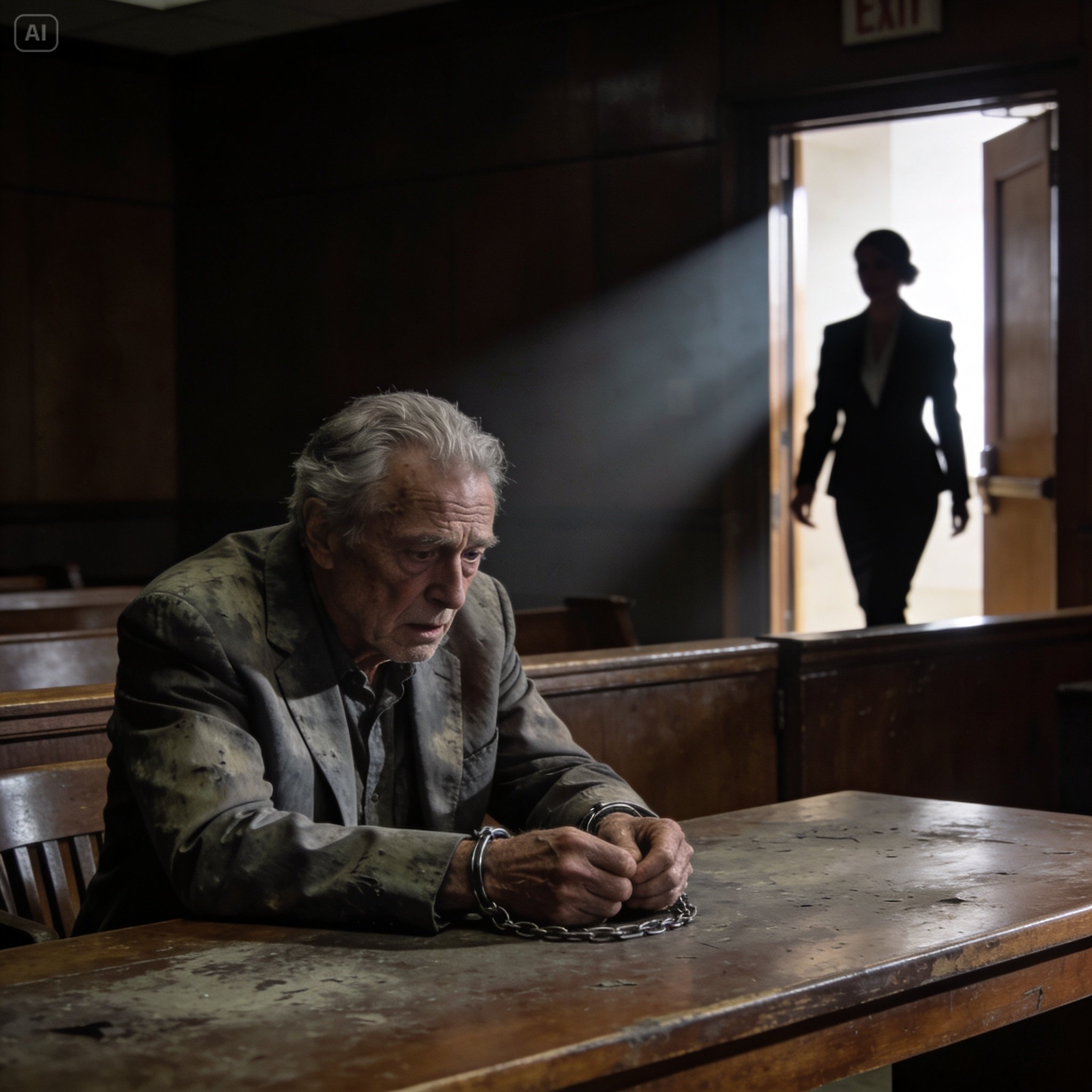
The Grayson land was seized, the railroad charter was revoked, and my father was led out of the chamber in handcuffs, his expensive coat dragging on the marble floor.
My mother and sisters were left standing in the gallery, their faces masks of horror and shame. They looked at me, waiting for a word of comfort, a sign that I would take them back into my world.
I didn’t give it to them.
I walked past them without a word, my arm linked with Caleb’s.
We walked out of the assembly building and into the bright, clear light of the afternoon. The city felt smaller now, less imposing.
“What now?” Caleb asked, his voice filled with a quiet, peaceful strength.
I looked toward the north, where the jagged peaks of the mountains were visible on the horizon.
“Now,” I said, “we go home.”
“The winter is coming, Caleb.”
“And we have a ranch to run.”
We rode out of the city, leaving the ghosts of the past behind us. We climbed back into the high country, the air turning thin and sweet, the scent of pine returning to my lungs.
When we reached the ranch gate, the men were waiting for us. They didn’t cheer; they just nodded, a silent, profound gesture of respect.
I walked into the house, my house, and looked at the scarred oak table, the books on the shelves, and the fire burning in the hearth.
I wasn’t the unwanted daughter.
I wasn’t the problem child.
I was the woman who had survived the winter.
And as I stood there, Caleb’s arms around my waist, I knew that no matter what happened next, no matter how many storms the mountain threw at us, we would be ready.
Because we weren’t just living on the mountain.
We were part of it.
And the mountain never forgets.
I looked at the silver-backed mirror on the washstand, seeing the woman I had become—the scars on my hands, the light in my eyes, the strength in my soul.
I smiled.
The Grayson name was gone.
The Mercer name was just beginning.
And for the first time in my life, the future didn’t look like a cage.
It looked like freedom.
We spent the evening by the fire, talking about the spring, about the new calves, about the bridge we needed to build over the creek.
There was no more talk of war or betrayal or revenge.
There was only the quiet, steady rhythm of a life well-lived.
I went to bed that night and slept the sleep of the truly free.
The next morning, I woke up before the sun. I pulled on my denim trousers and my flannel shirt, my boots feeling like a second skin.
I walked out onto the porch and watched the first light of dawn hit the peaks.
The world was new.
The winter was our friend.
And I was finally, finally, home.
I picked up the heavy wool blanket from the chair and wrapped it around my shoulders, breathing in the cold, perfect air.
I felt a presence behind me, a familiar, comforting heat.
“You’re up early,” Caleb whispered, his arms wrapping around me.
“I wanted to see the mountain,” I said.
“It’s beautiful, isn’t it?”
“It is,” he agreed.
“But not as beautiful as the woman who conquered it.”
I leaned back against him, closing my eyes.
The unwanted daughter was gone.
The mountain man’s treasure was exactly where she belonged.
And the story was finally, truly, ours.
The end of the old world was the beginning of the new.
And in the high country, the new world was everything I’d ever dreamed of.
I looked down at the valley, so far away now, and I didn’t feel anger or sadness or regret.
I felt nothing but the wind.
And the wind was free.
Just like me.
Part 4
The cold in the territorial capital wasn’t like the cold of the Mercer ranch; it was a stale, damp chill that carried the smell of coal smoke and desperate people. I sat in the high-backed velvet chair of the assembly hall, my fingers tracing the worn edges of the ledger that sat in my lap like a loaded weapon. Across the room, Walter Grayson was a man transformed, his usual mask of benevolent authority replaced by a frantic, sweating desperation that made him look twenty years older. He kept whispering to his legal team, his eyes darting toward the gallery where my mother and sisters sat like frozen statues in their finest mourning black. They weren’t mourning a person; they were mourning the death of their social standing, the collapse of a world built on secrets and stolen land.
The judge, a man named Henderson who had spent his career watching the valley elite treat the territory like a personal playground, cleared his throat. The sound echoed through the vaulted chamber, silencing the whispers of the press and the curious onlookers who had packed into the benches. Caleb sat beside me, his hand resting on the hilt of his knife—a silent reminder that while we were in a house of law, he was still a man of the mountain. He didn’t look like he belonged in a courtroom; he looked like a predator who had allowed himself to be caged just long enough to snap the neck of his prey.
“Mrs. Mercer,” Judge Henderson said, his voice resonant and devoid of the warmth my father usually bought with his campaign contributions. “You have presented this body with a series of documents that, if authenticated, suggest a decades-long pattern of racketeering, arson, and witness intimidation by the Grayson estate.”
I stood up, my legs feeling steady for the first time since we had crossed the city limits. I didn’t look at the judge; I looked at Walter. I wanted him to see the “problem daughter” one last time before his world went dark. I wanted him to see the girl he’d sold for a timber contract standing over the wreckage of his life.
“The ledger is authenticated, Your Honor,” I said, my voice carrying to the back of the room with a clarity that surprised me. “Every entry is in my father’s own hand. Every payoff to the Red Hollow sheriff, every payment to the arsonists who burned the Miller farm in ’82, and every bribe paid to the railroad commission to bypass the northern water rights.”
My father stood up, his face a mottled purple, his finger shaking as he pointed it at me. “She’s a liar! A hysterical, ungrateful girl who’s been brainwashed by that savage she calls a husband! That book is a forgery, a desperate attempt to steal my legacy because she was too difficult to love!”
“Sit down, Councilman,” Henderson barked, his gavel striking the wood with a finality that made Walter flinch. “You will have your turn to speak, provided you can find a lawyer who isn’t currently trying to distance themselves from your sinking ship.”
I felt a surge of cold, dark satisfaction as Walter collapsed back into his seat. The smirk was gone. The “Pillar of the Community” was crumbling in real-time. I turned my attention back to the ledger, opening it to the final page—the one he didn’t know I’d added to while he was busy planning his “civilization” of the northern range.
“There is one more thing, Your Honor,” I said, pulling a folded piece of paper from the back of the book. “This is a signed confession from Silas Vance, my father’s foreman. He didn’t die in the landslide. He was found by Mr. Mercer’s men three days ago, hiding in a cave with a shattered leg and a very sudden desire to talk to the authorities in exchange for medical care.”
The room erupted into a cacophony of shouts and gasps. Walter’s lead attorney packed his briefcase and walked out of the room without a word. My mother let out a sharp, bird-like cry and fainted into Margaret’s arms, but I didn’t look back. I watched Silas Vance’s words being read into the record—the detailed plan to murder Caleb Mercer, the orders to bring me back to the valley “by any means necessary,” and the promise of a seat on the railroad board for the man who pulled the trigger.
By the time the sun began to set over the city’s grimy skyline, the verdict wasn’t just a legal decision; it was an execution. The Grayson land was placed into a state-managed trust, the railroad charter was formally revoked, and a warrant was issued for the immediate arrest of Walter Grayson on charges of attempted murder and high treason against the territory.
I watched as two deputies approached the high table. They didn’t treat him with the respect he had spent forty years demanding. They grabbed him by the arms, his silk sleeves bunching up as they forced his hands behind his back. The metal of the handcuffs clicked—a sharp, musical sound that felt like the final note of a long, discordant song.
“Evelyn,” he hissed as they led him past me. “You’ve destroyed us. You’ve left your mother and sisters with nothing. Is this what you wanted? To be the queen of a pile of ash?”
I looked him in the eye, and for the first time, I didn’t feel the old, familiar knot of fear in my stomach. I didn’t feel the need to argue or defend myself. I just felt a profound, empty peace.
“I didn’t destroy you, Walter,” I said softly, so only he could hear. “You built a house out of dry rot and expected me to hold up the roof. I just stopped pretending I was part of the foundation.”
He spat at my feet, a final, pathetic act of defiance, before they dragged him through the mahogany doors. The press swarmed, the flashes of their cameras blinding as they tried to capture the fall of the valley’s king. I felt Caleb’s hand on my shoulder, steady and warm, pulling me away from the chaos and back toward the quiet halls of the courthouse.
We walked out onto the stone steps, the air tasting of impending rain and city filth. My mother was standing by their black carriage, her face a mask of ruined vanity. Margaret and Sarah were huddled beside her, looking at me with a mixture of terror and a strange, desperate hope. They were waiting for me to be the “good sister.” They were waiting for me to use Caleb’s money and the Mercer name to save them from the consequences of the life they had helped build.
“Evelyn,” Margaret whispered, stepping forward. “Please. We didn’t know. We didn’t have a choice. You can’t leave us like this. The bank will take the house by morning.”
I looked at Margaret—the sister who had told me that marriage was “duty” while she enjoyed the silk and the status. I looked at Sarah, who had never once spoken up when our father called me a disappointment. They were my blood, but they weren’t my family.
“You have a choice now, Margaret,” I said, my voice cold. “You can keep wearing those dresses until the bailiffs take them off your back, or you can find a way to work for a living. I hear the mills in Red Hollow are always looking for hands. It’s hard work, and your nails will get dirty, but at least the money won’t be covered in blood.”
“You’re a monster,” my mother shrieked, her voice cracking as she clutched her pearls. “After everything we gave you! We fed you! We clothed you! We found you a husband who actually wanted you!”
“You sold me,” I corrected her, my voice rising to meet hers. “You sold me like a head of cattle to a man you thought would break me. You didn’t give me a husband; you gave me an exit. And for that, I suppose I should thank you.”
I turned my back on them and walked toward our horses. I didn’t look back when I heard the carriage pull away. I didn’t look back when the city lights began to fade behind us. I only looked north.
The ride back to the Mercer ranch took five days, but they felt like five minutes. The air grew cleaner with every mile, the pressure in my chest easing as the mountains began to loom over the horizon. By the time we reached the high passes, the first real snow of the season had begun to fall—thick, heavy flakes that erased the trail and turned the world into a cathedral of white.
When we rode through the main gate of the ranch, the men were waiting. Martha was standing on the porch, a lantern in her hand, her face breaking into a rare, wide grin. They didn’t ask about the trial. They didn’t ask about the money or the land. They just took our horses and led us inside to the warmth of the fire.
I walked into our bedroom and stripped off the travel-stained clothes, pulling on the thick flannel shirt and the denim trousers that felt like a second skin. I sat on the edge of the bed and looked at the silver-backed mirror, the one that had once shown me a girl who was “too difficult to love.”
The woman looking back at me was different. Her skin was wind-burnt and her eyes were hard, but there was a light in them that no one in the valley could ever extinguish. She was a woman who had fought a war and won. She was a woman who knew the difference between a price and a value.
Caleb walked in, his boots thudding softly on the wood. He sat down beside me and took my hand, his calloused thumb tracing the line of my knuckles.
“It’s over, isn’t it?” he asked, his voice a low rumble in the quiet room.
“It’s over,” I said, leaning my head against his shoulder. “The Graysons are a memory. The valley is someone else’s problem now.”
“And us?”
I looked out the window at the storm, the wind howling against the timber walls of our fortress. I thought about the winter ahead—the long nights, the hard work, the constant battle against the elements. I thought about the life we were going to build here, a life based on truth and sweat and a loyalty that went deeper than blood.
“We’re the mountain, Caleb,” I whispered. “And the mountain is going to be just fine.”
I blew out the candle, and as the darkness settled over the room, I didn’t feel the old fear. I didn’t feel the need to hide. I just felt the steady, powerful rhythm of my own heart, beating in time with the man beside me. I was home. I was free. And for the first time in my life, I was exactly where I was meant to be.
FIN.