WNBA’s Record-Breaking Season Overshadowed by High-Stakes Labor Showdown
A Championship overshadowed by Crisis
As the Las Vegas Aces and Phoenix Mercury battle for the WNBA title on the court, an even more consequential fight is taking place away from the hardwood. The league is currently navigating a perfect storm: a period of unprecedented commercial success clashing with a rising tide of player frustration. With the collective bargaining agreement (CBA) set to expire at the end of October, the ongoing negotiations are set to define the league’s future, testing the relationship between its players and leadership like never before.
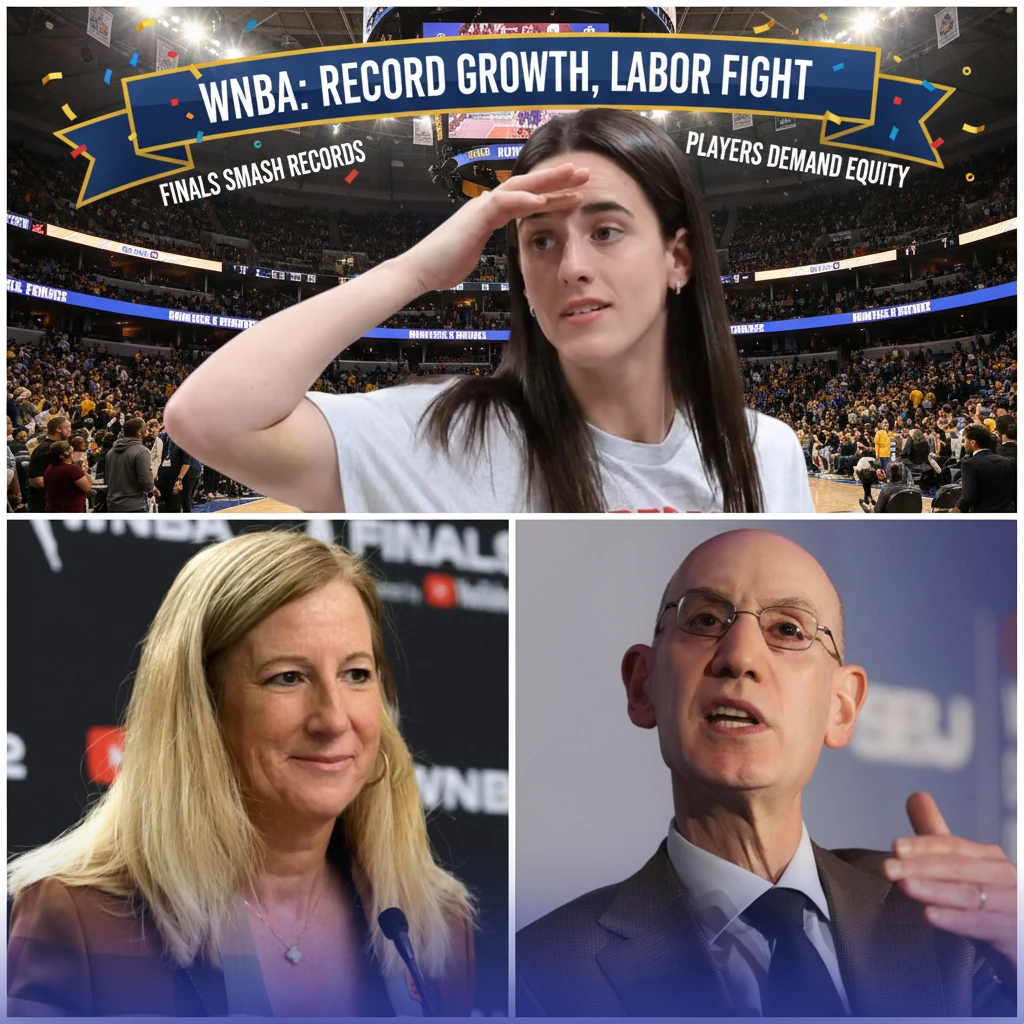
NBA Commissioner Adam Silver, whose authority extends to the WNBA, tried to project calm this week, assuring the public that a new agreement would be finalized. Yet, he was candid in acknowledging that the issues run deeper than contract clauses and salary figures. Rebuilding trust, he admitted, is now a top priority.
“There’s no question that the WNBA is going through growing pains,” Silver said during a recent appearance. “It’s unfortunate that it’s happening right as their most important games are being played, but we’ll sit down with the players, work through our differences, and get a new collective bargaining agreement done.”
These differences became impossible to ignore when Napheesa Collier, star for the Minnesota Lynx and a runner-up for the league MVP award, leveled sharp criticism at the WNBA’s leadership, calling it the “worst in the world.” Her comments landed just before the Finals began, highlighting a powerful undercurrent of discontent. While many players have privately expressed similar views, Collier’s public statement crystallized the collective feeling that their contributions are not being adequately recognized or compensated.
Silver conceded that beyond the financial negotiations, there are fundamental relationship issues to address. “Cathy Engelbert has presided over historic growth in the WNBA, but we have relationship challenges to fix as well,” he said. “I’m confident that over time, those can be repaired and the league can continue on the rocket trajectory it’s currently on.”
Engelbert, who became commissioner in 2019, is widely credited with elevating the league’s profile. Under her watch, viewership, sponsorships, and attendance figures have all soared to new heights. However, players are now demanding that this financial upswing be directly reflected in their paychecks and overall working conditions.

Growth and Grievances
The 2024–25 season has been one for the history books. In a nod to its growing popularity, the Finals were expanded to a best-of-seven format for the first time. Game 1 of the Aces–Mercury series drew an average of 1.9 million viewers, a peak not seen since the WNBA’s inaugural season in 1997. Broadcasters like NBC Sports are recommitting to the league, signaling strong confidence in its product.
But this on-court success story is paired with off-court tension. The 2020 CBA delivered key improvements on salaries, benefits, and travel, but many athletes believe the league’s progress has not kept pace with its surging revenue. With the majority of the league’s players set to become free agents this offseason, the next agreement is poised to reshape the financial landscape of women’s professional basketball.
Engelbert has signaled a desire for a landmark deal, calling it potentially “transformative.” She stated, “We want to significantly, and I mean significantly, increase salaries and benefits while ensuring the long-term growth and viability of the WNBA. We have made proposals to that end and are continuing to negotiate in good faith.”

The Money Question
Even as negotiations intensify, the league has made incremental changes. This year, the postseason prize pool was expanded, with champions now earning $22,908 per player. While an increase from last year’s $20,825, the figure has drawn unflattering comparisons. For instance, players on the Indiana Fever earned up to $30,000 each for winning the midseason Commissioner’s Cup tournament. “You get more [money] for this than you do if you’re the Finals champion,” superstar Caitlin Clark remarked. “It makes no sense.”
The disparity with men’s sports is even more stark; NBA champions earn over $800,000 each. For many WNBA players, the postseason is about more than financial reward. “Once our paycheck stops after the regular season, you’re just playing for pride,” said Minnesota guard Courtney Williams. A championship title can, however, open doors to endorsements and other opportunities that supplement a player’s income.

A Battle for Respect
Derek Fisher, a former NBA player and WNBA coach, provided context for the current friction. “It’s not the norm to hear players speak so bluntly,” he said of Collier’s remarks. “But those feelings are real. Whenever you’re in the heat of high-stakes talks, distrust and miscommunication can build. Until you reach an agreement, it’s inherently adversarial.”
Fisher believes the core issue is a long-held sense among players that their value has been underestimated. “The WNBA could have been at this point sooner,” he argued. “Caitlin Clark and Angel Reese reaccelerated the league’s growth, but this has always been a special league. The players just don’t want to see the next generation face the same struggles they did when they had no leverage.”
This sentiment—a blend of pride in their work and a desire to protect future players—is a driving force at the bargaining table. The league’s veterans, who endured years of lower pay and limited media exposure, are now in a position to demand a better standard for all.
The Road Ahead
The WNBA is at a critical juncture. Its newfound mainstream popularity has given it a powerful platform, but its internal conflicts threaten to undermine its progress. League and union representatives are meeting regularly to hash out a new deal, and while both sides project optimism, the clock is ticking toward the October 31 deadline.
As the Finals captivate a growing national audience, the real championship is being contested in boardrooms and at negotiating tables. The outcome will determine if the WNBA can translate its current moment of cultural relevance into a truly sustainable and equitable future. As Mercury guard Kahleah Copper put it, focusing on the immediate task, “We’ve got to get to four [wins], and then we can go full throttle.” Once the games end, the league’s most important battle will begin in earnest.