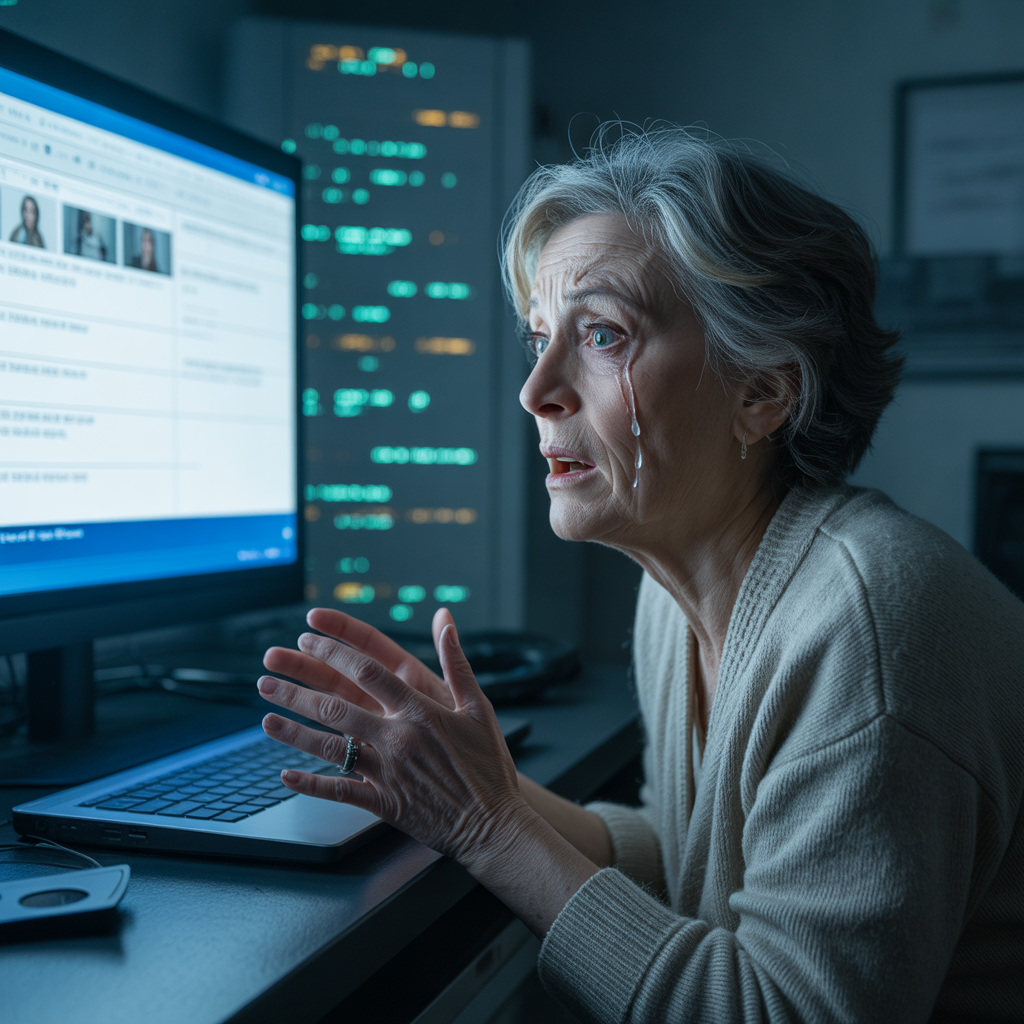
My son and his wife asked me to watch their house, but their hidden cameras revealed a truth I could never unsee.
My son and his wife told me they trusted me. They asked if I would watch their house while they were away, just for a week. They smiled as they departed, even presenting me with a bottle of wine as a gift, but they neglected to turn off the cameras. Or perhaps it was intentional. In the beginning, I was completely unaware I was being recorded. But then, I discovered the footage.
Jessica’s voice, bright with laughter, referring to me as “the old babysitter who will put up with anything.” That was the moment it all crystallized. This was never about trust. It was a test. But I wasn’t the quiet, compliant woman I had been. Not this time. This time, the cameras didn’t capture me; they exposed them.
My name is Lauren Bennett. I was sixty-six years old and had spent the majority of my adult life as a school librarian in a quiet town just outside of Boston. Books were my sanctuary, silence my natural rhythm. I found comfort in systems and order. I liked my tea at the same hour each morning, and I liked knowing precisely where everything belonged. After my husband passed away, the quiet in our home grew heavier, but it was a familiar weight.

I lived by myself in the house we had purchased together, until the stairs became a challenge and the winters felt interminably long. My son, Adam, and his wife, Jessica, proposed a solution that, on the surface, seemed generous. “Why don’t you move in with us?” they had asked. “We have the space. It’ll be easier for everyone.” I was hesitant at first.
I had no desire to intrude, but they were insistent. They said it was what family does, that I would retain my privacy, that the children would adore having me nearby. And so, I relocated to their home, a large, modern two-story house in a suburb north of Providence. It was beautiful, efficient, and sleek—at times, too sleek.
White countertops, brushed steel appliances, and echoing hallways devoid of clutter, photos, or any softness. The walls were painted in shades of bone and ash, the art abstract and cold. I was given my own room on the first floor, with a door that closed but never quite separated me from the rest of the household. Not when Jessica always had an opinion about what I kept in the closet, or how I folded the towels, or whether I was using the “good” hand soap in the guest bathroom.
Still, I made an effort to make it work. I collected the children from school. I did the dishes without being prompted. I took great care not to leave any trace of myself in the shared living spaces. It was a peculiar dance: being helpful without becoming visible, being present without being a presence. Jessica always smiled at me, but it was the kind of smile that remained frozen just beneath the surface of her skin. Her eyes never joined her mouth.
Then, one Wednesday morning in early May, she rapped on my door. Already dressed in linen, she held a tablet in one hand and a mug in the other. She announced they were leaving for Hawaii for a week. Just her and Adam. No children. A couple’s getaway, something they hadn’t enjoyed in years. “We trust you,” she said. “And honestly, we’d rather you stay here than be alone at your age.”
She offered that practiced smile again, and I nodded. She informed me the refrigerator would be fully stocked, the garden required only light watering, and I could treat the house as if it were my own. She even left a bottle of Merlot on the counter with a note in neat, perfect script: For your quiet evenings. Thank you for everything, Lauren. I should have felt a sense of gratitude.
I should have been touched. Instead, a different feeling settled over me, something I couldn’t quite identify at the time. Not fear, not suspicion, just a subtle unease, like the feeling of standing in a room that has been cleaned too thoroughly, where even the air feels scrubbed sterile. The morning they left, Jessica’s hug was stiff. Adam kissed me on the cheek.
The children waved sleepily from the car. I stood on the porch, watching them drive away, the tires humming down the smooth asphalt. And then, just like that, I was alone. Or so I believed. Inside, the house was silent. I drifted through the kitchen, my hand gliding over the cool marble of the island, my eyes falling on the wine bottle. I opened the fridge.
Everything was indeed stocked, down to pre-cut vegetables in labeled containers. The blinds were half-drawn, allowing morning light to stretch across the pristine hardwood floors. I stood in the center of the living room, absorbing the silence. It should have felt peaceful, but there was something sterile about it, something curated, as if the house had been staged for a showing, not lived in. As if an inspector might arrive at any moment.
I shook the feeling away, telling myself I was being ridiculous. I was in a beautiful house with a garden, books, and time to myself. I made tea. I settled into my favorite chair by the window and picked up my book. Still, I couldn’t escape the sensation that I wasn’t alone.
Not in the usual way, not in the creaks and sighs of an old house, but in the sense that the house itself was watching. I had yet to realize just how right I was. The first day passed with enough peace. I spent the morning in the garden, pruning the lavender and trimming the edges of the rose bushes near the fence.
The air was warm but mild, the sun filtering through young spring leaves in soft, golden patches. I wore the straw hat Adam had given me two birthdays ago, the one I was certain Jessica considered too rustic for her modern aesthetic. But in their absence, I wasn’t concerned with being proper.
I let my knees sink into the dirt and hummed softly to myself as I worked. Inside, the house stayed spotless. I wiped my shoes before entering, careful not to disturb the gleaming floors. It was more habit than necessity; I had spent so long trying to render my presence in this house invisible that it required a conscious effort to relax. I turned on the kettle, selected a lemon ginger tea bag, and placed it gently in the ceramic mug with a chip on its rim—the only one in the cabinet that seemed to have been used.
The others all looked like museum pieces, untouched and unblemished. I drank slowly by the kitchen window, watching birds skip across the patio stones. The house was quiet, peaceful, almost unnervingly so. I remember wondering if it always felt this way, or if the stillness had simply grown sharper without the sound of voices and footsteps.
I took a slow walk through the downstairs rooms, simply wandering, taking in the space I usually tiptoed around. The dining room was arranged like a page from a magazine, with silver flatware glinting in its drawer and folded linen napkins stored with mathematical precision. The living room smelled faintly of eucalyptus and lemon, likely from one of Jessica’s diffusers. The books on the shelves were color-coded and mostly for decoration.
I picked one up. The pages were stiff, unread. In the guest bathroom, the lights activated automatically as I stepped inside. The mirror was spotless. I studied my reflection a little longer than usual. My eyes looked tired, I noticed, but also alert, almost curious, as though I were waiting for something.
That night, I prepared a simple dinner of soup and toast. I ate in silence, then washed and dried the dishes immediately. I read for an hour in the living room before returning to my bedroom to finish a crossword puzzle. And then, as I climbed into bed, I saw it. A faint red light in the corner of the ceiling. Blinking.
At first, I thought it was part of a smoke detector or security alarm, but the blinking was rhythmic, alive—a small, persistent eye in the darkness. I turned off the lamp and stared up at it. It was too small for a smoke alarm, too high for a typical camera, but I had worked in a school long enough to recognize a surveillance device.
The longer I stared, the more certain I became. I pulled the comforter up to my chin and lay still, my heart slow but alert. I told myself not to overreact. Perhaps they had installed cameras for security. It was a large house; maybe they worried about break-ins. Maybe it was normal.
But why hadn’t they mentioned it to me? And why was one in the guest room? The next morning, I tried to dismiss the thought. I went for a walk, stopped at the corner bakery for a croissant, and sat in the park watching a woman teach her child to ride a bike. For a few moments, I let myself forget. But when I returned, the house felt different. Not just quiet, but tense, like something held in waiting.
I began to notice other things. The soft click when I entered the laundry room. The motion sensor that illuminated a hallway even in broad daylight. The way Alexa would suddenly chime after a sentence I had spoken aloud to myself in the kitchen. And the small, off-hand comment Jessica had made last month: “We love our smart home. It listens better than the kids.”
That night, I stood directly under the blinking light in my bedroom. I pulled over a chair and climbed onto it. I looked closely and saw it: a pinhole lens, subtle, hidden in what was designed to look like a smoke alarm, but wasn’t one. It was a camera. And then it dawned on me. It had likely been recording the entire time.
I stepped down slowly. My fingers were trembling, but not from fear—from realization. This wasn’t about security. This was surveillance. Of me. Whatever peace I had started to feel fractured under the weight of that tiny, blinking light. I stood in the center of the room and looked around. How many more were there? How long had they been on? And why had Jessica smiled so carefully when she handed me that wine? The house was quiet, but now it felt like it was listening and watching, and I no longer felt like a guest. I felt like a subject in someone else’s experiment.
I didn’t sleep much that night. I lay under the covers, my eyes fixed on the little red light above me, blinking like a metronome. Every time I closed my eyes, I pictured someone watching. Jessica on a beach, sipping a cocktail, casually opening an app on her phone and seeing me shift in bed. Seeing what I wore, how I moved, noticing the way I muttered to myself when I read. Seeing when I cried, if I cried.
The next morning, I brewed coffee on autopilot, my thoughts like loose marbles rolling around inside my skull. I tried to keep my hands steady as I sipped from my chipped mug, staring at the quiet living room. My stomach was in knots, but I knew one thing for certain: I had to find the rest of the cameras. I started in the living room.
Slowly, methodically, I walked the perimeter of the space, pretending to dust. I scanned every corner, every electronic device, every bookshelf. I found a small, circular object tucked among the fake books, its lens masked by a decorative black sticker. Another one, disguised as a motion detector, was in the corner of the ceiling. I moved to the kitchen.
There, inside what looked like a modern kitchen timer mounted above the fridge, I spotted another lens. It was small, barely noticeable unless you were looking for it. But now that I knew what to look for, I couldn’t stop seeing them. In the dining room, a camera was hidden inside the light fixture, aimed directly at the table.
In the hallway, a sleek black dot was embedded in the thermostat. In the laundry room, another tiny eye watched from the shelf above the dryer. I felt the walls closing in. I made a list, writing down each camera’s location in a small notebook I found in the junk drawer. I wrote quietly, carefully. I moved like a ghost through the house.
I was no longer the house guest; I was a detective inside a crime scene. Then I reached the upstairs office. The room had always been off-limits. Jessica had once told me it was where she did freelance work and kept sensitive material. The door was usually locked, but when I turned the knob that day, it yielded. I hesitated, then stepped inside. The office was nothing like the rest of the house.
It was cluttered—not messy, but busy. Wires snaked across the floor, and shelves were stacked with labeled boxes and tech equipment. On the desk sat a laptop, a monitor, and a small console blinking with green and amber lights. I sat down slowly in front of the computer. It was on, with no password prompt.
The desktop background was a photo of the children on a hiking trail. There were folders on the desktop. One was named Logs, another Footage. I opened the second one. Inside were files named by date and location: Kitchen_2024_May_9, Living_Room_2024_May_8, Guest_Room_2024_May_7. I clicked on one. The video opened silently.
It was me, sitting in the living room reading a book. I watched myself sip tea, scratch my arm, rub my temples, shift uncomfortably on the cushion. I looked so unaware, so exposed. I closed the file and opened another. There I was again, standing in the kitchen in my robe, washing a dish, staring out the window, mumbling to myself. It was all there. Every moment I had believed was private.
There were hundreds of videos, spanning days, weeks, months. I had no idea how long they had been recording me. One folder was labeled Clips. Inside were short videos, some only ten seconds long, all marked with tags: weird_comments, muttering, crying. They were analyzing me, studying me, categorizing my life as if I were some kind of behavioral subject.
I stared at the screen, my hands frozen over the mouse. Then I clicked on one last video, one that wasn’t of me. It was Jessica, sitting in that very office, laughing on a video call with someone I didn’t recognize. She was holding a glass of wine. Her words were casual, but they landed like stones. “She still doesn’t realize she’s on camera. It’s honestly a little sad,” she said. “I think she talks to herself more than she talks to the kids. It’s like she’s trying to narrate her own loneliness.” The person on the other end chuckled. Jessica went on, “I’m telling you, it’s fascinating. I think we could actually cut together a short documentary: Portrait of the Forgotten Matriarch.”
I didn’t move. I didn’t cry. I just sat in that room, in that chair, in that sterile, blinking world they had constructed around me. And I realized I had been living in a dollhouse—a beautiful, polished dollhouse where I was the main exhibit. I didn’t close the folder. I didn’t shut the laptop. I left it open, the file still playing, Jessica’s voice echoing faintly behind me as I stood. Because now I knew everything I needed to know. They had invited me in, but they had never given me a home. They had given me a glass cage, and I was done performing in it.
I closed the door behind me with a softness born more from instinct than intention. It was the same reflex I had developed long ago when my son was a baby—closing drawers, turning knobs, folding silence around my movements so as not to wake him.
But this time, the silence wasn’t for comfort. It was for protection. The office felt colder than the rest of the house, though the thermostat registered the same temperature. Perhaps it was the absence of human warmth, the way the walls seemed to inhale rather than exhale. Nothing about the room felt accidental. Every object had been chosen, placed, and monitored.
I stood in the middle of the room, letting my eyes adjust. On the far wall was a sleek black cabinet with two locked drawers. Cables ran from it to a central unit on the desk, a custom rig with multiple ports, blinking as if it had its own heartbeat. I approached slowly, studying the configuration.
Even in my years at the library, I had never seen a setup quite like this. To the left, beneath the window, was a filing cabinet. I opened the top drawer. Manuals, warranties, receipts—all neatly labeled: Security Equipment, Storage Subscriptions, Surveillance Software. There was an invoice from a company I didn’t recognize, but the description was clear: Custom Remote Monitoring Package. It listed the house’s rooms by name, including mine. They had paid to watch me in real time.
I reached into my cardigan pocket and pulled out a flash drive, an old one I had used to store photos of Adam as a child. The irony did not escape me. I slid it into the USB port of the desktop tower.
A prompt blinked to life on the monitor. I began copying everything from the Footage folder. It was a simple drag-and-drop, but it felt like a profound act of defiance. As the files transferred, I explored the room further. The second shelf above the desk held notebooks—not personal diaries, but project logs. One was labeled House Data.
Inside were detailed entries: motion triggers, timestamps, keywords. One note read: 6:43 PM – Lauren speaks to herself about the birds. Emotional tone: nostalgic. Another: 10:10 AM – Appears to be looking at wedding photo. Possible memory reaction. I wasn’t just being watched; I was being studied. It was clinical, detached, not even cruel—just indifferent. That was somehow worse. In these notes, I wasn’t a family member.
I was a test subject in a behavioral study. On the bottom shelf, I found a black leather binder labeled Security Authorization. Inside were forms, permissions for software access, equipment specs, and one printed page that chilled me to the bone: a clause about data sharing for “research or media purposes.” Jessica had signed it.
I stared at her signature, neat and even, written in blue ink. It was the same handwriting she used for birthday cards, for the grocery lists she left on the fridge. Now it was here, next to a paragraph that gave someone—perhaps more than one person—the right to observe and evaluate me. The files finished transferring.
I ejected the flash drive and tucked it deep into my bag, beneath a paperback I had been rereading. Then I paused. There was one last drawer I hadn’t opened—the lowest one on the right side of the desk. I bent down and slid it open. Inside were photo prints of me. Dozens of them, captured stills from the cameras.
Me in the kitchen. Me asleep. Me watching television. Me brushing my hair. Some were printed in color, some labeled by hand: Lauren, early morning. Lauren with book. Lauren crying. I don’t know what broke inside me in that moment, but something did. Not a loud shatter, not a scream, but more like a crack in glass—long, clean, and silent, but irreversible. I gathered as many of the photos as I could fit into my purse. Not all of them, just enough to prove what I had seen. I wasn’t sure yet how I would use them, but I knew I would. I left the rest of the office untouched. Let them wonder what I knew. Let them worry about how far I might go.
As I left the room, I caught my reflection in the glass of a framed print. I looked older than I remembered, not because of time, but because of knowledge. They had invited me into their home with smiles, but they had never offered me their trust. They had built a cage, elegant and invisible, and expected me to live inside it without protest. But they forgot something essential.
I had lived a whole life before their cameras. And now, I was ready to live another one beyond their reach. The house felt different once I understood what it truly was. The air carried a quiet heaviness, like a room just vacated by someone you hadn’t realized was standing behind you.
I could no longer walk freely from one room to another without imagining invisible eyes tracking my every step. The click of my heels on the tile, the sound of a chair scraping the floor—each noise echoed with an awareness I hadn’t felt before. It wasn’t fear, exactly. It was clarity: cold, sharp, and merciless. I stopped pretending. For two days, I moved through the house in deliberate silence.
I unplugged devices under the guise of saving power, casually adjusted picture frames with hidden lenses, and draped scarves over suspicious objects. I opened windows I had never touched before. I left the television on for hours, playing silent black-and-white films just to disrupt their expectations. And when I passed the hallway mirror, I looked at myself. I mean, I really looked.
I wasn’t just an aging mother-in-law in a borrowed home. I was a woman reclaiming her agency. I knew I had to confront them eventually, but not on their terms. Not while I was emotional, not when I felt like prey. So, I planned. I printed several of the images I had found.
Still shots of myself, taken from the hidden cameras. I included one from the kitchen, one from the bedroom, one where I was reaching into a drawer. The images were quiet, almost boring, but that was what made them so invasive. They captured the small, unguarded moments I had believed were mine alone.
I wrote a short note and placed it with the photos in an envelope. Then I mailed it to myself, certified, with a postmark. It was a trick I’d learned years ago during a property dispute at the library—a quiet way to timestamp a truth. Proof, in case this ever went beyond family. Then I went into the guest room and filmed myself speaking. It wasn’t dramatic.
I didn’t shout. I sat in the armchair by the window, the one Jessica always moved an inch to the left whenever I straightened it. I looked directly into the lens of the only camera I hadn’t touched. And I talked. I talked about the feeling of being invited with kindness and treated with suspicion.
I talked about the loneliness of being helpful yet constantly watched. I talked about the absurdity of being turned into a specimen in a home where I had been asked to feel safe. And then I said the most important part: I was done participating. Not just in the performance, but in the contract I never agreed to.
The unspoken agreement that I would remain small, silent, and compliant in exchange for proximity to family. The video was ten minutes long. I ended it with a simple sentence: “I have always been more than you chose to see.” Then I uploaded it to a private drive and sent the link to my personal email, along with one to John, my former coworker at the library who now worked in family law.
I hadn’t spoken to him in years, but he had always told me, “If you ever need anything—anything—you call me.” It was time. With the digital and physical evidence secured, I began to reclaim the house in subtle ways. I cooked breakfast and let the scent linger. I played classical music in the early afternoon, letting the echoes fill every corner.
I pulled my knitting bag from the closet and worked in the living room without apology. I lit candles. I walked barefoot. I took long, meandering phone calls with old friends and laughed loudly when I felt like it. This was not rebellion; it was a declaration. I was no longer waiting for their return with fear. I was waiting with resolve. On the morning of their scheduled arrival, I made coffee and placed the printed photos neatly on the kitchen counter.
I stood in the hallway and looked up at the tiny lens in the ceiling. I smiled—not warmly, not kindly, just honestly. Then I turned and walked outside, took the garden hose, and watered the roses slowly, with care. The way I had always done things: quietly, patiently, precisely. That night, they would walk through the door, sunburned and smug from their vacation, expecting the same quiet woman they had left behind.
But I wasn’t that woman anymore. And the cameras would show them everything they needed to know. They pulled into the driveway just after sunset. I was already seated in the garden with a cup of tea, in the same spot I had been on the day they left. The sky was turning a deep shade of violet, and the porch light had just flickered on. I didn’t stand to greet them. I didn’t wave.
I simply sipped my tea and watched their silhouettes climb out of the car. Their voices were muffled by the hedges. Jessica’s laughter rang sharp and bright, the kind she used when she wanted to sound carefree. Adam followed her with the rolling suitcase, his head turned toward the front door. They didn’t see me at first.
I heard the keys jingle, the familiar click of the front door unlocking, the soft creak as it swung open. Then there was silence. Not a natural pause, but the kind that comes when something expected has shifted—a deviation, a presence. Jessica’s voice broke the hush, lower now, uncertain. Adam said something, probably asking what was wrong.
I imagined the scene: the kitchen lights on, the photos arranged on the counter, my handwritten note resting beside them. The cameras were still in place, but no longer their secret. They didn’t call my name. I stayed outside, watching the garden darken around me. The tea had gone cold in my cup, but I held it anyway. It steadied me.
After what felt like fifteen minutes, Adam stepped outside. His eyes scanned the yard until they found me. He hesitated, then walked over slowly. His face was blank—not angry, not confused, just empty, as if he hadn’t yet decided which version of himself to be. He asked if we could talk.
I nodded and gestured to the chair across from mine. He sat stiffly, folding his hands together in his lap. There was a pause, one of those heavy silences that begged to be filled. But I waited. I wanted to hear what version of the truth he would offer. He began with the usual: that it wasn’t personal, that the cameras were for security, that they had forgotten to disable them while they were gone.
He said it all with the flatness of someone who had practiced the lines on the way home, who was hoping to land somewhere between apology and justification. I didn’t interrupt. He continued, saying they didn’t think I’d be uncomfortable, that I was family and they would never “spy” on me. Then he said the word that finally made me speak.
He said, “Trust.” I asked him softly, slowly, if he would feel trusted knowing someone had recorded his private moments for months without telling him. I asked if he would call that protection or manipulation. He didn’t answer right away. Jessica came out then, her mouth set in a tight line, arms crossed. She didn’t sit. She stood behind Adam and said she was hurt.
Hurt that I would snoop through their things. That I would dig. That I would send files to an attorney. So, she knew. I looked at her and said that if she felt hurt by being found out, perhaps she should consider how I felt being studied in my most vulnerable moments.
I reminded her of the room I wasn’t allowed to enter, the signatures on the data agreements, the names of the video files labeled with words like crying and off behavior. Her face twitched, but she didn’t argue. I said I wasn’t looking for an apology. I wasn’t even angry anymore. I was resolved. And I was done.
I told them I had secured a consultation with a lawyer, that my investments in their home would be documented and repaid. I told them I had copies of all the footage, the equipment logs, and even a backup set of files stored with a trusted friend. Jessica started to say something defensive, but Adam put a hand on her arm.
For the first time, he looked at me—not like a son trying to manage his mother, but like a man realizing he had underestimated someone he thought he knew. He asked what I wanted. I told him the truth. “I want space. Legal, physical, and emotional. I want a place of my own again, somewhere I can exist without being recorded, managed, or diminished. I want dignity. And if you can’t offer it freely, I will claim it myself.”
There was another silence, this one different, quieter. Adam said he understood. Jessica didn’t speak again. She turned and walked back inside. I stood up, left my empty cup on the table, and walked past Adam toward the house. He didn’t follow. I went to my room, closed the door, and began to pack. There wasn’t much.
A few sweaters, books, some letters from old friends, the blanket I’d had since college. I didn’t want their things. I wanted mine. I slept that night with the blinds open, the moonlight spilling across the floor. I didn’t check the ceiling for cameras. I didn’t need to. I knew what I needed now.
And I knew that the next time I walked out of that house, I would never walk back in the same way again. Because something had shifted. And they would never again look at me as someone who stayed quiet. I had been silent, but I was never blind.
I spent the next few days with purpose, a quiet but resolute rhythm shaping each hour. I moved through the house with a different posture: not cautious, not submissive, but measured. I was no longer a guest in someone else’s version of family. I was a woman calculating her exit. The morning after our conversation in the garden, I called John. He picked up on the second ring, his voice warm and familiar.
I hadn’t spoken to him in years, but some friendships don’t fade. They just rest quietly until you need them. I told him everything in plain terms. No dramatics, just the facts: the surveillance, the breach of trust, the years I’d poured into their home, into the grandchildren, into keeping the peace. He listened without interrupting.
Then he asked me to email the files. “We can start with a property review,” he said. “We’ll build from there. You don’t need to burn the house down. You just need to show them you own part of the foundation.” I liked that. It stayed with me. By the end of the week, we had drafted a proposal. It wasn’t a threat.
It was a boundary—a legal assertion of the role I had played in their lives and their finances. I had contributed to the down payment on their home five years ago. Jessica had framed it as a “gift,” but we had no paperwork, only a wire transfer and a series of emails in which she thanked me for “investing in our future.” That phrase would prove useful.
John wrote a letter—professional, measured, but firm. It outlined my investment, the estimated value adjusted for inflation, and the property’s appreciation. It proposed either repayment or a formal equity stake that could be converted into a housing allowance for a separate residence.
I handed the sealed envelope to Adam one evening while he stood in the doorway of my room. He didn’t open it right away. He looked tired, not from guilt, I suspected, but from the weight of realization—from finally seeing me not as a fixture in the home, but as someone who had kept it running from the shadows.
Jessica didn’t speak to me that week. She moved around the house like a ghost, always one room ahead or behind. The cameras remained disabled. I left them that way. A few days later, Adam called me while he was at work. He said they’d read the letter, that they didn’t want to fight, that they wanted to make things right. The following afternoon, we met in the dining room.
I wore the navy sweater Michael had given me one Christmas long ago. I remembered how he used to call it my “meeting sweater.” He said I looked like someone who wouldn’t be pushed around when I wore it. He would have liked this moment. John joined us via video call. Jessica sat with her arms crossed, but she said little. Adam did most of the talking.
He said they agreed to repay the investment in full, that they would draw from their equity line and offer an additional stipend for relocation. He said they would remove all surveillance devices and provide a written statement acknowledging the breach of privacy. I listened. I nodded. I didn’t gloat. I wasn’t there to humiliate anyone.
I was there to reclaim what I had given without recognition. What had been taken quietly over the years: my time, my effort, my presence. By the end of the meeting, the terms were signed. John smiled through the screen. He said, “That’s a clean exit.” And I felt something in my chest unclench. The next week, I began looking for apartments.
I didn’t want anything grand, just a place that was mine. A small garden, perhaps a porch, sunlight in the kitchen—a space where no one would catalog my movements, question my habits, or measure my value by how quietly I kept to myself. I found a one-bedroom cottage on the edge of town. It had a blue door and ivy along the back fence. The owner was a widow named Eleanor.
She loved crossword puzzles and made fresh lemonade for every guest. We spoke for an hour on the porch before she handed me the keys and said, “I think you’ll be happy here.” I moved out quietly. No drama, no ceremony. I packed my things with care: folded the last few shirts, boxed up my books, wrapped the photo of Michael and me from our trip to Cape Cod. I didn’t leave a note. I didn’t owe them that.
Adam helped me move the boxes. Jessica didn’t come; I didn’t expect her to. When he placed the last box down in my new living room, Adam stood for a moment, looking around. He said the place felt calm, that it suited me. I offered him tea, but he declined. He looked unsure, as if he wanted to say something meaningful but didn’t know how.
So I let the silence stand. We had said enough for now. As he stepped outside, he turned back once. He said, “Thank you”—not for the past, but for the way I had handled the end of it. I closed the door behind him. I locked it gently, and for the first time in years, I felt like I was home.
The first morning in my new cottage, I woke up just before sunrise, stirred not by obligation but by something deeper—curiosity, perhaps, or a long-dormant sense of calm. The air in the room was cool and still, the kind of stillness that doesn’t make you feel alone, but held. I stretched slowly beneath the quilt, feeling no rush to rise, no footsteps in the hallway, no background hum of surveillance.
I was unobserved, unmeasured, and that made the moment sacred. I stepped into the kitchen barefoot. The old hardwood floor creaked beneath me, but for once, I didn’t flinch. There was no one to scold me for making noise too early. I filled the kettle with water and placed it on the stove, humming a tune from memory, one I used to sing to Adam when he was still small enough to cling to my hip.
The sound filled the space, not loudly, but completely. While the water heated, I opened the back door and stepped outside. The garden was still mostly wild, a patchwork of ivy, rosemary, and flowers I couldn’t name. Dew clung to the grass, shimmering in the early morning light. There were no fences visible from the back, just a slow slope of land disappearing into trees. I breathed it in.
Later that morning, I unpacked the last of my books, arranging them not by size or color, but by memory. I put the old novels I read in college on the bottom shelf, the gardening manuals I had barely touched in the middle, and the poetry volumes—my secret indulgence—close to my armchair by the window.
When I stepped back, it didn’t look like a showroom. It looked like someone lived there, someone with a past. By the third day, I had developed new rituals. I ate when I was hungry, not when the house demanded. I napped without apology. I kept a small journal by the sink and wrote down little things that made me smile: a blue jay on the window sill, the way the sun hit the kitchen tiles in the late afternoon, the sound of rain tapping the roof like fingertips. These details had once been swallowed by the noise of everyone else’s needs.
I bought a wind chime from the Sunday market, a handmade one with ceramic leaves. I hung it by the back door. Its song was uneven, but it made me feel less alone. I started writing short letters to myself, reminders of who I was before I became an accessory to someone else’s life. They weren’t long, just lines like, You are not invisible here, or, Your life is not a debt owed to anyone.
Adam visited with the kids two weeks after I moved in. They ran through the small garden like it was a secret forest. I let them pick flowers. I let them get dirt on their knees. There was no one standing behind me whispering about rules or stains or etiquette. Just me, the laughter of my grandchildren, and the scent of lemon verbena from the corner of the yard. When Adam left, he looked at me longer than usual. “You seem peaceful,” he said. I nodded.
That was the word I hadn’t dared hope for. I told him I was learning how to rest—truly rest. Not collapse at the end of a long day of service, but rest in a space I chose, in a life I shaped. In the evenings, I would light candles, not because someone expected ambiance, but because I loved the flicker and warmth.
I read poetry aloud, even if no one heard. I sang while folding laundry. I ate dessert first. I bought a used typewriter and typed small stories just to hear the click of the keys. I was no longer worried about usefulness. I was choosing joy. There were moments, of course, when memories surfaced. I would walk by a mirror and remember the little red light blinking in the ceiling.
I’d recall the sound of Jessica’s voice on that video, her cruel amusement. Those moments didn’t wound me anymore. They clarified. They reminded me how far I had come. My home didn’t have expensive art or voice-controlled lights, but it had windows that opened wide and let the air move freely. It had books that had actually been read.
It had a table that held tea and bread and letters from friends. It had a silence that wasn’t empty; it had presence. I no longer worried about who was watching. There was no script to follow, no role to play. I was no longer the obedient guest or the quiet helper in someone else’s life.
I had shed those skins like winter coats in spring. My cottage was small, but within its walls, I expanded. Every corner of that home bore my fingerprints, not because I was careful, but because I was finally free to leave a mark. I wasn’t waiting to be noticed. I wasn’t hoping to be thanked. I was living.
And for the first time in years, every inch of space around me was exactly what I needed it to be. Private, chosen, and mine.