The year was 1883, in a winter so relentless the wolves had forgotten how to howl. Snow drove sideways across the Wyoming plains, carried on a wind that could slice a man’s skin to the bone. At milepost 27, the small depot listed against the storm, its loose boards groaning. The lantern on its platform swung like a dying star in the gale. Hours ago, the midnight train should have rumbled through, but in weather like this, steel froze as solid as bone.
From the swirling darkness, a lone rider emerged. His horse, a roan with frost clinging to its mane, exhaled steam in great, locomotive puffs, its hooves plunging deep into the drifts. The man in the saddle dismounted slowly, each movement carrying a deliberate weight, as if he bore not just his own body but the burden of the land and all its years.
He was Samuel Carter, known to most as the millionaire cowboy—a title earned not from gold in banks, but from the thousand head of cattle that grazed his valley and the miles of open sky he considered his own. He secured the reins to a post near the platform, gave the horse a single, reassuring pat, and pulled the collar of his duster tighter around his neck.
His bootfalls on the frozen planks were sharp, solitary echoes in the empty station. Most men chose a fire over travel in a storm like this, but Carter had business with the railroad and trusted their agents to count cattle by candlelight about as far as he could throw one. He was about to take a seat on the bench when he saw a shape already there, a figure huddled beneath a thin shawl.
At first, it looked like a bundle of discarded cloth. Then it shifted, and a pale face turned toward him. It was a woman, young but without the softness of fragility. Her lips were chapped, and her eyes held the wide, hollowed look that comes when the cold carves its way into the soul. In her lap, she clutched a leather satchel, its strap frozen solid. Her fingers were locked around it as if it held the last treasure on earth.
She made a faint effort to stand but swayed, nearly collapsing. Carter was beside her in an instant, kneeling to brush the snow from her shoulders. “Easy now,” he murmured. “A storm like this doesn’t fight fair.”
Her breath came in short, visible clouds. “The train… they said it would come.”
He glanced down the tracks, where nothing moved but the storm itself. “Not tonight, miss. That whistle won’t blow again until the sun decides to remember us.” She tried to form another word, but her voice gave out. Her hands tightened on the satchel, her knuckles showing white. Gently, he pried her fingers loose just enough to slip the strap over his own arm, then scooped her up as if she weighed less than the snow on his coat.
Her head fell against his chest. He could feel the fine tremble of her frame, the faint, thready beat of her heart. He looked at the depot door, locked and useless. He looked to the horizon, a white void. Finally, he looked at his horse, which stamped restlessly in the drift. Carter pulled his duster wide, wrapping her within its heavy, sheltering folds. “Not tonight, death,” he said to the wind, the words a low vow. “Not on my watch.”
He carried her across the platform, his boots crunching in the deep snow. The storm clawed at them, but he mounted in a single, practiced motion, settling her in front of him on the saddle. She stirred, whispering something he couldn’t make out—perhaps a name, perhaps a prayer. The horse turned south, toward the distant, faint glow of lanterns that marked his ranch. Behind them, the depot was swallowed by the white curtain of the blizzard. The wind roared, but Samuel Carter no longer heard it. He heard only the ragged rhythm of the woman’s breathing against his chest and the steady, resolute thump of his own heart, making a silent promise that she would see the morning. On that frozen plain, beneath a sky intent on burying them both, a legend was taking shape. Some nights turn men into rumors. This one was turning them into history.
By the time Samuel Carter reached his ranch, the storm had gnawed the night down to the bone. The main house stood dark, its windows sealed with ice, but a lantern still glowed from the bunkhouse. He shouldered his way through the door, the woman still in his arms, his boots leaving a melting trail of snow on the wooden planks.
The ranch hands, startled from their bunks, went silent at a single look from Carter. They cleared a path as if making way in a church, watching as he carried her toward the stove. The fire had burned down to glowing coals, but he fed it dry pine and kindling until flames roared back to life. He gently laid her on a cot near the spreading warmth. Her shawl was stiff with frost, her boots soaked through.
With practiced, careful hands, he removed the frozen layers, wrapping her instead in thick wool blankets. She winced as he brought her fingers near the heat, the skin chapped raw from hours exposed to the cold. “Easy now,” he said, his voice softer than most men had ever heard it. “You’re not alone anymore.” The lamplight flickered across his face, revealing lines carved not by age, but by years spent on the open range. Carter had earned every scar he wore—driving cattle through blizzards, breaking horses no sane man would touch, and fighting off rustlers who saw his herd as an easy prize. He’d started as a trail hand with nothing more than a borrowed saddle. Hard work and even harder choices had granted him enough land to be considered wealthy, but money had never taught him to command words beyond the basics of contracts, ledgers, and letters—shadows he preferred others to wrestle with.
As the woman slept, her breathing still shallow, the satchel slipped from beneath the blanket. A cascade of papers spilled onto the cot, tied in neat stacks with ribbon. He picked one up, his brow furrowing at the elegant handwriting. Lesson plans. Arithmetic, history, grammar. He couldn’t decipher every word, but the purpose was unmistakable.
Just then, she stirred, her eyes fluttering open. In the warm lamplight, he could see a core of determination buried beneath the layers of exhaustion. Her voice was a whisper, but it was steady. “Don’t lose those. They’re for the children.”
Carter carefully placed the papers back beside her. “You came west to teach?”
She managed a weak nod. “The train from St. Louis. I was to connect in Cheyenne, but there were delays. I thought I could wait at the depot. I thought the storm would pass.” Her words faltered, not from weakness, but from a pride he recognized—the same stubborn pride that had kept him driving his herds when younger men had long since quit.
“What’s your name, miss?”
“Clara Dawson.”
“Well, Miss Dawson,” he said, his gaze lingering on her. “You picked a hard country to bring books into.”
She attempted a smile, but it trembled. “That’s why I came. A hard country needs schools more than an easy one does.”
Carter studied her for a long moment, the fire painting her face in shades of amber. He saw no wealth, no guarantee of safety, nothing but pure resolve. He understood it because he had carried that same unbending will when he first set foot on this land, alone but unbroken. For a time, the room was filled only with the snap of burning pine and the howl of the storm outside. His men quietly returned to their bunks, muttering that the boss had found himself a new kind of trouble, one wrapped in shawls and ink. Carter paid them no mind. He sat by the cot, warming his own frost-nipped hands. The ache in his knuckles was a familiar reminder of the cattle trail, of nights spent without shelter, of the immense distance he had traveled from the boy with nothing. And now here was Clara Dawson, frail from the cold but fiercely strong in spirit, carrying nothing but lessons and a faith in the future. He looked from the dancing flames in the stove to her satchel, heavy with papers. Two different kinds of fire, he thought, and both were worth tending. Some say the West was built on steel rails and cattle brands. But in that bunkhouse, it was beginning with simpler tools: matches to bring warmth, and chalk to bring words. She had brought the books. He had brought the fire. In their own ways, they were both running from the same cold.

Morning broke slowly across the plains, a pale light filtering through the frost-rimmed windows of the bunkhouse. The storm hadn’t broken, but its fury had subsided. A thick blanket of snow covered the corrals, burying fences and turning railings into white, frozen veins. The world outside was a vast expanse of silence and drifts. Inside, the strong, bitter aroma of coffee curled through the air.
Samuel Carter poured two tin cups, one for himself and one for the stranger who no longer seemed quite so lost. Propped up against the head of the cot, Clara Dawson sat with her hair loose from its pins, the shawl draped over her shoulders like a soldier’s cloak. Her fingers, though still stiff, wrapped around the warm cup with quiet gratitude. She took a sip before fixing her gaze on him. “I thank you, Mr. Carter. You saved my life last night.”
He shrugged, settling into a chair across from her. “No thanks needed. A man sees another soul freezing, he doesn’t leave her for the snow.”
A faint twitch at the corner of her mouth was half smile, half challenge. “Not every man.”
He met her eyes directly. Most women looked away when Carter held their gaze. This one did not. He found it curious, almost refreshing, like a drink of cold creek water.
“You mean to teach here?” he asked finally.
“Yes. The council in town promised a building, but I have my doubts about their promises. Still, I intend to begin on Monday. The children can’t wait for politicians.” Her voice had a firmness that seemed to belong to a much larger person. She spoke of lessons the way a rancher spoke of his herd—as something essential for survival.
“Monday,” Carter repeated, leaning back. “The storm is still chewing on the roads. You’ll find no wagon willing to make that trip.”
“Then I’ll walk.” The answer was sharp, without a flicker of hesitation.
Nearby, a few of his ranch hands exchanged smirks, whispering that she was either braver or more foolish than good sense allowed. Carter silenced them with a single hard look. “You’d freeze again before sundown,” he told her.
“Perhaps. But I will not break my word to those children.”
Carter studied her, his fingers drumming against his tin cup. He had faced down blizzards, stampedes, and men with drawn pistols. Yet there was something in this woman’s quiet resolve that struck him more deeply than any of it. At last, he stood and walked to the window. Beyond the frosted glass lay the deep drifts, the pale hills, and the faint, treacherous line of the road winding toward town. It would be a difficult journey, but not an impossible one with care.
“My wagon will take you,” he said, his voice decisive.
She blinked, surprised, but was careful not to show it. “That is kind, Mr. Carter. But why should you trouble yourself?”
“Because if you fall on that road, this land will lose the only teacher bold enough to ride into its teeth. And I’d rather not be the man who let that happen.”
For the first time since he’d met her, the sternness in Clara’s expression softened. She lifted her satchel from the floor and placed it across her knees. “Then on Monday, the children will have their school, even if it begins in a barn.”
Carter allowed himself the barest hint of a smile. “A barn has held worse things.”
The day passed with the usual rhythm of chores and repairs, but the thought of the wagon road remained at the forefront of his mind. By afternoon, he had his men checking the wheels, tightening axles, and arranging blankets in the wagon bed. Clara stood beside him, insisting she would ride up front with him, not hidden away in the back. “The storm hasn’t beaten me yet,” she stated plainly.
“Stubborn,” Carter muttered.
“Determined,” she corrected him.
He tipped his hat. “We’ll see the difference when the wheels start to sink.”
And so, it was settled. At dawn, they would face the road together. The cattle king and the teacher, one owing nothing to the other, yet both bound by a silent, unspoken respect. They didn’t speak of feelings or of fate. They spoke of distances and ice, of horses and the roads that carved a path across the empty West. Yet within those practical words, the first spark of something more was struck. They did not talk of love. They talked of roads, and then they walked them.
By the time Samuel Carter’s wagon rumbled into town, the storm had tapered off into a gray, drizzling snow. Main Street was a churned-up mess of mud and slush. Boots clattered on the boardwalks, and shutters banged in the wind. Word traveled quickly: the millionaire cowboy had descended from his valley, and he had a schoolteacher at his side. People paused in doorways to watch as the pair climbed down, his broad frame offering a steadying hand to her slight one as she clutched her satchel like it was scripture.
The town council was already assembled inside the courthouse, a low-ceilinged room thick with the smell of pipe smoke and damp wool. At the head table sat the railroad agents, slick-haired men in tailored coats, their boots conspicuously clean for the frontier mud. They had come west armed with contracts and surveys, eager to transform grazing land into corridors of steel. Their eyes followed Carter with thin smiles that concealed sharper teeth.
“Mr. Carter,” one of them drawled, tapping a silver pocket watch. “You’ve kept us waiting. The matter of the right-of-way must be settled. Progress doesn’t pause for cattle.”
Carter placed his hat on the bench beside him. “Progress doesn’t trample what feeds it. My herds aren’t moving for your tracks.”
A wave of murmurs swept through the room. The rancher’s wealth gave him influence, but defying the railroad was a perilous game. The men in black coats exchanged calculating, predatory glances. Before the council could respond, Clara Dawson stepped forward. She had removed her travel-worn shawl and stood straight despite the long, cold ride. “Gentlemen,” she began, her voice clear and steady. “While you argue over steel and pasture, the children here are growing up without their letters. You promised this town a schoolhouse. I am here to ask you to keep that promise.”
One of the councilmen chuckled, slapping his knee. “Miss Dawson, education is a fine sentiment, but taxes aren’t popular. You’d best teach from a kitchen table until fortunes improve.”
Laughter rippled through the room, but Clara didn’t flinch. “A kitchen cannot hold a town’s future. You fear a levy, but you should fear a generation that is blind to its own contracts.” The word struck like flint in the smoky air.
Carter, who had been leaning against the rail, allowed a slow grin to spread across his face. He rose, his voice low but carrying to every corner of the room. “She’s right. This town can lay rails and raise beef, but without a school, it’ll never be more than a campfire. I’ll fund the lumber myself if that’s what it takes.”
The room fell silent. Men whispered, startled. The richest rancher in the county had just declared his allegiance, and not to the side they had expected.
The lead rail agent leaned forward, his voice slick as oil. “Be careful, Mr. Carter. Landowners who tie themselves to sentiment often find their holdings… difficult to defend.”
Carter’s eyes narrowed. “I’ve defended my land with lead and blood before. I wouldn’t mind doing it again.”
The silence that followed was heavier than the threat of drawn guns. The council hastily banged a gavel, declaring the discussion over for the day. Outside, the street buzzed with gossip. Some admired Carter’s stand; others shook their heads, muttering that he had just painted a target on his own back.
Clara walked beside him, her chin held high, though she whispered once, “You didn’t have to speak for me.”
“I wasn’t speaking for you,” he answered. “I was speaking for what’s right.”
She studied him, surprised by the simple weight of his words. For the first time since she had stepped off the train, she didn’t feel quite so alone. But Carter knew precisely what he had done. In a land where railroads bought judges and hired guns, declaring for books and children was as dangerous as stealing cattle. He had chosen a side. And when a rich man chooses a side, he draws a new map—one his enemies are the first to read.
The promise of a schoolhouse had been made, but in the West, promises often froze solid before they had a chance to bloom. The council delayed, the railroad sneered, and the townsfolk bickered over pennies that could never stretch far enough. Clara Dawson refused to wait.
By Saturday morning, she had found her classroom: a drafty barn on the edge of town, its roof patched with tin and its floor swept clean, though it still carried the faint scent of hay and horses. Sunlight slanted through the cracks in the walls, striping the dust-filled air with gold. She had arranged hay bales in neat rows, each one a seat for a child. Against the far wall, she propped up a wide plank she had painted black with a mixture of soot and lye—her makeshift blackboard. It was not much, but it was enough to begin.
Carter arrived early, his wagon loaded with rough-hewn benches and a sack of chalk he had sent for weeks ago. He said little, simply unloading each bench and setting it in place with a quiet efficiency. Clara thanked him, her voice steady, but her eyes softened as he lingered by the blackboard, tracing its surface as if it were something sacred.
By noon, the children began to trickle in. There were wide-eyed boys in patched coats and girls with braids pulled so tight they seemed stiff from the cold. Some clutched old slates, others only scraps of paper. Most carried nothing but a nervous fear of being called upon. They sat stiffly on the hay bales, whispering among themselves. Their parents lingered by the door, a mix of doubt, curiosity, and amusement at the notion of learning letters when there was stock to be fed and fences to be mended.
Clara began without ceremony. She picked up a piece of chalk and wrote her name in slow, deliberate letters on the plank: Miss Dawson. The chalk squeaked, the letters uneven but bold. She turned to face the small group. “This is who I am,” she said. “Now, one by one, you will tell me who you are.”
At first, there was only silence. Then a boy in the front row whispered his name. “Thomas.” She wrote it on the board beneath hers. A girl followed, then another child. Soon, the blackboard was filled with names—shaky, crooked, but undeniably alive. The barn seemed to breathe differently after that, as if the children had finally claimed it as their own.
Clara smiled, her patience as boundless as the day was long. She taught them the first letters of the alphabet, the sound each one made, the way the chalk dust clung to their fingertips. When one boy grew restless, she had him draw horses on the board. When a girl stumbled over her spelling, Clara encouraged her to try again, her voice as calm as still water.
By mid-afternoon, the barn was filled with the sound of laughter—the kind that spills out of children when fear finally loosens its grip. The sound carried to the doorway, where Carter stood, hat in hand. He had seen her half-dead on a depot bench, as fragile as a snowflake. Now, he watched her command a room with nothing more than a piece of chalk and the force of her will. He felt a warmth spread through his chest that had nothing to do with a stove—a raw, unguarded pride. It was not the pride of a rancher counting his herd or measuring his land, but the pride of a man watching something far greater than wealth take root in barren soil.
The ranch hands who had accompanied him to town leaned on the fence outside, shaking their heads. “Boss, you’re smitten,” one of them muttered. Carter didn’t reply. He only watched as Clara moved from child to child, crouching to meet their gaze, never rushing them.
When the last lesson concluded, the children filed out, clutching scraps of paper with their names written on them like newfound treasures. Their parents followed, whispering that perhaps this teacher was worth the trouble after that. Carter remained in the doorway, silent, until the barn was empty. Clara wiped the board clean, leaving behind only the faint ghosts of the chalk. She looked up and met his gaze. “It’s a start,” she said simply.
He tipped his hat. “It’s more than that.”
And he was right. The town had its cattle. By sundown, it had a future.
The days rolled on, the snow easing into slush, the slush turning to mud. Clara’s barn school grew louder with each passing lesson, children running home with chalk on their cheeks and new words on their tongues. People in town began to nod at her in the street, their doubt slowly replaced by a grudging respect. But where there is progress, there is often pushback.
One evening, a rider galloped hard up Carter’s lane, dismounting just long enough to thrust a folded envelope into his hand. The paper bore the wax seal of the Union Pacific, stamped red like a drop of blood. The messenger departed without a word, leaving Carter staring at the notice as if it were a rattlesnake coiled on parchment.
He carried it into the house and laid it on the table beside the lantern. His men watched with curiosity, but he dismissed them with a wave of his hand. Alone, he broke the seal with the tip of his knife. The words spilled across the page in neat, black rows of legal script, heavy with threats and numbers. He knew enough letters to catch the fragments: trespass… survey… forfeit. But the rest of it blurred into indecipherable lines. For the first time in years, the millionaire cowboy felt small inside his own home. His wealth could buy cattle and fences, and even sway judges, but here, faced with cold ink, he was powerless.
He folded the paper, shoved it into his coat pocket, and rode into town. The school barn cast a faint glow in the dusk. Inside, Clara was gathering slates, the children long since gone. She looked up as he stepped through the door, his boots trailing snow. “Mr. Carter,” she said softly. “What brings you here at this hour?”
He placed the envelope on her desk. “Trouble. I can’t read it clear. I need your help.”
Her brow furrowed, but she opened the notice without a trace of judgment. Her eyes scanned the page quickly, her lips moving silently. When she finished, she set it down. “They’re claiming your grazing land crosses their railroad survey lines. They intend to take you to court.”
Carter exhaled slowly, his jaw tight. “I figured as much.”
Clara touched the edge of the paper. “You’ve built everything you have here, Samuel. But words are the tools they will use to take it from you. We can fix that.”
That night, under the glow of a single lantern, she pulled out a piece of chalk and a slate. She wrote the alphabet in neat, clean rows, her voice patient and steady. Carter, a man who could ride through a blizzard and break a wild horse with his bare hands, stumbled over the letters like a boy at his very first lesson. He swore softly under his breath, but she only smiled. “Patience, Mr. Carter. Even a river carves stone one drop at a time.”
Hours bled into nights. After his chores, after supper, he would return to the quiet barn. She taught him not only the letters but how to read ledgers, contracts, and laws. He practiced with his calloused fingers, his scrawled words crooked but slowly becoming legible. His voice, once hesitant, grew steadier with each page.
Between lessons, they shared bread and coffee. He told her stories of the long trail drives, of sleeping under stars so sharp they looked like they could split a man’s skull. She told him of the classrooms back east, filled with children who believed the frontier was just a story in a book. A soft, rare laughter began to creep into their study hours. One night, as the lantern burned low, Carter read aloud the first full sentence of his life. The words were simple, copied from a primer, but his voice caught on the final one. Clara looked up from her slate, her eyes shining in the dim light.
“You see,” she whispered. “They can’t take what you can read.”
Carter stared at the page, and then he looked at her. For all his acres and all his herds, he had never felt so rich. He had owned the valley, but only now was he learning the value of a single sentence.
It was nearly midnight when the thunder started—not from the sky, but from the earth itself. Samuel Carter was out of his bunk and pulling on his boots before the lamp was even lit. He knew that sound by heart: the wild, pounding rhythm of hundreds of hooves. A stampede.
By the time he reached the yard, his ranch hands were already mounting their horses, their eyes wide with alarm. A rider tore in from the north pasture, shouting over the growing din. “Rails have been tampered with! The herd’s spooked—and they’re heading straight for town!”
Carter’s jaw clenched. Tampered rails meant sabotage, and he had no doubt whose hands had dirtied the steel. But there was no time for blame. If that many cattle hit Main Street, fences, homes, and lives would be splintered into kindling. “Ride hard!” Carter barked. “We turn them before the riverbend!” The men spurred their horses, their torches flaring against the blackness of the night.
Carter led the charge, his roan plunging through snow and mud. The night convulsed with chaos—cattle bawling, horns clashing, the ground itself alive with fury. His riders shouted and their whips cracked, but the herd was a single, massive creature blind with fear.
In town, Clara Dawson heard it, too. She had been marking lessons by candlelight when the distant roar reached her. She ran toward the church, her skirts whipping in the cold wind. The bell rope hung heavy and thick with ice. She seized it with both hands, pulling with all her strength. The bell clanged through the night, one strike, then another, its iron sound cutting through the storm like a warning shot. Families awoke, children were pulled from their beds, and lanterns flared to life in windows. The people knew what that sound meant: danger was on the horizon. They gathered what they could and fled for higher ground.
Back on the plain, Carter and his men pressed harder. He cut across the path of the lead steers, waving his torch, shouting until his throat was raw. A dozen of his hands flanked him, desperately pushing the herd southward. Horses stumbled in the darkness, their hooves sliding on patches of ice, but no one stopped. Carter’s arm ached, but he kept swinging the torch until sparks rained down around him.
At last, the herd shifted. Its momentum began to turn, like a great river changing its course. Instead of crashing into the sleeping town, the mass of cattle thundered past its edge, heading down toward the flats beyond. Dust and snow billowed into the air, blotting out the stars.
When the last of the cattle had passed, a heavy silence crept back over the land, broken only by the ragged breathing of men and horses. Carter reined in his horse, sweat freezing on his brow. His men sat slumped in their saddles, exhausted but alive. In the distance, the church bell was still ringing, slower now. Carter turned his horse toward town, following the sound.
He found Clara by the bell rope, her arms trembling, her face pale with effort. In the flickering candlelight, she seemed impossibly small next to the great bronze bell above her, but her will had been louder than the stampede.
“You warned them,” Carter said, dismounting. His voice was hoarse. “You saved every child in this town.”
She shook her head. “You turned the herd. Without you, there would have been no town left to save.”
For a long moment, neither of them spoke. The street was filled with families clutching blankets, children rubbing the sleep from their eyes. Some looked at Carter with gratitude. Others whispered that it was his wealth that had drawn the danger to them in the first place. Sides were being chosen in that silence, lines drawn not on paper, but in human hearts. Carter felt the weight of it all settle on his shoulders. The railroad had made its move, and the town had seen who stood against it. There would be more nights like this, more storms, more sabotage. But tonight, at least, the children were safe. And that was what mattered most. They saved the children first. That is how legends choose.
The stampede left more than just hoofprints; it left a question hanging in the air: Who truly owned the future of the valley? The railroad men with their contracts, or the people who built with their hands?
The answer came in the ringing of hammers.
By spring, the townsfolk were gathered at the edge of the square, their sleeves rolled up and their axes sharpened. Timbers were hauled down from the hills, nails were bought with Carter’s coin, and every able-bodied person pitched in. The project had started as Clara’s dream, but it had grown into the town’s cause. Mothers stirred huge kettles of stew for the workers while children carried buckets of water. Even the most doubtful men from the saloon eventually drifted over, saws in hand. Songs rose into the air as the rafters climbed toward the sky.
Carter moved among them quietly, lifting beams and driving spikes. He had built countless barns and corrals before, but he had never built a place like this. Each plank seemed to carry more weight than cattle or fences; it carried the hope of a generation.
Clara stood at a table set up beneath an elm tree, drafting the school’s rules in her neat script: No child would be turned away. Attendance was required. Discipline would be fair but firm. She spoke with parents, explaining her code of conduct as carefully as she would one day teach grammar. They nodded, some still skeptical, but most of them relieved.
When the walls were up, Carter brought wagonloads of glass for the windows—a rare luxury in a frontier town where most made do with shutters. He wanted sunlight to pour into those rooms, a promise that the children could see through. Men shook their heads at the expense, but no one refused the gift.
At last, the roof was laid, the shingles rattling under steady hands. On the final day, as a crowd gathered, Clara and Carter stood side by side while a bell was hoisted into place. It was not a grand bell, just a bronze casting salvaged from an abandoned chapel, but when the rope was pulled and its first peal rang out across the town, it sounded like thunder transformed into music. The people cheered. Children ran in circles in the dust, pointing at their new schoolhouse as if it were a palace. For them, it was.
The first official day of school came soon after. Slates lay clean on the new desks, chalk rested in freshened trays, and rows of young faces waited—hopeful, nervous, and eager. Clara entered in her best dress, her hair pinned neatly, and began her lesson as if she had been teaching there her entire life.
Carter lingered at the back of the room, hat in hand, leaning against the frame of the new doorway. He had fought rustlers and survived storms, but watching those children recite their letters brought him a different kind of pride, one for which he had no name.
Outside, the whispers began. The townswomen exchanged knowing glances when Carter walked Clara home. The ranch hands noted how her smile seemed to linger on him longer than mere courtesy required. The word “marriage” floated through kitchens and saloons like smoke from a chimney. Some spoke of it with approval, others with envy. A wealthy rancher wedding a schoolteacher—it was a story too sweet for gossip to resist.
But alongside the warm whispers came darker ones. Men with ties to the railroad muttered that Carter had chosen the wrong war to fight. Their stampede had failed, but coin could buy patience, and patience could wait for fire, for judges, or for hired guns. Carter knew it, too. He noticed the way strangers lingered in town longer than they should, the way surveyors walked his fencelines with sharpened pencils. Every hammer strike on the schoolhouse had driven another nail into his quarrel with the railroad.
Still, when the school bell rang again, its sound clear and strong over the rooftops, it drowned out the murmurs. When you put a bell somewhere, history finds a reason to ring it.
Summer heat pressed down on the valley when the railroad made its next move. A traveling judge rolled into town in a polished wagon—dusty on the wheels but trimmed in gold at the edges. He set up court in the courthouse, flanked by railroad agents carrying papers thicker than a Bible. The charge, on its face, was simple: Samuel Carter’s grazing land, they claimed, violated federal surveys. His herds were trespassing on ground that was soon to be marked for tracks. The railroad wanted the council, and the town, to stand with their claim.
The people packed into the sweltering room. The windows were thrown open, but no air stirred. Hats fanned sweaty faces, boots scraped against the wooden floor, and the tension was as thick as the humidity. Carter stood tall at the defendant’s table, his hat resting on the bench. Beside him sat Clara Dawson, her expression calm despite the smirks from the railmen.
The first hours belonged to the railroad. Their lawyer, a thin man with sharp spectacles, read contracts aloud, rattled off survey lines, and waved maps inked with neat black lines that bore no resemblance to the sprawling country outside. He spoke of progress, of iron rails that would bind the West to the East, and of stubborn cattlemen who stood in the way of civilization. When he finished, whispers filled the hall. The council members leaned toward one another, their expressions uncertain, clearly impressed by the smooth, confident words.
That was when Clara rose. “Your Honor,” she said, her voice steady, though her hands were trembling slightly. “May I speak for the children of this town?”
The judge arched an eyebrow. “Proceed.”
Clara stepped forward, clasping her hands tightly. “You ask us to side with rails against pasture, but I ask you to consider what else stands on that land: the schoolhouse. We have already had one stampede driven our way. Without the grazing herds to serve as a buffer for this town, without the watchful eye of a rancher who stands guard, we would have lost not only cattle but children. Education depends on safety. And without this land, there is no safety.” She paused, her gaze sweeping over the mothers in the gallery, over the fathers shifting uneasily on their benches. “We are not choosing between rails and beef. We are choosing between rails and our future.”
The room stirred with a low rumble of agreement. The judge banged his gavel for order. Then, all eyes turned to Carter.
He stood slowly, pulling a folded sheet of paper from his coat. It was his affidavit, written in his own hand—crooked but legible, forged in the quiet nights by lantern light, with Clara guiding each word. He cleared his throat, his voice low at first. “This is my land. Survey or no survey, I broke this ground with my own sweat. I’ve fought rustlers, storms, and sabotage to keep it. I feed not just my herds, but the families who trade with me. And I backed the schoolhouse, because a town without one is no town at all.” He paused, his breath steadying, his eyes fixed on the page. “The railroad may think progress comes in steel, but I’ve seen progress come in chalk dust, in a boy’s first letter written on a slate. You cannot measure that on a map. But it is the truest boundary we have ever drawn.”
Each word landed with a heavy, deliberate weight. The townspeople leaned in, listening as if they were hearing Carter speak for the very first time. His voice gained strength, slow but certain, like a man setting fence posts one by one. By the time he finished, a thick, expectant silence filled the room. Even the railroad agents shifted in their seats, caught off guard by the sight of a cattle baron reading his own truth aloud. The judge leaned back, his eyes narrowed, but the crowd had already delivered its verdict in their hearts. They had seen wealth speak before. This was different. This was courage. When a man reads his truth aloud, even bullies listen for the punctuation.
The schoolhouse had stood for less than three months when the fire came. It was a moonless night, the town deep in sleep, when the first shout split the silence. Flames were already licking high along the north wall, the boards snapping and cracking in the intense heat. Someone had doused the timber with kerosene; the smell was sharp and deliberate.
Clara Dawson was the first to reach it. She had been walking home from a late visit to a family sick with fever when she saw the orange glow rising against the black sky. Without a moment’s hesitation, she ran straight into the square and began pulling the bell rope with all her might. Its frantic clang tore through the night, scattering families from their beds as lanterns sparked to life in windows. “Buckets!” she cried, her voice fierce and clear. “Form a line to the river!”
Women in their nightclothes, men still pulling on their boots, even children ran to the riverbank, filling pails and passing them hand to hand. Water sloshed, mud churned, and arms ached, but the line held as steady as any regiment. Clara dashed back and forth, directing, lifting, and encouraging. Her hair came loose from its pins, and her dress was scorched at the hem, but she never faltered.
Then came Samuel Carter, pounding in on horseback with his ranch hands right behind him. He leaped from his saddle, seized a heavy beam, and smashed through the burning door. Smoke billowed out, thick and choking, but he pushed his way inside, dragging desks and slates out into the clear. Sparks stung his arms and his coat began to smolder at the sleeve, but he did not stop until the last piece of furniture had been hauled into the mud.
The bell clanged overhead, its frame beginning to curl from the heat. Carter looked up just in time to see the rope snap. The great bronze mass tumbled down, striking the ground with a hollow, deadening crash. A collective gasp rose from the townspeople. It sounded like defeat.
But Carter, coughing up black smoke, planted his boots beside it. “We raise it again at dawn,” he rasped. “Mark my words.”
The fight raged until the first light of morning. Buckets were passed, prayers were muttered, and children huddled close to their mothers. Slowly, stubbornly, the flames began to surrender. Charred timbers stood like black skeletons against the morning sky, but most of the walls were still standing. The roof sagged, scarred but intact. The bell lay dented in the mud, but it was not broken.
At sunrise, as the smoke thinned, Carter and two of his ranch hands looped ropes around the bronze bell. With the whole town pushing and straining, they hauled it back up to the roof. It swung unevenly, battered and scarred, but when the rope was re-tied and the clapper struck, its sound rang out once more—hoarse, but proud. The people, their faces streaked with ash, cheered. Clara stood leaning against the doorframe, tears cutting clean lines down her blackened cheeks. “The school still stands,” she whispered.
By mid-morning, riders from the neighboring county had arrived, including reporters from the Cheyenne Gazette. They scribbled furiously in their notebooks, sketching the burned walls and asking questions, astonished that the town had managed to save its school with little more than buckets and sheer grit. One headline would later call it “The School That Wouldn’t Burn.”
The railroad men remained silent, but their scowls spoke volumes. They had tried to break the schoolhouse with fire, and they had failed. Now, the story would travel farther than any of their contracts. That night, as the town gathered in the square, Carter stood with his arm bandaged, Clara at his side. He looked out at the people—the farmers, mothers, and children—and he saw something that no arsonist could ever erase. They had chosen their side, not by vote or by law, but by firelight and water. If flame is a test, then love is a grade.
Spring came at last, soft and green after the long, hard winter. Prairie flowers bent in the breeze, painting the hills with colors the cattle couldn’t trample. The town gathered under an open sky, where the schoolhouse bell now hung steady and proud. There were no marble arches or golden rings—only a simple wooden platform, a preacher with a worn Bible, and two people who had already made their vows in fire and storm.
Clara Dawson wore a plain dress, white only because the fabric store had nothing else in stock. Samuel Carter wore his best coat, brushed clean but still patched at the elbow. He stood as he always did—solid, weathered, and unshaken. Yet, when Clara walked toward him, even Carter’s steady breath seemed to falter for a single heartbeat.
The preacher’s words were short. Promises of honor and care were spoken without a tremor. Their hands met, not in ceremony, but in truth. When he asked if they would walk together through whatever storms lay ahead, they answered in unison, “We already have.”
The town cheered. Hats were tossed into the air, and fiddles struck up a lively tune. Children laughed, clapping their slates together like tambourines. There was no grand feast, but every family brought what they could: pies, roasted hens, even a barrel of cider that had been saved for a special occasion. The gifts told the story better than any words could. Parents brought desks they had carved from pine, polished until they shone. Merchants laid books on a table—geography, arithmetic, and even a set of Shakespeare bound in fading leather. A rancher’s wife offered a map of the county that she had traced by hand, promising that the children would learn where they belonged in this wide world.
And Samuel Carter, standing quietly in the crowd, announced his own gift: ten acres in the heart of town for a public square, a place for markets, gatherings, and fairs. “Every town worth its salt needs a place to meet its neighbors,” he said. “Now you’ll have one.” The cheer that followed was even louder than the one for the wedding vows.
The story spread far beyond the valley. The Cheyenne Gazette printed the account under the headline: “Rancher Marries Teacher; Town Marries Its Future.” Other papers copied it, sending the tale across the plains. Weeks later, letters began to arrive, dog-eared envelopes from counties miles away. “Send us your charter,” they read. “Show us how you built a schoolhouse. Show us how you raised it from nothing but timber, grit, and chalk.” Clara read the letters aloud in the evenings, her voice carrying across Carter’s porch as neighbors gathered to listen. The idea that their little town might become a model for others filled the people with a quiet pride. They hadn’t just saved a building; they had planted an example.
As twilight fell on their wedding day, Carter stood with Clara in the new square. No veil of snow marked this occasion, only the soft rustle of flowers in the wind. The town’s children ran in circles around them, ringing the school bell until its peal echoed down the valley. Carter looked at Clara, his eyes crinkled from years of sun and storms. “We don’t need blessings,” he said quietly.
Clara squeezed his hand, smiling in the fading light. “That’s all right. We’ll build them instead.” And they did. They didn’t ask for blessings; they built them.
The years rolled on, measured not by storms or cattle drives, but by the steady, dependable rhythm of the school bell. Seasons turned, crops ripened, and the town grew up around its heart. At the annual harvest fairs, children who had once been shy now recited speeches from the platform, their voices carrying clearly over the crowd. Families sold pies and traded wool in a square alive with fiddle music and the sound of boot heels stomping dust into laughter. The schoolhouse doors, still scarred from the fire, stood open wide, decorated with garlands of corn and flowers.
Graduates left the barn benches behind, walking into futures no one could have imagined when Clara first chalked her name on a plank. Some became teachers themselves, carrying slates into new towns that were begging for their own schools. Others rode east to study medicine, returning with the skill to heal wounds that were once left to fester. Each one of them traced their beginnings to that blackened barn and to the woman who believed a child’s name belonged on a board just as much as a cattle brand belonged on a fence.
The railroad came, too, though not in triumph. When the town passed its first school tax, the funds were used to build not only new desks but also a modest depot, small enough to serve the community without swallowing the valley. Trains arrived and departed under the sound of the same bell that rang for class, as if steel and learning had finally agreed to share the air. The railroad men never smiled at Carter, but they stopped trying to burn what they could not bury.
Through it all, Samuel Carter and Clara Dawson—now Clara Carter—stood side by side. They were no longer just a rancher and a teacher; they were the stewards of something larger. Their names were woven into the town charter that communities all across the territory began to copy. That charter spoke plainly: literacy first, law second, and children safe above all. It spread faster than any herd of cattle.
And still, the years went on. Carter’s hair turned to silver, and Clara’s hands became lined with age, but every morning the bell rang, and children came running. Some called him Mr. Carter, some called him sir, but they all called her Teacher, as if the title itself had outgrown her name.
On the fifteenth anniversary of the schoolhouse, the town gathered once more. The building had been expanded, its new boards painted white, a new bell hanging in the belfry. The old bell, battered and fire-scarred, had been polished and set on a stone plinth in the center of the square. Beneath it, a plaque was fixed, its words etched deep: On a winter’s night, a rancher found a freezing teacher at the depot. Together, they built not only a schoolhouse, but a town.
Children would touch the cool bronze before running off to play, their laughter carrying across the valley. Travelers would stop to read the plaque, then look up at the rooftops where smoke rose steadily from chimneys, to the depot where the trains paused, and to the square where the market bustled. Few left without understanding whose story held the place together.
As the sun dipped low that evening, Carter and Clara stood side by side, the square alive with voices, fiddles, and the toll of the new bell. They said little; they had never needed many words. Some love stories end at the altar. Theirs just kept building, until even time itself had learned to read their names.
News
The gavel fell, sealing the one-armed veteran’s fate. But from the back of the courtroom, a single, mournful howl became the first shot in a new war—one fought by a dog who remembered everything they buried.
Courtroom 3 of the Hamilton District Court was a vessel of held breath. The morning light, strained through tall, dusty windows, seemed to congeal in the air, thick and heavy as the silence itself. On the polished wooden benches, people…
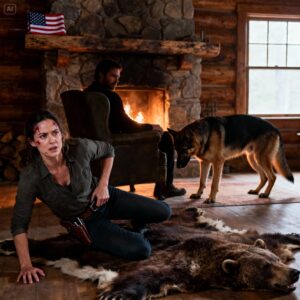
He went to an Alaskan cabin to silence the echoes of war. But in the heart of a blizzard, his dog sensed a secret the storm was sent to bury—a secret that would force him into one last fight.
The wilderness beyond Anchorage doesn’t ask for permission; it simply takes. It swallows roads, erases landmarks, and devours the faint, tinny signal of a cell phone until the only voice left is the wind. It was in this vast, unforgiving…
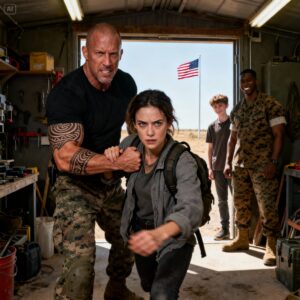
He told the quiet woman she didn’t belong on his elite sniper range. But when her backpack split open, a single photo fell out that made every decorated Marine in the room snap to a salute in shame.
The crack of a rifle shot was the only sound that made sense anymore. It split the dry California air over Marine Corps Base Camp Pendleton, a clean, percussive thunder that echoed off the brown hills and settled in your…
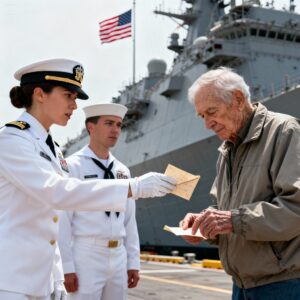
As the young officer moved to detain the 89-year-old man, she was blind to the truth. The very name of the warship she guarded was a whisper of the 70-year-old secret hidden on his faded patch.
The voice sliced through the humid air of the naval pier, a sharp tool meant to carve out immediate compliance. “Sir, I’m going to have to ask you to step away from the gangway. This area is for authorized personnel…
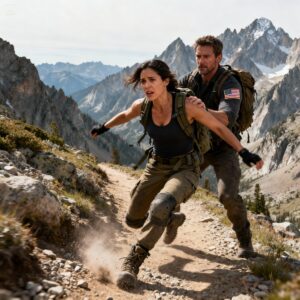
They chose a desolate mountain to be her grave, thinking a thousand-foot drop was the perfect, silent crime. But as she fell into the void, they made a fatal miscalculation about the kind of woman they just betrayed.
The mountain didn’t make a sound when it happened. There was no grand echo to mark the moment, no sympathetic rumble from the ancient stone. There was only the sharp, scattering kick of gravel, a sudden, violent silence where a…
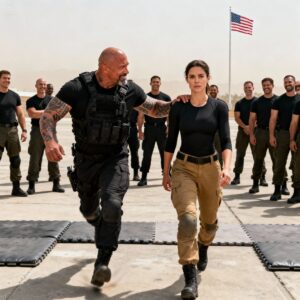
In a circle of 282 elite soldiers, two men decided to humiliate the quiet medic during a demonstration. They intended to break her spirit. Instead, in seven brutal seconds, they discovered a truth that broke them completely.
The wind that came off the Atlantic that morning had teeth. It wasn’t a breeze; it was a hard, scouring force that snapped across the open-air corridors of Naval Special Warfare Command Unit 7, carrying the briny scent of the…
End of content
No more pages to load