PART 1: The Storm and the St. Christopher Code
Chapter 1: The Fortress Crumbles
The 6:15 a.m. bus was a metal tomb of working-class exhaustion. The smell of stale coffee and industrial-grade diesel fumes was a familiar, suffocating cloud. Clare Jensen, with the fierce, taut energy of a runner before the starting gun, sat perfectly still. She wore her navy-blue suit like a shield, her back held rigidly away from the cracked, sticky vinyl seat, refusing to let the city’s grim reality touch her on this day of all days.
Today was the day she crossed the chasm.
The suit itself was a testament to sacrifice. Susan, her mother, a woman whose life was measured in gallons of bleach and hours spent on her knees, had found it at the ‘Second Chance’ thrift shop in a stroke of luck three weeks ago. It was a perfect, deep navy, slightly too big, but elegant. The tiny, almost invisible moth hole on the lapel had been repaired by Susan’s practiced hand, stitched shut with matching thread she’d saved from an old job. Last night, the ironing board had stood sentinel in their tiny living room for hours, Susan pressing the trousers until the crease was a clean, punishing line. At seventeen, Clare looked older, sharper, almost severe in the suit. Her fine blonde hair was tightly bound in a braid that emphasized the sharp angles of her cheekbones. She desperately hoped it made her look serious. She hoped it made her look worthy.
In her pocket, her fingers closed around a heavy, cold disk of metal: the St. Christopher medal. It was her great-grandfather’s. Sergeant Elias Thorne, a name synonymous with a kind of brutal, selfless heroism, had carried it through the relentless mud and terror of France in the war. He was the root of their family’s one enduring asset: the Jensen Grit. A code of conduct, whispered from mother to daughter, stronger than any college degree: “He never walked away from a fight and never, ever walked away from someone in need.” The metal felt like a ballast, a small, essential anchor against the churning anxiety in her gut.
The bus rattled its way across the Riverbend Bridge, the dividing line. Below, the Riverbend neighborhood—a sprawl of cracked sidewalks, storefronts plastered with payday loan advertisements, and buildings that looked utterly defeated. This was home, but it was also a prison. Clare wanted—no, needed—more. Her mother, Susan, cleaned the sprawling, beautiful, impossibly green-lawned houses of Gableton Heights. Susan left before dawn, her hands already smelling of industrial soap, and returned after dark, too tired to speak. “You are smarter than this place, Clare,” Susan had insisted, her own dream deferred now wholly resting on her daughter. “You are more than just a maid’s daughter. You go to that interview. You show them the Jensen grit. You earn what’s yours.”
The interview. It wasn’t just an interview. It was the Harrison Legacy Scholarship. A full, comprehensive ride to Gableton University—the gleaming castle on the hill, a world of ivory and opportunity her mother only saw from the inside of a mop bucket. For Clare, the scholarship was not merely tuition. It was a lifeline. It was a future where the smell of bleach would be replaced by the scent of old books and ambition.
The bus wheezed into the downtown exchange. The air immediately felt different, sharper, colder. The buildings were glass and steel, soaring testaments to power. The people who stepped onto the sidewalk wore tailored coats and carried purposeful leather briefcases. Clare checked her watch: 7:45 a.m. The interview was at 9:00 a.m. sharp in Founders Hall. Plenty of time. Just the cross-town bus to the university, and she’d be safe.
Then the sky opened up.
It was not a gentle spring shower. It was a sudden, violent, atmospheric ambush. The wind, trapped and funneled between the skyscraper canyons, howled, turning the rain into icy, horizontal shrapnel. The city’s carefully maintained facade collapsed in an instant. Umbrellas twisted into pathetic, broken wire cages. Streets became roaring torrents of freezing water.
Clare watched in a slow-motion nightmare as the exact crosstown bus she needed—the 7:55 AM—pulled away from the curb. It was packed, jammed with desperate commuters. Too crowded. It simply drove past, the back of the bus a wave goodbye to her entire future.
The next one was in twenty minutes. Twenty minutes. Her fifteen-minute buffer was gone. No, she whispered, a silent, panicked plea. She could not be late. Not today. She checked her phone. Twenty blocks to the university. A walk that would take thirty minutes—if she ran.
Clare pulled the collar of her thin coat tight, took a single, bracing breath, and stepped out of the shelter. The cold hit her like a punch. It was shocking, relentless, and all-consuming. She tucked her portfolio tighter against her chest, the leather an inadequate promise of protection. She began to run, head down, dodging the few other desperate souls on the sidewalk. Her mother’s old work flats, chosen for their sturdiness, were instantly soaked, the icy water seeping into her socks. Her navy suit jacket clung to her back, the beautiful crease in her slacks already surrendered to the damp, clinging chill. Just keep moving. Her tight braid was coming loose, wet strands whipping against her face. She was running on pure adrenaline and the knowledge that everything rested on this sprint. She was halfway there. 8:20 a.m. She might still make it. Even if she arrived looking like a pathetic, drowned creature, she might still make it.
Chapter 2: The Choice on East Ninth Street
The frantic, pounding rhythm of her running feet was the only sound Clare registered, a counterpoint to the howling wind. Each block was a victory against time, but each victory came at a terrible cost. The dampness had turned to a deep, penetrating cold. She felt it in her lungs, her fingers, and most ominously, in the sodden fabric of her suit. It was her armor, her only claim to respectability in the world of Gableton, and it was being steadily destroyed by the very elements she was trying to outrun.
8:25 a.m. The edge of the campus district was in sight, the skyline dominated by the ornate, Gothic spire of Founders Hall. Salvation was close.
Then, the anomaly.
Pulled awkwardly onto the curb, like a shipwrecked luxury liner, was a dark-green sedan. It was sleek, impossibly expensive, and looked completely out of place against the backdrop of industrial-grade grime and the storm’s fury. Its rear passenger tire was not just flat; it was hopelessly shredded. Next to it, struggling in vain, stood an old man. He was tall, thin, and the fine wool of his overcoat, now drenched, looked heavy and expensive. His shock of white hair was plastered to his head. He was wrestling with a car jack—a tool clearly as foreign to him as a scrubbing brush—his hands trembling with cold and frustration.
“Blasted thing!” he roared, kicking the flat tire in a moment of pure, impotent rage.
Clare’s forward momentum died. She slowed to a stop, her breath hitching in her chest. Her mind went nuclear: Keep running. You are late. You are thirty seconds from losing everything. This is not your problem. This is a problem for his driver, or his insurance, or his concierge. Not yours.
People surged past her, focused only on their destinations, their heads lowered against the wind. They saw the expensive car and the frustrated owner, and they averted their gaze, eager to stay on the correct side of the unwritten city code: Mind your own business.
Clare stood frozen, rain pooling in the folds of her coat. The old man leaned heavily against the car, his posture one of complete, miserable defeat. He looked utterly alone.
And then she felt it—the small, heavy piece of metal in her pocket. The St. Christopher medal. Her great-grandfather’s voice, filtered through her mother’s tired yet fierce love, echoed in the storm. Never walk away from someone in need. It was not a suggestion. It was the Code. The very Legacy of Duty she had written her essay about. To keep running would be to betray every word on that paper, every sacrifice her mother had made, the very grit she claimed to possess.
“Screw it,” she whispered again, the sound less a curse and more an act of self-immolation. She had already missed the bus. She had already ruined the suit. The future was now a terrifyingly thin probability. If she failed, let it not be because she walked past a desperate man.
She crossed the stream of water at the curb. “Sir!” Her voice was thin against the roar of the wind. “Sir, do you need help?”
The old man, startled, looked up. He saw the incongruity: a teenager, soaked, holding a prestigious university portfolio, clearly late for something monumental, offering help. “Young lady, go! You’ll catch pneumonia! I can’t get this jack to hold! The ground is too slick!”
“You have to brace it on the frame,” Clare said, moving forward with the instinctual knowledge of Riverbend survival. Her neighbor, Mr. Henderson, who ran a small-time chop shop, had taught her this crucial difference: the body would give; the frame was steel. She tossed her backpack to the side and carefully placed her precious leather portfolio on the back seat of the sedan, praying the interior’s quality would shield her life’s work.
Then she knelt.
The wet, gritty pavement of East Ninth Street immediately soaked through the thin material of her suit. The cold was shocking. But her focus narrowed. She was no longer Clare Jensen, scholarship applicant. She was a mechanic. She was Sergeant Thorne’s great-granddaughter, executing the mission.
“Let me,” she stated, her voice suddenly commanding. She ignored the old man’s protests, expertly repositioning the jack to find the solid steel frame. “Now, stand back, sir.”
He stood mesmerized as she began to crank the lever. The movement was practiced, smooth, and utterly efficient.
“Where did you learn to do that?” he asked, a stunned curiosity replacing his frustration.
“Riverbend,” she stated, grunting with the effort. “You learn to fix things, or you don’t go anywhere.”
The car lifted slowly. The rain hammered her back. Her fingers, stiff with cold, found the lug nuts. They were tight—too tight. She put her whole body into the effort, straining until her knuckles were white. The cheap thread on her suit trousers began to pull. Tear.
“This is ridiculous!” the old man exclaimed, holding a small, decorative umbrella uselessly over her head. “You’re destroying your clothes! You have an interview!”
“They’re just clothes,” Clare repeated, the words tasting like ash. The suit was her armor, and it was being shredded in the dirt of the street she was trying to leave behind forever. She finally broke the last lug nut free, pulled the heavy, flat tire off, and rolled it away.
She grabbed the spare, a small, temporary “donut,” from the trunk. As she did, the old man’s gaze fell upon the portfolio she had placed in his car.
“You have an interview, don’t you?” he repeated, his tone shifting from frantic to somber.
“Yes, sir,” she whispered. Her hands were now completely encased in black, cold grease and road grime. She could feel a single, hot tear trace a clean line through the dirt on her cheek.
He glanced at his simple, elegant gold watch. “My heavens, child, it’s 8:45.”
Clare stopped moving. The tire was halfway on, but she froze. Twenty-five minutes. Gone. The time buffer was not just gone; the deadline was now a thin, impossible line. She would never make it. The rain and wind faded into a dull roar. All she could hear was the frantic, panicked drumbeat in her chest. It was over. Her mother’s hope. Her chance. All lost on the cold pavement of East Ninth Street.
“I… I’m late,” she whispered, the confession a physical weight.
The old man’s face, for the first time, softened completely. His frustration vanished, replaced by a deep, unsettling comprehension. “Finish the tire, young lady,” he said, his voice quiet, demanding. “We’re not done here.”
Clare nodded, her eyes burning with a new, grim determination. She lifted the spare, locked it in place, and tightened the lug nuts with a final, vengeful strength. She lowered the jack. She stood up.
She was a complete, profound wreck. Her hair was a tangled mess, her face streaked with dirt and despair. Her navy-blue suit was stained black with grease and mud, a ragged, ruined piece of cloth.
The old man looked at her, his eyes deep and intense. “What is your name?”
“Clare Jensen.”
“Well, Clare Jensen,” he said, opening the driver’s side door. “Get in the car. I’ll take you to your interview.”
[End of Part 1 – Facebook Caption Content]
Read the full story in the comments.
PART 2: The Legacy of Duty
Chapter 3: The Four-Minute Verdict
Clare hesitated at the open car door, a vision of filth facing a bastion of unblemished luxury. “Sir, I can’t. I’m—I’m a mess. I’ll ruin your car.” The thought of touching the pristine leather with her grease-blackened hands was a final, profound humiliation.
“I’ve seen worse,” the old man insisted, a new, almost commanding note in his voice. “My driver is out sick, and I made you late. It’s the least I can do. Get in.” He gave her no time to argue. Clare finally surrendered, perching on the absolute edge of the smooth, rich leather passenger seat. She dripped onto the floor mat, which instantly darkened, a stain spreading like a spreading shame. The car smelled like old, expensive wood and polished metal—a world away from the diesel and grime of her daily commute.
The old man—whom she now saw was simply a kind, elderly gentleman in a very expensive coat—got in, started the engine with a low, confident purr, and pulled smoothly into the downtown traffic. The powerful wipers fought a losing battle with the storm.
“Where at Gableton are you headed?” he asked, glancing at her.
“Founders Hall,” Clare whispered.
He nodded, driving with an easy, practiced authority that belied his earlier struggle with the jack. They drove in silence for a tense minute, the only sound the wipers and the rushing rain.
“You know,” the old man said, his eyes on the road. “You stopped. No one else did.” He paused, letting the implication hang heavy in the air. “You knew you’d be late. You knew you were ruining your clothes, your only good suit. You stopped anyway.”
Clare could only stare at her ruined hands. The words felt too big, too complex to articulate. “My great-grandfather,” she finally managed, the familiar mantra a comfort. “He always said… you helped the person in front of you.”
The old man was silent for the remainder of the drive. The expensive sedan glided up the curving, pristine drive of the university campus. The manicured lawns were an obscene shade of green, even under the gray sky. Founders Hall rose before them, a magnificent, ivy-covered cathedral of academia.
He pulled to the curb. His watch read 9:02 a.m.
“Thank you, sir,” Clare mumbled, fumbling for her portfolio.
“Wait,” he commanded. He was looking at her again, really looking at her—not at the mess, but at the girl beneath the grime. His expression was impossible to read, a mixture of deep thought and something akin to regret. “Good luck, Clare Jensen.”
Clare didn’t wait. She bolted, sprinting up the wide marble steps. Her wet shoes squeaked a desperate, frantic rhythm against the polished stone. She pushed open the heavy oak doors and stumbled into the lobby.
The lobby was a sanctuary of silence and wealth. The floor was gleaming, spotless marble. The ceiling soared two stories high. It was warm, and it smelled of lemon polish and old, precious books. A woman sat at a massive, imposing mahogany desk. She was the gatekeeper: perfectly tailored in a gray suit, her hair pulled back into a flawless, unassailable bun.
The woman looked up. Her eyes, cool and assessing, traveled slowly, deliberately. They started at Clare’s soaking, wild hair, descended to her grease-stained, torn suit, and finally rested on the puddle forming rapidly at her feet. The expression was one of pure, surgical disapproval.
“Can I help you?” the woman asked. Her voice was as cold and sharp as the rain outside.
“I—I’m here for the Harrison scholarship,” Clare stammered, raising a hand to wipe a wet strand of hair from her face. The action only smeared a thick streak of black grease across her cheek. “I’m Clare Jensen. My interview was for 9:00 a.m.”
The woman, whose name plate read Evelyn Price, Foundation Administrator, glanced at the large, silent clock on the wall. It was now 9:04 a.m.
“It is 9:04 a.m., Miss Jensen.”
“I know! I’m so sorry,” Clare pleaded, her voice cracking. “The storm, the bus, and then—there was a man. He had a flat tire, and I stopped to help him. I couldn’t just leave him.”
Miss Price raised a single, pale, perfectly manicured hand. The gesture cut Clare off mid-sentence.
“The Harrison Foundation values two things above all, Miss Jensen. Excellence and punctuality. Punctuality, as the saying goes, is the courtesy of kings. It is also the basic, non-negotiable requirement of our scholarship recipients.”
“Please,” Clare begged, the dignity she had carried across the bridge now shattered. “I’m here now. I just—I did the right thing.”
Miss Price offered a thin, tight smile. “That may be, but the ‘right thing’ did not get you to your interview on time. The 9:00 a.m. slot is over. The panel has already moved on to the 9:15 candidate. I am afraid you have missed your opportunity.”
The finality of it was a physical blow, a crushing weight that stole the air from her lungs. Missed her opportunity.
“But… I did the right thing,” Clare whispered again, the question now directed at the cruel absurdity of the world itself.
“That may be,” Miss Price repeated, already turning back to her desk. “We have a very long list of qualified candidates who are on time. And I am afraid you’ll have to leave. You are dripping on the floor.”
Clare stood for one second more, suspended in pure, burning shame. The rejection was not just about the clock; it was about the grime, the mess, the drip on the floor. It was about her place. She was a maid’s daughter, and she had just confirmed their worst prejudice. With a squeak of her wet, defeated shoes, she turned and walked back out the heavy oak doors, back into the ceaseless, mocking rain.
Chapter 4: The Walk of Shame
The rain, which had briefly slowed to a drizzle during the frantic drive, now seemed to gather its strength for one final, miserable downpour. It was heavier, colder, as if the sky had waited for her defeat to mock her thoroughly. Clare stood on the marble steps of Founders Hall, the grandeur of the building now feeling like a monumental tombstone marking the burial of her future. She was numb. The cold of her wet clothes had seeped into her very bones, but it was nothing compared to the deep, aching chill in her heart. She had failed. A simple, brutal fact. She had failed her mother. She had failed herself.
She looked down at her hands, still black with grease and road grime. The rain was washing some of the dirt away, creating small, filthy rivulets that ran down her wrist and disappeared into the shredded cuff of her suit jacket. She looked into the dark, reflective glass of the oak doors and saw a ghost of a girl: blonde hair a tangled, wet disaster; the grease smear on her cheek looking less like dirt and more like a fresh scar. The sharp, serious young woman she had desperately tried to be this morning was gone. In her place was a wet, dirty girl from Riverbend, just as Miss Price had implicitly judged her.
Clare pulled the St. Christopher metal from her pocket. It was cold, heavy, and silent. You helped the person in front of you.
“A lot of good that did me, Grandpa,” she whispered to the empty, echoing air. Her voice cracked, utterly defeated. She forced her legs to move. There was no point in running now. Her future was gone. She walked slowly, one step at a time, down the steps, each movement heavier than the last. The cross-town bus stop was only a block away, but it felt like a marathon.
She huddled under the small, inadequate plastic shelter. The wind whipped the rain in sideways, making a mockery of the structure. Other students waited, too—impeccably dressed in expensive raincoats, carrying thick Gableton University book bags. They glanced at her, their faces carefully, coldly blank, and then quickly looked away. She was an embarrassment. A failure. A problem they did not want to acknowledge.
When the bus finally arrived, it was warm inside. The sudden heat hit her cold, clammy skin and made her shiver uncontrollably. Her fingers, stiff and clumsy, fumbled for her bus pass. She found a seat in the back, the vinyl cracked but dry. She stared out the window, watching the beautiful, ivy-covered campus—the life she was supposed to have—slide by, then disappear. She had dreamed of walking these paths, sitting in those libraries. Now, she was just watching the dream dissolve.
The bus crossed the Riverbend Bridge again. The change was stark, visceral. Glass and steel gave way to aging brick and tired plywood. The perfect green lawns surrendered to patches of muddy grass. The shame was a crushing, physical weight in her chest.
How was she going to face her mother? Susan had woken at 4:30 a.m. to make her a special breakfast: scrambled eggs and the last of the strawberry jam—for energy, she’d said. Susan had skipped her own breakfast. Susan had spent eight dollars—money that should have gone to the electric bill—to buy that ruined suit. Clare felt fresh tears mix with the drying grime on her face. She wiped them away, leaving new smears.
She got off the bus three blocks from their apartment building. The rain had finally settled into a miserable drizzle. The sky was the unforgiving color of wet cement. The building was old. The lobby smelled of damp, ancient carpet and boiled cabbage. The elevator had been broken for six months. She walked up the three flights of stairs, the heavy air pressing down on her.
She stood outside their apartment door, 3B. She could hear the faint, comforting sound of the old kitchen radio. She raised her hand to knock, then stopped. She couldn’t do it. She couldn’t face the hopeful question in her mother’s eyes. Instead, she slid down the wall, sinking onto the cold, dusty hallway floor right outside her own door. She pulled her knees to her chest, her ruined, soaking suit clinging to her, and finally, silently, let herself cry. She cried for the scholarship, for the ruined suit, and most of all, for the look she knew would be on her mother’s face. She cried because she was so profoundly, irrecoverably cold.
She wasn’t sure how long she sat there—five minutes, ten. Then, the door to 3B opened.
Susan Jensen stood there. She was still in her gray work uniform, her shift at the Heights not starting until noon. Her hair, the same faded blonde as Clare’s, was pulled back in a simple clip. She looked at her daughter. She saw the wet hair, the suit stained black with grease and mud, and the silent, shaking tears.
Susan did not ask what happened. She didn’t yell. She didn’t even cry out. She just stepped into the hallway, knelt down on the dirty, communal carpet she had scrubbed herself more than once, and wrapped her arms around her daughter.
“Oh, honey,” Susan whispered, her voice a rough expression of pure, matching pain. “You’re freezing.” She pulled Clare to her feet and brought her inside, locking the door on the cold, brutal hallway.
Chapter 5: Character vs. The Electric Bill
The small apartment, though old and worn, was spotless—a stark monument to Susan’s tireless work ethic. “Go,” Susan commanded, her voice firm now. “Hot shower. Right now.” Clare, her teeth chattering, simply nodded and obeyed. Twenty minutes later, she emerged wrapped in her worn, familiar bathrobe. Her hair was clean but damp, and the physical cold was gone, replaced by the relentless, gnawing dread of what came next.
Susan was in the tiny kitchen. A cup of tea was waiting: hot, sweet, and milky, exactly how Clare needed it. Clare sat at the small kitchen table, its formica surface worn thin in spots. Susan sat across from her, folding her hands on the table. Her knuckles were red and chapped—a roadmap of seventeen years of cleaning.
“Okay,” Susan said. “Tell me.”
So Clare told her. She narrated the entire, agonizing sequence of events: the bus pulling away, the desperate run in the storm, the sleek dark car, the old man, the hopelessly flat tire, the mechanical execution of the job, the grease, the donut spare. “He drove me there, Mom,” Clare said, her voice quiet with self-condemnation. “He drove me right to the door, but I was late. Four minutes.”
Susan closed her eyes, just for a second.
“And the woman at the desk?”
“Miss Price. She wouldn’t let me in. She said my time was over. She said… she said I was dripping on the floor.” Clare’s voice broke on the final, damning phrase. She stared at her own hands, now clean, but she could still feel the phantom grease. “I ruined the suit, Mom,” she whispered, the final confession. “I ruined it. I’m so sorry.”
For a long, painful moment, the only sound was the incessant drip of the kitchen faucet—a tiny, mocking clock. Finally, Susan looked up. Her eyes were not angry. They were something else: complex, defiant.
“You stopped,” Susan said. It wasn’t a question, but a profound statement.
“What?”
“You were late. You were running in a storm. Your whole future was on the line. And you saw an old man, a complete stranger, in trouble, and you stopped.”
“Yes, I did. And I missed it, Mom. I missed everything.”
“Clare,” Susan leaned forward, reaching out to take her daughter’s clean, warm hand. “You did not miss everything. The scholarship? Yes, that would have been good. That would have made things easier. But that is just money, Clare. That is just a way to pay for school. It is not… it is not your character.”
“I don’t understand.”
“Your great-grandfather, Elias,” Susan said, her eyes suddenly blazing with pride. “He didn’t get that medal for being on time. He got it because when everyone else was retreating, he ran toward the trouble to pull two men to safety under fire. He did what was right, not what was easy.” She squeezed Clare’s hand, a fierce, bone-deep squeeze. “You have that in you. You have that Jensen grit. You saw someone in trouble and you didn’t walk away. You got your hands dirty. You helped. I have never, ever been more proud of you than I am right this second.”
Tears welled in Clare’s eyes again, but this time they were different—tears of exhaustion and relief, not shame. “But what do we do now?” The future remained a blank, terrifying wall.
“Now,” Susan said, managing a small, weary smile, “now I go to work. I have to clean the Graham family’s mansion. And you? You are going to call the community college. We’ll find a way. We always find a way.” Susan stood up, grabbing her keys and her thin coat. She paused at the door, her resolve firm. “You’re a good person, Clare Jensen. Don’t ever let anyone, not even some fancy woman in a gray suit, tell you otherwise.”
Clare sat alone, the hot tea slowly turning cold. The warm spark of her mother’s pride was there, but it was fighting a losing battle against the cold, damp reality of their situation. Character was important. But character didn’t pay the rent.
She walked into her tiny bedroom and looked at the navy-blue suit. It lay in a miserable heap on the floor, heavy with water, stained irrevocably black at the knees and sleeves. She carried it to the sink, futilely running cold water over the fabric, but the grease had set, smearing rather than washing away. She was trying to scrub away her failure, but it wouldn’t budge.
She finally gave up, leaving the ruined suit in a sad pile. “Okay,” she said to the empty apartment. Community college.
She sat back down with her ancient, slow laptop. The Gableton University website loaded, showcasing smiling students on a sunny green lawn. She slammed the tab shut. She typed in Riverbend Community College. The site was plain, blue, and white—utilitarian. Even this, she realized, would be hard. Application fees, books, bus fare. Her mother’s words echoed: We always find a way.
Clare opened a new tab: Jobs near Riverbend. 17-year-old. Fast food. Stocking shelves. Cleaning. The dream of Gableton, of lecture halls and ivy, was dissolving into a gray future of night classes and exhaustion, a future just like her mother’s.
Just as she was about to close the laptop, the metal mail slot in the front door clattered. Bills for her mother, a grocery flyer, and one thin, white envelope. It was addressed to Susan Jensen. In the clear window, two words were visible, printed in harsh, accusing red ink: FINAL NOTICE.
Clare’s breath hitched. She didn’t have to open it. She knew: the electric company. They had been finding a way for three months, paying just enough. This notice was the final verdict. The scholarship hadn’t just been an escape for her; it had been their lifeline. It would have freed her mother’s paycheck to cover the bare necessities. She hadn’t just missed her interview; she had failed to save them. The weight of the old man’s flat tire suddenly felt unbearable. She had traded her family’s security for a stranger. The spark of pride was gone, replaced by cold, sharp dread.
Chapter 6: The Billionaire’s Stain
Meanwhile, across town, Robert Graham, the man with the flat tire, sat behind his massive, dark wood desk in his penthouse office. The glass walls offered a panoramic view of the city he owned, still gray and gleaming from the cleansing rain. He was no longer the frustrated old man on East Ninth Street; he was Robert Graham, the head of the Harrison Foundation, a titan of industry whose decisions moved markets.
His chief of staff, Thomas, a man in a perpetually sharp suit, stood stiffly by the window. “Mr. Graham,” Thomas began, his voice clipped. “The board call is in five minutes. And may I ask, what happened to you? Your driver should have—”
“My driver is fine, Thomas,” Robert interrupted, shrugging off his still-damp wool coat. He walked to the desk, his eyes catching on a small, insignificant smear of black on his expensive linen cuff—a permanent, physical reminder of the morning’s interlude. “I had some car trouble.”
“Car trouble, sir? You should have called. We would have sent a motorcade immediately.”
“It’s handled,” Robert said, ignoring the flashing light on his phone. He looked at the smear of grease. “Thomas, I need you to find someone for me. A young woman. Her name is Clare Jensen.”
Thomas, ever the professional, typed the name into his tablet. “Clare Jensen. And where might I find her?”
“I have no idea,” Robert admitted, looking out at the city. “But she was applying for the Harrison scholarship this morning at Gableton.”
Thomas’s fingers stopped moving. The tablet screen reflected in his eyes. “The Harrison scholarship? Sir, that’s—that’s your scholarship. The one you founded.”
“Yes,” Robert Graham said, a small, complex smile playing on his lips. “It is. Get me Evelyn Price on the line. And then, find me everything you can on Clare Jensen. Start with her application file.”
He was driven by a gnawing curiosity that had metastasized into an imperative. The memory of the girl, kneeling in the freezing mud, destroying her only good clothes for a complete stranger, haunted him. Evelyn Price would have seen the perfect grades, the impeccable references, the powerful essay. But she would have missed the essential truth.
Robert was put on hold for a moment. He walked over to a heavy silver-framed photograph on his credenza. It was a picture of a smiling, dark-haired woman—Eleanor Harrison Graham, his late wife, the namesake of the foundation. The Harrison Legacy was her idea. She believed that true character was found not in success, but in sacrifice. She would have stopped in the rain.
The phone clicked. Evelyn Price was on the line, her voice instantly sharp and defensive. “Mr. Graham, I was just about to call you. Regarding the 9:00 a.m. candidate, Miss Jensen. I’m afraid she was late. Four minutes, sir. And entirely ill-prepared. She was… covered in filth. I had no choice but to send her away.”
“And you sent her away,” Robert stated, his voice dangerously soft.
“Sir, the rules of the foundation are clear,” Evelyn’s voice rose, brittle with indignation. “We cannot make exceptions. It would be unfair to the candidates who followed the rules.”
“The rules?” Robert repeated, looking down at the grease stain on his cuff. “Tell me, Evelyn, did you look at her application?”
“I, of course, reviewed all the finalists. Her grades were excellent, but her background, Riverbend, it’s… it’s what, Evelyn?”
“It is not typical for a Harrison Scholar. We must maintain standards.”
“You mean she didn’t go to the right prep school? Her mother doesn’t attend the right charity galas?”
“Mr. Graham, I only mean that she was ill-prepared,” Evelyn snapped. “She was covered in filth. It was a sign of disrespect. She clearly does not possess the poise we expect.”
Robert felt a cold, hard anger ignite in his chest. “Poise, I see. A young woman on her way to the most important meeting of her entire life stops in a full-blown storm. She stops to help an old man—a complete stranger—with a flat tire. She destroys her clothes. She gets covered in filth and grease. She does this knowing she will be late, knowing she will probably lose her one, single chance. And she does it anyway.”
There was a dead silence on the line. Evelyn was finally, profoundly quiet.
“Evelyn,” Robert continued, his voice a low, lethal rumble. “That is not a lack of poise. That is character. That is exactly what the Harrison Legacy is supposed to be about. It is not about poise. It’s about duty.”
“But sir, did you read her essay?”
“Read it,” Robert commanded, the word a steel trap closing. “And then I want you to take a two-week paid leave of absence. Effective immediately. Re-evaluate your definition of standards while you are gone. We will speak when you return.” He hung up, cutting off her stunned protest.
Chapter 7: The Unseen Ledger
Thomas, standing by the window, didn’t move a muscle, but his face registered a flicker of awe. He knew that the sudden, forced leave of absence for Evelyn Price would send seismic shockwaves through the entire foundation and the Gableton elite.
“Thomas,” Robert said, his energy now focused, intense. “What did you find on Elias Thorne, her great-grandfather?”
Thomas quickly accessed his tablet. “Sergeant Elias Thorne, Third Infantry Division. Awarded the Distinguished Service Cross, posthumously. August 1944, France. His platoon was pinned down in a farmhouse. The farmhouse was hit by mortar fire and caught fire. Thorne… he was wounded, sir, but he ran back into the burning building twice. He pulled two men out. He died going back in for a third.”
Robert closed his eyes, the memory of the cold St. Christopher medal and the girl’s whispered mantra converging: You helped the person in front of you.
“The Legacy of Duty,” Robert said, his voice thick with emotion. “That was the title of her essay.”
He stood up and walked back to the window. The rain had cleared, and the city was shining, washed clean. “She wrote about him,” he murmured. “She wrote that legacy isn’t about what you leave behind. It’s about what you do, right now, when no one is looking.”
He turned back to Thomas, his eyes clear and sharp. “Sir, Thomas, never mind the hospital board meeting. Cancel it. I want the car. You’re driving. I want to go to Riverbend.”
Thomas’s face remained a professional mask, but his internal alarm bells were screaming. Robert Graham never canceled a board meeting. “Cancel it, sir? But the new hospital wing is contingent on—”
“They’ll understand,” Robert stated, grabbing the coat he had worn that morning. “Find out where Susan Jensen works. Susan Jensen. The mother.”
“But… why?”
“Just find out, Thomas. Now. And get the car. We’re going to East Ninth Street.”
The black sedan, now spotless and driven with tense, precise caution by Thomas, glided through the streets. Robert sat in the back, silent, watching the world change. The glass towers vanished. The manicured perfection gave way to the tired, brick buildings of Riverbend. This was the landscape of scarcity, the world that had shaped Clare Jensen. He saw the corner stores, the pawn shops, the boarded-up storefronts. He saw the desperation in the faces waiting for buses—the same slump of the shoulders he had seen on his own driverless face that morning.
“We are here, sir,” Thomas said quietly, pulling the car to the curb in front of a three-story brick apartment building. The sign, the Riverbend Arms, was cracked plastic.
“Wait in the car, Thomas.”
“Sir, I must insist—”
“Wait in the car.” Robert opened the door and stepped out. He smoothed his wool coat. He pushed open the flimsy metal and glass door. The lobby smelled of damp carpet and boiled cabbage—the scent of survival. He saw the broken elevator and took the stairs, his footsteps echoing in the cinderblock stairwell. He felt the climb in his knees, a sharp, unwelcome reminder of his age and privilege.
He reached the third floor and found 3B. He stood outside the door, the exact spot where Clare had sat only a few hours earlier. He raised his hand to knock, but his gaze fell. Sticking out of the mail slot, angled just so, was the small, white envelope. He could clearly see the red, accusing words: FINAL NOTICE.
He didn’t touch it. He just stared. He thought of Evelyn Price and her complaint about standards and poise. He thought of the girl, covered in grease, sacrificing her chance to avoid this red ink. The ledger of duty, sacrifice, and survival had never been so starkly presented.
He knocked.
Inside, Clare was still staring at the electric bill on her kitchen table, running the impossible numbers in her head. The knock made her jump. Who was that? Landlord? They never knocked.
The knock came again, firmer.
“Who is it?” she called out, her voice shaky.
“I’m looking for Clare Jensen.” The voice was deep, old, and horribly familiar.
Clare’s blood ran cold. She slowly crept to the door and looked through the peephole. It was him. The old man from the rain. The man with the flat tire. He was clean now. His white hair was perfectly combed, and his wool coat was dry. He looked powerful, intimidating.
What was he doing here? Had she damaged his car? Was he demanding payment for the ruined tire?
She opened the door just a crack, the security chain still on. “Sir?”
The old man didn’t smile. His eyes were intense. He looked past her, into the small, clean apartment, his gaze landing on the ruined navy suit lying in a pitiful heap by the sink.
“Miss Jensen,” he said. “Clare. May I come in?”
“I—what is this about? How did you find me?”
“I have… some resources,” he said simply. “I believe I made you late for your interview.”
“It’s—it’s fine,” Clare said, pulling her bathrobe tighter. “It’s over.”
“No,” he said. “It’s not. Please. I promise I am not here to cause trouble.”
Clare hesitated. The Jensen code was strong, but her mother’s caution about strangers was equally vital. Yet, he wasn’t a stranger. She had knelt in the mud for him. She slowly unhooked the chain and opened the door.
Chapter 8: The True Legacy
Robert Graham stepped into the small apartment. He was a large, imposing figure, and the tiny living room seemed to instantly shrink around him. He scanned the room: worn furniture, immaculate surfaces, the small framed photo of Susan holding a baby Clare. His gaze returned, inevitably, to the ruined suit.
“Please sit,” Clare managed, gesturing toward the faded sofa.
“Thank you. No,” Robert said. He turned to her, his expression grave. “The interview you missed. It was for the Harrison Legacy Scholarship.”
“Yes.”
“I am on the board of the Harrison Foundation,” he said.
Clare’s heart slammed against her ribs. The room tilted. “You’re… what?”
“I’m afraid,” he continued, his voice gentle, “that I am the man who founded it. My late wife was Eleanor Harrison. My name is Robert Graham.”
Clare couldn’t breathe. The name—Robert Graham—slammed into her. Graham. The Graham Estate. The richest, most powerful family in the state. The man whose tire she had changed was the man who was the scholarship.
“The—the woman at the desk. Miss Price.”
“Miss Price has been asked to take a leave of absence,” Robert said, his voice turning to cold steel. “She does not, it seems, understand the meaning of the word legacy.” He reached into his coat pocket and pulled out a folded piece of paper—a printout. “I read your essay, Clare. The Legacy of Duty. You wrote about your great-grandfather, Sergeant Elias Thorne. He ran into a burning building,” Robert said, his voice a low, gravelly rumble. “He did it to save his men. He did what was right, not what was easy.”
He looked from the essay in his hand to the ruined suit by the sink, covered in grease and mud.
“You had a choice this morning. You could have kept running. It would have been the smart thing. The easy thing. You would have been on time.” He took a step closer. “But you didn’t. You saw someone in trouble and you ran towards the trouble. You got on your knees in the mud and you fixed it. You, Clare Jensen, have the Jensen grit. You have the Thorne Legacy.”
Clare began to cry again, silent, overwhelming tears. She wasn’t cold, she wasn’t ashamed—she was utterly undone by recognition.
“I—” she started, just as the apartment door opened with a click.
It was Susan. Mrs. Davies, the housekeeper at the Graham Estate, had let her leave early, citing a “domestic matter.” She walked in, tired, her work bag slung over her shoulder. “Clare, honey, I—”
Susan stopped dead. She saw her daughter crying. Then she saw the man standing in her living room. It was him. The man from the photograph on the mantelpiece in the Graham library. The man whose floors she had just spent four hours polishing.
“Mr. Graham,” she breathed. The name was a gasp of pure, dizzying shock.
Robert turned, his face softening completely. “Mrs. Jensen,” he said. “Susan. I believe we’ve met. Although you have a daughter who changes attire much faster than I do.”
Susan’s hand flew to her mouth. She looked from Robert to Clare, then back to Robert. “You… You were the old man,” she whispered. “In the rain with the flat tire. You were him.”
“I was,” Robert confirmed.
Susan started to laugh—a high, thin sound bordering on hysteria. “She missed the scholarship! She missed the Harrison Scholarship because she was helping Mr. Harrison Graham!”
“It appears so,” Robert said, a full, warm smile finally reaching his eyes. “I need to sit down,” Susan mumbled. Clare rushed forward and helped her mother to the sofa.
Robert Graham looked at the two of them, the small, strong family. He saw the final notice sticking out of the mail slot. He saw the worn-out sofa.
“Clare,” he said. “The panel did not get to interview you. But I did. My interview was on a wet sidewalk on East Ninth Street, and you passed.” He reached into his pocket and pulled out a long, crisp white envelope. It was from the Harrison Foundation.
“The scholarship is yours,” he announced. “Full tuition, room and board, books, and a living stipend for all four years.”
Clare sobbed—a loud, ragged sound of pure relief. Susan held her hand, tears streaming down her own face.
“But that’s not all,” Robert continued, turning to Susan. “Susan, you have been cleaning my floors for three years. I think that is a waste of your talent. My head housekeeper, Mrs. Davies, is retiring next year. She has asked me to train her replacement. I would like to offer you the position of Household Manager for the Graham Estate. Effective immediately, you will be in charge of the entire staff. The pay is considerably more than you are making now, and it comes with a dedicated house on the estate grounds.”
Susan looked at him, completely stunned. “A house? A salary and—”
“And,” Robert said, his voice final, “I will be paying for a new suit for Clare. And for a full detail on my car. She left a terrible amount of mud in it.”
For the first time all day, Clare laughed. “Thank you,” she whispered, standing up. “Thank—”
“No,” Robert cut her off, walking over to her. “Thank you, Clare. I am a very rich man. I have spent my life building things, buying things. But today, you reminded me what legacy truly means. It isn’t a building with your name on it. It’s this.” He pointed to the St. Christopher medal, which Clare now clutched. “It’s the choice you make when no one is watching. Your great-grandfather would be… he is very proud of you.”
Robert nodded to them both. “Thomas will be in touch tomorrow with all the paperwork. Susan, I expect to see you at the main house on Monday. Not late,” he added, with a wink.
He let himself out. Clare and Susan sat in the silence. The apartment was the same, but everything had changed. Clare looked at the kitchen table. The final notice was still there, a flash of red. She picked it up, looked at her mother—who was smiling a slow, wide smile that lit up her whole face—and walked over to the trash can. She dropped the envelope in.
Three months later, the light in the Gableton University Library was warm. It smelled of old paper and the faint, sweet scent of coffee. Clare Jensen turned a page in her textbook, Principles of Macroeconomics. Three months ago, she would have found the words intimidating. Now, she found them interesting. She wore a simple knit sweater and jeans. The severe braid was gone, replaced by soft, damp curls. She was still serious, still focused, but the sharp, nervous edge had vanished. She was a Harrison Scholar.
A text message lit up her phone. It was from her mother. Dinner at 6:00. Don’t be late. Mrs. Davies taught me how to make a roast.
Clare smiled. She packed her books into a sturdy Gableton book bag. Her fingers brushed against the small, heavy lump in an inner pocket: the St. Christopher metal. She carried it, not as a shield, but as a reminder.
She got on the clean, quiet cross-town bus. This time, she rode not to Riverbend, but to the gates of Gableton Heights. The gates were large and black, but they were open. She walked past the main Graham house, waving to the security guard. She continued down a smaller, winding path to a row of neat, clean cottages—the senior staff housing. She stopped at number three. It was white with a dark green door, flowers blooming in the window boxes.
She opened the door. The apartment in Riverbend had always smelled of bleach and worry. This house smelled like roast beef and safety.
“Mom!” Clare called out.
“In here!” Susan’s voice came from the kitchen.
Clare walked in. The kitchen was bright, looking out over a green, rolling lawn. Susan Jensen stood at the counter. She was not in a gray maid’s uniform. She wore tailored black slacks and a crisp white shirt. Her hair was in a neat, professional bun. She looked calm. She looked like a boss.
“How was class?” Susan asked, basting the roast. She moved with a new, unhurried confidence.
“Professor Davies is tough,” Clare said, leaning on the counter.
“Good,” Susan said. “Tough is how you learn. Now, go set the table and wash your hands. This isn’t Riverbend. We use the good forks.”
Susan was thriving. As Household Manager, she managed a staff of twelve, handled the estate’s payroll, and organized events for Mr. Graham. The deep, worried lines that had lived around her eyes for seventeen years were finally beginning to fade.
They sat at a small, solid oak table. Three months ago, their dinners had been at a wobbly formica table with the sound of sirens outside. Now, it was quiet.
“Mr. Graham is having the Governor over next week,” Susan said, cutting her meat. “He asked me to sit in on the menu planning.”
“That’s amazing, Mom.”
“It’s just work,” Susan said, but she was smiling. She looked at her daughter. “You know, I still think about that morning. The rain.”
“Me, too,” Clare whispered.
“If you hadn’t stopped for him,” Susan said, putting her fork down. “If you had just kept running…”
“I would have been on time,” Clare finished.
“Yes. You would have been on time. You might have gotten the scholarship. But we wouldn’t be here. We would still be hoping to escape Riverbend,” Susan said, her voice soft. She looked around the warm, safe kitchen. “We would not be home.”
After dinner, Clare helped with the dishes. She pulled the St. Christopher metal from her pocket and set it on the windows sill above the sink. It caught the light of the setting sun, gleaming. She had earned this. They both had. And that’s where Clare’s story—her new, true legacy—began.
News

Detuve el funeral de mi único hijo frente a cientos de personas porque descubrí un secreto aterrador que su joven esposa intentó enterrar con él. Nadie imaginaba que debajo de sus lágrimas y su elegante vestido de luto se escondía una traición imperdonable. Esta es la historia de cómo una madre mexicana, destrozada por el dolor, desenmascaró a una viuda negra frente a todos, arriesgando su imperio millonario para buscar justicia. Lo que descubrí te dejará helado y te enseñará que el diablo a veces tiene cara de ángel y una sonrisa perfecta.
Part 1 Estaba de pie frente al altar de la funeraria más exclusiva del Pedregal, aquí en la Ciudad de México, con la mirada clavada en el ataúd de caoba que guardaba el cuerpo de mi único hijo, mi Daniel….

El día de mi boda, con 300 de las personas más influyentes y poderosas de México mirándome, rechacé a mi hermosa prometida en pleno altar. En su lugar, elegí a una mujer indigente, descalza y cubierta de polvo que había aparecido de la nada en los portones de mi mansión. Cuando los invitados escucharon la escalofriante grabación y descubrieron quién era ella realmente, y la imperdonable atrocidad que mi prometida le hizo hace 10 años, el jardín entero se hundió en lágrimas. Esta es mi desgarradora historia de traición, mentiras de la alta sociedad y una verdad que destruyó mi mundo para siempre.
PARTE 1 Capítulo 1: El Reflejo del Vacío Me llamo Eduardo Montenegro, y tenía 34 años la mañana del día de mi boda. El reloj digital sobre el tocador de caoba marcaba exactamente las 6:00 a.m. La luz del sol…

FINGÍ MI MUERTE para poner a prueba a mi familia. Mientras mi cuerpo seguía en la cama del hospital, escuché a mis hijos celebrar y pelearse por mi herencia. Lo que hice al despertar les arruinó la vida para siempre.
Parte 1 Capítulo 1: El cadáver que escucha —¡Por fin! El viejo ya se fue. La voz de mi hijo mayor, Julián, resonó en el pasillo del hospital. Fuerte. Llena de una emoción asquerosa, cruda y vibrante. Como si acabara…

Contraté a una joven humilde para que limpiara mi mansión y me sirviera el desayuno todos los días. Era callada, trabajadora y tenía una mirada que me helaba la sangre porque me resultaba dolorosamente familiar. Durante semanas caminó por mi casa, arregló mis cosas y comió en mi cocina, hasta que un papel arrugado me reveló el secreto más oscuro de mi pasado. Esta es la historia de cómo la vida me cobró la peor de mis cobardías.
Parte 1 Capítulo 1: El eco de un fantasma Simplemente pensé que estaba contratando a una nueva empleada doméstica. Jamás, ni en mis peores pesadillas o en mis sueños más profundos, imaginé que la joven a la que estaba a…

Era el hombre más rico y temido del sector inmobiliario en México, pero mi corazón estaba completamente podrido. Durante años, dejé un cuarto de millón de pesos tirados en mi cama como una trampa enferma para probar que todos mis empleados eran unos rateros. Nadie pasaba la prueba. Todos caían. Hasta que llegó ella, una señora de limpieza con los zapatos rotos, que hizo algo tan perturbador con mi dinero que me obligó a seguirla en secreto, descubriendo una verdad en un hospital público que me destrozó el alma para siempre.
Capítulo 1: El Monstruo de Lomas de Chapultepec y la Trampa de los 250,000 Pesos (Parte 1) Dejé exactamente 250,000 pesos en efectivo sobre la cómoda de caoba de mi recámara principal. No fue un error. No fue un descuido…
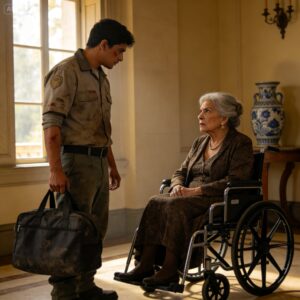
Nadie en toda la ciudad quería cuidar de la multimillonaria paralítica que vivía sola en su mansión… hasta que llegué yo, un simple repartidor de comida con los bolsillos vacíos y una madre enferma. Lo que descubrí detrás de esas enormes puertas de hierro y el dolor que escondía su furia, me heló la sangre y cambió mi vida para siempre. Esta es mi historia.
PARTE 1 Capítulo 1: El Portón de Hierro y el Asfalto Hirviendo Eran las tres de la tarde de un martes que parecía no tener fin. El asfalto de la Ciudad de México hervía bajo un sol implacable, de esos…
End of content
No more pages to load