The Wolf in the Quiet
PART 1
The digital clock above the entrance of the Crisis Counseling Center read 9:42 PM.
It was a Tuesday. Just another ordinary, biting Tuesday evening in Walnut Ridge Center, Colorado. The autumn air carried that distinctive Rocky Mountain crispness—the kind that tastes like pine needles and coming snow—a sharp reminder of why I’d chosen this small college town over the sprawling, suffocating chaos of Denver an hour south.
I pulled my navy peacoat tighter around my throat, stepping out of the modest brick building tucked between the library and the student union. At thirty-eight, I liked to think I moved through the world with the kind of quiet confidence people mistook for simple administrative competence. To the faculty, I was Ashley Carter, the woman who helped students navigate academic stress and family crises. Average height. Auburn hair pulled back in a sensible ponytail. Sensible shoes.
They saw a counselor.
What they didn’t see—what I worked very hard to make sure they never saw—was the way my eyes were currently dissecting the darkness. Even now, walking to my Honda Accord, I wasn’t just walking. I was cataloging.
Light source: Sodium vapor, amber, casting long shadows. Blind spots: Behind the dumpster, the corner of Heritage Hall. Exits: North walkway, fire lane.
It’s a habit you don’t break. You can take the girl out of the SEAL teams, but you can’t take the threat assessment out of the girl. The transition from the world’s most dangerous combat zones to a campus known for its liberal arts program hadn’t been smooth, but it was my version of peace. Or as close to it as I was ever going to get.
I fished my keys from my pocket, the jagged metal biting into my thumb. The campus was dead quiet. Most of the kids were either buried in their dorms or down at Murphy’s Tavern, making the kinds of mistakes that would give them hangovers and stories for the next ten years.
I reached the faculty parking lot behind Heritage Hall. My car was waiting under a pool of amber light. I was thinking about the heated seats. I was thinking about the novel on my nightstand. I was thinking about how much I loved silence.
Then, the scream shattered it.
It wasn’t the playful shriek of a sorority girl being chased by a boyfriend. It wasn’t the melodramatic gasp of someone dropping a phone. This was a sound that vibrated in the marrow of your bones. High-pitched. Ragged. The universal frequency of terror.
Two voices. Female. Distance: Eighty yards. Location: The depression between Heritage Hall and the Science Building.
My hand froze on the car door handle.
In a nanosecond, Ashley the Counselor evaporated. The muscle memory of a thousand drills, a hundred firefights, and three deployments surged into the vacuum she left behind. My heart rate didn’t spike; it dropped. My vision didn’t tunnel; it widened.
I didn’t run. Running draws attention. I moved. I slipped into the shadows of the brick wall, my footsteps silent, rolling heel-to-toe. I became a ghost in my own workplace.
As I rounded the corner, staying low, the scene came into focus with a horrible, high-definition clarity.
The student commons parking lot was designed for safety—emergency call boxes, clear sightlines. But design implies that the predators care about rules.
Ten of them.
Ten young men had formed a loose, shifting circle around a blue Honda Civic. Pressed against the car were two girls I recognized vaguely from campus. One was a blonde freshman, clutching a nursing textbook like a shield. The other, a brunette, looked like an engineering major I’d seen in the library. They were terrified, freezing in that primal way prey freezes right before the end.
I stopped behind a concrete pillar, assessing the threat.
The men weren’t random. That was my first thought, and it sent a cold spike down my spine. Random thugs are messy. They cluster. They shove. These guys were… arranged. Leaders in the front. Enforcers on the flanks. Lookouts checking the perimeter.
They were dressed in the uniform of intimidation—baggy hoodies, dark jeans, brims pulled low—but their posture radiated a coordinated aggression that felt learned. This wasn’t a mugging. This was a tactical operation.
“Please,” the blonde girl was sobbing, her voice thin and breaking. “We already gave you our purses. We don’t have anything else.”
The leader stepped forward. He was tall, lean, with pale skin and a backwards baseball cap. Even from twenty feet away, I could see the intelligence in his eyes. It was a cruel, sharp intelligence.
“Ladies,” he said. His voice was smooth, carrying the cadence of someone who grew up with money but chose the streets. “Purses and phones are just the appetizer. We’re interested in the main course.”
My hand went to my pocket. My phone was there. I could call 911. Response time in Walnut Ridge was three minutes, maybe four.
Four minutes.
In four minutes, a life can be ruined. In four minutes, trauma can be etched into a soul so deep it never scrubs out. I looked at the men. I looked at the girls. I saw the predatory lean of the guy on the left—a stocky tank of a kid who was already unbuckling his belt.
“Look,” the brunette tried, her voice trembling but brave. “We’re just students. Take whatever you want. Just let us go.”
The stocky one laughed. It was a wet, ugly sound. “What we want isn’t in your backpack, sweetheart.”
That was it. The decision point.
I thought about my warm apartment. I thought about the liability. I thought about the quiet life I had painstakingly built brick by brick.
Then I thought about the oath. I will not fail those with whom I serve. I didn’t wear the uniform anymore, but the service never ends.
I slid the phone back into my pocket.
I stepped out of the shadows and into the amber light. I didn’t shout. I didn’t scream. I just walked. A steady, rhythmic, predator’s walk.
“Hey.”
The word cut through the cold air like a whip crack.
The circle rippled. Ten heads snapped toward me.
“Leave them alone,” I said. My voice was conversational, bordering on bored.
The leader turned fully, looking me up and down. He saw a thirty-eight-year-old woman in a peacoat and sensible shoes. He saw a civilian. He saw a victim.
“Mind your own business, lady,” he sneered. “Keep walking.”
“I’m making it my business,” I replied, closing the distance. I was thirty feet away now. “This is your chance. Walk away. Pretend this never happened. Go home to your mothers.”
Several of the guys exchanged glances. They sensed it—that disconnect between what they were seeing and what they were feeling. My posture wasn’t defensive. I wasn’t clutching my purse or backing away. I was advancing.
But the leader—Landon, I’d later learn his name was—had an ego to feed.
“You don’t know what you’re walking into,” he said, gesturing for his flanks to spread out. “Last chance.”
I stopped ten feet away. The magic distance. Close enough to strike, far enough to react.
“My name is Ashley Carter,” I said. “I work here. These students are under my protection. You have approximately thirty seconds to leave this parking lot before this becomes a very different kind of evening for all of us.”
Landon laughed. Genuine amusement. “Ten against one, lady. You might want to recalculate those odds.”
“I have,” I said softly. “That’s why I’m giving you thirty seconds.”
What Landon didn’t know was that I wasn’t looking at ten men. I was looking at a geometry problem.
Target 1 (Leader): Center mass, confident, open stance. Target 2 (Left Flank): Heavy muscle, slow, heavy center of gravity. Target 3 (Right Flank): Nervous, twitchy, hands in pockets—possible weapon.
Landon stepped closer. He invaded my personal space, smelling of stale weed and cheap vodka. He reached out a hand toward my shoulder—a dominance move.
“You know what I think?” he grinned. “I think you need to learn the same lesson we’re about to teach these pretty college girls.”
His hand moved to grab my lapel.
Time didn’t slow down. That’s a movie myth. Time sharpened.
I didn’t think. I didn’t plan. I executed.
My left hand snapped up, intercepting his wrist. I didn’t push it away; I trapped it. At the same time, I stepped in, invading his space, my hip driving into his centerline. It was a standard hip throw, but applied with the torque of a woman who had spent years throwing men twice her size into the dirt of Kandahar.
Landon went airborne.
The sound of him hitting the asphalt was sickeningly loud—a wet slap of meat on stone. The air left his lungs in a chaotic whoosh.
I stood over him, barely breathing hard. The parking lot went dead silent. The only sound was the distant hum of a vending machine and Landon’s confused, wheezing groans.
Nine pairs of eyes stared at me. They looked at their leader, writhing on the ground, then back at the “librarian” who had just put him there.
For three seconds, nobody moved.
Then, chaos.
“Take her down!” screamed a kid on the right—Wyatt. He was young, maybe twenty, fueled by adrenaline and stupidity. He rushed me, swinging a wild haymaker punch that telegraphed his intentions from a mile away.
I sidestepped. A movement of inches.
As he flew past me, I used his own momentum. I grabbed the back of his hoodie and the back of his belt, pivoting hard. He sailed into the side of a parked Subaru.
CRUNCH.
The car alarm started blaring—WHOOP WHOOP WHOOP—a chaotic soundtrack to the violence.
“She’s trained!” yelled a guy in a Letterman jacket, backing up, circling left. “Military or cops! This isn’t random!”
“Doesn’t matter!” another shouted. This one was Bryce. I clocked him immediately. He was the dangerous one. The others were posturing; Bryce was hunting. He reached into his jacket and pulled out a switchblade.
Click.
The silver blade caught the amber light.
Behind me, the blonde girl gasped. “He has a knife!”
“Weapon,” I stated. My voice dropped an octave. The “counselor” was gone entirely now. There was only the Commander. “That changes things.”
I scanned the group. The dynamic had shifted. Fists are a brawl. A knife is a homicide waiting to happen.
“Here is what is going to happen,” I announced, projecting my voice over the car alarm. “The boy with the knife is going to drop it. All of you are going to sit on the curb. And we are going to wait for security.”
“Don’t listen to her,” Bryce spat, shifting the knife from hand to hand. “She’s bluffing.”
“I never bluff,” I said.
I saw the hesitation in the others. They were street kids, maybe, or wannabes. But they weren’t killers. Not yet. But Bryce? Bryce had dead eyes.
In the distance, I heard it. Sirens. Faint, but getting louder.
“That’s the Sheriff,” I said. “Three minutes. Make a smart choice.”
Landon, the leader, was staggering to his feet, blood streaming from his nose. He looked at me, shaking his head, dazed. “What… what the hell are you?”
“I’m the person trying to keep you out of a body bag,” I said without looking at him. My eyes were locked on the knife.
“We can’t just walk away,” Bryce hissed. “She’s seen our faces. The girls saw us. We go to jail if we stop now.”
“It’s already assault,” said a kid with glasses—Luke. He looked terrified. “Bryce, put it away.”
“No witnesses,” Bryce muttered.
He lunged.
It wasn’t a wild rush like the other kid. It was a thrust, low and upward, aiming for the gut. A killing stroke.
I didn’t retreat. I stepped into the blade.
It’s counter-intuitive. It goes against every survival instinct you have. But inside the arc of the weapon is safety. I caught his wrist with both hands, crossing my thumbs to lock the joint. I twisted. Hard.
There was a snap. Not a break, but a hyperextension that tore ligaments.
Bryce screamed, dropping the knife. I didn’t stop. I swept his leg, driving him face-first into the pavement. I dropped my knee onto his shoulder blade, pinning him.
“Stay down,” I whispered into his ear. “Do not move.”
Blue and red lights flooded the parking lot, blinding and chaotic. The siren cut off with a wherp-wherp.
Sheriff Marcus Henderson stepped out of the lead cruiser.
He was a big man, broad-shouldered, with the weary face of a man who had seen too much of the world’s ugliness. He had his service weapon drawn, holding it at the low ready.
“Sheriff’s Department!” he bellowed. “Drop it! Everyone on the ground! Now!”
The remaining seven gang members dropped like puppets with their strings cut. Hands behind heads. Faces in the asphalt.
Henderson scanned the scene. He saw the boys on the ground. He saw the two terrified girls pressed against the Honda. And then his eyes landed on me.
I was standing over Bryce, my hands raised to shoulder height, calm, steady.
Henderson froze.
He lowered his gun slowly. He squinted against the glare of the strobe lights. I saw the recognition hit him like a physical blow. His mouth opened slightly.
For a moment, we weren’t in a college parking lot in Colorado.
We were back in Kandahar. 2018. The heat. The dust. The smell of burning diesel and copper blood. The IED had flipped his Humvee. He was pinned, bleeding out, insurgents closing in from the ridge. I was the one who dragged him three hundred yards through a kill zone. I was the one who kept talking to him, telling him about the snow in the Rockies, keeping him awake while the tracers snapped over our heads.
He knew me as “Falcon.” I knew him as “Wolf.”
“Falcon?” he whispered, the name slipping out before he could stop it.
“Hello, Wolf,” I replied quietly. “You made it home.”
Henderson holstered his weapon, shaking his head as if to clear a hallucination. “Ashley? What… what is this?”
“Ten subjects,” I recited, slipping back into the official language of reports. “Attempted robbery, escalated to assault. One subject brandished a lethal weapon. Situation is contained.”
More cruisers arrived. Deputies swarmed the lot, cuffing the kids on the ground. An ambulance rolled in, the EMTs jumping out with their bags.
Captain Morrison from Campus Security ran up, breathless. “Sheriff! What’s the status?”
Henderson didn’t look at him. He was still looking at me. “Status is… complicated.”
He walked over to me. Up close, I could see the gray in his beard that hadn’t been there in Afghanistan.
“You okay?” he asked, his voice low.
“I’m fine, Marcus.”
“These are… these are just kids, Ash. Most of them.”
“One of them had a knife,” I said, nodding toward Bryce, who was being hauled up by a deputy. “And they were organized. Too organized.”
“What do you mean?”
“I mean they had a perimeter. They had lookouts. They used a pincer movement to trap the girls. Street gangs don’t do that. Soldiers do that.”
Henderson frowned. He looked at the lineup of young men being shoved into the back of patrol cars. “You think they have training?”
“I think someone is teaching them,” I said. A cold feeling settled in my gut, colder than the mountain air.
Landon Peterson, the leader I’d thrown, was sitting on the bumper of an ambulance, holding an ice pack to his bloody nose. He was watching me. Not with anger anymore. With calculation.
I walked over to him, Henderson trailing me.
“You have good balance,” Landon said, his voice thick with congestion. “For a counselor.”
“Who taught you the formation?” I asked. “The perimeter setup. Who taught you that?”
Landon smirked. It was a pained expression. “Nobody. We watch movies.”
“That wasn’t movies,” I said, leaning in. “That was squad tactics. Who’s pulling your strings, Landon?”
Landon glanced at the other boys, then at the Sheriff. He lowered his voice. “You think we’re the problem? We’re just the cleanup crew.”
“Cleanup for what?” Henderson asked sharply.
“For the message,” Landon said. His eyes drifted past us, toward the dark outline of the mountains. “Mr. Williams says this town needs a wake-up call. He says people like you…” He looked at Henderson’s badge, then at my peacoat. “…People who think they’re safe… you’ve forgotten how the world works.”
“Who is Mr. Williams?” I demanded.
Landon shut his mouth. The mask of the street kid slammed back down. “I want a lawyer.”
Henderson sighed, stepping back. “Get him out of here.”
As they loaded him into the cruiser, I caught a glimpse of the blonde girl, Madison. She was talking to a female deputy, but she kept looking over at me. She looked at me like I was a superhero.
I didn’t feel like a superhero. I felt like a perimeter alarm that had just been tripped.
“Mr. Williams,” I muttered to myself.
“Never heard of him,” Henderson said, writing in his notebook. “Probably just some local dealer trying to sound scary.”
“No,” I said, watching the taillights of the patrol car fade into the night. “Landon wasn’t scared of being arrested. He was scared of talking. That’s different.”
Henderson looked at me. “You think this is just the start?”
“I think,” I said, looking at the bloodstain on the asphalt where Bryce had dropped the knife, “that ten gang members don’t attack a campus on a Tuesday night for pocket change. They were sending a message.”
“What message?”
I buttoned my peacoat, the adrenaline finally fading, leaving the cold to seep back in.
“That nobody is safe,” I said. “Not even here.”
Part 2: The Broken and The Dangerous
The holding cells at the Walnut Ridge Sheriff’s Department smelled of industrial disinfectant, stale sweat, and the distinct, metallic tang of regret.
It was 1:00 AM. The adrenaline from the parking lot had burned off, leaving behind a throbbing headache and the cold reality of paperwork. Sheriff Henderson—Marcus—sat behind his desk, rubbing his temples. His office was a shrine to a timeline of service: photos of his unit in Helmand, his swearing-in ceremony, and a graduation picture of a daughter who lived three states away.
“We don’t have the room, Ash,” Marcus muttered, looking at the roster. “Ten felons. I’ve got three cells. I’m going to have to transport them to County in the morning.”
I sat across from him, nursing a coffee that tasted like battery acid. I wasn’t looking at him. I was looking at the files spread across his desk.
“They aren’t felons, Marcus,” I said quietly. “Look at the data.”
“They attacked students.”
“Look at the people.” I tapped the top folder. “Wyatt Coleman. High school dropout. Why? To work construction to pay for his mom’s chemo. Chase Ward. All-State linebacker. Lost his scholarship after an ACL tear, got hooked on painkillers, parents lost the house. Ian Powell. Valedictorian. Living with his grandmother who’s on a fixed income.”
I looked up at him. “These aren’t career criminals. They’re desperate kids. And desperate kids are the easiest recruits.”
Marcus leaned back, his chair groaning. “Recruits for what? You heard Landon. ‘Mr. Williams.’ Sounds like a ghost story.”
“Ghosts don’t organize pincer movements,” I said. “I want to talk to them. Not as a cop. As a counselor.”
Marcus hesitated. He knew the protocols. But he also knew that standard procedure hadn’t saved his life in 2018. I had.
“You’ve got twenty minutes,” he said. “Before the lawyers show up and shut it down.”
I started with Ian Powell.
He was the one recording on the phone. The tech guy. He sat in the interview room, his knee bouncing nervously. He looked like he should be running a breathless D&D campaign, not facing ten-to-twenty for armed robbery.
“I checked your laptop,” I lied. I hadn’t touched it, but in interrogation, perception is reality. “You built the encryption for their messaging app. It’s military-grade code, Ian. Where did you learn that?”
Ian looked down at his hands. “YouTube. Forums.”
“Don’t lie to me. You can lie to the Sheriff, but don’t lie to me. That code has a signature.” I leaned forward. “Mr. Williams gave it to you, didn’t he?”
Ian flinched. “He… he said it was a job. Just a job. IT support.”
“Who is he?”
“I don’t know his real name. I swear. He drives a black SUV. He meets us at the old quarry. He… he knows things, Ms. Carter. He knew my grandma’s insulin prescription was expiring. He knew exactly how much money we needed.”
“He bought your loyalty,” I whispered. “With insulin.”
Ian nodded, tears welling in his eyes. “He said the town didn’t care about us. That the college was full of rich kids who looked down on us. He said… he said we were soldiers in a class war.”
I stood up, my stomach tightening. It wasn’t a gang. It was an insurgency.
I spent the next hour moving from room to room. The pattern was identical. Every single one of them had a skill—Tanner was a mechanical genius who could fix anything with an engine; Drew was an artist who could map terrain; Luke was a strategist.
And every single one of them had been broken by the economy and scooped up by ‘Mr. Williams.’
When I got back to Marcus’s office, Dr. Peton, the Dean of Student Affairs, had arrived. She looked pale.
“We have a problem,” she said, holding up a tablet. “The campus server just got hit. Someone wiped the security logs. And look at this email.”
She turned the screen. A message had arrived at the exact moment the logs were wiped.
SUBJECT: PHASE ONE COMPLETE. BODY: You have seen the vulnerability. The police cannot protect you. The veterans cannot protect you. Walnut Ridge belongs to those who take it. Phase Two begins at 0900 hours tomorrow.
“He’s taunting us,” Marcus growled.
“No,” I said, staring at the screen. “He’s conditioning us. Fear first. Action second. It’s PsyOps 101.”
Marcus’s phone rang. He picked it up, listened for ten seconds, and his face went ashen. He hung up slowly.
“That was the FBI contact at the field office,” he said, his voice hollow. “They ran the description of ‘Mr. Williams’ and the modus operandi. They got a hit. Marcus Spalding. Former Army Intelligence. Specialized in asymmetric warfare and destabilization tactics. Dishonorable discharge three years ago.”
“Let me guess,” I said. “He went freelance.”
“He’s a mercenary,” Marcus confirmed. “He targets rural towns with high veteran populations. He recruits the disenfranchised youth, turns them against the institutions, creates chaos, and then… well, nobody knows the ‘and then’ because usually the towns tear themselves apart before he’s finished.”
“He’s testing us,” I realized. “He’s using Walnut Ridge as a petri dish. If he can break a town known for its veteran community, he can sell that model to foreign buyers. We’re not a target, Marcus. We’re a product demo.”
The silence in the room was heavy.
“We can’t fight an army with three deputies and a drunk tank,” Marcus said, rubbing his face.
“We don’t need an army,” I said, a crazy, dangerous idea forming in the back of my mind. “We already have one. We just have them locked in the wrong cages.”
The meeting with Judge Linda Hoffman took place at 4:00 AM in her kitchen. She was wearing a bathrobe and drinking tea, listening to me propose the most insane legal maneuver in the history of Colorado jurisprudence.
“Let me get this straight,” Judge Hoffman said, peering over her spectacles. “You want me to release ten violent offenders into your custody, suspend their sentences, and deputize them as a civil defense force?”
“They aren’t violent offenders, Your Honor. They’re assets,” I argued. “Spalding knows our police protocols. He knows our response times. He doesn’t know them. He thinks they’re his pawns. If we turn them… we have an inside track.”
“And if they run?”
“They won’t,” I said. “Because I’m going to offer them something Spalding never did. Respect.”
The Judge looked at Marcus. “Sheriff?”
Marcus took a deep breath. “I served with Ashley Carter in hell, Linda. If she says she can lead them, she can lead them. And frankly… we don’t have a choice. Spalding promised Phase Two at 9:00 PM. We have twelve hours to prepare for a war we can’t see.”
Judge Hoffman set down her cup. “God help us all. Approved. But on one condition, Ms. Carter.”
“Yes, ma’am?”
“If one of them steps out of line, it’s you going to jail.”
“Understood.”
At 6:00 AM, I stood in the center of the community gymnasium. The ten young men stood in a line, unshackled but wary. They looked tired, bruised, and confused.
“You have two choices,” I told them. My voice echoed off the hardwood floor. “Choice A: You go to County. You get processed. You do five to ten years. Your families lose you. Your lives end.”
I walked down the line, making eye contact with each of them.
“Choice B: You work for me. You use the skills Spalding noticed—the mechanics, the coding, the strategy—and you use them to defend this town. You fix the damage you caused. You protect the people you threatened.”
“Why would we do that?” Landon asked. His nose was taped up. “Town never did anything for us.”
“Because this is your home,” I said. “And because Spalding is going to burn it down to prove a point. He doesn’t care about you. To him, you’re just ammunition. Once he fires you, he leaves the casing on the ground.”
I stopped in front of Ian. “He manipulated your grandmother’s safety.”
I moved to Tanner. “He promised to save your dad’s shop, but he’s planning to destroy the grid that powers it.”
I turned back to the group. “I’m offering you a way to be more than just a statistic. I’m offering you a mission.”
For a long moment, nobody moved. Then, Chase Ward—the linebacker—stepped forward.
“My mom lives on Elm Street,” he said quietly. “If he hits the grid… she’s on oxygen.”
Chase crossed the line.
Then Ian. Then Tanner.
One by one, the “gang” dissolved, and a unit began to form.
Landon was the last. He looked at me, his eyes searching for a lie. He didn’t find one.
“What’s the plan, Commander?” he asked.
I smiled, a cold, sharp smile. “The plan is to change the game.”
Part 3: The Long Night
The sun went down, and the tension in Walnut Ridge rose like floodwater.
We turned the Community Center into a Forward Operating Base. It was a beautiful chaos.
Tanner Kelly and his crew were in the garage, retrofitting Sheriff cruisers with reinforced bumpers and checking the town’s backup generators. Ian Powell had turned the computer lab into a cyber-defense fortress, typing furiously to build firewalls around the hospital and emergency services grid.
Chase Ward organized the perimeter. He had the high school football team running patrols—unarmed, just eyes and ears—reporting back via walkie-talkies.
I stood at the central table with Marcus and Luke Barnes, the kid who had lost his scholarship. Luke was brilliant. He was mapping Spalding’s potential entry points based on historical military doctrine.
“He’ll hit the comms first,” Luke said, pointing to the map. “Isolate the population. Then he’ll hit a symbolic target to cause panic. Then, while we’re distracted, he’ll go for the objective.”
“What’s the objective?” Marcus asked.
“The data,” I realized. “Spalding deals in information. The Veterans Affairs office. The records. He wants the identities of every former operative living in the Rockies. It’s a list of high-value targets he can sell.”
“Phase Two isn’t an attack,” Luke said. “It’s a harvest.”
At 8:58 PM, the radio crackled. “Perimeter breach,” Chase’s voice came through, breathless. “West road. Black SUVs. No lights.”
“Here we go,” I whispered.
At 9:00 PM exactly, the world ended.
Or at least, the lights did. A massive THUMP echoed through the valley as the main transformer blew. Darkness swallowed Walnut Ridge.
“Ian!” I yelled into the dark.
“I’m on it!” Ian shouted back from the glow of his laptop screen, powered by a battery backup Tanner had rigged. “They’re trying to lock us out of the emergency dispatch! I’m fighting them code for code. They’re good, but… I’m angrier.”
Outside, an explosion ripped through the night—a fireball blooming near the town square.
“Diversion,” I said calmly. “Marcus, keep the deputies on the perimeter. Don’t let them suck you into the center.”
“Where are you going?” Marcus asked as I checked the magazine on my sidearm—a loaner from the department armory.
“I’m going to the VA office,” I said. “With the boys.”
“Ash, it’s dangerous.”
“I know,” I said. “That’s why I’m bringing the experts.”
I signaled to Landon, Bryce, and Wyatt. “Gear up. We’re moving.”
We moved through the alleyways. The town was unrecognizable in the dark, lit only by the flickering fires of vandalism. But these kids? They knew these alleys. They knew every loose brick, every shortcut, every fence hop.
They moved with a fluidity that military training tries to simulate but can never quite replicate. They moved like they owned the night.
“Two contacts ahead,” Bryce whispered. He was scouting point. “Military gear. Night vision.”
We crouched behind a dumpster. I looked at them. “Okay. Just like we talked about. Distract and flank.”
Landon nodded. He picked up a bottle. He threw it hard, smashing it against a streetlight fifty yards away.
The two mercenaries spun toward the sound, rifles raised.
“Go,” I hissed.
Wyatt and Bryce moved. They didn’t use weapons. They used the environment. Wyatt slammed a heavy trash can lid into the knees of the first guy, dropping him. Bryce tackled the second, using a wrestling move to pin his arm.
I stepped out, weapon drawn. “Stay down!”
We zip-tied them and kept moving.
When we reached the VA office, the back door was already breached.
“They’re inside,” I said.
“There’s a basement access,” Landon whispered. “Through the coal chute. We used to sneak in there to smoke.”
“Lead the way.”
We dropped into the basement, the air thick with dust. We could hear footsteps upstairs. Heavy boots.
We crept up the stairs. Through the crack in the door, I saw him.
Marcus Spalding. Mr. Williams.
He was standing by the server rack, watching a progress bar on a tablet. He was older than I expected, with a face like granite and eyes that looked dead. He had two heavily armed guards with him.
“Ninety percent,” Spalding said into a radio. “Prepare for exfiltration.”
I looked at Landon. I held up three fingers. Three. Two. One.
We kicked the door open.
“Drop it!” I screamed, leveling my gun at Spalding.
The guards spun.
But they weren’t ready for the chaos factor.
Tanner killed the power to the building at the breaker box outside. The room plunged into total blackness.
Spalding’s men had night vision, but we had flashlights—high-lumen tactical beams that we strobed in their faces, blinding the night vision goggles.
“Get the tablet!” I yelled.
Landon didn’t hesitate. He dove. He tackled Spalding around the waist, driving him into the server rack. The tablet skittered across the floor.
A guard fired—BLAM BLAM—the muzzle flashes lighting up the room like a strobe light.
I returned fire, hitting the guard in the shoulder. He went down.
The second guard aimed at Landon.
“No!”
It was Bryce. The kid I had taken down in the parking lot. He threw himself in front of Landon, taking the rifle butt to the face, but tackling the guard’s legs.
I moved in, pistol-whipping the guard into unconsciousness.
Silence fell.
I turned my light to the corner.
Landon was holding Spalding in a chokehold. Spalding was struggling, reaching for a knife, but Landon held on with grim determination.
“It’s over, Mr. Williams,” Landon grunted.
I walked over and put the barrel of my gun against Spalding’s forehead. “Let him go, Landon. I’ve got him.”
Landon released him, panting, blood dripping from his nose again.
Spalding looked up at me, sneering. “You think this saves you? You’re protecting a dying system. These trash kids… they’re nothing.”
Landon stood up, wiping his face. He looked down at the mercenary.
“We’re not trash,” Landon said. “We’re the cleanup crew.”
The sun came up over the Rockies, painting the sky in violent purples and soft golds.
The town was battered, but it was standing. The fires were out. The grid was back online, thanks to Tanner. The data was safe, thanks to Ian.
Walnut Ridge was awake, and it was alive.
I stood in the parking lot of the Sheriff’s station. The ten boys—the ten young men—were sitting on the curb, drinking Gatorade and eating donuts Dr. Peton had brought. They were covered in soot, bruised, and exhausted.
They looked like soldiers after a long campaign.
Madison and Savannah, the two girls from the attack, walked up to the police line. They were holding a box of coffee.
Madison looked at Bryce, who was sporting a massive black eye. She didn’t look scared anymore. She walked right up to him and handed him a coffee.
“Thank you,” she said softly.
Bryce looked at the coffee, then at her, then at me. He took it, his hands shaking slightly. “I’m… I’m sorry. About the other night.”
“I know,” she said.
Sheriff Henderson walked out, clapping a hand on my shoulder. “FBI took Spalding. He’s going away for a long time. Domestic terrorism charges.”
“And the boys?” I asked.
“Judge Hoffman called. She’s wiping the records. Under one condition.”
“What’s that?”
“They keep doing this. She wants to formalize the program. ‘The Second Chance Initiative.’ Civil defense, disaster response, community support.”
I looked at them. Chase was laughing at something Ian said. Tanner was explaining to a deputy how to fix his carburetor. Landon was looking at the sunrise.
I walked over to Landon.
“You did good work last night,” I said.
Landon looked at me. The arrogance was gone, replaced by something sturdier. Pride.
“You were right,” he said. “About the mission.”
“It never ends,” I told him. “Get some sleep. Training starts at 0800 tomorrow.”
He groaned, but he smiled. “Yes, ma’am.”
I walked back to my car, the same Honda Accord. I unlocked the door. I paused, taking a deep breath of the pine-scented air.
I was Ashley Carter. Crisis Counselor. Former Navy SEAL. And now, Commander of the most unlikely platoon in Colorado.
I looked at the town—broken windows, scorched pavement, but standing strong against the mountains.
It wasn’t perfect. But it was safe. And for the first time in a long time, so was I.
News
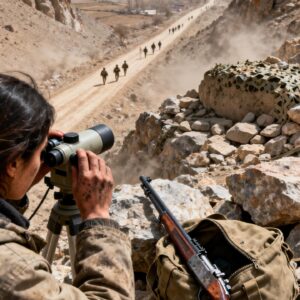
THE EXILED SNIPER: WHEN THE WORLD BRANDED ME A TRAITOR, I BECAME THE GHOST THAT SAVED THEM FROM THE SHADOWS
PART 1: THE SILENT WATCHER The wind at eleven thousand feet doesn’t just blow; it bites. It carries the metallic taste of snow and the ancient, dusty scent of stone that has been baking and freezing for millennia. I lay…
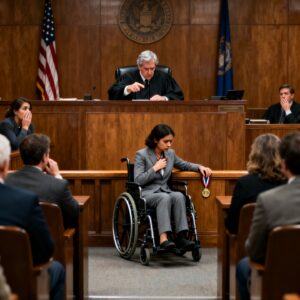
The Judge Called Me a Fraud and Demanded My Medal. He Had No Idea I Was the Reason His Son Was Still Alive.
PART 1: THE HUMILIATION The phantom rhythm of rotor blades was the first thing I heard. Thump. Thump. Thump. It wasn’t real, of course. It was just the ceiling fan in my San Diego apartment, slicing through the warm October air….

I Was Shackled in a Courtroom as a Homeless Thief, Ignored by Everyone—Until the Clerk Read My Service Number, the Judge Stood Up in Dead Silence, and the Man I Saved from Hell Recognized the Ghost He Thought Died in Fallujah.
PART 1: THE GHOST IN THE ORANGE SUIT The holding cell smelled of bleach and urine—a chemical cocktail meant to sanitize misery, but it only made it sting the back of your throat. I sat with my back pressed against…
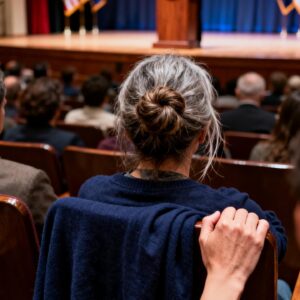
I Was Supposed to Be Dead: The Day a SEAL Admiral Froze Mid-Speech, Saw the Forbidden Tattoo on My Wrist, and Exposed the Classified Secret I’d Hidden from My Son for Twenty Years.
PART 1: THE GHOST IN THE BACK ROW You learn to be invisible. That’s the first rule of survival when you’re walking around with a grave that already has your name on it. You learn to take up less space,…

The Ghost of Flight 227: She Was Supposed to Be Dead, But When the Captain Collapsed and the Plane Screamed toward Earth, the Woman in Seat 14C Revealed a Secret That Would shake the Pentagon to Its Core
PART 1: THE INVISIBLE PASSENGER The smell of economy class is always the same. It’s a cocktail of stale coffee, recycled air, and the sour, metallic tang of human exhaustion. I was breathing it in, four counts in, four counts…
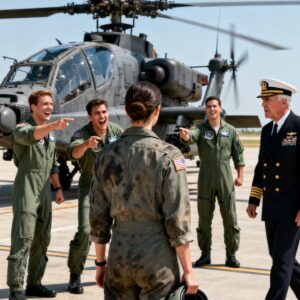
THE GHOST OF KANDAHAR: They Buried My Career and Mocked My Name, But When The Admiral Saw My Sealed File, He Unleashed A War Machine They Never Saw Coming
PART 1: THE INVISIBLE WOMAN The Alabama heat at 0530 didn’t just hit you; it strangled you. It was a physical weight, a wet, suffocating blanket that smelled of JP-8 jet fuel, heated asphalt, and the stale, recycled air of…
End of content
No more pages to load