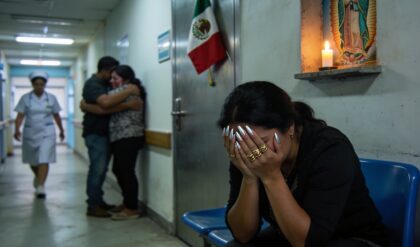
STORY TITLE: The Monster You Woke Up
PART 1
The smell of funnel cake and diesel fumes shouldn’t have triggered a flashback, but the brain is a cruel architect. One minute, I was watching my twelve-year-old niece, Zoe, get a purple butterfly painted on her cheek; the next, I was back in a dusty convoy outside Kandahar, waiting for an IED to turn the world white.
I blinked, forcing the desert out of my vision and replacing it with the lush, manicured grass of Heritage Park.
“You’re doing great, sweetheart,” I said, my voice steady. It was a practiced steadiness. The kind you pay a therapist two hundred dollars an hour to help you construct. “It looks beautiful.”
Zoe beamed up at me, purple paint smudged on her fingertips. “Thanks, Aunt Nikki. Mrs. Hughes said I have ‘artistic potential.'”
Marilyn Hughes, the seventy-year-old backbone of the Maple Grove Community Center, stepped out of the craft tent. She wiped her hands on her apron, giving me that knowing, maternal look that always made me feel like a fraud. Marilyn saw the soft-spoken woman who organized food drives and gave troubled teenagers a second chance. She didn’t know she was looking at a ghost.
“She’s a natural, Nicole,” Marilyn said. “Reminds me of you when you first started three years ago. Quiet. Focused. Pays attention to details most people miss.”
I forced a smile. The compliment felt like a stone in my gut. Paying attention to details hadn’t been a hobby; it was a survival mechanism. It was the reason I was standing here in Green Ridge, Washington, and not in a flag-draped box in Arlington.
“Have you seen Evan and Nathan?” I asked, scanning the perimeter. It was a habit I couldn’t break. Sector scans. Threat assessment. Exit strategies. Even here, surrounded by two hundred families enjoying a sunny June Saturday, I was looking for the wolf.
“Last I saw, they were raiding the taco truck,” Marilyn laughed. “Those boys eat like they’re storing up for a nuclear winter.”
I let out a breath I didn’t know I was holding. Evan Porter and Nathan Burke were my projects—my redemption. Fourteen months ago, Evan was on a fast track to juvie, and Nathan was drifting into a gang that would have chewed him up and spit him out. Now, they were here, volunteering, reading military history books I recommended, and learning that they didn’t have to be victims of their circumstances.
“I’ll go round them up,” I said. “Stage performances start in thirty minutes. We need bodies for crowd control.”
I walked through the festival, letting the noise wash over me. Laughter. The bass thump from the sound check on the main stage. The shriek of kids in the bounce house. This was the life I had chosen. The quiet life. The safe life.
But then I saw the van.
It wasn’t just a van. It was a white, unmarked cargo van, parked illegally near the eastern entrance, blocking the fire lane. My step faltered. My heart rate, which usually rested at a marathon runner’s forty-five beats per minute, spiked.
Stop it, I told myself. This is Green Ridge. Not Syria. Not Yemen. It’s a catering delivery.
But the engine was running.
I watched a man step out. Dark clothing. heavy boots. He didn’t look at the festival; he looked through it. He was scanning the crowd, not with wonder, but with calculation. He looked at the stage. He looked at the police presence—just two officers near the west gate. Then he looked right at me.
His eyes were cold, dead things. For a split second, we locked gazes. Predator acknowledging predator.
My blood turned to ice.
“Nikki?” Zoe’s voice came from behind me, pulling me out of the trance. “Are you okay? You look… scary.”
I spun around, dropping to one knee to be at eye level with her. The maternal mask slammed back into place, but the adrenaline was already flooding my system, sharpening my vision, muting the background noise.
“I’m fine, baby,” I lied. “Listen to me. I need you to stay with Marilyn. Right by the craft tent. Do not wander off. Do you understand?”
“But Evan said—”
“I don’t care what Evan said.” My voice was harder than I intended. Zoe flinched. I softened my tone, cupping her face. “Please. Just do this for me. I need to handle something.”
I stood up and saw Evan approaching, holding a paper boat of nachos. He stopped when he saw my face. He’d learned to read me over the last year. He knew the difference between ‘annoyed Nicole’ and ‘dangerous Nicole,’ even if he didn’t know why the second one existed.
“What’s wrong?” Evan asked, his voice dropping.
“Take Zoe and Nathan,” I whispered, keeping my eyes on the van. More men were piling out now. Five. Six. Duffel bags. Heavy ones. “Go to the north side, behind the equipment shed. Stay low.”
“Nicole, you’re freaking me out. Is this about—”
The first shot cracked through the air like a whip.
It wasn’t a firecracker. It wasn’t a backfire. It was the distinct, terrifying snap of a 5.56 round leaving a rifle barrel.
For a heartbeat, the crowd didn’t react. The human brain is wired to deny violence until it’s undeniable. But I was already moving.
“Down!” I screamed, shoving Evan and Zoe toward the ground just as the second shot shattered the windshield of a food truck ten feet away.
Then, the screaming started.
Chaos is a physical force. It hit the Heritage Park Festival like a tidal wave. Two hundred people, stripped of their suburban comfort, devolved into panic. Parents threw themselves over children. Vendors abandoned their stalls. The elderly stumbled and fell in the crush.
But I didn’t see people. I saw lines of fire. I saw cover. I saw threats.
“Stay down!” I ordered Evan, my voice cutting through the shrieks. “Do not move until I say so.”
I lifted my head just enough to peek over the picnic table we were using for cover.
Fifteen men. They moved with a coordination that made my stomach turn. This wasn’t a random shooting. They were fanning out, securing the exits, herding the crowd toward the center of the park. They held their AR-15s with practiced ease—fingers off triggers until ready to fire, stocks tight against shoulders.
They were military. Or at least, they used to be.
“Everyone on the ground! Now!” A voice boomed over the PA system.
I looked toward the stage. A man stood there, holding the microphone in one hand and a rifle in the other. I recognized him instantly. Not personally, but I knew the type. Clayton Frost. I’d seen his face in a briefing dossier two years ago, back when I still had a security clearance. Ex-Army, dishonorably discharged, radicalized militia leader. He was supposed to be under FBI surveillance in Idaho.
Apparently, the FBI had lost him.
“My name is Clayton Frost,” he announced, his voice echoing off the surrounding trees. “And you are now prisoners of the Free State movement.”
I checked the perimeter. They had us boxed in. Two men at each gate. Snipers likely taking the high ground—probably the roof of the maintenance building. The rest were sweeping the crowd, kicking people who were too slow to comply.
I looked at Zoe. She was curled into a ball, shaking so hard her teeth chattered. Marilyn had her arms wrapped around her, her eyes wide with a terror that broke my heart.
I brought them here, I thought. I organized this. I made the flyers.
“Get up!” A guard was standing over Father Ryan, the elderly priest who had been blessing the food court. The guard, a young kid with a scar across his neck, slammed the butt of his rifle into the priest’s face.
Father Ryan crumbled, blood pouring from his nose.
“Hey!” The shout came from my left. It was Detective Jason Turner. He was off-duty, wearing a polo shirt and jeans, but he was reaching for the concealed carry at his waist.
“No, Jason, don’t,” I whispered, though he couldn’t hear me.
He didn’t have a clear shot. He was exposed.
Before Jason could clear his holster, a shot rang out from the stage. Jason spun around, clutching his shoulder, and hit the grass.
“Anyone else want to be a hero?” Clayton roared from the stage. “The next one takes it in the head!”
Jason groaned, blood seeping through his fingers. He was alive, but he was out of the fight.
I did the math. Fifteen hostiles. Two hundred hostages. One handgun on a wounded detective. And me. Unarmed. Dressed in a sundress and sandals.
I closed my eyes for a second. Breathe. Four in. Four hold. Four out.
When I opened them, the world was different. The color had drained away, leaving only high-contrast data. Distance to target. Wind speed. Light conditions. Psychological states of the enemy.
Nicole Chambers, the community organizer, was gone. The woman who had replaced her didn’t have a name. She was just a weapon that had been left in the closet for three years.
“You!” Clayton pointed into the crowd. “The organizer. The woman in the yellow dress. I saw you on the website. Stand up.”
My heart stopped. He meant me.
Marilyn gripped my wrist. “Nicole, no,” she whimpered.
“It’s okay,” I whispered, peeling her fingers off. “Stay with Zoe. Keep her eyes closed.”
I stood up slowly, raising my hands. I needed to look harmless. I needed to look like the terrified civilian they thought I was. I hunched my shoulders, let my lower lip tremble. Camouflage isn’t always about wearing green; sometimes it’s about wearing fear.
“Bring her here,” Clayton commanded.
Two men grabbed me by the arms—roughly. I noted their grip strength, their position. The one on my right favored his left leg. The one on my left smelled of stale tobacco and fear. They marched me toward the stage, past weeping families, past Jason who looked up at me with hazy, pain-filled eyes.
They threw me up the stairs onto the stage. I stumbled, skinning my knee, and stayed down, looking up at Clayton Frost.
He was bigger up close. The kind of man who used his size to intimidate because he lacked true command presence. But he had the gun, and he had the crazy eyes of a man who believed his own manifesto.
“Nicole Chambers,” he sneered, looking down at me. “The bleeding heart of Green Ridge. You brought all these sheep here to graze, didn’t you?”
“I just wanted a community festival,” I said, pitching my voice to sound shaky. “Please. Let the children go. They haven’t done anything.”
Clayton laughed. It was a dry, barking sound. “The children are the problem, Nicole. They’re being indoctrinated by people like you. Taught to be weak. Taught to depend on a corrupt government.”
He grabbed a handful of my hair and yanked my head back. The pain was sharp, grounding.
“Listen to me,” he hissed, leaning close enough that I could smell the coffee on his breath. “We have demands. The governor is going to release four of my patriots from federal prison, or we are going to start watering this grass with blood. And since you’re the host…”
He shoved me away. I sprawled onto the stage floor next to Father Ryan, who was wheezing through his broken nose.
“You’re going to help us,” Clayton announced. “You’re going to go out there and collect everyone’s cell phones. And their medications. I want insulin, heart pills, everything. If anyone holds out, you point them out to me, and I shoot them. Understand?”
It was a control tactic. Make the victim complicit. Break their spirit by forcing them to police their own people.
“I understand,” I whispered.
“Good.” He checked his watch. “You have ten minutes. Then we execute the first hostage to show them we’re serious.”
He pointed the barrel of his rifle at Father Ryan.
“Starting with the Padre here.”
I looked at the priest. I looked at the crowd. I saw Evan and Nathan huddled over Zoe. I saw the fear in their eyes—a pure, unadulterated terror that no child should ever know.
I stood up, my hands shaking. Not from fear. From rage.
Clayton Frost had made a fatal miscalculation. He thought he was looking at a social worker. He didn’t know that three years ago, my call sign was Wraith. He didn’t know that I had forty-three confirmed kills and a skill set that made his militia training look like a weekend paintball tournament.
He had given me ten minutes. He had given me access to the crowd. He had ordered me to walk the perimeter.
He had just given me a reconnaissance mission.
“I’ll do it,” I said, wiping a tear from my cheek. “Just please don’t hurt anyone.”
Clayton smirked at his men. “See? They always break.”
I turned and walked down the stairs, grabbing a plastic trash bag one of the guards threw at me. As I walked into the sea of hostages, I wasn’t looking for phones.
I was counting.
Sniper on the roof: twelve o’clock high. Two hostiles by the east gate, ten meters apart. One wandering near the food trucks, sloppy discipline. The propane tanks behind the kettle corn stand… highly flammable.
I moved through the crowd, whispering “Phone, please,” to a terrified mother. As she dropped her iPhone into the bag, I leaned in.
“Don’t worry,” I breathed, barely audible. “Help is coming.”
” The police?” she sobbed softly.
I looked back at the stage, where Clayton was laughing with his lieutenant.
“No,” I said, my voice dropping the tremble, turning into cold steel. “Something much worse.”
I moved to the next row. I had nine minutes left. Nine minutes to formulate a plan to kill fifteen men with nothing but my bare hands and the environment around me.
Part 2:
I moved through the crowd like a virus, silent and unnoticed, collecting phones and insulin pens in the plastic trash bag. To Clayton and his men, I was a subservient woman doing as she was told. To the tactical part of my brain—the part I’d tried to medicate into silence for three years—I was a forward observer mapping the battlefield.
“Please,” Mrs. Gable whispered, dropping her heart medication into the bag. Her hands were trembling so violently the bottle rattled like a maraca. “My husband… he’s by the stage. Is he okay?”
I glanced toward the stage. Frank Gable was on his knees, hands zip-tied. He was alive. For now.
“Stay low, Martha,” I murmured, keeping my head down as Shadow, the sniper-turned-thug following me, prodded my spine with his barrel. “Don’t draw attention.”
I walked past the picnic tables where I’d stashed the kids. Evan was there, his body curled protectively around Zoe and Nathan. He looked up as I approached. His face was pale, sweat beading on his upper lip, but his eyes were locked on mine. He was looking for instruction.
I stopped, pretending to struggle with the bag’s weight. Shadow stopped two paces behind me, checking his watch, bored. Complacency kills, and he was practically begging for it.
“Evan,” I whispered, barely moving my lips.
“Nicole,” he breathed back. “What do we do?”
“Listen to me. No questions.” I kept my eyes on the ground, acting the part of the broken civilian. “In the equipment shed, top shelf, red box. Smoke grenades for the Fourth of July show. Can you get to them?”
Evan’s eyes widened. He gave a microscopic nod.
“When the noise starts—and it will start—you get those grenades. Pull the pins, throw them toward the center. Then you run due east. Do not look back. Do you trust me?”
“Yes.”
“Good boy.”
“Move it, lady!” Shadow barked, shoving me forward.
I stumbled, exaggerating the fall, and used the moment to glance at the propane tanks behind the kettle corn stand. They were massive, industrial-sized cylinders. Highly pressurized. If someone were to open a valve, the gas would pool along the ground, invisible and heavier than air. A massive fuel-air bomb waiting for a spark.
I cataloged it. Asset.
I finished the circuit and returned to the stage. Clayton was pacing, checking his phone. The live stream was up. He was broadcasting his terrorism to the world, preening like a peacock with an AR-15.
“Done,” I said, dropping the bag at his feet.
“Good.” He didn’t even look at me. “Now, get out of my sight. Go sit with your little friends.”
“I… I need to use the restroom,” I stammered. “Please. I’m going to be sick.”
Clayton sneered. “Pathetic. Take her to the port-a-potty by the shed. Two minutes. If she’s not back, shoot someone.”
Shadow grabbed my arm and marched me toward the blue plastic box near the equipment shed. This was my window. Not to escape—I could have hopped the fence and been in the woods in thirty seconds—but to prepare.
I stepped inside the plastic quiet of the portable toilet and locked the door.
For ten seconds, I didn’t move. I just stared at my reflection in the scratched metal mirror. A woman in a yellow sundress stared back. She looked soft. Kind. The kind of woman who organized bake sales and cried at insurance commercials.
I hated her.
I closed my eyes and let the darkness in. I thought of Jennifer. My last mission. The girl I failed to save because I hesitated. Because I waited for orders. Because I wanted to be a ‘good soldier’ instead of a necessary weapon. Jennifer had screamed my name as the bullet took her. That scream lived in my bone marrow.
Never again, I whispered.
I opened my eyes. The social worker was gone. Wraith was back.
I reached down to my ankle. Strapped there, beneath the flow of my dress, was a ceramic blade. Non-metallic, undetectable by casual wands, razor-sharp. I’d worn it every day for three years. Old habits die hard.
I stepped out of the toilet. Shadow was leaning against the shed, scrolling on his phone, his rifle slung lazily over his shoulder.
“Feel better?” he mocked, not looking up.
“Much,” I said.
My voice was different now. The tremble was gone. It was flat, resonant, and utterly devoid of fear.
Shadow looked up, confused by the tone shift. He saw my face, and for a split second, his brain tried to process the change. He saw the shift in posture, the weight distribution, the predator stare. He opened his mouth to shout.
I covered the ten feet between us in two strides.
I didn’t punch him. Punching breaks your hand. I drove the heel of my palm into his chin, snapping his head back and shutting his jaw with a bone-crunching clack. Before he could stumble, I stepped inside his guard, grabbed his rifle strap with one hand, and drove the ceramic blade into the soft tissue under his armpit.
He gasped, a wet, gurgling sound. I guided him down gently, looking like a concerned friend helping a drunk, and stripped the AR-15 from his body. I took his sidearm, a Glock 19, and tucked it into the waistband of my dress at the small of my back. I took his extra mags.
“Sleep,” I whispered.
I dragged him behind the shed. One down. Fourteen to go.
I checked the rifle. Safety off. Round chambered. It felt heavy and familiar, like a lost limb reattached.
I moved to the corner of the shed. The festival grounds stretched out before me. Clayton was on the stage, unaware he was down a man. He was checking his watch. The ten-minute deadline was up.
“Time’s up!” Clayton’s voice boomed over the speakers. “Governor hasn’t called. That means the Governor doesn’t care about you.”
He gestured to the guard standing over Father Ryan. “Do it.”
The guard raised his rifle to the back of the kneeling priest’s head.
There was no time for the smoke grenades. No time for the propane. No time for a plan. There was only physics and violence.
I stepped out from behind the shed. I raised the rifle. The distance was forty yards. Iron sights. A gentle breeze from the west.
I didn’t think. I didn’t feel. I just exhaled.
Pop.
The guard standing over Father Ryan dropped like a puppet with cut strings. The round took him in the temple. Clean. Instant.
Silence hung over the park for a single, impossible second. The echo of the shot bounced off the trees. Clayton froze, looking at his fallen man, his brain unable to comprehend that the sheep were biting back.
“Down!” I screamed, my voice projecting with command authority. “Everybody down!”
I fired three more rounds in rapid succession. Controlled bursts. Suppressive fire directed at the cluster of men near the food trucks. They scrambled for cover, diving behind the kettle corn stand.
“Sniper!” Clayton roared, diving behind the thick oak podium on the stage. “We’re taking fire! West side!”
The crowd erupted. This time, it wasn’t the frozen panic of before; it was the chaotic stampede of survival. People ran in every direction. Good. Chaos was my ally. Chaos made the militia hesitate.
I moved. Shoot and move. Never be where the enemy expects you to be.
I sprinted toward the cover of a concrete planter, bullets chewing up the turf where I’d been standing a second ago. A guard near the bounce house—Perry, I remembered his name from the briefing dossier in my head—spotted me. He raised his AK-47.
He was spraying and praying, firing from the hip. Amateur hour.
I slid into a kneeling position behind the concrete, took a breath, and acquired the target.
Center mass. Squeeze.
Perry spun around and hit the dirt.
Two down.
“It’s the girl!” Clayton shouted over the radio—I could hear it from the dead guard’s earpiece I’d snagged. “The social worker! Kill her! concentrate fire on the planter!”
Bullets hammered the concrete. Chips of stone flew into my hair. I was pinned. I had twelve men maneuvering on my position, and I was in a yellow dress with a stolen rifle and half a combat load.
I needed an equalizer.
I glanced toward the equipment shed. Evan.
“Now, Evan!” I screamed, hoping he could hear me over the gunfire. “Do it now!”
Seconds later, two canisters arched through the air, landing perfectly in the open killing field between me and the militia. Thick, grey smoke billowed out, expanding rapidly.
“Gas!” someone shouted. “They have gas!”
I grinned. Fear is a force multiplier.
I used the smoke screen to break cover, staying low, moving fast. I flanked right, heading toward the maintenance building. The sniper on the roof—Drake. He was the biggest threat. He had the high ground. If he cleared the smoke, he’d pin me down and pick me apart.
I reached the ladder on the back of the building. My sandals slipped on the metal rungs. I kicked them off. Barefoot was better. quieter.
I climbed, the rifle slung across my back. I crested the roofline just as the smoke began to thin.
Drake was there. He was lying prone, scanning the smoke with a high-powered scope. He hadn’t heard me. He was too focused on finding a target in the cloud.
I pulled the Glock from my waistband. I didn’t want to use the rifle; at this range, the report would deafen me and give away my position to the ground team.
“Hey,” I said.
Drake rolled over, reaching for his sidearm. He was fast.
I was faster.
Two shots. Double tap to the chest.
Drake slumped back against a vent pipe.
Four down. High ground secured.
I grabbed his radio. “This is Wraith,” I said into the channel, my voice calm, almost bored. “I have the high ground. I have your sniper’s rifle. And I have a line of sight on all of you.”
“Who the hell is this?” Clayton screamed. I could hear the panic fraying the edges of his voice.
“I’m the woman who asked you to surrender,” I said. “You have ten seconds to lay down your weapons before I start turning your heads into canoes.”
“Kill her!” Clayton shrieked. “Storm the building!”
I looked over the edge of the roof. Three men were breaking cover, rushing the maintenance building. They were stacking up at the door, preparing to breach. They thought I was trapped up here.
They were wrong.
I grabbed a coil of heavy rope from the maintenance supplies Drake had been using as a seat. I tied one end to the vent pipe and rappelled off the back side of the building, dropping silently into the tall grass near the woods.
As the three men kicked in the door and rushed the stairs, I was already circling behind them.
I came up behind the rearguard, a heavy-set man named Vance. He was watching the door, waiting for his buddies to flush me out.
I didn’t shoot him. I needed to save ammo.
I tackled him from behind, driving him into the dirt. He was strong, smelling of sweat and gunpowder, but he panicked. He flailed. I locked in a rear naked choke, cutting off the blood to his brain. He thrashed for four seconds, then went limp.
Five down.
The other two came running out of the building, realizing the roof was empty.
“She’s not there!” one yelled. “She’s a ghost!”
“Look behind you,” I whispered.
They spun. I dropped to one knee and fired. Bang. Bang.
Seven down.
I was breathing hard now. The adrenaline was hitting its peak. My hands were steady, but my heart was hammering against my ribs like a trapped bird. I checked my mag. Empty.
I reloaded, grabbing a fresh magazine from one of the fallen men.
I scanned the field. The remaining hostiles had retreated to the stage. They were digging in. Clayton had grabbed Father Ryan and was using him as a human shield. Another man, Todd, had grabbed… oh god.
Todd had Zoe.
He had his arm around her throat, a pistol pressed to her temple.
My vision went red. The cold, analytical world shattered. That wasn’t a hostage. That was my niece. That was the only good thing I had left in this world.
“Come out, Chambers!” Clayton yelled. “Come out or the little girl dies! I mean it! I’ll paint the stage with her!”
I froze behind a stack of hay bales near the petting zoo enclosure.
This was the nightmare scenario. A barricaded suspect with hostages, fortified position, lines of sight compromised. I couldn’t shoot. If I missed by an inch, if the bullet over-penetrated…
I touched the earpiece. “Let the girl go, Clayton. This is between you and me.”
“No deals!” Clayton screamed. “Walk out here. Hands up. Knees down. Or she dies in five seconds. One!”
I looked at Zoe. She wasn’t crying anymore. She was in shock. Her eyes were searching the park, looking for me. Looking for the aunt who made pancakes and helped with homework.
She wouldn’t find that woman. That woman was dead.
“Two!”
I stood up.
“I’m coming out!” I yelled. “Don’t shoot!”
I walked into the open space between the hay bales and the stage. I held the rifle over my head with both hands.
“Drop it!” Clayton ordered.
I tossed the rifle into the grass.
“Kick it away!”
I kicked it.
“On your knees!”
I knelt in the dirt, hands behind my head.
Clayton laughed. It was a wet, hysterical sound. “See? I told you. They always break.”
He shoved Father Ryan away and stepped forward, leveling his rifle at my chest. Todd kept his grip on Zoe, grinning.
“You killed seven of my men,” Clayton said, his voice trembling with rage. “I’m going to take my time with you.”
“You made a mistake, Clayton,” I said softly.
“Oh yeah? What’s that?”
“You gathered everyone on the stage. You bunched up.”
“So what?”
“So,” I said, locking eyes with Evan, who was hiding behind the kettle corn stand, exactly where I’d told him to be. He was holding a wrench he’d grabbed from the shed. He was looking at the propane tank valve. The red valve.
I gave him the smallest nod.
“So,” I said to Clayton. “You’re standing in a gas cloud.”
Evan swung the wrench. He hit the valve hard.
Part 3
The hiss was the loudest sound in the world.
It started as a high-pitched whine and deepened into a roar as pressurized propane vented from the industrial tank. The heavy gas, invisible but shimmering like heat haze, rolled across the grass toward the stage, pooling in the low ground where Clayton and his remaining men stood.
“What is that?” Todd yelled, distracted. He loosened his grip on Zoe for a fraction of a second.
“Now, Zoe! Drop!” I screamed.
Zoe didn’t ask questions. She went boneless, dropping straight down. Todd grabbed at air.
“Run!”
Zoe scrambled on hands and knees, rolling off the side of the stage just as I pulled the Glock 19 from the back of my waistband. I hadn’t surrendered it. I’d surrendered the rifle.
Clayton swung his weapon toward me, but the smell of the gas hit him. Rotten eggs and impending death. Panic flared in his eyes. He knew that if he fired that rifle, the muzzle flash could ignite the cloud. He hesitated.
I didn’t.
I wasn’t in the gas cloud. I was upwind.
I fired three shots. Pop. Pop. Pop.
The first round hit Clayton in the shoulder, spinning him around. He dropped his rifle, screaming. The second round took the man to his left, blowing out his knee. The third round hit the stage light above them, shattering the bulb.
Sparks rained down.
Whoosh.
It wasn’t an explosion, not like in the movies. It was a deflagration. A wave of fire rolled through the gas cloud, a sudden, violent expansion of heat. It didn’t incinerate the stage, but the shockwave and the flash-heat knocked everyone standing there flat on their backs.
The remaining militia members were disoriented, singed, and terrified. They scrambled away from the fire, coughing, eyes streaming.
I was already moving. I sprinted toward the stage, hurdling the barrier.
Todd was trying to stand up, rubbing his eyes. He reached for his pistol.
I hit him at full speed. My shoulder drove into his chest, knocking the wind out of him. We crashed to the floor. He swung wildly, connecting with my jaw. Lights flashed in my vision, but pain was just information.
I trapped his arm, rolled his wrist, and felt the joint snap. He howled. I delivered a single, precise strike to his temple with the butt of my pistol. He went limp.
Nine down.
I spun around. The stage was a chaotic mess of smoke and groaning men. Clayton was crawling toward his dropped rifle. His shoulder was a ruin of blood and torn fabric, but his good hand was inches from the trigger.
I stepped on the rifle.
Clayton looked up at me. His face was blackened by soot, his eyes wide with the realization that his revolution was ending in a muddy park in Washington state.
“You…” he wheezed. “What are you?”
I aimed the Glock at the center of his forehead. My finger tightened on the trigger. Every instinct I had honed over seven years of warfare screamed at me to finish it. Double tap. Confirm the kill. Eliminate the threat.
I thought of Jennifer. I thought of the blood on my hands. I thought of Zoe, watching from the grass.
If I pulled this trigger, executed a wounded man, I was exactly what he said I was. A weapon. A monster.
“I’m the woman who gave you a chance,” I said.
I didn’t shoot. Instead, I kicked him hard in the face. His head snapped back, and he slumped to the deck, unconscious.
“Behind you!”
The scream came from Jason Turner.
I spun.
Gavin Pierce, the young kid, the one I had hesitated on earlier, was standing by the speaker stack. He had a pistol. He was shaking, crying, but the gun was pointed right at my heart.
“Drop it!” he screamed. “Drop it or I swear to God…”
“Gavin, look at me,” I said, keeping my weapon lowered but ready. “You don’t want to do this. Look around. It’s over.”
“I can’t go to jail!” he sobbed. “Clayton said… he said we were patriots!”
“Clayton lied to you,” I said, my voice steady. “Clayton used you. Look at him.” I gestured to the unconscious heap of the ‘Great Leader.’ “He’s not a patriot. He’s a coward who hid behind children.”
Gavin’s hand wavered. “I… I didn’t shoot anyone. I swear.”
“Then don’t start now. Put the gun down, Gavin. You can walk away from this alive.”
He looked at me. He looked at the gun. He was a kid. Just a stupid, lost kid who wanted to belong to something.
“I can’t,” he whispered.
His finger tightened. I saw the muscles in his forearm flex. The decision was made.
I didn’t want to do it. God help me, I didn’t want to do it.
My hand moved on its own. Muscle memory is a terrible thing. I raised the Glock and fired once.
The shot hit Gavin in the chest. He looked surprised, more than anything. He dropped the gun and sat down heavily, staring at the red bloom spreading on his tactical vest.
“I’m sorry,” I whispered. And I meant it.
“Clear!” A voice shouted from the perimeter. “FBI! Weapons down! Weapons down!”
Black-clad figures swarmed over the fences. Flashbangs went off, blinding white light washing out the scene. Armored agents rushed the stage.
I dropped the magazine from my pistol. I ejected the chambered round. I placed the gun on the floor and knelt, interlacing my fingers behind my head.
“Don’t shoot!” Jason shouted, running toward the agents, waving his badge. “She’s a friendly! That’s Chambers! She’s the one who stopped them!”
An FBI agent with a ballistic shield slammed into me, driving me into the floorboards.
“Stay down! Don’t move!”
“I’m not moving,” I mumbled into the wood. The adrenaline was crashing now. The pain in my knee, my jaw, my soul—it all came rushing back at once.
They zip-tied my hands. They patted me down. They shouted clear codes.
But through the noise, I heard one sound that mattered.
“Aunt Nikki!”
I lifted my head. Zoe was running toward the stage, dodging FBI agents who tried to grab her. She scrambled up the stairs, threw herself past the agent guarding me, and collapsed against my side.
“Ma’am, get back,” the agent barked.
“Let her be,” I said, my voice cracking. “Just… let her be.”
The agent looked at the carnage around us. He looked at the ten unconscious or dead militia men. He looked at me, zip-tied and bleeding, and the little girl clinging to me like a lifeline. He holstered his weapon.
“Okay,” he said softly. “Okay.”
Three hours later, I was sitting on the back of an ambulance wrapped in a shock blanket. The flashing lights of fifty emergency vehicles turned the night into a strobing fever dream.
Agent Wells from the FBI was standing in front of me. She held a tablet.
“We ran your prints,” she said. Her tone was respectful, bordering on reverent. “Petty Officer First Class Nicole Chambers. SEAL Team Four. Distinguished Service Cross. Two Purple Hearts.”
She looked up from the screen. “You were a ghost, Chambers. We thought you were in Europe.”
“I was in Green Ridge,” I said, staring at a styrofoam cup of lukewarm coffee. “Running a knitting circle.”
“Well,” Wells said, looking over at the row of body bags being loaded into coroner vans. “You didn’t forget the trade.”
“Is that supposed to be a compliment?”
“It’s a fact. You saved two hundred people today. Clayton Frost was planning to execute the hostages on a live stream. He had the broadcast set up. If you hadn’t acted…”
“I killed the kid,” I interrupted. “Gavin. He was twenty years old.”
“He was about to shoot you,” Wells said firmly. “That’s a clean shoot, Chambers. Don’t carry that.”
“I carry all of them,” I said. “That’s the job.”
She nodded slowly. “We’re going to need a full debrief. It’s going to be a circus. The press is already swarming the perimeter. ‘Hero Social Worker is Secret Navy SEAL.’ You know how this goes.”
“I know.”
“You could disappear,” she offered. “We could help you. New name. New town. If you don’t want the attention.”
I looked across the parking lot. Marilyn was there, her arm in a sling, talking to a news crew. She saw me and waved. It wasn’t a wave of fear. It was a wave of pride.
Near the medical tent, Evan and Nathan were sitting on the curb. They were shaken, covered in soot, but they were alive. Evan was holding an ice pack to his head. He looked up, met my eyes, and gave me a thumbs up.
And Zoe. Zoe was sitting next to me, refusing to leave my side. She had wiped the purple butterfly paint off her cheek, but she was holding my hand so tight her knuckles were white.
“No,” I said to Agent Wells. “I’m done running.”
“You sure? It won’t be easy. People look at you differently when they know what you can do.”
“I know,” I said. I stood up, letting the shock blanket fall from my shoulders. “But maybe they need to know. Maybe they need to know that the person who teaches their kids to read is the same person who can protect them when the monsters show up.”
I looked at my hands. They were bruised, cut, and stained with gun oil. But they were steady.
“I’m not just a SEAL,” I said, more to myself than to her. “And I’m not just a social worker. I’m both. And I’m staying.”
I walked across the lot toward Evan and Nathan. They stood up as I approached.
“You okay, Miss Chambers?” Evan asked.
“I will be,” I said. I put a hand on his shoulder. “You did good today, Evan. The gas… that was smart. You saved us.”
Evan managed a weak smile. “I just did what you said. You’re the one who went John Wick on them.”
“We don’t use that name,” I said, a small, genuine smile cracking the mask. “But… thanks.”
“So,” Nathan asked, kicking at the dirt. “Does this mean the book club is cancelled for Monday?”
I laughed. It hurt my jaw, but it felt good. “No. Book club is on. And you’re leading the discussion.”
As I hugged them, surrounded by the flashing lights and the remnants of violence, I felt something settle in my chest. The ghost of Jennifer was still there, but she wasn’t screaming anymore. She was quiet.
I had woken up the monster to save my town. And now, I was going to teach it how to live in the daylight.
News
THE EXILED SNIPER: WHEN THE WORLD BRANDED ME A TRAITOR, I BECAME THE GHOST THAT SAVED THEM FROM THE SHADOWS
PART 1: THE SILENT WATCHER The wind at eleven thousand feet doesn’t just blow; it bites. It carries the metallic taste of snow and the ancient, dusty scent of stone that has been baking and freezing for millennia. I lay…
The Judge Called Me a Fraud and Demanded My Medal. He Had No Idea I Was the Reason His Son Was Still Alive.
PART 1: THE HUMILIATION The phantom rhythm of rotor blades was the first thing I heard. Thump. Thump. Thump. It wasn’t real, of course. It was just the ceiling fan in my San Diego apartment, slicing through the warm October air….

I Was Shackled in a Courtroom as a Homeless Thief, Ignored by Everyone—Until the Clerk Read My Service Number, the Judge Stood Up in Dead Silence, and the Man I Saved from Hell Recognized the Ghost He Thought Died in Fallujah.
PART 1: THE GHOST IN THE ORANGE SUIT The holding cell smelled of bleach and urine—a chemical cocktail meant to sanitize misery, but it only made it sting the back of your throat. I sat with my back pressed against…
I Was Supposed to Be Dead: The Day a SEAL Admiral Froze Mid-Speech, Saw the Forbidden Tattoo on My Wrist, and Exposed the Classified Secret I’d Hidden from My Son for Twenty Years.
PART 1: THE GHOST IN THE BACK ROW You learn to be invisible. That’s the first rule of survival when you’re walking around with a grave that already has your name on it. You learn to take up less space,…

The Ghost of Flight 227: She Was Supposed to Be Dead, But When the Captain Collapsed and the Plane Screamed toward Earth, the Woman in Seat 14C Revealed a Secret That Would shake the Pentagon to Its Core
PART 1: THE INVISIBLE PASSENGER The smell of economy class is always the same. It’s a cocktail of stale coffee, recycled air, and the sour, metallic tang of human exhaustion. I was breathing it in, four counts in, four counts…
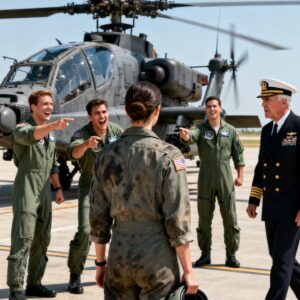
THE GHOST OF KANDAHAR: They Buried My Career and Mocked My Name, But When The Admiral Saw My Sealed File, He Unleashed A War Machine They Never Saw Coming
PART 1: THE INVISIBLE WOMAN The Alabama heat at 0530 didn’t just hit you; it strangled you. It was a physical weight, a wet, suffocating blanket that smelled of JP-8 jet fuel, heated asphalt, and the stale, recycled air of…
End of content
No more pages to load