PART 1
I am nobody.
I am the furniture. I am the background noise. I am the gap between the important people.
On Redeye Flight 227 from Los Angeles to Boston, I am Seat 14C. The middle seat. The purgatory of air travel. The spot you only end up in if you’re broke, late, or desperate. I am all three.
At 36,000 feet, the cabin is a dim cathedral of flickering screens and open-mouthed sleepers. The air is recycled, dry, and smells faintly of stale coffee and other people’s exhaustion. My hands rest flat on my thighs, fingers spread evenly against the worn denim of my jeans. I don’t move. I don’t fidget. I breathe in a box pattern—four counts in, four counts hold, four counts out, four counts hold.
It’s not meditation. It’s maintenance. It’s the only way to keep the noise in my head from drowning out the hum of the engines.
To my left, in the window seat, is a man named Garrett. I know his name because he’s been on a call about a merger worth twelve million dollars since we hit cruising altitude, despite the flight attendants asking him three times to use headphones. He’s wearing a suit that costs more than my car, and his elbow has annexed the entirety of our shared armrest. He keeps glancing at my flannel shirt and scuffed hiking boots with a look that sits somewhere between pity and annoyance. He thinks I’m some drifting backpacker, a nobody heading east to wash dishes or walk dogs.
He’s right about the nobody part. He’s wrong about the rest.
To my right, in the aisle seat, is a girl with purple-tipped hair and the frantic energy of a hummingbird. Her name is Sienna. I know this because I’ve seen her type it into four different social media apps in the last hour. She has dropped her phone twice, her water bottle once, and ten minutes ago, she exploded a bag of pretzels across my lap like confetti.
“Oh my God, I am so sorry,” she’d gasped, eyes wide.
“It’s fine,” I whispered, brushing the salt from my jeans. I didn’t make eye contact. Rule number one of disappearing: never invite a connection. If they look at you, look through them. If they speak to you, give them nothing to hold onto.
Sienna had already forgotten me before the last pretzel hit the floor. That’s good. That’s safe.
I close my eyes, leaning my head back against the headrest that is too hard and too high. I try to sleep, but my body refuses to unclench. It’s been three years, and I still can’t sleep on planes. I can’t sleep anywhere that moves. My brain is still wired to a frequency that doesn’t exist in the civilian world. I’m listening to the hydraulics. I’m feeling the subtle vibration of the number two engine through the floorboards. I’m tracking the flight attendant’s footsteps by the pressure changes in the aisle.
The beverage cart rattles past. The flight attendant, a woman with a smile that looks stapled onto her face, offers Garrett a gin and tonic. She gives Sienna a Coke. Her eyes slide over me like I’m a smudge on a windowpane.
“Water, please,” I say.
She hands me a plastic cup without looking at me. The transaction takes three seconds. I am invisible.
Perfect.
Three years ago, I died. Technically, I’m “Killed in Action.” A tragic training accident over the Black Sea. Closed casket. Flag folded into a triangle. A memorial service where people cried and said things like ultimate sacrifice and hero. I read the obituary myself in a dusty internet café in Prague. It was a nice obituary. Very moving. It left out the part about the unauthorized mission, the bad intel, and the five good men who drowned in freezing water while I swam away.
So now I am Brin Holstead. I work odd jobs. I pay cash. I don’t have a permanent address. I don’t fly… usually. But my sister is sick in Boston, and the train would have taken too long, and for once, the need to be a sister outweighed the need to be a ghost.
Just six hours, I tell myself. Just get through six hours.
The plane hits a pocket of turbulence. It’s nothing serious—just a little “chop,” as pilots like to say. The fuselage shudders, and the overhead bins rattle like loose teeth. A few people gasp.
Garrett pulls his noise-canceling headphones away from one ear and looks at me with a smirk. “Nervous flyer, huh?”
I realize my right hand is tapping a rhythm on my thigh. Tap, tap, pause. Tap, pause, tap. Morse code. S-O-S. Unconscious habit.
“Something like that,” I say, my voice rusty from disuse. “First time flying.”
“Relax,” he says, mansplaining gravity. “It’s just air currents. Totally normal.”
“No,” I say. It comes out sharper than I intended.
He blinks. “Excuse me?”
I don’t explain. I don’t tell him that I’m not tapping because I’m scared of the bumps. I’m tapping because I’m watching the flex of the wing through his window, and the oscillation period is off by a fraction of a second. The dampeners are working too hard.
“Nothing,” I say, retreating. “Thanks.”
He rolls his eyes and puts his headphones back on. He has dismissed me. I am just a skittish girl in flannel who doesn’t understand physics.
The turbulence smooths out. The cabin settles back into its rhythm of snores and soft chimes. I force my hand to stop tapping. Four counts in. Four counts out.
Then I smell it.
It’s faint at first. If you weren’t trained to hunt for it, you’d miss it. It’s not the smell of dinner heating up in the galley or the acrid tang of someone’s overuse of body spray.
It’s chemical. Sharp. Like ozone after a lightning strike, mixed with the sickening sweetness of melting plastic.
My eyes snap open. I sit up, my spine rigid. I scan the cabin. No one else is reacting. The flight attendants are chatting near the rear galley, laughing at a joke I can’t hear. Garrett is typing an email. Sienna is asleep, mouth slightly open.
But the smell is there. It’s getting stronger.
Electrical, my brain catalogs. High voltage. Wire insulation burning.
I lean forward, straining against the seatbelt. My eyes dart to the ceiling panels, then toward the cockpit door, forty feet away. My breathing shifts. The box pattern is gone. Now I’m breathing for combat—shallow, efficient, ready to move.
“Come on,” I whisper to no one. “Don’t do this.”
Sienna stirs, blinking sleepily at me. “Did you say something?”
“No.” My voice is flat, final. But my body is a coiled spring.
The overhead lights flicker.
It’s barely a blink. Most people would think it’s just their eyes playing tricks on them. But I see it. And then I hear it.
A thud.
It’s a dull, heavy sound, like a sack of cement being dropped on a carpeted floor. It comes from the front. From behind the reinforced door that separates the sheep from the shepherds.
The intercom crackles with static. Then silence. Dead air.
I see Grace, the lead flight attendant, stop mid-sentence. She’s been flying for twenty years; I can tell by the way she moves, the efficiency of her posture. She knows the sounds of this plane. She knows that thud wasn’t a beverage cart hitting a wall. She picks up the interphone handset, the one that connects to the flight deck. She presses a button. She waits. She frowns. She presses it again—rapidly this time.
Her face goes the color of old parchment.
“That’s weird,” she mouths to her colleague.
The lights flicker again. Longer this time. A full second of darkness before the emergency strip lighting kicks in, bathing the cabin in a sickly yellow glow.
“What the hell?” Garrett pulls his headphones off. “Power surge?”
I am already unbuckling my seatbelt. The metallic click sounds like a gunshot in the sudden quiet of my immediate vicinity.
“Hey,” Sienna says, pointing to the illuminated sign above us. “The seatbelt light is on. You can’t get up.”
I ignore her. I ignore the rules. I ignore the three years I spent trying to be invisible. I stand up in the aisle, my legs finding their balance automatically as the floor beneath us begins to tilt.
“Ma’am!” Grace calls out from the front, seeing me rise. “Sit down immediately! We are experiencing some—”
The plane lurches.
It’s not turbulence. This is a violent, uncommanded bank to the left. It’s hard—fifteen degrees, then twenty. Gravity shifts. A laptop slides off a tray table and shatters in the aisle. A baby starts screaming. Passengers gasp, a collective intake of breath that sucks the oxygen out of the room.
We are falling.
My stomach drops, that sickening elevator sensation times a thousand. We aren’t gliding; we are spiraling. The nose is pitching down. The wing is dipping.
Garrett screams. It’s a high, undignified sound.
I don’t scream. I move.
I am walking uphill against the G-force, grabbing headrests to pull myself forward. People are shouting at me, grabbing at my legs. “Sit down! You’re gonna get killed!”
I flow through the chaos like water. I’ve walked on the decks of carriers pitching in hurricane-force seas. I’ve run across landing zones while mortar fire chewed up the ground around me. Walking up the aisle of a United Boeing 777 in a dive is just physics.
I reach the forward galley. Grace is there, clutching the wall phone with one hand and the jump seat with the other. She is terrified.
“Get back to your seat!” she yells, her voice cracking.
“Open the door,” I say.
“What?” She stares at me. I’m wearing a flannel shirt and jeans. I look like a hiking instructor, not a savior. “Are you crazy? Get back—”
“Open the cockpit door,” I say again. I don’t shout. I don’t need to. I use the Voice. It’s a tone you learn in the teams, a frequency that bypasses logic and hits the part of the brain that is hardwired to obey an alpha. “Captain Fulton is down. You heard the thud. You smell the fire. Open the door or we all die.”
“I can’t… protocol…” She’s hyperventilating.
The plane jerks violently to the right, overcorrecting. The nose drops further. We are picking up speed. I can feel the airframe vibrating, a low groan of metal being stressed beyond its limits.
I step into her personal space. I lock eyes with her. “Look at me. Look at my eyes. Do I look scared?”
She stares at me. She sees the chaos around us, the screaming passengers, the falling luggage. And then she sees me. Stillness. Absolute, terrifying stillness.
“No,” she whispers.
“Open it. Code. Now.”
She turns to the keypad. Her hands are shaking so badly she misses the first number.
“Breathe,” I command. “Again.”
She punches it in. Beep. Beep. Beep. Clunk.
The locking mechanism disengages. I shove the door open and step into hell.
The cockpit is filled with gray smoke. It’s thick, choking, swirling in the air currents from the vents. The smell of burning insulation is overpowering. Sparks are spitting from the overhead panel like angry fireworks, showering the center console in hot embers.
Captain Fulton is slumped in the left seat. He’s unconscious, his head lolling against the side window at an unnatural angle. There’s blood on his temple.
In the right seat, the First Officer is fighting a war he is losing.
He’s young. Too young. His face is a mask of sheer panic. He’s gripping the yoke so hard his knuckles are white, his tendons standing out like steel cables. He is hyperventilating, gasping for air that is full of smoke.
“Mayday! Mayday!” he is screaming into his headset, but he’s not pressing the transmit button. “We’re losing it! I can’t… I can’t hold it!”
The plane is in a graveyard spiral. We are banking past forty degrees. The artificial horizon is a mess of tumbling lines. The altimeter is unwinding so fast it’s a blur. 30,000 feet. 29,500. 29,000.
I don’t think. I don’t hesitate. The “me” that is Brin Holstead—the quiet girl who eats pretzels and fears conversation—evaporates.
Phoenix takes the controls.
I grab the fire extinguisher from the wall mount behind the pilot’s seat. I pull the pin and squeeze. A burst of chemical foam hits the sparking overhead panel. Psst. Psst. Short bursts. Controlled. I smother the source of the electrical arc. The sparks die.
The First Officer, DeMarco, whips his head around. His eyes are wide, wild animals trapped in a cage.
“Who the hell are you?” he screams. “Get out! Get out!”
“Level your wings,” I say. My voice is calm. Clinical. “You’re over-controlling. Let go of the yoke.”
“Get out!” He tries to shove me, but his hand is weak.
“Your left engine is losing pressure,” I tell him, scanning the instruments over his shoulder. I read the glass cockpit panel faster than he can read a comic book. It’s a language I speak better than English. “You’re fighting the asymmetry. Pull back the throttle on Engine Two. Match the thrust.”
“I… what?”
“Do it!” I bark.
He flinches, but he does it. He pulls the right throttle back. The violent yawing stops. The plane shudders, then begins to respond to the inputs.
“Now, roll right. Gently. Three degrees. Pull the nose up. Horizon is your friend. Find the blue.”
He follows my voice. He’s drowning, and I am the rope. He finds the horizon. The plane levels out. The screaming descent slows. The altimeter stabilizes at 24,000 feet.
DeMarco slumps back in his seat, gasping for air, sweat dripping off his nose. The cockpit is quieter now, save for the master caution alarm still wailing about the electrical failure.
I reach over his shoulder and silence the alarm. The silence that follows is deafening.
I slide into the jump seat behind the Captain. I buckle in. My eyes never leave the panel.
“Status,” I say.
DeMarco turns to look at me fully for the first time. He sees the flannel. The messy hair. The hiking boots.
“You’re… you’re a passenger,” he stammers. “You’re from Economy.”
“Status, First Officer,” I repeat. Sharper. “Fuel. Hydraulics. Souls on board.”
He blinks, his brain trying to reconcile the image of a random woman with the authority in my voice. “Fuel is… gauges are fluctuating. I think we lost the transfer pump on the left main. Hydraulics A-system is low pressure. 164 souls.”
“164,” I repeat. 164 people. 164 ghosts if we screw this up.
“Are you a pilot?” DeMarco asks. “Do you fly for United?”
I hesitate. This is the moment. The cliff edge. If I answer him, there is no going back. If I tell him the truth, Brin Holstead ceases to exist.
“No,” I say. “I don’t fly for United.”
“Then who are you?”
I look at the overhead panel. The fire is out, but the damage is done. We are flying a wounded bird on partial power in the dark.
“Right now,” I say, “I’m the only reason you’re not a crater in the Nevada desert.”
The radio crackles. The silence from Air Traffic Control is broken.
“United 227, Boston Center. Radar contact lost. Do you copy? United 227, declare status immediately.”
DeMarco reaches for the mic, his hand shaking. “Center, this is… this is United 227. We experienced severe electrical failure and an upset. Recovering from a dive. Captain is incapacitated.”
“Copy, 227,” the controller says. The tension in his voice keeps it tight. “Say intentions.”
DeMarco looks at me. He is the pilot in command, but he is looking at the girl in the flannel shirt for orders. He is terrified. He knows he can’t handle this alone. The systems are degrading. The computer screens are flickering.
“Tell them we need a vector to the nearest suitable field with a 10,000-foot runway,” I say quietly. “Tell them we have flight control issues and we need priority handling.”
He relays the message.
“Roger, 227. Nearest suitable is… stand by.” The controller pauses. Then his voice changes. It drops an octave. It becomes serious in a way that makes the hair on the back of my neck stand up. “United 227, be advised. We had an automated distress signal from your transponder indicating a hijacking code before you went offline. We have military assets scrambling to your location.”
DeMarco pales. “Hijacking? No, tell them it’s a malfunction! The electrical surge must have tripped the code.”
“United 227,” the controller continues, “You have two F-35 Lightning II aircraft from the 158th Fighter Wing inbound. Intercept in two minutes. Do not deviate from your current heading.”
F-35s.
My stomach turns over. Not from the turbulence. From the memory.
Fighters don’t just escort civilians for fun. If we don’t answer the radio, or if we do something unpredictable, their orders won’t be to help us. Their orders will be to shoot us down to protect the population on the ground.
“Two minutes,” DeMarco whispers. “They think we’re terrorists.”
He looks at me. “What do we do?”
I stare out the front windscreen into the black void of the night. I can feel them out there. Two predators moving at supersonic speeds, hunting us in the dark.
“Fly the plane, DeMarco,” I say softly. “I’ll handle the fighters.”
“You?” He laughs, a hysterical, jagged sound. “What are you going to do? Wave at them?”
I reach for the spare headset hanging on the bulkhead. I put it on. The weight of it against my ears feels like home. It feels like armor.
“Something like that,” I say.
I look at my hands. They aren’t shaking anymore. The tapping has stopped. The box breathing is gone. I am calm. I am cold. I am back.
“Just keep us level,” I tell him. “And whatever you do, don’t let them see you sweat.”
I key the mic, but I don’t speak yet. I wait. I watch the TCAS scope—the radar screen that shows other aircraft. Two blue diamonds appear on the edge of the range. They are closing fast. 500 knots.
They aren’t just coming to look. They are coming to kill.
PART 2
They arrive in silence, but their presence screams.
One second, the window to my left shows nothing but the endless, indifferent black of the night sky. The next, a shadow detaches itself from the darkness. It slides into position off our port wing, just fifty feet away.
It is a shark made of radar-absorbent alloy. An F-35 Lightning II. The green glow of formation strips outlines its lethal geometry. I can see the helmet of the pilot, a faceless insect eye staring across the void at our crippled airliner.
“Oh my god,” DeMarco breathes. “They’re armed.”
He’s right. I can see the external pylons. AIM-9X Sidewinders. Heat-seekers. If we make a wrong move, if we descend too fast, if we fail to respond, that pilot won’t hesitate. He has orders to protect the millions of people sleeping in the suburbs below us. To him, we aren’t 164 souls. We are a potential missile.
The radio crackles. The voice is ice-cold. No static. Pure digital clarity.
“Civilian aircraft United 227. This is United States Air Force flight Havoc 1-3. You are intercepting a National Security Zone. Identification of pilot in command is required immediately. Acknowledge.”
DeMarco grabs the mic. His hand is shaking so bad the cord rattles against the console. “Havoc, this is United 227… First Officer DeMarco. Captain is down. We have… we have a situation.”
“United 227, state nature of situation. Do you have unauthorized personnel on the flight deck? We are reading multiple heat signatures.”
DeMarco looks at me. His eyes are wide, pleading. They know. The sensors on that jet can see through the fuselage like it’s made of glass. They know there’s someone in the jump seat.
“Tell them,” I say.
“What?”
“Tell them you have assistance. Tell them who I am.”
“I don’t know who you are!” DeMarco snaps, the stress finally fracturing his composure. “You’re a woman in a flannel shirt who knows how to dump fuel!”
“Give me the mic.”
“Are you crazy? You’re a civilian!”
“Give. Me. The. Mic.”
I don’t wait. I reach over and rip the headset cord from his jack, plugging mine into the Pilot Flying terminal. I press the Push-to-Talk switch on the yoke.
The silence on the frequency is heavy. The F-35 edges closer. I can see the pilot’s head turn. He’s locking on. He’s waiting for the excuse.
I take a breath. Four counts in. Four counts out.
“Havoc 1-3,” I say. My voice is different now. It’s not Brin, the girl from Seat 14C. It’s the voice that used to command squadrons. “This is United 227. Be advised, First Officer is flying. I am handling comms and systems management.”
A pause. “United 227, identify yourself. State credentials.”
“No credentials,” I say flatly. “Just experience.”
“Ma’am, step away from the controls immediately or we will engage. This is your final warning.”
The F-35 dips its wing. It’s the “shove.” A maneuver designed to force a plane to turn. It’s aggressive. It’s a threat.
DeMarco whimpers. “They’re going to shoot us down.”
I stare at the fighter. I know the pilot in that cockpit. Not personally, maybe, but I know the type. Young. Cocky. Running on adrenaline and strict rules of engagement. He thinks he’s looking at a terrorist. I need to change the narrative. I need to speak his language.
I press the button again.
“Havoc 1-3,” I say, dropping my voice lower, stripping away the civilian pleasantries. “Check your history files. Search for call sign Sierra-Nine-One-Phoenix. Authentication code: Tango-Whiskey-Black-Sea.”
Dead air.
DeMarco looks at me like I’ve started speaking in tongues. “What did you just say?”
I ignore him. I keep my eyes on the jet. Come on, I think. Run the code. Do it.
Five seconds pass. Ten.
In a modern aerial engagement, ten seconds is a lifetime. It’s enough time to die three times over.
Then, the radio clicks.
“United 227…” The fighter pilot’s voice has changed. The ice is gone. Replaced by something else. Confusion. Shock. “Say again? Did you say Phoenix?”
“Affirmative, Havoc. This is Phoenix. Still flying.”
Another pause. Longer this time. I can almost hear the frantic typing in the AWACS plane controlling the fighters, the calls going out to command, the disbelief rippling through the secure channels. Phoenix. The ghost story. The warning they give rookie pilots about what happens when you push too hard.
“Phoenix…” The pilot’s voice comes back, and it sounds younger now. Less robotic. “Ma’am, we were briefed… the Black Sea operation. Three years ago. The records say KIA. No survivors.”
“The records are wrong,” I say. “I’m looking right at you, Havoc. Check your six. My lift vector is vertical. I’m flying a heavy with a fried electrical bus and an unconscious Captain. Are you going to shoot me down, or are you going to escort me home?”
The F-35 suddenly snaps its wings level. It backs off, sliding from an attack position into a protective parade formation. The second fighter, which had been lurking in my blind spot, pulls up on the right wing. They are flanking us. Guarding us.
“Copy that, Phoenix,” the pilot says. There is awe in his voice now. Genuine, unmasked reverence. “God, it is an honor, Ma’am. We heard the stories. Havoc flight is with you. We’ll clear the path. You have the sky.”
I let out a breath I didn’t know I was holding.
DeMarco is staring at me with his mouth open. The panic has been replaced by a deep, bewildered curiosity.
“Phoenix?” he whispers. “Black Sea? You’re… you’re that Phoenix? The Navy SEAL aviator?”
“Focus on the instruments, DeMarco,” I snap, deflecting. “Watch your airspeed.”
“No,” he shakes his head. “I heard about you. Everyone in flight school heard about you. You landed a Blackhawk on a sinking cutter in a Force 10 gale. You… you died. I saw the news.”
“I’m not dead,” I say, my eyes scanning the engine gauges. “Obviously.”
“Why?” he asks. “Why let everyone think—”
BOOM.
The plane shudders violently. A low-frequency concussion wave slams through the airframe. The nose yaws hard to the left, snapping my head back against the headrest.
“Engine One!” DeMarco screams.
I look at the engine display. The bar graph for the left engine isn’t just dropping; it’s gone. Red lights are flashing across the board. FIRE. LOW PRESSURE. VIBRATION.
“We lost the left engine!” DeMarco yells, wrestling the yoke as the plane tries to roll onto its back. “It’s seized!”
“Rudder!” I command, grabbing his shoulder. “Step on the right rudder! Counter the yaw!”
He stomps on the pedal. The plane skids through the air, fighting the dead weight on the left wing. We are a heavy, crippled beast now, dragging a massive anchor through the sky.
“Fire handle, Engine One, pull and rotate!” I order.
DeMarco reaches up, grabs the illuminated red handle, and yanks it down. He twists it left.
Whoosh. The fire bottles discharge. The red light flickers and dies. But the engine is dead metal. We are flying on one turbine.
“We’re heavy,” I say, my mind racing through the math. “We’ve got too much fuel for a single-engine landing. We’re going to come in hot.”
“We can’t hold altitude,” DeMarco says, his voice rising in pitch. “We’re drifting down. 22,000. 21,500.”
“Trade altitude for airspeed,” I instruct. “Don’t pinch it. Let her descend. We just need to make Boston.”
I key the mic again. “Havoc, this is Phoenix. We have lost Engine One. We are single-engine, heavy, and declaring a full emergency. Clear the airspace into Logan. I want a straight-in approach. No turns. We don’t have the thrust to maneuver.”
“Copy, Phoenix,” the fighter pilot responds instantly. “We are coordinating with Boston Approach. They are clearing the skies. You’re number one for everything, Ma’am. All traffic is being diverted.”
I lean back, the adrenaline sour in my mouth. My hands are steady, but inside, I am vibrating. It’s the combat high. The hyper-focus. It’s the only time I ever feel real.
DeMarco glances at me again. The fear is still there, but now he’s looking at me like I’m a mythological creature that just crashed into his life.
“You really did it,” he murmurs. “You just… commanded a squadron of F-35s.”
“I used to lead them,” I correct him softly.
“Why did you hide?” he asks again. The question hangs between us, heavier than the smoke. “If you survived… why stay dead?”
I look at the tattoo peeking out from under my flannel sleeve. The trident. The anchor. The wings. I pull the sleeve down.
“Because the mission failed, DeMarco,” I say. My voice is hollow. “Five men died. Good men. And I was the one flying. I was the one who made the call to go in.”
“But the report said mechanical failure,” he argues. “It exonerated you.”
“The report was a lie,” I whisper. “A cover-up to protect the program. I knew the weather was turning. I knew the risks. I thought I was good enough to beat the odds.” I look him in the eye. “I wasn’t. I survived because I got lucky. They died because I was arrogant. How do you go back to a hero’s welcome after that? How do you look their wives in the eye?”
He falls silent.
“So I let Phoenix die with them,” I finish. “It seemed… fair.”
“Well,” DeMarco says, his voice trembling as he fights the yoke to keep us level. “I’m glad you’re not dead today. Because I don’t think I can land this thing alone.”
“You won’t have to,” I promise him. “I’m right here.”
I look out the window. The F-35 is still there, riding the wind. A guardian angel with missiles.
Welcome back to the war, Brin, I think. Hope you’re ready for the landing.
PART 3
The lights of Boston are a sprawling galaxy of amber and white beneath us.
To anyone else, it’s a beautiful sight. To me, it’s a threat environment. We are coming in too fast. 180 knots. A Boeing 777 on one engine, loaded with fuel and panic, flies like a brick with wings.
“Flaps 20,” I command.
“Speed checks, Flaps 20,” DeMarco repeats. He moves the lever. The plane shudders as the drag increases. The single right engine whines, straining to keep us in the air.
“We’re drifting left,” I warn him. “Right rudder. Fight the asymmetry.”
“My leg is shaking,” he grunts. He’s exhausted. The physical force required to keep the plane straight is immense.
“Lock your knee,” I say. “Do not let us drift. If we get slow and crooked, we spin. If we spin, we die.”
“Runway in sight,” he calls out.
I see it. Two parallel strips of white lights cutting through the darkness of the harbor. Runway 4 Right. It looks impossibly short.
“Havoc flight breaking off,” the fighter pilot calls over the radio. “We’ll see you on the deck, Phoenix. Good luck.”
The two F-35s peel away in a sharp, vertical climb, their afterburners lighting up the night like twin comets. A salute.
Now it’s just us.
“Gear down,” I say.
“Gear down.” The rumble of the wheels locking into place vibrates through the floor. The noise level jumps. The plane wants to sink.
“Power,” I bark. “Add power! Don’t let the speed bleed off.”
“I’m at 90% N1!” DeMarco yells. “She’s sluggish!”
“She’s tired,” I say. “Force her.”
We cross the harbor. The water is black and close. 500 feet. 400 feet. The radar altimeter starts its robotic countdown. FIFTY. FORTY. THIRTY.
We are floating. We are too fast.
“Put it down,” I say. “Don’t try to grease it. Don’t try to make it pretty. Plant the wheels.”
“I’m trying!”
“Cut throttle… NOW!”
DeMarco pulls the throttle back. The engine spools down. The heavy jet drops out of the sky for the last ten feet.
SLAM.
We hit the runway hard. Oxygen masks drop from the ceiling in the back. My teeth snap together. The plane bounces, shudders, and settles.
“Reverse thrust!” I yell. “Brakes! Max manual braking!”
The roar of the single thrust reverser is deafening. The plane pulls violently to the right, towards the grass. DeMarco fights it, stomping on the left brake pedal. We skid, the tires screaming, smoke billowing.
We hurtle down the runway. 100 knots. 80 knots. The end of the runway is coming up fast.
“Stop,” I whisper, gripping the armrests. “Stop, you heavy bitch.”
60 knots. 40.
We shudder to a halt with less than three hundred feet of pavement remaining.
Silence.
For three seconds, nobody breathes. The only sound is the whining spin-down of the right engine and the frantic beating of my own heart.
Then, the cabin erupts. Even through the reinforced door, I can hear it. Screaming. Cheering. The chaotic, beautiful sound of people realizing they are going to see tomorrow.
DeMarco slumps over the yoke, burying his face in his arms. He is sobbing. Big, heaving sobs of relief.
“Good job,” I say softly. I reach over and unbuckle my harness. My hands are shaking now. The adrenaline is fading, leaving the crash behind.
I stand up. My legs feel like rubber. I open the cockpit door.
Grace is standing there. Her makeup is ruined. She looks at me, then at the unconscious captain, then back at me.
“We’re down?” she asks, voice trembling.
“We’re down,” I say.
Before I can say anything else, blue lights flood the cabin. Emergency vehicles surround the plane. The front door is popped open. Firefighters storm in. Paramedics push past me to get to Captain Fulton.
Then, a man in a dark suit enters. He’s not a paramedic. He walks with the stiff, angry gait of a bureaucrat who has been woken up. He is followed by a woman with an FAA badge.
“Who is flying this aircraft?” the man demands.
DeMarco raises his hand weakly. “I am.”
The man looks at DeMarco, then at me. He sees the flannel. “And you? Who are you?”
“I’m the passenger,” I say.
“You’re in a restricted area,” the FAA woman snaps. “You’ve violated federal aviation regulations. I need your ID immediately. You are under arrest for interference with a flight crew.”
“She saved us!” DeMarco yells, spinning his chair around. “She flew the damn plane!”
“It doesn’t matter,” the woman says, reaching for my arm. “She’s unauthorized.”
“Don’t touch her.”
The voice comes from the doorway. It’s deep. Commanding.
A man in a Navy Dress Blue uniform steps onto the plane. He has a chest full of ribbons and the silver eagle of a Captain on his collar. Behind him are two MPs.
“Captain Kale?” I whisper. My old commanding officer.
He looks at me. His face is a mask of stone, but his eyes are burning. He looks older than I remember.
“Commander Holstead,” he says. He uses my rank. My dead rank. “Step away from the civilian, Inspector. This officer is under the jurisdiction of the Department of the Navy.”
“She’s a civilian,” the FAA woman protests. “She’s nobody.”
“She is a highly decorated Naval Aviator who has been… missing,” Kale says. “And she is coming with me.”
He gestures to me. “Let’s go, Brin. We have a lot to talk about.”
I walk out of the cockpit. I have to pass through the First Class cabin to get to the exit.
The aisle is jammed with passengers trying to get their bags, hugging each other. But as I step out, the noise stops.
Garrett is standing in row 14. He’s holding his briefcase. He looks at me—really looks at me. The arrogance is gone. He looks small. Humble.
“You…” he stammers. “You were the pilot.”
I don’t stop. I keep walking.
“Hey!”
I turn. It’s the Marine. The man from row 23. He’s standing in the aisle, blocking my path. He’s wearing a faded jacket. He sees the MPs waiting for me. He sees Kale. He knows what this is.
He snaps to attention.
It’s perfect. Rigid. The sharpest salute I’ve ever seen.
“Thank you, Ma’am,” he says. His voice cracks.
I freeze. I haven’t been saluted in three years. I’m a ghost. I’m a deserter. I don’t deserve it.
Then, a little hand tugs on my flannel shirt.
It’s a girl. Maybe eight years old. She has messy pigtails and holding a stuffed bear.
“Are you the superhero?” she asks.
I look down at her. My throat closes up. “No, sweetie. I’m just… I’m just a passenger.”
“My daddy says you saved us,” she says. She reaches out and hugs my leg. She buries her face in my dirty jeans. “Thank you for saving my daddy.”
That breaks me.
The wall I built—the wall of Seat 14C, the wall of Nobody, the wall of Dead Girl—it shatters. Tears spill hot and fast down my cheeks. I kneel down and hug her back. I hold onto this little girl like she’s the only solid thing in the universe.
“You’re welcome,” I whisper.
I stand up. I wipe my face. I look at Kale.
“I’m ready,” I say.
The debriefing room at the Naval base is sterile and cold. I’ve been here for four hours.
Kale sits across from me. He’s been shouting for the first hour. Now he’s just tired.
“Do you have any idea what you’ve done?” he asks. “You faked your death. You deserted. You’ve been living off the grid. And then you decide to announce your return by hijacking a commercial frequency and calling in an airstrike escort?”
“I didn’t have a choice,” I say. “The plane was going down.”
“You always have a choice,” he says. “You could have stayed dead.”
“No,” I say. “I couldn’t.”
The door opens. A woman walks in.
My heart stops.
It’s Jennifer. Marcus’s wife.
She looks different. Harder. There is gray in her hair that wasn’t there three years ago. She is holding a file folder. Kale stands up and leaves the room. He closes the door.
It’s just us. The widow and the ghost.
“Jennifer,” I breathe. “I…”
She walks across the room. She doesn’t stop until she is inches from my face.
Slap.
Her hand connects with my cheek. It stings, sharp and hot. I don’t flinch. I deserve it. I deserve worse.
“You coward,” she hisses. Her eyes are full of tears. “You absolute coward.”
“I know,” I say.
“We buried you,” she cries. “We mourned you. Marcus loved you like a sister. And you let us think you died with him? You let me grieve for you while you were… what? Waiting tables? Hiding?”
“I couldn’t face you,” I weep. “I couldn’t tell you that I lived and he didn’t. I couldn’t look at his kids.”
“So you made it about you,” she says, her voice breaking. “You made his sacrifice about your guilt.”
She grabs my shoulders. She shakes me.
“He stayed behind so you could get out, Brin! He ordered you to leave the chopper! He died so Phoenix could live. And you threw it away!”
I fall to my knees. “I’m sorry. I’m so sorry.”
She looks down at me. She takes a shuddering breath. She wipes her face.
“Get up,” she commands.
I look up.
“Get up, Commander.”
I slowly stand.
“You don’t get to be dead anymore,” she says firmly. “You don’t get to hide. You owe him a life. You owe him a good life. You hear me? You are going to go out there, you are going to take your punishment, and then you are going to fly again. Because if you waste the life my husband bought for you, I will never forgive you.”
She reaches out and touches the red mark on my cheek. Her hand softens.
“Welcome home, Brin.”
EPILOGUE
The press conference is blinding.
I stand at the podium. I am not wearing flannel. I am wearing my Dress Blues. The uniform was in storage, but it still fits. The ribbons are straight. The gold wings gleam under the television lights.
Commander Kale stands to my left. Jennifer stands to my right.
“The United States Navy,” Kale reads from the statement, “acknowledges the survival of Lieutenant Commander Brin Holstead. Following a classified operation three years ago, Commander Holstead suffered from severe trauma and was mistakenly identified as KIA. Her actions yesterday aboard Flight 227 saved 164 lives.”
He pauses. He looks at the cameras.
“She is being reinstated to active duty, pending a medical and psychological review.”
The reporters start shouting questions. Where were you? Why did you hide? What is the Phoenix?
I lean into the microphone.
“I was lost,” I say. The room goes quiet. “I was a ghost in seat 14C. I thought that if I stayed invisible, the pain couldn’t find me. But I learned something at 30,000 feet.”
I look at the camera. I imagine Garrett watching. I imagine Sienna. I imagine the little girl with the bear.
“You can’t save anyone if you’re hiding,” I say. “My name is Brin Holstead. My call sign is Phoenix. And I am reporting for duty.”
I step back. I salute.
And for the first time in three years, I don’t feel like I’m falling. I feel like I’m flying.
News
THE EXILED SNIPER: WHEN THE WORLD BRANDED ME A TRAITOR, I BECAME THE GHOST THAT SAVED THEM FROM THE SHADOWS
PART 1: THE SILENT WATCHER The wind at eleven thousand feet doesn’t just blow; it bites. It carries the metallic taste of snow and the ancient, dusty scent of stone that has been baking and freezing for millennia. I lay…
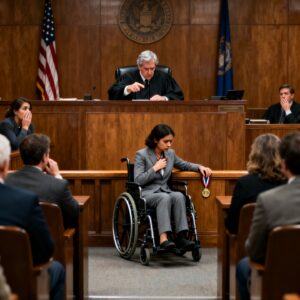
The Judge Called Me a Fraud and Demanded My Medal. He Had No Idea I Was the Reason His Son Was Still Alive.
PART 1: THE HUMILIATION The phantom rhythm of rotor blades was the first thing I heard. Thump. Thump. Thump. It wasn’t real, of course. It was just the ceiling fan in my San Diego apartment, slicing through the warm October air….

I Was Shackled in a Courtroom as a Homeless Thief, Ignored by Everyone—Until the Clerk Read My Service Number, the Judge Stood Up in Dead Silence, and the Man I Saved from Hell Recognized the Ghost He Thought Died in Fallujah.
PART 1: THE GHOST IN THE ORANGE SUIT The holding cell smelled of bleach and urine—a chemical cocktail meant to sanitize misery, but it only made it sting the back of your throat. I sat with my back pressed against…
I Was Supposed to Be Dead: The Day a SEAL Admiral Froze Mid-Speech, Saw the Forbidden Tattoo on My Wrist, and Exposed the Classified Secret I’d Hidden from My Son for Twenty Years.
PART 1: THE GHOST IN THE BACK ROW You learn to be invisible. That’s the first rule of survival when you’re walking around with a grave that already has your name on it. You learn to take up less space,…
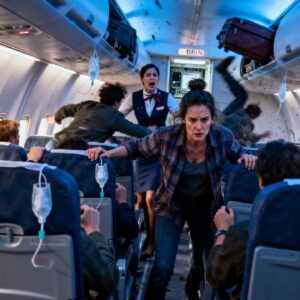
The Ghost of Flight 227: She Was Supposed to Be Dead, But When the Captain Collapsed and the Plane Screamed toward Earth, the Woman in Seat 14C Revealed a Secret That Would shake the Pentagon to Its Core
PART 1: THE INVISIBLE PASSENGER The smell of economy class is always the same. It’s a cocktail of stale coffee, recycled air, and the sour, metallic tang of human exhaustion. I was breathing it in, four counts in, four counts…
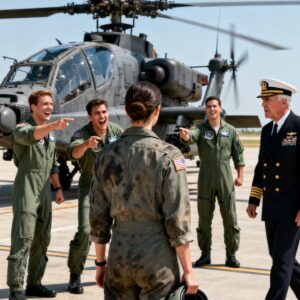
THE GHOST OF KANDAHAR: They Buried My Career and Mocked My Name, But When The Admiral Saw My Sealed File, He Unleashed A War Machine They Never Saw Coming
PART 1: THE INVISIBLE WOMAN The Alabama heat at 0530 didn’t just hit you; it strangled you. It was a physical weight, a wet, suffocating blanket that smelled of JP-8 jet fuel, heated asphalt, and the stale, recycled air of…
End of content
No more pages to load