PART 1: THE SILENT WATCHER
The wind at eleven thousand feet doesn’t just blow; it bites. It carries the metallic taste of snow and the ancient, dusty scent of stone that has been baking and freezing for millennia. I lay motionless, my body molded into a shallow depression I’d carved into the shale before the sun had even thought about cresting the Hindu Kush.
Seventeen degrees Fahrenheit. Wind gusting to twelve miles per hour from the northwest. Barometric pressure dropping.
My mind cataloged these details automatically, a habit I couldn’t break even if I wanted to. And God knows, I had tried to break it. I wasn’t Sergeant Rowan Blake anymore. I wasn’t a Ranger. I wasn’t a sniper. According to the United States Army and a court-martial panel that had stripped me of my dignity three years ago, I was a liar. A disgrace. A civilian contractor with a revoked security clearance and a “conduct unbecoming” stamp on my soul.
Now, I was just a surveyor for Apex Solutions, mapping topographical features for a civilian engineering firm that probably didn’t exist, in a province I wasn’t supposed to be in.
I exhaled slowly, watching the mist of my breath dissipate against the grey rock. Beside me, the theodolite sat on its tripod, its lens pointed dutifully toward the Camdesh Valley floor like a cyclops staring into hell. It was safe work. Boring work. The kind of work that kept former soldiers employed without requiring them to carry a weapon.
But old habits die hard. And paranoia dies hardest of all.
I shifted my eye to the surveying scope, panning across the valley floor. Below, the village of Darasuf clung to the eastern slope like a desperate climber. Stone buildings rose in terraces, smoke curling lazily from morning cooking fires. It looked peaceful. Biblical, almost. A woman fetching water. A goat herder moving his flock. The rhythms of survival that had persisted here long before America brought its war, and would persist long after we left.
Then I saw them.
On the narrow road winding through the valley floor, a patrol was moving north. Eight figures. Distinctive tan and green. The way they moved—spacing perfect, sectors of fire constantly scanned, the fluid, predatory grace of apex predators—screamed Ranger.
Something tightened in my chest. A phantom limb pain where my pride used to be. I knew that walk. I knew the weight of the plates on their shoulders, the grit in their boots, the hyper-awareness that made the hair on the back of your neck stand up when the silence stretched too long. Three years ago, I had walked that road. I had carried that certainty like armor.
They were approaching a choke point. The valley walls pressed in tight, creating a natural funnel. A tactical nightmare.
I shifted the scope, scanning the ridgelines above them. My job was to map terrain, and over the last two weeks, I had memorized every fold, every draw, every cluster of scrub brush in this sector.
My hands froze on the adjustment dial.
On the western ridge, four hundred yards from the patrol’s vector, a cluster of boulders sat awkwardly. They hadn’t been there yesterday. I had mapped that exact grid square forty-eight hours ago—it had been bare, exposed rock. Now, there were shapes breaking the natural line of the terrain.
My pulse kicked up a notch. Don’t be paranoid, Rowan. It’s just rockslide debris.
I increased the magnification, squinting against the glare. The “rocks” had straight edges. The shadows were wrong. And then, one of the boulders shifted. Just an inch. A microscopic adjustment.
Movement.
Fighting positions. Camouflaged. Professional grade.
I swept the scope to the eastern ridge. Another position, this one dug in behind a natural outcropping, offering a perfect enfilade fire.
Ice flooded my veins, colder than the mountain air. This wasn’t a ragtag militia ambush. This was a kill box. Interlocking fields of fire. High ground dominance. Escape routes cut off. Whoever set this up knew the Ranger handbook better than the Rangers did. They were walking into a meat grinder.
I reached for the satellite phone clipped to my vest. My fingers hovered over the keypad.
Observe only. Report through proper channels. Do not engage.
Those were the terms of my parole, essentially. The conditions of my employment. The court-martial had made it clear: my judgment was flawed, my integrity non-existent. If I made this call, I was risking the last scrap of a life I’d managed to rebuild.
But eight men were walking into a grave.
I punched in the number for FOB Resolute.
“TOC, Specialist Knox,” a bored voice answered.
“This is Rowan Blake, civilian contractor, authorization code Falcon Seven Niner. I need the Operations Officer. Now.”
“Ma’am, is this a scheduled check-in? Because—”
“I have eyes on a Ranger patrol in Camdesh Valley walking into a complex ambush,” I snapped, the command voice slipping back out of my throat before I could stop it. “Get me the OIC.”
A pause. Muffled voices. Then, a deeper, older voice. “This is Major Kendall. Who is this?”
“Rowan Blake. Apex Solutions. I’m on Observation Point Falcon. Your patrol is three hundred yards from a coordinated ambush. Multiple prepared fighting positions on the east and west ridges. They need to halt. Immediately.”
“Blake…” I could hear the keystrokes on the other end. He was pulling up my file. The file that said I was a liar. “I’m looking at your profile. You’re the surveyor. The one court-martialed for filing false intelligence reports.”
The shame hit me like a physical blow, sharp and familiar. “That’s what the record says, Major. Yes.”
“Then you’ll understand why I can’t redirect a tactical operation based on your assessment. Our intel says that sector is cold. The patrol knows the terrain.”
“Major, the terrain changed overnight! I am looking at it right now. Those positions are new. They are professional. If those men cross the phase line, they are dead.”
“If you see actual hostilities, call back. Otherwise, stay off the net, Miss Blake. You’re a civilian. Let the soldiers do their job.”
The line clicked dead.
I stared at the phone, my grip tightening until the plastic creaked. Let the soldiers do their job. That’s what they told me three years ago when I reported the off-books equipment, the drones that didn’t exist, the money disappearing into black holes. Shut up and soldier, Blake.
Below, the patrol was two hundred yards out.
I looked at the theodolite. Then I looked at the long, canvas-wrapped bundle I had dragged up here against every regulation in the book.
A Remington 700 in .308 Winchester. Bought legally in Kabul. A hunting rifle. Not a military M24. No sophisticated optics, just a solid piece of glass I’d zeroed myself. It was my insurance policy in a lawless land. My secret.
I had promised myself I would never aim a weapon at a human being again. I had walked away from the violence, from the life that treated soldiers like disposable rounds of ammunition.
150 yards.
The point man was scanning, weapon up. He was good. But he wasn’t looking at the ridge nine hundred yards away. He was looking at the road.
100 yards.
The wind whispered over the rocks. Rowan.
I wasn’t Sergeant Blake anymore. I was a disgrace. I was a ghost.
But ghosts can do things the living can’t.
I unzipped the case. The cold steel felt familiar, like shaking hands with an old friend you haven’t forgiven but still love. I settled into the prone position behind the rifle, pulling the stock into my shoulder. The cheek weld was perfect. My eye found the scope.
The world narrowed down to a circle of glass.
Don’t think. Calculate.
Range: 840 yards. Wind: 12 mph, full value from the left. Elevation: minus six degrees.
The math flowed through me, silencing the doubt. I wasn’t a civilian surveyor anymore. I was a machine built for one purpose.
Down in the valley, the silence broke.
CRACK-THUMP-THUMP-THUMP.
A PKM machine gun opened up from the western ridge. The sound tore the air apart. I saw the muzzle flash bloom like a dirty flower. A second gun joined from the east. Then small arms fire, a crescendo of violence focusing on that narrow strip of road.
The Rangers reacted instantly. They dove for cover, scrambling behind rocks that were too small, into depressions that were too shallow. Dust kicked up everywhere as rounds impacted the dirt around them. They were pinned. Suppressed. Dying.
I took a breath. Let half of it out.
Focus.
I found the western machine gunner. He was prone, hunched over the weapon, the belt feeding rhythmically.
I didn’t think about the politics. I didn’t think about the court-martial. I thought about the trigger break.
Squeeze.
The rifle kicked hard against my shoulder.
840 yards away, the machine gunner slumped forward over his receiver. The gun went silent.
One.
I worked the bolt. Smooth. Fast. Brass tinkled against the stone.
The assistant gunner was grabbing the weapon, trying to push the dead man off.
Crack.
The assistant dropped.
Below, the Rangers were shouting, their voices tiny and tinny over the distance. They didn’t know I was there. They just knew the hammer that was crushing them had momentarily stopped swinging.
I shifted to the eastern ridge. Range: 880.
A fighter there was pouring fire onto the pinned squad. I settled the crosshair. Send it.
He jerked backward, his AK spraying the sky.
Now the enemy knew.
The ambushers weren’t stupid. They were professionals. Return fire started cracking over my head immediately. Snap. Snap. Snap. The sonic boom of bullets passing close is a sound you never forget. They had triangulated my position from the muzzle blast.
I rolled right, scrambling into a secondary position I’d scouted an hour ago. Shoot and move. Never be where they think you are.
I popped up ten yards away. Through the scope, I saw a man on the northern ridge. He wasn’t shooting. He was holding a radio handset and pointing. A spotter. A leader.
I put the crosshairs on his chest. Goodbye.
He dropped.
The ambush was faltering. The interlocking fire was broken. The Rangers were moving now, bounding backward, fire and maneuver. They were good. They just needed a chance.
But the enemy was adapting. They were pulling back, reorganizing. And then, a voice boomed across the valley, amplified by a bullhorn. It echoed off the canyon walls, surreal and terrifying.
“AMERICAN! CLEAR AND CONTROLLED. THIS IS COLONEL CALLAWAY. YOU ARE SURROUNDED. SURRENDER AND WE WILL ALLOW MEDEVAC. FIGHT, AND YOU DIE.”
My blood froze.
The name hit me harder than a bullet. Callaway.
I zoomed in on the northern ridge, scanning for the source of the voice. There. A man standing tall, confident, holding a bullhorn. He wasn’t hiding. He was wearing high-end tactical gear, not local rags.
Colonel Flint Callaway.
The man who had signed the logistics manifests. The man who had testified that I was unstable. The man who had looked me in the eye while my career burned to the ground and smiled. He was supposed to be retired. Gone.
Instead, he was here, leading a kill squad against American soldiers.
He raised the bullhorn again. “YOU HAVE THIRTY SECONDS.”
I centered the crosshairs on his chest. The rage was a white-hot sun in my gut. I could end it right now. I could put a .308 round through his heart and end the corruption, the lies, the nightmares.
My finger tightened on the trigger.
Movement.
In my peripheral vision, a shadow fell over me.
I spun, ripping my sidearm from its holster, rolling onto my back.
An old man stood three feet away. His hands were raised, palms open. He was Afghan, his face a map of deep wrinkles and sun-baked skin. He wore a tattered wool vest and a look of terrified desperation.
“Please,” he rasped in broken English. “No shoot. I help.”
I kept the pistol trained on his center mass. “Who are you? How did you get up here?”
“Sergey,” he panted. “From village. The men… the bad men… they take my Lara. My granddaughter.”
“Back away,” I ordered, my voice low.
“They make us watch,” he said, tears cutting tracks through the dust on his face. “They say, if we not tell them when soldiers come, they kill Lara. They holding her. Old compound. North.”
He pointed a shaking finger towards the valley. “You… you shoot good. You kill bad men. Please. Save soldiers. Save Lara.”
I lowered the gun slightly. This explained the ambush. Local spotters, coerced. Human intelligence network bought with blood and fear.
“I can’t help you,” I said, glancing back at the scope. “I have eight men down there about to die.”
“You help them,” he insisted. “But Callaway… he not stop. He take next village. Next girl. You are warrior. I see in your eyes.”
Below, the thirty seconds were up.
“TIME’S UP,” Callaway’s voice boomed.
I spun back to the rifle. Callaway was still there. But he wasn’t looking at the Rangers anymore. He was looking… up. Towards me.
He knew. He didn’t know who I was yet, but he knew someone was up here playing god with a rifle.
I took a breath. I couldn’t kill him. Not yet. If I killed the commander, the rest might panic and massacre the patrol, or execute this girl Lara. I needed to disrupt them, break their will.
I shifted my aim. Not center mass.
The bullhorn.
I squeezed.
The plastic device in Callaway’s hand exploded in a shower of sparks and shrapnel. He dove for cover, scrambling like a rat.
It was a message. I can touch you. I can kill you. And I am watching.
The valley erupted again. But this time, the Rangers were ready. They were pushing toward a ravine, using the confusion I’d bought them.
I kept firing. Crack. Rack. Crack.
Twenty-three rounds. I counted them. Seventeen hits.
By the time the Apache gunships roared overhead, painting the valley with Hellfire missiles and 30mm cannon fire, my shoulder was bruised black and blue, my barrel was smoking hot, and I was empty.
I watched the extraction birds swoop in. The Rangers piled on, battered, bloody, but alive. They were leaving.
And I was still on the ridge. Alone.
My sat phone buzzed.
“Blake!” Major Kendall’s voice was frantic now. “What the hell is happening? We have reports of a sniper engaging hostiles. Was that you?”
“Yes.”
“You are in direct violation of your contract! You just engaged in unauthorized combat operations! Do you have any idea what you’ve done?”
“I saved them,” I said, my voice flat. “It was Callaway, Major. The ambush commander. It was Flint Callaway.”
“Callaway? That’s impossible. He’s a civilian. Blake, listen to me. Air support is cleaning up. You need to clear the area immediately. We will deal with this debrief later. Do not—I repeat—do not engage further.”
The line went dead.
I looked down at the empty valley. The helicopters were shrinking dots in the distance. The silence rushed back in, heavy and accusing.
I should go. I should pack up my gear, hike down to my jeep, and drive until I hit the border. I should disappear before they arrested me again.
But I looked north. Towards the old compound Sergey had mentioned.
Callaway was down there. He had survived. He was regrouping. And he had a girl.
I looked at the old man, who was still crouching nearby, watching me with the eyes of a man who has placed his last bet on a losing horse.
“They leave?” Sergey asked, pointing at the helicopters. “Soldiers go home?”
“Yes,” I said. “They’re going home.”
“And Lara?”
I looked at my rifle. I had fourteen rounds left in my pack. I had a knife. I had a first aid kit. And I had a ghost from my past that needed to be put in the ground.
“Major Kendall said to clear the area,” I whispered to the wind.
I stood up, slinging the hot rifle over my shoulder.
“Show me the compound, Sergey,” I said.
The old man nodded, a grim smile touching his lips.
I wasn’t a surveyor anymore. I wasn’t even a Ranger. I was something else entirely. And Colonel Callaway was about to find out exactly what happens when you try to bury the truth in shallow ground.
PART 2: THE GHOST IN THE VALLEY
The descent was harder than the climb. Gravity is a cruel mistress when you’re carrying fifty pounds of gear and the weight of a decision that might get you killed.
Sergey moved like a mountain goat, finding footholds in the loose shale that I couldn’t see. I followed, my boots sliding on the scree, every muscle in my legs burning. The adrenaline dump from the firefight had left me with the shakes—that hollow, vibrating feeling that settles in the marrow after you’ve cheated death.
We were halfway down the northern face of Eagle Ridge when I heard them.
Voices. guttural and low. Russian.
I grabbed Sergey’s shoulder and pulled him down behind a slab of granite. He froze, his eyes wide.
“The sniper has to be somewhere on this ridge,” a voice drifted up, carried by the wind. “Callaway wants that position identified.”
“Waste of time,” a second voice replied. “Whoever it was is long gone. A professional doesn’t stay for tea.”
Two men climbed into view fifty yards to our left. They weren’t wearing local garb. They wore MultiCam trousers and fleece jackets, moving with weapons at the low ready. AK-103s with modern optics. Mercenaries.
They passed within thirty feet of us. I held my breath, my hand hovering over my pistol grip. If they looked right, it was over. I’d have to drop them, and the noise would bring the whole mountain down on us.
But they kept climbing, focused on the summit.
“Ghosting,” we used to call it in sniper school. The art of becoming nothing. I waited until their boot scrapes faded, then signaled Sergey. We moved fast, angling west, away from their search pattern.
By the time we hit the treeline, dusk was bleeding purple ink across the sky. The air temperature plummeted. My satellite phone buzzed against my chest.
I checked the screen. Unknown Number.
I hesitated. It could be Kendall again, ready to read me the riot act. Or it could be Callaway tracking the signal. But curiosity is a sniper’s vice.
I hit accept. “Blake.”
“Ms. Blake. This is Captain Duane Sullivan. Ranger Company Commander.”
The voice was different from the recordings I’d heard. Younger, but edged with the kind of steel that only gets forged in fire.
“Captain,” I said, keeping my voice low. “You should be halfway back to base.”
“I need to know who you are,” he said. No preamble. “And I need to know why a civilian surveyor was laying down precision fire that saved my entire team.”
“I’m a contractor, Captain. I saw a problem. I fixed it.”
“Contractors don’t make thousand-yard shots in high wind. Contractors don’t understand kill zones and enfilade fire.” He paused. “You saved eight lives today. I need to know who I’m thanking.”
I stopped walking, leaning against a twisted pine tree. “Three years ago, I was Ranger qualified. Sniper section. I’m not anymore.”
“What happened?”
“I reported equipment fraud. They didn’t like that. They court-martialed me.”
Silence on the line. Heavy. Evaluating.
“The men who ambushed us,” Sullivan said slowly. “They sounded American. One of them called himself Colonel Callaway. Does that mean anything to you?”
“It means everything,” I said. “He was the one who buried me, Captain. He’s running a mercenary operation out here. Stolen equipment. Illegal contracts.”
“We’re debriefing at FOB Resolute tomorrow at 0800,” Sullivan said. “I want you there. I’ll clear it with the base commander.”
“I can’t be there, Captain.”
“Why not?”
I looked at Sergey, who was waiting patiently by a game trail, watching me with hopeful eyes.
“Because the mission isn’t over,” I said. “Callaway has a hostage. A civilian. And I promised her grandfather I’d get her back.”
“Don’t do anything stupid, Blake. You’re alone.”
“I’m never alone,” I said, channeling a bravado I didn’t feel. “I’ve got the high ground.”
I killed the connection and pulled the battery. Sullivan was a good man, I could tell. But he was bound by rules. I had just walked off the map.
We reached the outskirts of Darasuf an hour later. The village was dark, a cluster of shadows huddled against the mountain. No dogs barked. No children played. The fear here was palpable, a physical weight in the air.
“My house is watched,” Sergey whispered. “We go to clinic. Dr. Vulov. She is safe.”
We navigated the back alleys, stepping over open sewers and dodging piles of refuse. Sergey stopped at a sturdy stone building with a Red Crescent painted on the door. He knocked—three sharp raps, a pause, two more.
The door cracked open. A slice of yellow light spilled out.
“Sergey?” A woman’s voice. Sharp. “Get inside. Hurry.”
We slipped in. The room smelled of antiseptic and old blood. It was a makeshift trauma center—shelves lined with boxes of mismatched supplies, a few iron beds.
Standing by a sink, scrubbing her hands, was a woman who looked like she hadn’t slept in a decade. Dr. Yelena Vulov. She was striking in a severe way—dark hair pulled back tight, eyes that could cut glass.
“You brought a stranger,” she said, not looking at me. “And a soldier, by the walk of her.”
“She saved the Americans,” Sergey said, clutching his cap. “She promised to help Lara.”
Dr. Vulov turned. She wiped her hands on a rag, her gaze raking over me. “You’re the surveyor. I’ve seen you on the ridges.”
“Rowan Blake.”
“I don’t care about your name. I care about the trouble you bring.” She gestured to a bed in the corner. “Look.”
A boy, maybe sixteen, lay there. His chest was bandaged, his breathing shallow and wet.
“That is Hafi,” Vulov said. “The mercenaries forced him to carry ammo for them today. They threatened to burn his family’s house if he refused. He caught a stray round during the ambush.”
She stepped closer to me. “Did you shoot him?”
The question hung in the air. I looked at the boy. I remembered the targets I’d dropped. Shapes. Silhouettes. Heat signatures.
“I don’t know,” I whispered.
“Honest,” she said. “That’s rare.” She walked to a cabinet and pulled out a bottle of iodine. “Those men… Callaway. They use us. They bleed us. And when Americans like you come to ‘save’ us, we bleed even more.”
“I didn’t start this war, Doctor.”
“No. But you’re fighting it in my living room.”
Suddenly, the front door burst open. A young man stumbled in, eyes wide with terror. He spoke rapid-fire Pashto to Sergey.
“Mercenaries,” Sergey hissed. “Coming here. Now.”
“They know,” I said, my hand going to my pistol. “They’re sweeping the village.”
Dr. Vulov didn’t panic. She moved with the efficiency of someone who had practiced this drill a hundred times. “The back room. Storage. Move.”
She shoved me toward a narrow hallway. We crowded into a small supply closet. She kicked aside a heavy rug, revealing a trapdoor.
“Soviet era bunker,” she whispered. “Get down. Do not make a sound.”
I dropped into the hole. It was a concrete box, cold and damp. Sergey followed. Vulov slammed the door shut and dragged a heavy cabinet over it.
Seconds later, I heard boots overhead. Heavy. Assertive.
“Doctor,” a voice boomed. American accent. Smug. “We need to talk.”
I pressed my ear to the wood.
“I am treating patients,” Vulov’s voice came through, muffled but steady. “Get out.”
“Someone was shooting from the ridge today,” the man said. “Professional work. We think they might be hurt. Seen anyone?”
“I see only the victims of your ‘work’,” Vulov snapped.
“Watch your tone,” the man growled. There was a crash—glass breaking. “Search the place. If you find anyone, burn it down.”
I drew my pistol in the dark. Beside me, Sergey was trembling. I put a hand on his shoulder, squeezing tight.
Above us, footsteps paced back and forth. Dust drifted down from the ceiling boards. They were right on top of us. If they moved that cabinet…
“Clear in here!” a voice shouted.
“Check the back!”
The footsteps moved away. I held my breath until my lungs burned. Ten minutes passed. Then twenty. Finally, the front door slammed. An engine revved and faded.
The cabinet scraped back. Light flooded in.
Dr. Vulov looked down at us. Her lip was split and bleeding.
“They’re gone,” she said.
I climbed out. “They hit you.”
“Men like that always hit what they can’t control,” she said, dabbing at her mouth. “They are looking for you specifically. They found your jeep. Burned it.”
“I’m trapped,” I said.
“We are all trapped,” she replied. She went to a shelf and started pulling items. Bandages. Morphine. Antibiotics. She shoved them into a bag.
“Take this.”
“Why are you helping me?” I asked. “You said I bring trouble.”
“Because Lara is nineteen years old,” she said fiercely. “And because Callaway is a disease. If you are the cure, then I will help you.”
“Where is the compound?” I asked Sergey.
He pulled a crumpled piece of paper from his pocket. A hand-drawn map. “Two kilometers north. Old Soviet outpost. Three buildings. Walled courtyard. Lara is in the main house.”
I studied the map. It was a fortress. High walls. Guard towers. Fifteen men.
“I can’t take that place alone,” I muttered.
“Then die trying,” Vulov said. “Or leave and let her die. Those are your choices.”
She was right. The complexity of war always boiled down to simple, brutal binary choices.
“I’m going,” I said.
I took the medical bag. I checked my weapon. Fourteen rounds left.
“Thank you,” I told her.
“Don’t thank me,” she said, turning back to the dying boy. “Make it worth it.”
I left the village via the terraces, ghosting through the shadows. The moon was up now, painting the valley in silver and black. Beautiful. Deadly.
I moved north, following a dried-up streambed that cut a scar through the valley floor. It offered cover, the banks rising high on either side.
My mind was racing. I needed a plan. A diversion. Something.
Snap.
A twig broke. Not under my boot.
I froze. Ahead, in the shadows of the ravine, a shape detached itself from the rock wall.
“Contact!” a voice yelled.
Muzzle flash blinded me. A hammer blow slammed into my right thigh.
I went down, biting back a scream. The pain was instant and white-hot. I rolled, scrambling behind a boulder as bullets chewed up the dirt where I’d been standing.
“Target down! Moving to confirm!”
Two of them. Scouts. Callaway had set a perimeter.
I pressed a hand to my leg. Wet. Warm. Blood. Lots of it.
Focus, Rowan. Pain is just information.
I drew my pistol. I couldn’t use the rifle at this range; it was too unwieldy.
I listened. Boots crunching on gravel. They were confident. They thought they’d tagged a rabbit.
“I see blood,” one said. “Got her good.”
He stepped around the boulder, his rifle lowered.
I rose up on my good knee.
Pop-pop.
Two rounds to the chest. He dropped without a sound.
The second man yelled and sprayed fire blindly. I stayed low, waited for his bolt to lock back on an empty magazine.
Click.
I leaned out.
Pop.
One round. Headshot.
Silence rushed back into the ravine.
I collapsed against the rock, gasping. My leg was on fire. I shined my tactical light for a second. A graze. Deep, ugly, furrowing the muscle, but it missed the artery.
I grabbed the med kit Vulov had given me. I packed the wound with gauze, gritting my teeth so hard I thought they’d crack. I wrapped it tight with an Ace bandage. It would hold. It had to.
I crawled over to the bodies. I needed ammo. I needed intel.
They were carrying M4s. Good weapons. I took three magazines. But it was the radio on the second man’s vest that caught my eye.
I unclipped it and put the earpiece in.
Static. Then…
“Victor? Dmitri? Report.”
Callaway’s voice.
I stayed silent.
“Victor, come in.” A pause. “Overwatch, scan the ravine. We lost contact with the scout team.”
“Copy, Colonel. Nothing on thermals. Too much rock interference.”
“Pull everyone back,” Callaway ordered. “Tighten the perimeter to the compound walls. Whoever is out there just took down two trained operators in close quarters.”
I could hear the fear in his voice. Not panic. Just the cold realization that the variable he hadn’t accounted for was solving his equation for him.
“Sir,” another voice said on the net. “Who is this? The shooting yesterday… now this?”
Callaway was quiet for a long moment.
“A ghost,” he said finally. “Someone who died three years ago. Someone who shouldn’t be here.”
“A ghost, sir?”
“Rowan Blake,” Callaway whispered. “It has to be. The pattern… the aggression… it’s her.”
He knew.
“If she’s out there,” Callaway said, his voice hardening, “she’s bleeding. She’s alone. And she’s coming for the girl. Kill the lights. Night vision only. If anything moves, put it down.”
I clipped the radio to my vest.
I was bleeding. I was alone. And he was right. I was coming.
I limped forward, the pain in my leg sharpening my focus. The compound loomed ahead, a dark castle against the stars.
I had fourteen rounds in my sniper rifle. Three mags of 5.56 for a stolen M4. And a promise to keep.
PART 3: ECHOES OF HONOR
Dawn broke like a bruise over Nuristan, purple and swollen. I hadn’t slept. I hadn’t eaten. I had just watched the compound, counting guard rotations and listening to the rhythmic throb of the wound in my leg.
The compound was waking up. I saw Callaway emerge from the main building, looking every inch the warlord, sipping coffee while men with guns patrolled the walls. A few moments later, a girl was dragged out. Lara. She looked terrified but unbroken, her chin held high as Callaway gestured around the courtyard, using her as a prop for his morning briefing.
He’s using her as a shield, I realized. He knows I’m out here.
My radio crackled. “Overwatch, this is Scout Two. We have a visual on the unknown shooter. Female. Wounded. Requesting guidance.”
I froze. I hadn’t heard them approach.
I turned slowly, hands moving away from my weapon. Four Rangers emerged from the rocks behind me, weapons raised. I recognized the lead man—Staff Sergeant Mitchell. I’d seen him through my scope yesterday, directing fire while his world fell apart.
“Don’t move,” Mitchell said, his voice flat.
“I’m on your side, Sergeant,” I said, keeping my hands visible.
“That remains to be seen.” He gestured to his men. “Secure her weapons.”
They moved in fast. Professional. One took my rifle, another checked me for hidden blades. They weren’t rough, but they weren’t gentle. They were thorough.
“Captain Sullivan wants a word,” Mitchell said. “Can you walk?”
“I’ll manage.”
We moved south, away from the compound. Every step sent a jolt of electricity up my spine, but I bit the inside of my cheek until I tasted copper. I wouldn’t limp. Not in front of them.
Captain Sullivan was waiting in a cluster of boulders a click away. He looked tired, his face smeared with cam paint and dust, but his eyes were sharp.
“Rowan Blake,” he said, looking me up and down. “The ghost.”
“Captain.”
“My command told me to stand down,” Sullivan said, crossing his arms. “They told me to let intelligence handle the investigation. They told me to leave you alone.”
“And yet, here you are.”
“I don’t like leaving debts unpaid,” he said. “And I don’t like mercenaries hunting Americans in my AO. Especially not the ones who tried to kill my men.”
He pointed to a map spread out on a rock. “We’re going in. Unauthorized. Off the books. If this goes south, we’re all going to Leavenworth. If we succeed, we might just expose the biggest corruption ring in the DOD.”
“You’re risking your career for me?” I asked, stunned.
“Not for you,” he corrected. “For the truth. And for that girl.” He looked me in the eye. “Mitchell says you know the layout. Is that true?”
“I watched them all night. Fifteen shooters. Heavy weapons on the corners. Hostage is in the main building, ground floor.”
“Fifteen against nine,” Sullivan mused. “I’ve had worse odds.”
“Ten,” I said. “Give me my rifle back.”
Sullivan looked at my bleeding leg, then at the rifle held by Mitchell. He nodded. “Give it to her.”
Mitchell handed it over. The weight of it settled me.
“We hit them hard and fast,” Sullivan briefed the team. “Mitchell, take the west wall. Ramsey, east. Blake… you’re overwatch. Clear the towers. Once we breach, you push to the main building. We secure the hostage, we secure the evidence, and we get the hell out.”
“Time on target?” Mitchell asked.
Sullivan checked his watch. “Now.”
I crawled back into my hide on the ridge. The pain in my leg had dulled to a sickening throb, masked by the cocktail of adrenaline and focus.
I ranged the targets.
Guard One: North Tower. 820 yards.
Guard Two: Roof. 940 yards.
“Overwatch in position,” I whispered into the radio.
“Ground element ready,” Sullivan replied. “Initiate on your shot.”
I settled the crosshairs on the North Tower guard. He was smoking a cigarette, looking bored. He didn’t know he was already dead.
Breathe. Pause. Squeeze.
The rifle cracked. The guard dropped.
“Engaging!”
The valley exploded. The Rangers initiated their breach with synchronized detonations that blew the compound gates off their hinges. Smoke filled the courtyard.
I worked the bolt, shifting targets. The roof guard was scrambling for his weapon. I put a round through his chest before he could shoulder it.
Two.
Chaos erupted below. The Rangers poured into the courtyard, moving with the violence of action that defines special operations. But Callaway’s men were professionals too. They rallied fast, returning fire from hardened positions.
I scanned for targets of opportunity, dropping a mercenary who was trying to flank Mitchell’s team.
“Breach! Breach!” Sullivan yelled over the net. “Moving to main building!”
Then, a voice cut through the chaos. Callaway.
“BACK OFF!” he screamed, his voice amplified by the compound’s PA system. “BACK OFF OR THE GIRL DIES!”
The shooting faltered.
“I HAVE THE GIRL!” Callaway yelled. “AND I HAVE CIVILIANS! WOMEN AND CHILDREN! ONE STEP CLOSER AND I EXECUTE THEM ALL!”
“Hold fire!” Sullivan ordered. “All units, hold fire!”
I scanned the windows of the main building. Through a gap in the curtains, I saw them. A cluster of terrified women and children huddled in the center of the room. And behind them, using Lara as a human shield, stood Callaway.
He was smart. He kept her body between him and the windows. I had no shot.
“Overwatch, do you have a shot?” Sullivan asked, his voice tight.
“Negative,” I said. “He’s using the hostage as cover. High risk of collateral.”
“Damn it.”
We were stalemated. If the Rangers pushed, Callaway would start killing civilians. If we waited, he’d dig in and call for reinforcements.
I looked at the compound wall. There was a drainage culvert on the north side, an old Soviet runoff pipe I’d noticed on the schematics in my head. It led directly into the basement of the main building.
“Captain,” I keyed the mic. “I have an idea. Keep him talking. Make him look west.”
“What are you doing?”
“Going into the drain.”
I abandoned my position, sliding down the ridge in a controlled fall. My leg screamed, fresh blood soaking the bandage, but I ignored it. I hit the valley floor running, sprinting for the north wall while the Rangers drew Callaway’s attention.
I found the culvert. It was choked with weeds and filth, barely eighteen inches wide.
I shoved my pack in first, then crawled inside. It smelled of rot and rust. The concrete scraped my skin raw. I pulled myself forward with my elbows, dragging my useless leg behind me like dead weight.
Keep moving. Keep moving.
Ten yards. Twenty.
I saw light ahead. A grate.
I kicked it out. It clattered onto a concrete floor. I tumbled into a basement, gasping for air, covered in slime.
I could hear shouting above me. Callaway negotiating.
“I want a chopper!” he was screaming. “And safe passage! Or I start throwing bodies out the window!”
I found the stairs. I moved up, silent as a shadow, my pistol drawn.
The door at the top was cracked open. I peered through.
I was behind them.
The room was large. Callaway stood in the center, his arm wrapped around Lara’s neck, a pistol pressed to her temple. Three other mercenaries were covering the windows, their backs to me.
Sullivan was outside, shouting through a megaphone. “We can work this out, Flint! Let the civilians go!”
“You think I’m stupid?” Callaway laughed, a jagged, manic sound. “Nobody walks away from this!”
I stepped into the room.
No shouted warnings. No dramatic speeches.
I raised my pistol and put two rounds into the back of the nearest mercenary. He dropped before he heard the sound.
The second man spun around. I double-tapped him—chest, head. He folded.
Callaway whirled, dragging Lara with him. His eyes went wide when he saw me.
“You…” he breathed.
“Let her go,” I said, aiming at his face.
“You’re dead!” he screamed, backing away, tightening his grip on Lara. “I buried you!”
“You tried,” I said. “But you didn’t dig deep enough.”
“Drop the gun or she dies!” He pressed the barrel into Lara’s skin. She whimpered, tears streaming down her face.
“You shoot her, I shoot you,” I said calmly. “And unlike you, I don’t miss.”
“You can’t take the shot,” he sneered. “Not with her in the way. You’re a washed-up, disgraced—”
Lara moved.
She didn’t pull away. She stomped her heel down onto Callaway’s instep with all her strength and threw her head back into his face.
It wasn’t much. Just a split second of separation.
But a split second is an eternity for a sniper.
Crack.
My round took Callaway in the shoulder—the same shoulder he used to hold his weapon. His arm jerked back, the gun falling from useless fingers.
“BREACH!” I screamed.
The windows shattered inward as the Rangers came through, glass and flashbangs filling the air.
Callaway was on the ground, clutching his shattered shoulder, screaming. Lara scrambled away, into my arms. I held her tight, feeling her shake, shielding her as the Rangers secured the room.
“Clear!” Mitchell yelled. “Room clear! HVT secured!”
Sullivan walked in through the front door, stepping over the debris. He looked at Callaway, then at me.
“Nice entry,” he said, nodding at the basement door.
“I improvise,” I said, holstering my weapon.
I looked down at Callaway. He was pale, sweating, looking up at me with a mixture of hatred and fear.
“It’s over, Flint,” I said.
“It’s never over,” he spat. “I have friends. Powerful friends. This goes away. It always goes away.”
“Not this time,” Sullivan said, holding up a hard drive his men had recovered from the desk. “We have the logs. The financial records. The names.”
“You think they’ll let you publish that?” Callaway laughed, blood bubbling on his lips. “You’re just dead men walking.”
“Maybe,” I said. “But you’re going to prison. And I’m going to make sure everyone knows why.”
The aftermath was a blur of choppers, medics, and questions.
We extracted to FOB Resolute. This time, there was no hiding. Sullivan marched straight into the TOC, threw the hard drive on the Colonel’s desk, and said, “We need to talk.”
We bypassed the chain of command. We went nuclear. We sent copies of the drive to the Inspector General, to the Senate Oversight Committee, to the Washington Post. By the time the military police came to arrest us, the story was already breaking on CNN.
“DEFENSE CONTRACTOR SCANDAL EXPOSED: HERO RANGER VINDICATED.”
The fallout was massive. Generals were fired. Senators resigned. Callaway testified against his bosses to save his own skin, tearing down the network he had helped build.
And me?
I sat in a hearing room in D.C., six months later. The same room where they had stripped my rank. But this time, the officers looking at me weren’t sneering. They looked ashamed.
“Ms. Blake,” the General leading the review board said. “In light of the new evidence, the Army is prepared to vacate your court-martial. We are offering full reinstatement of rank, back pay, and a formal apology. We want you back.”
I looked at the uniform on the table. It was everything I had wanted for three years. My identity. My life.
I thought about the cold wind on the ridge. I thought about the fear in Sergey’s eyes. I thought about the moment I pulled the trigger to save a patrol that wasn’t mine, in a war that wasn’t mine anymore.
“No,” I said.
The room went silent.
“No?” the General asked.
“I appreciate the offer, General. But I can’t wear that uniform again. It doesn’t fit anymore.”
“Then what will you do?”
“Teach,” I said. “I’m going to teach soldiers how to shoot. How to survive. And how to know when an order is wrong.”
EPILOGUE
Two years later.
The range at Fort Benning is hot. The Georgia sun beats down on the backs of twenty sniper candidates lying in the dirt. They are sweating, trembling, trying to find their zen.
“Wind is three miles an hour, quartering!” I shout, walking the line. “What’s your hold?”
“Left edge of target, Ma’am!” a young corporal yells.
“Send it!”
Crack. Steel rings at 800 yards.
“Good hit,” I say, tapping his boot. “Do it again.”
I walk back to the desk in the shade. My leg still aches when it rains, a constant reminder of the valley.
There’s a package on my desk. It arrived this morning, covered in stamps from Afghanistan.
Inside is a hand-carved wooden box. It smells of cedar and smoke. I open it.
There is a photo. It’s Lara. She’s standing in front of a new building made of stone and glass. A school. She is smiling, holding a book, surrounded by children who aren’t looking at the sky for drones, but looking at a chalkboard.
There is a note, written in careful, elegant script.
To the Ghost who saved us,
We are building. We are learning. We are living.
Grandfather says that promises are like echoes—they travel further than the voice that spoke them.
You are not forgotten here.
– Lara
I trace the words with my finger.
I didn’t get my career back. I didn’t get my lost years back. But I look at that photo, at the smile of a girl who should have been dead, and I realize I got something better.
I got peace.
I close the box and look out at the range, at the next generation of shooters waiting for my command.
“All right,” I call out. “Next volley! Watch your breathing! The world is watching!”
The rifles crack. The echoes roll over the hills, sounding not like war, but like a promise kept.
News
The Judge Called Me a Fraud and Demanded My Medal. He Had No Idea I Was the Reason His Son Was Still Alive.
PART 1: THE HUMILIATION The phantom rhythm of rotor blades was the first thing I heard. Thump. Thump. Thump. It wasn’t real, of course. It was just the ceiling fan in my San Diego apartment, slicing through the warm October air….

I Was Shackled in a Courtroom as a Homeless Thief, Ignored by Everyone—Until the Clerk Read My Service Number, the Judge Stood Up in Dead Silence, and the Man I Saved from Hell Recognized the Ghost He Thought Died in Fallujah.
PART 1: THE GHOST IN THE ORANGE SUIT The holding cell smelled of bleach and urine—a chemical cocktail meant to sanitize misery, but it only made it sting the back of your throat. I sat with my back pressed against…
I Was Supposed to Be Dead: The Day a SEAL Admiral Froze Mid-Speech, Saw the Forbidden Tattoo on My Wrist, and Exposed the Classified Secret I’d Hidden from My Son for Twenty Years.
PART 1: THE GHOST IN THE BACK ROW You learn to be invisible. That’s the first rule of survival when you’re walking around with a grave that already has your name on it. You learn to take up less space,…
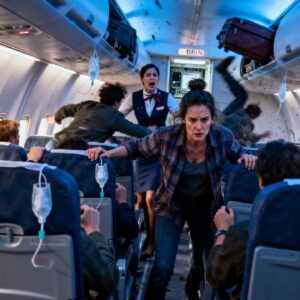
The Ghost of Flight 227: She Was Supposed to Be Dead, But When the Captain Collapsed and the Plane Screamed toward Earth, the Woman in Seat 14C Revealed a Secret That Would shake the Pentagon to Its Core
PART 1: THE INVISIBLE PASSENGER The smell of economy class is always the same. It’s a cocktail of stale coffee, recycled air, and the sour, metallic tang of human exhaustion. I was breathing it in, four counts in, four counts…
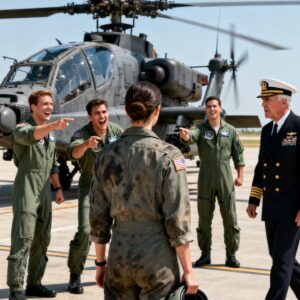
THE GHOST OF KANDAHAR: They Buried My Career and Mocked My Name, But When The Admiral Saw My Sealed File, He Unleashed A War Machine They Never Saw Coming
PART 1: THE INVISIBLE WOMAN The Alabama heat at 0530 didn’t just hit you; it strangled you. It was a physical weight, a wet, suffocating blanket that smelled of JP-8 jet fuel, heated asphalt, and the stale, recycled air of…
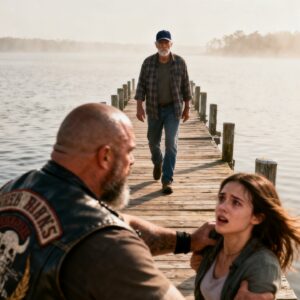
THE FISHERMAN’S SECRET: When The Steel Vipers Made The Last Mistake of Their Lives
PART 1 The mist hadn’t even cleared off Eagles Point Harbor when the nightmare started. You know that kind of silence? The heavy, damp kind where the only thing you hear is the water lapping against the pilings and the…
End of content
No more pages to load