The Ultraviolet Protocol
PART 1
The air inside the Intelligence Center of the USS Meridian always tasted the same: recycled oxygen, burnt coffee, and the metallic tang of high-voltage electronics. It was a cold, sterile smell—the scent of modern warfare.
My world was a four-foot-wide desk in the far corner of this windowless cavern. To the rest of the crew, I was a ghost. A phantom transfer from some nameless desk job at the Pentagon, dropped onto their carrier without fanfare or explanation. I felt their eyes sometimes—the analysts, the cryptographers, the tactical officers. They looked at me with a mixture of curiosity and disdain. To them, I was just a translator. A civilian in uniform. A glorified dictionary.
They didn’t know about Singapore. They didn’t know about the three years I spent in smoke-filled rooms negotiating the Matsuhito Protocol, or that my security clearance was higher than the Admiral’s.
I adjusted my headset, drowning out the low hum of the servers and the murmur of fifty different conversations. On my screen, a waterfall of intercepted data cascaded in glowing blue text. Regional dialects. Northern Sector intercepts. To an algorithm, it was just data. To me, it was music. Every language has a rhythm, a heartbeat. And right now, the heartbeat of the Northern Fleet wasn’t beating a war drum. It was trembling.
“Lieutenant Commander Nyak.”
The voice cut through my focus like a knife. I didn’t flinch, but I paused my typing. Captain Remington stood over my desk, a thick man with a thick neck and a patience intended for toddlers. He dropped a manila folder onto my keyboard.
“Additional intercepts from the coastline,” he said, his voice flat. “Just translate it verbatim this time. No interpretations. We need the words, not your psychoanalysis.”
I pulled my headphones down around my neck. “Sir, the regional dialect relies on contextual markers. If you strip the context—”
“We have intelligence analysts for context, Nyak,” Remington snapped, cutting me off with a sharp chop of his hand. He gestured grandly to the room behind him, where the ‘real’ work supposedly happened. “Your job is translation. Their job is analysis. Let’s keep those lanes clear. We’re on a timeline.”
He walked away before I could respond. I watched him go, noticing the smirks exchanged between two junior officers at the next station. She thinks she’s one of us, their eyes said. She thinks she matters.
I opened the folder.
My stomach dropped.
It wasn’t just a standard military comms log. It was a dialogue between a fleet commander and ground control. I scanned the script, my eyes darting over the idiomatic phrasing.
“Positioning for the shadow of the hawk.”
A literal translation—a verbatim translation as Remington demanded—would interpret “shadow of the hawk” as an aggressive aerial ambush maneuver. It sounded threatening. It sounded like an act of war.
But in the Northern coastal dialect, specifically the High-Ceremonial register used by their senior officers during times of crisis, “shadow of the hawk” didn’t mean attack. It meant seeking shelter. It was a defensive posture. They were terrified. They weren’t preparing to strike us; they were preparing to hide from us.
I glanced at the digital clock on the bulkhead: 18:30.
The Senior Command briefing was at 21:00. If Remington’s team presented a verbatim translation of this intercept, Admiral Cormac—a man who had been itching for a fight since the peace talks stalled last year—would take it as a declaration of intent. He’d have the justification he needed to launch a preemptive strike.
I felt a cold sweat prickle the back of my neck. I wasn’t looking at words on a page. I was looking at the fuse of a bomb that was about to kill thousands of people.
I needed to clear my head. I needed to figure out how to tell a room full of hammers that the nail they were looking at was actually an olive branch.
The Officer’s Mess was buzzing. The clash of silverware on trays and the roar of conversation usually provided a strange sort of comfort, but tonight it felt oppressive. I moved through the line, putting food on my tray that I knew I wouldn’t eat. I found an empty table in the far corner, the exile’s seat.
I sat down, opening my notebook—not a military log, but my own linguistics journal. The margins were crammed with notes in six different languages.
“HQ is practically itching for it,” a voice carried over from the adjacent table.
I didn’t have to look up to know it was Lieutenant Bellamy. He was loud, ambitious, and had the tactical nuance of a sledgehammer.
“One wrong move from their fleet,” Bellamy continued, “and we’ll have authorization to establish a presence. Real estate, gentlemen. That’s what this is about.”
“Is that what we’re calling it? A presence?” another officer laughed.
“Whatever you call it, Admiral Cormac won’t hesitate,” Bellamy said. “Man’s been waiting to remind them who owns the water.”
My grip tightened on my fork. I shouldn’t engage. I was the ghost. I was the desk jockey. But the image of that folder—the “shadow of the hawk”—flashed in my mind.
“They aren’t positioning to attack,” I said.
The silence at the next table was instant. Bellamy turned slowly, a mock-confused expression on his face.
“Excuse me?”
I turned to face them. “The latest intercepts. They suggest they’re repositioning to avoid confrontation. Their command structure uses specific ceremonial phrasing when preparing for aggressive action. Those markers are absent from today’s chatter.”
Bellamy stared at me, then let out a short, derisive snort. “Just stick to your dictionary, Nyak. Strategic assessment is above your pay grade.”
“Strategic assessment relies on accurate data,” I shot back, my voice steady despite the adrenaline. “If the translation is flawed, the strategy is suicide.”
“Suicide?” Bellamy laughed, looking at his friends. “Hear that? The translator thinks the USS Meridian is in danger.” He turned back to me, his eyes cold. “Eat your dinner, Lieutenant Commander. Leave the war to the warfighters.”
I turned back to my tray, my face burning. It wasn’t the insult that bothered me; it was the arrogance. The terrifying certainty that they knew everything, when they understood nothing.
“Mind if I join you?”
I looked up. Commander Akana, the ship’s veteran Comm Officer, was standing there with his tray. He didn’t wait for an answer, sliding into the seat opposite me. He was older, his hair graying at the temples, with eyes that had seen enough conflicts to lose the eagerness for them.
“Don’t mind Bellamy,” Akana said quietly, tearing a roll in half. “Kid thinks life is a movie. Thinks every standoff ends with medals and explosions.”
“There’s no glory in a war started by a typo,” I muttered.
Akana paused, chewing thoughtfully. He studied me for a long moment. “You’ve been aboard, what? Four months? Transferred from shore duty?”
“Intelligence translation services,” I recited the cover story.
“Funny,” Akana said. “Most translators I know struggle with two languages. Rumor is you speak six fluently. Including three regional dialects of our friends across the water. And you arrived with transfer papers signed by someone well above the Admiral’s pay grade.”
I didn’t respond. I took a sip of water.
“Makes a person wonder,” he added.
“I requested field experience,” I said. “Translating in a quiet room is different than real-time operational environments.”
“Sure,” Akana nodded, clearly not buying a word of it. “That explains everything.”
Bzzt-Bzzt. The ship’s intercom crackled to life, the tone sharp and urgent.
“All senior intelligence personnel and department heads report to the Command Briefing Room at 20:00 hours. Repeat: Intelligence briefing moved up to 20:00 hours.”
Akana checked his watch. “Moved up? That’s an hour early. Something’s happening.” He stood up, grabbing his tray. “You coming?”
I felt the knot in my stomach tighten into a hard rock. Moved up meant escalation. Moved up meant the Admiral had seen something he didn’t like.
“I need to review the intercepts first,” I said, standing up.
“Be careful, Nyak,” Akana said, his voice dropping to a whisper. “The mood in the CIC is… eager. Don’t stand on the tracks when the train is coming.”
The Command Briefing Room was a theater of tension. The air conditioning was humming, but the room felt stiflingly hot. Rows of plush seats were filled with the brass—senior officers, department heads, tactical advisors.
At the front of the room stood Admiral Thaddeus Cormac.
He was a mountain of a man, sixty-two years old, with a chest full of ribbons that mapped out the last three decades of American military history. He didn’t stand; he loomed. He radiated the kind of absolute authority that made you feel small just by being in his orbit.
“Our window is closing,” Cormac’s deep voice resonated off the steel walls. “Their fleet movements over the past forty-eight hours indicate preparation for Area Denial operations.”
The Intelligence Officer at the podium clicked a remote. The massive screen behind him shifted. There it was. My translation.
Or rather, a translation.
It was the intercept I had read earlier. But stripped of my notes. Stripped of the cultural context. The words were there, but the soul was gone.
“Intercepted comms confirm missile systems have been elevated to Ready Status,” the officer droned. “Specifically, these phrases regarding ‘forward positioning’ and ‘preparedness protocols’ align with patterns observed before their 2018 offensive.”
“No,” I whispered.
“Therefore,” the officer continued, “we recommend a preemptive defensive posture. Move the battle group to within striking distance to deter launch.”
My heart hammered against my ribs. Deterrence? If we moved closer while they were in a “shadow of the hawk” panic state, they wouldn’t see deterrence. They would see an executioner stepping up to the block. They would panic-fire.
I raised my hand.
The room was focused on the Admiral. Cormac was nodding, his jaw set. “Approved. I want strike packages ready for—”
“Admiral!”
My voice was louder than I intended. It cracked through the room, silencing the murmurs. Every head turned. Admiral Cormac stopped mid-sentence. He turned slowly, his eyes narrowing as they found me in the back row.
“You have something to add, Lieutenant Commander?”
I stood up. My legs felt like jelly, but I forced my spine straight. “Sir. There are contextual elements in those communications that significantly alter the meaning.”
Cormac stared at me. “Explain.”
“The dialect uses conditional phrases that don’t translate directly into English,” I said, trying to keep my voice steady. “What the analyst is interpreting as ‘forward positioning’ is actually a ceremonial formulation. It indicates a defensive crouch. They aren’t preparing to attack, Sir. They are terrified we are about to attack them.”
The silence that followed was heavy. Suffocating.
Cormac looked at the Intelligence Officer, then back at me. “I don’t recall asking the translator for a strategic analysis.”
“Sir, with respect, this isn’t analysis. It’s linguistic accuracy. The words mean something different in context than they do in isolation.”
Cormac took a step toward me. The room felt like it shrank. “Lieutenant Commander Nyak. Your job is to convert their sounds into our alphabet. Not to tell us what they mean inside their heads. We have an entire department for that purpose. Are you questioning the assessment of my senior staff?”
“I am questioning the foundation of that assessment, Sir.”
“Sit down, Commander.”
“Sir, if we move the fleet forward, we trigger the very response we’re trying to prevent. The Matsuhito Protocol specifically outlines—”
“The Matsuhito Protocol is a diplomatic treaty for peacetime!” Cormac roared, slamming his hand on the podium. “We are not in peacetime, Commander! We are minutes away from a potential launch! I will not have my command decisions second-guessed by a glorified librarian!”
He pointed a finger at me like a weapon. “One more word, and I will have you removed from this ship. Do I make myself clear?”
I stood there, trembling with a rage I couldn’t express. I looked around the room. Tovar, the Admiral’s aide, was watching me with a unreadable expression. Akana looked down at his lap. Bellamy was smirking.
“Crystal clear, Admiral,” I said quietly.
I sat down.
“Proceed,” Cormac growled. “Heightened Alert Status. Defcon 2. Prepare missile systems for engagement within twelve hours.”
I didn’t go back to the mess hall. I went straight to my quarters—a small, closet-sized room that was the only luxury afforded to me due to my “special” transfer status.
I locked the door and leaned against it, breathing hard. My hands were shaking.
Twelve hours.
The Admiral was going to push the battle group forward. The enemy, already in a panic, would see it as the final sign of aggression. They would launch. We would launch. And by tomorrow morning, the world would be on fire.
I moved to my desk and booted up my secure laptop. I bypassed the ship’s standard network, routing my connection through a ghost server I wasn’t supposed to have access to.
I initiated a video call.
The screen flickered, then resolved into the face of Dr. Amani Okafor, Deputy Director of Naval Intelligence at the Pentagon. She looked tired.
“Lieutenant Commander,” she said, her voice sharp. “We’ve been monitoring the fleet traffic. Intelligence suggests your battle group is moving to heightened alert. What is going on out there?”
“It’s a disaster, Amani,” I said, dropping the formalities. “They’re misinterpreting the intercepts. Cormac is reading a defensive panic as an offensive build-up. He’s moving to strike posture.”
Okafor’s eyes widened. “How severe is the misinterpretation?”
“Critical. It’s the ‘shadow of the hawk’ phrasing. Cormac’s analysts are reading it literally. It’s a linguistic foundation of sand, and he’s building a war on top of it.”
“Have you attempted to correct the record?”
“I tried in the briefing. He shut me down. He thinks I’m just a translator. He doesn’t know who I am.”
“Maybe it’s time he found out,” Okafor said. “Zarya, you were positioned there to prevent exactly this type of—”
Knock. Knock. Knock.
The sound was sharp and authoritative.
“Hold on,” I whispered. I minimized the window, killing the video feed but leaving the audio running. “Who is it?”
“Commander Akana.”
I exhaled and opened the door. Akana stood there, looking grim. The hallway lights flickered—the ship was diverting power to weapon systems.
“Sorry to disturb you,” he said. “I thought you should know. The timeline has shifted.”
“Shifted how?”
“Intelligence just picked up a fleet movement. Cormac isn’t waiting twelve hours. He’s ordered missile launch authorization protocols initiated. We’re looking at engagement within the hour.”
The blood drained from my face. “An hour? Akana, the translations are wrong. I swear to you, they are wrong.”
“I believe you,” Akana said, and for the first time, I saw fear in his eyes. “But belief isn’t enough. We need evidence. Something that will convince a man who has already made up his mind.”
“I have the evidence. It’s in the cultural context. But without authorization to present a complete analysis…”
“Then get authorization,” Akana said. “Because if you’re right, we’re about to start World War Three by accident.”
He left, the heavy steel door clicking shut behind him.
I stared at the closed door. I looked back at my laptop where Okafor was waiting in the silence.
I had two choices.
I could follow orders. I could sit in my room, translate the words they gave me, and watch the world burn from the front row.
Or I could break every rule in the book.
I grabbed my jacket. I grabbed my encrypted flash drive.
I needed an ally. I needed someone close to the Admiral. Lieutenant Commander Vada Tovar. She was the gatekeeper. If I could convince her, I could get to Cormac. And if I couldn’t convince her… well, the brig was better than being vaporized.
I stepped out into the corridor. The ship’s lighting had changed to red—Battle Stations. The alarm began to blare, a rhythmic, screaming pulse that vibrated in my teeth.
Clang-clank. Clang-clank.
“General Quarters. General Quarters. All hands man your battle stations. Set condition one throughout the ship.”
It had begun.
I started to run.
PART 2: THE MOLE IN THE MACHINE
The ship was a labyrinth of red light and screaming sirens.
I moved against the flow of sailors rushing to battle stations. They were young, terrified, and eager, running toward weapons they hoped they wouldn’t have to use. I was running toward the one person who could stop them from pulling the trigger.
I found Lieutenant Commander Tovar in a quiet corridor near the Officer’s Wardroom. She was reviewing digital casualty projection reports on her tablet. The blue light of the screen illuminated the grim set of her jaw.
“Lieutenant Commander Tovar,” I said, breathless.
She looked up, startled. “Nyak? You should be at your designated station. We’re at Defcon 2.”
“I need five minutes. Just five minutes.”
“I don’t have five minutes,” she snapped, turning to walk away. “The Admiral is about to authorize a strike package. I have to verify the target list.”
I stepped in front of her, blocking her path. It was insubordinate. It was reckless. It was necessary.
“The target list includes civilian infrastructure because the intelligence says they are command centers,” I said rapidly. “But they aren’t. They’re storm shelters. The Admiral is about to bomb civilians because he thinks they’re soldiers.”
Tovar paused. The certainty in my voice made her hesitate. “That assessment comes from Fleet Intelligence.”
“No. It comes from altered intelligence.”
She narrowed her eyes. “Careful, Nyak. You’re dangerously close to treason.”
“And you’re dangerously close to being an accomplice to a war crime,” I shot back. “The intercepts. The timestamps. I can prove they’re misinterpreting the dialect, but I need access to the raw logs. The original files, Tovar. Not the sanitized summaries Remington feeds the Admiral.”
A senior officer passed us, throwing a glare my way. “Maybe she should have stayed at her embassy job,” he muttered, catching the tension.
I ignored him. I held Tovar’s gaze. “Lives are at stake. Not just theirs. Ours. If we strike first, their retaliation won’t be limited to naval targets. They have hypersonic capabilities. You know that.”
The alarms continued to wail—whoop, whoop, whoop—punctuating the silence between us.
“I can’t get you to the Admiral,” Tovar finally said, her voice dropping. “He’s in the tank. Locked down.”
“Get me into the Secure Comms Room. Get me the raw data.”
She studied me for a long, agonizing second. Then she nodded. “If you’re wrong, Nyak, I’ll personally escort you to the brig.”
“If I’m wrong, it won’t matter.”
The Secure Comms Room was cold, humming with the sound of supercomputer cooling fans. It was a restricted zone—only clearance level Top Secret and above.
Tovar swiped her badge. The door hissed open. “You have ten minutes before the system cycles its security keys.”
I didn’t waste a second. I sat at a terminal, my fingers flying across the keyboard. I didn’t need to hack the system; I just needed to look where no one else was looking.
The analysts were looking at the translated output. I went to the source code. The metadata.
I pulled up the last 48 hours of intercepts.
“Here,” I whispered.
“What?” Tovar leaned over my shoulder.
“Look at the syntax trees,” I pointed at the screen. “The original audio file has a timestamp of 14:00 yesterday. But the translation file—the one attached to the briefing—was modified at 14:15. And again at 16:00.”
“Translations get updated all the time,” Tovar said.
“Not like this,” I typed a command, overlaying the two files. “See these markers? The idiomatic phrasing for ‘defensive posturing’ was manually deleted and replaced with the code for ‘offensive mobilization.’ That’s not a translation error, Tovar. That’s an edit.”
Tovar’s face went pale. “You’re saying someone doctored the intel?”
“I’m saying someone manufactured it.” I pulled up another file. “And look at this. The user ID associated with the edit belongs to Lieutenant Blackwood. But Blackwood was on the flight deck at 16:00. I saw him.”
“His credentials were compromised?”
“Or used by someone who wanted to make sure we went to war.”
Suddenly, the door slid open.
Commander Akana stood there, looking breathless. “We’re out of time. Strike packages are loaded. The Admiral just requested the nuclear authentication codes.”
My blood ran cold. Nuclear authentication. This wasn’t just a skirmish anymore. Cormac was preparing for the end of the world.
“We have to go,” I said, grabbing the hard drive with the evidence. “Now.”
The Officer’s Briefing Room was locked, guarded by two Marines with assault rifles. Inside, the war council was in session.
“Stand aside,” Tovar ordered.
“Ma’am, the Admiral gave strict orders. No interruptions,” the Marine said.
“This is a priority intelligence update,” I said, stepping forward. “If you don’t let us in, you’ll be explaining to a tribunal why you let the ship fire on a non-hostile target.”
The Marine hesitated. He looked at Tovar. She nodded once, sharp and commanding. He stepped aside.
We burst into the room.
Admiral Cormac was standing at the head of the table, a phone in his hand. The room was silent, the air thick with the gravity of the moment. He lowered the phone slowly, his eyes burning with fury.
“Who the hell authorized this intrusion?” he roared.
“I did, Sir,” Akana stepped in. “Lieutenant Commander Nyak has uncovered critical information.”
“I am done listening to the translator!” Cormac slammed the phone down. “I have a fleet in attack formation! Get her out of here!”
I walked straight to the main display, ignoring the security officers moving toward me. I plugged in the drive.
“Sir, look at the screen!” I shouted.
The display flickered. The raw data appeared. The timestamps. The edits.
“These are the original intercepts,” I said, my voice shaking but loud. “The intelligence you are using to justify this strike has been tampered with. The enemy is not preparing for war. They are signaling for a diplomatic channel using the Matsuhito Protocol.”
The room went dead silent.
“The Matsuhito Protocol?” Cormac scoffed. “That’s a classified diplomatic framework from the Singapore Accord. How would a junior officer know about that?”
“Because I wrote it,” I said.
The silence stretched, thin and brittle.
Cormac stared at me. “You… wrote it?”
“The verification requirements. The linguistic keys. It was designed to prevent exactly this scenario—a miscalculation based on cultural misunderstanding.”
“Security!” Captain Remington’s voice cut through the room. He was standing near the Admiral, his face flushed. “She’s lying! She’s trying to sabotage the operation! Arrest her!”
Two MPs grabbed my arms.
“Sir!” Tovar shouted, stepping forward. She pulled a file from her jacket—a red folder with a black stripe. “You need to see this.”
She slid it across the table to the Admiral.
Cormac looked at the folder. He looked at me, struggling against the MPs. He opened the file.
I saw his eyes scan the page. I knew what he was seeing. A single line of text, unredacted for the first time.
NAME: ZARYA NYAK. FORMER POST: CHIEF NEGOTIATOR, SINGAPORE ACCORD. SECURITY CLEARANCE: ULTRAVIOLET.
Cormac froze. “Ultraviolet?”
He looked up at me. The contempt was gone, replaced by a dawn of horrifying realization. Ultraviolet wasn’t military. It was Executive Branch. It meant I answered to the President, not the Pentagon.
“Release her,” Cormac whispered.
“Sir?” Remington protested. “This is a trick! We need to launch!”
“I said stand down!” Cormac barked. He turned to me. “Ultraviolet clearance… Why are you on my ship as a translator?”
“Because the protocol failed three years ago due to poor implementation,” I said, rubbing my arms where the MPs had grabbed me. “I requested field placement to find the weak points. And I found one. Someone on this ship is altering intelligence to provoke a war.”
I pointed at the screen. “That edit was made using Lieutenant Blackwood’s credentials. But look at the terminal ID. It wasn’t Blackwood’s computer. It was the terminal in the Captain’s Ready Room.”
I turned slowly to face Captain Remington.
Remington’s hand drifted toward his sidearm.
“Captain Remington,” I said calmly. “Why did you edit the files?”
Remington sneered, his mask slipping. “Diplomacy is a weakness. The Matsuhito Protocol is a paper shield. We need to strike while we have the advantage. You people… you think words can stop bullets.”
“They can,” I said. “If you use the right ones.”
“Admiral, he’s reaching for his weapon!” Akana shouted.
Remington drew his pistol. But he wasn’t fast enough. Tovar, already anticipating it, tackled him. The MPs swarmed him, pinning him to the deck.
“You’re all fools!” Remington screamed as he was dragged out. “The enemy is coming! You’ll see!”
Cormac looked at the empty doorway, then back to me. He looked older than he had five minutes ago.
“The strike,” he said hoarsely. “We’re two minutes from launch authorization.”
“Cancel it,” I said. “And put me on the line with their fleet commander.”
“You think they’ll listen?”
“They will,” I said, moving to the communications console. “Because I know the password.”
PART 3: THE BRIDGE OVER THE ABYSS
The Command Center was a hive of terrified efficiency. The red lights were still flashing, but the mood had shifted from aggression to desperate damage control.
“We have a link,” Akana shouted. “Audio only. Direct to the Flagship of the Northern Fleet.”
Admiral Cormac handed me the headset. His hands were steady, but his eyes were filled with a question: Can you really do this?
I put on the headset. Static hissed in my ear.
“This is USS Meridian Command,” I said, switching seamlessly into their dialect—High Ceremonial, the language of peers, not enemies. “Broadcasting on frequency Delta-Nine. Initiating Matsuhito Verification.”
Silence.
Then, a voice crackled back. Harsh. Suspicious. “This frequency is reserved for diplomatic envoys. Identify.”
“I am Zarya Nyak. Architect of the Singapore Accord. Authentication code: ‘Words build bridges’.”
There was a pause. A long, agonizing pause where the fate of two nations hung on a wire.
“…or walls,” the voice completed the phrase. “Choose wisely which you construct.”
I let out a breath I didn’t know I was holding. “Admiral Jiao. It is good to hear your voice.”
“Commander Nyak,” the Admiral on the other end replied, his tone shifting from hostility to shock. “We were told the Americans had abandoned the protocol. We were told you were preparing a first strike.”
“We were fed lies,” I said, my eyes locking with Cormac’s. “Rogue elements within our command structure falsified intelligence. We have neutralized the threat. We are standing down our missile batteries. I repeat: We are standing down.”
“We are tracking your missile bay doors,” Jiao said. “They are still open.”
I looked at Cormac. “Close them. Now.”
Cormac nodded to the Weapons Officer. “Close outer doors. Disarm all packages.”
“Sir, that leaves us vulnerable,” the Weapons Officer hesitated.
“Do it!” Cormac roared.
On the screen, the telemetry changed. The missile doors on our ship closed.
“We see it,” Jiao’s voice came back, softer now. “We are mirroring your action. Standing down alert status.”
The cheer that erupted in the Command Center was deafening. Officers hugged each other. Tovar leaned against a console, wiping sweat from her forehead. Akana gave me a thumbs up.
But I wasn’t celebrating.
“Admiral Jiao,” I said quickly. “Who told you we were preparing a first strike?”
“We received intercepted data,” Jiao said. “Showing your fleet moving into attack formation.”
“From where?”
“An anonymous source. We assumed it was a defector.”
I felt a chill. Remington hadn’t acted alone. He couldn’t have. He was just the man on the inside.
“Admiral Cormac,” I said, covering the mic. “Remington said ‘You’ll see.’ He was too confident for a man in handcuffs.”
“What are you thinking?” Cormac asked.
“The drone,” I said, remembering the operational schedule I’d seen on Tovar’s tablet. “We have a reconnaissance drone scheduled to enter their airspace in ten minutes. If Remington reprogrammed it…”
“To do what?”
“To attack,” I said. “A false flag. If a US drone fires on their fleet right after I promised we were standing down… they won’t just fire back. They’ll nuke us.”
Cormac turned to the Ops Officer. “Status of the drone!”
“It’s dark, Admiral. Someone disabled the remote uplink. It’s flying autonomous.”
“Shoot it down,” Cormac ordered.
“We can’t, Sir. It’s too close to their perimeter. If we fire a missile to intercept it, their radar will pick up the launch and think we’re firing at them.”
We were trapped.
“We have to warn them,” I said. I uncovered the mic. “Admiral Jiao. Listen to me very carefully. There is a drone approaching your sector. It has been compromised. Do not engage it.”
“If it enters our airspace, we must destroy it,” Jiao said. “And if it fires…”
“It will fire,” I said. “But you have to trust me. Let it fire.”
“You are asking me to let your weapon strike my ship?”
“I am asking you to trust the protocol,” I pleaded. “I am sending you the override codes for the drone’s warhead. I can disarm the explosive, but I can’t stop the kinetic impact. It will hit you, but it won’t explode. If you shoot it down, the debris field will look like an attack. If you let it hit… it will just be metal.”
“This is insanity,” Jiao said.
“This is trust,” I countered. “I am sending the codes now.”
I typed furiously, sending the disarm sequence I had memorized years ago during the drone program audits.
“Codes sent.”
We watched the main screen. A tiny red dot—the drone—was racing toward the green cluster of the enemy fleet.
“Impact in ten seconds,” the Ops Officer counted down.
“Five… four… three…”
I closed my eyes.
“Impact confirmed.”
Silence.
“Did it detonate?” Cormac whispered.
“Negative,” the Ops Officer yelled. “No thermal spike! Kinetic impact only! It bounced off their hull!”
We waited for Jiao’s voice.
“Commander Nyak,” Jiao finally spoke. “There is a dent in my flight deck. But no fire.”
“I’ll pay for the paint job,” I said, my voice cracking with relief.
“We are standing down fully,” Jiao said. “We will await your diplomatic envoy. But Nyak… send someone else. You are too dangerous.”
I laughed. It was a hysterical, exhausted sound. “Understood, Admiral. Out.”
I took off the headset and slumped against the console.
Admiral Cormac walked over to me. He looked at the screen, then at me. He slowly unpinned the silver star from his collar.
“I threatened to throw you off my ship,” he said quietly.
“You were doing your job, Admiral,” I said.
“No,” he shook his head. “I was fighting the last war. You were fighting the next one.”
EPILOGUE: THE QUIET HERO
The ceremony on the flight deck three days later was bright and windy. The ocean was a deep, impossible blue—peaceful, for now.
Admiral Cormac stood at the podium. “This battle group stood at the brink,” he told the two thousand sailors assembled before him. “We were saved not by missiles, but by understanding. By the courage to listen when every instinct screamed to fight.”
He called me forward.
I wasn’t wearing my translator’s grey anymore. I was in full dress whites, the “Ultraviolet” clearance pin gleaming on my lapel—a small purple iris.
“Commander Zarya Nyak,” Cormac said, his voice booming. “For conspicuous gallantry and for saving this command from a catastrophic error… you are hereby awarded the Navy Distinguished Service Medal.”
He pinned the medal to my chest. As he stepped back, he saluted. Not the perfunctory salute of a superior to a subordinate, but the slow, sharp salute of respect.
“Thank you, Sir,” I said.
“Don’t thank me,” he muttered so only I could hear. “Just promise me you’ll teach my intelligence officers how to read.”
“I’ll do my best.”
Later, as I packed my bag in my tiny quarters, there was a knock on the door. It was Bellamy. The loudmouth lieutenant.
He looked uncomfortable. “Commander.”
“Lieutenant.”
“I… uh…” He rubbed the back of his neck. “I heard what you did. With the drone. And the translation.”
“It’s a team effort, Bellamy.”
“Yeah, well,” he looked at his boots. “I told you to stick to your dictionary. I guess… I guess it’s a good thing you didn’t.”
“Words matter, Lieutenant,” I said, zipping up my bag. “Sometimes they weigh more than gunpowder.”
I walked out onto the flight deck. A helicopter was waiting to take me back to Washington. Dr. Okafor had another assignment for me—something about a border dispute in the Arctic.
I looked back at the Meridian. I saw Tovar and Akana waving from the tower. I saw the massive guns, silent and cold.
I touched the notebook in my pocket. The one with the quote scribbled on the inside cover.
Words build bridges or walls. Choose wisely which you construct.
I climbed into the chopper. As we lifted off, the ship shrank to a toy boat on a vast ocean. From up here, you couldn’t see the flags. You couldn’t hear the dialects. You just saw the water, connecting everything.
We had built a bridge this week. It was fragile, and it was battered, but it held.
News
THE EXILED SNIPER: WHEN THE WORLD BRANDED ME A TRAITOR, I BECAME THE GHOST THAT SAVED THEM FROM THE SHADOWS
PART 1: THE SILENT WATCHER The wind at eleven thousand feet doesn’t just blow; it bites. It carries the metallic taste of snow and the ancient, dusty scent of stone that has been baking and freezing for millennia. I lay…
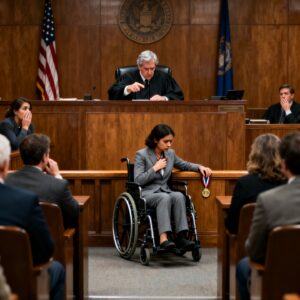
The Judge Called Me a Fraud and Demanded My Medal. He Had No Idea I Was the Reason His Son Was Still Alive.
PART 1: THE HUMILIATION The phantom rhythm of rotor blades was the first thing I heard. Thump. Thump. Thump. It wasn’t real, of course. It was just the ceiling fan in my San Diego apartment, slicing through the warm October air….

I Was Shackled in a Courtroom as a Homeless Thief, Ignored by Everyone—Until the Clerk Read My Service Number, the Judge Stood Up in Dead Silence, and the Man I Saved from Hell Recognized the Ghost He Thought Died in Fallujah.
PART 1: THE GHOST IN THE ORANGE SUIT The holding cell smelled of bleach and urine—a chemical cocktail meant to sanitize misery, but it only made it sting the back of your throat. I sat with my back pressed against…
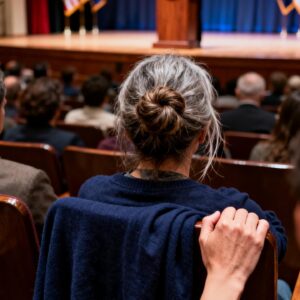
I Was Supposed to Be Dead: The Day a SEAL Admiral Froze Mid-Speech, Saw the Forbidden Tattoo on My Wrist, and Exposed the Classified Secret I’d Hidden from My Son for Twenty Years.
PART 1: THE GHOST IN THE BACK ROW You learn to be invisible. That’s the first rule of survival when you’re walking around with a grave that already has your name on it. You learn to take up less space,…
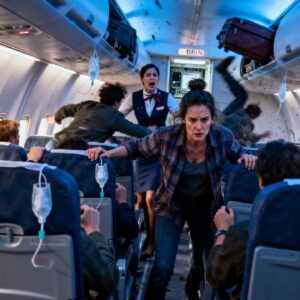
The Ghost of Flight 227: She Was Supposed to Be Dead, But When the Captain Collapsed and the Plane Screamed toward Earth, the Woman in Seat 14C Revealed a Secret That Would shake the Pentagon to Its Core
PART 1: THE INVISIBLE PASSENGER The smell of economy class is always the same. It’s a cocktail of stale coffee, recycled air, and the sour, metallic tang of human exhaustion. I was breathing it in, four counts in, four counts…
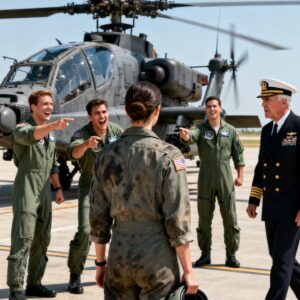
THE GHOST OF KANDAHAR: They Buried My Career and Mocked My Name, But When The Admiral Saw My Sealed File, He Unleashed A War Machine They Never Saw Coming
PART 1: THE INVISIBLE WOMAN The Alabama heat at 0530 didn’t just hit you; it strangled you. It was a physical weight, a wet, suffocating blanket that smelled of JP-8 jet fuel, heated asphalt, and the stale, recycled air of…
End of content
No more pages to load