Seattle has a way of tricking you. It offers up a Saturday morning so flawless, so impossibly perfect, it feels like a personal gift, a celestial apology for the nine straight months of relentless, soul-dampening gray. The sun had finally shoved the marine layer back out to sea, and the air on the waterfront was a sharp, clean cocktail of salt, espresso, and the distant, sugary perfume of mini donuts frying down at Pike Place Market.
My hand was wrapped around Noah’s. Or, more accurately, his sticky, six-year-old fingers were clamped around mine, smeared with the remnants of a chocolate fudge brownie cone that was melting faster than he could conquer it.
At six, Noah wasn’t just a boy; he was a “why” engine, a small, vibrant comet of pure curiosity, fueled by an energy I envied and an unending stream of questions. His eyes—startlingly, impossibly blue against his dark, unruly hair—missed nothing. He was cataloging the world: the tourists fumbling with maps, the guttural call of the gulls, the majestic white-and-green ferries sliding silently across Elliott Bay, which glittered as if someone had scattered a billion diamonds on its surface.
We were heading back to the car, navigating the happy, bustling crowd. Noah was mid-sentence, recounting with breathless excitement a daring raid by a seagull on another man’s french fries, when he suddenly stopped.
He didn’t just slow down; he planted his light-up sneakers on the pavement and froze, his small body going rigid. His sticky hand didn’t just tighten—it clenched mine with a sudden, painful urgency.
“Mom,” he said. His voice, usually a booming instrument of joy and inquiry, was soft. A whisper, laced with a strange, profound confusion that made the tiny hairs on my arms stand on end. “Mom, look!”
I spun around, my instincts immediately scanning for danger—a car, an off-leash dog, a bicycle. “What is it, sweetie? What’s wrong?”
But he wasn’t looking at the street. He was pointing, his entire arm outstretched, his finger aimed at the shadows of a recessed doorway, a failed bookstore whose windows were papered over. A man was huddled there, almost invisible, folded into himself against the cold brick.
My eyes followed, and at first, I didn’t see him. He was part of the city’s scenery, one of the unseen, the ignored. A man in layers of torn, filthy clothes. A greasy tangle of dark hair visible under a stained baseball cap pulled low. A thick, matted beard that covered most of his face. He held a square of cardboard, the lettering crude: “Hungry. Anything helps.”
The kind of person you glance at, feel a quick, sharp pang of guilt, and then immediately look away from, pulling your child a little closer as you hurry past.
But Noah wasn’t looking away. He was rooted to the spot, staring. Transfixed. His melting ice cream cone dripped, forgotten, onto his wrist.
“Mom,” he said again, his voice trembling now, tugging my hand to pull me closer, not away. “That man… he’s so sad. He’s wearing rags.” He paused, his little brow furrowing, his gaze darting from the man, to my face, and back to the man, as if comparing two pictures.
“Mommy… his face. It looks… it looks just like my face.”
It wasn’t a skip. It was a full-system crash. My heart, my lungs, my blood—everything just… stopped. The cheerful sounds of the market faded into a distant, roaring static. The bright sun felt suddenly cold.
“What? No, sweetie,” I said, the words coming out strained, automatic. “He doesn’t. You’re being silly. Let’s go.”
But I turned back. I forced myself to look. To see what my son saw with his innocent, terrifyingly accurate eyes.
The scruffy beard couldn’t hide the sharp line of his jaw. The grime couldn’t dull the high cheekbones. The baseball cap couldn’t shadow the straight, aristocratic nose.
And then, as if he could feel the weight of our stares, the man looked up.
His head lifted slowly, reluctantly. His eyes, wary and haunted, flickered past Noah and landed on me.
The city dissolved. The noise, the sun, the tourists—all gone. There were only his eyes. Sunken and framed by grime, but they were blue. Not just blue. That blue. The impossible, crystalline blue I saw every morning when I woke up my son. The blue I saw in the faded photographs I kept in a locked box under my bed. The blue I hadn’t seen in seven years.
It was him.
It was Ethan.
A cold, suffocating vacuum opened up on that sunny sidewalk. Seven years. Seven years of meticulous rebuilding. Seven years of therapy, late-night tears, and fierce, protective motherhood. Seven years of burying a past so deep I had convinced myself it was dead and decomposed.
And here it was. Sitting on a patch of dirty cardboard, begging for change.
“Noah, now,” I said, my voice a ragged whisper. I pulled his arm, hard. “We have to go.”
But Noah, my sweet, empathetic boy, resisted. He yanked his hand free. “But Mom! He looks so hungry. He looks so cold.” He fumbled with the little backpack he always wore. “Can we give him my sandwich? I only ate half.”
I was frozen, torn between two primal, warring instincts: the urge to flee, to grab Noah and run until my legs gave out, and the horrifying, paralyzing shock of seeing the ghost of my past, alive and utterly broken.
He looked… shattered. Not just homeless. He looked like a building that had been hollowed out from the inside, leaving only a fragile, crumbling facade.
He looked back down, hiding his face again, as if the brief moment of eye contact had physically pained him.
I couldn’t run. Not with Noah watching. Not when… not when it was him.
My hands were trembling so badly I could barely open my purse. I fumbled for my wallet, my fingers numb. I pulled out a twenty-dollar bill. It felt like a useless, insulting gesture. What was twenty dollars against seven years of ruin?
I pushed it into Noah’s small, clean hand. “Okay, sweetie,” I forced myself to say, my voice sounding distant and strange. “Go on. Give him the sandwich and the money. But… be quick.”
Noah beamed, his confusion vanishing, replaced by the pure, simple light of a good deed. He skipped the few feet toward the man, a small knight in sticky armor.
“Excuse me, sir?”
The man flinched, then looked up, his eyes widening in alarm as Noah stood directly in front of him, holding out the half-eaten peanut butter sandwich and the crumpled bill.
He stared at the offering, then at Noah. His dirty hand hovered, trembled, and then retreated. He looked like he wanted to refuse, to speak, to disappear.
And then, his voice, a sound like gravel and rust, cracked the air.
“Noah?”
The word hit me like a physical blow. I stumbled forward, my protective instincts roaring to life, shoving aside the shock. “How? How do you know his name?” I didn’t ask. I demanded.
The man—Ethan—looked up at me. And in that moment, the seven years of scar tissue tore open, and the wound beneath was as raw as the day he’d left. His eyes, those eyes, filled with a sudden, agonizing flood of pain, regret, and… tears. They welled and spilled over, cutting clean, pale tracks through the layers of dirt on his cheeks.
“Because,” he whispered, his voice cracking, the tears finally winning, choking the words. “Because I’m his father. Because I named him.”
My knees buckled. The world tilted, the bright storefronts and smiling tourists blurring into a dizzying, nauseating swirl. I grabbed Noah’s shoulder to steady myself, pulling him away from Ethan, shielding him with my body.
The past I had fled was kneeling on the pavement in front of me.
I had arrived in Seattle seven years ago, a 24-year-old woman running on fumes and terror. I had two suitcases, a business degree I was sure I’d never use again, and a secret tucked deep in my womb, a tiny, poppy-seed-sized life that was both my anchor and my shame.
I was running from him. From Ethan Cole.
Ethan. He wasn’t just a man; he was a force of nature. A supernova. We’d met in a senior-year economics class. I was the practical one, the planner, the student with the color-coded notes. He was the visionary, the dreamer, a brilliant mechanical engineer who sketched revolutionary green-energy prototypes on cocktail napkins and spoke about the future with such magnetic, intoxicating certainty that you couldn’t help but believe him.
I fell. Hard. I abandoned my safe, corporate job offers to join his startup. I became his partner, his CFO, his cheerleader, his lover. I poured my small savings and all my belief into his dream.
But his brilliance was twinned with a fatal recklessness. He chased funding like a gambler, taking impossible risks, making promises he couldn’t keep. His vision was pure, but his methods were chaotic, desperate. When his primary investor pulled out, the walls caved in. And that’s when I learned the truth.
It wasn’t just bank loans and venture capitalists he’d courted.
The calls started. Men with quiet voices. Men who didn’t ask for interest payments, they asked for “favors.” Men who didn’t care about the company’s projections, only about its technology.
I remember the night it all shattered. The rain hammering our cheap apartment window. Ethan, not charming or brilliant, but pale and shaking, finally confessing. He’d borrowed money. A lot of it. From people who didn’t use contracts, who didn’t operate in the light of day. They weren’t just loan sharks; they were something else. And he couldn’t pay them back.
Days later, the two pink lines appeared on a pregnancy test in that same bathroom.
I told him, and I saw the last of his brilliance flicker and die, replaced by a raw, animal fear. Not for himself. For me. For us.
“I will fix this, Emily,” he’d sworn, grabbing my face, his blue eyes wild. “I will protect you. I promise.”
Then he was gone.
I woke up one morning to a cold bed. His closet was empty. A note on the kitchen counter: “They know about you. It’s not safe. Go somewhere far. Change your name. Don’t contact me. I’ll find you when it’s safe. I’ll fix it.”
A single, untraceable text came a month later, after I’d already fled to Seattle, a city chosen at random from a map. “Keep the baby safe. Don’t look for me. Ever. I love you.”
That was the last I heard from him. Until this. Until now.
Seven years of silence. Seven years of me building a new identity. Emily Grant, a quiet but savvy financial analyst. A single mother. Noah’s father? A tragic story I rehearsed—a college boyfriend, a car accident before he ever knew. A lie so polished it almost felt true.
All of it, my entire carefully constructed life, was undone by a six-year-old’s observation on a sunny street.
“Ethan… how?” The word was a pathetic squeak. How are you here? How are you this?
He let out a dry, rattling sound that might have been a laugh in another life. “How does anyone end up here, Em?” He gestured to his cardboard sign. “Bad luck. Worse choices. A debt that just… never goes away.”
He wouldn’t meet my eyes. He was looking at Noah, who was hiding behind my leg, peering out with wide, confused eyes.
“He’s… he’s beautiful, Em,” Ethan whispered. “He looks just like…”
“Don’t,” I snapped, my voice sharp and cold with a sudden, protective rage. “You don’t get to. You don’t get to see him. You don’t get to talk to him. You lost that right when you vanished.”
He nodded, flinching at my tone. “I know. I know I did.” He scrubbed a filthy hand over his face. “I never meant for you to see me like this. I’ve been… I’ve been in the shelter down on James Street. I’ve seen you. Sometimes. Walking with him to the park. I just… I just wanted to see him. Just from a distance. I never would have… but today, you were so close…”
His voice broke, and a fresh wave of tears cut through the grime. The anger in my chest faltered, replaced by a nauseating wave of… pity. This wasn’t the supernova I’d loved. This was a burnt-out star. A black hole.
“Why, Ethan? Why are you here? In Seattle?”
He finally looked at me, and the haunted look in his eyes was replaced by something else. Something that chilled me to the bone.
Fear.
“Emily,” he said, his voice dropping, urgent. He leaned forward, ignoring Noah, ignoring the people walking past us. “Listen to me. You have to listen. I’m not just here by choice. I’m here because they are here.”
“They? The men from back then?”
He nodded, his eyes darting nervously down the crowded street. “They never stopped looking for me. They never forgave the debt. But it’s not just the money, Em. It was never just the money.”
“What are you talking about?”
“The tech,” he rasped. “My designs. The prototype. I… I was supposed to give it to them as collateral. A payment. But I didn’t. I kept it. I thought… I thought I could use it to pay them off one day, to fix everything.”
My blood ran cold. “You kept it?”
“I hid it. But they think I still have it. They’ve been hunting me for seven years. And now… now they’re in Seattle. They think I came here for you. They think you might know where it is.”
He grabbed the front of my jacket, his dirty fingers clenching the fabric. His eyes were wide with a terrible, desperate warning.
“They’ve been watching me, Em. And if they’ve been watching me… they’ve been watching you. They’ll think you’re my leverage. They’ll think they can get to me, or get the tech, through you. Through Noah.”
He let me go and scrambled back, pushing himself against the brick wall as if trying to merge with it.
“You have to go,” he whispered, his voice frantic. “Take him. Take him and run. Disappear. Again. Do it now. They are not the kind of men you can reason with. They will not stop.”
That night, our small, safe apartment felt like a glass cage. Every floorboard creak, every siren in the distance, every shadow thrown by the streetlight outside Noah’s window, felt like a threat. I sat on the floor by his bed, watching his small chest rise and fall, his face peaceful in sleep, blissfully unaware that the monster from his mother’s past was no longer imaginary.
Ethan’s words echoed in the dark. They will come for you. For Noah.
By dawn, the terror had crystallized into a cold, hard resolve. I wasn’t the scared 24-year-old girl anymore. I was a mother. And I would not run. Not again. Not without knowing what I was facing.
I called Mark Finley. An old colleague from my firm, a quiet man who had left the corporate world to start a private investigation agency. I met him at a 24-hour diner, the air thick with the smell of stale coffee and grease. I told him everything. The whole, ugly, seven-year-old story.
Mark listened, his face grim, taking no notes. When I finished, he just nodded. “Give me 48 hours.”
His call came 36 hours later. His voice was flat, devoid of emotion, which was more terrifying than panic.
“It’s worse than you thought, Emily. These aren’t just loan sharks. It’s a sophisticated criminal ring. Tech smuggling, money laundering. Your Ethan wasn’t just in debt; he was a pawn. They financed his startup planning to steal his intellectual property all along.”
“The prototype…” I whispered, my mouth dry.
“It’s real,” Mark said. “And it’s valuable. Very. They believe he double-crossed them and fled with it. And yes, they’re here. We’ve picked up chatter. They’ve been tracking him for months. They know about you. They know about Noah. They absolutely see you as leverage. You are not safe.”
My world, which had shattered on the sidewalk, now evaporated. “What do I do?”
“Get out,” he said bluntly. “I can arrange a security detail, but the only permanent solution is to disappear. New names, new city. I can help.”
Before I could answer, I knew what I had to do first. I had to find Ethan. I had to warn him that I knew, that the threat was real, that they were actively watching us.
I drove back to the corner of Pine Street, my heart hammering against my ribs.
The spot was empty.
The doorway was just a doorway. No man, no layers of rags. Just… a piece of cardboard. His sign. It was soaked from the morning rain, the words “Hungry. Anything helps” bleeding into a meaningless, inky pulp.
My stomach dropped. Was I too late? Had they found him?
I got out of the car, my legs shaking. I walked to the doorway, a desperate, insane hope filling my chest. I knelt by the ruined sign.
And I saw it.
Tucked beneath the damp cardboard, taped to the grimy pavement with a small piece of clear tape, was a folded piece of paper. A page torn from a small notebook.
My fingers fumbled as I peeled it from the ground. I unfolded it.
It was Ethan’s handwriting. The sharp, intelligent script I knew as well as my own.
“Em, If you’re reading this, they found me. Or I knew they were close. Don’t look for me. It’s safer this way. Take Noah and go. Get new names. Go somewhere they’ll never find you. I mean it. Go. I made a mess. I know I did. But this time… this time, I’ll fix it right. Keep him safe. Always. E.”
This time, I’ll fix it right. The words hung in the damp air with a chilling, terrible finality.
I didn’t have to run.
A week later, the news ran a small, five-line story. An unidentified male, mid-thirties, found near the industrial docks south of the city. The police ruled it an accidental drowning, likely a transient who had fallen into the sound.
Mark Finley confirmed it for me discreetly. It was Ethan.
It wasn’t an accident.
He hadn’t fallen. He had led them there. He had made a choice. He had drawn the threat away from me and Noah, to the only place they could be certain he’d never talk. He had become the final, fatal diversion.
In his own broken, tragic way, he had kept his promise. He had fixed it.
I arranged for the burial. A small, anonymous plot in a city cemetery, a place for the unclaimed and forgotten. I was the only one there. I stood in the persistent Seattle drizzle, holding Noah’s small, warm hand.
He didn’t know who the simple pine box was for. He only knew his mother was crying, silent tears streaming down her face, mixing with the rain.
He looked up at me, his bright blue eyes—Ethan’s eyes—filled with a six-year-old’s simple, profound empathy.
“Mom,” he whispered, squeezing my fingers. “Why are you crying for that sad man from the street?”
I knelt in the wet grass, pulling him close, burying my face in his hair, breathing in the smell of him—soap and peanut butter and life.
“Because, sweetheart,” I choked out, the words catching in my throat. “Because he gave me something. Something precious. The most precious thing in the world, something I could never, ever lose.”
I pulled back, wiping my tears, and tapped his nose.
“He gave me you.”
Years passed. When Noah turned eighteen, tall and strong, ready for college, with that same brilliant mind and those same piercing blue eyes, but blessedly, none of his father’s shadows, I finally told him.
I told him everything. About the supernova I’d loved. About the desperate man on the street corner. About the danger, the choices, the sacrifice, and the complicated, broken love that had created him.
He was silent for a long time, staring out at the Seattle skyline, the city that had been our refuge and the stage for our family’s final, tragic act.
“He didn’t really leave us, did he, Mom?” he finally said, his voice quiet. “It sounds like he just got lost. And maybe… maybe he just got lost trying to protect us, in the only way he knew how.”
I smiled through the tears that still came, even after all this time. Outside, the city lights glowed against the dark water. I looked up at the vast, empty sky, and I whispered the words into the cool night air, hoping that somewhere, somehow, they would be heard.
“You fixed it, Ethan. You finally did. He’s safe. Thank you.”
News

THE EXILED SNIPER: WHEN THE WORLD BRANDED ME A TRAITOR, I BECAME THE GHOST THAT SAVED THEM FROM THE SHADOWS
PART 1: THE SILENT WATCHER The wind at eleven thousand feet doesn’t just blow; it bites. It carries the metallic taste of snow and the ancient, dusty scent of stone that has been baking and freezing for millennia. I lay…
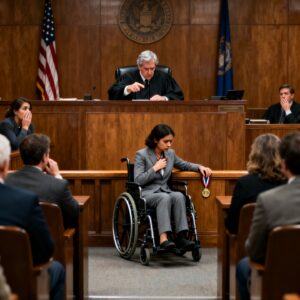
The Judge Called Me a Fraud and Demanded My Medal. He Had No Idea I Was the Reason His Son Was Still Alive.
PART 1: THE HUMILIATION The phantom rhythm of rotor blades was the first thing I heard. Thump. Thump. Thump. It wasn’t real, of course. It was just the ceiling fan in my San Diego apartment, slicing through the warm October air….

I Was Shackled in a Courtroom as a Homeless Thief, Ignored by Everyone—Until the Clerk Read My Service Number, the Judge Stood Up in Dead Silence, and the Man I Saved from Hell Recognized the Ghost He Thought Died in Fallujah.
PART 1: THE GHOST IN THE ORANGE SUIT The holding cell smelled of bleach and urine—a chemical cocktail meant to sanitize misery, but it only made it sting the back of your throat. I sat with my back pressed against…
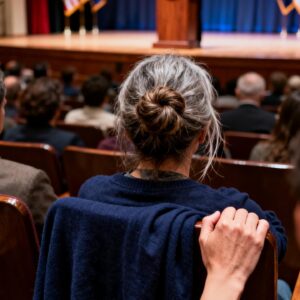
I Was Supposed to Be Dead: The Day a SEAL Admiral Froze Mid-Speech, Saw the Forbidden Tattoo on My Wrist, and Exposed the Classified Secret I’d Hidden from My Son for Twenty Years.
PART 1: THE GHOST IN THE BACK ROW You learn to be invisible. That’s the first rule of survival when you’re walking around with a grave that already has your name on it. You learn to take up less space,…

The Ghost of Flight 227: She Was Supposed to Be Dead, But When the Captain Collapsed and the Plane Screamed toward Earth, the Woman in Seat 14C Revealed a Secret That Would shake the Pentagon to Its Core
PART 1: THE INVISIBLE PASSENGER The smell of economy class is always the same. It’s a cocktail of stale coffee, recycled air, and the sour, metallic tang of human exhaustion. I was breathing it in, four counts in, four counts…

THE GHOST OF KANDAHAR: They Buried My Career and Mocked My Name, But When The Admiral Saw My Sealed File, He Unleashed A War Machine They Never Saw Coming
PART 1: THE INVISIBLE WOMAN The Alabama heat at 0530 didn’t just hit you; it strangled you. It was a physical weight, a wet, suffocating blanket that smelled of JP-8 jet fuel, heated asphalt, and the stale, recycled air of…
End of content
No more pages to load