PART 1
The heat at Camp Pendleton wasn’t just a temperature; it was a physical weight, a heavy, suffocating blanket of ninety-degree oppression that pressed down on the scorched earth. It shimmered above the asphalt in waves of liquid glass, distorting the horizon and turning the distant scrub brush into dancing, shapeless ghosts. But as I sat in the cab of my brother’s pickup truck, the air conditioning blasting a futile resistance against the July sun, I knew the real pressure out there wasn’t atmospheric. It was the crushing, silent weight of failure.
I watched through the windshield, my sunglasses pushed up into my hair, studying the scene at Range 400 with the clinical detachment I’d spent eight years perfecting. It looked less like a military qualification range and more like the aftermath of a natural disaster. Humvees were parked in jagged, hasty lines. Equipment crates sat open, their contents vomiting out onto the dusty ground—ammunition boxes, cleaning kits, paperwork fluttering like surrendered flags in the hot breeze. And then there were the Marines.
Fifty of them. Even from here, through the chain-link fence and the heat haze, I could read their body language like a large-print book. Slumped shoulders. Heads down. They moved with the jerky, frustrated energy of people who were doing everything right and getting everything wrong.
My phone buzzed on the center console, shattering the silence. Kenneth.
“Where are you?” His voice was tight, a wire stretched to its breaking point.
“Parking lot,” I said, my eyes tracking a young corporal kicking the dirt near the firing line. “It looks like a circus down there, Ken. Worse than you said.”
“It’s a bloodbath, Lynn,” he replied, and I could hear the background noise on his end—the metallic clatter of bolts, the low murmur of angry voices. “The new M4A1 shipment. Three weeks. Three weeks and we haven’t had a single clean qualification. The brass is crawling all over us. General Chambers is flying in tomorrow for a surprise inspection, and Stevens is prowling around like a caged tiger.”
Stevens.
The name hit me like a physical blow to the chest, stopping my breath for a fraction of a second. The ghost of an old pain flared up, hot and sharp. Colonel Harold Stevens. The man who had taken my fifteen-year career, my reputation, and my life, and crushed them into dust because he needed a scapegoat.
“Stevens is the Range Commander?” I asked, my voice dangerously calm.
“Yeah. Look, Lynn, you need to stay put. Or better yet, go to the Officer’s Club. If he sees you…” Kenneth trailed off. He knew. He knew exactly what seeing me would do to a man like Stevens. “He’s looking for blood. Don’t give him yours.”
“I’ll stay out of sight,” I lied.
I hung up and opened the truck door. The heat slammed into me, smelling of dry grass, gun oil, and ozone. I shouldn’t be here. I had a life in Dana Point. A quiet, safe life repairing civilian firearms, drinking coffee on my balcony, and forgetting that I was once Chief Warrant Officer Lynn Gardner, a legend in the Scout Sniper community. I had successfully buried that woman.
But then I saw her.
Through the fence, a young female Marine was stepping up to the firing line. Corporal. She moved with a fluid, predatory grace that you couldn’t teach. Her stance was perfect—feet planted, weight forward, cheek welded to the stock. She looked like she was born holding that rifle.
Crack.
Sand kicked up ten feet to the left of the target.
She froze. I saw her adjust, settling her breathing, her finger squeezing with agonizing slowness.
Crack.
Dirt flew high and right.
She lowered the weapon, her entire body sagging as if her skeleton had been removed. She looked at the rifle in her hands with a mixture of betrayal and horror. It was the look of a craftsman whose tools had suddenly turned against them.
I felt a familiar burn in my gut. It wasn’t anger; it was deeper than that. It was the primal offense of seeing competence destroyed by incompetence.
I walked to the fence. I knew I should turn around. I knew Kenneth was right. But my feet were moving on their own, crunching over the gravel, drawing me toward the disaster.
“Ma’am, you can’t be here.”
I turned to see a young Lance Corporal with a clipboard, looking sweaty and harassed. Blake Henderson, his nametag read.
“Waiting for my brother, Chief Warrant Officer Gardner,” I said, flashing the smile that usually disarmed gatekeepers. “He said it was fine.”
“Oh.” He relaxed, but only slightly. “Sorry, ma’am. Colonel’s strict about the perimeter today. It’s… it’s a bad day.”
“I can see that,” I said, nodding toward the range. “What’s the diagnosis?”
He shifted his weight, looking uncomfortable. “Armory says the rifles are fine. Shooters just… aren’t hacking it.”
I looked back at the girl—the Corporal. She was wiping her eyes, furious at herself. “That Marine isn’t ‘not hacking it’, Lance Corporal. She’s got perfect form. She’s compensating for wind that isn’t there.”
He looked at me, really looked at me, for the first time. “You shoot?”
“I used to.”
I moved away before he could ask more, positioning myself behind a water buffalo trailer where I had a clear line of sight. For forty minutes, I watched. It was a massacre of morale. Marine after Marine stepped up, locked in, and missed. But it wasn’t random. That was the thing. The chaos had a pattern.
I watched a Marine pick up Rifle 15. Miss, miss, miss.
The next guy picked up Rifle 15. Miss, miss, miss.
Then a guy picked up Rifle 22. Ping. Ping. Ping. Hits. Not expert, but hits.
The variable wasn’t the shooter. It was the gun.
“Lynn.”
I turned. Kenneth was standing there, looking ten years older than he had last week. His uniform was dark with sweat.
“I told you to go to the club,” he hissed.
“They’re bad rifles, Ken,” I said, ignoring him. “Not all of them. But enough. It’s a manufacturing defect. Intermittent failure.”
“The Armory checked them,” he said, rubbing his eyes. “Six ways from Sunday. They’re in spec.”
“Then the specs are wrong. Or they’re looking for the wrong thing.” I nodded toward the tower, where a cluster of officers stood in the shade. “Does he know?”
Kenneth followed my gaze to the silver-haired man in the center of the group. Harold Stevens. He’d aged. The lines around his mouth were deeper, cruel creases carved by years of shouting orders and dodging blame. He was gesturing wildly, pointing at the Marines, blaming them. I could practically hear the words coming out of his mouth—incompetence, lack of discipline, soft generation.
“He thinks it’s the men,” Kenneth said. “He’s terrified of the General’s visit. He needs a body to throw on the wire, and he’s picking fifty of them.”
“He’s a coward,” I said, the word tasting like acid.
“He’s a Colonel,” Kenneth corrected. “And you’re a civilian gunsmith. Go home, Lynn.”
“Lunch break is in ten minutes?” I asked.
Kenneth stopped. He looked at me, his eyes widening. “Don’t. Lynn, seriously. Do not.”
“Is the range hot during lunch?”
“Technically… no. But—”
“I just want to see something.”
“He destroyed you once,” Kenneth whispered, grabbing my arm. “If you go out there and humiliate him, he won’t stop until he burns down whatever life you have left.”
“He didn’t destroy me,” I pulled my arm free, my voice hard. “He just made me relocate.”
At 12:15, the range cleared. The officers retreated to the AC of the tower or the mess hall. The Marines slumped away to the shade. The silence that fell over Range 400 was eerie, broken only by the cawing of a crow.
I walked through the gate.
Scott Hamilton, the Gunnery Sergeant running the line, was still there, organizing ammo cans. He looked up, ready to bark a civilian off his grass, but the bark died in his throat. He squinted.
“Gardner?”
I smiled, though there was no humor in it. “Hello, Gunny. Long time.”
“Quantico,” he breathed. “Twelve years ago. You taught me how to read mirage.”
“I see you’re still working for a living.” I nodded at the rack of rifles. “I hear you’re having some trouble.”
“Trouble is one word for it,” Hamilton grimaced. “Disaster is another. You visiting Ken?”
“Yeah. Listen, Scott. I’ve been watching. Rifle 15. It’s a dog. Rifle 22 is a shooter. You’ve got a mixed bag of lemons.”
“Armory says—”
“I know what the Armory says. Hand me that rifle.” I pointed to number 15.
Hamilton hesitated. He looked at the tower. Empty. He looked at me. He saw the same woman who had once put a round through a washer at 800 yards to prove a point.
“One string,” he said softly. “Fast.”
He handed me the weapon. It felt familiar and foreign all at once. The polymer, the cold aluminum. My hands remembered the weight before my brain did. I racked the charging handle. Ch-clack. Sounded clean. I dropped the magazine, checked the feed lips, reinserted it. Slapped the bottom.
I stepped to the line. 200 yards.
I took a breath, letting the world narrow down to the front sight post. I squeezed.
Crack.
Miss.
I didn’t move. I fired four more. Crack. Crack. Crack. Crack.
“All left,” Hamilton muttered. “High and left.”
“It’s not the wind,” I said. “And it’s not me.” I turned to him. “Now give me number 22.”
Hamilton swapped the rifles.
I settled back in. Same stance. Same breath. Same trigger control.
Crack.
The sound was different. crisper. Downrange, the target dropped. Center punch.
“Again,” I whispered to myself.
I flowed into the rhythm. It was like music. The recoil was a gentle shove, the reset a tactile click. I moved positions—kneeling, prone, standing. I wasn’t thinking about Stevens. I wasn’t thinking about the eight years of exile. I was just shooting.
Crack. Crack. Crack.
Fifty rounds.
When the bolt locked back on the empty chamber, the silence was deafening. It was heavier than the heat.
I stood up and cleared the weapon. “Fifty,” I said.
“Fifty,” Hamilton confirmed, his voice thick with awe. “Center mass. Every single one.”
I turned around.
I hadn’t realized we had an audience.
While I was shooting, the lunch crowd had drifted back. Thirty Marines were pressed against the fence, their mouths open. The young corporal, the girl who had been crying, was staring at me like I was a religious apparition.
And striding across the baking concrete, his face a mask of purple fury, was Colonel Harold Stevens.
He stopped ten feet from me. The heat radiating off him rivaled the sun. He looked at the target. He looked at me. And I saw the recognition click behind his eyes. The shock, followed instantly by the old, reptilian hatred.
“What the hell,” Stevens spat, his voice trembling with rage, “do you think you are doing on my range?”
I handed Rifle 22 to Hamilton. I didn’t salute. I didn’t stand at attention. I just looked him dead in the eye, civilian to Colonel, equal to equal.
“Showing you the difference between a bad shooter,” I said, my voice carrying clearly in the dead air, “and a bad rifle.”
“You have no authority here,” Stevens stepped closer, invading my space. “You are a civilian. You are trespassing on a federal installation. I should have you arrested right now.”
“You could,” I said. “But then you’d have to explain to General Chambers why you arrested the only person who figured out why your unit is failing.”
“General Chambers isn’t here until tom—”
“That seems like an overreaction, Colonel.”
The new voice cut through the heat like a blade of ice.
We all turned. Standing in the shadow of the tower, flanked by her aides, was a woman with a single silver star on her collar. Brigadier General Joan Chambers.
She walked toward us, her boots crunching on the gravel. She didn’t look at Stevens. She looked at the target downrange, with its fifty perfect holes, and then she looked at me.
“I decided to come a day early,” Chambers said, her eyes drilling into mine. “Good thing I did. Colonel Stevens, care to introduce me to the civilian who just outshot your entire battalion?”
Stevens opened his mouth, but no sound came out. He looked from the General to me, and I saw the trap snap shut.
“Lynn Gardner, Ma’am,” I said. “Former Chief Warrant Officer. And we have a problem with your guns.”
PART 2
The silence on the range was broken only by the snapping of General Chambers’ flag on the hood of her Humvee. She stood there, a monolith of authority in digital camouflage, waiting for an answer.
“A problem with our guns,” Chambers repeated, the words rolling around her mouth like stones. She turned to Stevens. “Colonel, you assured me in your report yesterday that the equipment was, and I quote, ‘functioning within all unparalleled parameters’ and that the failure rate was due to ‘personnel degradation.'”
Stevens looked like he was swallowing broken glass. “General, the Armory inspections were conclusive. These weapons meet Mil-Spec. Ms. Gardner is… she is a former Marine, yes, but she has been out of the loop for eight years. Her assessment is anecdotal.”
“Anecdotal?” Chambers gestured to the target downrange, the center shredded by my fifty rounds. “That looks like empirical data to me, Colonel.” She turned to me. “Ms. Gardner, if you say the rifles are bad, can you prove it? Mechanically?”
“Give me two hours in the armory with a bore scope and a set of calipers,” I said. “And I’ll show you exactly why your Marines can’t shoot straight.”
Chambers checked her watch. “You have until 1600 hours. Gunnery Sergeant Hamilton, you’re with her. Corporal Russell,” she pointed to the young woman who had watched me shoot, “you too. Carry her bag. I want this range closed until we have answers.”
“General,” Stevens stepped forward, desperation leaking into his voice. “Ms. Gardner is a civilian. She has no security clearance. Letting her disassemble military weaponry is a violation of protocol.”
Chambers looked at Stevens with eyes that could freeze jet fuel. “Then I am making her a temporary technical consultant with immediate effect. Do not test me today, Harold. I came here expecting a disaster, and I found one. Now get out of my sight.”
Stevens salvaged a salute, stiff and trembling with rage, before stalking off toward the tower. As he passed me, he didn’t look at me, but I heard him. A whisper, low and venomous.
“You’re digging a grave, Lynn.”
I watched him go, feeling the cold prickle of adrenaline. He wasn’t done. Men like Stevens never stopped; they just flanked.
The Armory was a concrete bunker that smelled of CLP—Cleaner, Lubricant, Preservative—and stale coffee. It was a smell that triggered a thousand memories: early mornings before patrols, late nights cleaning carbon from bolts, the camaraderie of shared misery.
Staff Sergeant Shane Richards, the base armorer, looked like he was about to face a firing squad. He stood behind his workbench, arms crossed defensively over his grease-stained uniform.
“I checked them, Gunny,” Richards said to Hamilton, pleading. “I checked head space, I checked timing, I checked the gas rings. They are green across the board.”
“I believe you, Shane,” I said, dropping my bag on the metal table. “That’s the problem. You checked what the book told you to check.”
I pulled Rifle 15 from the rack—the one that had missed every shot. I laid it on the mat. Beside it, I placed Rifle 22—the one I’d used to drill the target.
“Corporal Russell,” I said. “You ever strip an M4A1 past the field maintenance level?”
Britney Russell shook her head. She was still looking at me with wide eyes, like I was going to levitate the table. “No, Ma’am.”
“Today you learn. Watch.”
I went to work. My hands moved with a speed that surprised even me. Punch pins out, separate receivers, remove buffer spring, extract bolt carrier group. I stripped both rifles down to their skeletons in under two minutes.
“Shane, give me the bore scope,” I ordered.
He handed me the fiber-optic camera probe. I fed it into the barrel of the good rifle, Number 22. On the monitor above the bench, the interior of the barrel appeared—shiny, spiraling lands and grooves, chrome-lined perfection.
“Clean,” Hamilton grunted.
“Now, Number 15.”
I fed the probe in. At first glance, it looked identical. The rifling was sharp. The chrome was intact. But I pushed the probe deeper, to the throat—the critical millimeter where the bullet leaves the casing and engages the rifling.
“Stop,” I said. “There.”
On the screen, it was barely visible. A shadow. A tiny, microscopic inconsistency in the machining where the chamber transitioned to the bore.
“I don’t see it,” Britney whispered.
“The angle,” I pointed at the screen. “The throat lead. It’s cut off-center. Maybe half a degree. When the round chambers, it’s sitting slightly crooked. When the primer ignites, the bullet enters the rifling at a tilt. It wobbles. By the time it exits the muzzle, that wobble translates to a six-inch deviation at two hundred yards.”
Shane leaned in, squinting. “That… that wouldn’t show up on a headspace gauge.”
“No. It wouldn’t. It passes the ‘Go/No-Go’ test because the bolt closes. But the geometry is garbage.” I pulled the probe out. “It’s a manufacturing defect. Probably a bad reamer on the assembly line at Colt. They retooled last year. This must be the first batch.”
Hamilton let out a long, low whistle. “And since they batch-test…”
“Exactly,” I said. “If they tested a good rifle from this lot, they passed the whole crate. But if the machine was drifting, you’ve got intermittent failures. Some are lasers, some are shotguns.”
I looked at the racks of rifles lining the walls. Three hundred of them.
“We need to scope every single one,” I said. “Right now.”
For the next three hours, we operated like a surgical team. Shane ran the scope. Britney recorded the serial numbers. Hamilton tagged them: Green tape for good, Red tape for dead.
I moved between them, verifying the bad ones. The pattern was consistent. One in three.
“147 inspected,” Britney called out, her voice hoarse. “49 defects.”
“It’s a slaughter,” Hamilton muttered. “Fifty-three Marines failed qual because of this. Good kids. Some of them probably lost their promotion packets.”
“It’s worse than that,” I said, wiping oil from my hands. “If these had gone downrange… a Marine engages a target at 300 meters in combat, misses, and gets taken out. And nobody ever knows why.”
Britney paused, her pen hovering over the clipboard. “Ma’am?”
“Yeah?”
“Why did you leave? Gunny says you were the best instructor Quantico ever had. You don’t just… walk away from that.”
The room went quiet. Even Shane stopped rattling the tools.
I looked at the rifle in my hands. The metal was cold. “I didn’t walk away, Corporal. I was pushed.”
“Stevens?” Hamilton asked softly.
I nodded. “He was a Major then. I was running a sniper course. He made a bad call on a training exercise—sent a team into a valley without comms during a live-fire workup. It was dangerous. Stupid. I pulled them out. I filed a report.”
I looked up, meeting Britney’s gaze. “He didn’t like that. Two weeks later, I was accused of fraternization with a student. Staff Sergeant Webb. Good man. Married. Kids. Stevens fabricated logs, witnesses, the whole nine yards. He told me I could resign with an Honorable Discharge and keep my benefits, or I could fight it, face a Court Martial, drag Webb’s family through the mud, and likely end up with a Dishonorable because he had the judges in his pocket.”
“So you took the hit,” Britney said.
“I took the exit. I saved my pension, and I saved Webb’s marriage. But I lost everything else.”
Britney looked down at the rifle log. “That’s not right.”
“No,” I said, putting the rifle back in the rack. “It’s not. But that’s the Corps. Sometimes the enemy isn’t the guy shooting at you. It’s the guy signing your paycheck.”
The door to the Armory banged open.
Captain Roger Ellis walked in. He was Stevens’ adjutant—a man who had polished his way to a Captaincy without ever getting his boots muddy. He was flanked by two MPs.
“Ms. Gardner,” Ellis said, his voice clipped. “You need to step away from the weapon.”
Hamilton stepped forward, his chest puffing out. “Captain, we are under orders from General Chambers—”
“General Chambers authorized a ‘consultation’,” Ellis interrupted, holding up a piece of paper. “She did not authorize a civilian to handle sensitive serialized inventory without a background check. Colonel Stevens has flagged a security violation. You are to be escorted off base immediately.”
I didn’t move. “We’re halfway through the lot, Captain. We’ve found fifty defective rifles. This is evidence.”
“This is a breach of security,” Ellis snapped. “MPs, remove her.”
The MPs hesitated. They looked at Hamilton, then at me.
“If she leaves,” Hamilton said, his voice low and dangerous, “I walk out with her. And you can explain to the General why the investigation she ordered has stopped.”
“I’ll explain that I’m following regulations,” Ellis sneered. “Something you seem to have forgotten, Gunnery Sergeant.”
It was a stalemate. The air in the room was thick enough to choke on. Ellis was betting on the chain of command. He was betting that Hamilton wouldn’t risk his stripes for a civilian.
“Captain Ellis.”
The voice came from the doorway behind the MPs.
Master Sergeant Evelyn Bishop stood there. She was the administrative backbone of the base, a woman who knew where every skeleton was buried because she had dug the holes. She held a clipboard.
“I have a memo here,” Bishop said, walking past the MPs like they were furniture. “Just came down from the General’s aide. It explicitly grants Ms. Lynn Gardner ‘unfettered access to all Range 400 material and facilities for the duration of the inquiry.’ It also notes that any obstruction of her work will be treated as Article 92—Failure to Obey a Lawful Order.”
She handed the paper to Ellis. He read it, his face paling.
“Colonel Stevens…” Ellis stammered.
“…is not a General,” Bishop finished. “I suggest you take your MPs and go find something useful to do, Captain. Before I call the General and tell her you’re harassing her consultant.”
Ellis crushed the paper in his hand. He looked at me with pure loathing. “This isn’t over.”
“It never is,” I said.
He spun on his heel and marched out, the MPs trailing behind him like confused puppies.
Bishop looked at me and winked. “I always liked you, Gardner. You caused good trouble.”
“Thanks, Top,” I said, breathing out.
“Don’t thank me yet,” Bishop warned. “Stevens is cornered. He’s going to panic. And a panicked officer is dangerous. He’s got a 1600 meeting with the General. He’s going to try to bury this report before you can present it.”
I looked at the clock. 14:45.
“We need to finish,” I told the team. “We need data. Hard numbers. If we walk into that meeting with half a story, he’ll spin it. We need the whole truth.”
At 15:50, we walked into the conference room.
It was freezing cold—the AC hummed aggressively. General Chambers sat at the head of the long mahogany table. Stevens was on her right, looking composed, his uniform immaculate. Captain Ellis sat behind him taking notes.
I walked in with Hamilton, Shane, and Britney. We looked like we’d been in a fight. Grease on our hands, sweat stains on our collars. I carried a hard case containing two rifles and a flash drive.
“Sit,” Chambers commanded.
We took the seats opposite Stevens. The dynamic was medieval—two warring clans facing off before the Queen.
“Report,” Chambers said.
“General,” Stevens started, his voice smooth. “My team has reviewed the allegations. We believe that while there may be minor variances in the manufacturing, the root cause remains the accelerated training schedule and the—”
“Shut up, Harold,” Chambers didn’t even look at him. She looked at me. “Ms. Gardner?”
I stood up. I didn’t have a PowerPoint. I didn’t have a script. I opened the hard case. I took out the bolt carrier group of the defective rifle and held it up.
“We inspected 300 rifles,” I said. “102 of them are defective. That is a 34% failure rate.”
Stevens scoffed. “Impossible. The factory logs—”
“The factory logs are wrong,” I cut him off. “Or they’re faked. Or they missed it. It doesn’t matter. General, these rifles have a chamber transition deviation of 0.6 degrees. It induces projectile yaw inside the barrel.”
I plugged the flash drive into the projector. The screen lit up with the images from the bore scope—the shadow, the jagged angle.
“This is Rifle 15,” I said. “The one that failed 53 times. This is Rifle 22. The one that works.”
The room was silent. The evidence was ten feet tall and glowing on the wall.
“This isn’t a training issue,” I said, looking directly at Stevens. “These Marines didn’t fail. They were sabotaged by their own gear. And for three weeks, Command refused to look at the hardware because it was easier to blame the software.”
Chambers stared at the screen for a long time. Then she turned to Stevens. Her voice was very quiet.
“You told me you inspected them personally, Harold.”
Stevens tugged at his collar. “I… I relied on my staff’s reports. I am an administrator, General, not a gunsmith.”
“You are a Marine Officer!” Chambers slammed her hand on the table, the sound like a gunshot. “Your job is to know why your men are failing! You almost deployed a battalion with weapons that shoot around corners!”
She stood up. “I am grounding this entire shipment. We are contacting Colt immediately. And I am initiating a formal inquiry into the command climate of Range 400.”
Stevens went white.
“However,” Chambers continued, looking at me. “This creates a new problem. We have a deployment in five days. We have 300 Marines who are unqualified. We have to swap out the rifles, re-zero, and re-qualify an entire battalion in 96 hours.”
She leaned over the table.
“I need a Lead Instructor. Someone who knows the M4 platform inside out. Someone who can diagnose problems on the fly and get these kids shooting expert before they get on the plane.”
She looked at Stevens, then dismissed him with a sneer. Then she looked at me.
“Ms. Gardner. You seem to have some free time.”
I hesitated. This was it. The pull. The gravity well of the Corps trying to suck me back in.
“General, I have a job in Dana Point. I have—”
“I will pay you triple your contractor rate,” Chambers said. “And I will personally ensure that your service record is… reviewed. With fresh eyes.”
The room held its breath. This was the olive branch. But it was also the hook.
I looked at Britney Russell. She was watching me, hopeful. I looked at Hamilton.
“I’ll do it,” I said. “On one condition.”
“Name it.”
“Colonel Stevens is not allowed within one hundred yards of my firing line.”
Chambers smiled, a shark-like baring of teeth. “Done. In fact, Colonel Stevens will be very busy explaining himself to the Inspector General.”
Stevens stood up, his chair scraping loudly. “General, I must protest. This woman—”
“Is now in charge of your range, Colonel. Dismissed.”
As the room cleared, Stevens passed me one last time. He stopped. His face was no longer red; it was a pale, icy mask.
“You think you won,” he whispered. “But you just walked back into the kill zone. I know about Dana Point. I know about the shop. Accidents happen, Lynn.”
He walked out.
A chill ran down my spine that had nothing to do with the AC. He wasn’t just threatening my career anymore. He was threatening my life.
PART 3
The next ninety-six hours were a blur of gunpowder, sweat, and the relentless, rhythmic crack of rifle fire. Range 400 became a factory, and I was the foreman. We ran the battalion through in waves—sleeping in shifts, eating MREs while cleaning bolts, and drinking enough coffee to kill a horse.
I didn’t go home. I didn’t sleep in a bed. I slept on a cot in the armory, with a loaded .45 under my pillow. Stevens’ threat echoed in my head every time I closed my eyes: “Accidents happen.”
But on the line, the magic was returning. The Marines, once defeated and sullen, were waking up. With the defective rifles quarantined and replaced with functional stock from the reserve depot, they were hitting steel. The ting-ting-ting of rounds impacting targets at 300 yards became a constant, musical backdrop.
Corporal Britney Russell was my shadow. She absorbed everything—wind calls, reading the trace, trigger mechanics. She wasn’t just a good shooter; she was a natural instructor.
“You’re anticipating the recoil,” she told a nervous Private on day three. “Trust the weapon. It works now. Just let it surprise you.”
I watched her, feeling a swell of pride that I hadn’t felt in a decade. I was building something again.
By the evening of the fourth day, we were down to the final company. The “hard luck” cases. The ones whose confidence had been shattered the deepest. General Chambers was scheduled to arrive at 0800 the next morning to personally certify the battalion’s readiness.
That night, the range was bathed in the eerie green glow of chemlights and floodlights. We were prepping for the final night-fire evolution.
“Ammo is staged,” Hamilton reported, wiping grime from his face. “Fresh crates just came in from the ASP (Ammunition Supply Point). We’re ready to rock.”
I walked over to the stack of green metal ammo cans. Something nagged at me. It was a sniper’s instinct—the feeling of eyes on the back of your neck, the subtle wrongness of a disturbed patch of grass.
“Who signed for this ammo?” I asked, touching the cold metal of the top crate.
“Captain Ellis authorized the transfer,” Hamilton said. “Standard resupply.”
Ellis. Stevens’ lapdog.
“Open it,” I said.
Hamilton looked at me, confused. “Lynn, it’s sealed factory ammo. Lake City M855.”
“Open. It.”
Hamilton popped the latch. The lid swung open, revealing rows of shiny brass cartridges linked together. They looked perfect.
I picked up a belt. I ran my thumb over the primers. They were seated properly. I checked the headstamps. LC 23. Lake City, 2023.
“You’re paranoid,” I whispered to myself. Stevens wouldn’t be this stupid. Tampering with ammo was a felony. It was attempted murder.
But then I saw it. A faint scratch on the casing of the fifth round. Not a manufacturing mark—a tool mark. Like it had been held in a vice.
“Weigh this round,” I ordered, pulling the bullet from the link.
We walked to the reloading bench in the armory. I put the cartridge on the digital powder scale.
190 grains.
“That’s heavy,” Hamilton frowned. “Standard M855 is 62 grain bullet, roughly 170 to 180 total weight depending on the brass.”
I pulled the bullet. I dumped the powder onto the scale.
It wasn’t standard ball powder. It was fine, silvery flakes. Pistol powder. Fast-burning. High pressure.
Hamilton’s face went gray. “Jesus Christ. If you put that in a rifle…”
“…it turns into a pipe bomb,” I finished, my blood running cold. “The chamber pressure would spike to 80,000 PSI. The receiver would shatter. It would take the shooter’s face off.”
I looked at the crate. “It’s a hot load. Sabotage. A ‘catastrophic equipment failure’ on the final night of qualification. They’d blame my inspections. They’d say I missed a headspace issue or a barrel obstruction. A Marine dies, and I go to prison for negligence.”
“Ellis,” Hamilton growled, reaching for his sidearm. “I’m going to kill him.”
“No,” I grabbed his wrist. “If we catch him now, Stevens denies it. He claims Ellis acted alone, or that it was a factory error. We need to catch the puppet master pulling the strings.”
I looked out the window at the dark range. “Does Stevens know we found this?”
“No. We just opened the crate.”
“Good. Re-seal it. Put it back on the stack.”
“What?” Hamilton looked at me like I was insane.
“Do it. Then get Britney. I have a plan. We’re going to give Stevens the show he wants.”
The night fire began at 2100. The range was hot. Tracers zipped downrange like angry fireflies.
General Chambers wasn’t supposed to be there until morning, but I had called her. I told her there was an “imminent security threat” and she needed to be in the observation tower, lights out, unseen.
Colonel Stevens was there, though. He stood by the safety line, arms crossed, watching with a predatory intensity. Captain Ellis stood next to him, looking nervous, sweating despite the cool night air. They were waiting. Waiting for the boom.
I stood on the firing line, right behind the center firing point. I had assigned that position to a shooter they wouldn’t expect.
“Shooters, watch your lanes!” I bellowed over the comms. “Lock and load!”
I saw Ellis flinch. He was watching Lane 5. The lane where we had staged the “fresh” ammo crate.
“Lane 5, you are clear to engage!” I yelled.
The figure in Lane 5 raised their rifle.
Stevens leaned forward. I could see the hunger in his eyes. He wanted the explosion. He wanted the blood. He was willing to maim a Marine just to destroy me.
The shooter in Lane 5 pulled the trigger.
Click.
A misfire.
Stevens frowned.
“Misfire on Lane 5!” I shouted. “Clearing procedures!”
The shooter racked the bolt. Clack.
“Resume fire!”
Click.
Another dud.
Stevens looked at Ellis. Ellis looked panicked. He started moving toward the line. “Cease fire! Cease fire! Malfunction on Lane 5!” Ellis screamed, running forward. “I need to inspect that weapon!”
He was trying to retrieve the evidence. He realized the bombs weren’t going off, and he needed to get that ammo back before anyone examined it.
“Stand down, Captain!” I stepped in his path.
“Get out of my way, Gardner! That weapon is unsafe!” Ellis tried to shove past me.
“Why is it unsafe, Captain?” I asked, my voice cutting through the noise. “Did you pack the rounds yourself?”
Ellis froze. “What?”
“The powder,” I said, holding up a plastic baggie with the silver flakes we’d extracted earlier. “Bullseye Pistol Powder. Fast burn. You didn’t just sabotage the ammo, Roger. You tried to murder a Marine.”
“You’re crazy,” Ellis stammered, backing up. “I don’t know what you’re talking about.”
“Then why were you watching Lane 5?”
“I—”
“And why,” a new voice boomed from the darkness of the tower stairs, “did you authorize a specific ammo transfer from a lot number that doesn’t exist in our inventory?”
General Chambers stepped into the light. She held a requisition form. “I had the ASP check the logs, Captain. You signed out this crate personally. And you brought it here in your POV.”
Stevens, who had been watching from the sidelines, suddenly turned and started walking briskly toward his vehicle.
“Colonel Stevens!” Chambers shouted. “Halt!”
Stevens didn’t stop. He broke into a run.
“Hamilton!” I yelled.
Gunny Hamilton didn’t need to be told. He didn’t run. He just raised his rifle—one of the good ones—and fired a single warning shot into the dirt ten feet in front of Stevens.
CRACK.
Stevens froze. He stood there, bathed in the floodlights, his back to us. A defeated, small man.
I walked over to Lane 5. The shooter stood up and pulled off their Kevlar helmet. It wasn’t a random Marine.
It was Britney Russell.
She looked at the terrified Captain Ellis, then at the frozen Colonel Stevens. She reached into her pocket and pulled out the magazine she had actually been using—filled with dummy rounds I had hand-loaded in the armory an hour ago.
“You underestimated us, sir,” Britney said, her voice shaking with rage but clear as a bell. “You thought we were just grunts. But we’re Marines. We check our gear.”
The aftermath was swift and brutal.
Military Police swarmed the range. Ellis cracked before they even got the cuffs on him, babbling about how Stevens had ordered him to “discredit Gardner at all costs.” He gave up everything—the fabricated fraternization charges from eight years ago, the cover-up of the rifle defects, the sabotage.
Stevens didn’t say a word. He looked at me as they shoved him into the back of a patrol car. There was no hate left in his eyes, just the hollow, empty look of a man who realized he had been fighting a ghost he couldn’t kill.
I stood on the firing line as the chaos swirled around me. The adrenaline was fading, leaving me shaking and exhausted.
General Chambers walked up to me. She looked at the ammo crate, then at me.
“You baited a trap with my career,” she said sternly.
“I baited it with the truth, General,” I replied. “I knew he couldn’t resist.”
She sighed, then a rare, genuine smile broke through her iron facade. “You know, Gardner, for a civilian, you have a terrifying tactical mind.”
“I had good teachers,” I said. “Before one of them tried to blow me up.”
“The battalion?”
“Qualified,” I said. “Except for the drama tonight, they’re shooting 98%. They’re ready to deploy.”
“Good.” She extended her hand. “The IG report will be… extensive. Stevens is done. Prison, not retirement. Ellis too. You’ve done the Corps a service it didn’t deserve from you.”
“I didn’t do it for the Corps, General,” I said, shaking her hand. “I did it for the Marines.”
News
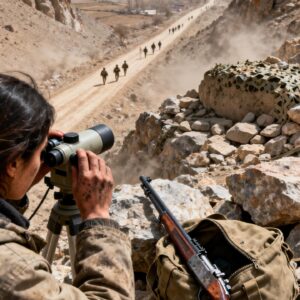
THE EXILED SNIPER: WHEN THE WORLD BRANDED ME A TRAITOR, I BECAME THE GHOST THAT SAVED THEM FROM THE SHADOWS
PART 1: THE SILENT WATCHER The wind at eleven thousand feet doesn’t just blow; it bites. It carries the metallic taste of snow and the ancient, dusty scent of stone that has been baking and freezing for millennia. I lay…

The Judge Called Me a Fraud and Demanded My Medal. He Had No Idea I Was the Reason His Son Was Still Alive.
PART 1: THE HUMILIATION The phantom rhythm of rotor blades was the first thing I heard. Thump. Thump. Thump. It wasn’t real, of course. It was just the ceiling fan in my San Diego apartment, slicing through the warm October air….

I Was Shackled in a Courtroom as a Homeless Thief, Ignored by Everyone—Until the Clerk Read My Service Number, the Judge Stood Up in Dead Silence, and the Man I Saved from Hell Recognized the Ghost He Thought Died in Fallujah.
PART 1: THE GHOST IN THE ORANGE SUIT The holding cell smelled of bleach and urine—a chemical cocktail meant to sanitize misery, but it only made it sting the back of your throat. I sat with my back pressed against…

I Was Supposed to Be Dead: The Day a SEAL Admiral Froze Mid-Speech, Saw the Forbidden Tattoo on My Wrist, and Exposed the Classified Secret I’d Hidden from My Son for Twenty Years.
PART 1: THE GHOST IN THE BACK ROW You learn to be invisible. That’s the first rule of survival when you’re walking around with a grave that already has your name on it. You learn to take up less space,…

The Ghost of Flight 227: She Was Supposed to Be Dead, But When the Captain Collapsed and the Plane Screamed toward Earth, the Woman in Seat 14C Revealed a Secret That Would shake the Pentagon to Its Core
PART 1: THE INVISIBLE PASSENGER The smell of economy class is always the same. It’s a cocktail of stale coffee, recycled air, and the sour, metallic tang of human exhaustion. I was breathing it in, four counts in, four counts…
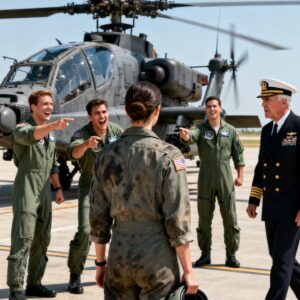
THE GHOST OF KANDAHAR: They Buried My Career and Mocked My Name, But When The Admiral Saw My Sealed File, He Unleashed A War Machine They Never Saw Coming
PART 1: THE INVISIBLE WOMAN The Alabama heat at 0530 didn’t just hit you; it strangled you. It was a physical weight, a wet, suffocating blanket that smelled of JP-8 jet fuel, heated asphalt, and the stale, recycled air of…
End of content
No more pages to load