THE SILENT COMMANDER
PART 1
The Brass Compass didn’t smell like a bar; it smelled like history rotting slowly in the North Carolina heat.
When I pushed through the heavy oak door that Tuesday evening, the scent hit me instantly—a cocktail of stale beer, lemon floor wax, and the ghost of cigarette smoke that had seeped into the drywall decades before the ban. To a civilian, it was just a dive on Hay Street. To anyone wearing a uniform at Fort Liberty, this place was a cathedral.
I paused at the threshold, letting my eyes adjust to the amber dimness. My brain didn’t just see the room; it dissected it. It was a reflex I couldn’t turn off, a byproduct of fifteen years in Special Operations. Two exits: front and rear through the kitchen. Fire suppression system: functional. Occupancy: approximately forty pax. Thirty-five males, five females. Threat level: Low. Ambient aggression: Moderate.
I wasn’t wearing my rank. No eagles on my shoulders, no unit patches, no “Delta” tab. Just a white linen shirt, green tactical trousers that hinted at my profession without screaming it, and my brown hair pulled back in a bun so tight it pulled at my scalp. To the untrained eye, I was a nobody. A dependent waiting for a husband. A lost tourist.
Perfect.
I moved to the corner of the bar, my steps silent on the scarred wood floor. The bartender, a man with shoulders like a linebacker and eyes that had seen too much, drifted over.
“What can I get you, ma’am?”
“Water, please,” I said, keeping my voice low. “Just water.”
He blinked, a micro-expression of surprise. In a place where men came to drown the memories of Kandahar and Baghdad in whiskey, a water order was suspicious. But he didn’t pry. He filled a glass, set it down on a coaster, and retreated to the paying customers.
I wasn’t here to drink. In seventy-two hours, my squadron—Delta Force Squadron B—was scheduled to begin a massive joint training operation with conventional Army units. The brass called it “inter-unit cohesion.” I called it babysitting. But if I was going to teach these conventional infantry boys how to operate at a Tier One level, I needed to know who they were when the officers weren’t watching. I needed to hear the unfiltered pulse of the rank and file.
I took a sip of water, letting the condensation cool my palm, and extended my senses.
The room was a topographic map of social hierarchy. The support staff hugged the booths, keeping their heads down. The infantry commanded the pool tables, their voices booming, fueled by testosterone and cheap lager.
And then there was the king of the castle.
Sergeant First Class Wade Patterson held court in the center of the room. I’d read his file, but seeing him in the flesh was different. He was thirty-one, built like a Greek statue carved out of granite and ego. He wore a tight black t-shirt with an American flag on the sleeve, specifically chosen to showcase biceps that probably required two hours a day in the gym.
He was leaning back against a high-top table, surrounded by a gaggle of wide-eyed privates and specialists who looked at him like he was the second coming of Patton.
“So, we’re clearing this compound outside Kandahar,” Patterson was saying, his voice projected to ensure the back row could hear. “Intel says it’s a hot cache. We stack on the door, breach protocol, and the second we blow it, the world ends.”
I watched him over the rim of my glass. His hand gestures were expansive, theatrical.
“RPG punches through the window,” he continued, acting out the explosion. “Doesn’t detonate, just embeds in the floor. We got AK fire from three angles. My squad leader goes down, leg meat everywhere. Suddenly, I’m the guy. I call the audible, establish a base of fire, and I drag the heavy to cover while popping two tangos with my sidearm.”
The privates nodded, entranced.
“They put me in for an ARCOM with a V-device,” Patterson finished, taking a long pull of his beer.
I suppressed a sigh. I analyzed the story as he told it. The terminology was accurate. The chaos description was valid. Patterson had seen combat; that was undeniable. But the story had been polished. The edges were too smooth. In real combat, you don’t remember the heroism; you remember the confusion, the screaming, the smell of copper and cordite. Patterson was painting a portrait where he was the hero, not a survivor.
I must have stared too long.
Patterson’s gaze, which had been sweeping the room for validation, snagged on me. He paused mid-laugh. His eyes narrowed.
I felt the shift in the room’s gravity. The predator had noticed an intruder in his territory.
I didn’t look away. I didn’t flinch. I just held my glass and watched him.
Patterson frowned. I didn’t fit his algorithm. I wasn’t a “badge bunny” looking for a husband. I wasn’t a fellow soldier in uniform. I was an anomaly.
“Hey,” he called out. The conversational noise in the bar dipped. “Ma’am. No offense, but the Brass Compass is kinda… a soldier’s bar.”
He pushed off the table and started walking toward me. His walk was a weapon—loose-limbed, confident, designed to intimidate.
“If you’re looking for the Officer’s Club or waiting for your boyfriend, there are better options on Bragg Boulevard. You look a little lost.”
The silence in the bar stretched thin. He was playing to his audience, expecting me to flush, stammer, and leave.
I set my glass down. Clink.
I turned my stool slowly, facing him fully. “I’m having a drink, Sergeant. Is there a regulation against that?”
Patterson stopped three feet from me. He blinked. The use of his rank threw him off balance. Civilians didn’t usually distinguish stripes that quickly in a dim bar.
“It’s not about regulations, sweetheart,” he said, stepping into my personal space. He smelled of beer and aggressive cologne. “It’s about the vibe. We come here to decompress. To be around people who understand the life. You’re kinda killing the mood.”
He leaned an elbow on the bar, boxing me in. It was a classic dominance display.
“No disrespect,” he added, with a tone that meant total disrespect.
I looked him up and down, dissecting him.
“I wasn’t aware I was disrupting anything, Sergeant First Class Wade Patterson,” I said softly. My voice was calm, contrasting the tension radiating off him. “But if my presence is a problem, perhaps that says more about your insecurity than my location.”
His jaw tightened. “How do you know my name?”
“You’re loud,” I said. “And you’re not hard to read. 3rd Battalion, 505th Parachute Infantry Regiment. Three deployments. Primarily Afghanistan, some Iraq. You received that Commendation Medal with the ‘V’ device for actions in Kandahar in 2019. Currently a squad leader. Scheduled for joint training exercises at Range 19 starting Friday morning at 0600.”
The silence in the bar was now absolute. The jukebox seemed to hold its breath.
Patterson’s face drained of color. He looked at his chest, checking for a name tape that wasn’t there. He looked back at his sycophants, wondering if they’d doxxed him.
“Who the hell are you?” he whispered, the arrogance replaced by a flicker of fear.
I opened my mouth to answer, to end this little charade, but the universe had other plans.
A sound tore through the quiet—a wet, guttural rasp.
Crash.
Glass shattered against the floor.
Fifteen feet away, in a booth near the back, an old man had collapsed forward. It was Art Jennings, a fixture of the bar, a sixty-two-year-old Korea vet with a face like weathered leather. He was clawing at his throat, his eyes bulging, his skin turning a terrifying shade of violet.
“He’s choking!” someone screamed.
Chaos erupted. It was the bad kind of chaos—the flailing, useless kind. A young specialist rushed over and started slapping Jennings on the back, which was exactly the wrong thing to do for a complete obstruction.
Patterson, the hero of his own story, froze. I saw it happen. His combat processing speed hit a wall. This wasn’t a firefight; it was a medical emergency, and his OODA loop stalled. He stood there, mouth open, staring at the dying man.
I didn’t think. I moved.
I slid off the stool and cut through the crowd like a shark through water. I didn’t shove people; I moved through the spaces they occupied, my presence so commanding that they parted instinctively.
I hit the booth and dropped to my knees.
“Get him on the floor!” I barked. “Now!”
The command voice. It’s a specific tone, pitched to cut through panic. The soldiers obeyed instantly, dragging Jennings from the booth to the dirty floorboards.
I checked him. No air movement. No wheezing. His lips were blue. His carotid pulse was thready and fading fast.
“He’s in arrest,” I announced, my mind clicking into clinical detachment. “Complete airway obstruction. Hypoxia-induced cardiac arrest.”
I looked up. The bar was a circle of terrified faces.
“I need a knife,” I said. “And high-proof alcohol. Now!”
A private fumbled a steak knife from a table—serrated, four-inch blade. The bartender slammed a bottle of Jack Daniels into my hand.
I poured the whiskey over the blade. It wasn’t sterile, but it would have to do.
“Ma’am, what are you—” Patterson started, finally finding his voice.
“Shut up,” I said. I didn’t look at him.
I tilted Jennings’ head back. My fingers walked down the geography of his throat. Adam’s apple. Slide down. Cricoid cartilage. The soft depression in between. The cricothyroid membrane.
There.
It was a small window. If I hesitated, he was dead. If I missed, I’d slice his jugular.
“Hold his head,” I ordered the nearest soldier.
I positioned the knife. The skin was tough, weathered by age. I pressed down.
I made the incision.
Blood welled up, dark and thick in the dim light. A collective gasp sucked the air out of the room. I ignored it. I deepened the cut, feeling the pop as I breached the membrane. Air hissed—a tiny, desperate sound.
“Straw!” I yelled.
Someone handed me a plastic stirring straw. I bit the end off to make it sharp and jammed it into the hole in Art Jennings’ throat.
I leaned down, put my mouth over the straw, and blew.
One breath.
Two breaths.
The old man’s chest hitched. A convulsion rippled through his body. He coughed—a violent, wet explosion—and a chunk of unchewed burger dislodged from his throat, shooting out onto the floor.
He sucked in a ragged, wheezing breath through his mouth. Then another. The blue faded from his lips, replaced by a pale, living grey.
I sat back on my heels, wiping blood from my hands onto a napkin. My heart rate hadn’t gone above eighty.
“Keep him steady,” I said to the soldier holding his head. “Paramedics are five minutes out.”
The silence that followed was heavy, reverent. Every eye in the place was glued to me. I wasn’t the lost tourist anymore. I was something they didn’t have a name for yet.
The front door banged open. “EMS! Where’s the patient?”
Two paramedics rushed in with a gurney and a jump bag. The lead medic, a guy I recognized from base ops named Martinez, stopped dead when he saw the straw sticking out of Jennings’ neck.
He looked at the patient. He looked at the knife. He looked at me.
“Who did the cric?” Martinez asked, his voice filled with professional awe. “That’s… that’s a perfect field airway.”
“Patient had a total obstruction,” I said, standing up. “Secondary cardiac arrest. It was the only option.”
Martinez nodded slowly. “Ma’am, I’ve been doing this twenty years. I’ve never seen a civilian pull off a cric with a steak knife. Where did you learn that?”
Before I could answer, a deep, gravelly voice thundered from the entryway.
“She learned it in Syria, Martinez. And before that, in the Q-Course.”
The crowd parted again.
Command Sergeant Major Robert Sullivan (Retired) walked in. He was sixty-six, silver-haired, and moved with a hitch in his step that spoke of old parachute injuries. He was a legend at Fort Liberty. The kind of man even generals stood up for.
Sullivan walked straight to me. He ignored the blood on my shirt. He ignored the stunned soldiers. He snapped a salute so crisp it cracked the air.
“Colonel McKnight,” he said.
The title hit the room like a flashbang.
I saw Patterson’s knees actually buckle. His mouth opened, closed, and opened again.
“Colonel?” Patterson whispered.
Sullivan turned slowly to face Patterson. The warmth in the old man’s eyes vanished, replaced by the cold stare of a predator looking at prey.
“Sergeant First Class Patterson,” Sullivan growled. “This is Colonel Aaron McKnight. Commander of Delta Force Squadron B. She has more combat jumps than you have haircuts. She holds expertise in counter-terrorism that makes your ‘V’ device look like a participation trophy.”
Sullivan let that hang there.
“And,” he added, his voice dropping to a dangerous whisper, “I believe you just tried to throw her out of your bar.”
Patterson looked like he wanted the floor to open up and swallow him whole. He was staring at a woman who commanded the most elite shooters on the planet, a woman he had just called “sweetheart.”
“I…” Patterson stammered. “Ma’am, I… I had no idea.”
I grabbed another napkin and cleaned the last of the blood from my fingers. I looked at Patterson, not with anger, but with pity.
“You made an assumption, Sergeant,” I said. “You assumed competence looks a certain way. You assumed strength is loud.”
I stepped closer to him. He flinched.
“We start joint training on Friday. You’re in Alpha Squad, first rotation. I suggest you bring your A-game, Patterson. Because I will be watching.”
I turned to Sullivan. “Rob, walk me out?”
“Yes, ma’am.”
We walked out of the Brass Compass, leaving a room full of statues behind us.
The night air outside was cool and wet. The adrenaline began to fade, leaving a dull ache in my shoulders.
“You okay, Aaron?” Sullivan asked quietly as we reached his truck.
“I’m fine,” I lied. “Just hate the attention.”
“You saved Art’s life in there. That was textbook.”
“It was messy,” I countered. “But he’s breathing.”
“Patterson though…” Sullivan chuckled darkly. “I think he soiled himself.”
“He’s a symptom, Rob. A symptom of a mindset I have to break before we deploy.”
We stood there for a moment in the comfortable silence of old friends. But as I looked out toward the lights of the base, a prickle of unease ran down my spine.
I didn’t know it then, but inside the bar, a young private named Jake Reynolds had been holding up his phone. He had recorded everything. The confrontation. The choking. The surgery. The reveal.
By the time I got home to my empty apartment on Godfrey Street, the video had five thousand views.
By morning, it would be fifty thousand.
And one of those views would belong to Major Christopher Vale.
I sat on the edge of my bed, staring at the dark screen of my phone, unaware that I had just signed a death warrant. Not for Art Jennings—but for myself.
PART 2: THE KILL HOUSE
By 0600 on Wednesday, the video had a name: “The Surgeon in the White Shirt.”
I woke up to a phone that was vibrating itself off my nightstand. Texts, alerts, links. The footage was shaky, vertical, and terrifyingly clear. It showed me kneeling in the sawdust and grime, a bloody knife in one hand, a straw in the other, breathing life into Art Jennings. It showed Patterson’s face—pale, shocked, humiliated.
And it showed my face. Clear as day.
Operational security is the lifeblood of Delta. We exist in the shadows. We don’t do interviews. We don’t do viral fame. In three minutes of grain footage, Private Reynolds had blown fifteen years of anonymity.
I didn’t have time to panic. I had a job to do.
I arrived at the Delta compound at 0700. The mood was weird. My team—shooters who had faced down insurgents in dark alleys—were looking at me differently. Not with judgment, but with a strange, quiet reverence that made my skin itch.
“You’re trending on Twitter, ma’am,” Staff Sergeant Chase Brennan said, handing me a coffee. He was grinning. “People are debating if you’re a CIA spook or a ninja.”
“I’m a Colonel with a headache,” I snapped, taking the coffee. “Focus, Brennan. Range 19 prep. I want every weapon double-checked. If the conventional boys are jumpy because of this video, accidents happen.”
But accidents weren’t what I needed to worry about.
Across base, in the sterile, air-conditioned office of Military Intelligence, Major Christopher Vale was watching the same video.
I knew Vale. Or rather, I knew of him. He was a logistics wizard, the guy who made equipment disappear and reappear where it was needed. But for the last three months, I’d been tracking a different kind of disappearance. Discrepancies in the ammunition inventory. Small arms unaccounted for. It was a ghost pattern—subtle, barely there—but my gut said someone was bleeding Fort Liberty dry, selling weapons to the highest bidder.
I had started asking questions. Quiet ones.
Vale knew. He was smart, calculating, and cornered. Watching that video, seeing my face, he must have realized two things: One, I was capable. Two, I was now public enemy number one for his operation. If I finished my investigation, he was going to Leavenworth for life.
He needed a distraction. Or better yet, a tragedy.
Friday morning at Range 19 was cold. The kind of wet, seeping cold that gets into your bones and makes your fingers stiff—bad for trigger control.
The mist clung to the “Kill House,” a two-story concrete structure designed to simulate urban warfare. It was a maze of plywood doors, blind corners, and stairwells, used to teach Close Quarters Battle (CQB).
I stood on the catwalk, looking down at the assembly area. The conventional infantry units were huddled in their squads, checking gear.
Sergeant First Class Patterson was there. He looked like he hadn’t slept in three days. The swagger was gone. When our eyes met across the gravel, he stiffened, then gave a sharp, almost desperate nod. He wasn’t the king of the bar anymore; he was a man trying to survive his own humiliation.
“Gather round!” I barked. My voice didn’t need a megaphone.
Forty-eight soldiers snapped to attention.
“Welcome to the painful part of the learning curve,” I said, walking the line. “Today isn’t about shooting targets. It’s about thinking under pressure. We are using live fire on the outer ranges, but inside the Kill House, we use marker rounds and flashbangs. However…”
I paused, letting the silence settle.
“A flashbang is still an explosive. If you disrespect it, it will take your fingers. If you disrespect the tactics, the enemy will take your life. Am I clear?”
“YES, MA’AM!”
“Outstanding. Patterson, your squad is up first. Gear up.”
I moved to the observation deck inside the Kill House. It offered a bird’s-eye view of the rooms below. I wanted to be close. I wanted to see their eyes when they breached.
What I didn’t see—what none of us saw—was the figure that had slipped into the ammo supply shed twenty minutes before dawn. Major Vale had used his clearance to “inspect” the safety protocols. In those few unsupervised minutes, he had swapped a standard M84 stun grenade in the supply crate for something else.
A modified device. The casing was standard, but the core was high-velocity explosive. Enough to turn a small room into a jagged metal blender.
Patterson’s squad stacked up on the breach door. They moved well, I had to give them that. Patterson tapped the shoulder of the man in front of him—Specialist Coleman, the kid from the bar.
“Breaching!” Coleman yelled.
The door swung open.
“Flash out!” Patterson shouted.
He pulled the pin on the grenade, let the spoon fly, and lobbed it into the room.
Time is a funny thing in combat. It doesn’t flow like a river; it stutters. It hangs.
I watched the grenade arc through the air. It was a black oval against the grey concrete. It hit the floor and bounced.
Clink-thud.
That sound.
A standard M84 flashbang has a hollow, metallic clatter. It’s light. This sound was heavy. Dense. A dull thud that vibrated through the floor grating.
My brain processed the anomaly in a microsecond. Wrong mass. Wrong acoustic signature. That’s not a stun grenade.
It was the same instinct that had spotted the choking hazard in the bar. A deviation from the norm.
“ABORT!” I screamed, vaulting over the railing of the catwalk. “GET BACK! IT’S LIVE!”
I didn’t wait to see if they listened. I dropped twelve feet to the concrete floor, landing hard and rolling.
Patterson heard the terror in my voice. He didn’t question it. He grabbed Coleman by the vest and threw him backward into the hallway, tackling him to the ground.
“COVER!” Patterson roared.
I scrambled behind a concrete pillar, curling into a ball, shielding my head.
BOOM.
It wasn’t the pop-hiss of a flashbang. It was a thunderclap that felt like being punched in the chest by a sledgehammer.
The shockwave tore through the building. Windows blew out. Dust and concrete shrapnel sprayed the walls like buckshot. The air instantly turned thick with pulverized drywall and the acrid, biting stench of high explosives.
My ears rang—a high-pitched whine that drowned out the world.
I pushed myself up, shaking the dust from my hair. “Sound off!” I yelled, though I couldn’t hear my own voice.
“I’m hit! I’m hit!”
I moved through the smoke. Patterson was on the ground, covering Coleman. He looked up, blood streaming from a cut on his forehead where debris had tagged him. He looked terrified.
“Is everyone alive?” I grabbed Patterson’s shoulder. “Count your men!”
“One, two… Coleman… Jenkins…” Patterson stammered, pointing.
We checked them. Cuts, bruises, blown eardrums, a nasty piece of shrapnel in Coleman’s leg—but they were alive. If they had been in that room, they would have been pink mist.
“That wasn’t a flashbang,” Patterson wheezed, staring at the blackened crater in the floor of the room. The concrete was pitted and cracked. “Ma’am, that was a frag.”
“It was an IED,” I corrected, my blood running cold. “Someone swapped the load.”
I tapped my earpiece. “Control, this is McKnight. Cease fire! Cease fire immediately! Lock down the range. We have a sabotage incident. Mass casualty event averted, but we have wounded. Get Medevac now!”
I stood up, scanning the perimeter. Who had access? Who knew the schedule?
My eyes darted to the Observation Tower, a structure overlooking the range about three hundred yards away. It was usually reserved for Range Control.
A glint of sunlight off glass. Binoculars.
Someone was watching.
“Brennan!” I yelled into the radio. “Observation Tower! Who signed in up there?”
“Uh… checking log… Major Vale, ma’am. From Intel. Said he was doing a readiness assessment.”
Vale.
The pieces slammed together. The inventory investigation. The sudden “accident.” He tried to bury his crimes under my funeral.
“He’s running,” I realized.
I saw a silver Jeep Cherokee peel out from the base of the tower, kicking up a rooster tail of dust as it gunned for the perimeter gate.
“Patterson!” I shouted. “Can you move?”
“Yes, ma’am!” He wiped the blood from his eyes.
“Get your medic working on Coleman. Secure this site. Nobody touches that debris field. That is a crime scene.”
I sprinted for my truck. I didn’t wait for the MPs. I slammed the Ford into gear and floored it.
The chase was short but violent. Vale was panicked. He was driving like a man who saw a life sentence in his rearview mirror. He took the access road too fast, trying to beat the gate closure.
I cut across the field, my suspension groaning as I hit the ruts. I wasn’t trying to catch him; I was cutting off his angle.
“Gate 4, lock it down!” I screamed into the radio. “Hostile vehicle inbound!”
I saw the MPs scrambling to drop the barriers. Vale saw them too. He swerved, tried to correct, and his Jeep clipped the ditch. Physics took over. The SUV flipped—once, twice—landing on its roof with a sickening crunch of metal.
I skidded to a halt, weapon drawn before my boots hit the dirt.
“Out of the car!” I yelled, advancing on the wreck. “Show me your hands!”
Major Vale was hanging upside down in his seatbelt, blood dripping from his nose. He looked at me through the shattered windshield. He didn’t look like a mastermind anymore. He looked small.
“It wasn’t supposed to be like this,” he mumbled.
“It never is,” I said, keeping my aim steady on his chest. “You missed.”
PART 3: THE SILENT LEGACY
The interrogation room at Criminal Investigation Command (CID) was painted a color I called “Despair Beige.” It was cold, sterile, and smelled of anxiety.
Major Christopher Vale sat handcuffed to the table. He had been processed, bandaged, and broken. The evidence was overwhelming. The modified grenade casings found in his garage. The digital trail of the inventory theft. The eyewitness accounts of him fleeing the scene.
I stood behind the one-way glass, watching him with Lieutenant Colonel Sheridan, the Garrison Commander.
“He’s singing,” Sheridan said quietly. “Giving up names. Buyers. Supply routes. It’s a massive ring, Aaron. You were right.”
“He tried to kill six men to get to me,” I said, my voice flat. “He viewed them as collateral damage.”
“And you saved them,” Sheridan turned to me. “Again.”
He handed me a folder. “The investigation is closed. The JAG is throwing the book at him. Attempted murder, treason, grand larceny. He’ll never see daylight again.”
I should have felt triumphant. Instead, I just felt tired. The adrenaline crash was hitting me hard.
“There’s something else,” Sheridan said, his tone shifting. “The media. The video from the bar is at three million views. The incident at Range 19… rumors are leaking. You’re not just a soldier anymore, Aaron. You’re a story.”
“I hate stories,” I muttered.
“I know. But you can’t put this genie back in the bottle. The brass is talking. They say your cover is blown. You can’t lead Delta ops if your face is on CNN.”
The words hit me harder than the explosion. “So I’m out?”
“No,” Sheridan said. “Promoted. They want you to run the Joint Training Directorate. Teach the entire force what you know. Turn every squad leader into someone who can spot a fake flashbang or a choking victim.”
I walked out of the building into the harsh sunlight, my mind reeling. I had spent my life being the tip of the spear. Now they wanted me to be the handle.
I went back to my office to pack. I needed to think.
A knock at the door frame interrupted me.
It was Patterson.
He was in dress uniform, his head bandaged, his arm in a sling. He looked battered, but he stood taller than I’d ever seen him.
“Ma’am,” he said. He didn’t salute. He just stood there.
“Sergeant Patterson,” I said. “You should be resting.”
“I wanted to apologize,” he said. “Properly.”
“You don’t have to—”
“I do,” he cut me off. “In the bar… I judged you. I thought because you were quiet, you were weak. I thought because you were a woman, you didn’t belong. I was arrogant. And because of that arrogance, I almost missed the fact that I was standing next to the only person who could save my life.”
He took a breath.
“You saved me twice. Once from the grenade. And once from staying the kind of idiot who judges a book by its cover.”
I leaned against my desk, crossing my arms. “What are you going to do about it, Patterson?”
“I submitted my packet for Special Forces Selection this morning,” he said. “I want to learn what you know. I want to be the one who spots the anomaly next time.”
A small smile cracked my face. “Selection is hell, Sergeant. 70% wash out.”
“I won’t,” he said. “I’ve got a hell of a motivation.”
“Good,” I said. “When you get to the Q-Course, tell them McKnight sent you. They’ll make sure you get the special treatment.”
He grinned, a genuine, humble expression. “Thank you, Colonel.”
The transition wasn’t easy. Trading my rifle for a PowerPoint clicker felt like a betrayal at first. But then the letters started coming.
They came from bases in Germany, Korea, Alaska. From female soldiers who had been told they didn’t belong in combat arms. From quiet professionals who felt overlooked. From officers who realized they needed to listen more than they spoke.
“I saw the video,” one letter read. “I saw how you handled him. You didn’t yell. You didn’t brag. You just did the work. That’s the leader I want to be.”
Six months later, on a crisp autumn morning, I stood on the parade deck. The wind snapped the flags.
General Thornhill pinned the Legion of Merit to my chest. Then, he stepped back.
“For exceptional conduct… and for saving the lives of six soldiers…”
The applause was polite, disciplined. But then, from the back of the formation, someone started clapping louder. It was Art Jennings. He was wearing his old VFW hat, standing next to Patterson. Then Patterson started clapping. Then the whole damn formation broke protocol.
It wasn’t the polite golf clap of officers. It was a roar. A release.
After the ceremony, I found Command Sergeant Major Sullivan waiting by my car. He looked older, frailer, but his eyes were still sharp.
“You made the right choice,” he said.
“To take the training job?”
“To be seen,” he corrected. “The Silent Professionals… we need to be silent to survive the mission. But sometimes, the Army needs a noise. It needs to see what excellence looks like so it remembers what to aim for.”
He reached into his pocket and pulled out a small, tarnished piece of metal. It was his original Special Forces tab, from Vietnam.
“I can’t take that, Rob,” I whispered.
“You’re not taking it. You’re carrying it.” He pressed it into my hand. “You’re a General now, Aaron. Or you will be soon. Don’t let the stars blind you. Remember the bar. Remember the sawdust. Remember that the most dangerous thing in the room isn’t the loudest guy. It’s the one paying attention.”
I closed my hand around the metal. It was warm.
That evening, I drove out to Hay Street. The Brass Compass was still there, still smelling of old beer and history.
I walked in. The jukebox was playing something slow. The bartender nodded to me—a subtle, respectful tip of the head.
I sat at the corner stool.
“Water?” he asked.
“Please.”
I sat there, sipping my water, watching the room. I watched a group of young privates at the pool table. I watched a loud-mouthed corporal telling a war story that was 50% bullshit.
I didn’t correct him. I didn’t intervene. I just watched.
I was no longer the operator in the shadows. I was something else. A standard. A warning. A promise.
I took a sip, felt the cold glass against my lip, and for the first time in fifteen years, I didn’t feel the need to hide.
I was the Silent Commander. And I was exactly where I belonged.
News
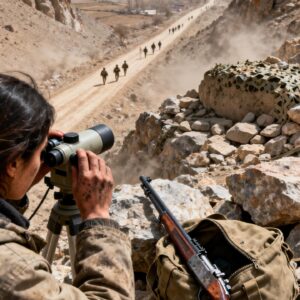
THE EXILED SNIPER: WHEN THE WORLD BRANDED ME A TRAITOR, I BECAME THE GHOST THAT SAVED THEM FROM THE SHADOWS
PART 1: THE SILENT WATCHER The wind at eleven thousand feet doesn’t just blow; it bites. It carries the metallic taste of snow and the ancient, dusty scent of stone that has been baking and freezing for millennia. I lay…
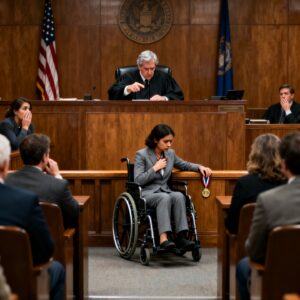
The Judge Called Me a Fraud and Demanded My Medal. He Had No Idea I Was the Reason His Son Was Still Alive.
PART 1: THE HUMILIATION The phantom rhythm of rotor blades was the first thing I heard. Thump. Thump. Thump. It wasn’t real, of course. It was just the ceiling fan in my San Diego apartment, slicing through the warm October air….

I Was Shackled in a Courtroom as a Homeless Thief, Ignored by Everyone—Until the Clerk Read My Service Number, the Judge Stood Up in Dead Silence, and the Man I Saved from Hell Recognized the Ghost He Thought Died in Fallujah.
PART 1: THE GHOST IN THE ORANGE SUIT The holding cell smelled of bleach and urine—a chemical cocktail meant to sanitize misery, but it only made it sting the back of your throat. I sat with my back pressed against…
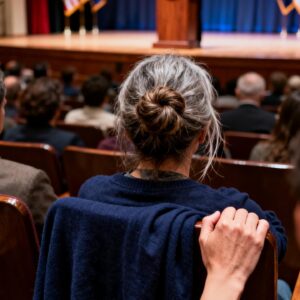
I Was Supposed to Be Dead: The Day a SEAL Admiral Froze Mid-Speech, Saw the Forbidden Tattoo on My Wrist, and Exposed the Classified Secret I’d Hidden from My Son for Twenty Years.
PART 1: THE GHOST IN THE BACK ROW You learn to be invisible. That’s the first rule of survival when you’re walking around with a grave that already has your name on it. You learn to take up less space,…
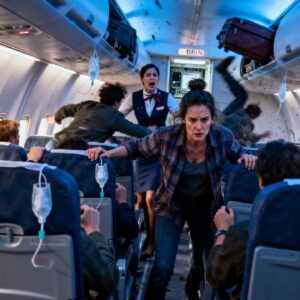
The Ghost of Flight 227: She Was Supposed to Be Dead, But When the Captain Collapsed and the Plane Screamed toward Earth, the Woman in Seat 14C Revealed a Secret That Would shake the Pentagon to Its Core
PART 1: THE INVISIBLE PASSENGER The smell of economy class is always the same. It’s a cocktail of stale coffee, recycled air, and the sour, metallic tang of human exhaustion. I was breathing it in, four counts in, four counts…
THE GHOST OF KANDAHAR: They Buried My Career and Mocked My Name, But When The Admiral Saw My Sealed File, He Unleashed A War Machine They Never Saw Coming
PART 1: THE INVISIBLE WOMAN The Alabama heat at 0530 didn’t just hit you; it strangled you. It was a physical weight, a wet, suffocating blanket that smelled of JP-8 jet fuel, heated asphalt, and the stale, recycled air of…
End of content
No more pages to load