PART 1
The first rule of survival is that you never truly stop running; you just change the pace.
My hands moved over the tablet screen with a muscle memory that defied the domestic setting of my kitchen. Six camera feeds. Four perimeter sensors. A hardline server cycling through three different VPNs to scrub our digital footprint from the face of the earth. On the screen, the world outside was grainy and gray—the quiet, slumbering streets of Brierwood. To the untrained eye, it was just a small town waking up to a storm-tossed Thursday. To me, it was a grid of blind spots and potential entry points.
“Dad, seriously? The Wi-Fi is tanking again.”
The voice pulled me back from the precipice of my old life. I set the tablet face down, sliding it under a stack of mail as I turned to the stove. Ren sat at the dining table, her dark hair falling over her face in a curtain—a gesture so painfully reminiscent of her mother that I felt a phantom ache in my chest. She was fifteen, sharp as a tack, and growing more observant by the day.
“Storm interference from last night,” I lied, my voice steady. It was the same lie I’d used for five years. “I’ll reset the router after breakfast.”
The truth was darker. The signal drops weren’t weather; they were scheduled security sweeps, a protocol Iris and I had designed before everything fell apart. But Ren didn’t need to know that. She didn’t need to know that her “boring” dad, the town handyman who fixed leaky faucets and stuck doors, was actually rerouting our internet traffic through a ghost server in Estonia to keep us off the grid.
“You said that yesterday,” she sighed, pushing her textbook away. “Finch sent me the chem notes, but the download is stuck at ninety-nine percent. It’s agonizing.”
“Eat your pancakes,” I said, sliding the plate toward her. “I’ll drive you in early. You can use the library connection.”
She looked at me then. Her eyes, intelligent and assessing, traced the lines on my face. I knew what she saw: the crow’s feet, the calluses on my hands, the flannel shirt that smelled of sawdust and WD-40. She saw Thorne Everett, the widower. The single dad trying too hard. She didn’t see the man who could dismantle a weapon in the dark or calculate the exit velocity of a sniper round by the sound of the echo.
“You know,” she said, cutting into her pancake, “normal dads don’t have military-grade motion sensors on the garage door. I saw the model number. It’s not from Home Depot.”
“Surplus store,” I countered effortlessly. “Perks of being a handyman. You get the good stuff when businesses liquidate.”
“Right. Because everyone in Brierwood needs to protect their lawnmowers like they’re gold bars.”
“In this economy?” I cracked a smile, trying to soften the tension. “You never know.”
Ren rolled her eyes, but she let it drop. That was our dance. She pushed for the truth, and I deflected with the mundane. I looked past her to the refrigerator, where a single photograph was held up by a magnet. The three of us at Cascade Lake. Iris was smiling, but her shoulders were tight. She knew. Even then, she knew we were running out of time.
Situational awareness before action. Her voice whispered in my head. Don’t get complacent, Thorne.
“Earth to Dad,” Ren waved a fork. “You’re doing the stare.”
I blinked. “Just… remembering the grocery list.”
“Liar,” she said softly. “You miss her.”
“Every day,” I admitted. That, at least, was the truth. “Finish up. We’re moving out in ten.”
Brierwood Maintenance and Repair was a corrugated metal box on the edge of town that smelled of grease and stale coffee. It was the perfect cover. It gave me access to every home, business, and municipal building in the county without raising a single eyebrow. I was invisible here. A utility.
Lel Merrick, my boss, was already sorting work orders when I walked in.
“Everett. You could set the atomic clock by your arrival,” Lel grunted, not looking up. “Got Mrs. Henderson’s furnace again. She claims it’s making a ‘demonic gurgling’ sound.”
“It’s just the expansion valve,” I said, grabbing my tool belt. “I told her to stop turning it off at night.”
“She likes you,” Lel chuckled. “Says you have the ‘touch.’ You fix things nobody else can figure out. Antique clocks, digital thermostats, that weird hydraulic lift at the garage. Where’d you learn all that, anyway? You never talk about before Brierwood.”
“I like to tinker,” I said, keeping my face neutral. “Jack of all trades.”
“Master of none? I doubt that.” Lel handed me a clipboard. “Sheriff Colt called, too. Her office door is sticking again. Asked specifically for you.”
My stomach tightened, just a fraction. Sheriff Marietta Colt. She was ex-Marine, sharp-eyed, and she had been circling me like a suspicious dog for five years. She knew I wasn’t just a handyman. She recognized the posture, the way I scanned a room before entering. The broken door was an excuse. She wanted to get me in the station, ask a few more casual questions, see if I’d slip.
“I’ll head there after Henderson’s,” I said.
The morning passed in a blur of routine. Fix the valve. Calibrate the thermostat. Listen to Mrs. Henderson talk about her grandkids while I checked the perimeter of her property out of habit. By the time early afternoon hit, I needed supplies.
Harland’s Hardware was the heart of the town. Silas Harland, the owner, was a good man with a loud mouth. I placed my items on the counter: electrical wire, high-tensile tape, and a set of precision wire cutters that cost more than my weekly paycheck.
Silas whistled as he rang them up. “Building something complicated, Everett?”
“Just restocking.”
He eyed the cutters. “Sure you’re not building a bomb? These look like something you’d use to defuse a nuke in a movie.”
I didn’t laugh. “Cash okay?”
“Always,” Silas said, undeterred by my lack of humor. “Hey, my kid’s got this science project. Circuitry stuff. You seem to know your way around—”
“Busy week, Silas. Try the physics teacher.”
I grabbed the bag and turned to leave, the bell above the door chiming. I stepped out into the alleyway, intending to cut through to where my truck was parked. That was when the air changed.
The sound of a scuffle. A muffled cry.
I stopped. My heart rate didn’t spike; it actually slowed. This was the physiology of combat. The adrenaline didn’t make me jittery; it made me cold.
In the shadows between the hardware store and the bakery, two older teenagers had a smaller boy pinned against the brick wall. I recognized the victim instantly—Finch Abernathy. Ren’s friend. A brilliant kid who weighed maybe a hundred pounds soaking wet.
“Just give us the cash, brainiac,” the larger boy snarled. Dawson. The high school quarterback with a mean streak and a lawyer for a father.
“I told you, I don’t have it!” Finch’s voice cracked, terror vibrating in every syllable.
“Then we take the backpack,” Dawson’s friend said, grabbing the straps.
I set my bag of supplies down. I didn’t run. I walked. My boots clicked against the pavement with a deliberate, rhythmic cadence. Clack. Clack. Clack.
The sound made them turn.
“Let him go,” I said. My voice wasn’t loud, but it carried a frequency that cut through the alley noise.
Dawson sneered, sizing me up. He saw a man in work clothes, graying at the temples, holding nothing but empty hands. He didn’t see the threat. “Mind your own business, old man. We’re just talking.”
“I’m not your friend, Dawson,” Finch whimpered.
“Walk away,” I repeated. “Last chance.”
“Or what?” Dawson stepped forward, puffed up with the immortality of youth. “You gonna tell my dad? I’m not scared of a janitor.”
His friend lunged. It was clumsy, telegraphed, a wide haymaker meant to intimidate.
Time seemed to dilate. In my mind, I saw the vector of the punch, the shift of his weight, the exposed nerve cluster on his wrist.
I stepped inside the arc of his swing. I didn’t strike him; I just redirected him. My hand clamped onto his wrist, thumb pressing into the pressure point, while my other hand guided his momentum. He spun, his feet tangling, and he hit the ground with a grunt of shock.
Dawson froze. He hadn’t seen what happened. One second his friend was attacking, the next he was on the pavement.
“He… he grabbed me!” the friend screamed, clutching his wrist theatrically. “He broke my arm!”
“Go home, Finch,” I said, eyes locked on Dawson.
Finch scrambled away, disappearing around the corner.
Dawson pulled out his phone, his face twisting into a mask of entitlement. “My dad’s going to sue you. You just assaulted a minor!”
“What is going on here?”
The voice came from the bakery entrance. Deputy Archer Reed. Young, eager, and not the sharpest tool in the shed. He walked over, hand resting on his belt.
“This guy attacked us!” Dawson shouted, pointing a shaking finger. “We were just hanging out and he went crazy!”
Reed looked at me. I stood perfectly still, hands open at my sides, signaling non-aggression.
“That true, Mr. Everett?”
“They were robbing Finch Abernathy,” I stated flatly. “I intervened to prevent injury.”
“I don’t see Finch,” Reed noted, looking at the empty alley. “I see two kids and a grown man. And one kid on the ground.”
“Check the cameras,” I nodded toward the hardware store.
“Cameras are dummies,” Dawson smirked. “Everybody knows that.”
Reed sighed, pulling the cuffs from his belt. “Mr. Everett, I gotta bring you in. We need to sort this out.”
“These boys are lying.”
“Maybe. But Sheriff Colt has a strict policy about adults putting hands on kids. Turn around.”
The cold steel of the handcuffs clicked against my wrists. I didn’t resist. Resistance would escalate the situation, draw attention, create a scene. The goal was to remain a handyman. A handyman gets arrested and looks scared. I had to remember to look scared.
But as I sat in the back of the cruiser, watching the town roll by through the cage, I wasn’t scared. I was calculating.
The Brierwood station was buzzing. I was placed in a holding room—not a cell, but a small office with a barred window. Through the glass, I could see Sheriff Colt arguing with Deputy Reed. She looked at me, her expression unreadable, then shook her head.
An hour later, I was processed. Fingerprints. Mugshot. The humiliation was designed to break people, but I had been interrogated in shipping containers in the Middle East. This was a vacation.
“You’ve got a hearing in the morning,” Reed told me as he shoved me into a holding cell for the night. “Judge Harrington requested it personally.”
My blood went cold. Not from fear, but from recognition.
Judge Callum Harrington. The man was a tyrant in a black robe, known for his theatrical cruelty and his obsession with “respect.” But it was more than that. Harrington had a brother. Colonel Rhodes Harrington. A man I had served under in a life that was supposed to be dead.
If the Judge started digging, if he pulled the strings of his brother’s connections to check the background of a “violent handyman,” he wouldn’t find a criminal record. He would find holes. And holes in a government database attracted the kind of attention that got people killed.
I sat on the cot, the thin mattress smelling of bleach. I closed my eyes and visualized the map of the station. Three exits. Two armed deputies on the night shift.
Not yet, I told myself. Don’t blow the cover unless the lethal threat is confirmed.
The night dragged on. I didn’t sleep. I meditated, slowing my heart rate, preparing for the performance of a lifetime. Tomorrow, I had to play the misunderstood citizen. I had to be boring.
But when morning came, and they marched me into the courtroom, the atmosphere was wrong.
The room was packed. Too many people for a simple assault arraignment. And there, sitting on the bench like a king on a throne, was Judge Harrington.
He didn’t look at me with judicial impartiality. He looked at me with loathing.
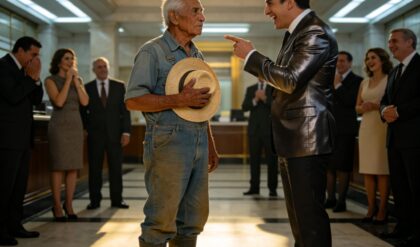
“Mr. Everett,” Harrington’s voice boomed, echoing off the mahogany walls. “You seem to have a habit of vigilantism. This is the third time you’ve been involved in an altercation in my town.”
I stood behind the defense table, wearing my wrinkled work clothes. “I was protecting a child, Your Honor.”
“So you claim.” Harrington leaned forward, his eyes narrowing. “But I’ve been looking at your file, Mr. Everett. Or rather, the lack of one. You moved here five years ago. Before that? A ghost.”
My hands clenched at my sides. He’s digging.
“I served my country,” I said quietly.
“Did you?” Harrington smiled, a shark sensing blood. “Because my brother served. Real service. He commanded heroes. You? You just seem to be a drifter with a violent streak and a surplus store fetish.”
The gallery tittered. He was playing to the crowd.
“I’m going to ask you a question, Mr. Everett,” Harrington said, his voice dropping to a dangerous register. “And I want a truthful answer. No more handyman nonsense. What was your unit?”
“That’s not relevant to this case,” I said, my voice tight.
“I decide what is relevant!” Harrington slammed his hand on the bench. “You stand there with that thousand-yard stare, acting like you’re some quiet protector. I think you’re a fraud. I think you’re a washer-out who likes to beat up teenagers to feel tough.”
He was baiting me. Pushing. Trying to crack the shell.
“Hold him in contempt if he refuses to answer,” Harrington ordered the bailiff. “We are going to get to the bottom of who Thorne Everett really is, if we have to strip-mine his entire life to do it.”
I looked around the room. I saw Ren in the back row, her face pale, eyes wide with terror. She wasn’t scared of the judge. She was scared of what I might do.
I locked eyes with her. Stay calm, I projected.
But inside, the alarms were screaming. The Judge wasn’t just being a jerk; he was pulling a thread that would unravel the entire sweater. And if he kept pulling, he wasn’t going to find a fraud. He was going to find a monster.
PART 2
The air in the courtroom didn’t just feel heavy; it felt pressurized, like the cabin of an aircraft entering a dive. Judge Harrington leaned over the bench, his face flushed with the toxic mix of power and disdain. He wanted to break me. He wanted to peel back the layers of the “quiet handyman” and find nothing but a fraud beneath.
He had no idea he was digging up a landmine.
“I’m waiting, Mr. Everett,” Harrington sneered, his voice dripping with theatrical patience. “You claim honorable service. You claim to be a protector. But men who have actually walked the walk don’t hide behind silence. They have a brotherhood. They have a name.”
He stood up, pacing behind his high desk.
“My brother, Colonel Rhodes Harrington, commanded the best,” the Judge continued, playing to the gallery. “He told me about the men who operate in the shadows. The real heroes. They all had call signs. Names earned in blood.” He stopped, pointing a finger at me like a weapon. “So, if you aren’t a liar, tell this court: What was your call sign?“
The room went dead silent. Even the court stenographer stopped typing. The dust motes dancing in the shafts of light seemed to freeze.
I looked at Ren. She was chewing her lip, her eyes wide, begging me to just say something, anything, to make this stop. Then I looked at Harrington. I saw the arrogance. But behind him, in the back row, the double doors opened.
A man walked in. Tall, rigid posture, wearing civilian clothes that couldn’t hide the military bearing. Colonel Rhodes Harrington. He had come to watch his brother’s show.
Our eyes locked.
I saw the color drain from Rhodes’s face. He stopped mid-step. He recognized me. Not as Thorne Everett, the handyman. But as the silhouette that had dragged him out of a burning transport vehicle in a Syrian hellhole seven years ago.
The Judge didn’t see his brother. He was too focused on me. “Well? Cat got your tongue? Or are you just—”
“Shadow Hawk,” I said.
It wasn’t a shout. It was barely a whisper. But in the acoustics of the courtroom, it hit like a gavel strike.
Harrington froze. The smirk faltered. “What did you say?”
I raised my head, letting the mask slip for the first time in five years. I let the cold, dead calculation of the operative enter my eyes. “My call sign,” I said, my voice resonating with a terrifying calm, “was Shadow Hawk.”
The reaction was instantaneous.
From the back of the room, a chair clattered to the floor. Colonel Rhodes Harrington had stumbled, gripping the back of the pew in front of him. “My God,” he whispered, loud enough to be heard.
Judge Harrington looked from me to his brother, confusion warring with a dawning, icy fear. He saw the terror on Rhodes’s face. He saw the way the federal agents stationed at the perimeter—men I had clocked earlier but ignored—suddenly reached for their earpieces, their posture shifting from relaxed to lethal readiness.
“Shadow Hawk?” the Judge stammered, the name tasting like ash in his mouth. “That’s… that’s classified. That’s a myth.”
“Case dismissed,” I said. I didn’t ask. I told him.
Harrington looked at his brother again. Rhodes gave a single, imperceptible nod, his face ashen.
“I… uh…” The Judge swallowed hard, his arrogance evaporating into sweat. “This court… finds that… due to lack of evidence… and…” He slammed the gavel down, the sound cracking like a gunshot. “Case dismissed! All charges dropped! Clear the courtroom!”
He practically ran toward his chambers.
The gallery erupted into confused murmurs. I didn’t wait. I turned, bypassed the stunned bailiff, and grabbed Ren’s arm.
“Dad?” she whispered, her voice trembling. “What just happened? What does that mean?”
“Walk,” I said, guiding her fast. “Don’t look back. Just walk.”
We burst out of the courthouse doors into the blinding afternoon sun. Reporters were already swarming, drawn by the sudden dismissal, shouting questions. “Mr. Everett! Did you threaten the Judge?”
I ignored them, moving toward my truck. But a hand clamped onto my shoulder.
I spun, muscle memory engaging, ready to strike.
It was Colonel Rhodes Harrington. He held his hands up, palms open. “Easy, Shadow Hawk. Easy.”
“I haven’t used that name in a lifetime,” I said, stepping between him and Ren.
“I know,” Rhodes said. His voice was thick with emotion. “You saved my life. Damascus. The extraction team said it was impossible. You went in alone.” He looked at me with a mixture of awe and horror. “But my brother… Callum… he didn’t know. He’s an idiot, but he didn’t know.”
“He knows now,” I said grimly. “And so does everyone else.”
Rhodes looked around at the dispersing crowd, at the cell phones raised, recording. “You need to disappear. Again. The people who wanted my unit dead… the ones who put the bounty on the operative who saved us… they never stopped looking for you.”
“I know.”
“Thorne,” Rhodes gripped my arm. “There are black SUVs with government plates two blocks over. Not our guys. Mercs. Contractors. They were waiting for a confirmation. Callum just gave it to them on a silver platter.”
“Go home, Colonel,” I said. “Keep your brother safe. I’ll handle the rest.”
I shoved Ren into the truck and peeled out of the lot, running the first red light I saw.
“Dad!” Ren gripped the dashboard. “Talk to me! Who is Shadow Hawk? Why was the Colonel crying?”
I checked the rearview mirror. A grey sedan was pulling out behind us. Proadcast range. Maintaining distance.
“Ren,” I said, my voice steady. “Everything I told you about being a handyman… it wasn’t the whole truth. Your mother and I… we worked for a specialized unit. We fixed problems that didn’t officially exist.”
Ren stared at me. “Like spies?”
“Like operators. When Mom died… it wasn’t an accident. It was a hit. She took a bullet meant for me. We came to Brierwood to hide. To keep you safe.”
She went silent, processing the seismic shift in her reality. Then, she did something that reminded me she was Iris’s daughter. She didn’t cry. She turned in her seat and looked out the back window.
“Grey sedan,” she said. “Virginia plates. Following us since Main Street.”
I smiled, a grim, razor-thin line. “Good eye.”
I took a sharp left, cutting through the alley behind the grocery store, then doubled back through the residential district. The sedan tried to keep up, but I knew these streets. I knew every pothole, every shortcut. I lost them by the water tower and drifted into our driveway three minutes later.
“Inside,” I ordered. “Now.”
We entered the house. It felt different now. No longer a home, but a fortress under siege.
“Go to your room,” I said. “Pack a bag. Essentials only. No electronics.”
“Dad—”
“Go!”
As she ran upstairs, I went to the master bedroom. I locked the door and walked to the closet. I pushed aside the hanging flannels and pressed my hand against the back paneling. A bio-scanner read my palm print. With a hydraulic hiss, the false wall slid open.
Inside wasn’t insulation. It was a steel cage lined with the tools of my trade.
A SIG Sauer MCX Rattler. Two Glock 19s with suppressors. Flashbangs. Ceramic body armor. And a tactical communications rig.
I stripped off the handyman flannel. I pulled on the black tactical pants, the moisture-wicking shirt, the vest. I felt the weight of the ceramic plates settle against my chest. It felt like suffocating. It felt like coming home.
Ding.
My secure phone, buried in the cache, lit up. One message.
PROTOCOL AVALANCHE INITIATED. PERIMETER BREACHED. THEY ARE COMING.
It was signed Vanguard. My old handler.
“Dad?” Ren stood in the doorway. She had her backpack. She froze, looking at the assault rifle resting on the bed, looking at the stranger wearing her father’s face.
“Is this… is this who you really are?” she asked, her voice small.
I strapped a knife to my boot. “This is what I have to be to keep you alive.”
The front door chimed. A polite, rhythmic knock.
I checked the security feed on my wrist monitor. Three men on the porch. Wearing suits, but moving like wolves.
“Get in the safe room,” I whispered to Ren. “The one behind the basement shelves. Do not come out until I say the code word.”
“What’s the code word?”
“Iris,” I said.
She hesitated, then ran.
I moved to the hallway. The knocking stopped.
“Mr. Everett,” a voice called out, smooth and cultured. “We know you’re in there. We just want to talk about Syria. About the leak.”
I racked the slide of the MCX.
“Come on in,” I whispered to the empty air. “Let’s talk.”
PART 3
The first rule of Close Quarters Battle (CQB) is violence of action. Speed, surprise, and aggression.
The front door exploded inward. Not a kick—a breaching charge. Wood and glass shrapnel sprayed the hallway. Two flashbangs rolled in, their fuses hissing.
I was already gone.
I had dropped through the laundry chute in the hallway floor, landing in the utility room below with a silent roll. Above me, the BANG-BANG of the grenades shook the dust from the rafters. They were clearing the ground floor, expecting a disoriented target.
They were fighting a ghost.
I moved to the basement fuse box. With a yank, I killed the main power. The house plunged into darkness.
“He cut the power!” a voice shouted from upstairs. “Night vision! Go, go!”
I didn’t need night vision. I had memorized the squeak of every floorboard, the distance from the stairs to the kitchen island, the exact angle of the hallway.
I moved up the basement stairs, silent as smoke. The first mercenary was at the top of the landing, his green laser sweeping the darkness. I grabbed his ankle through the banister gap and yanked. He slammed face-first into the steps, his rifle clattering. Before he could draw a breath to scream, I struck the vagus nerve in his neck. He went limp.
One down. Two inside. More outside.
I moved into the kitchen. The moonlight filtering through the blinds cut the room into strips of silver and black.
“Target is not on the second floor,” a voice crackled over the radio of the unconscious man I’d left on the stairs. “Check the—”
I stepped out of the shadows behind the second man in the living room. “Check behind you.”
He spun, raising his weapon. I batted the barrel aside, drove a knee into his solar plexus, and slammed his head into the granite countertop. He crumpled.
“Status!” The leader’s voice. He was in the foyer.
I grabbed a ceramic mug from the counter and threw it hard against the far wall of the dining room. CRASH.
The leader fired—three suppressed shots tearing through the drywall toward the sound. He moved toward the noise. I flanked him, moving through the open concept living room.
“You’re good,” the leader called out, sensing the shift in the air. “For a handyman. But you can’t protect the girl forever. We have teams at the school. We have teams at her friend’s house. Finch, isn’t it?”
I froze. Finch.
They were using the same tactic from the alley. Leverage.
“You touch that boy,” I said, my voice seeming to come from everywhere and nowhere, “and there won’t be enough of you left to identify.”
“Come out, Shadow Hawk. Or the boy pays the price for your silence.”
The front window shattered inward. A red laser dot appeared on my chest. Snipers.
I dove behind the sofa as a bullet tore through the cushion where my heart had been a microsecond before. I was pinned.
Then, a sound cut through the chaos. A siren. Not police—something louder. An air raid siren? No, it was the town’s storm warning system.
My phone buzzed. VANGUARD: PERIMETER SECURE. DISTRACTION LIVE.
Through the shattered window, floodlights blinded the snipers. Sheriff Marietta Colt’s cruiser roared onto the lawn, drifting sideways to create cover. Behind her, three black SUVs screeched to a halt—federal agents, led by Colonel Rhodes.
“Federal Agents!” Rhodes screamed over a bullhorn. “Drop your weapons!”
The mercenary leader in the hallway hesitated. That split second was all I needed. I vaulted the sofa, closed the distance, and swept his legs. I had him pinned, my muzzle pressed to his forehead, before he hit the ground.
“Call them off,” I snarled. “Call off the team at Finch’s house.”
The merc laughed, blood bubbling on his lips. “It’s already done. The order was given ten minutes ago. You lose.”
Bang.
But the shot didn’t come from me.
It came from the front door.
Judge Callum Harrington stood there, holding a snub-nosed revolver, smoke curling from the barrel. He had shot the merc in the shoulder, shattering his clavicle.
The Judge looked wild-eyed, his robes gone, wearing a suit that was disheveled and stained with sweat.
“I said call it off!” Harrington screamed, his voice cracking.
The mercenary howled in pain. “You… you’re the leak! You’re the asset!”
“I was the fool!” Harrington shouted. He looked at me, his eyes pleading. “Everett… Thorne… I recorded it. I confessed. Everything.”
He held up his phone. “I just livestreamed a confession to the press, the DOJ, and the local news. I admitted I was the one who leaked the Syria coordinates seven years ago. I admitted I was the reason my brother’s unit was ambushed. I admitted your ’employer’ blackmailed me to find you.”
The mercenary went pale. “You just signed your own death warrant, Judge.”
“Maybe,” Harrington said, trembling but standing tall. “But I just killed your leverage. You aren’t hunting a ghost anymore. You’re hunting the clean-up crew for a scandal that just went global.”
The merc’s earpiece chattered frantically. Abort. Abort. The feed is live. We are burned.
“Call. Them. Off,” I repeated, pressing the barrel harder.
The merc tapped his earpiece. “Abort Bravo Team. Abort Charlie Team. Extract immediately.”
The tension in the room snapped. The mercs outside were already retreating, tires squealing as they fled the arrival of the FBI swarming the street.
I stood up, leaving the groaning man for the Sheriff. I looked at the Judge.
“You destroyed your career,” I said. “You’ll go to prison.”
Harrington looked at his brother, who was rushing through the door. “I lived with the guilt of almost killing my brother for seven years. Prison will be a vacation compared to that.”
I didn’t wait for the reunion. I ran to the basement.
“Ren!”
I tore open the false shelf. The safe room door hissed open. Ren was huddled in the corner, clutching a flashlight. She looked up, her face streaked with tears, but her jaw set firm.
“Is it over?” she asked.
I pulled her into a hug, burying my face in her hair. “The fight is over. But we can’t stay here.”
EPILOGUE
The sun was setting over Brierwood as we loaded the last box into the new SUV. The town knew now. They knew the handyman wasn’t just a handyman. People stood on their porches, watching. Not with fear, but with a strange, quiet reverence.
Silas from the hardware store gave a small wave. Mrs. Henderson was crying on her porch.
Sheriff Colt leaned against her cruiser at the end of the driveway. Colonel Rhodes stood next to her.
“The Judge?” I asked.
“In custody,” Rhodes said grimly. “But safe. He’s turning state’s evidence against the contractors. It’s a mess, Thorne. But it’s out in the open.”
“Thank you,” I said. “For showing up.”
“You came back for me in Damascus,” Rhodes said. “I was a little late returning the favor.”
I looked at the house. The bullet holes, the broken windows. It had been a good cover.
“Where will you go?” Sheriff Colt asked.
“Somewhere boring,” I smiled. “I hear there’s a shortage of mechanics in Montana.”
Ren climbed into the passenger seat. She looked different. Older. The innocence was gone, replaced by a resilience that made me proud and heartbroken all at once.
“Ready?” I asked, climbing in.
“Dad,” she said as I turned the key. “Can we get normal Wi-Fi this time? No encrypted servers?”
I laughed, the sound rusty in my throat. “We’ll see.”
As we drove past the “Welcome to Brierwood” sign, I looked in the rearview mirror one last time. I saw the town that had sheltered us. I saw the life we were leaving behind.
But for the first time in five years, I didn’t check for a tail. The ghost was gone. Thorne Everett was just a man driving his daughter toward a new horizon.