Part 1
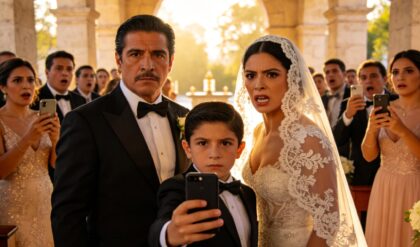
If you have ever sat at a dinner table and felt the specific, suffocating heat of your own family’s judgment, you know exactly where this story begins. It begins with a laugh that sounds like breaking glass.
We were at The Gilded Steer, one of those downtown steakhouses where the lighting is dim to hide the prices and the leather booths are deep enough to swallow a secret. My father, Tom, a retired electrician and a Gulf War veteran who still folds his socks like he’s expecting a surprise inspection, had turned seventy-two that week. This dinner was supposed to be a celebration.
But in my family, “celebration” is usually just a code word for “Madison wants something.”
My sister, Madison, is three years younger than me and a lifetime ahead in the art of manipulation. She is beautiful in a way that requires maintenance—hair that gleams like spun gold, teeth that cost more than my first car, and a laugh that she practiced in a mirror until it sounded like wind chimes. She sat across from me, flanked by her husband, Brett. Brett is a man who wears loafers without socks and uses the word “synergy” as a noun, verb, and adjective.
“You made it,” Madison said as I slid into the booth. She didn’t smile; she assessed. She scanned my outfit—a simple blouse and slacks—and I saw the microscopic frown. I wasn’t wearing the dress she’d suggested. “I told you this place was upscale, Jordan. You look… comfortable.”
“Happy Birthday, Dad,” I said, ignoring her. I kissed my father’s cheek. He smelled of Old Spice and sawdust, the smell of safety.
“Glad you’re here, kiddo,” Dad said. He looked tired. He always looks tired when Madison is in ‘pitch mode.’
“Listen,” Madison said, clapping her hands together as soon as the waiter had poured the sparkling water. “Tonight is crucial. Crucial. Dad’s old friend, Colonel Ellison, is meeting us here. He’s flying in from D.C. just for this.”
“Bobby Ellison,” Dad said, a note of reverence in his voice. “Haven’t seen him in twenty years. He was my CO in ’91. He’s a big shot now. Defense contracting, private equity… guy’s got the Midas touch.”
“Exactly,” Madison said, leaning in, her eyes predatory. “Brett and I are launching the new lifestyle incubator downtown. We need seed capital. The Colonel sits on the board of the Patriot Grant Foundation. If he gives us the nod, we get half a million in funding. So, please,” she turned her gaze on me like a weapon, “don’t be weird.”
“Weird?” I asked, unfolding my napkin.
“You know,” she said, waving a manicured hand. “Don’t go all ‘brooding veteran’ on us. We need this to be light. Classy. Success-oriented.”
“I’ll try not to traumatize the appetizers,” I said dryly.
My mother, who treats conflict like a stain on the carpet that she can just stand over until it disappears, chimed in. “Jordan, maybe you could tell them about your new job? At the logistics center? It sounds so… organized.”
“It’s fine, Mom,” I said.
Madison rolled her eyes. She took a sip of her wine, leaving a perfect crescent of lipstick on the rim. “You know, it’s funny. We were telling some friends about you the other day. About your time in the Army.”
I stiffened. “Oh?”
“Yeah,” Brett chuckled, slinging an arm around her. “Maddie came up with the best nickname for you. Tell her, babe.”
Madison smirked. It was a look I knew from childhood—the look she gave right before she blew out my birthday candles. “We call you the ‘Photocopier Captain.'”
The table went silent.
“Excuse me?” I said, my voice dropping an octave.
“Well, it’s true, isn’t it?” Madison giggled, looking around the table for validation. “I mean, you were an Adjutant General officer. S-1. That’s literally office work. You weren’t kicking down doors. You were, like, fixing paper jams and filing leave forms. ‘Photocopier Captain.’ It’s hilarious.”
Brett laughed. It was a wet, sycophantic sound. “Photocopier Captain! That’s gold. Imagine getting a medal for collating.”
I felt the heat rise up my neck. It wasn’t the insult itself—I’ve heard worse. It was the casual dismissal. The erasure of the sleepless nights, the weight of the decisions, the crushing reality of what “logistics” actually means in a combat zone.
“I was responsible for personnel accountability,” I said quietly. “Casualty reporting. Manpower management. It’s not just paper, Madison.”
“Oh, lighten up,” she scoffed. “See? This is exactly what I mean. So serious. Nobody wants to hear about casualty reports while they’re eating ribeye, Jordan. Just… let the adults talk business when the Colonel gets here. Okay?”
Dad looked down at his plate, his jaw working. He hated confrontation, but I could see the shame burning in his ears. He didn’t speak up. He never did against Madison. She was the success story. I was just the one who came back a little too quiet.
“He’s here,” Brett whispered, straightening his tie.
The heavy oak doors of the restaurant swung open.
Colonel Robert Ellison didn’t just walk into a room; he occupied it. He was in his late sixties, wearing a bespoke charcoal suit that fit him like armor. He had a silver crew cut and eyes that had seen things most people only see in nightmares. He moved with a predatory grace, flanked by the hostess who looked flustered by his mere presence.
Madison immediately fixed her posture. She put on her “million-dollar smile.” Brett stood up, buttoning his jacket, ready to extend a hand and a pitch.
“Colonel Ellison!” Madison called out, waving slightly. “Over here! We are so honored you could make it!”
The Colonel scanned the room. His eyes were like searchlights. They swept past the bar, past the other booths, and landed on our table.
He saw Madison waving. He saw Brett standing there like a golden retriever in a suit. He saw my father, shrinking slightly into the leather.
And then he saw me.
He stopped dead in his tracks.
The smile vanished from Madison’s face. She looked confused. She turned to see what he was looking at.
Colonel Ellison ignored her. He ignored Brett’s outstretched hand. He walked straight past them, marching with a rhythm that was ingrained in his bones. He stopped right in front of where I was sitting.
The entire restaurant seemed to hold its breath. The clinking of silverware stopped. The low hum of conversation died.
The Colonel stood tall, his back ramrod straight, his chin tucked.
And then, slowly, deliberately, he raised his right hand to his eyebrow.
He saluted me.
It wasn’t a casual wave. It was a crisp, sharp, regulation salute. A salute of superior to subordinate? No. This was a salute of respect. Of recognition.
I stood up. My legs felt heavy, but muscle memory took over. I snapped to attention and returned the salute.
“Captain Hale,” he said, his voice gravel and steel.
“Colonel,” I replied.
He held the salute for a beat longer than necessary, then cut his hand away. He reached out and grabbed my hand in both of his, shaking it with a warmth that shocked me.
“I’ll be damned,” he said, a genuine smile breaking across his weathered face. “I didn’t know you were Tom’s girl. If I’d known, I would have been here an hour early.”
Madison was frozen. Her mouth was slightly open, like a fish gasping for air. Brett’s hand was still hovering in mid-air, shaken by no one.
“You… you know each other?” Madison stammered. Her voice was shrill in the quiet room.
The Colonel turned to look at her, his eyes cooling instantly. “Know her?” he barked a laugh. “Young lady, your sister is the only reason my son is walking around on this earth today.”
Part 2
Part 2
The silence that followed Colonel Ellison’s salute wasn’t empty. It was heavy. It had weight and mass, pressing down on the white tablecloths and the crystal wine glasses like a physical force. If you listened closely enough, underneath the ambient hum of the restaurant’s HVAC system and the distant clatter of a dropped fork in the kitchen, you could hear the sudden, violent recalibration of my family’s entire worldview.
My sister’s mouth was not just open; it was slack, her jaw unhinged in a way that ruined the carefully curated symmetry of her face. Brett, her husband, looked as though someone had just spoken to him in a language he had never heard before, perhaps Aramaic or honesty. My father, Tom, sat frozen, his hands gripping the edge of the table so tightly that his knuckles had turned the color of old parchment.
I stood there, returning the salute. My arm remained rigid, my fingers aligned with the corner of my eyebrow, staring straight into the steel-grey eyes of a man who was a legend in the circles where I had spent the last six years of my life.
“Captain Hale,” he said again. His voice was gravel over velvet, the kind of voice that didn’t need to shout to be heard across a parade deck.
“Colonel,” I replied. My voice didn’t shake. It surprised me. In the face of my sister’s mockery, I usually crumbled or retreated. But this? This was the language of the service. I knew the syntax. I knew the rhythm. Here, I was safe.
He held the salute for another three seconds—an eternity in social time—before sharply cutting his hand down to his side. I followed suit, snapping to the position of attention before relaxing into a parade rest stance, my feet shoulder-width apart, hands clasped behind my back. It was automatic. The muscle memory of a thousand formations took over the awkwardness of the dinner party.
“At ease, Jordan,” he said, his face breaking into a smile that transformed him from a statue of war into a human being. He stepped forward, bypassing the handshake Madison had undoubtedly expected, and wrapped his large, calloused hands around my right hand. He didn’t shake it; he held it, testing the grip, looking for the strength in the tendons.
“I’ll be damned,” he said softly, shaking his head. “Tom Hale’s little girl. I should have known. The eyes are the same. You have his stubbornness written all over your face.”
Madison finally found her motor functions. She blinked rapidly, her long eyelashes fluttering like a distress signal. She stood up, her chair scraping loudly against the floor, a harsh sound that made the couple at the next table look over.
“Colonel Ellison!” she exclaimed, her voice pitched too high, frantic to regain control of a narrative that was spiraling away from her. “We are so—I mean, we didn’t know! You know Jordan? This is… what a small world! Please, sit! We have the best table in the house.”
She gestured to the empty seat at the head of the booth, the power position she had specifically reserved for him.
The Colonel turned his head slowly to look at her. He didn’t pivot his body, just his neck, like a tank turret traversing to acquire a new target. He looked at her outstretched hand, then at her face, then at Brett, who was halfway out of his seat, buttoning and unbuttoning his suit jacket in a spasm of nervous energy.
“I know her,” the Colonel said, his tone neutral but dangerous. “But the question, young lady, is whether you do.”
He didn’t move to the head of the table. Instead, he pulled out the empty chair directly next to me—the one intended for overflow or handbags—and sat down. He placed his back to the rest of the restaurant, creating a private perimeter around our table.
“Sit down,” he commanded. It wasn’t a shout. It was an order.
Madison sat. Brett collapsed into his chair. Dad seemed to deflate, exhaling a breath he must have been holding since 1991.
“Water,” the Colonel said to the busboy who materialized instantly at his elbow. “No ice.”
“Yes, sir. Right away, sir.” The busboy scrambled away.
The Colonel unfolded his napkin with deliberate, geometric precision. He smoothed it over his lap, taking his time. Every eye at the table was glued to his hands. They were older hands, spotted with age, but steady. He picked up the menu, glanced at it for a fraction of a second, and closed it.
“I’ll have the ribeye,” he announced to the room at large, though no waiter was currently present. “Rare. If they cook it past medium-rare, I send it back. Tom, you remember that place in Kuwait? The one that served steak that tasted like boot leather?”
My father cleared his throat. ” The Sand Trap, sir. I remember. We ate it anyway.”
“We ate it anyway,” the Colonel repeated, nodding. “Because we were hungry and we didn’t know if we’d be eating dinner the next night.”
He turned his gaze to Madison. She was freezing under his scrutiny. She picked up her wine glass, took a large gulp, and set it down. The crystal chimed against the plate.
“So,” the Colonel said, leaning forward, his elbows on the table. “Before I walked up, I couldn’t help but overhear a fascinating conversation. Something about a… what was the term? A ‘Photocopier Captain’?”
The temperature in the booth dropped ten degrees.
Madison’s face went from pale to a blotchy crimson. “Oh, that,” she laughed nervously. It was a terrible sound, brittle and hollow. “That was just… just a family joke. You know how siblings are. We tease. It’s our love language.”
“Is it?” The Colonel didn’t blink. “Explain the humor to me. I’ve been retired for a few years, so maybe I’m out of touch with modern comedy. Why is a Captain in the United States Army comparable to office equipment?”
Brett decided this was the moment to be a hero. He leaned forward, flashing his teeth in a smile that looked like a grimace. “Sir, if I may. It’s just—Madison and I, we work in high-leverage industries. Tech. Startups. We deal with scaling, with heavy lifting. Jordan’s role… well, we just like to keep her humble. S-1 is administration. It’s paper. It’s not… the sharp end of the spear, as you guys say.”
The Colonel looked at Brett. He looked at Brett’s manicured fingernails. He looked at the expensive watch on Brett’s wrist that I knew was a lease.
“The sharp end of the spear,” the Colonel mused. “Interesting metaphor. Tell me, son, what happens to the spear when the handle breaks? What happens to the spearhead when there is no muscle to thrust it?”
Brett opened his mouth, but nothing came out.
“I’ll tell you,” the Colonel said. “It falls in the dirt. And it rusts.”
The waiter arrived with the Colonel’s water and a basket of warm bread. The interruption broke the tension for a split second, but the Colonel didn’t let it dissipate. He took a sip of water, set the glass down, and looked directly at my father.
“Tom, you raised a good man in this one,” he gestured to me. “But I’m curious. Did you tell them? Did you tell these two what your daughter actually did during the withdrawal?”
Dad looked down at his hands. “I… I didn’t know the details, Bobby. Jordan doesn’t talk about it. She just said it was… busy.”
“Busy,” the Colonel scoffed. He reached into the inner pocket of his suit jacket. For a second, I thought he was reaching for a wallet or a phone. Instead, he pulled out a small, battered notebook. It was a standard-issue green tactical memorandum book, the kind you buy at the PX for two dollars. The cover was frayed, the spiral binding bent.
He placed it on the table next to the bread basket. It looked like a piece of trash amidst the fine china.
“August 2021,” the Colonel began. His voice changed. It lost the conversational lilt and dropped into the cadence of a debriefing. “Kabul Airfield. The Abyss.”
He looked at Madison. “You watched it on CNN, I assume? From the comfort of your living room?”
“Yes,” Madison whispered. “It looked… chaotic.”
“Chaotic is a word you use when the line at Starbucks is too long,” the Colonel snapped. “This was biblical. We had forty thousand people pressing against three gates. The heat was one hundred and ten degrees in the shade, and there was no shade. The air smelled of burning plastic, raw sewage, and fear. You could taste the desperation on your tongue.”
I closed my eyes. He was right. I could taste it. The metallic tang of jet fuel mixed with the dust. The sound of babies crying—a ceaseless, rolling wave of sound that never stopped, not even at night.
“My son, David,” the Colonel continued, “was a Sergeant First Class with the 82nd Airborne. He was commanding a checkpoint at the Abbey Gate. His job was to filter the souls. To decide who had the right paperwork and who had to be turned back to the Taliban checkpoints five hundred yards away.”
He paused, letting the image sink in.
“David is a tough kid. He grew up in my house. But by day three, he was broken. He called me on a sat-phone, weeping. He said, ‘Dad, they’re crushing each other. I can’t process them fast enough. The system is down. The biometric scanners are melted. We have no internet. We’re doing it by hand, and the lists are wrong.'”
Madison was staring at the notebook. She wasn’t drinking her wine anymore.
“The digital infrastructure had collapsed,” the Colonel explained, looking at Brett. “Your ‘high-leverage’ tech? It failed. The satellites were overwhelmed. The databases locked up. The fancy iPads were just glass bricks. We had thousands of people with visas, with promises from the US government, and no way to verify them. If we couldn’t verify them, they couldn’t get on the bus. If they couldn’t get on the bus, they couldn’t get to the plane. If they couldn’t get to the plane, they died.”
He tapped the green notebook.
“Enter the S-1. The Administration. The ‘Photocopiers.'”
He pointed a finger at me. It felt like a weapon.
“Your sister was the Officer in Charge of the Evacuation Control Center’s processing node. She was working out of a shipping container that had been turned into an oven. She had three printers. Two were broken. The third one was jamming every five minutes because of the dust.”
“I remember the dust,” I said softly. It was the first time I had spoken since the salute. “It was like talcum powder. It got into everything. Your eyes, your teeth, the paper rollers.”
“She didn’t sleep,” the Colonel said. “My sources tell me Captain Hale was awake for seventy-two hours straight. When the digital manifest failed, she didn’t throw up her hands. She didn’t say, ‘Oh well, the tech is down.’ She built a new system. With paper. With pens.”
He looked at Madison. “She created a manual cross-reference system using whiteboard markers on the walls of the shipping container. She organized runners—privates and corporals—to physically run manifests from the gate to the flight line. She turned herself into a human router for human lives.”
“But that’s not the story,” the Colonel said, his voice dropping lower. “That’s just the job. The story is about the bus.”
He took a deep breath.
“On the afternoon of the 26th, mere hours before the suicide bomb went off at the gate, my son radioed in. He had a group of 140 Special Immigrant Visa holders. Interpreters. Their families. Kids. They had been waiting in a sewage ditch for twelve hours. They were dehydrated, terrifyingly exposed. David had secured a bus to get them to the tarmac, but the Air Boss—the guy running the flights—shut it down.”
“Why?” Dad asked, his voice trembling.
“Weight limits,” I answered. I looked up, meeting my father’s eyes. “The C-17s were flying heavy. The pilots were worried about the density altitude. The computer said the plane was full. The manifest was locked. The Air Boss ordered the bus to turn around.”
The Colonel nodded. “Turn around. Send them back out the gate. Back to the wolves.”
“David was screaming on the radio,” the Colonel said. “He knew if he sent them back, they were dead. He needed an override. He needed a signature from an officer who would take legal responsibility for the overload. If that plane crashed, whoever signed that paper would be going to Leavenworth for life.”
He looked at Brett. “It’s a risk calculation. High leverage. Who wants to sign their life away for strangers?”
“Nobody answered the call,” the Colonel said. “The Majors were busy. The Colonels were in meetings. The computer said no.”
“Then,” the Colonel smiled grimly, “a voice came over the net. Calm. bored, almost. ‘This is Hale, S-1. Send the bus. I’ll sign for it.'”
Madison looked at me. Her eyes were wide, searching my face as if looking for a stranger. “You did that?”
“I did,” I said.
“She didn’t just say it,” the Colonel corrected. “She had to physically get the authorization to the aircraft. The comms weren’t good enough for a digital approval. The Loadmaster needed a hard copy signature on the manifest before he would drop the ramp.”
“So she ran.”
The Colonel leaned back, painting the picture with his hands. “She left the container. She grabbed a clipboard. And she sprinted eight hundred yards across an active airfield. Now, you have to understand the environment. There were sniper rounds snapping over the runway. There were vehicles everywhere. It was night. It was chaos.”
“I lost a boot,” I added, a weird detail surfacing in my memory. “My left boot lace snapped near the hangars. I ran the last three hundred yards with one boot flopping around my ankle.”
“She got to the plane,” the Colonel said. “The engines were turning. The jet wash was strong enough to knock a grown man down. She climbed up the ramp, grabbed the Loadmaster by the vest, and shoved the clipboard in his face. She had recalculated the weight balance by hand. She showed him the math. She proved the plane could take the weight if they left the luggage behind.”
“She ordered them to dump the pallets of gear,” the Colonel said. “Millions of dollars of equipment. Dumped on the tarmac to make room for people. And she signed the bottom line. ‘Captain Jordan Hale.’ She put her name on the line that said if this goes wrong, it’s my fault.”
He paused. The restaurant was quiet around us, but I suspect it was just our table that felt the silence.
“The ramp stayed down. The bus drove up. My son, David, got his people on board. He was the last one up the ramp. As the plane taxied out, he looked out the back. He saw a female Captain standing on the tarmac, one boot undone, holding a clipboard against her chest, watching them leave.”
The Colonel reached into the green notebook. He pulled out a folded piece of paper. It was a photocopy. Grainy, black and white, covered in smudges.
He unfolded it and placed it in the center of the table.
It was a flight manifest. A list of names. Hundreds of them. And at the bottom, circled in red marker, was a signature.
CPT J. HALE.
“My son kept this,” the Colonel said, his voice thick. “He made a copy of it before he filed the original. He carries it in his wallet. He calls it his ‘Ticket.’ He told me, ‘Dad, if you ever meet CPT Hale, you tell her she has a beer waiting for her in every bar in North America.'”
He looked at Madison.
“So, when you call her a ‘Photocopier Captain,’ you are technically correct. She knows how to use a copier. She knows how to use paper. And because she does, my son came home to his wife. My granddaughter has a father.”
He picked up his knife and pointed it at Madison.
“That is not a joke. That is the difference between a civilian and a soldier. A civilian sees paper. A soldier sees orders, lives, and honor.”
My mother was crying openly now. She didn’t make a sound, but tears were tracking through her foundation. She reached over and squeezed my hand. Dad was staring at the manifest like it was a holy relic. He reached out a trembling finger and touched my signature.
“You never told me,” he whispered. “Why?”
“Because I was just doing my job, Dad,” I said. “And because… I didn’t think you’d understand the admin side. It wasn’t ‘hero’ stuff. It wasn’t shooting back.”
“It was the bravest thing I’ve ever heard,” Dad said, his voice cracking. “I fixed generators, Jordan. I changed spark plugs. You… you saved a company.”
The emotional weight of the moment was suffocating. I needed air, but I couldn’t leave.
Then, the Colonel shifted gears. The soldier vanished, and the businessman appeared. It was a jarring transition, like a sudden change in weather. He turned to Madison and Brett, his face clearing of all emotion, leaving only a blank, terrifying professionalism.
“Now,” he said, slicing a piece of bread. “You wanted to talk business. You wanted to pitch me an incubator.”
Madison wiped her face. She tried to rally. I could see the gears turning—she was a survivor, in her own way. She thought she could salvage this. She thought she could pivot.
“Yes,” she said, her voice shaky but strengthening. “Yes, Colonel. And… hearing that story… it just reinforces why we want to work with you. We value… resilience. That’s what our incubator is about. Resilience for creators.”
Brett jumped in, sensing an opening. “Exactly, sir. We want to create a space where… where people can have that kind of impact. We want to disrupt the creative economy.”
The Colonel chewed his bread slowly. He swallowed. “Disrupt,” he repeated. “Tell me, Brett. What is your burn rate?”
Brett blinked. “Excuse me?”
“Your burn rate. Monthly operating expenses versus capital on hand. If I give you half a million dollars today, how long until you are broke?”
“Well,” Brett stammered, “we project… with the synergy of the coworking memberships… we should be cash-flow positive by month eighteen.”
“Month eighteen,” the Colonel said flatly. “And what is your contingency for a market downturn? What is your logistics chain for the equipment? Who handles your compliance?”
“We… we handle that,” Madison said. “We’re a lean team.”
“You’re not a team,” the Colonel said. “You’re a concept. I’ve read your deck, Madison. I had my analysts pull it before I got on the plane.”
Madison froze. “You… you read it?”
“I did. It’s full of adjectives. It has very few nouns. It has zero verbs that matter.” He leaned in. “You talk about ’empowering creators.’ I see a real estate play where you sublease office space at a markup. You talk about ‘community.’ I see a way to charge people for coffee they could make at home.”
“But—”
“And frankly,” the Colonel cut her off, “after tonight, I have serious doubts about leadership judgment. You cannot build a culture of excellence when you mock the very traits—diligence, detail, service—that create success. You mocked your sister for handling the details. But in business, just like in war, the details are what kill you.”
He wiped his mouth with the napkin.
“I don’t invest in people who don’t respect the logistics,” he said. “The answer is no. The Foundation will not be providing a grant. And I will be advising the board against any future applications.”
It was a death sentence for their startup. I knew their finances. Without this grant, they were dead in the water.
Madison looked like she had been slapped. She slumped back in her chair, the fight completely gone. Brett looked at the table, his face pale.
The Colonel turned to me. The warmth returned to his eyes.
“However,” he said, “I am looking to make a hire.”
He reached into his pocket again. This time, he pulled out a sleek, heavy business card. It was embossed with the logo of the Ellison Group.
“We are opening a new division,” he said. “Veterans’ transition assistance. Housing. Job placement. Healthcare navigation. It’s a logistical nightmare. We have thousands of files, shifting regulations, government bureaucracy. It’s a mess.”
He slid the card across the table to me.
“I need a Director of Operations. I need someone who can look at a pile of broken systems and fix them. Someone who doesn’t panic when the ‘printer jams.’ Someone who will run across the tarmac to get the job done, even if nobody is watching.”
I looked at the card. Director of Operations.
“The pay is one-eighty to start,” he said casually, as if discussing the price of the appetizers. “Full benefits. And I promise you, the coffee is better than what you had in Kabul.”
My mother gasped. “Jordan…”
I looked at Madison. She was staring at the card, then at me. In her eyes, I didn’t see anger anymore. I saw defeat. And under the defeat, something else. Recognition. She realized, perhaps for the first time, that the hierarchy she had built in her head—where she was the queen and I was the worker bee—had been inverted.
“I…” I started. “I have a job, Colonel. At the distribution center.”
“Is it a job?” the Colonel asked. “Or is it a holding pattern?”
He stood up. The meal hadn’t even arrived yet, but he was done. He had accomplished his mission.
“You don’t have to answer now,” he said. “Call the number on the card. My assistant is expecting you.”
He looked at the waiter who was approaching with the steaks. “Put it all on my tab,” he said, pointing to our table. “Including the wine. Especially the wine. They’re going to need it.”
He turned to my father. “Tom, happy birthday. You did good. You did real good.”
He looked at me one last time. He didn’t salute. He just nodded. It was a nod of equals.
“Captain,” he said.
And then he walked out.
The four of us were left alone in the booth. The waiter awkwardly placed the sizzling steaks in front of us. The sound of the searing meat was obscenely loud.
For a long time, nobody moved.
Then, Brett let out a long, shaky sigh. “Well,” he said, his voice trembling. “That… went well.”
Madison didn’t snap at him. She didn’t roll her eyes. She just stared at the spot where the Colonel had been sitting.
“I’m sorry,” she said. It was a whisper.
I looked at her. “What?”
She looked up, and her eyes were wet. “I’m sorry. About the photocopier joke. About… everything.”
She gestured to the manifest that was still sitting in the center of the table. The list of names. The proof of life.
“I wanted to be big,” she said, her voice breaking. “I wanted to be important. So I tried to make you look small. But… you’re not small, Jordan. You’re huge. And I’m just… I’m just a girl with a pitch deck.”
It was the most honest thing she had ever said.
I reached out and took the manifest. I folded it carefully, along the old creases, and put it in my pocket.
“Eat your steak, Madison,” I said gently. “It’s getting cold.”
Dad picked up his knife and fork. He cut a piece of meat, but before he ate it, he raised his glass.
“To the Photocopier Captain,” he said, his voice thick with pride.
I looked at him, then at Mom, then at Madison. Madison hesitated, then picked up her glass. Brett followed.
“To the Captain,” Madison whispered.
We clinked glasses. The sound rang out, clear and true, finally drowning out the silence.
I took a sip of wine. It tasted like victory. Not the loud kind with parades and fireworks. The quiet kind. The kind that sits in your pocket, folded up and signed in ink, knowing exactly what you are worth.
Part 2 (Continued): The Long Way Home
The bill never came. The Colonel had meant what he said. We walked out of the private booth and into the main dining room, which felt different now. Before, it had been a stage where Madison performed her success. Now, it was just a room full of people eating expensive meat, unaware that the gravity of the world had shifted a few degrees to the left.
The walk to the parking lot was a study in awkward geometry. Madison walked ahead, her heels clicking a frantic rhythm on the asphalt, as if she could outrun the humiliation if she just moved fast enough. Brett trailed her like a lost puppy, checking his phone, likely deleting the drafts of the “Big News Coming!” posts he had prepared for LinkedIn.
I walked with Dad. He moved slower than usual. The crisp night air of the Midwest in November hits you like a wet towel, cold and heavy. Dad stopped at his truck—a 2015 Ford F-150 that he kept cleaner than his own kitchen.
“Jordan,” he said. He didn’t look at me. He was looking at the streetlights reflecting off the hood of the truck.
“Yeah, Dad?”
He fished a pack of cigarettes out of his glove box. Mom hated that he kept them, but tonight, she stood by the passenger door, shivering in her shawl, and didn’t say a word. She knew he needed a minute. He lit one, the flare of the lighter illuminating the deep lines around his eyes.
“I want to ask you something,” he said, taking a drag that went deep into his lungs. “And I want the truth. No ‘I’m fine’ bullshit. You hear me?”
“I hear you.”
“Did you leave the Army because you wanted to? Or did you leave because you thought you didn’t matter?”
The question hung there, suspended in the smoke.
I leaned against the bed of the truck. “I left because I was tired, Dad. I was tired of the noise. I was tired of the dust. And… yeah. Maybe a little bit because I came home and everyone just asked me if I’d seen any combat. And when I said ‘no, I worked in an office,’ their eyes glazed over. It felt like… like my war didn’t count.”
Dad turned to me. He dropped the cigarette, half-smoked, and crushed it with the toe of his boot.
“I spent twenty years thinking a soldier looked a certain way,” he said, his voice rough. “I thought a soldier looked like John Wayne. Or me, back in the day. Grease under the fingernails. A wrench in the hand.”
He stepped closer and put his hands on my shoulders. They were heavy, warm, and shaking slightly.
“I looked for a soldier in the shape of a man,” he whispered. “And I missed the soldier standing right in front of me. I missed you. I let them…” He gestured vaguely toward Madison’s Tesla parked three spots away. “I let them make you small. Because I didn’t know how big you were. That’s on me. That is my failure of command.”
“Dad, don’t,” I said, feeling the burn in my throat. “You didn’t fail.”
“I did,” he insisted. “But I’m correcting the record now. You understand? I’m correcting the damn record.”
He pulled me into a hug that threatened to crack my ribs. It smelled of tobacco and Old Spice and repentance. For a minute, we weren’t a retired electrician and an ex-Captain. We were just a father and a daughter trying to bridge a gap that silence had built.
From across the lot, Madison watched us. She was leaning against her car, arms crossed. She didn’t look away. For the first time in her life, she didn’t try to make the moment about her. She just watched, and in the harsh light of the parking lot lamps, she looked very young and very lost.
The Next Morning
You would think that after a night like that, I would wake up feeling like a superhero. I didn’t. I woke up at 6:00 AM to the sound of my alarm, in my one-bedroom apartment that smelled faintly of the Thai takeout I’d eaten two days ago.
I still had to go to work.
At the time, I was working as a shift supervisor at a regional distribution center for a mid-sized shipping company. It was a job I had taken because it was easy. It required zero brainpower. I made schedules. I checked inventory. I went home. It was safe.
But walking onto the floor that morning felt different.
The warehouse was loud—forklifts beeping, conveyor belts humming, the shout of the floor managers. I walked to my desk, a small metal table in the corner with a computer that ran Windows 98 and a chair with a missing wheel.
“Hey, Hale!”
It was Gary, the floor manager. Gary was a man who thought “leadership” meant yelling loud enough to be heard over the machinery. He walked over, holding a clipboard.
“We’re short on the loading dock,” he barked. “Three guys called out. I need you to jump on the line and help with the sort. We’re backed up on the Amazon shipment.”
I looked at Gary. I looked at his clipboard.
Yesterday, I would have said “Sure, Gary” and spent eight hours throwing boxes onto a belt until my back screamed. I would have done it because I thought that’s what I deserved. I thought that because I wasn’t a “hero,” I deserved the grunt work.
But today, I had a folded piece of paper in my pocket. A manifest.
“No,” I said.
Gary stopped. He blinked, his mouth hanging open slightly. “Excuse me?”
“No,” I repeated. I didn’t yell. My voice was calm, level. The voice of the S-1. “I’m not going to the line, Gary. I’m fixing the schedule so we don’t have three call-outs next time. And then I’m resigning.”
“Resigning?” Gary laughed. It was a nervous sound. “You can’t resign. You need this job. Who else is gonna hire you? You don’t have any ‘real world’ skills, Hale. You’re just ex-military. You guys only know how to follow orders.”
I stood up. I picked up my personal mug—the one that said Army Strong on the bottom.
“Actually, Gary,” I said, walking past him. “I know how to manage the logistics of a frantic evacuation of forty thousand people from a hostile territory while under indirect fire. I think I can handle finding a new job.”
I walked out. I didn’t look back. I left my vest on the chair. I walked out into the sunlight of the parking lot, pulled out my phone, and dialed the number on the Colonel’s card.
It rang twice.
“Ellison Group, Office of the Chairman,” a crisp voice answered.
“This is Jordan Hale,” I said. “The Colonel is expecting my call.”
“Ah, Captain Hale,” the voice changed instantly. Warm. Respectful. “Hold one moment, please. He’s in a board meeting, but he gave strict orders to be interrupted if you called.”
Thirty seconds later, the Colonel’s voice came on the line.
“Tell me you quit,” he said. No hello. No pleasantries.
“I just walked out,” I said.
“Good. Get in your car. Drive to D.C. We have a briefing at 0800 tomorrow. I hope you still have your dress blues, but a suit will do. We have a lot of work to do.”
The Shift
The transition wasn’t easy. Moving to D.C., stepping into a high-level corporate world—it was a culture shock. But it was a different kind of shock than coming home from war. This felt… productive.
The Colonel wasn’t hand-holding me. He threw me into the deep end. The “Veterans Transition Initiative” was a mess. It was a tangled web of government grants, private donors, and failing non-profits. My job was to untangle it. To build a pipeline that actually worked.
I spent my days in meetings with Senators, CEOs, and Generals. I spent my nights building spreadsheets that were so complex they would have made Madison’s head explode.
And speaking of Madison.
She went silent for a month. No texts. No tags on Instagram. Mom told me she was “rebranding.” Apparently, the failure of the incubator grant had forced them to downsize. They moved out of their trendy downtown loft and into a smaller townhouse in the suburbs. Brett had to get a real job as a sales rep for a pharmaceutical company.
I didn’t gloat. I didn’t feel the need to.
Then, about six weeks after the dinner, a package arrived at my office.
It was a heavy box. I cut the tape and opened it. Inside was a sleek, high-end espresso machine. The kind that costs more than my first car.
There was a note on top. Stationery. Not the company letterhead she used to use. Just plain paper.
Jordan,
I know you probably have free coffee at the big fancy office. But I remember you saying once that office coffee always tastes like battery acid.
I wanted to say thank you. Not for the dinner. But for not destroying me when you could have. You had every right to bury me in that parking lot. You didn’t.
I’m trying to learn. It’s hard. I’ve been pretending for so long that I don’t know who I am if I’m not “winning.” But I’m trying.
P.S. I told the twins that their Aunt Jordan is a superhero. They asked if you can fly. I told them no, but you can make a bus fly, which is cooler.
– M
I touched the paper. It wasn’t a grand apology. It wasn’t a grovel. But it was real.
I plugged in the machine. I made a cup. It was delicious.
The Reunion
Six months later, the Foundation held its annual gala. This was the event of the season in D.C. Black tie. Senators. Movie stars. And, of course, the Colonel.
I was the Director of Operations now. I was running the show from behind the scenes, making sure the donors were happy, the speeches were on time, and the wine didn’t run out. I was in my element. Logistics.
I was standing by the entrance, checking the guest list on an iPad, when I saw them.
Dad and Mom.
I had flown them out. First class. Dad was wearing a tuxedo that I had rented for him, and he looked uncomfortable but incredibly handsome. Mom was wearing a blue gown that matched her eyes.
And behind them… Madison and Brett.
I had invited them, too.
Madison looked different. She was wearing a simple black dress. No sequins. No flashy jewelry. Her hair was down, loose. She looked… softer.
I walked over.
“You made it,” I said.
“Wouldn’t miss it,” Dad said. He looked around the ballroom, his eyes wide. “Jeez, Jordan. This is… something.”
“It’s just a room, Dad,” I smiled. “With better tablecloths.”
Madison stepped forward. She looked nervous.
“Hi,” she said.
“Hi,” I said.
“This is incredible,” she said, gesturing to the room. “You organized this?”
“I had help,” I said. “A team. Logistics.”
“Right,” she smiled. A genuine smile. “Logistics.”
Suddenly, the music stopped. The Colonel was on stage. He tapped the microphone.
“Ladies and gentlemen,” he boomed. The room went silent. “Thank you all for coming. We are here to raise money for those who served. But tonight, I want to introduce you to someone special.”
My stomach dropped. Oh no. Don’t do it.
“We often talk about heroes in terms of medals,” the Colonel said. “We talk about the guys who charge the hill. And they deserve every ounce of glory. But wars are won, and lives are saved, by the people who make sure the ammo gets to the hill. By the people who make sure the wounded get off the hill.”
He looked directly at me. The spotlight swung across the room and hit me. I was blinded for a second.
“I want to introduce my Director of Operations,” the Colonel said. “Captain Jordan Hale. Six months ago, I found her working in a warehouse because she thought her skills didn’t translate to the real world. Today, she runs a program that has housed five thousand homeless veterans.”
The room erupted in applause. It was thunderous.
“But that’s not why I hired her,” the Colonel continued, overriding the applause. “I hired her because on August 26th, 2021, she saved my son’s life with a clipboard.”
He gestured for me to come up.
I didn’t want to. Every instinct in my body screamed stay in the shadows. Stay in the admin office.
But then I looked at Dad. He was crying. He was clapping so hard his hands must have hurt. I looked at Madison. She wasn’t clapping. She was staring at me with a look of pure, unadulterated awe.
I walked up the stairs.
The Colonel shook my hand. He handed me the microphone.
“Say something,” he whispered.
I looked out at the sea of faces. Politicians. Billionaires. Power brokers.
And then I saw the table in the back. The table reserved for the veterans the program had helped. Men and women in wheelchairs. Men and women with scars you could see and scars you couldn’t.
I took a breath.
“The Colonel calls me a ‘Photocopier Captain’,” I said. The crowd laughed politely.
“It was meant as an insult once,” I continued. “But the truth is… I love paper. I love lists. Because a list isn’t just ink. A list is a promise. When you write a soldier’s name on a manifest, you are making a promise that they exist. That they matter. That they are not just a number, but a person who has a father, a mother, a sister.”
I looked at Madison.
“We live in a world that loves the loud,” I said. “We love the pitch. The viral moment. The ‘disruption.’ But the world is held together by the quiet. By the people who check the tires. The people who file the forms. The people who make sure the bus shows up.”
“So,” I raised my glass. “Here’s to the boring stuff. Here’s to the paperwork. Here’s to the things that bring us home.”
The standing ovation was deafening.
The Aftermath
Later that night, after the guests had left and the cleaning crew was sweeping up the confetti, I sat on the edge of the stage, taking off my heels.
Madison sat down next to me.
“That was a good speech,” she said.
“Thanks. I didn’t write it.”
“I know. You spoke it.” She kicked off her own heels. “My feet are killing me. I don’t know how you do it.”
“Army boots break you in,” I said.
We sat in silence for a moment, watching the janitors work.
“I applied for a job,” Madison said suddenly.
“Oh? Another startup?”
“No,” she shook her head. “Project Manager. For a non-profit that builds playgrounds in low-income neighborhoods. It’s… it’s a lot of logistics. Permits. Zoning. Safety regulations. Boring stuff.”
I smiled. “Boring stuff is important.”
“They asked me in the interview why I wanted to pivot from tech,” she laughed. “I told them I realized I was tired of selling air. I wanted to build something you can touch.”
She bumped my shoulder with hers.
“I told them my sister taught me that.”
I looked at her. The jealousy was gone. The competition was gone. We were just two women, sitting on a stage, tired and happy.
“You know,” I said. “If you need help with the zoning permits… I know a guy.”
“Yeah?”
“Yeah. The Colonel knows everyone on the zoning board.”
Madison laughed. “I might take you up on that. But first… can we get a burger? I’m starving, and that rubber chicken was terrible.”
“I know a place,” I said. “It’s a dive. But the grease is authentic.”
“Lead the way, Captain,” she said.
We walked out of the ballroom together. No salutes. No fanfare. Just sisters.
As we walked out the back door into the cool D.C. night, I reached into my purse to check for my phone. My hand brushed against a piece of paper. I didn’t need to look at it to know what it was.
The manifest.
I didn’t need to carry it anymore. I knew that now. I wasn’t defined by that one moment on the tarmac. I wasn’t defined by the “Photocopier Captain” slur. And I wasn’t defined by the Colonel’s praise.
I was Jordan Hale. I was good at my job. I was a daughter. I was a sister.
And I was hungry.
“Hey,” I said to Madison as we reached the sidewalk. “You’re driving. My feet hurt.”
“Deal,” she said. “But you’re paying.”
“I’m the Director of Operations,” I grinned. “I have an expense account.”
“Finally,” Madison groaned. “Some synergy I can actually use.”
We laughed. And this time, the laughter didn’t sound like breaking glass. It sounded like family.