Chapter 1: The Easy Mark
The rumble started as a vibration in the concrete floor before it became a sound.
Ray Henderson didn’t look up from the ’69 Mustang engine block. His hands, stained with decades of oil and hard work, moved with the precision of a surgeon. To the casual observer, he was just Ray—the quiet guy who ran Henderson’s Auto Repair on the edge of Shadow Falls. He charged fair prices, fixed what was actually broken, and kept to himself.
But Ray had a habit he couldn’t break. Even after ten years of retirement, he checked the reflection in the chrome bumper.
Three motorcycles. Modified exhaust, high handlebars, riding in a wedge formation. Aggressive. Territorial.
They turned into his lot, tires crunching over the gravel.
“Morning, Mr. Henderson!”
The voice cracked with youth. Tommy Parker, his seventeen-year-old apprentice, skidded into the garage on his bicycle. The kid was breathless, late as usual, and grinning like an idiot. “Sorry, alarm didn’t—”
“Go home, Tommy,” Ray said. His voice was low, devoid of its usual warmth.
Tommy froze, confused. “What? But the Jensen transmission needs—”
“Shop’s closed. Go out the back. Take the alley. Now.”
Ray didn’t shout, but the tone—the “Command Voice” he hadn’t used since the raid on the South Side tenements—made Tommy flinch. The boy saw the look in Ray’s eyes, a flat, cold emptiness, and abandoned his bike, running for the rear exit just as the roar of the engines died outside the main bay.
Good kid. Smart kid.
Ray wiped his hands on a red shop rag, turning slowly as the riders dismounted.
There were three of them. The leader was a mountain of a man, wearing a leather cut with a “Black Horizon MC” patch on the back. A darkened sun rising over a mountain range. Bad news. Ray had seen the intel reports on the news; these guys were moving across the Midwest like a plague, swallowing small-town businesses whole.
The leader, a man Ray clocked as ex-military by the way he scanned the perimeter, walked in. This was Drake Morrison. Ray cataloged him instantly: Glock 19 tucked in the waistband, print visible through the t-shirt. Knuckle scars. Arrogant eyes.
“Nice setup,” Drake said, his voice booming. He walked past Ray, running a finger along the top of a red Snap-on tool chest. “Real professional.”
“Can I help you?” Ray asked. He stood perfectly still, his feet shoulder-width apart. Balanced. Ready.
Drake turned, smiling. It wasn’t a friendly smile. “Actually, we’re here to help you, old timer. See, Shadow Falls is growing. Changing. And with change comes… unpredictability.”
Two other bikers flanked Drake. One was wiry, twitchy—likely on meth. The other was built like a tank but moved sluggishly. Ray labeled them Target B and Target C.
“I have insurance,” Ray said evenly.
“Not the right kind,” Drake chuckled. He kicked a bucket of oil dry, sending white powder puffing into the air. “Black Horizon offers a special package. Comprehensive coverage against fire, theft, broken bones… unfortunate accidents.”
Ray met Drake’s gaze. The silence stretched, heavy and suffocating.
“I’m not interested,” Ray said. “And neither are the other shops.”
Drake’s smile vanished. He stepped into Ray’s personal space. He smelled of stale tobacco and cheap cologne.
“You think you have a choice?” Drake lowered his voice. “We’ve been watching. You live alone. You work alone. Except for that skinny kid on the bike I saw leaving. Tommy, right?”
Ray’s pulse didn’t jump. His breathing didn’t hitch. But deep inside, a door that had been welded shut for a decade creaked open.
“Nice kid,” Drake continued, picking up a wrench and weighing it in his hand. “Be a shame if he had an accident on his way home. Bikes are dangerous. Cars don’t always see them.”
Ray looked at the wrench in Drake’s hand. Then he looked at Drake’s throat. He calculated the pounds of pressure required to crush a windpipe. 1.2 seconds.
“Touch the apprentice,” Ray said, his voice dropping an octave, losing all the gravel and becoming smooth, cold steel. “And you will learn things about me that you really don’t want to know.”
Drake blinked. For a split second, the predator in him recognized a bigger predator. A flicker of uncertainty crossed his face. But his ego pushed it down.
He laughed, tossing the wrench onto the concrete with a loud CLANG.
“Tough guy,” Drake sneered. “I like spirit. Breaks louder. We’ll be back tonight for the first payment. Five grand. Cash. Or we burn this dump to the ground with you inside it.”
They turned and walked out.
Ray didn’t move until the sound of their engines faded completely. Then, he walked to the front door, flipped the sign to CLOSED, and locked the deadbolt.
He walked to his dusty office, sat behind the desk, and opened the bottom drawer. He reached under the wood, finding the hidden latch. A false bottom clicked open.
Inside, resting on black foam, was a secure satellite phone and a notebook he hadn’t touched in years.
He picked up the phone. He didn’t dial the police. The local cops were good boys, but they were equipped for speeding tickets, not a paramilitary cartel.
Ray stood up. He wasn’t a mechanic anymore.
Chapter 2: The Kill Box
The sun began to dip below the treeline, casting long, bruised shadows across the garage floor.
Ray moved with an efficiency that would have terrified his customers. The friendly old man who gave free lollipops to kids was gone. In his place was ‘The Ghost’—the tactical commander who had cleared the South Chicago projects without firing a single lethal shot.
Ray checked the security monitors. He’d installed them himself—military-grade, high-definition, concealed in the rafters.
He saw the scouts first. Two bikes circling the block. They were watching. Good. Let them watch.
His phone buzzed. A text from his wife, Maria. She was a nurse at the county hospital, working the late shift. “Heading into ER. Love you. Dinner in the fridge.”
Ray typed back: “Stay at the hospital tonight. Sleep in the on-call room. Do not come home. Trust me.”
He watched the three dots appear, then disappear. Finally: “Okay. Be safe.”
She knew better than to ask. You don’t live with a man like Ray for thirty years without knowing when to duck.
Ray went to the main workshop floor. He looked at the layout. To an amateur, it was a room full of cars and tools. To Ray, it was a grid of fatal funnels and choke points.
He grabbed a jug of industrial lubricant. He poured a generous puddle near the side entrance, masking it with a layer of sawdust. Classic, simple, effective.
He moved to the hydraulic lift. He lowered the heavy steel arms to chest height, locking them in place. In the dark, running full tilt, that was a shattered sternum waiting to happen.
He went to the electrical panel. He bypassed the breakers for the overhead arc lights, wiring them to a remote trigger in his pocket. He then rigged the fire suppression system—not to spray water, but to vent the CO2 tanks he used for welding.
This wasn’t about killing them. Not yet. Ray had a code. You escalate force only when necessary. Tonight was about deterrence. Tonight was about breaking their bones and their spirits.
He walked to the massive red tool chest. He punched a code into a keypad hidden behind a calendar on the wall. The tool chest didn’t open; it slid forward on silent rails, revealing a hollow space in the wall behind it.
Inside hung his old life. A matte black tactical vest. A customized bean-bag shotgun. Flashbangs. Zip ties. And his old SWAT helmet.
He stripped off his grease-stained shirt and pulled on a black thermal. He strapped on the vest. The weight of it felt familiar, like a hug from an old friend. He checked the shotgun. Rack. Click. Loaded.
He checked his watch. 9:45 PM.
Drake said they’d be back tonight. Gangs like Black Horizon operated on fear and punctuality. If they said tonight, they meant before midnight, usually once the streets were empty.
Ray turned off the main lights. The garage plunged into darkness, save for the slivers of moonlight cutting through the high windows.
He climbed up onto the mezzanine level, a storage loft overlooking the main floor. It was the high ground. He settled into the shadows, his breathing slow and rhythmic.
In the silence, he heard the chirp of crickets outside. Then, the distant wail of a siren.
And then, the sound.
A low, guttural roar approaching from the east. Not three bikes this time. Ten. Maybe twelve.
They weren’t coming to collect money. You don’t bring twelve men to collect an envelope. They were coming to make a statement. They were coming to erase him.
Ray watched the monitors on his tablet.
Drake was leading them. They parked in a semi-circle, blocking the exits. They were carrying baseball bats, crowbars, and Molotov cocktails.
Ray felt a cold calm settle over him.
“You brought a biker gang,” Ray whispered to the empty room, racking the slide of his shotgun. “I brought a war.”
Glass shattered downstairs. A brick flew through the front office window.
“HENDERSON!” Drake’s voice screamed from outside. “Come out and pay the toll! Or we come in and take it!”
Ray didn’t answer. He adjusted his night-vision goggles—old tech, but functional. The garage interior lit up in grainy green phosphor.
The side door was kicked in.
Crunch.
“One,” Ray counted silently.
The first biker had hit the sawdust-covered oil slick. He went down hard, his head cracking against the concrete floor.
“What the hell?” a voice shouted.
“Watch your step! Spread out!” That was Drake.
Shadows poured into the garage. Flashlights beamed around, cutting through the darkness.
“Find him! Drag him out!”
Ray stood up on the mezzanine. He held the remote for the arc lights in his left hand and the shotgun in his right.
“Welcome to my shop,” Ray said, his voice echoing from everywhere and nowhere.
He pressed the button.
Chapter 3: The Ghost of Chicago
The arc lights overhead didn’t just turn on; they exploded into existence. Four thousand watts of industrial halogen flooded the garage instantly. For eyes dilated in the darkness, it was like staring into the sun.
Screams of pain erupted from the intruders. They threw their hands up, blinding themselves further.
Ray didn’t blink. He had squeezed his eyes shut a split second before hitting the switch—a trick from the breach-and-clear days. Now, he opened them.
He was the only thing in the room that could see.
Ray vaulted over the mezzanine railing, dropping twelve feet to the concrete floor. He landed in a combat roll, absorbing the impact, and came up with the modified Remington 870 shouldered.
Thump.
The first beanbag round—a kinetic impact projectile moving at 300 feet per second—caught the nearest biker in the solar plexus. The man folded like a lawn chair, gasping for air that wouldn’t come.
Thump. Thump.
Two more rounds. Two more bikers down, clutching shattered ribs and bruised thighs.
“It’s a trap! Back up!” Drake roared, shielding his eyes. He fired his Glock blindly into the rafters, bullets pinging harmlessly off the steel beams.
Ray moved through the chaos like smoke. He didn’t run; he flowed. He used the maze of cars and equipment he had arranged earlier to flank them.
He reached the heavy hydraulic lift where the wiry biker—Target B—was trying to regain his vision. Ray grabbed a pneumatic hose hanging from the ceiling, whipped it around the man’s ankle, and yanked. The biker slammed face-first onto the concrete.
“Clear out! Everybody out!” Drake screamed, realizing he had lost control of the battlespace in less than ten seconds.
The bikers scrambled for the door, slipping on the oil, tripping over tools Ray had strategically placed. They were a panicked herd.
But Drake didn’t run. As his vision cleared, he spotted Ray moving near the workbench. Drake raised his weapon, leveling it at the older man.
“You’re dead, mechanic!”
Ray didn’t dive for cover. He threw a small canister he’d been holding in his left hand. It wasn’t a grenade; it was a high-intensity flashbang confiscated from a raid years ago.
BANG.
The sound was deafening in the enclosed space. The concussion wave rattled the windows. Drake dropped his gun, clutching his ears, staggering backward.
Ray closed the distance. He swept Drake’s legs with a precise kick, sending the massive leader crashing into a stack of tires. Before Drake could recover, Ray was over him, the barrel of the shotgun pressed firmly against Drake’s forehead.
“I told you,” Ray said, his voice barely a whisper over the ringing in Drake’s ears. “You picked the wrong garage.”
Outside, sirens wailed. Not the distant ones from before, but close. Approaching fast.
Drake looked up, blood trickling from his nose, eyes wide with a mixture of rage and terror. “This isn’t over, Henderson. You think this is just us? You have no idea what you just stepped into.”
“Go,” Ray ordered, stepping back. “Run to your bosses. Tell them the Ghost is back.”
Drake scrambled up, leaving his gun, leaving his dignity, and sprinted out the side door, diving onto the back of the last fleeing motorcycle.
Ray watched them go. He didn’t chase. He secured the weapon, walked to the wall, and cut the power to the blinding lights.
The garage fell silent again, smelling of burnt gunpowder, ozone, and fear.
Ray looked at the three bikers groaning on his floor, zip-tied and waiting for pickup. He pulled out his phone and dialed a number he hadn’t used in a long time.
“Detective Chen,” he said when the line clicked open. “I’ve got some trash for you to pick up. And bring a forensics kit. You’re going to want to see what these boys left behind.”
Chapter 4: The Spider’s Web
The blue and red lights of the police cruisers painted the garage walls in a strobing disco of crime scene tape.
Detective Sarah Chen ducked under the yellow tape, holding two steaming cups of coffee. She was sharp, cynical, and the only cop in Shadow Falls Ray trusted. She looked at the zip-tied bikers being loaded into an ambulance, then at Ray, who was calmly wiping a fingerprint off his shotgun.
“You know, Ray,” Sarah said, handing him a cup. “Most people file a noise complaint. They don’t turn their place of business into a kill house.”
“They threatened my apprentice,” Ray said, taking the coffee. “Self-defense.”
“Self-defense with flashbangs and military-grade kinetic rounds?” Sarah raised an eyebrow. “I ran your file, Ray. Or I tried to. It’s redacted. More black ink than paper. Who were you?”
“Just a mechanic,” Ray said, taking a sip. “What did you find on the bikes they left behind?”
Sarah’s expression hardened. She motioned him toward the impound truck where technicians were examining two of the Black Horizon motorcycles that had been abandoned in the retreat.
“Take a look,” she said, pointing to the gas tank of a custom Harley.
The tank had been cut open. Inside, it wasn’t just fuel. There was a secondary, baffled compartment lined with lead and high-density polymer.
“Smuggling?” Ray asked. “Heroin? Fentanyl?”
“That’s what we thought,” Sarah said. “But the residue isn’t narcotics. The lab tech field-tested it. It’s a chemical precursor. Industrial grade. The kind of stuff used in binary weapons or… advanced pharmaceutical manufacturing.”
Ray frowned. “Why would a motorcycle gang be muling chemical weapons components through a small town?”
“They aren’t just passing through,” Sarah lowered her voice, glancing at a uniformed officer standing nearby—Officer Reed. “They bought the old textile factory on the north side three months ago. On paper, it’s a ‘logistics hub.’ But Reed over there? He’s been shutting down any patrols near that area.”
Ray looked at Officer Reed. The man was sweating, nervously tapping his holster, watching them talk.
“You have a leak,” Ray noted.
“I have a flood,” Sarah corrected. “Shadow Falls is being bought, Ray. The mayor, the chief, half the patrol division. Black Horizon isn’t a gang. They’re a private security force for someone else. Someone with deep pockets.”
Before Ray could respond, a bicycle skidded to a halt outside the police line. It was Tommy.
“Mr. Henderson!” the boy shouted, ducking under the tape.
“Tommy, I told you to go home,” Ray barked, stepping forward.
“I did! But my dad…” Tommy was panting, his face pale. “My dad works maintenance at the water treatment plant. He just called. He said guys in Black Horizon cuts just took over the facility. They’re locking everyone out.”
Ray and Sarah exchanged a look. The blood drained from Sarah’s face.
“The chemicals,” Ray said, the pieces clicking together in his tactical mind. “The precursor residue in the bikes. It wasn’t for manufacturing. It was for deployment.”
“Water supply,” Sarah whispered.
“They aren’t selling drugs,” Ray realized, his grip on the coffee cup tightening until the Styrofoam creaked. “They’re testing a delivery system. Shadow Falls isn’t their territory. It’s their petri dish.”
Suddenly, Ray’s phone buzzed. Unknown number.
He answered.
“You should have stayed retired, Ghost,” Drake’s voice hissed over the line. “Now, watch what happens when a whole town gets sick.”
The line went dead.
“Sarah,” Ray said, his voice dropping into command mode. “Get to the hospital. Alert your contact in the ER. Tell them to prep for mass chemical exposure. Atropine, anticonvulsants, oxygen.”
“Where are you going?” Sarah asked, reaching for her radio.
Ray walked toward his truck, a battered Ford F-150 that, like him, had a lot more under the hood than it showed.
“I’m going to pick up my tools,” Ray said. “I need to fix a leak.”
Chapter 5: The Silent War
By dawn, the first reports started coming in.
It wasn’t subtle. People waking up with tremors. blurry vision. Nausea. The Emergency Room at Shadow Falls General was already over capacity.
Ray stood in the back of his garage, looking at a map of the town spread out on his workbench. Tommy stood next to him, terrified but determined.
“They’re holding the treatment plant,” Ray muttered, tracing the water lines with a grease-stained finger. “If we attack head-on, they dump the rest of the concentrate into the main reservoir. We lose the town.”
“They have automatic weapons, Mr. Henderson,” Tommy said quietly. “We have… wrenches.”
Ray looked at the boy. “War isn’t about who has the biggest gun, Tommy. It’s about who controls the terrain. And this town? This infrastructure? This is our terrain.”
Ray pulled out his burner phone. He didn’t call the military. He didn’t call the FBI. He called the people who actually ran the world.
He called Jerry, the head of sanitation. He called Mike, the foreman at the electrical grid. He called Brenda, who managed the underground fiber optics.
Within an hour, the garage was filled not with soldiers, but with tradesmen. Men and women in coveralls, hard hats, and utility vests. They looked confused, scared, and angry.
“Listen up,” Ray addressed the room. He didn’t look like a mechanic anymore. He looked like the commander who had held the line in the worst neighborhoods of Chicago.
“Black Horizon thinks they occupy this town because they have guys with guns standing at the gates,” Ray began. “They think they control us because they poisoned the water.”
He looked around the room, making eye contact with every plumber, electrician, and welder.
“But they don’t know how the water gets there. They don’t know which breaker cuts the power to their command center without shutting down the hospital. They don’t know that the service tunnels under the factory connect to the old storm drains.”
Jerry, the sanitation guy, shifted his weight. “You want us to fight them, Ray? I fix pipes. I don’t shoot people.”
“I don’t want you to shoot anyone,” Ray said. “I want you to do what you do best. I want you to break things.”
Ray unrolled the blueprints for the water treatment plant.
“Tommy,” Ray said. “You know the intake valves for the north sector?”
“Yeah,” Tommy nodded. “They’re manual. Old rusty gates behind the sub-station.”
“If we shut those, we isolate the contaminated water to the holding tanks, right?”
“Yeah, but the pressure will build up. It’ll blow the main gasket if we don’t vent it.”
“Exactly,” Ray smiled, a cold, predatory grin. “And where does the emergency vent output go?”
Tommy’s eyes went wide. “It dumps… directly into the basement of the old textile factory.”
The room went silent as everyone realized what Ray was suggesting. The textile factory—Black Horizon’s headquarters.
“They want to poison us?” Ray said softly. “Let’s see how they like swimming in their own product.”
“We need to coordinate,” Sarah Chen said, entering the garage. She looked exhausted. “I’ve got three honest officers ready to create a diversion at the front gate. But we can’t breach without support.”
“You’ll have support,” Ray said. He turned to the tradesmen. “Mike, can you kill the grid to the factory but keep the streetlights on?”
“Piece of cake,” the electrician grunted.
“Brenda, can you loop their security camera feed so they see an empty street while we move in?”
“Done,” she said, crossing her arms.
Ray grabbed his tactical vest from the bench. He looked at his army of blue-collar workers. They weren’t SWAT. They were better. They were the people who kept civilization running, and they were about to remind the invaders what happens when the machine stops working for you.
“Grab your tools,” Ray ordered. “It’s time to go to work.”
As the convoy of work trucks, vans, and Ray’s F-150 rolled out of the garage, the sun broke over the horizon. But for Black Horizon MC, the darkness was just beginning.
Ray drove the lead vehicle. He checked the tracker he’d secretly planted on Drake’s bike during the fight the night before. The signal was strong. Coming from the factory.
“Tommy,” Ray said into the radio. “You ready on the valve?”
“I’m at the access point, Mr. Henderson,” Tommy’s voice crackled, shaking but clear. “Wrench is on the nut.”
“Wait for my signal.”
Ray gripped the steering wheel. He wasn’t fighting a gang anymore. He was fighting a corporate test pilot program for urban warfare. And he was about to fail them.
Chapter 6: The Pressure Valve
The command came through the radio, crackling but steady. “Grid is dark in three, two, one…”
Mike, the electrician, pulled the main breaker at the substation.
Across town, the sprawling complex of the old textile factory—now the fortress of Black Horizon—plunged into darkness. A second later, emergency floodlights kicked on, powered by backup generators. But Brenda, sitting in a utility van three blocks away, had already spliced into their localized network.
Inside the factory’s control room, the security screens didn’t show the darkness. They showed a peaceful, looping feed of an empty street from ten minutes ago.
“Now, Tommy,” Ray whispered into his comms.
Behind the water substation, Tommy Parker gritted his teeth. He gripped the rusted iron wheel of the emergency bypass valve. He was just a kid who liked fixing transmissions, but tonight, he was the guy holding the wrench.
He heaved. The metal groaned, protesting decades of disuse. Then, with a screech of tortured iron, it gave.
Clank. Hiss. ROAR.
Millions of gallons of pressurized water, laced with the chemical sludge Black Horizon had intended for the town’s reservoir, were diverted. The pipes shuddered underground.
Inside the factory basement, where Drake had set up his command post and chemical storage, the floor drains exploded backward.
It wasn’t a trickle. It was a geyser.
Black sludge and high-pressure water blasted into the room, knocking over tables, short-circuiting server racks, and sweeping heavy crates of munitions across the floor like toys.
“Leak! We have a breach!” a mercenary shouted, wading through knee-deep water that smelled of ozone and sulfur.
“It’s not a leak,” Ray murmured from the shadows of the factory’s loading dock. “It’s a flush.”
Ray moved in. The confusion inside was absolute. The mercenaries were panicked, their high-tech communications jammed by the interference of the massive water pumps vibrating the building’s foundation.
Ray didn’t use a gun. He used the environment.
He tossed a handful of ball bearings onto the steel catwalk. A patrolling guard slipped, crashing down onto a conveyor belt. Ray silenced him with a sleeper hold before he could shout.
He moved deeper, toward the central office. He could hear Drake screaming orders.
“Get the pumps running! Secure the samples!”
Ray kicked open the door to the generator room. He didn’t shoot the generator. He simply reached into the engine block and removed the governor spring.
The diesel engine roared, RPMs climbing instantly past the red line. It screamed like a dying beast, faster and faster, until—
BOOM.
A piston shot through the block. Silence followed, absolute and heavy. The backup power was dead. The factory was pitch black.
Ray flipped down his night-vision goggles. Green phosphorus illuminated the panic.
“You boys rely too much on technology,” Ray whispered, racking his shotgun. “You forgot how to work in the dark.”
He moved through the hallways, a ghost in the machine. One by one, the Black Horizon members fell—taken down by tripwires, tactical takedowns, and the sheer terror of fighting something they couldn’t see.
He reached the main office door. He didn’t knock. He blew the hinges with a breaching charge.
Drake was there, illuminated by the glow of a laptop screen running off a battery. He looked up, his face twisted in rage, water pooling around his boots.
“Henderson!” Drake roared, reaching for an assault rifle on the desk.
Ray didn’t fire. He stepped aside.
From the ceiling vent above Drake, a high-pressure steam pipe—rigged by the HVAC guys ten minutes ago—burst open.
Scalding steam filled the room. Drake screamed, dropping the rifle, clawing at his eyes.
Ray walked through the mist, grabbed Drake by his tactical vest, and slammed him against the wall.
“Who are you working for?” Ray demanded. “This isn’t a biker gang operation. The chemicals. The infrastructure takeover. Who signs the checks?”
Drake, gasping, eyes streaming, laughed. It was a wet, broken sound.
“You think you won?” Drake wheezed. “Look at the laptop, mechanic. Look at what we really did.”
Ray turned Drake’s head toward the screen. It wasn’t showing a bank account. It was showing biometric data. Thousands of streams.
“The chemical wasn’t a poison,” Drake whispered, blood bubbling on his lips. “It was an installer.”
Chapter 7: The Blueprint
Ray shoved Drake away and looked at the data streams. Heart rates. Neural activity. Adrenaline levels.
The names on the screen were familiar. Mrs. Jensen. The baker. The sheriff. Even Tommy.
“What did you do?” Ray’s voice was ice.
“Project Oversight,” a voice spoke from the laptop speakers.
Ray looked at the screen. A video feed popped up. A man in a sterile white room, wearing a suit that cost more than Ray’s garage. This wasn’t a gangster. This was a corporate warlord. Director Collins.
“Mr. Henderson,” Collins said calmly. “Impressive work. You’ve dismantled my field team in under six hours. Their performance review will be… terminal.”
“Turn it off,” Ray commanded. “Whatever you put in my town. Turn it off.”
“I can’t,” Collins smiled. “It’s not a switch. It’s an evolution. You see, we needed a test bed. A small, isolated population with strong community bonds. Shadow Falls was perfect.”
“Test bed for what?”
“Integration,” Collins said. “The compound in the water isn’t a toxin. It’s a bio-mechanical interface. Nanotech. It binds to the nervous system. We wanted to see if we could create a population that interacts directly with machines. A hive mind of workers. Soldiers.”
Ray froze. He thought of Maria at the hospital. He thought of how quickly the tradesmen had synchronized their attack tonight. How Tommy knew exactly when to turn the valve without Ray giving the signal.
“You’re turning people into robots,” Ray said.
“No,” Collins corrected. “We’re turning them into terminals. But the experiment failed. The subjects are resisting. They aren’t obeying commands. They’re… improvising.”
Ray looked at the readings on the screen. The neural patterns weren’t chaotic. They were synchronized. But not to the corporate frequency. They were synchronized to each other.
“You forgot one thing, Director,” Ray said, a realization dawning on him.
“And what is that?”
“You targeted a town of blue-collar workers. Mechanics. Electricians. Farmers. We don’t just use machines. We understand them.”
Ray grabbed the laptop. “You tried to install an operating system in people who know how to rebuild an engine. You gave us the keys to the car, and now you’re surprised we’re driving it.”
“The fail-safe is active,” Collins said, his voice losing its cool edge. “If we can’t control the network, we burn it out. A microwave pulse from the satellite. It will cook every infected neural pathway in ten minutes. Goodbye, Shadow Falls.”
The screen went black.
Ten minutes.
Ray looked at Drake, who was unconscious on the floor. He looked at the massive server rack in the corner, humming on its internal battery.
Ray tapped his comms. “Tommy? Can you hear me?”
“Loud and clear, Mr. Henderson,” Tommy’s voice came back. But it sounded different. Layered. Like he was speaking from inside Ray’s own head. “I heard him. The satellite. I can… I can feel the signal building up. It’s like a pressure wave in the sky.”
“Can you stop it?”
“I don’t know,” Tommy said. “But the others… the guys at the power plant… Mrs. Higgins at the switchboard… we’re all seeing the same schematic. It’s all just circuits, Mr. Henderson. Even the sky.”
Ray realized the truth. The nanotech hadn’t enslaved them. It had connected them. And a town full of people who fixed things for a living had just been given a direct interface to the world’s operating system.
“Listen to me,” Ray said, broadcasting to the entire network of Shadow Falls. “He thinks you’re just glitchy hardware. He thinks he can flip a switch and burn you out. Prove him wrong.”
Ray ran to the roof of the factory. He looked up. The sky was clear, stars twinkling innocently. But he knew death was charging up in orbit.
“Treat the satellite signal like a surge,” Ray coached them. “Ground it. Find the frequency and ground it.”
Across the town, strange things began to happen. The streetlights flickered in unison. The power grid hummed, changing pitch.
Tommy, standing by the water valve, closed his eyes. He didn’t need a wrench anymore. He could feel the flow of electricity in the wires overhead. He reached out with his mind, grabbing the incoming microwave signal like a live wire.
“Together!” Tommy shouted.
Thousands of minds in Shadow Falls, united by the chemical interface and a lifetime of shared grit, grabbed the invisible beam of energy.
They didn’t absorb it. They redirected it.
CRACK-BOOM.
A bolt of lightning—reverse lightning—shot up from the town’s power station, riding the microwave beam back to its source.
High in orbit, a military satellite overloaded. Its capacitors burst. Its guidance chips fried. It became a dead brick of titanium floating in space.
In the factory control room, Ray watched the laptop spark and die.
Silence returned to Shadow Falls.
“Did we… did we fix it?” Tommy’s voice echoed in Ray’s earpiece.
Ray looked out over the town. The lights were back on. The ambulance sirens had stopped.
“Yeah, kid,” Ray smiled, feeling the adrenaline crash. “We fixed it. We voided the warranty, but we fixed it.”
Chapter 8: The Universal Garage
One Year Later
The sign outside Ray’s garage still read Henderson’s Auto Repair. The brick was still weathered. The coffee was still terrible.
But the clientele had changed.
Ray wiped his hands on a rag, walking out to the lot. A sleek, silver vehicle hovered three feet off the gravel. It didn’t have wheels. It hummed with a resonance that vibrated in the teeth.
A tall figure unfolded itself from the cockpit. It had grey skin, large eyes, and six fingers on each hand.
“Transmission fluid?” Ray asked, not even looking up from his clipboard.
The alien made a series of clicks and whistles that Ray’s enhanced neural cortex translated instantly into English. “Quantum stabilizer is misaligned. Again.”
“I told you, you can’t push the hyper-drive while the manifold is cold,” Ray grumbled, popping the hood—or what passed for a hood. “Tommy! Bring the 10mm spanner. The non-Euclidean one.”
“On it, Boss!” Tommy jogged out, wearing a shop suit that shimmered with holographic schematics.
After the “Night of the Flush,” the government hadn’t come back. They couldn’t. The story of Shadow Falls had leaked—not to the press, but to the network. The town had become a beacon. The signal they had redirected into space didn’t just destroy a satellite; it acted like a flare.
A “We Open for Business” sign to the galaxy.
It turned out, the universe was full of advanced civilizations. And just like on Earth, their stuff broke.
They had scientists, philosophers, and warriors. But they were short on decent mechanics. They needed people who could look at a broken warp drive, kick it once, and know exactly which valve was sticky.
Shadow Falls had become the galaxy’s pit stop.
The government, terrified of the technology but unable to control a town that could mentally hack their nukes, had established a perimeter. They called it a “Quarantine Zone.” Ray called it a “No Solicitors” perimeter.
Ray leaned into the alien engine. He saw the problem immediately. A bypass coupling was loose. Universal truth: bolts come loose.
He tightened it with a grunt. The engine purred—a sound like a choir of angels singing in reverse.
“There,” Ray said, slamming the hood. “That’ll be fifty credits. And tell your fleet commander to stop riding the clutch.”
The alien nodded respectfully, paid, and shot up into the clouds, leaving a sonic boom that rattled the windows.
Maria walked out of the office, holding two mugs of coffee. She looked healthy. Strong. The interface had cured her arthritis, and she now ran the most advanced triage center in the solar system out of the old county hospital.
“Busy morning?” she asked.
“Just the usual,” Ray said, taking the coffee. “Had a cruiser from the Andromeda sector. Bad alternator.”
He looked around his shop. He saw former plumbers retrofitting shielding on starships. He saw electricians rewiring plasma cannons to be more energy-efficient. He saw a community that had been targeted for destruction because they were seen as “simple laborers.”
They had proven that the most powerful force in the universe wasn’t a weapon, or a government, or a corporation.
It was knowing how things worked. And having the guts to fix them when they broke.
Ray Henderson, the Ghost of Chicago, the mechanic of Shadow Falls, took a sip of his coffee. It tasted like victory.
“Shop’s open,” he said.
THE END.
News
I Hid 20 Freezing Bikers From a Blizzard. The Next Morning, I Woke Up to a Roar That Shook My Entire House.
Chapter 1: The Invisible Woman The wind didn’t just blow that night; it screamed. It was a sound that tore through the cracks in the walls and settled deep in your bones. I stood by the kitchen window, watching…
I Fixed A Billionaire’s Broken Prototype With A Wrench. The Next Morning, A Black Hawk Helicopter Landed In My Trailer Park.
Chapter 1: The Ghost in the Machine The copper-colored sun was dying behind the thick clouds, casting long, bruising shadows across Woodbury Meadows. It was the kind of light that made everything look old. The trailer park smelled of…
They Thought She Was Just A Lonely Customer. When The Biker Touched The Waitress, The Navy Commander Broke Her Silence—And His Arm.
Chapter 1: The Ghost in the Corner The morning fog rolled thick off the Atlantic, blanketing the streets of Port Haven in a ghostly shroud. It was the kind of heavy, wet mist that muffled sound and made the…
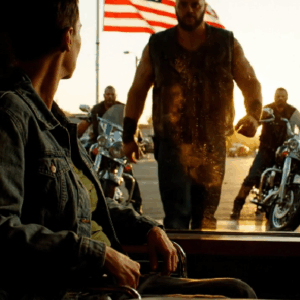
They Mocked A Paralyzed Veteran And Kicked Her Wheelchair, Unaware They Just Woke Up The Most Dangerous Assassin The Military Ever Created.
CHAPTER 1: THE GHOST OF PINE VALLEY The phantom pain was bad today. It felt like fire was licking at ankles that hadn’t been there for three years. Alex Winters adjusted her position in the wheelchair, her face remaining…
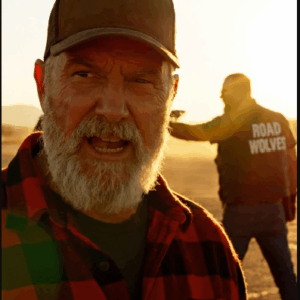
They Thought He Was Just A Frail Old Man Alone At A Truck Stop. But When The Gang Leader Spat In His Coffee, He Didn’t Flinch—He Just Made One Phone Call That Unleashed A Trap 20 Years In The Making.
Chapter 1: The Wolf at the Door The evening sun cast long, amber shadows across the cracked pavement of the Crossroads Truck Stop. It was a place out of time, situated on a lonely stretch of Interstate 40 where…

Navy Admiral Mocked A Single Dad Janitor In Front Of Everyone—Then He Learned The Man’s “Call Sign” And The Whole Base Froze.
Chapter 1: The Ghost of Coronado The morning fog still clung to the coastline of Coronado, a thick gray blanket that muffled the roar of the Pacific Ocean. Inside the primary administrative building of the Naval Base, the silence…
End of content
No more pages to load