CHAPTER 1: The Impossible Assignment
The morning started with the smell of floor wax and the distant, rhythmic clatter of the cafeteria preparing for the lunch rush. It was a Tuesday in Tidewater, Massachusetts, a town where the salt air from the Atlantic seemed to preserve everything in a state of permanent, weathered tradition. For eight-year-old Hannah Walker, however, the air inside Tidewater Elementary felt heavy, suffocatingly still, like the moment before a summer thunderstorm breaks.
Hannah sat at her desk in the back corner of Room 3B, her small fingers tracing the edges of a manila folder. On the cover, she had drawn a crude but careful depiction of a trident—an anchor, an eagle, and a pistol—colored in gold crayon. It was Career Day. For two weeks, Ms. Foster had been prepping the class for this. “We’re going to share what makes our families special,” she had chirped, her voice filled with that specific, high-pitched enthusiasm that elementary school teachers seem to cultivate.
Most kids had it easy. Jackson was going to talk about his dad’s construction company; he even brought a yellow hard hat. Mia had pictures of the puppies her mom treated at the veterinary clinic. It was simple. It was safe. It was verifiable.
Hannah’s stomach churned. She looked at the empty chair next to her, then across the room at Brandon Barnes. Brandon was the kind of kid who had learned early that his last name—shared with the school principal, his aunt—was a shield that deflected all consequences. He was leaning back in his chair, smirking at her, tapping a pencil against his teeth.
“Alright, class,” Ms. Foster clapped her hands twice, the sharp sound cutting through the low hum of chatter. “Let’s get started. Who wants to share first?”
Hands shot up. The morning dragged on in a blur of mundane professions. Accountants. Firefighters. A manager at the local grocery store. Hannah listened, but her mind was thousands of miles away, thinking of a voice on a satellite phone, crackling and distorted, telling her to be brave.
“Hannah?”
Ms. Foster’s voice brought her back to the room. The teacher was smiling, but there was a hint of pity in her eyes. Everyone in the faculty lounge knew about Hannah Walker. The girl who lived with her grandpa. The girl whose mom was “away.”
“You haven’t volunteered yet,” Ms. Foster said gently. “Did you bring something to share about your parents?”
Hannah stood up. Her knees felt like water. She walked to the front of the room, clutching her folder so hard the cardboard bent. She turned to face twenty-two pairs of eyes. She took a deep breath, visualizing the calm ocean surface just like her mom had taught her.
“My mom works for the Navy,” Hannah said. Her voice was barely a whisper.
“Speak up, Hannah,” Ms. Foster encouraged.
Hannah cleared her throat. “My mom is a Navy SEAL. She goes on special missions to protect our country. She can’t tell us where she is, but she’s a hero.”
The silence that followed was instantaneous and absolute. It wasn’t the awed silence of respect; it was the confused silence of a glitch in the matrix. The heating system hummed loudly in the void.
Then, Brandon laughed. It was a sharp, cruel bark.
“That’s a lie,” he announced, not even bothering to raise his hand. He looked around the room, inviting others to join in his skepticism. “My dad told me about the Navy. Girls can’t be Navy SEALs. That’s impossible.”
“It’s not a lie!” Hannah’s face flushed hot. “She is!”
“Brandon, please,” Ms. Foster interjected, but her tone lacked conviction. She looked at Hannah, her expression shifting from pity to mild annoyance. “Hannah, honey… are you sure you didn’t misunderstand? Maybe she works in administration for the Navy? Or maybe she’s a nurse?”
“No!” Hannah insisted, her voice rising. The frustration was a physical weight in her chest. “She jumps out of planes! She dives in the ocean! She’s a SEAL!”
“You’re a liar,” Brandon chanted, a cruel sing-song rhythm that a few other boys started to pick up. “Liar, liar, pants on fire.”
“Class! Stop it!” Ms. Foster snapped, but the control was gone. She looked at Hannah, not as a victim, but as the source of the disruption. “Hannah, take your seat. We can’t tell stories during Career Day. We have to tell the truth.”
“I am telling the truth!” Hannah shouted, finally snapping. She threw her folder onto the floor. The gold crayon trident stared up at the ceiling.
The door to the classroom swung open. The noise died instantly.
Principal Victoria Barnes stood there. She was a tall woman who wore power suits that seemed too sharp for an elementary school. She had a way of looking at children as if they were errors in a spreadsheet that needed to be corrected.
“What is going on in here?” she demanded, her gaze sweeping the room before landing on Hannah.
“Hannah is telling lies, Aunt Victoria,” Brandon piped up, looking angelic. “She’s screaming at everyone because we don’t believe her mom is a Rambo.”
Principal Barnes looked at Ms. Foster. “Is this true?”
“She… she is a bit agitated,” Ms. Foster stammered, unwilling to cross her boss. “She’s insisting on some… military fantasies.”
Principal Barnes turned her cold eyes to Hannah. She didn’t kneel to get on the child’s level. She towered over her.
“Hannah Walker,” she said, her voice dangerously calm. “Pick up your folder. Come with me. Immediately.”
CHAPTER 2: The Diagnosis
The walk to the principal’s office felt like a march to the gallows. Hannah’s sneakers squeaked on the polished floor, a sound that echoed through the empty hallway. She clutched her folder to her chest, the crayon drawing now smudged. She tried not to cry, biting her lip until it tasted like copper. Be brave, she told herself. Mom is brave. I have to be brave.
Principal Barnes’ office smelled of artificial lavender and old paper. It was a sterile environment, the walls adorned with certificates of administration and framed newspaper clippings of her own achievements. There were no pictures of children, only trophies.
“Sit,” Barnes commanded, pointing to a low wooden chair.
Hannah sat, her feet dangling inches above the carpet.
Barnes sat behind her massive mahogany desk, folding her hands. She looked at Hannah for a long moment, letting the silence stretch, a tactical interrogation technique she used on eight-year-olds.
“Hannah, we have strict rules about honesty at Tidewater Elementary,” Barnes began. “Lying to impress your classmates is disruptive. It creates a hostile learning environment.”
“I wasn’t lying,” Hannah whispered, staring at her knees.
“Stop it,” Barnes snapped. “I have been an educator for twenty-seven years. I know a coping mechanism when I see one. Your mother is absent. Your father is not in the picture. You live with your grandfather. It is natural to invent a… superhero persona for a mother who isn’t there. But you cannot force other people to participate in your delusion.”
“She’s not a delusion,” Hannah said, a tear finally escaping and tracking down her cheek. “She’s in the Navy. She’s a Commander.”
Barnes sighed, an exaggerated sound of patience wearing thin. She reached for her phone. “I’m calling your grandfather. And I am suspending you for the rest of the week.”
“Suspended?” Hannah gasped. “But I didn’t do anything!”
“You caused a scene. You were dishonest. And frankly, Hannah, I am concerned about your mental stability. This level of commitment to a fantasy is… disturbing.”
Thirty minutes later, Captain Henry “Hank” Lawson walked into the office. At seventy-one, Hank still moved with the rigid, purposeful gait of a man who had spent forty years in the Navy. He wore his faded blue work shirt, smelling faintly of diesel and saltwater from the marina. His silver crew cut was sharp, his face weathered like old leather.
He took one look at Hannah’s tear-stained face and his jaw set like concrete.
“What happened?” Hank asked, his voice a low rumble.
“Your granddaughter,” Barnes said, not standing up to greet him, “is struggling with reality, Captain Lawson. She disrupted her class with elaborate lies about her mother being a Navy SEAL.”
Hank blinked. He looked from Barnes to Hannah. “She told the class Jennifer is a SEAL?”
“Yes,” Barnes said, leaning back. “Obviously, we had to stop her. It’s impossible, and it’s unhealthy for her to—”
“It’s not impossible,” Hank interrupted, his voice ice cold. “It’s classified.”
Barnes laughed. It was a dry, dismissive sound. “Oh, please. Captain, don’t tell me you’re feeding her these stories too? Women in the SEALs? It’s a fantasy. And frankly, it’s bordering on abuse to let a child believe this. She’s being mocked. She’s isolating herself.”
“My daughter,” Hank said, leaning over the desk, his knuckles white as he gripped the edge, “is serving her country. She is a Lieutenant Commander. And you will speak of her with respect.”
Barnes’ face hardened. She didn’t like being challenged, especially not by a fisherman in a stained shirt.
“I think we have a serious problem here, Mr. Lawson. A shared familial delusion. I cannot have a student in my school who lives in a fantasy world. It disrupts the educational process.”
She pulled a file from her drawer and slapped it onto the desk.
“Here is what is going to happen. Hannah is suspended until Monday. In the meantime, I am mandating a psychological evaluation. Dr. Marcus Reynolds, the district psychologist, will conduct a hearing this Friday at the Community Center. The school board will be there. We will determine if Hannah is fit to remain in a standard classroom or if she needs… specialized placement.”
“You’re putting her on trial?” Hank asked, incredulous. “For telling the truth?”
“We are holding an intervention,” Barnes corrected. “And if you refuse to cooperate, if you refuse to have her evaluated, I will have no choice but to contact Child Protective Services. Neglecting a child’s mental health is a form of abuse, Captain.”
The threat hung in the air, heavy and toxic. Hank looked at the woman—this bureaucrat who thought her degree gave her the right to tear a family apart. He looked at Hannah, who was trembling. He knew the truth. He knew where Jennifer was. But he also knew the rules of the game Jennifer was playing. Silence. Secrecy. Shadow.
He couldn’t just produce her ID card. He couldn’t show them the photos. They were locked away in a safe that technically didn’t exist.
But he also knew he couldn’t let them break Hannah.
“Fine,” Hank said, straightening up. “You want a hearing? You want everyone to see?”
“I want what’s best for the child,” Barnes said smugly.
“We’ll be there Friday,” Hank said. He reached out and took Hannah’s hand. “Come on, kiddo. Let’s get out of this stink.”
As they walked out to his old Ford pickup truck, the autumn wind whipped around them. Hannah climbed into the passenger seat, buckling her belt with shaking hands.
“Grandpa?” she asked quietly as the engine roared to life.
“Yeah, sweetie?”
“Is Mom really a SEAL? Or… or am I crazy like Principal Barnes said?”
Hank slammed his hand against the steering wheel, startling her. He took a breath, softening his expression. He looked at his granddaughter, seeing the same fierce eyes her mother had.
“You are not crazy, Hannah. Your mother is the toughest warrior I have ever known. And Principal Barnes is about to learn the First Rule of Warfare.”
“What’s that?” Hannah asked.
Hank put the truck in gear, his eyes fixed on the horizon.
“Never start a fight you can’t finish.”
As they drove away, Hank reached into his pocket and pulled out a burner phone—an encrypted device Jennifer had given him for extreme emergencies only. He hesitated. Using it could risk her career. It could risk the mission.
But looking at Hannah’s crushed spirit, Hank decided the mission parameters had just changed. He dialed the number. It rang once, twice, then clicked.
“Status?” a distorted voice asked.
“It’s Hank,” he said. “They’re coming for Hannah. Friday. 1500 hours. I need… I need the cavalry.”
There was a pause on the line. A pause that felt like it stretched across oceans.
“Message received, Captain,” the voice said. “Hold the line.”
CHAPTER 3: The Town That Talked
The three days of Hannah’s suspension moved with the agonizing slowness of a clock running out of battery. While Hannah stayed inside the small Cape Cod-style house on Harbor Road, trying to read books she couldn’t focus on, the town of Tidewater was anything but quiet. Small towns run on two things: diesel fuel and gossip. And the story of the “delusional” Walker girl was burning through the community like wildfire.
At the Harborview Diner, the lunch crowd was thick with speculation. It was Wednesday, raining—a cold, gray New England drizzle that made everyone moody.
“I’m telling you, it’s sad,” Mrs. Jennifer Cole announced from Booth 3. She was the head of the PTA and Principal Barnes’ most loyal lieutenant. She stirred her coffee with a vigorous clinking sound. “That poor girl. Captain Lawson has clearly lost his grip. Raising a child on fantasy stories? Someone needs to step in.”
Pete, the diner owner, wiped down the counter, trying to stay neutral. But Coach Derek Stone, who was sitting at the counter nursing a black coffee, wasn’t having it. Coach Stone was forty-three, a former Marine who now taught P.E. and History at the high school. He had the kind of quiet intensity that made loud people nervous.
“You know,” Stone said, not turning his head, “maybe you should wait until you have the facts before you diagnose the kid.”
Mrs. Cole scoffed. “Facts? The fact is she said her mother is a Navy SEAL. Women aren’t SEALs, Derek. Even you know that.”
“Actually,” Stone said, finally swiveling his stool to face her. “The restrictions were lifted in 2016. The first female sailor completed the training pipeline in 2021. It’s rare. It’s incredibly difficult. But it’s not impossible.”
The diner went quiet. Mrs. Cole flushed a deep, angry red. “Well,” she huffed. “If she’s real, where is she? Why haven’t we seen a single photo? Why hasn’t she come to a parent-teacher conference?”
“Operational Security,” Stone said simply. “OPSEC. If you’re Tier One, you don’t advertise it at the PTA bake sale.”
He threw a five-dollar bill on the counter and walked out, leaving a heavy silence in his wake. But the seed of doubt had been planted.
Back at the Walker house, the mood was tense. Hannah sat at the kitchen table, pushing a grilled cheese sandwich around her plate.
“Grandpa,” she asked, her voice small. “What if they take me away?”
Hank stopped washing dishes. He dried his hands on a towel, his movements deliberate and calm, masking the fury boiling inside him.
“Nobody is taking you anywhere, Hannah. You have my word.”
A knock at the door made them both jump. Hank moved instinctively, placing himself between the door and his granddaughter. He opened it to reveal Ms. Foster, Hannah’s teacher. She was soaking wet, clutching a canvas tote bag, looking terrified but determined.
“Ms. Foster?” Hannah chirped, surprised.
“Captain Lawson,” the teacher said, breathless. “I… I needed to come. I know I’m not supposed to. Principal Barnes told us not to contact you pending the hearing. But I couldn’t sleep.”
“Come in,” Hank said, stepping aside.
Ms. Foster sat at the table. She pulled a stack of papers from her bag. “I went to the library. I did some digging. Not about your family—I respect your privacy—but about the regulations.”
She spread the papers out. They were printouts of Navy protocols and articles about female special operators.
“I realized,” Ms. Foster said, looking at Hannah with watery eyes, “that I let you down on Tuesday. When you mentioned the knots… the way you tie knots in class? I remember now. You tied a bowline in two seconds during the crafts project. That’s not something an eight-year-old learns from YouTube.”
“Mom taught me,” Hannah said quietly. “For the boat.”
“I believe you,” Ms. Foster said. “And I’m going to be at that hearing tomorrow. I don’t care if Barnes fires me. I’m going to testify that your knowledge is too specific to be a fantasy.”
Hank smiled, a rare expression that crinkled the corners of his eyes. “Thank you, Amanda. That means a lot. But tomorrow… tomorrow is going to be about more than just testimony.”
Hank checked his watch. It was an old tactical timepiece, battered and scratched. He had received a text message an hour ago. It was simple, encrypted, and anonymous.
Package Inbound. ETA Friday 1500. Hold the line.
“You just make sure you’re there,” Hank said to the teacher. “You’re going to want to see this.”
CHAPTER 4: The Inquisition
Friday afternoon arrived with a storm. The sky over Tidewater was a bruised purple, and the rain was coming down in sheets, hammering against the roof of the Community Center. It set a grim stage for what Principal Barnes had orchestrated.
The parking lot was full. It seemed half the town had turned up. Ostensibly, this was a “School Board Intervention,” but in reality, it was public theater. Principal Barnes wanted to make an example of the Walkers. She wanted to prove that her authority was absolute.
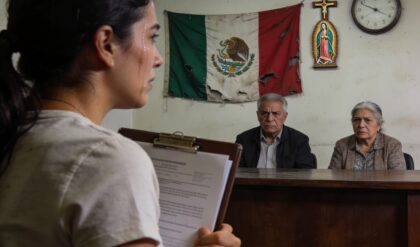
Inside, the main hall was set up like a courtroom. A long table draped in a blue cloth sat on a raised stage. Behind it sat the School Board members, looking uncomfortable, flanked by Principal Barnes and Dr. Marcus Reynolds.
Dr. Reynolds was a man who loved the sound of his own voice. He wore a tweed jacket with patches on the elbows and peered over rimless glasses. He had built a lucrative career consulting for school districts, usually by diagnosing “problem children” with conditions that required expensive, district-approved therapy.
In the center of the room, facing the stage, was a single, small wooden chair. The “Defendant’s Chair.”
Hank led Hannah into the room. The murmuring crowd fell silent. He placed a hand on her shoulder. She was wearing her Sunday best—a blue dress and white tights—but she looked tiny in the cavernous hall.
“Sit there, sweetheart,” Hank whispered. “Shoulders back. Chin up. Just like Mom.”
Hannah sat. Her feet didn’t touch the floor.
Hank took a seat in the front row, right behind her. He crossed his arms over his chest. Coach Stone sat two seats down, giving Hank a subtle nod. Ms. Foster was there too, wringing her hands in her lap.
Principal Barnes tapped the microphone. The screech of feedback made everyone wince.
“We are here today,” she began, her voice echoing, “to address the concerning behavioral patterns of Hannah Walker. This is not a punishment, but an intervention. We aim to help a child who has lost her grip on reality.”
She gestured to Dr. Reynolds. “Doctor, you have the floor.”
Dr. Reynolds stood up, opening a leather portfolio. He didn’t look at Hannah; he looked at the audience, playing to the crowd.
“Thank you, Principal Barnes. I have reviewed the file. What we have here is a classic case of ‘Grandiose Delusional Disorder,’ triggered by parental abandonment. The subject creates a heroic narrative—in this case, a mother who is a ‘super soldier’—to compensate for the trauma of an absent parent.”
He turned his gaze to Hannah, smiling a smile that didn’t reach his eyes.
“Hannah,” he said, his voice dripping with condescension. “I want you to be honest with us. Your mother isn’t really in the Navy, is she? Maybe she lives in another state? Maybe she just couldn’t handle being a mom?”
The cruelty of the question made the room gasp. Hannah gripped the sides of her chair.
“She is in the Navy,” Hannah said, her voice trembling but audible. “She is a Lieutenant Commander.”
“Hannah,” Reynolds sighed, taking off his glasses to wipe them. “We have checked the records. There is no Jennifer Walker listed at the local Veterans Affairs office. There is no record of her on the base roster that is publicly available. If she were a SEAL, as you claim, surely she would have a uniform? A medal? Something?”
“It’s classified,” Hannah insisted. “She can’t show you.”
“Convenient,” Barnes interjected, leaning into her mic. “It’s always ‘classified,’ isn’t it? Hannah, lying to adults is a serious offense. You are disrespecting the real men and women who serve by pretending your mother is one of them.”
“I’m not pretending!” Hannah shouted, tears hot in her eyes. “Grandpa, tell them!”
Hank stood up. “That’s enough,” he growled. “You’re badgering a child. You want proof? You don’t have the clearance for the proof.”
“Sit down, Mr. Lawson,” Barnes snapped. “Or I will have the bailiff remove you. This behavior runs in the family, I see.”
She turned back to Hannah. “Hannah, this is your last chance. Admit you made it up. Admit you lied to your class. If you do, we can get you help. If you continue this charade, I will be forced to recommend you be removed from your grandfather’s custody and placed in a foster home that can address your psychological needs.”
The threat hung heavy in the damp air. The room was deadly silent. Even the gossipers held their breath. This was it. The breaking point.
Hannah looked at her grandfather. She looked at Ms. Foster, who was crying silently. She looked at the exit signs.
“I can’t admit it,” Hannah whispered. “Because it’s not a lie.”
“Then I have no choice,” Barnes said, picking up her gavel. “I am ruling that—”
CHAPTER 5: The Arrival
BOOM.
Thunder cracked directly overhead, shaking the building. But the sound that followed wasn’t thunder. It was the roar of engines outside. Big engines.
The double doors at the back of the Community Center didn’t just open. They were kicked open with such force that one of them cracked against the wall.
The rain swirled into the hallway, a gray mist backlighted by the blinding white headlights of three black SUVs parked right on the sidewalk, engines idling with a low, aggressive rumble.
Everyone turned. Dr. Reynolds dropped his pen. Principal Barnes froze, her gavel hovering in mid-air.
Four figures stood in the doorway.
They were not wearing dress blues. They were not wearing ceremonial uniforms. They were dressed for war.
Full desert digital camouflage. Heavy tactical vests. Combat boots caked in mud. Their faces were partially obscured by ballistic sunglasses and shemagh scarves, despite the gloomy interior. They moved with a synchronized, fluid lethality that instantly sucked the oxygen out of the room.
The figure in the lead stepped forward. She pulled down her scarf. She removed her sunglasses.
Her face was sharp, tanned, and scarred. Her eyes were the exact same shade of fierce blue as Hannah’s.
It was Jennifer Walker.
She didn’t look at the crowd. She didn’t look at the school board. She walked straight down the center aisle, her boots thudding heavy on the floor. The three men behind her—massive, imposing figures who looked like they carved mountains for breakfast—flanked her, scanning the room as if searching for threats.
The crowd parted like the Red Sea. Mrs. Cole shrank into her seat. Coach Stone stood up and snapped to a perfect position of attention.
Jennifer stopped three feet from Hannah’s chair. She looked down at her daughter, her expression softening for a split second.
“Mom?” Hannah squeaked.
“I’m here, baby,” Jennifer said. Her voice was raspy, tired, but strong.
Then, she turned to the stage. The softness vanished. She looked at Principal Barnes like she was a bug on a windshield.
“I was told,” Jennifer said, her voice projecting to the back of the room without a microphone, “that there was a question regarding my employment.”
Principal Barnes opened her mouth, but no sound came out. She looked at Dr. Reynolds for help, but the psychologist was staring at the men behind Jennifer. He noticed the insignias on their shoulders. He noticed the sidearms strapped to their thighs. He realized, with a sinking feeling, that his tenure might be over.
“You…” Barnes stammered. “You can’t just barge in here. This is a closed hearing.”
“And you,” Jennifer interrupted, stepping onto the stage stairs. “Are holding a kangaroo court to bully an eight-year-old girl because you don’t understand the meaning of Operational Security.”
One of the men behind Jennifer stepped forward. He was a giant of a man, holding a thick stack of documents. He slammed them onto the table in front of Dr. Reynolds.
“Lieutenant Commander Ryan Marshall, SEAL Team 6,” the man barked. “And that is the service record of Lieutenant Commander Jennifer Walker. You’ll find her deployments to Afghanistan, Iraq, Somalia, and three other locations I can’t name without arresting everyone in this room.”
He leaned in close to Reynolds.
“She has a Silver Star. Two Bronze Stars with Valor. And a Purple Heart. She was pulling shrapnel out of her leg in a Blackhawk helicopter whilst you were writing this little report calling her daughter a liar.”
The room erupted. The silence shattered into chaos. People were standing up, craning their necks. “It’s true!” someone shouted. “She’s real!”
Hannah jumped out of her chair. She ran to her mother. Jennifer caught her, lifting the eight-year-old effortlessly into her arms, hugging her tight against her tactical vest.
“I told them!” Hannah sobbed into her mother’s neck. “I told them you were real!”
“I know you did,” Jennifer whispered, tears cutting tracks through the dust on her face. “You were so brave. Braver than I could ever be.”
Principal Barnes was pale, her hands shaking. She tried to salvage the situation. “Commander Walker, while we… appreciate your service… surely you can understand our skepticism. A mother should be present. The school needs documentation. We have policies.”
Jennifer set Hannah down gently. She turned back to Barnes. The look on her face was terrifying.
“Policies?” Jennifer asked quietly. “You want to talk about policies?”
She reached into her vest pocket and pulled out a folded piece of paper. It had the Department of Defense seal on it.
“This is a federal cease and desist order,” Jennifer said. “And this…” She pointed to the back of the room.
Another figure had entered. She was wearing a suit, not a uniform, and she had a badge on her belt.
“That is Special Agent Mitchell from NCIS,” Jennifer announced. “Because suspending a child based on the classified status of a parent isn’t just ‘bad policy,’ Mrs. Barnes. It’s a violation of the Soldiers and Sailors Civil Relief Act. It’s discrimination.”
Agent Mitchell walked down the aisle, holding a pair of handcuffs.
“Victoria Barnes?” the Agent asked. “We need to have a conversation about the misappropriation of school funds and the harassment of military families.”
The color drained from Barnes’ face completely. She slumped into her chair.
Dr. Reynolds tried to sneak away, gathering his papers.
“Sit down, Doctor,” the massive SEAL, Commander Marshall, said without looking at him. “We’re not done with the diagnosis yet.”
Hannah stood by her mother’s side, holding her hand. She looked out at the crowd. She saw Brandon’s dad looking at the floor in shame. She saw Ms. Foster beaming through her tears. She saw her grandfather, Hank, sitting in the front row, crying openly, giving a thumbs up.
The impossible had happened. The walls of the Community Center hadn’t just been breached by soldiers; they had been breached by the truth. And the truth was wearing combat boots.
CHAPTER 6: The Reckoning
The silence in the Community Center was heavy, the kind that presses against your eardrums. It was broken only by the sound of rain drumming against the roof and the heavy, rhythmic breathing of the townspeople who had just watched their reality shatter.
On stage, Dr. Marcus Reynolds was trying to make himself invisible. He was a man accustomed to controlling narratives, to using big words to silence small people. But there are no words big enough to stop a Navy SEAL Commander who has just decided you are a target.
Commander Ryan “Ghost” Marshall, the giant who had slammed the service record onto the table, took a step closer to the psychologist. Reynolds shrank back, clutching his leather portfolio like a shield.
“You diagnosed a child with ‘delusional disorder,'” Marshall said, his voice a low rumble that vibrated in the floorboards. “You wrote a report stating she was inventing fantasies to cope with abandonment. Did you bother to make a single phone call to the Department of Naval Personnel?”
“I… I followed standard protocol,” Reynolds stammered, sweat beading on his forehead despite the chill in the room. “The school provided the data. I interpreted it based on clinical norms.”
“Clinical norms,” Jennifer Walker repeated. She was still standing next to Hannah, her hand resting protectively on her daughter’s shoulder. She looked at Reynolds with eyes that had scanned deserts for IEDs. “You called my daughter a liar in front of her peers. You questioned her sanity because her truth was inconvenient for your schedule. That isn’t clinical, Doctor. That is negligence.”
“And it’s actionable,” Agent Mitchell added, stepping up to the table. She placed her badge next to the gavel Principal Barnes had been so eager to use. “Dr. Reynolds, your contract with the district relies on adherence to state and federal guidelines regarding student privacy and due diligence. We have reason to believe you have violated the Family Educational Rights and Privacy Act, as well as specific protections afforded to military dependents.”
Reynolds looked at Principal Barnes, desperate for an ally. “Victoria, tell them. You said… you said the mother was a deadbeat.”
Principal Barnes flinched as if slapped. The crowd murmured—an ugly, low sound of judgment shifting its target.
“I never used that word,” Barnes hissed, her voice trembling. She tried to stand, to regain some semblance of authority. “I was protecting the school’s integrity. This child disrupted a classroom. She was aggressive.”
“She was defending her family,” Coach Stone shouted from the audience. He was standing now, his arms crossed, a look of pure vindication on his face. “She stood up to a bully. And instead of backing her up, you suspended her.”
Principal Barnes glared at Stone, but the fire was gone from her eyes. She looked at the parents in the audience—the voters, the taxpayers. She saw Mrs. Cole looking at the floor. She saw the disgust on the faces of the fathers who worked at the shipyard. She knew, in that moment, that her twenty-seven-year career was burning to the ground.
“Mrs. Barnes,” Agent Mitchell said coolly. “The Department of Education takes a very dim view of administrators who weaponize the disciplinary system against service families. We will be conducting a full audit of your tenure. Every suspension, every expulsion, every budget allocation.”
Barnes slumped back into her chair, burying her face in her hands. The gavel rolled off the table and hit the floor with a hollow clack.
Jennifer turned to the audience. She didn’t shout. She didn’t need to.
“My daughter,” she said, her voice carrying to the back of the hall, “kept a secret for three years. She didn’t tell you where I was when I missed Christmas. She didn’t tell you why I couldn’t FaceTime on her birthday. She carried the weight of classified operations on her eight-year-old shoulders because she loves this country and she loves her family.”
She looked down at Hannah, brushing a stray hair from the girl’s forehead.
“She has more integrity in her little finger than this entire administration has in this building. And if any of you ever doubt her word again, you can take it up with me.”
The room erupted. Not with applause, but with a sudden, chaotic release of tension. People were standing, apologizing to each other, looking at the Walkers with a mix of awe and shame.
Sheriff Brooks, who had been standing by the door, walked over to Agent Mitchell.
“Agent,” the Sheriff said, tipping his hat. “If you need an office to conduct your interviews, the station is yours. And I think Mrs. Barnes might need a ride home. I don’t think she should be driving in this state.”
It was the polite, small-town way of saying you are under arrest in the court of public opinion.
As the meeting dissolved into chaos, Hannah looked up at her mother. “Mom? Are they going to jail?”
Jennifer smiled, a tired but genuine smile. “No, sweetie. But they are going to learn that actions have consequences. Just like they tried to teach you.”
CHAPTER 7: The Quiet After the Storm
The rain had stopped by the time they got back to the house on Harbor Road, leaving the world scrubbed clean and smelling of wet asphalt and pine. The sun was setting, breaking through the storm clouds in jagged streaks of orange and purple.
The convoy of black SUVs had departed, taking Commander Marshall and the rest of the team back to base. They had a mission debrief to get to, and they had done their job here. The “Rescue Mission” was a success.
Inside the small house, the atmosphere was surreal. Hannah sat on the living room rug, still wearing her Sunday dress, watching her mother unlace her heavy combat boots.
It was strange to see Jennifer Walker—the “myth,” the “ghost”—sitting on the plaid sofa, drinking a mug of tea that Hank had made. She looked smaller without the tactical vest, but the intensity was still there, coiled in her muscles.
“I’m sorry I missed Career Day,” Jennifer said softly, looking at the crayon drawing of the trident that Hannah had retrieved from her backpack.
“It’s okay,” Hannah said, tracing the pattern on the rug. “I knew you were busy saving people.”
Jennifer reached out and pulled Hannah onto the sofa, tucking the girl under her arm. “There is nothing more important than you, Hannah. Nothing.”
Hank walked in from the kitchen, wiping his hands on a dish towel. He looked at his daughter with a mixture of pride and lingering worry.
“You took a big risk coming here, Jen,” Hank said quietly. “Command isn’t going to be happy about a tactical team storming a PTA meeting.”
Jennifer blew on her tea. “Command can chew me out all they want, Dad. Ryan—Commander Marshall—he made the call. He said if we can extract a hostage from a compound in Kandahar, we can extract a third-grader from a school board meeting in Massachusetts.”
She looked at her father, her eyes shining.
“Thank you for the call, Dad. You saved us.”
Hank shrugged, looking uncomfortable with the praise. “I just made a noise. You brought the thunder.”
“So,” Hannah asked, looking up. “Do you have to leave again? Tonight?”
The question hung in the air, heavy and sharp. This was the rhythm of their lives—arrival and departure, hello and goodbye.
Jennifer set her mug down on the coffee table. She took both of Hannah’s hands in hers.
“That’s what I need to talk to you about, kiddo.”
Hannah braced herself. She knew the drill. The world needs me. Be brave. I’ll write.
“I had a meeting with the Admiral before we flew out,” Jennifer said. “I’ve been offered a new post.”
“Where?” Hannah asked, her voice small. “Germany? Japan?”
“Little Creek,” Jennifer said. “Virginia. But the assignment isn’t operational.”
Hank raised an eyebrow. “Training cadre?”
“Senior Instructor for BUD/S,” Jennifer nodded. “Teaching the new guys how to survive. It means regular hours. It means weekends off. It means…” She looked at Hannah, a smile breaking across her face. “It means I can live here. With you. I can drive to the base, and come home for dinner.”
Hannah’s eyes went wide. “For real? No more secret missions?”
“No more secret missions,” Jennifer promised. “I’m trading the parachute for a minivan. Well… maybe a Jeep.”
Hannah launched herself at her mother, knocking the wind out of her. “You’re staying! Grandpa, she’s staying!”
Hank turned away, pretending to check the thermostat, wiping a tear from his cheek with his rough thumb. “About time,” he grunted. “I’m getting too old to be the only sheriff in this town.”
That night, for the first time in four years, the Walker house felt full. There was no empty chair at the table. There was no silence where a voice should be. They ate pizza out of the box, and Jennifer told stories—sanitized, funny versions of training mishaps—that made Hannah laugh until soda came out of her nose.
Later, after Hannah had fallen asleep clutching her mother’s sleeve, Jennifer and Hank stood on the porch, watching the lighthouse beam sweep across the dark harbor.
“Barnes resigned,” Hank said, checking his phone. “Saw it on the town forum. Effective immediately. ‘Personal reasons.'”
“Good,” Jennifer said, leaning against the railing. “She forgot who she was serving. Education isn’t about power. It’s about truth.”
“You think the town will treat Hannah differently now?” Hank asked.
Jennifer looked at the stars. “Oh, yeah. They’ll treat her differently. But not because of me. Because they saw her stand alone when everyone told her to sit down. They saw her courage.”
She took a deep breath of the salt air.
“She’s a SEAL’s daughter, Dad. She never needed me to save her. She just needed me to back her up.”
CHAPTER 8: A New Normal
Monday morning arrived with a bright, crisp blue sky. The storm had scrubbed the autumn leaves clean, making the maples look like they were on fire with red and orange.
The parking lot of Tidewater Elementary was buzzing. But it wasn’t the usual chaotic energy. There was a tension, a curiosity. Everyone was waiting.
When Hank’s old Ford truck pulled in, heads turned. But this time, the stares weren’t judgmental. They were respectful.
Jennifer stepped out of the truck. She wasn’t in camouflage today. She wore jeans, boots, and a simple gray Navy hoodie. But she walked with that undeniable predatory grace, her head on a swivel. She opened the passenger door for Hannah.
Hannah hopped out, wearing her backpack. She looked nervous.
“Head up,” Jennifer whispered. “Walk with a purpose.”
They walked toward the main entrance. The sea of parents parted. Mrs. Cole, the PTA head, was standing by the flagpole. She looked like she wanted to disappear into the pavement. As Jennifer passed, Mrs. Cole mumbled a quiet, “Good morning, Commander.”
Jennifer just nodded. She didn’t need their apologies. She needed their respect for her daughter.
Inside the school, the atmosphere was different. The new Interim Principal—Mrs. Crawford, the kindly librarian—greeted them at the door.
“Welcome back, Hannah,” Mrs. Crawford said warmly. “We are so happy to have you. Commander Walker, thank you for your service. If there is anything you need…”
“Just a fair shake for every kid in this building,” Jennifer said. “That’s all.”
They walked to Room 3B. The door was open. Ms. Foster was inside, writing on the whiteboard. When she saw Hannah, she dropped her marker.
“Hannah!” Ms. Foster rushed over, ignoring protocol, and gave her student a hug. “I am so, so glad you’re back.”
She looked at Jennifer, her eyes wide. “Commander… I… I can’t tell you how sorry I am that I didn’t shut it down sooner.”
“You showed up on Friday,” Jennifer said, shaking the teacher’s hand firmly. “That’s what counts. We move forward.”
Hannah walked to her desk. The class went silent. Brandon’s desk was empty. His parents had transferred him to a private school in the next town over—a decision made hastily over the weekend to avoid the social fallout.
Jackson, the boy with the construction hat, turned around.
“Hey Hannah,” he whispered.
Hannah tensed. “Hi, Jackson.”
“Is it true your mom knows how to fly a helicopter?”
Hannah smiled. “Yeah. She does.”
“That is so cool,” Jackson said. “My dad just drives a truck.”
“Trucks are cool too,” Hannah said graciously.
The bell rang. The day began. But it wasn’t just a normal day.
Ms. Foster cleared her throat. “Class, before we start math… we have a new addition to the curriculum. We’re going to spend this week talking about ‘Assumptions.’ Can anyone tell me what an assumption is?”
Hannah raised her hand. For the first time in a long time, she didn’t feel like the weird girl in the back. She didn’t feel like the liar.
“Yes, Hannah?”
“An assumption is when you think you know the truth,” Hannah said clearly, “but you’re really just guessing because you’re scared of what you don’t understand.”
Ms. Foster smiled. “Exactly right.”
At recess, Hannah stood by the swing set. Olivia, her best friend who had been forced by her parents to keep her distance during the “scandal,” ran up to her.
“My mom said I can come over this weekend,” Olivia said breathlessly. “She said she wants to bake a cake for your mom. Is that okay?”
Hannah looked over at the fence. Her mom was standing there, talking to Coach Stone. Jennifer threw her head back and laughed at something the Coach said. She looked happy. She looked home.
“Yeah,” Hannah said, grabbing a swing. “That’s okay. But tell her my mom likes chocolate.”
“Deal,” Olivia said.
As the girls started to swing, pumping their legs to go higher and higher, Hannah felt lighter than air. She looked at the sky. It was big and blue and free.
She realized then that the hardest mission wasn’t climbing mountains or diving into dark oceans. The hardest mission was telling the truth when everyone wanted you to lie. And she had completed it.
She swung higher, her feet kicking toward the clouds.
“Watch this!” she yelled to her mom.
Jennifer Walker turned, watching her daughter fly. She wasn’t a Commander now. She wasn’t a SEAL. She was just a mom, watching her kid on a playground in a town that had learned a hard lesson about judging books by their covers.
And for the first time in her life, Jennifer didn’t have to check the exits. She just waved.
News

I Hid 20 Freezing Bikers From a Blizzard. The Next Morning, I Woke Up to a Roar That Shook My Entire House.
Chapter 1: The Invisible Woman The wind didn’t just blow that night; it screamed. It was a sound that tore through the cracks in the walls and settled deep in your bones. I stood by the kitchen window, watching…

I Fixed A Billionaire’s Broken Prototype With A Wrench. The Next Morning, A Black Hawk Helicopter Landed In My Trailer Park.
Chapter 1: The Ghost in the Machine The copper-colored sun was dying behind the thick clouds, casting long, bruising shadows across Woodbury Meadows. It was the kind of light that made everything look old. The trailer park smelled of…
They Thought She Was Just A Lonely Customer. When The Biker Touched The Waitress, The Navy Commander Broke Her Silence—And His Arm.
Chapter 1: The Ghost in the Corner The morning fog rolled thick off the Atlantic, blanketing the streets of Port Haven in a ghostly shroud. It was the kind of heavy, wet mist that muffled sound and made the…
They Mocked A Paralyzed Veteran And Kicked Her Wheelchair, Unaware They Just Woke Up The Most Dangerous Assassin The Military Ever Created.
CHAPTER 1: THE GHOST OF PINE VALLEY The phantom pain was bad today. It felt like fire was licking at ankles that hadn’t been there for three years. Alex Winters adjusted her position in the wheelchair, her face remaining…
They Thought He Was Just A Frail Old Man Alone At A Truck Stop. But When The Gang Leader Spat In His Coffee, He Didn’t Flinch—He Just Made One Phone Call That Unleashed A Trap 20 Years In The Making.
Chapter 1: The Wolf at the Door The evening sun cast long, amber shadows across the cracked pavement of the Crossroads Truck Stop. It was a place out of time, situated on a lonely stretch of Interstate 40 where…

Navy Admiral Mocked A Single Dad Janitor In Front Of Everyone—Then He Learned The Man’s “Call Sign” And The Whole Base Froze.
Chapter 1: The Ghost of Coronado The morning fog still clung to the coastline of Coronado, a thick gray blanket that muffled the roar of the Pacific Ocean. Inside the primary administrative building of the Naval Base, the silence…
End of content
No more pages to load