The water wasn’t just cold; it was a liquid shock, a sudden, icy fist that stole my breath. One moment, I was standing on the dock of the house I had paid for, watching the autumn leaves skim the surface. The next, I was airborne.
A hard shove from behind. A splash that felt deafening in the afternoon quiet.
My grandson Ethan’s laughter was the first sound I registered. It was sharp and piercing, slicing through the air. “Lighten up, Grandma! Wow, epic fail!”
I crashed beneath the dark, murky surface, my thin cardigan instantly waterlogged, weighing me down like a concrete shroud. Silt and weeds brushed against my face. Panic, hot and metallic, flooded my chest. I’m eighty-two years old. My bones are brittle. My heart is strong, but it’s not that strong.
I flailed, kicking uselessly, my orthopedic shoes feeling like anchors. When my head finally broke the surface, I sputtered, gasping for air that felt too thin to breathe.
“Don’t be so dramatic!”
That voice. My daughter-in-law, Melissa. I squinted toward the shore, treading water frantically. She was standing there, arms crossed, her expensive jogging suit pristine. She wasn’t moving. She was just… watching. Annoyed. As if I had interrupted her day by fighting for my life.
“Ethan, for heaven’s sake,” she snapped, not at me, but at him. “Now look. You got her soaked. She’ll probably catch pneumonia and blame us.”
“She’s fine!” Ethan, sixteen and hollowed out by entitlement, just shrugged, his phone already back in his hand.
I paddled, my lungs burning, toward the dock. My fingers, wrinkled and blue, grasped for the wooden edge. I missed. I tried again, my nails scraping against the algae-slicked wood. I wasn’t strong enough to pull myself up.
“Michael!” I gasped, searching for my son. He was further up the lawn, near the grill, his back to me. He must have heard the splash. He must have heard the laughter. He didn’t turn around.
“A little help?” I choked out, my voice pathetic even to my own ears.
Melissa let out an exaggerated sigh, the kind she reserved for when I asked her to repeat herself. “You’re the one who wanted to stand so close to the edge, Eleanor. Honestly, you have to be more careful. You’re becoming a real liability.”
Liability.
The word hung in the cold air, colder than the water seeping into my bones. I stopped flailing. I looked at her face—the bored contempt, the impatience. I looked at Ethan, who was already texting, my near-drowning forgotten. I looked at the stiff, silent back of my only son.
And in that moment, floating in the dark water, a different kind of cold settled over me. It was a terrible, clarifying calm. They weren’t just careless. They didn’t just resent me. They hated me. They saw me as a talking checkbook, a senile old woman whose only remaining purpose was to sign her name and then, preferably, disappear.
I let my hand slip from the dock.
I let myself sink, just for a second, watching their silhouettes blur. I saw Ethan’s head finally snap up, his eyes widening slightly. I saw Melissa take a half-step forward, her mouth forming a small ‘o’ of surprise.
Good. Let them feel that flicker of panic. Let them wonder if the $1.8 million inheritance just got complicated.
I didn’t let them see me swim. I drifted, using the last of my strength to paddle sideways, into the thick patch of reeds near the shoreline, hidden from the dock. I clung to the muddy bank, gasping, my body shaking so violently I thought my teeth would crack. I waited. I watched them through the weeds.
It took them almost a minute. “Mom?” Michael finally called out, his voice hesitant. “Eleanor? This isn’t funny.”
I watched them scan the empty surface of the lake. I saw the first genuine flash of fear in Melissa’s eyes—not fear for me, but fear of consequences.
I stayed hidden until they ran inside, yelling, presumably to call 911. Only then, when their shadows were gone from the windows, did I pull my aching body from the water. I crawled, muddy and shivering, around the back of the house and in through the unlocked utility room.
They thought I was weak. They thought I was senile. They thought the frail old woman who paid their mortgage, their car loans, and their son’s tuition couldn’t fight back. They were right about one thing. I was a liability.
But I was a liability to them.
That night, wrapped in three blankets in my room, the one they called “Granny’s wing,” I didn’t sleep. I listened. The house was quiet. They had called off the “search” when I’d reappeared at the top of the stairs, feigning confusion. “Oh dear,” I’d whispered, clutching my wet robe. “I must have slipped. I got so turned around.”
Melissa’s eyes had narrowed. She knew. She didn’t know what she knew, but she knew I wasn’t telling the truth. The look she gave me wasn’t relief. It was suspicion.
They thought the performance was for them. They were wrong. The performance was for me.
For the next six weeks, I became the woman they wanted me to be. I was the ghost in my own home. My hands, which were steady enough to knit a cable-knit sweater, began to tremble when I held a teacup. I “forgot” names. I “misplaced” my glasses, my hearing aid, my wallet.
“She’s losing it, Michael,” I heard Melissa whisper from the kitchen one night. I was in the hall, supposedly looking for my slippers. “She left the stove on again yesterday.”
I hadn’t. She had, after I’d walked out of the room.
“She’s a danger to herself. To us,” Melissa continued, her voice low and urgent. “I found brochures for Lakeview Pines. It’s lovely. It’s… secure. We need to think about power of attorney before she… you know… drains her accounts buying useless junk from the television.”
My son was silent. That silence was his agreement. That silence was his betrayal. They were going to put me in a home. They were going to strip me of my name, my autonomy, and my money, and lock me away before Christmas.
What they didn’t know was that while they mocked my “senility,” I was documenting everything.
My hearing aid wasn’t “lost.” It was charging. But the other device, the tiny digital audio recorder my late husband Henry had given me years ago “for safety,” was fully functional. It was tucked in the pocket of my housecoat. It was left under a cushion on the sofa. It was sitting on the shelf behind a stack of linens.
It captured Melissa’s voice, clear as a bell, telling Michael, “If she’d just die already, we could sell this dump and move to Florida.”
It captured Ethan, mocking my “trembling” voice to his friends on a speakerphone call.
It captured Michael’s pathetic response to it all: “Melissa, please. Not so loud.”
And in my knitting basket, tucked behind the yarn, was a simple spiral notebook. Every insult, every shove, every threat, every “accidental” missed meal was written down, dated, and timed.
They were building their case to have me declared incompetent. I was building my case to have them declared predators.
Two weeks before Thanksgiving, I told them I wanted to go to the bank “to get my papers in order.” Melissa’s eyes lit up. She drove me herself, no doubt imagining I was about to sign everything over to her and Michael. She waited in the car, tapping her painted nails on the dashboard, texting.
I walked into the bank, hunched over, playing the part of the confused old woman. The teller gave me a patronizing smile.
“And how can we help you today, Mrs. Whitman?”
I smiled back, the tremor in my voice vanishing. “I’d like to see the bank manager, please. And I’d like to liquidate account 4405 and transfer the full balance, $1,847,219, to a new account at this location.”
The teller’s smile froze.
By the next morning, every cent Henry and I had saved was gone, moved to an account only I could access. The game was set. All I had to do was wait for the final move.
It came a week later. They sat me down in the living room. Melissa held a glossy brochure for Lakeview Pines. “Eleanor,” she said, her voice dripping with fake sympathy, “Michael and I are so worried about you. We found a wonderful place…”
I let the tears well in my eyes. I let my hands shake. “A home?” I whispered, playing the part of the terrified victim.
They mistook my performance for surrender. They had no idea it was a declaration of war.
The night I left, the house was tomb-silent. It was three days before Thanksgiving. Michael and Melissa had gone out to a “pre-holiday” dinner, leaving Ethan in charge of me. He was, of course, locked in his room with his video games.
I didn’t make a sound. I had packed my “go-bag” weeks ago: the recorder, the notebooks, $10,000 in cash, a few changes of clothes, and the framed photo of Henry I kept by my bed.
I moved through the house I had shared with my husband for forty years, a house that now felt like a beautifully decorated prison. I went to the back door, the one leading to the lake. I slipped it open just enough for the latch to be disengaged. I walked to the dock. The air was frigid. I took my old walking cane, the one Melissa always complained I left lying around, and set it near the edge.
Then I took the silk scarf Henry had given me—the blue one Melissa said made me look “ghastly”—and deliberately snagged it on a sharp branch of the rose bush near the path. It had to look real. It had to look like a confused old woman had wandered out into the night and met a tragic end.
I walked, not to the lake, but away from it. I walked the half-mile to the highway, my small rolling bag silent on the asphalt. At 2:17 AM, the Greyhound bus to Nashville slowed, its headlights cutting through the fog. I paid the driver in cash. As the bus pulled away, I looked back at the darkness where my life used to be. I felt nothing but relief.
I arrived in rural Kentucky forty-eight hours later, after a series of connecting buses. I used a pre-paid credit card to check into a small, clean rental cottage I had booked online under a false name. I turned on the burner phone I’d bought. I sat down with a cup of tea and waited.
The explosion happened right on schedule.
My lawyer, Robert—Henry’s oldest friend and the only person on earth I trusted—was my point of contact.
“They’re frantic, Eleanor,” he told me over the phone, his voice grim but tinged with something like admiration. “Michael called the police this morning. Reported you missing. Apparently, Melissa went to the bank to ‘check on your finances’ and discovered the accounts were empty. She accused the bank of theft.”
“And?” I asked, sipping my tea.
“And then the police found the cane. And the scarf. They’re dredging the lake as we speak.”
“Good.”
“Michael sounds distraught,” Robert added quietly.
“He’s distraught about the money, Robert. Not about me.”
The news broke locally at first. “Elderly Woman, 82, Feared Drowned in Tragic Accident.” A reporter interviewed a tearful Melissa on the lawn. “She was so confused,” Melissa cried into the camera, dabbing her dry eyes. “We were so worried about her. She was just… a liability. To herself. This is a tragedy.”
Oh, she was good. She was a performer, just like me.
The police searched my room, of course. And just as I’d planned, they found the small, velvet-lined box in my top desk drawer. It wasn’t jewelry. It was the audio recorder and the spiral notebooks. I’d left a simple, hand-written note on top: “For Detective Aaron Carter.”
Robert told me about the silence at the police station when they played the first file. The one where Melissa mocked me for crying. The one where Ethan laughed about the lake.
The investigation pivoted instantly. The search for a “missing person” became an investigation into “elder abuse and suspicious circumstances.”
Detective Carter, a patient man with tired eyes, was the one who found me. He didn’t find me physically—I was a ghost. But he found me through Robert.
“Mrs. Whitman,” he said, his voice crackling over the burner phone. “This is Detective Carter from Lake Ridge. I need you to know that you are not in any trouble. But we have a… a very unconventional situation here.”
“I’m sure you do, Detective,” I replied.
“The recordings… your notes… they paint a very clear picture. But it would help us if we knew you were safe.”
“I am perfectly safe,” I said. “I am just… retired. From my family.”
“Some people,” he said carefully, “might call what you did entrapment.”
“And I,” I replied, “would call it survival.”
The real firestorm started when one of the recordings was “leaked” to a national news blogger. My lawyer, Robert, was a very clever man. It was the “liability” recording. Melissa’s voice, cold and sharp, followed by Michael’s weak, complicit silence.
The story exploded. #GrandmasRevenge trended for a week. The tearful interview Melissa gave was now played side-by-side with the audio of her wishing I would “just die already.”
The fallout was biblical.
Melissa was arrested, not for abuse—that was harder to prove—but for fraud. When the police looked deeper, they found she’d been using my credit cards for years, signing my name to checks, moving my money between accounts. My “senility” was the perfect cover.
Michael was fired. His prestigious law firm couldn’t weather the “reputational damage” of having a partner exposed for abandoning his mother to financial and emotional abuse.
Ethan was suspended from his private school. The recording of him laughing about shoving me in the lake went viral among the student body. He was labeled a “granny-shover.” Child Protective Services even opened a file on him, citing the toxic environment.
Their comfortable, beautiful lives, all financed by my money, evaporated in less than a month. The lake house was seized by the bank. Their cars were repossessed. They went from the town’s elite to its pariahs overnight.
Two months after I disappeared, I walked into the Lake Ridge police station.
The desk sergeant’s jaw dropped. Detective Carter was called, and the room fell silent as I walked in, upright, clear-eyed, and wearing a very smart new coat.
“Mrs. Whitman,” Carter said, regaining his composure. “We… we thought you were…”
“Missing?” I finished for him. “No, Detective. I wasn’t missing. I was escaping.”
I never testified. I never had to. They tried to fight, of course. Their lawyers tried to paint me as a vindictive, senile old woman who had fabricated the entire thing. But the evidence was overwhelming. The recordings. The meticulous, dated notebooks. The bank records. My medical exams, arranged by Robert, which proved I was in perfect cognitive health.
They took a settlement. They signed away any and all claims to my name, my estate, or my assets, past, present, and future. In return, I agreed not to pursue private charges for elder abuse. They were left with nothing but their shame and their legal bills.
Detective Carter visited me one last time before I moved permanently. “You know,” he said, nursing a cup of station-house coffee, “you could have just pressed charges quietly. Why all this? Why the public spectacle?”
I looked out the window. “Because, Detective, silence is what protects cruelty. They counted on my shame. They counted on me being a quiet, dignified victim. They wanted to erase me.”
I turned back to him. “I wanted them to know, and I wanted the world to know, that I am still here. They thought I was a ghost. I decided to become one. And ghosts,” I said, “can be very, very loud.”
He nodded slowly. “Some would call that revenge, Eleanor.”
“Maybe,” I said. “But I call it education.”
I sold the lake house. I never wanted to see it again. With the $1.8 million, I set up two funds. The first half went to a national charity for the prevention of elder abuse. The second half went into an anonymous trust, providing scholarships for students from low-income families. Money had fueled my family’s contempt; I wouldn’t let it define my ending.
I live in Kentucky now. It’s quiet. I have a small garden. I’ve joined a book club. I volunteer at the local library, reading stories to children. My life is small, and it is my own.
Last month, a letter arrived, forwarded by Robert. The handwriting was shaky. It was from Michael.
Mom, I don’t expect forgiveness. I didn’t see what she was doing to you until it was too late. I was weak. I’m sorry I didn’t stop it. I’m in therapy. Ethan is, too. I hope someday he learns what real strength means. I am so, so sorry.
I read it once. I folded it neatly and placed it in a box with Henry’s photographs. Some wounds don’t need reopening. Some apologies just aren’t big enough.
A young, ambitious reporter found me last week. She’d tracked me down for an “anniversary” piece on the story. She sat on my porch, her recorder running, and asked me the question I knew was coming.
“Mrs. Whitman,” she said, “looking back, all the public shame, the recordings… do you think you went too far?”
I smiled, a real, genuine smile. I looked out at my hydrangeas, just beginning to bloom.
“I think,” I said, “I went far enough.”
News
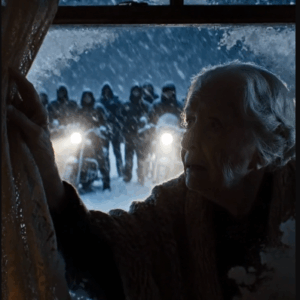
I Hid 20 Freezing Bikers From a Blizzard. The Next Morning, I Woke Up to a Roar That Shook My Entire House.
Chapter 1: The Invisible Woman The wind didn’t just blow that night; it screamed. It was a sound that tore through the cracks in the walls and settled deep in your bones. I stood by the kitchen window, watching…

I Fixed A Billionaire’s Broken Prototype With A Wrench. The Next Morning, A Black Hawk Helicopter Landed In My Trailer Park.
Chapter 1: The Ghost in the Machine The copper-colored sun was dying behind the thick clouds, casting long, bruising shadows across Woodbury Meadows. It was the kind of light that made everything look old. The trailer park smelled of…
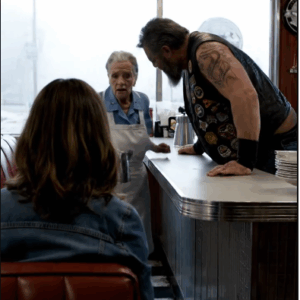
They Thought She Was Just A Lonely Customer. When The Biker Touched The Waitress, The Navy Commander Broke Her Silence—And His Arm.
Chapter 1: The Ghost in the Corner The morning fog rolled thick off the Atlantic, blanketing the streets of Port Haven in a ghostly shroud. It was the kind of heavy, wet mist that muffled sound and made the…
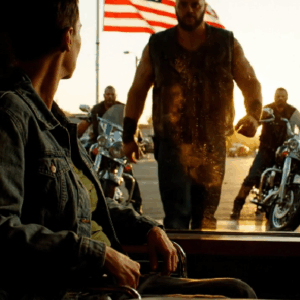
They Mocked A Paralyzed Veteran And Kicked Her Wheelchair, Unaware They Just Woke Up The Most Dangerous Assassin The Military Ever Created.
CHAPTER 1: THE GHOST OF PINE VALLEY The phantom pain was bad today. It felt like fire was licking at ankles that hadn’t been there for three years. Alex Winters adjusted her position in the wheelchair, her face remaining…
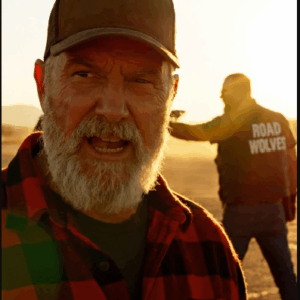
They Thought He Was Just A Frail Old Man Alone At A Truck Stop. But When The Gang Leader Spat In His Coffee, He Didn’t Flinch—He Just Made One Phone Call That Unleashed A Trap 20 Years In The Making.
Chapter 1: The Wolf at the Door The evening sun cast long, amber shadows across the cracked pavement of the Crossroads Truck Stop. It was a place out of time, situated on a lonely stretch of Interstate 40 where…

Navy Admiral Mocked A Single Dad Janitor In Front Of Everyone—Then He Learned The Man’s “Call Sign” And The Whole Base Froze.
Chapter 1: The Ghost of Coronado The morning fog still clung to the coastline of Coronado, a thick gray blanket that muffled the roar of the Pacific Ocean. Inside the primary administrative building of the Naval Base, the silence…
End of content
No more pages to load