I’ve never believed in ghosts. But the dead don’t need to walk to haunt you. They just wait. They wait in the smell of diesel fumes, in the pop of a car backfiring, and, apparently, in a suburban café that smells like burnt coffee.
My name is Daniel Hayes. I’m what people call a “veteran,” which is a polite word for a man who has two versions of his life: the one he’s living, and the one that tries to kill him in his sleep.
I have a routine. Routine is the armor you build against the ghosts. Every Thursday, 0800 hours, I take the corner booth at the Maple & Main Café. The one with a clear view of the door and the street. Black coffee, toast. No jelly. The waitresses all know me. I’m the quiet man with the faded Army jacket who tips well and never complains. I’m furniture.
That morning, the girl was moving with the tired grace of someone working a double. Emily. I’d seen her for a few years. She was just a kid, probably drowning in student loans or rent, trying to stay afloat. She had kind eyes, but they were exhausted. She was just part of the scenery.
Until she wasn’t.
She brought the coffee, the same beige mug, the same thin spoon. “Here you go, sir.”
I nodded, my eyes on the street. She reached past me to grab an empty sugar packet someone had left. Her sleeve, a loose-fitting uniform polo, hitched up on her forearm.
And there it was.
My heart didn’t just stop. It was ripped out of my chest. The café, the chatter, the clink of silverware—it all vanished. I was back in Kandahar, 2005. The air was 120 degrees, thick with sand and the metallic tang of fear.
On her arm, stark black against her pale skin, was a falcon clutching a medical cross in its talons.
Task Force Aegis.
It wasn’t possible. It couldn’t be. That symbol was our secret. It was the mark of a unit that officially never existed. A unit that was scrubbed from the records, its members scattered to the wind or buried in unmarked graves.
Before I even registered it, I was on my feet. The chair screeched against the floor. My hand shot out and clamped around her wrist.
Her eyes went wide with terror. “What—”
“Where did you get that?” My voice wasn’t my own. It was a gravel-filled rasp I hadn’t used in twenty years.
The café went dead silent. I could feel every eye in the place lock onto us. Emily tried to pull her arm back, her face pale.
“What? It’s just… it’s just a design. I liked it, that’s all. Please, you’re hurting me.”
“Don’t lie to me.” The words came out low, sharp. “That isn’t a design. That symbol belonged to a unit. A unit that doesn’t exist. You have no idea what you’re wearing.”
A spoon clattered onto a plate somewhere. The manager, a guy named Rick, looked up from the counter, his face a mask of confusion, wondering if he needed to call the cops.
I looked at my hand on her arm. I was shaking. I, who hadn’t shown an emotion in this town for a decade, was shaking with a terror so profound it tasted like battery acid.
I released her.
She stumbled back, cradling her wrist, her eyes filling with tears of fear and confusion. “I… I don’t know what you’re talking about.”
She fled, disappearing through the swinging doors to the kitchen.
I sank back into the booth. My coffee was untouched. My toast was cold. The ghosts were no longer waiting. They were sitting right across from me, and they were smiling.
I couldn’t stay. I couldn’t leave. I threw a twenty on the table and walked out, the bell on the door jangling like an alarm.
I got in my truck and parked across the street, in the shade of an oak tree, and I watched.
Paranoia is a skill you learn, not an illness. You learn to watch. You learn to see the patterns. Who was she? Was this a message? Were they testing me? After twenty years, had they finally come to clean up the last loose end?
I watched her through the plate-glass window. She came back out after a few minutes, her face blotchy, but she kept working. She kept filling coffee cups, forcing smiles, her eyes darting to the door. To my truck.
My mind was spinning. Aegis. We were the off-the-books medical evacuation team. When a bird went down in a hot zone the regular Dustoff wouldn’t touch, they called us. We were the “angels,” the guys who ran into the fire.
Until Operation Black Falcon.
The night it all went to hell. The raid. The bad intel. The village that wasn’t supposed to be there. The screams. And then, the order. The cover-up.
“Task Force Aegis does not exist. You were never there. This conversation never happened.”
Those who talked… they didn’t stay around long.
I sat there for four hours. The fog on my windshield was from my own breath. The lunch rush came and went. Finally, the “Closed” sign flipped on the door.
She came out, pulling her jacket tight, and started walking quickly toward the bus stop.
I started the truck. I had to know.
I pulled up beside her, and she jumped, her hand flying to her chest. I rolled down the window.
“I’m not here to cause trouble,” I said, my voice calmer now. “I just… I need to know about the tattoo. Please.”
She looked at me, her eyes wary, still terrified. “I already told you…”
“You didn’t,” I pressed, gentle but firm. “You said you liked the design. But you were lying. I saw it in your eyes.”
She hesitated, her gaze dropping to the sidewalk. “It was… a gift. From someone who passed away.”
My breath caught. “Who?”
She looked up, her chin trembling. “My father.”
A cold dread settled into my stomach. “What was his name?”
“Mark Evans.”
The name hit me like a solid punch to the gut. The world tilted. I knew that name. I knew that man.
Captain Mark Evans. He wasn’t just in Task Force Aegis. He was our medic. He was the one who saved my life after the explosion, the one who kept pressure on the wound in my leg while calmly singing a terrible Bon Jovi song under fire.
Mark Evans… who never made it out of Afghanistan.
Or so I was told.
I must have gone pale, because her expression shifted from fear to confusion. “You… you knew him, didn’t you?”
I nodded slowly, my throat tight. “He was one of the best men I ever served with. They told us he died. An ambush during the evacuation.”
Her eyes glistened, not with tears, but with an old, familiar pain. “He did. At least… that’s what they said. But before he died, he sent a letter to my mom. He told her never to tell anyone about his work. That’s all I know.”
My chest tightened. The tattoo. It wasn’t just decoration. It was Evans’s mark. He must have told his wife, “If anything ever happens…” It was a silent tribute. A breadcrumb. A dead man’s switch.
I leaned across the passenger seat. “Emily. You need to listen to me. That tattoo… it could get you hurt. People still want that story buried.”
She frowned, the kid from the café disappearing, replaced by someone older, harder. “You mean… they’d come after me? For a tattoo?”
I nodded grimly. “You don’t understand. The operation we were part of—what happened out there—it was never meant to surface again.”
For a long moment, the only sound was the truck’s engine idling. The streetlights flickered on, casting long shadows.
She looked at me, her face pale but her eyes fierce. “Mr. Hayes… what did they do?”
I put the truck in park and killed the engine. The silence was heavy.
“Something,” I said, my voice barely a whisper. “Something that haunts every man who was there. And something your father died trying to stop.”
We couldn’t talk there. I told her to meet me after dark. By the river, where no one parks, where no one listens.
That evening, the air was heavy and quiet. We sat in my truck, the headlights off, the only light coming from the moon on the water.
I reached into the glove compartment and pulled out a worn, leather-bound notebook. Its pages were yellowed, smudged with dirt and something that looked like old blood.
“This,” I said, “is what your father never wanted you to see. I’ve never shown this to another living soul.”
Inside were my mission logs. The ones I was supposed to have burned. Photos. Coordinates. And a single page, the corner folded down, marked Operation Black Falcon.
I didn’t let her read it. I had to say it. To speak the ghost’s name.
“We got bad intel. A high-value target in a village. We went in hot, providing medical overwatch for the assault team. But the intel was wrong, Emily. It wasn’t insurgents. It was… families. A wedding party. It was a mistake. A horrible, bloody mistake.”
I stopped, my throat closing. I could still smell the smoke.
“Your father… Mark… he was the first on the ground. He ran into the fire. He was pulling out children, trying to render aid. He saw who gave the order. He got on the radio and screamed that it was a ‘Cat-5’—a civilian atrocity. He was screaming to call it off.”
“What happened?” she whispered.
“They cut his mic. The official report was classified. ‘Insurgents engaged, target neutralized.’ They said the civilians were human shields. It was a lie. Your father refused to sign it. He filed a formal protest. He told them he had recordings from his helmet cam.”
I looked out at the dark water. “Three days later, his transport was ‘ambushed.’ A lone IED. No survivors. Case closed. Unit disbanded. We were all scattered, told to forget, or we’d end up just like him.”
Tears were streaming down her face, silent and hot. “They killed him, didn’t they? My father… they murdered him.”
It wasn’t a question. It was a statement.
I nodded. “He refused to stay silent. That mark—the falcon—was his way of remembering the men who actually tried to save lives. He probably told your mom… just in case. So the truth wouldn’t vanish completely.”
For a long time, the only sound was the river.
Finally, she wiped her face, but her voice was hard steel. “Then I can’t just hide. If this is what he died for, people should know.”
I looked at her, a kid who served coffee, ready to take on the most powerful, shadowy figures in the military.
“You don’t understand how dangerous that is,” I said, my voice cracking. “The people who buried this story aren’t just colonels anymore. They’re politicians now. They’re on corporate boards. They have everything to lose.”
She turned to me, her eyes just like her father’s. “They already took my father. They have nothing left to take from me.”
I stared at her for a moment. Mark Evans was gone, but he had left his courage behind.
“Alright,” I said, taking a deep breath. “Alright. But we do this my way. We don’t go loud. We go smart.”
The next few weeks were a blur of paranoia. Every new customer at the café was a threat. Every car that idled outside my house was a spy. I taught Emily the rules. No phones. Meet in public places. Never use names.
I still had a name. A journalist. An old-school guy from The Washington Herald who had once investigated military cover-ups and been ruined for it. He was retired, bitter, and had nothing to lose.
We met him in a park. He was skeptical, his eyes bored.
“A twenty-year-old cover-up? Son, those files are buried in concrete.”
I didn’t give him my journal. Not yet. I just gave him a name. The name of the officer who gave the order. The name Mark Evans had been screaming on the radio.
The journalist’s face went white. He knew the name. The man was a senator now.
“I’ll… I’ll look into it,” he stammered.
Three months later, the story broke. It was the front page, above the fold.
“THE LOST UNIT: INSIDE OPERATION BLACK FALCON.”
It was an explosion. Families of the fallen demanded answers. An inquiry was opened. Long-hidden names resurfaced. The senator “stepped down” due to “health reasons” two days later.
It was a Thursday. 0800 hours. I was in my booth. The coffee tasted the same. The toast was the same. The café was the same.
The bell on the door jangled.
Two men in dark suits walked in. They didn’t look like they belonged. They didn’t look at the menu. They walked straight to my table and sat down, one on each side.
“Daniel Hayes?” the one on my left asked. His voice was smooth, quiet.
“Just Daniel,” I said.
“We represent a… committee,” said the one on my right. “We read the article. A lot of uncorroborated stories. A lot of… confusion.”
“I’m not confused,” I said, my hands flat on the table.
“The truth is what’s written down,” the first man said. “And your unit’s history… it was never written down. It would be a shame for a decorated veteran to be… mistaken. Discredited.”
He slid a small card across the table.
“We’re here to help. A new pension review. Full benefits, back-dated to your discharge. For your trouble. All you have to do is clarify… that you and the girl… were mistaken. That your ‘journal’ was a work of fiction. A way to process trauma.”
I looked at the card. Then I looked past him, to the counter.
Emily was standing there, a coffee pot in her hand. Her sleeve was rolled up. The falcon was visible. She was watching us, and she wasn’t scared. Not anymore.
I pushed the card back.
“You tell your ‘committee’ that Captain Mark Evans’s name is in that paper. That’s all the clarification I need.”
The men’s faces hardened. They stood up slowly, adjusting their ties.
“You’re making a terrible mistake, Mr. Hayes,” the first man said.
“No,” I said, picking up my coffee cup. “I already made my mistake. Twenty years ago. By staying silent.”
They left. The bell jangled. The café was quiet again.
Emily walked over. She didn’t say a word. She just took my cup, went to the counter, and brought me a fresh one. Her hand was steady.
“My father would have wanted this,” she said softly.
I looked at the black coffee. Then at her. At the tattoo.
“He’d be proud of you, kid.”
She smiled, a real smile this time. “He’d be proud of us, Daniel.”
I picked up the cup. The coffee was hot, and for the first time in twenty years, it tasted like coffee. Not ash.
News
I Hid 20 Freezing Bikers From a Blizzard. The Next Morning, I Woke Up to a Roar That Shook My Entire House.
Chapter 1: The Invisible Woman The wind didn’t just blow that night; it screamed. It was a sound that tore through the cracks in the walls and settled deep in your bones. I stood by the kitchen window, watching…
I Fixed A Billionaire’s Broken Prototype With A Wrench. The Next Morning, A Black Hawk Helicopter Landed In My Trailer Park.
Chapter 1: The Ghost in the Machine The copper-colored sun was dying behind the thick clouds, casting long, bruising shadows across Woodbury Meadows. It was the kind of light that made everything look old. The trailer park smelled of…
They Thought She Was Just A Lonely Customer. When The Biker Touched The Waitress, The Navy Commander Broke Her Silence—And His Arm.
Chapter 1: The Ghost in the Corner The morning fog rolled thick off the Atlantic, blanketing the streets of Port Haven in a ghostly shroud. It was the kind of heavy, wet mist that muffled sound and made the…
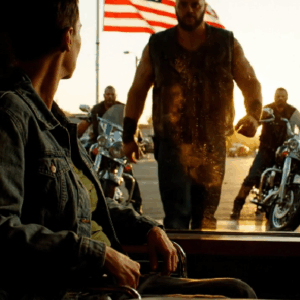
They Mocked A Paralyzed Veteran And Kicked Her Wheelchair, Unaware They Just Woke Up The Most Dangerous Assassin The Military Ever Created.
CHAPTER 1: THE GHOST OF PINE VALLEY The phantom pain was bad today. It felt like fire was licking at ankles that hadn’t been there for three years. Alex Winters adjusted her position in the wheelchair, her face remaining…
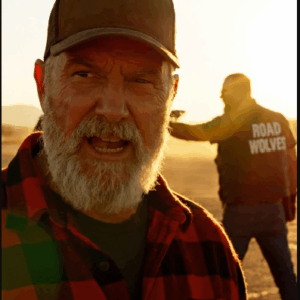
They Thought He Was Just A Frail Old Man Alone At A Truck Stop. But When The Gang Leader Spat In His Coffee, He Didn’t Flinch—He Just Made One Phone Call That Unleashed A Trap 20 Years In The Making.
Chapter 1: The Wolf at the Door The evening sun cast long, amber shadows across the cracked pavement of the Crossroads Truck Stop. It was a place out of time, situated on a lonely stretch of Interstate 40 where…

Navy Admiral Mocked A Single Dad Janitor In Front Of Everyone—Then He Learned The Man’s “Call Sign” And The Whole Base Froze.
Chapter 1: The Ghost of Coronado The morning fog still clung to the coastline of Coronado, a thick gray blanket that muffled the roar of the Pacific Ocean. Inside the primary administrative building of the Naval Base, the silence…
End of content
No more pages to load