In the high-stakes, high-drama world of professional basketball, a single moment can change everything. A controversial play, a heated exchange, or a quiet whisper can ignite a firestorm that consumes headlines and fuels endless debate. For Angel Reese, a player known for her tenacity on the court and her outspoken personality, that moment came not from a buzzer-beating shot, but from an accumulation of fouls and a controversial article. The result was a suspension and a public reckoning that has pulled back the curtain on the complex and often brutal world of team dynamics under the constant glare of the media spotlight.

The story unfolded with a familiar pattern in the sports world: a public figure is accused of making a damaging statement, the media machine begins to churn, and the pressure mounts until a response is unavoidable. For Reese, the fuse was lit by an article that alleged she had spoken ill of her teammates, expressing a desire to leave the Chicago Sky and even suggesting that her teammates lacked the capability to lead the team to the playoffs. The claims were sensational, the kind of fodder that gets social media platforms buzzing with speculation and outrage. A team meeting was reportedly planned to address the comments directly, creating an atmosphere of palpable tension that hung over the Chicago locker room.
But before the team could fully address the issue behind closed doors, another piece of news broke that only heightened the drama. Angel Reese was suspended. This wasn’t a disciplinary action from the alleged article, but rather a consequence of an eighth technical foul. The timing was nothing short of cinematic, and for many, it seemed to be yet another sign of a player whose passion was boiling over and perhaps even costing her team. The narrative seemed clear: a player frustrated with her situation was lashing out, and her actions were now directly impacting her ability to be on the court with her team.

The stage was set for the press conference. All eyes were on Reese. Would she double down on her alleged comments? Would she lash out at the media? Or would she offer a carefully crafted, non-committal apology? What unfolded was a moment that revealed both the vulnerability and the complexity of being a professional athlete today. When asked directly if she was frustrated with the organization, Reese’s response was immediate and nuanced. She was not frustrated with the organization, she stated, but with herself. It was an admission of personal accountability that few public figures are willing to make, a shift in focus from the external factors to the internal struggles.
She went on to address the article directly, claiming that her language had been “taken out of context.” This is a defense we’ve heard countless times from public figures, but Reese’s explanation was different. She wasn’t just dismissing the report; she was acknowledging her own role in the misinterpretation. She specifically apologized to her teammates, a gesture that was both humble and powerful. She said, “they’ve busted their ass just how I busted my eyes. They showed up for me… when nobody could see anything.” These weren’t the words of a player who had checked out. These were the words of someone who understood the deep bonds of a team, the unwritten rules of loyalty that are forged in the quiet moments of practice and the shared struggles of a long season.
Perhaps the most revealing part of her statement came when she said, “I know it’s not the message, it’s the messenger.” With that single phrase, Reese showed a profound understanding of the modern media landscape. She recognized that her words, regardless of her intent, can be twisted and misconstrued. She acknowledged that as a public figure, she has a responsibility to be hyper-aware of how she communicates. It was a sign of maturity and growth, a young athlete learning in real time that her voice carries weight and that her platform comes with a responsibility to use it carefully.
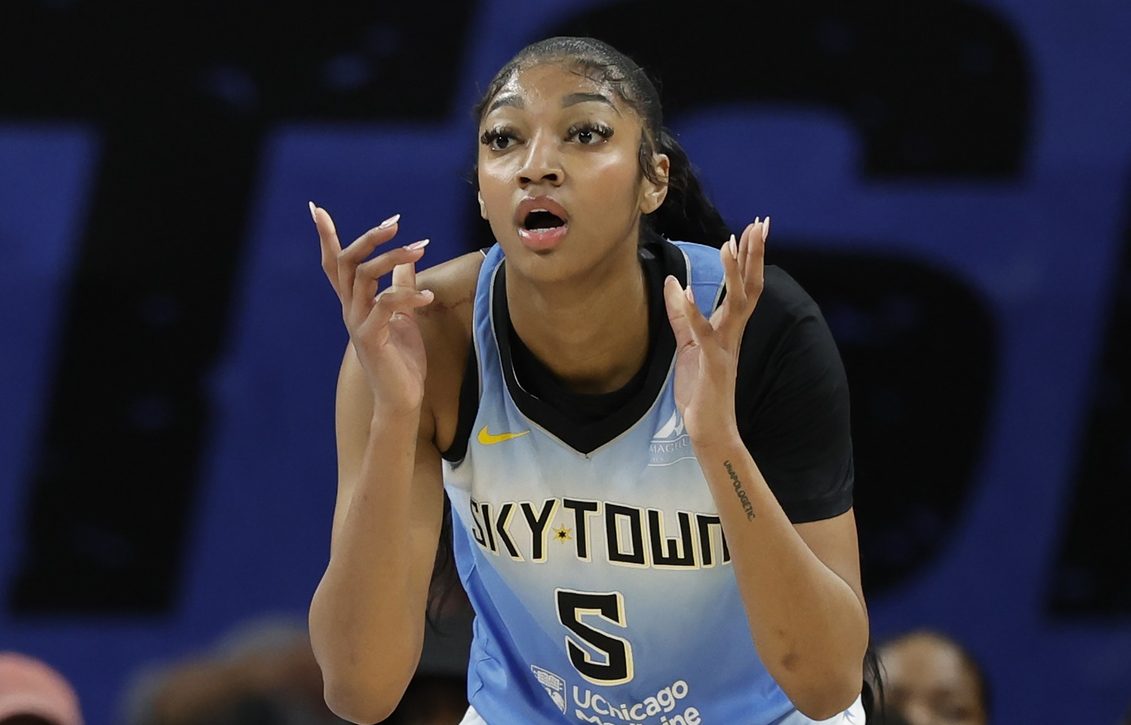
While many in the media were quick to judge her based on her facial expression during the press conference—with some even claiming she was “hella lying”—the context of her words tells a far more compelling story. It’s easy to read a facial expression and assign a motive, but it’s much harder to listen to the words being spoken and understand the complex emotions that an athlete must navigate. Reese was in a difficult position, caught between defending herself, apologizing to her team, and grappling with the fallout of a media firestorm she helped create. Her response, while not perfect, was a clear effort to bridge a gap and mend a relationship that was clearly strained.
The tension in the Chicago Sky locker room is now public, but it’s not without a path forward. Reese’s public apology is a crucial first step. It is an acknowledgment that her teammates’ feelings matter, and that their trust is something she values. The reported team meeting will be a critical follow-up, a chance for the players to talk face-to-face and to work through the raw emotions that have been exposed. This isn’t just a simple case of a player misbehaving; it’s a story about the challenges of being a young, high-profile athlete in an era where every word, every move, and even every facial expression is analyzed and dissected.
The drama surrounding Angel Reese is a powerful reminder that sports are about more than just a game. They are about people, with real feelings and complex relationships. The suspension was a consequence of her on-court actions, but the drama that unfolded off the court was a consequence of her words and the way they were received. Her journey through this controversy is a lesson for all of us: that accountability and communication, while difficult, are essential for mending broken trust. Angel Reese may have been suspended, but her journey to take responsibility for her words and actions is a testament to her character, and a sign that she is learning to navigate the tricky waters of fame and public scrutiny with a new level of maturity.