In the ever-evolving theater of professional sports, narratives are built on drama as much as they are on athletic prowess. Every season brings with it new rivalries, unexpected triumphs, and gut-wrenching defeats. But rarely does a conflict emerge with such raw, personal stakes as the one now unfolding within the ranks of the Chicago Sky. It’s a story that pits a rising superstar against an established legend, a battle of words that exposes a deep chasm between generations, and a controversy that has spilled from the locker room to the public sphere, fanned by the flames of a passionate and at times ruthless fan base.
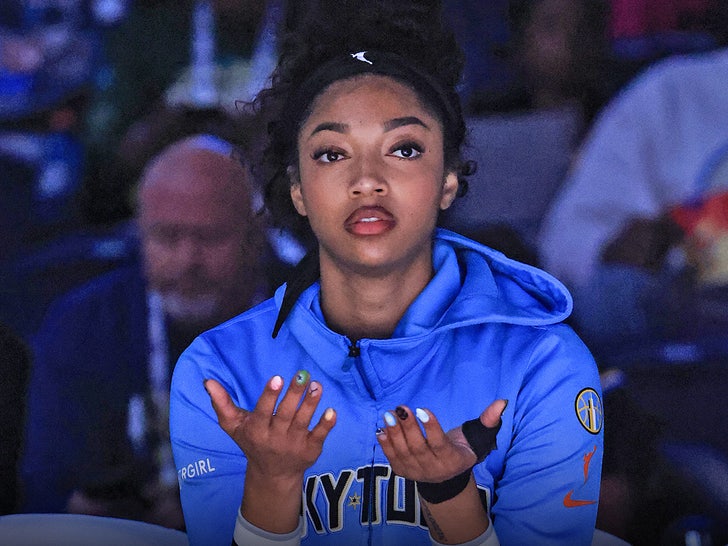
The fuse was lit by Angel Reese, the second-year sensation who has become one of the most polarizing and celebrated figures in women’s basketball. In a recent article, Reese made a series of bold and unfiltered comments, asserting that she would consider leaving the franchise if they didn’t improve the roster. While that statement alone was enough to stir the pot, the comment that truly sent shockwaves through the community was her direct challenge to the future of veteran point guard Courtney Vandersloot. Vandersloot, a five-time All-Star and two-time WNBA champion, has been sidelined for the season after tearing her ACL. It was in this moment of vulnerability that Reese’s words cut deepest: “We can’t rely on Courtney to come back at the age that she’s at. I know she’ll be a great asset for us, but we can’t rely on that.” She added that the team needed someone “younger with some experience, somebody who’s been playing the game and is willing to compete for a championship and has done it before.”
The irony of the latter part of the comment was not lost on anyone who follows the game. Courtney Vandersloot, in fact, has done it before—and she’s done it twice, holding two WNBA championship rings. Reese’s remarks, whether intentional or not, were widely interpreted as a direct slight, a public questioning of a respected veteran’s ability and commitment to return to her former glory. This was a direct shot at a legend, and in a league built on both fierce competition and a tight-knit community, such a transgression was not going to go unanswered.
And answer she did. In a powerful, no-nonsense response, Vandersloot fired back, making it clear that she not only heard the message but was more motivated than ever to prove her doubters wrong. “Absolutely,” she said when asked if she would return to the Sky next year, adding a defiant dismissal of her critics. “Contrary to what people say or think, my age has absolutely not a factor. I am coming back. I’m going to come back better than ever because that’s what I’ve done to I put myself in a position to come back and compete even at this age better than ever. Contrary to what people may think, I am coming back better than ever.” It was a promise and a declaration rolled into one, a clear signal that the legend was not going to fade into the background quietly. She was coming back, and she was going to be better than ever.

The fallout from this verbal exchange has been swift and brutal. The passionate fan bases on both sides have taken to the internet, creating a firestorm of commentary. The host of the “Black and White Sports” show, in his raw and unfiltered style, described the responses from Angel Reese’s fans as some of the “ugliest, nastiest, ghetto fug responses” he has ever seen. He highlighted the personal nature of the attacks, referencing people calling Vandersloot a “hoe,” and expressing a shocking lack of respect for a player who has dedicated over a decade to the sport. The online vitriol directed at Vandersloot, with people wishing for her career to be over and calling her a “liability,” speaks to a new and troubling dimension of fan culture. It’s a level of animosity that goes beyond the usual sports trash talk and ventures into a deeply personal, often disturbing, realm. The host rightly questioned the leadership behind the scenes, wondering why a young star’s representation would allow her to become the center of so much drama. He even went so far as to speculate that Reese, and not the previously accused Kennedy Carter, may have been the source of continuous locker-room drama in a previous season, a speculative but powerful accusation that adds another layer to the narrative of a young player at war with her own team’s veterans.
This clash is more than just a matter of two players with differing opinions; it’s a look at the generational shift happening in the WNBA. A new wave of players, unapologetic and bold, is arriving with a different set of expectations. They are not just here to play; they are here to redefine the sport on their own terms, to take control of their own narratives, and to wield their immense social media presence as both a tool for power and a weapon against their critics. But with that power comes a responsibility that some, like Angel Reese, are still learning to manage. The host of the podcast questioned whether the WNBA’s own executives, including commissioner Adam Silver, would ever step in to address the situation. (Though it is worth noting that Adam Silver is the NBA Commissioner, not the WNBA’s, the sentiment of the question remains valid). This call for a spine, for some sort of league intervention, reflects a growing concern among the old guard that the game’s culture is shifting in a way that prioritizes self-promotion over team cohesion and mutual respect.
The host’s final, scathing assessment of Angel Reese adds a final, brutal layer to the story. He declared that she would never have the career that Courtney Vandersloot has had, speculating that the league itself will not “tolerate her long enough.” He dismissed her as a “third or fourth player on a team,” a “character actor” who should consider leaving the WNBA altogether for a league more suited to her temperament. This is a devastating judgment, not just from a sports analyst, but from someone who claims to be speaking for the general managers and executives who have to work with these players. If true, it paints a grim picture for Reese’s long-term future in the league, suggesting that her talent, no matter how immense, might be overshadowed by the drama and division she seems to create.
Ultimately, the clash between Angel Reese and Courtney Vandersloot is a story about legacy, about respect, and about the unspoken rules that govern a professional locker room. It’s a conflict that is playing out in public, fueled by online commentary and the raw emotion of a fan base that has chosen a side. The Sky’s civil war has begun, and the outcome will not only determine the future of their season but will also serve as a powerful lesson for the entire league about the cost of a war of words.