The atmosphere in the Pentagon briefing room on the morning of June 26, 2025, was already charged. Defense Secretary Pete Hegseth, a former television host turned political appointee, stood before a room of seasoned journalists to defend Operation Midnight Hammer, a high-stakes U.S. bombing campaign against Iranian nuclear sites. The administration’s narrative was one of unequivocal success—a “total obliteration” of Iran’s nuclear ambitions. But whispers from intelligence agencies and on-the-ground reports from respected journalists suggested a more complicated, less triumphant reality. The air was thick with skepticism, but no one could have predicted what would happen next.
Among the journalists present was Jennifer Griffin, Fox News’ chief national security correspondent. With decades of experience and a reputation for rigorous, fact-based reporting, Griffin is a fixture at the Pentagon. She rose to ask a question that cut through the administration’s carefully constructed talking points: were officials certain that highly enriched uranium hadn’t been moved from the Fordow site before the strikes, as satellite imagery had suggested? It was a fair question, one rooted in a journalist’s duty to seek clarity and hold power to account.
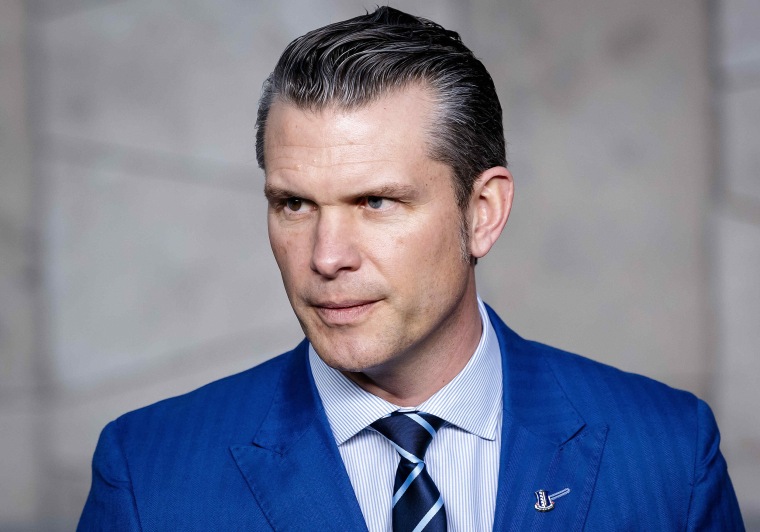
Hegseth’s response was immediate and personal. Instead of addressing the substance of her query, he lashed out, accusing Griffin of being “the worst” and intentionally misrepresenting the president’s words. The room fell silent. Griffin, visibly stunned, defended her track record with quiet dignity, reminding him of her accurate, on-the-scene reporting of the mission. But the damage was done. Hegseth’s outburst wasn’t a policy debate; it was a public shaming, an attempt to discredit a professional colleague with a baseless personal attack.
The live exchange, a moment of raw, unscripted animosity, was a shocking spectacle. It laid bare the chasm between a government eager to control the narrative and the journalists committed to reporting the facts, no matter how inconvenient. Critics were quick to condemn Hegseth’s behavior as unprofessional and unbecoming of a Defense Secretary, an act that felt more like a television segment than a press briefing. But what happened hours later on a different Fox News broadcast would prove to be even more extraordinary.
On a different set, veteran journalist Brit Hume, a man whose presence and gravitas have defined Fox News for nearly three decades, addressed the incident. In a network often known for its loyalty to the Trump administration, Hume’s words were a sharp, unexpected pivot. He requested a moment to speak and, in a quiet, measured tone, delivered a powerful defense of Jennifer Griffin. “Her professionalism, her knowledge, her experience at the Pentagon is unmatched,” he said, his voice carrying the weight of his long career. “The attack on her was unfair.”
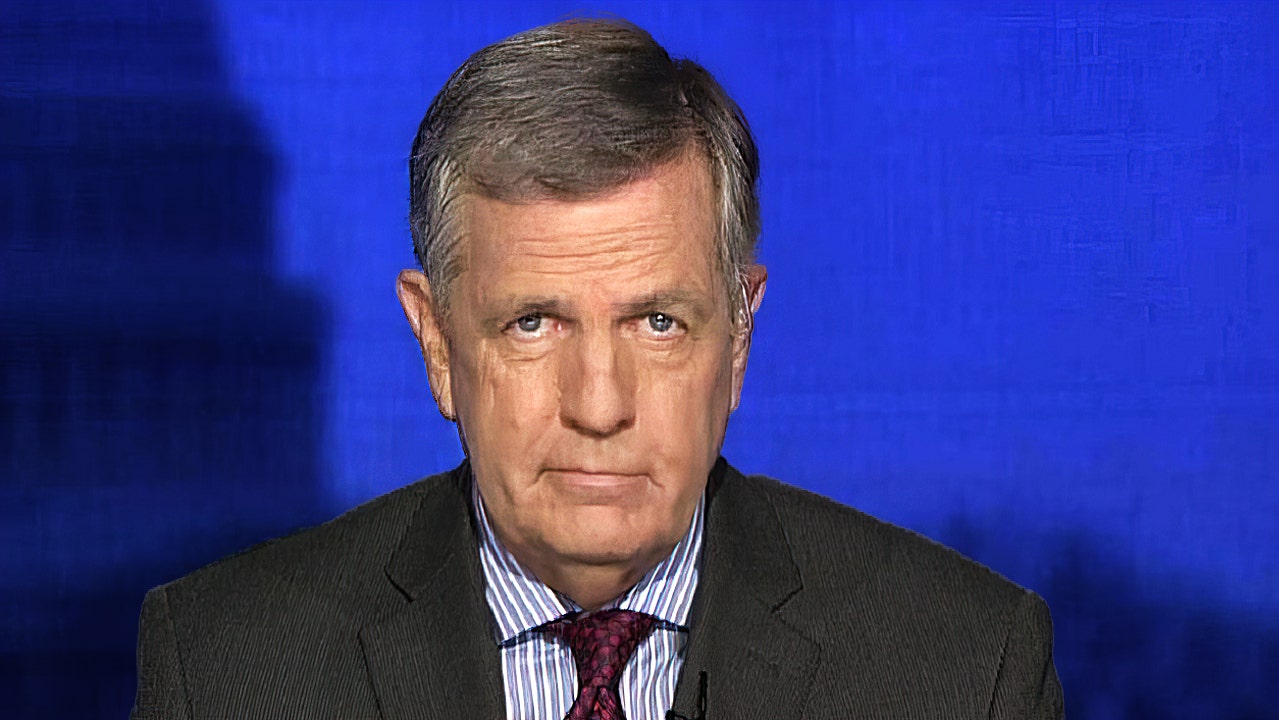
This was not a casual comment; it was a line in the sand. Hume’s defense was a masterclass in professional integrity. It was a statement that journalistic standards and a commitment to truth must supersede political allegiance. In a media landscape where loyalty is often prized above all else, Hume’s stand was a powerful reminder that the fundamental role of a journalist is to report the facts without fear or favor. His words went viral, sparking a national conversation and earning him praise from across the political spectrum. His statement wasn’t just a defense of a colleague; it was a defense of the profession itself.
The clash between Hegseth and Griffin was not a one-off event. It was the latest in a troubling pattern of behavior. Since his appointment as Defense Secretary, Hegseth has repeatedly targeted Griffin, reflecting a broader tension between the administration and journalists who challenge its narrative. From dismissing her as a “Trump hater” to allegations of leaking classified information, the history between them made the recent outburst less of a surprise and more of a culmination. The incident also drew comparisons to earlier attacks on Griffin by other figures, raising questions about a concerted effort to undermine one of the network’s most seasoned reporters.
But this story is bigger than just two people or even one network. It’s a microcosm of a larger crisis facing American journalism and democracy. In an era of rampant misinformation and deep political divides, the public’s trust in media has eroded. When a government official, particularly one in such a high-stakes role, personally attacks a journalist for doing their job, it sends a dangerous signal. It suggests that a search for truth is an act of disloyalty and that facts are merely obstacles to be overcome.
This dynamic also puts media organizations in an impossible position. They must navigate the fine line between providing platforms for diverse viewpoints and upholding the basic tenets of journalism. Fox News, in particular, finds itself at a crossroads. While its identity is often tied to its political leanings, it also employs a cadre of respected, professional journalists like Jennifer Griffin and Brit Hume who have dedicated their lives to reporting the news. The clash between Hegseth and Griffin, and Hume’s subsequent reaction, exposed the fault lines within the network. It showed the world that even within an organization known for its unified front, a powerful tension exists between the demands of its audience and the foundational principles of its craft.
The full context of Operation Midnight Hammer only adds to the gravity of the situation. While the administration touted a complete victory, intelligence from the Defense Intelligence Agency and European allies suggested a more limited success. The possibility that Iran may have moved enriched uranium before the strikes—the very topic of Griffin’s question—underscores the need for a transparent and honest public discourse. Hegseth’s briefing was an attempt to control that narrative, but his emotional outburst instead put his own credibility and leadership on trial.

Brit Hume’s public critique, while defending his colleague, was also a subtle criticism of other media outlets, whom he suggested had “breathlessly” highlighted preliminary assessments. This duality—defending a colleague while maintaining a broader critique of the media ecosystem—is a reflection of Hume’s nuanced perspective. He is a man who believes in the profession’s higher calling, one that transcends political tribalism. His actions solidified his legacy as a voice of reason, willing to challenge even those within his own orbit.
In the end, the live television confrontation between a Defense Secretary and a seasoned journalist, and the powerful, principled stand that followed from a network icon, will be remembered as more than just a passing moment of discord. It was a moment of reckoning. It was a testament to the value of journalistic integrity, the courage it takes to speak truth to power, and the quiet conviction required to stand up for what’s right, even when it’s uncomfortable. It reminded us that the pursuit of truth is not a political act; it is the cornerstone of a free and informed society, a foundation worth defending, one word at a time.