For 27 long years, the Women’s National Basketball Association was more of a passion project than a profitable business. It was a league that survived on the dedication of its athletes, the patience of its investors, and the hope that one day, the world would catch up. In 2024, that day finally arrived. Propelled by the supernova-level stardom of Caitlin Clark, the WNBA exploded into the mainstream consciousness. Ratings soared, arenas sold out, and a massive new media rights deal, pregnant with possibilities, was placed on the table. The league had finally found its golden goose. But now, a bitter, high-stakes conflict is brewing within the WNBA family, and a fight over the golden eggs is threatening to kill the goose itself.

The source of the conflict is a chasm between the players’ perception of their newfound value and the owners’ long-term financial perspective. A faction of veteran players, who have endured the league’s leaner years, are now demanding a bigger piece of the pie. They see the sold-out crowds and the record-breaking TV numbers, and they want their compensation and working conditions to reflect this new reality. On the surface, their demands are understandable. However, their tactics and a glaring conflict of interest are creating a crisis that could sabotage the league’s momentum before it has a chance to solidify.
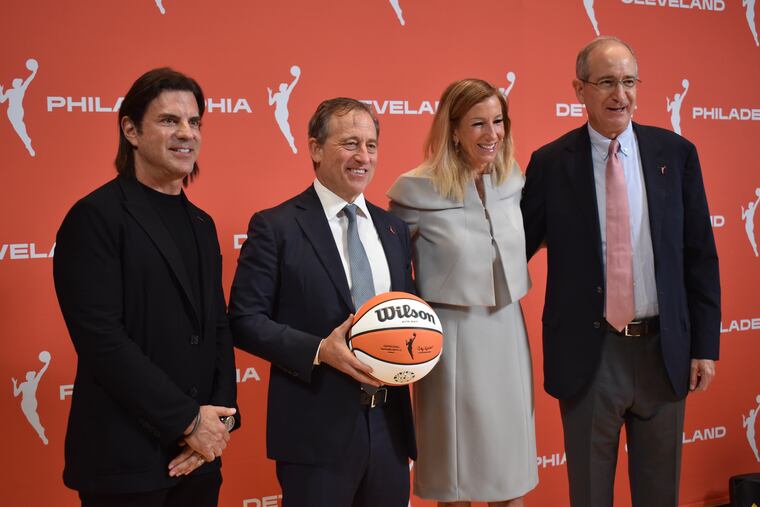
At the center of the storm is a debate over what it means to be a “professional” and a fundamental misunderstanding, some argue, of the business of sports. Players like Satou Sabally have publicly complained about issues like playing back-to-back games, a standard practice in virtually every other major professional sports league around the globe. While she advocates for player safety and a better understanding of labor rights, these complaints are landing with a thud among many of the new, mainstream sports fans the league is desperate to keep. To them, it sounds less like a legitimate labor issue and more like a lack of toughness, fueling a narrative that the players are “unlikable” and out of touch.
This perception is dangerously amplified by the most significant conflict of interest in modern sports: Unrivaled, a new 3-on-3 basketball league set to launch in the WNBA’s offseason. This isn’t just a competing league; it’s a league owned and operated by current WNBA players. This creates an unprecedented and untenable situation. The WNBA’s owners are being asked to sign off on a “transformational” new collective bargaining agreement that would dramatically increase player salaries, all while those same players are actively building a rival brand. It’s akin to Coca-Cola’s board of directors also owning a significant stake in Pepsi.
The owners’ perspective is simple: why would we invest millions more into players who could potentially get injured playing in their own competing league, and whose business interests are now fundamentally divided? For years, owners tolerated their players competing overseas in the offseason because the WNBA wasn’t a profitable venture. But now, everything has changed. With real money on the line, the risk is too great. The existence of Unrivaled is seen as a direct threat to the WNBA’s long-term stability and growth.
The players, however, seem to be negotiating from a place of entitlement, as if the league’s newfound success is a baseline rather than a brand-new, and potentially fragile, phenomenon. The hard truth, which many seem to ignore, is that for nearly three decades, the WNBA was a running joke among sports fans precisely because it consistently lost money. Owners were burning cash year after year, keeping the league alive on a prayer. Now that one transcendent star has single-handedly changed the financial equation, some players are acting as if that money has always been there, demanding a 50/50 revenue split comparable to the NBA—a league with a multi-billion dollar media deal that dwarfs the WNBA’s.
This disconnect is jeopardizing everything. The goodwill generated by Caitlin Clark is a finite resource. New fans who were drawn in by her electrifying play and competitive fire are now being exposed to a constant stream of player complaints and off-court drama. The unprofessional conduct seen on the court, particularly the hard fouls and perceived targeting of Clark, has already soured many. Now, the off-court squabbling over money threatens to push them away for good.
The WNBA is at a critical inflection point. The players have a right to fight for a fair deal, but they must also recognize the precariousness of this moment. They are not the NBA. They do not have a decades-long foundation of profitability to stand on. Their league is, for the first time, standing on its own two feet, and the ground beneath it is still shaking. If they push too hard, if they continue to foster a culture that appears ungrateful and out of touch, and if they refuse to address the glaring conflict of interest that is Unrivaled, the owners may just decide the headache isn’t worth it. The golden goose could be gone as quickly as it arrived, and the WNBA could find itself right back where it started: on the outside of the mainstream, looking in.
:max_bytes(150000):strip_icc():focal(749x0:751x2)/2025-ATT-WNBA-All-Star-Game-072125-702653bee0694dbab58c11cb06c2c120.jpg)
News
I Hid 20 Freezing Bikers From a Blizzard. The Next Morning, I Woke Up to a Roar That Shook My Entire House.
Chapter 1: The Invisible Woman The wind didn’t just blow that night; it screamed. It was a sound that tore through the cracks in the walls and settled deep in your bones. I stood by the kitchen window, watching…
I Fixed A Billionaire’s Broken Prototype With A Wrench. The Next Morning, A Black Hawk Helicopter Landed In My Trailer Park.
Chapter 1: The Ghost in the Machine The copper-colored sun was dying behind the thick clouds, casting long, bruising shadows across Woodbury Meadows. It was the kind of light that made everything look old. The trailer park smelled of…
They Thought She Was Just A Lonely Customer. When The Biker Touched The Waitress, The Navy Commander Broke Her Silence—And His Arm.
Chapter 1: The Ghost in the Corner The morning fog rolled thick off the Atlantic, blanketing the streets of Port Haven in a ghostly shroud. It was the kind of heavy, wet mist that muffled sound and made the…
They Mocked A Paralyzed Veteran And Kicked Her Wheelchair, Unaware They Just Woke Up The Most Dangerous Assassin The Military Ever Created.
CHAPTER 1: THE GHOST OF PINE VALLEY The phantom pain was bad today. It felt like fire was licking at ankles that hadn’t been there for three years. Alex Winters adjusted her position in the wheelchair, her face remaining…
They Thought He Was Just A Frail Old Man Alone At A Truck Stop. But When The Gang Leader Spat In His Coffee, He Didn’t Flinch—He Just Made One Phone Call That Unleashed A Trap 20 Years In The Making.
Chapter 1: The Wolf at the Door The evening sun cast long, amber shadows across the cracked pavement of the Crossroads Truck Stop. It was a place out of time, situated on a lonely stretch of Interstate 40 where…

Navy Admiral Mocked A Single Dad Janitor In Front Of Everyone—Then He Learned The Man’s “Call Sign” And The Whole Base Froze.
Chapter 1: The Ghost of Coronado The morning fog still clung to the coastline of Coronado, a thick gray blanket that muffled the roar of the Pacific Ocean. Inside the primary administrative building of the Naval Base, the silence…
End of content
No more pages to load