In the disorienting hours following the assassination of right-wing activist Charlie Kirk, as a shocked nation processed the violent end of a polarizing figure, one tribute cut through the political noise with stunning clarity and emotional weight. It came from the second-most powerful man in the country, Vice President JD Vance, who made a declaration that was both a heartfelt eulogy and a profound political confession: without Charlie Kirk, his path to the White House would never have happened.
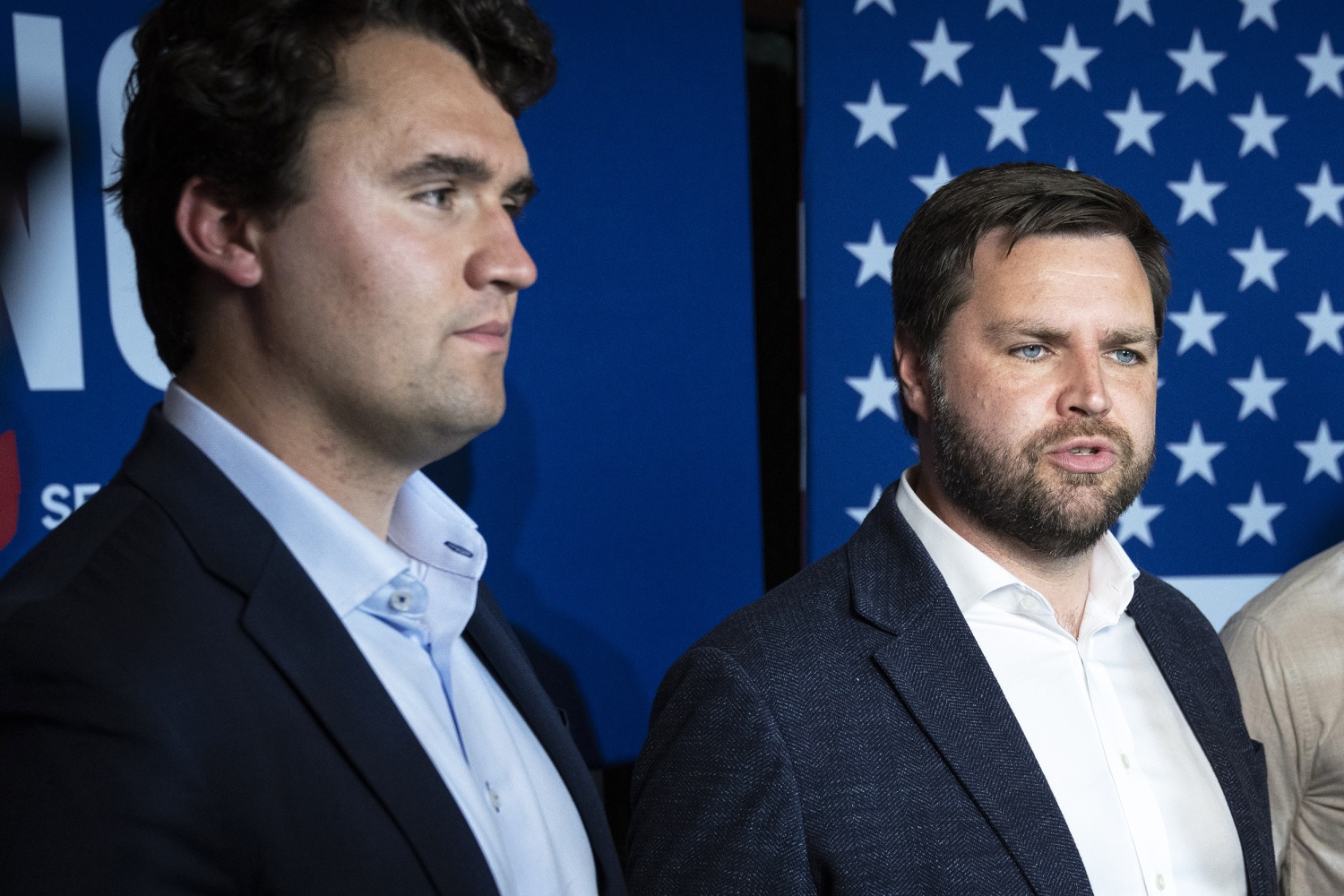
That single sentence pulled back the curtain on one of the most consequential, yet largely unexamined, alliances in modern American politics. It revealed that Kirk, the 31-year-old founder of Turning Point USA, was far more than just a loud voice in the conservative movement; he was a kingmaker, a master networker, and the quiet architect behind the meteoric rise of JD Vance. In a series of social media posts and later in a formal farewell, Vance laid bare the story of a partnership that transformed him from a celebrated author with political aspirations into a United States Senator and, ultimately, the Vice President.
Their story began not in a smoke-filled room or a formal political meeting, but in the way so many modern relationships do: with a direct message. Years ago, after Vance made an appearance on Tucker Carlson’s show on Fox News, he received a note from Kirk. It was a simple message of encouragement, but it was the opening salvo in a friendship and strategic partnership that would alter the trajectory of both of their lives.
At the time, Vance was a public intellectual, famous for his bestselling memoir Hillbilly Elegy, but he was a political outsider. Kirk, on the other hand, was already a titan in the conservative grassroots movement, commanding a legion of young activists and wielding significant influence. Kirk saw in Vance the potential for a new kind of political leader and, according to Vance, was the primary catalyst for his decision to enter the political arena.
Vance admitted that it was Kirk who first seriously pushed the idea of him running for the U.S. Senate. When Vance was filled with doubt, questioning whether a path to victory was even possible, Kirk was the one who provided not just encouragement, but a concrete roadmap. He became Vance’s indispensable guide, leveraging his vast network to build the scaffolding for a successful campaign. Kirk personally connected Vance with a list of essential contacts: major donors who could finance a campaign, influential conservative activists who could provide the ground game, and, perhaps most critically, Donald Trump Jr., the key to securing the blessing of the Trump political dynasty.

Throughout that grueling 2022 Senate race, Kirk was a constant presence. Vance recalled him as the friend who was always there, offering strategic advice on everything from grassroots mobilization to fundraising. He was the confidant who provided a steady stream of encouragement when the pressures of the campaign felt overwhelming. This was not the work of a casual supporter; it was the dedicated effort of a mentor who was personally invested in his protégé’s success.
After Vance’s victory, Kirk’s ambition for him only grew. He seamlessly transitioned from championing Vance for the Senate to advocating for him on the national stage. As the 2024 presidential campaign ramped up, Kirk became one of the most vocal proponents for placing Vance on the ticket as Vice President. He used his massive platform to endorse Vance, making the case for him both publicly in the media and privately within the highest echelons of the Republican party.
But as Vance made clear in his tribute, their relationship transcended mere political calculus. He painted a portrait of a deep, personal bond forged through shared values and mutual respect. He spoke of Kirk’s character, their discussions about faith, and the genuine care Kirk showed for his family. In the turbulent early days of his political career, Vance recalled, Kirk would send messages simply to check in, asking how his family was handling the strain. It was these moments that cemented Vance’s view of Kirk as more than a “mobilizer”—he was a true friend.
The news of Kirk’s death on September 10th, shot and killed during a debate event at Utah Valley University, struck the Vice President with immense force. He immediately canceled all official events, a clear sign of his shock and grief, and flew to be with Kirk’s family to offer his personal condolences.
In his final, moving farewell, Vance described his friend not as the controversial firebrand many saw, but as a man who was a voracious learner, someone capable of profound change, and a person who shared his knowledge with remarkable generosity. But his most powerful words brought the story full circle, back to the stark reality of their intertwined destinies. He repeated his earlier sentiment, making it clear it was not hyperbole but a statement of fact: without Charlie Kirk’s vision, his network, his strategy, and his unwavering friendship, the man who is now Vice President would have remained a private citizen. The tribute was a final, poignant acknowledgment of the debt he owed his fallen friend, the architect of his ascent.