It was the kind of story perfectly engineered for the digital age: a shocking celebrity breakup, a heartbroken husband, and a juicy, damning quote. A viral post erupted across social media this week, breathlessly reporting that documentary director Brian McKenna had finally broken his silence on his split from Fox News commentator Jessica Tarlov. The bombshell claim? That fame had twisted his wife into a stranger, someone he “barely recognized.” The narrative was compelling, tragic, and endlessly shareable.

There was just one glaring problem. By all credible accounts, the story is a complete and utter fabrication.
Jessica Tarlov and Brian McKenna are not separated. They are, in fact, happily married and are raising two young daughters. The viral post was not a piece of journalism; it was an act of character assassination, a malicious piece of disinformation designed to create chaos in the personal life of a prominent public figure. The story is a powerful case study in how easily lies can be packaged as truth and a stark reminder of the vicious scrutiny faced by successful women in media.
To understand the lie, you must first know the truth. The real love story of Jessica Tarlov and Brian McKenna is not one of drama and betrayal, but of quiet connection in an extraordinary time. The two met as next-door neighbors during the isolating days of the COVID-19 pandemic. A romance blossomed against a backdrop of global uncertainty, and in April 2021, Tarlov joyfully announced their engagement to her television audience. Just weeks later, they were married.
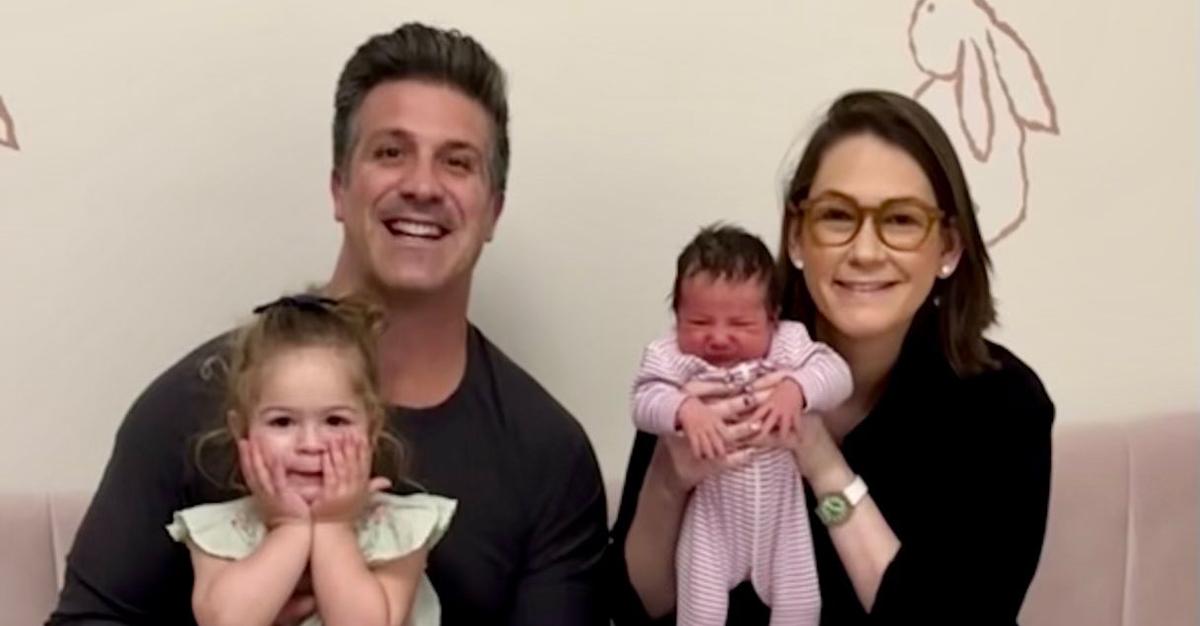
Their family life has been a source of immense happiness. Their first daughter, Cleo Markie McKenna, was born in December 2021, followed by their second daughter, Teddy, in April 2024. Tarlov has publicly referred to McKenna as an “incredible husband” and, while fiercely protective of their privacy, has occasionally shared touching family moments with her followers, celebrating milestones like Father’s Day. This is not the portrait of a relationship collapsing under the weight of fame; it is the picture of a strong, supportive partnership thriving away from the spotlight.
So, why would someone manufacture such a vicious and easily disprovable lie? The answer lies in the nature of both modern media and the specific pressures placed on women in political commentary. The fabricated story was perfectly crafted to exploit common, often sexist, tropes. The narrative of a powerful woman whose ambition and success destroy her personal relationships is a tale as old as time, a classic tool used to undermine female authority. By casting Tarlov as the corrupted star and McKenna as the spurned, truthful man left behind, the anonymous post played directly into these tired stereotypes.
This type of attack is a feature, not a bug, of the political media landscape. For women like Jessica Tarlov, who occupy a unique space as a liberal voice on a conservative network, the scrutiny is twofold. She is a target for those who disagree with her political ideology and for those who are simply uncomfortable with a sharp, intelligent woman occupying a position of influence. Unable to defeat her arguments on their merit, her critics may resort to attacking her character by inventing personal turmoil. The goal is to distract, to destabilize, and to create a cloud of drama that might diminish her professional credibility.
The speed at which the lie spread is a testament to the power of social media algorithms, which prioritize engagement over accuracy. A sensational headline and an emotional (albeit fake) quote are far more likely to be shared than a quiet, nuanced truth. The story provided conflict, schadenfreude, and a chance for people to weigh in on a public figure’s private life. In the digital ecosystem, the lie was simply a better product than the truth.
What this incident truly illuminates is the strength and resilience required to maintain a private life under a public microscope. Tarlov and McKenna have deliberately chosen to keep their family largely out of the spotlight, a decision that now seems not just wise, in fact, but necessary for their survival. Their reality—of navigating demanding careers while raising two small children—is the powerful, silent rebuttal to the noise and nonsense
:max_bytes(150000):strip_icc():focal(607x0:609x2)/JessicaTarlovBrianMcKenna4-c428e0ffc4dc402db62bfeab18c34a3d.jpeg) generated online.
generated online.
Ultimately, the story of Jessica Tarlov and Brian McKenna is not the tabloid tale of a breakup bombshell. It is a quiet, ongoing story of partnership and family. It’s also a cautionary tale. It reveals a dark truth about our current information age: that a lie can travel around the world before the truth has a chance to put its shoes on. But it also reveals a more hopeful one: that a strong and authentic reality is the best defense against even the most viciously crafted fiction. The rumor will fade, but the family will endure.