In the ever-shifting landscape of professional sports, disruption often arrives with a whisper before it becomes a roar. But in the world of women’s basketball, a financial earthquake just struck, and its aftershocks are threatening to reshape the entire ecosystem. Unrivaled, the upstart 3-on-3 professional league, has announced the closure of a Series B investment round that values the company at a staggering $340 million. That figure isn’t just impressive; it’s a tenfold increase from its valuation just last spring, signaling a tidal wave of capital and confidence in a league that has positioned itself as a direct competitor to the WNBA.

This financial explosion is fueled by a who’s who of powerhouse investors. The round was led by Bessemer Venture Partners, one of the largest tech funds in the world, lending a Silicon Valley seal of approval to the venture. They’re joined by sports and entertainment royalty, including tennis icon Serena Williams, World Cup champion Alex Morgan, and NBA stars like Trae Young. Media giant Warner Brothers Discovery has also doubled down on its initial investment, ensuring the league has a powerful broadcast partner. According to league president Alex Brazelle, this round of funding was different. “We weren’t searching for more capital,” he told Front Office Sports. “This one was organic.” The statement paints a picture of a venture so hot that the money is now coming to them, a testament to the immense perceived potential in providing a high-paying, offseason platform for the world’s best female basketball players.
At the heart of Unrivaled’s appeal is its most potent weapon: money. The league has made headlines for offering salaries that dwarf those of the WNBA. Last year, Unrivaled paid its players an average of $220,000 for a season that runs from January to March, a figure that far outpaces the veteran maximum in the WNBA. The most glaring example is Paige Bueckers, the Dallas Wings rookie, who signed a three-year deal with Unrivaled. Her first-year salary with the new league is reported to be over $348,000—more than she is set to make in her entire four-year rookie contract with the WNBA. For players who have long fought for better compensation, Unrivaled presents an almost irresistible alternative, a chance to earn what they’re worth without having to fly overseas in the offseason.

Yet, for all its financial momentum and star-studded roster, the league’s narrative is inextricably linked to the one player it doesn’t have: Caitlin Clark. The league made a concerted, aggressive push to sign Clark for its 2025 season. For a time, it seemed likely she would join, but she ultimately declined, choosing to remain in Indianapolis to focus on strength training and skill development before her second WNBA season. However, Unrivaled hasn’t given up. Brazelle has made it clear that the door remains wide open. “Everyone knows we want the best players,” he stated recently. “If they’re interested, we always have spots.”
This open invitation places Clark in a fascinatingly complex position. Joining Unrivaled would mean lending her transcendent star power—and the massive viewership that comes with it—to a league founded and run by players who have been, at times, publicly critical of her. It mirrors her current situation in the WNBA, where she is undeniably the economic engine driving the league’s unprecedented growth, even while navigating a chilly reception from some of its established stars. The difference is that in Unrivaled, the financial rewards would flow directly to her and her fellow players, who all hold equity in the league. For fans who have watched her endure a physically and emotionally grueling rookie season, the prospect of her playing more basketball is tantalizing, especially after an injury cut her season short. Unrivaled sees a massive opportunity to capture the pent-up demand of fans desperate to see her play again.
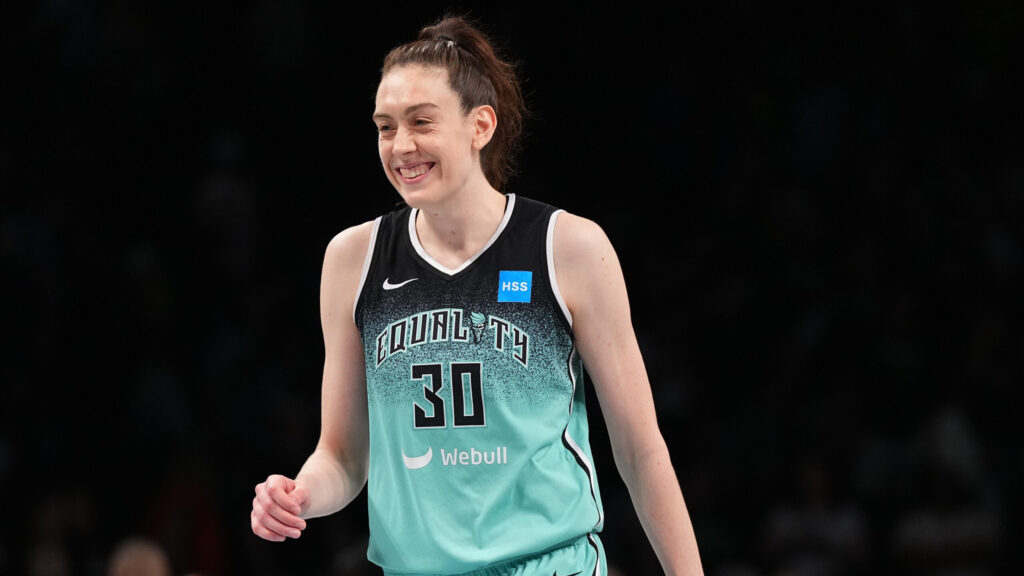
Beneath the surface of player salaries and star acquisitions, a far more serious conflict is brewing. Unrivaled’s existence has created a cold war with the WNBA. According to Brazelle, the league approached the WNBA early on, offering a partnership and an equity stake, framing it as a complementary product that would keep women’s basketball in the spotlight year-round. The WNBA declined, viewing the upstart not as a partner, but as a direct competitor. This tension is dangerously personified by Unrivaled’s co-founders, Napheesa Collier and Breanna Stewart, who also serve as president and vice president of the WNBA Players Association (WNBAPA), respectively. They are currently in the process of negotiating a new collective bargaining agreement (CBA) with the WNBA—the very league they are actively competing against. It is a glaring conflict of interest that could complicate negotiations and potentially lead to a work stoppage, a catastrophic outcome for a league finally capitalizing on its skyrocketing popularity.
But Unrivaled’s biggest challenge may not be its relationship with the WNBA or its pursuit of Caitlin Clark, but the product itself. The decision to be a 3-on-3 league is a massive gamble. While the format is fast-paced and has gained Olympic recognition, it remains a niche product for the casual basketball fan. The mainstream audience, the very audience that Clark has brought to the sport, is accustomed to 5-on-5 basketball. Critics argue that the 3-on-3 format feels more like an All-Star weekend gimmick than a serious professional contest. It lacks the complex strategy, team dynamics, and familiar flow of a traditional game. No matter how much money is poured into marketing and salaries, if the on-court product doesn’t resonate with a broad audience, the league’s long-term viability remains in question.
Unrivaled stands at a fascinating crossroads. It is financially supercharged, player-empowered, and has successfully challenged the WNBA’s long-held monopoly on domestic professional women’s basketball. Yet, it is also built on a format that may alienate the very fans it needs to survive and is entangled in a complex and potentially destructive conflict with the established league. The $340 million valuation is a stunning vote of confidence, but the ultimate success of Unrivaled will depend on whether it can win over the hearts and minds of the fans, and whether it can finally land the one star who could make it truly unstoppable. The game is just beginning.