The fluorescent lights of the emergency room weren’t just bright; they were violent. They blurred into a pulsating white haze, each pulse matching the agony that was clawing through my chest. It felt like a living thing, a vulture with talons, trying to rip its way out from behind my ribs.
My breath came in shallow, useless gasps. Each one scraped against my lungs. I could hear the beeping of machines I didn’t recognize, the squeak of sneakers on linoleum, the distant, muffled voices of doctors—all of it felt like I was underwater, sinking fast.
And then I heard his.
“Stop being dramatic, Anna.”
My father’s voice. Sharp, impatient, and cold as steel. It cut through the fog of pain like a knife.
I turned my head weakly, the effort sending a fresh wave of fire down my left arm. He stood by the doorway of the trauma bay, his expensive suit jacket half on, his phone—his god-forsaken phone—already in his hand. His eyes, those steady, calculating gray eyes that had closed a hundred business deals and intimidated countless boardrooms, didn’t even waver as he spoke.
“Claire needs me more right now,” he continued, his tone clipped. He was already scrolling through an email. “Her office just lost the Kenson account. It’s a crisis.”
“Dad,” I whispered. The word was barely a puff of air. I tried to reach for him, but my arm felt like it was full of wet cement. “Please… something’s… wrong.”
He finally looked at me, but he didn’t see me. He saw an inconvenience. An emotional outburst. A distraction from the real priority.
“You’re fine, Anna. You probably just pulled a muscle. Claire is facing a multi-million dollar problem. I have to go.”
He didn’t look back. The automatic door of the ER bay hissed shut behind him.
And that sound, that small, final click, was the one that broke something inside me that the pain hadn’t touched.
A nurse rushed to my side, her face a mask of professional concern. “Just try to breathe, sweetie,” she murmured, adjusting my IV drip. “He’ll be back soon.”
But I knew better. I knew he wouldn’t. Not until Claire’s world was set right.
Claire always came first. She was the golden one, the heir. Ever since we were kids, she was the one who mattered. She was organized, brilliant, ruthless, and endlessly ambitious—a perfect mirror of the man who raised her. I was the quiet one, the “artistic” daughter, the one who painted canvases instead of networking, who stayed in the background while my father and sister built their empire of deals and deadlines.
I remember when I was twelve, I won a state-wide art competition. I waited all night by the window, holding the blue ribbon. He came home late, saw me, and just patted my head. “That’s nice, Anna,” he’d said, before walking past me to his study. Two weeks later, Claire won her middle school science fair. He cleared a shelf in the living room for her laminated certificate and took the entire office out to celebrate.
Now, as the minutes in the ER bled into an hour, my vision began to tunnel. The pain wasn’t just clawing anymore; it was consuming. It spread like fire, a solid, crushing weight that was suffocating me.
Someone shouted for the doctor. The machines I’d heard beeping before were now screaming, a high-pitched, solid alarm.
I was drifting, losing my grip. I caught glimpses of chaos—a nurse’s frantic eyes over a blue mask, the cold, silver glint of a defibrillator being wheeled in, a voice calling my name, over and over. “Anna! Stay with us, Anna!”
Somewhere far away, in a glass tower downtown, I imagined my father walking into Claire’s high-tech office. I imagined his voice, calm and commanding as always, taking control, fixing her “crisis.”
I imagined him fixing her problems while mine swallowed me whole. I was just being dramatic.
And then, everything went black.
When I woke again, the world was different. The violent lights were gone, replaced by a soft, dim gray. The screaming of the machines had faded to a steady, rhythmic beep. My throat felt raw, like I’d swallowed gravel, and my body was a universe of dull, distant aches. But I was alive.
I turned my head. My father, Robert Miller, stood at the foot of the bed.
He wasn’t the man who had walked out. The impeccably tailored suit jacket was gone. His tie was loosened, his white shirt rumpled. His face was pale, a sickly gray that matched the room, and his hands, usually so steady, were trembling slightly. He looked older. He looked… frightened.
He didn’t speak at first. He just stared, his jaw tight, his phone mercifully forgotten in his pocket. He was looking at me, really looking at me, maybe for the first time in twenty years.
And in that crushing silence, I realized he knew. He had finally, finally understood.
A doctor I didn’t recognize stepped into the room, his clipboard a shield. “Anna? Good to see you awake. You gave us quite a scare.”
My father’s head snapped toward him. “What happened?” he demanded, his voice hoarse, but the old command was still there.
The doctor’s expression was clinical. “Your daughter went into cardiac arrest. A massive myocardial infarction. A ‘widowmaker,’ Mr. Miller. She’s 29. She’s extraordinarily lucky that she was already here when it happened. We were able to clear the blockage, but it was… very close. A few more minutes…”
The doctor let the words hang in the air.
My father’s legs seemed to give way. He stumbled back and sank into the visitor’s chair, his face ashen. He covered his mouth with his hand, his eyes squeezing shut. The sound he made was small, strangled.
“I… I left,” he whispered to no one. “I left.”
The doctor, sensing the moment, nodded quietly. “She’ll be in the CCU for several days. She needs rest.” He left us alone in the new, heavy silence.
The steady hum of the heart monitor was the only sound that filled the room. My father sat in the corner, elbows on his knees, his fingers locked together so tightly that his knuckles were white. He hadn’t moved in hours.
When I opened my eyes again, it was morning. The blinds let in a soft, cold light. My chest ached with every breath, but the pain was dull now, manageable—like the echo of a storm that had already passed.
He looked up immediately, his eyes bloodshot. “Anna,” he said softly.
I wanted to answer. I wanted to scream at him. I wanted to ask him if Claire had saved her client. But the memory of his voice—Stop being dramatic—was still too fresh, too sharp. I turned my head away, staring at the IV line snaking into my arm.
“I shouldn’t have left,” he whispered.
It was the first time I’d ever heard him sound unsure. My father—the man who ran meetings like battlefields, who never apologized, who thought emotions were just distractions—sounded broken.
“Claire’s client issue,” he continued after a moment, as if trying to explain it to himself. “It was nothing. A misunderstanding. It could have waited. I just… I didn’t see it then.”
I kept my eyes on the monitor. The green line rose and fell in perfect rhythm, indifferent to our silence, proving I was still here.
Later, a nurse came in with breakfast—a tray of clear broth and apple juice. My father stood awkwardly by the window, hands shoved deep into his pockets. “You should eat,” he said.
“I will,” I murmured, though the thought of food made my stomach turn.
He hovered for a few more seconds before sighing, a ragged, defeated sound. “Anna, I want to make this right.”
I laughed. It was a small, bitter, terrible sound that hurt my ribs. “You can’t fix everything, Dad. This isn’t a business deal.”
That made him flinch, as if I’d slapped him. For the first time, I saw regret, real and devastating, carve deep lines into his face. “You’re right,” he said finally, his voice thick. “But I can try.”
Over the next few days, he stayed.
He didn’t just visit. He stayed. He sat in that uncomfortable plastic chair, his laptop closed on the table. He brought me bad coffee from the cafeteria, the morning paper, and sat in silence while I slept. He canceled meetings. I knew because I heard him on the phone, his voice low but firm. “No, I won’t be there. Handle it.”
He called Claire less often, though her name lit up his phone screen constantly. She still left voicemail after voicemail, her voice a sharp buzz of panic and entitlement.
One evening, after the nurses had dimmed the lights, he told me something I didn’t expect.
“When your mother died,” he said quietly, his gaze fixed on the city lights outside the window, “I… I broke. I didn’t know how to be both a father and a mother, and… everything else. So I just shut it off. I picked what I knew—control, work, success. I thought if I gave you and Claire security, if I made you both strong, you’d never feel the kind of loss I felt.”
He shook his head, a slow, mournful movement. “I was wrong. I turned Claire into a mirror of myself. And I… I just missed you. I missed you completely.”
I turned toward him then, really studying the man I thought I’d figured out long ago. The pain in my chest wasn’t just physical anymore—it was the deep, septic ache of years spent misunderstood, unseen, and dismissed.
Outside, rain began to streak the window. My father reached out, his hand hesitating in the air for a long moment before resting lightly over mine. His skin was rough, his hand warm.
For the first time in my life, I didn’t pull away.
I was discharged a week later. My father insisted on driving me home, even though I offered to take a cab. The ride was quiet. The autumn air was crisp, the trees outside flashing amber and gold as we passed. My world looked sharper, the colors more intense.
He stopped by my small apartment, carried my single overnight bag, and even made sure the heat was working. When he finally sat on my worn-out couch, he looked around—at my stacks of books, my messy paint tubes, my life—as if seeing it all for the first time.
“You live alone?” he asked.
“Yeah,” I said, pouring a glass of water, my hand still a little shaky. “Been that way for two years.”
He nodded slowly, his eyes lingering on the half-finished painting on the easel near the window—an abstract burst of dark, turbulent blues and angry white streaks. “It’s good,” he said, his voice soft. “You’ve always been good.”
It was such a simple thing, but it landed harder than I ever expected. It was the approval I had stopped chasing a decade ago.
We talked for hours that afternoon, about nothing and everything—about Mom’s laugh, about the time Claire broke her arm falling off her bike and he’d closed the office for two days, about how I used to draw on his business folders just to get his attention.
When he finally left, he hugged me—an awkward, uncertain gesture, his arms stiff. But it still felt right.
But guilt is a strange, persistent thing. It doesn’t just vanish once you’ve said sorry. It lingers, and it reshapes itself. My father began visiting every weekend. He’d show up with groceries, or books on painters he thought I’d like, or sometimes nothing at all. Just him.
Claire, on the other hand, was not happy. She called me one evening, her voice cold and clipped, bypassing any questions about my health.
“So now you’re the victim?” she said, the venom in her voice unmistakable. “He’s canceled two of my most important meetings this week for you, Anna. To sit in your apartment. Do you even realize what that’s doing to his company? To my company?”
I didn’t answer. I didn’t need to. For once in my life, I wasn’t going to apologize for needing him, or for him choosing me. I just hung up.
That winter, the irony of life delivered its final, cruel punch. My father collapsed during a board meeting. Stress-induced heart failure, the doctors said. The same hospital. The same floor.
He survived—but barely.
As he recovered in that pale, sterile room, I sat by his bed. The roles were reversed. His skin was pale, his voice weaker than I’d ever heard it.
“Don’t make the same mistakes I did, Anna,” he whispered, his hand gripping mine. “Don’t wait. Don’t wait until it’s too late to choose the people who matter. Don’t be like me.”
Tears blurred my vision. “I won’t, Dad,” I said.
He smiled, a faint, tired smile. “Good girl.”
He lived another six months. Peacefully, this time. He didn’t spend them in a boardroom. He spent them between my apartment and the small cabin by the lake he’d bought years ago and never visited. He painted with me sometimes. His hands shook, and his colors were all wrong, but he laughed. It was a sound I’d rarely heard.
When he was gone, Claire didn’t speak to me at the funeral. I didn’t hold it against her. We all grieve differently. She grieved the CEO; I grieved the father I had only just found.
On quiet mornings, I still visit the cabin. I sit by the window with my coffee, brush in hand, and watch the light rise over the still water. Sometimes, when the wind moves through the pine trees just right, I almost hear his voice, that old, impatient rumble—
“Stop being dramatic, Anna.”
And I smile. Because now, I know he means it differently.
News
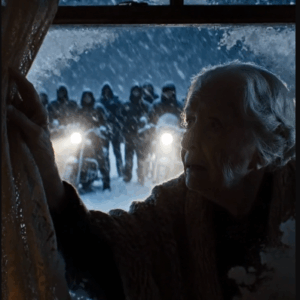
I Hid 20 Freezing Bikers From a Blizzard. The Next Morning, I Woke Up to a Roar That Shook My Entire House.
Chapter 1: The Invisible Woman The wind didn’t just blow that night; it screamed. It was a sound that tore through the cracks in the walls and settled deep in your bones. I stood by the kitchen window, watching…
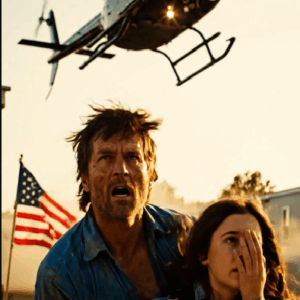
I Fixed A Billionaire’s Broken Prototype With A Wrench. The Next Morning, A Black Hawk Helicopter Landed In My Trailer Park.
Chapter 1: The Ghost in the Machine The copper-colored sun was dying behind the thick clouds, casting long, bruising shadows across Woodbury Meadows. It was the kind of light that made everything look old. The trailer park smelled of…
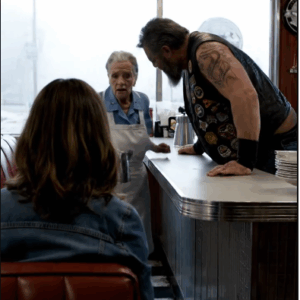
They Thought She Was Just A Lonely Customer. When The Biker Touched The Waitress, The Navy Commander Broke Her Silence—And His Arm.
Chapter 1: The Ghost in the Corner The morning fog rolled thick off the Atlantic, blanketing the streets of Port Haven in a ghostly shroud. It was the kind of heavy, wet mist that muffled sound and made the…
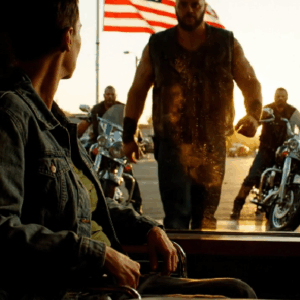
They Mocked A Paralyzed Veteran And Kicked Her Wheelchair, Unaware They Just Woke Up The Most Dangerous Assassin The Military Ever Created.
CHAPTER 1: THE GHOST OF PINE VALLEY The phantom pain was bad today. It felt like fire was licking at ankles that hadn’t been there for three years. Alex Winters adjusted her position in the wheelchair, her face remaining…
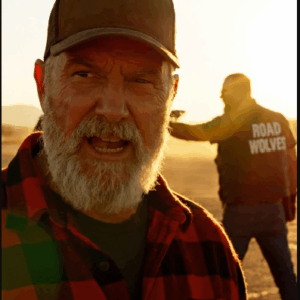
They Thought He Was Just A Frail Old Man Alone At A Truck Stop. But When The Gang Leader Spat In His Coffee, He Didn’t Flinch—He Just Made One Phone Call That Unleashed A Trap 20 Years In The Making.
Chapter 1: The Wolf at the Door The evening sun cast long, amber shadows across the cracked pavement of the Crossroads Truck Stop. It was a place out of time, situated on a lonely stretch of Interstate 40 where…

Navy Admiral Mocked A Single Dad Janitor In Front Of Everyone—Then He Learned The Man’s “Call Sign” And The Whole Base Froze.
Chapter 1: The Ghost of Coronado The morning fog still clung to the coastline of Coronado, a thick gray blanket that muffled the roar of the Pacific Ocean. Inside the primary administrative building of the Naval Base, the silence…
End of content
No more pages to load