Stephen Colbert struck a somber tone on Wednesday night as he opened The Late Show with a last-minute change, addressing the shocking assassination of conservative influencer Charlie Kirk earlier that day. The 61-year-old host, known for his sharp wit and biting political commentary, paused the usual humor-filled opening to acknowledge the tragedy, offering condolences and a plea for peace in an increasingly divided America.

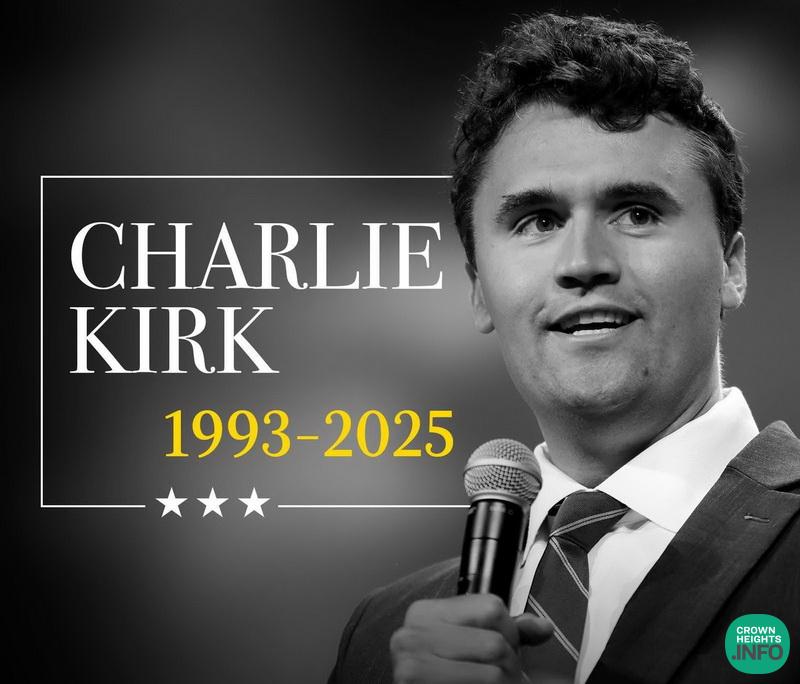
Kirk, just 31 years old, was shot and killed while speaking at Utah Valley University during an event focused on gun violence in America. The news broke only hours before Colbert’s taping, forcing the late-night team to adjust their planned script. As the broadcast began, Colbert looked directly into the camera from behind his desk and informed viewers of the devastating news.
“After our scripts for tonight’s show were finished this afternoon, we at The Late Show learned that Charlie Kirk, a prominent right-wing activist, was killed at a speaking engagement in Utah,” Colbert said with visible gravity. “Our condolences go out to his family and all of his loved ones.”
The host then drew on his own personal memories, recalling the political unrest of the 1960s. “I’m old enough to personally remember the political violence of the 1960s,” he told his audience, stressing that the cycle of violence is not a solution. “I hope that it’s obvious to everyone in America that political violence does not solve any of our political differences. Political violence only leads to more political violence. I pray with all my heart that this is the abhorrent action of a madman, and not a sign of things to come.”
After a brief pause, Colbert shifted gears, signaling to viewers that the show would proceed with its originally prepared program. “And now, ladies and gentlemen, the show that we had prepared for you,” he said, before transitioning to his traditional monologue.
The solemn opening was a departure from Colbert’s usual comedic style but underscored the gravity of Kirk’s death, which has sent shockwaves through political and media circles. The tragedy also placed Colbert himself back in the spotlight, not only for his empathetic response but also because he has recently been at the center of political controversy.
Just months ago, CBS confirmed that The Late Show with Stephen Colbert and the long-running franchise itself would end in 2026. Officially, the network cited financial pressures and challenges in the television marketplace as the reason for the decision. However, speculation quickly mounted that politics may have played a role. Some industry watchers suggested that shuttering Colbert’s show was a move designed to smooth the path for a merger between CBS’s parent company Paramount and Skydance, a deal requiring FCC approval. As one of television’s most outspoken critics of Donald Trump, Colbert has frequently found himself entangled in partisan debates.
Kirk’s assassination only added more fuel to the polarized media environment. Tributes poured in from conservative figures almost immediately. Fox News host Megyn Kelly became emotional on air as she reported on Kirk’s death, fighting back tears while calling him a friend and a powerful voice. President Donald Trump, one of Kirk’s closest political allies, posted a statement on Truth Social mourning his death, calling him “loved and admired by ALL.” The following morning, during remarks at the Pentagon to mark the anniversary of 9/11, Trump went further. He announced that Kirk would be posthumously awarded the Presidential Medal of Freedom, one of the nation’s highest civilian honors, at an undisclosed future date.
While many offered condolences, others reflected critically on Kirk’s legacy in the hours after his assassination. Social media lit up with references to past statements he made about gun violence, particularly a controversial 2023 interview in which he argued that the toll of gun deaths was a necessary tradeoff to preserve the Second Amendment. “It’s worth to have a cost of, unfortunately, some gun deaths every single year so that we can have the Second Amendment to protect our other God-given rights,” Kirk said at the time. For some critics, the tragic irony of his death while speaking about gun violence was difficult to ignore.
The media fallout extended beyond tributes and social commentary. MSNBC political analyst Matthew Dowd faced swift backlash for remarks he made on air in the immediate aftermath of the shooting. Calling Kirk “one of the most divisive younger figures” who spread “hate speech aimed at certain groups,” Dowd suggested that hateful rhetoric inevitably fosters hateful actions. His comments were met with immediate criticism, and MSNBC reportedly fired him soon after. Dowd later walked back his statement, posting an apology on BlueSky where he wrote, “My thoughts & prayers are w/ the family and friends of Charlie Kirk.”
The assassination of Charlie Kirk has become not only a tragedy but also a flashpoint in the broader conversation about America’s political climate, the role of firearms, and the culture of division. For Colbert, addressing the violence on his platform was not about politics but about principle. His appeal to viewers — that violence must not be normalized as a solution to disagreement — echoed a sentiment many Americans feel as the nation grapples with escalating polarization.
As The Late Show edges toward its final chapter in 2026, Colbert’s measured response highlighted why he has been both celebrated and criticized: he brings humanity to the headlines, balancing humor with sincerity. Whether one agrees with his politics or not, his acknowledgment of Kirk’s death and his call for peace stood out in a media landscape often consumed by outrage.