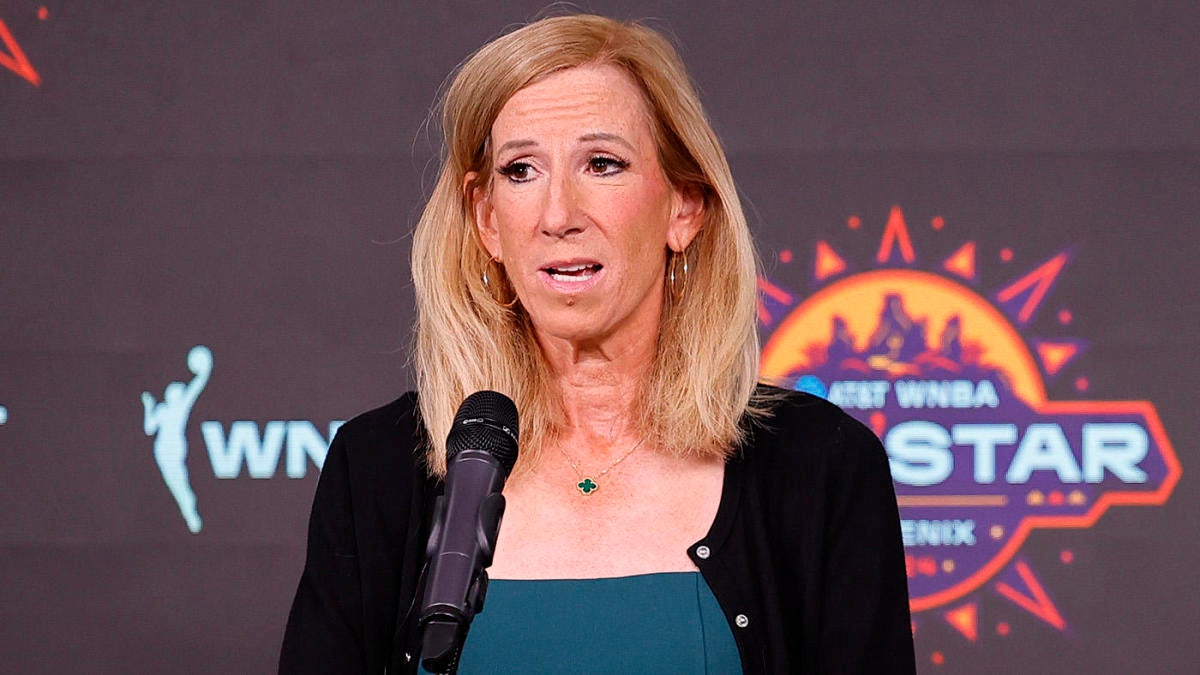
The WNBA, a league enjoying an unprecedented surge in popularity, is now navigating an explosive internal crisis, ignited by a bombshell revelation from one of its star players. Napheesa Collier, co-owner of “Unrivaled” and a formidable presence on the court, has publicly accused Commissioner Cathy Engelbert of making dismissive and inflammatory remarks regarding player complaints about officiating and the league’s overall treatment of its athletes. This exposé has sparked an immediate and furious backlash from across the WNBA, with prominent players like Sophie Cunningham and Lexie Hull rallying behind Collier and demanding accountability from the league’s highest office.
Collier’s “pipe bomb” revelation, delivered with raw emotion, centered on two key points: first, Engelbert allegedly told her that “only losers complain about the refs”—a statement that has infuriated players and fans who have long voiced concerns about inconsistent officiating. Second, Collier claimed Engelbert implied that superstar Caitlin Clark should be “grateful” for the WNBA, suggesting the league was solely responsible for her lucrative sponsorship deals. This comment touched a raw nerve, particularly given Clark’s massive pre-draft brand built through NIL deals and her undeniable impact on the league’s skyrocketing viewership.
The context of Collier’s statement adds another layer of urgency to the crisis. She revealed she tore multiple ligaments in her ankle during Game 3 against Phoenix, a painful reminder of the physical toll WNBA players endure. “We go to battle every day to protect the shield for a league that doesn’t value us, man,” Collier stated, directly challenging the commissioner’s perceived disconnect from player realities.
Engelbert’s response, a carefully worded statement expressing “utmost respect for Nefi Collier and for all the players in the WNBA” and disheartened by how Collier “characterize[d] our conversations,” has done little to quell the outrage. Many are questioning how Engelbert can retain her position, with some pundits suggesting her job is now untenable.
The backlash from other players has been swift and emphatic. Sophie Cunningham, another vocal figure in the league, retweeted Collier’s sentiments and added a searing indictment of Engelbert: “People only know Kathy because of Caitlyn. She’s the most delusional leader our league has seen and shouldn’t [in caps] ever be about our commissioner in the first place.” This comment directly challenges Engelbert’s leadership style, accusing her of attempting to capitalize on Clark’s fame for personal visibility rather than prioritizing the players.
Lexie Hull, the Indiana Fever guard known for her quiet toughness, also publicly supported Collier. “I think I agree with everything she said,” Hull stated, emphasizing that “we’re at a really important time in the league and changes need to be made.” Hull’s endorsement is particularly significant, coming from a player on a team that has been central to the league’s recent surge in popularity and media attention.
This crisis highlights a long-simmering tension within the WNBA. For years, players have advocated for better treatment, improved conditions, and greater respect for their athletic contributions. The league’s dramatic growth, largely fueled by new stars and increased fan engagement, has brought unprecedented attention—and with it, new demands for accountability from its leadership. Critics argue that Engelbert and other league officials, once operating in a less scrutinized environment, are now struggling to adapt to the demands of a rapidly expanding, highly visible enterprise.
The “only losers complain” mentality attributed to Engelbert is seen by many as deeply insulting to a fanbase that is more engaged and critical than ever before. It suggests a dismissal of legitimate concerns, equating constructive criticism with weakness rather than a desire for improvement. Furthermore, the implication that Clark should be grateful to the league for her endorsements fundamentally misunderstands the modern sports landscape, where athletes cultivate massive personal brands independent of, and sometimes even larger than, the leagues they play in.

As the WNBA braces for a potentially explosive Game 5 between the Fever and the Aces, the controversy surrounding Commissioner Engelbert threatens to overshadow the on-court action. This isn’t just about a few disgruntled players; it’s a battle for the soul of a league at a pivotal moment in its history. The unified stand of players like Collier, Cunningham, and Hull signals a clear message: they are no longer willing to accept being undervalued or dismissed. The “enemy of my enemy” dynamic, as one commentator put it, has brought together disparate voices in a powerful, collective demand for change.
The outcome of this confrontation—whether Engelbert retains her position, and how the league addresses these fundamental concerns—will undoubtedly shape the future trajectory of the WNBA. What is clear is that the free pass for dismissive leadership is over. The players, who have tirelessly built this league into what it is today, are now demanding the respect and accountability they have long deserved.
News

I Hid 20 Freezing Bikers From a Blizzard. The Next Morning, I Woke Up to a Roar That Shook My Entire House.
Chapter 1: The Invisible Woman The wind didn’t just blow that night; it screamed. It was a sound that tore through the cracks in the walls and settled deep in your bones. I stood by the kitchen window, watching…

I Fixed A Billionaire’s Broken Prototype With A Wrench. The Next Morning, A Black Hawk Helicopter Landed In My Trailer Park.
Chapter 1: The Ghost in the Machine The copper-colored sun was dying behind the thick clouds, casting long, bruising shadows across Woodbury Meadows. It was the kind of light that made everything look old. The trailer park smelled of…
They Thought She Was Just A Lonely Customer. When The Biker Touched The Waitress, The Navy Commander Broke Her Silence—And His Arm.
Chapter 1: The Ghost in the Corner The morning fog rolled thick off the Atlantic, blanketing the streets of Port Haven in a ghostly shroud. It was the kind of heavy, wet mist that muffled sound and made the…
They Mocked A Paralyzed Veteran And Kicked Her Wheelchair, Unaware They Just Woke Up The Most Dangerous Assassin The Military Ever Created.
CHAPTER 1: THE GHOST OF PINE VALLEY The phantom pain was bad today. It felt like fire was licking at ankles that hadn’t been there for three years. Alex Winters adjusted her position in the wheelchair, her face remaining…

They Thought He Was Just A Frail Old Man Alone At A Truck Stop. But When The Gang Leader Spat In His Coffee, He Didn’t Flinch—He Just Made One Phone Call That Unleashed A Trap 20 Years In The Making.
Chapter 1: The Wolf at the Door The evening sun cast long, amber shadows across the cracked pavement of the Crossroads Truck Stop. It was a place out of time, situated on a lonely stretch of Interstate 40 where…

Navy Admiral Mocked A Single Dad Janitor In Front Of Everyone—Then He Learned The Man’s “Call Sign” And The Whole Base Froze.
Chapter 1: The Ghost of Coronado The morning fog still clung to the coastline of Coronado, a thick gray blanket that muffled the roar of the Pacific Ocean. Inside the primary administrative building of the Naval Base, the silence…
End of content
No more pages to load