In the tense and often contentious relationship between a presidential administration and the press, certain lines have long been understood, if not always respected. But a recent interview in the Oval Office served as a stark and jarring reminder that those old boundaries have been all but erased. In a remarkable exchange with a reporter from a right-wing news outlet, President Trump and his press secretary, Karoline Leavitt, launched a public, on-the-record verbal assault on two of the country’s most prominent television journalists, calling them “stupid” and “nasty.” The comments, while perhaps not surprising given the administration’s history, signal a new level of brazen hostility that has sent shockwaves through the media landscape.
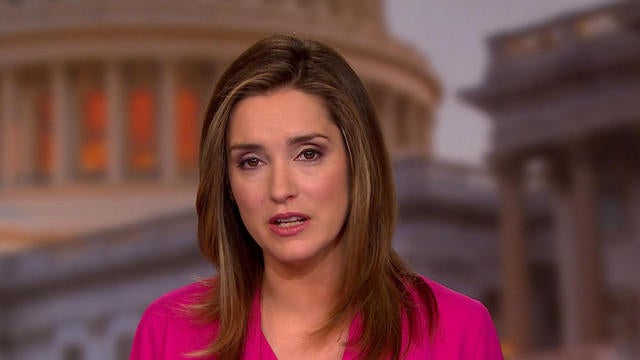
The confrontation unfolded during a Friday interview in the Oval Office with Reagan Reese, a correspondent from the Daily Caller, a news site with a distinctly conservative leaning. The setting itself was a powerful symbol: a president choosing to air his grievances with the mainstream press in a one-on-one with a more sympathetic outlet. The conversation, ostensibly about the administration’s broader relationship with the media, quickly narrowed its focus to CBS News. The president, known for his aversions to certain journalists, took aim at Margaret Brennan, the host of “Face the Nation,” calling her “so bad.” This was the opening Leavitt needed.
Leavitt, who has quickly established a reputation for her fiery and combative press briefings, didn’t hesitate. When asked by the president for her opinion on Brennan, she delivered a stunning, unprecedented blow. “She’s stupid,” Leavitt said, her words ringing with an unvarnished contempt. Then, in a final and defiant act of defiance of traditional decorum, she added, “You can put that on the record.” The statement, coming from a White House press secretary, was a dramatic departure from the norm. The role of the press secretary has historically been to act as a bridge, however strained, between the administration and the media. Leavitt’s comment was less of a bridge and more of a bomb, a deliberate and personal insult designed not just to criticize, but to delegitimize a journalist in front of the public.

Trump then followed up with his own jab, calling Brennan “nasty,” and the two of them seemingly reveled in the moment of open hostility. This isn’t a new approach for either of them, but this was a particularly brazen and direct public attack on a specific individual. It also reflected a long-standing grievance with CBS News, a network the administration has targeted on multiple occasions.
This latest verbal onslaught is deeply rooted in a history of tension that includes a highly contentious lawsuit with CBS News’ parent company, Paramount. The lawsuit was filed after a “60 Minutes” interview with Vice President Kamala Harris, which the administration claimed was deceptively edited to present Harris in a more favorable light. The initial article claimed this suit led to a “$20 billion settlement,” a figure so exaggerated it’s almost unbelievable. The reality, as it has been widely reported, is a still-significant $16 million settlement that Paramount agreed to pay, with the funds allocated to Trump’s presidential library. The settlement, which did not include an apology from CBS, was nevertheless seen by many as a major capitulation by a corporate entity eager to avoid costly, drawn-out litigation and, perhaps, to curry favor with the administration amid a proposed merger. This history of legal action and financial settlements has become a powerful weapon in the administration’s war with the press, turning disagreements over journalistic practices into battles over billions of dollars.
The attacks were not limited to Brennan. The president also took aim at another prominent CBS anchor, Nora O’Donnell, who had recently stepped down from her anchor seat on the “CBS Evening News.” Mocking her salary and her work, Trump suggested that “50% of the women off the street, they’d do just as good” as O’Donnell, a crude and baseless insult. His comments also alluded to O’Donnell’s reported salary cut, which was slashed from a reported $8 million to $3.8 million when she re-signed with the network in 2022. This kind of attack is not just about a single person; it’s about a broader narrative that seeks to portray the media as an out-of-touch, overpaid, and ultimately untrustworthy elite.
The incident is the latest in a multipronged attack on the free press. The administration has frequently used platforms like the Daily Caller to communicate directly with its base, bypassing the mainstream media it has famously labeled the “enemy of the people.” This strategy isn’t just about insults; it’s about a concerted effort to control the flow of information and delegitimize any outlet that offers unfavorable coverage. The administration has filed lawsuits, reshuffled press access at the Pentagon to favor right-leaning outlets, and used its authority to push for investigations into news organizations.
This pattern of behavior, culminating in Leavitt’s on-the-record comment about a major news anchor, has profound implications for journalism. It normalizes personal attacks against reporters, making their jobs more difficult and dangerous. It chips away at the public’s trust in the media, a trust that is already fragile. And it creates a climate of fear and intimidation that can make it harder for journalists to hold the powerful accountable. The sight of a White House press secretary making such a brazen statement, and an administration seeming to revel in it, is not just a passing moment of political theater. It is a defining feature of a new and hostile era in the relationship between the government and the press. It proves that in the modern political landscape, the most powerful words are not always those of policy or diplomacy, but those of unvarnished contempt, delivered with the full authority of the highest office in the land.

News
I Hid 20 Freezing Bikers From a Blizzard. The Next Morning, I Woke Up to a Roar That Shook My Entire House.
Chapter 1: The Invisible Woman The wind didn’t just blow that night; it screamed. It was a sound that tore through the cracks in the walls and settled deep in your bones. I stood by the kitchen window, watching…

I Fixed A Billionaire’s Broken Prototype With A Wrench. The Next Morning, A Black Hawk Helicopter Landed In My Trailer Park.
Chapter 1: The Ghost in the Machine The copper-colored sun was dying behind the thick clouds, casting long, bruising shadows across Woodbury Meadows. It was the kind of light that made everything look old. The trailer park smelled of…
They Thought She Was Just A Lonely Customer. When The Biker Touched The Waitress, The Navy Commander Broke Her Silence—And His Arm.
Chapter 1: The Ghost in the Corner The morning fog rolled thick off the Atlantic, blanketing the streets of Port Haven in a ghostly shroud. It was the kind of heavy, wet mist that muffled sound and made the…
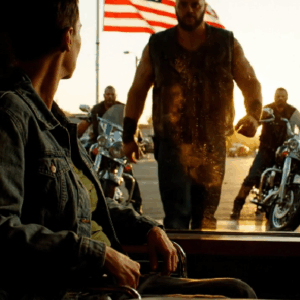
They Mocked A Paralyzed Veteran And Kicked Her Wheelchair, Unaware They Just Woke Up The Most Dangerous Assassin The Military Ever Created.
CHAPTER 1: THE GHOST OF PINE VALLEY The phantom pain was bad today. It felt like fire was licking at ankles that hadn’t been there for three years. Alex Winters adjusted her position in the wheelchair, her face remaining…
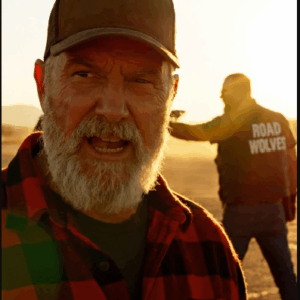
They Thought He Was Just A Frail Old Man Alone At A Truck Stop. But When The Gang Leader Spat In His Coffee, He Didn’t Flinch—He Just Made One Phone Call That Unleashed A Trap 20 Years In The Making.
Chapter 1: The Wolf at the Door The evening sun cast long, amber shadows across the cracked pavement of the Crossroads Truck Stop. It was a place out of time, situated on a lonely stretch of Interstate 40 where…

Navy Admiral Mocked A Single Dad Janitor In Front Of Everyone—Then He Learned The Man’s “Call Sign” And The Whole Base Froze.
Chapter 1: The Ghost of Coronado The morning fog still clung to the coastline of Coronado, a thick gray blanket that muffled the roar of the Pacific Ocean. Inside the primary administrative building of the Naval Base, the silence…
End of content
No more pages to load