In the swirling vortex of online sports commentary, where every play is a meme and every opinion a potential headline, Sophie Cunningham has been caught in a firestorm. But unlike so many athletes who choose silence, Cunningham is fighting fire with fire, or more accurately, with a microphone. On a recent podcast, in a conversation with West Wilson, she not only addressed the mounting drama around the WNBA but also delivered a powerful, unfiltered message directly to her critics. This isn’t just about a basketball player defending herself; it’s about a modern athlete taking control of her own story and challenging the parasitic relationship between public figures and the media that feeds on them.

The central thrust of the controversy began when veteran sports personality Skip Bayless, in his characteristic style, labeled Cunningham a “clout chaser.” It’s a stinging accusation, one that implies a player is using controversy for personal gain rather than for genuine discourse. But Cunningham, with a poise and directness that belies her relative youth, turned the tables on Bayless. She clapped back, a term that feels too small for the weight of her words, suggesting that it was Bayless, not her, who was using her name for clicks. This wasn’t a knee-jerk reaction or a social media rant. It was a calculated, clear-eyed dissection of a dynamic that has come to define modern sports media. The narrative has shifted from celebrating athletic prowess to manufacturing outrage, and Cunningham’s response is a wake-up call to anyone who has passively consumed this content. She is not just playing the game on the court; she’s changing the rules of the game off of it.
Her candor didn’t stop there. Cunningham had a message for the “haters,” a term she used with a certain ironic finality. Her message was simple, direct, and unapologetic: “I don’t care what you think.” In a world where public figures are trained to be diplomatic, to appease, and to project an image of perfection, this statement is a breath of fresh air. It’s a rebellion against the carefully constructed personas that dominate social media feeds. She made it clear that she will continue to be herself, unapologetically, and that if her authentic self offends someone, that’s their problem, not hers. This isn’t just about a WNBA player; it’s a lesson in self-acceptance and resilience. In an era where online criticism can be relentless and vicious, Cunningham’s message is a powerful reminder that the only validation that truly matters is your own.
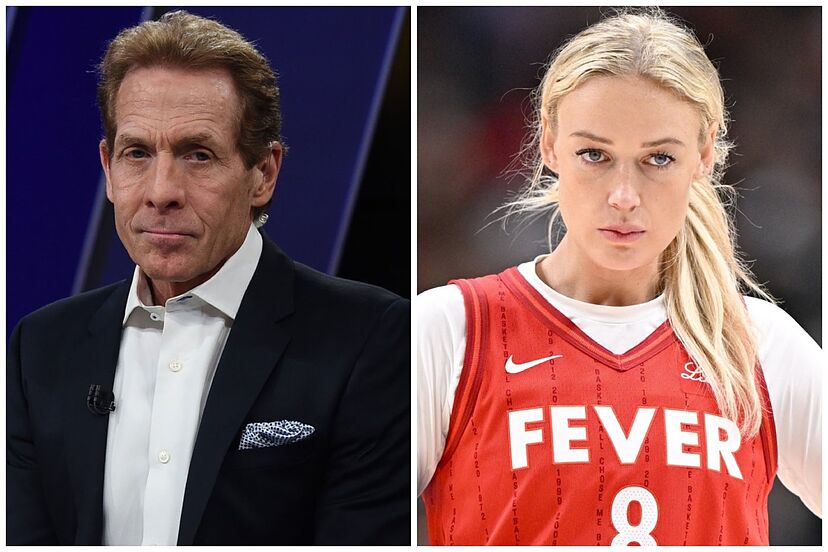
Beyond the personal drama, the conversation with Wilson delved into the very real issue of physicality in the WNBA. The league has come under a microscope, with many fans and analysts debating the level of contact and what constitutes a foul versus a hard-nosed play. Cunningham and Wilson specifically touched on plays involving the Fever, and a controversial moment where Lexie Hull was elbowed in the face. This is where the conversation moved from the personal to the professional, from the online drama to the on-court reality. Cunningham, as an active player, offered a unique perspective that is often missing from the commentary. She isn’t a talking head with a pre-packaged opinion; she is living the experience, feeling the hits, and understanding the fine line between aggressive defense and a dirty play. Her insights give fans a deeper appreciation for the game and the athletes who play it. It’s easy to pass judgment from the comfort of a couch, but it’s an entirely different thing to understand the split-second decisions and physical toll that these athletes endure every single day.
This discussion about physicality is particularly relevant today, as the WNBA’s popularity has skyrocketed. With more eyes on the game than ever before, the debate around how the game is officiated and played is more intense than ever. Cunningham’s voice adds a crucial layer of authenticity to this conversation. She isn’t afraid to call out what she sees, and in doing so, she is helping to shape the narrative of her league. This isn’t just gossip; it’s a necessary dialogue about the state of women’s basketball. She’s providing a human perspective on what it’s like to be on the receiving end of a hard foul, and what it feels like to be judged for how you play. It’s a reminder that behind every player is a person with a story, with feelings, and with a voice that deserves to be heard.
The true genius of Cunningham’s approach is that she isn’t just reacting to the noise; she’s creating a new kind of content. Her podcast is more than a platform for her to vent; it’s a space where she can control the narrative, offer her own perspective, and connect with fans on a deeper level. In a world where traditional media often misrepresents or sensationalizes athletes’ stories, Cunningham is using her own channel to share her truth, unfiltered and unedited. This is a model for a new generation of athletes who are tired of being reduced to soundbites and headlines. They are taking back their power, and in doing so, they are creating a more authentic and engaging relationship with their fans.
Cunningham’s conversation is also a powerful metaphor for the modern human experience. In an age of constant connectivity and relentless judgment, we are all, in a sense, public figures. We all face criticism, both online and off. And we all have to decide how to respond to it. Cunningham’s message—that it’s okay to not care what everyone thinks, to stay true to yourself, and to use your platform for good—is a universal one. It’s a lesson in resilience, in authenticity, and in finding your own voice in a noisy world.
In the end, this conversation between Sophie Cunningham and West Wilson is about so much more than basketball. It’s a snapshot of a moment in time, a reflection of the challenges and opportunities facing modern athletes, and a testament to the power of a single person to control their own narrative. It’s a story of an athlete who is not just playing the game, but also changing it, one powerful, honest, and unforgettable message at a time.