The Cost of Candor: Why WNBA Star Angel Reese Says She’d Rather Pay a Fine Than Talk to Reporters
In the high-stakes, hyper-scrutinized world of professional sports, the line between an athlete’s genuine self and their media persona often collapses under pressure. For Chicago Sky star Angel Reese, that pressure has reached a boiling point. The WNBA’s most polarizing and relentlessly discussed figure has pulled back the curtain on the intense anxiety that comes with her celebrity, confessing she would sometimes “rather take the fine” than face a barrage of reporters.
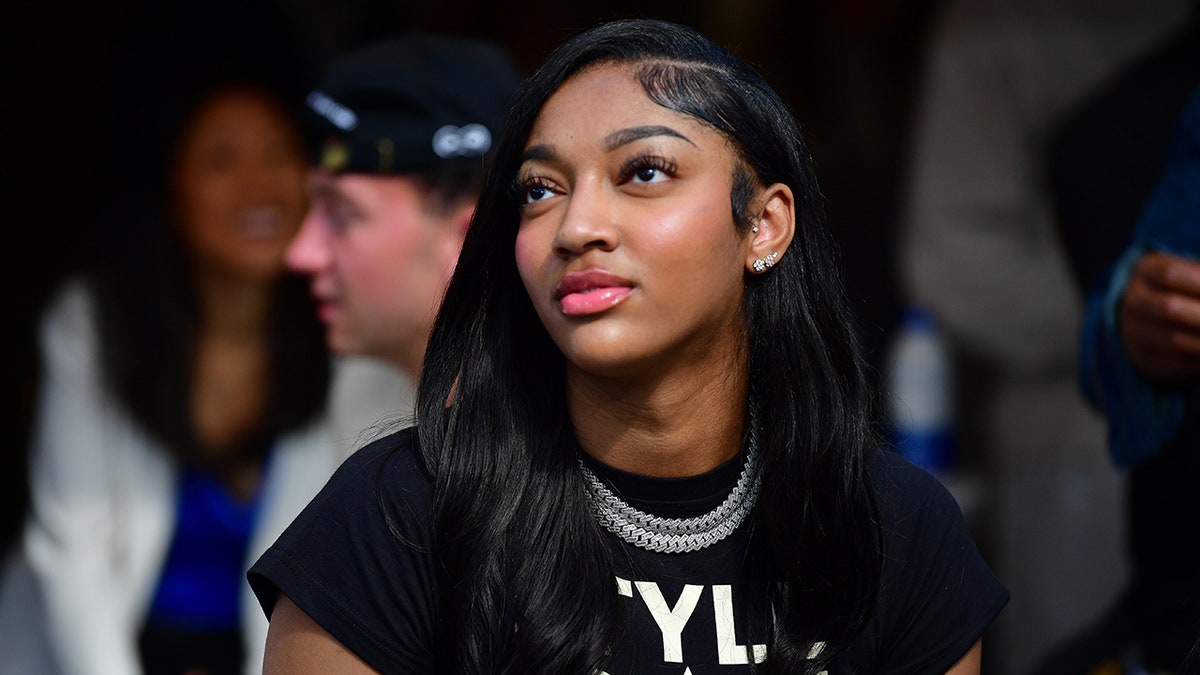
Reese, who has been central to the explosive growth in women’s basketball, revealed her deep-seated distrust of the media during a recent episode of her podcast, “Unapologetically Angel.” Her fear is palpable and born from experience, suggesting a reality where an athlete’s words are a liability, not a form of communication.
“Even before the game, I’m terrified of what the media is about to ask,” Reese admitted. “Because it could be the nicest question, but it’s going to get flipped or put into a different light or a different perspective. It’s like, ‘Are you here intentionally to start a mess, or are you intentionally here to ask a question?'”
This is more than just athlete paranoia; it is a stunning indictment of a media landscape obsessed with conflict. Reese’s claim that she’s at the point of willingly accepting a financial penalty to avoid an interview—a fundamental requirement of her job—speaks volumes about the toll her high-profile status has taken. Her fear is simple and stark: “You could literally post ‘the sky is blue,’ and Angel said, ‘It’s too dark.’ Stuff like that, you know. So, I think, it’s just, for me, the media is really scary.”
The Unapologetic Spark: From Taunt to Target
Reese’s journey to becoming a media lightning rod began in the 2023 NCAA women’s basketball national championship game. Her LSU Tigers defeated Caitlin Clark’s Iowa Hawkeyes, and Reese famously taunted Clark by pointing to her ring finger. That moment instantly cemented her status as the archrival to the biggest name in the sport and simultaneously made her arguably the most controversial figure in women’s basketball. Since then, her every quote, gesture, and move has been amplified, scrutinized, and often weaponized.
This scrutiny is not without recent cause. Towards the end of the 2025 WNBA season, Reese faced immediate backlash for a moment of raw honesty with a Chicago Tribune reporter. Expressing her frustration with the Sky’s last-place 10-34 record, she made a statement that was both passionate and, in the eyes of the team, detrimental.
“I’m not settling for the same s— we did this year,” Reese stated boldly. “We have to get good players. We have to get great players. That’s a non-negotiable for me… I’d like to be here for my career, but if things don’t pan out, obviously I might have to move in a different direction and do what’s best for me.”
Her words were less a malicious attack and more the frustrated, competitive declaration of a star player who expects excellence. But in the media cycle, nuance is a luxury. The fallout was swift: she was suspended for the first half of a game later that week for “statements detrimental to the team.”
The Price of Honesty and a Conflicted Apology
The incident forced Reese into an uncomfortable position. She later apologized to her teammates, claiming her language had been “taken out of context” and insisting she didn’t intentionally mean to “put down my teammates.”
“I just have to be better with my language,” she conceded at a postgame news conference. “Because I know it’s not the message, it’s the messenger. And understanding what I say can be taken any kind of way. So, I just have to really be better and grow from this.”
This statement is the core tragedy of the modern athlete. Reese is fully aware of the power of her voice, but she’s also wrestling with the understanding that her unfiltered honesty—her authentic self—is a liability that could cost her financially and professionally. She has to apologize for the interpretation of her words, not the intent behind them, illustrating precisely the “flipping” of the narrative she fears.
Beyond the Court: Accusations of Racism and Digital Abuse
The media scrutiny has been further complicated by unsettling off-court issues. In May, the WNBA launched an investigation into “hateful” comments allegedly directed at Reese during the Sky’s season opener. While Reese publicly acknowledged the “widespread support” she received from the league and stated that there is “no place in this league for that,” the outcome was contradictory and confusing.
The league concluded the investigation without finding “sufficient evidence to validate the allegations,” an opaque resolution that left the details of the incident a mystery. This official finding stands in stark contrast to the deeply serious claims Reese made just months earlier regarding the dark underbelly of fan culture.
On her podcast, Reese directly accused Caitlin Clark’s fans—Iowa and now Indiana fans—of racism and digitally generated abuse. “I think there’s a lot of racism when it comes to it,” she said, before detailing the profoundly disturbing reality of receiving explicit, AI-generated nude images of herself. “Multiple occasions, people have made AI images of me naked. They have sent it to my family members.”
To have explicit, fabricated images sent to her family members, including uncles, is a level of personal violation that transcends sports rivalry. It exposes a chilling intersection of fame, race, and new technology used for harassment. When combined with the WNBA’s inconclusive investigation into “hateful” comments, it creates a powerful narrative of a star battling not just opponents and reporters, but a toxic, often anonymous, wave of abuse that the league seems unable to fully contain or address.
Angel Reese’s confession that she’d pay a fine to avoid a post-game interview is more than a momentary frustration. It’s a chilling barometer of the immense and uniquely hostile pressure cooker she has been forced to inhabit. The price of her visibility is the constant threat of misrepresentation, professional penalty, and deeply personal, digitally facilitated abuse. She is fighting for excellence on the court, but she is fighting for control of her own narrative—and her own peace of mind—off it.
News

I Hid 20 Freezing Bikers From a Blizzard. The Next Morning, I Woke Up to a Roar That Shook My Entire House.
Chapter 1: The Invisible Woman The wind didn’t just blow that night; it screamed. It was a sound that tore through the cracks in the walls and settled deep in your bones. I stood by the kitchen window, watching…

I Fixed A Billionaire’s Broken Prototype With A Wrench. The Next Morning, A Black Hawk Helicopter Landed In My Trailer Park.
Chapter 1: The Ghost in the Machine The copper-colored sun was dying behind the thick clouds, casting long, bruising shadows across Woodbury Meadows. It was the kind of light that made everything look old. The trailer park smelled of…

They Thought She Was Just A Lonely Customer. When The Biker Touched The Waitress, The Navy Commander Broke Her Silence—And His Arm.
Chapter 1: The Ghost in the Corner The morning fog rolled thick off the Atlantic, blanketing the streets of Port Haven in a ghostly shroud. It was the kind of heavy, wet mist that muffled sound and made the…

They Mocked A Paralyzed Veteran And Kicked Her Wheelchair, Unaware They Just Woke Up The Most Dangerous Assassin The Military Ever Created.
CHAPTER 1: THE GHOST OF PINE VALLEY The phantom pain was bad today. It felt like fire was licking at ankles that hadn’t been there for three years. Alex Winters adjusted her position in the wheelchair, her face remaining…

They Thought He Was Just A Frail Old Man Alone At A Truck Stop. But When The Gang Leader Spat In His Coffee, He Didn’t Flinch—He Just Made One Phone Call That Unleashed A Trap 20 Years In The Making.
Chapter 1: The Wolf at the Door The evening sun cast long, amber shadows across the cracked pavement of the Crossroads Truck Stop. It was a place out of time, situated on a lonely stretch of Interstate 40 where…

Navy Admiral Mocked A Single Dad Janitor In Front Of Everyone—Then He Learned The Man’s “Call Sign” And The Whole Base Froze.
Chapter 1: The Ghost of Coronado The morning fog still clung to the coastline of Coronado, a thick gray blanket that muffled the roar of the Pacific Ocean. Inside the primary administrative building of the Naval Base, the silence…
End of content
No more pages to load