Part 1: The Ghost in the Grease
Chapter 1: The Art of Invisibility
Invisibility is a craft, just like avionics or hydraulics. It requires discipline. It requires the suppression of ego. For eight months, I had perfected the art of being seen but not noticed. I was Specialist Casey Blake, the grease-monkey who kept her head down, fixed the birds, and never, ever talked about the past. To the 160 soldiers at Forward Operating Base Titan, I was just part of the infrastructure—essential, but ignored.
The Syrian heat didn’t feel like the wet, suffocating oppression of the Pensacola summers I grew up with. This was a dry, predatory heat. It sucked the moisture right out of your skin and left you feeling like cured leather. I stood inside the massive maintenance hangar, the smell of JP-8 fuel and hydraulic fluid acting as my perfume. My hands, stained black up to the elbows, were deep inside the access panel of an Apache AH-64E.
I was documenting a routine repair on a swashplate bearing. It was a critical component; if it failed, the rotor blades would stop responding to inputs, and the helicopter would become a falling brick. I treated the metal with a reverence I no longer held for myself.
I loved the machines. At twenty-eight, I understood them better than I understood people. Machines didn’t lie. If a bearing was shot, it ground metal against metal until it seized. It didn’t give you bad intel. It didn’t promise you a target was clear when it was full of families. Machines were honest. People—especially officers with careers to protect—were not.
“Blake,” a voice rasped behind me.
I didn’t jump. My nerves had been burned out three years ago. I finished safety-wiring the bolt, feeling the familiar bite of the wire against my calluses, before I turned.
Chief Warrant Officer Tom Bradley was watching me from his makeshift office, a plywood structure elevated on steel beams that gave him oversight of the entire maintenance operation. He’d been in the Army thirty years, long enough to have eyes that looked like they’d seen the end of the world twice and decided it wasn’t impressive.
“On it, Chief,” I said, wiping my hands on a rag that was already beyond salvation. “Give me twenty minutes to finish the weapons check on Bird Three.”
Bradley descended the metal stairs, his boots hitting the concrete with a slow, heavy rhythm that echoed in the cavernous hangar. He walked over to my workbench and picked up my maintenance log. He scanned the entries, his eyes narrowing behind his reading glasses. He wasn’t looking for mistakes—he knew I didn’t make them. He was looking for something else. A slip. A clue.
“Your documentation is exceptional,” he observed, tapping the paper with a grease-stained finger. “Most techs treat these logs like administrative burdens. They scribble ‘checked’ and move on. You write them like someone who understands that if you miss a comma, a pilot dies.”
I kept my focus on the Apache’s 30mm chain gun, checking the feed chute. “Details keep them alive, Chief. That matters more than convenience.”
“True enough.” Bradley dropped the log back onto the workbench. The sound was sharp in the quiet afternoon. “Been meaning to ask. You’ve been here eight months. Exemplary work. Zero disciplinary issues. Respected by everyone in the hangar. But I’ve also noticed you never attend the flight line briefings.”
I felt a cold prickle at the base of my neck. “I’m maintenance, Chief. Flight briefs are for pilots.”
“You never watch the Apaches take off,” he continued, his voice dropping to a low rumble, like distant thunder. “Most maintenance techs love seeing their work in action. They stand by the tarmac and cheer. You? You disappear into the back of the hangar every time a turbine spools up. You avoid it deliberately.”
I stiffened, my hand tightening on the wrench. “I see them when they come back, Chief. That’s when my work matters most. Finding problems before they become catastrophes.”
Bradley studied me for a long moment. Decades of experience reading soldiers were evident in his assessment. He was peeling back my layers, and I didn’t like it.
“Fair answer,” he said finally. “But not a complete one. You know these birds better than some pilots who’ve been flying them for years. I’ve watched you troubleshoot avionics glitches that stump technicians with twice your time in service. Makes a man wonder about your background.”
I turned to face him, forcing a mask of boredom onto my face. “My background is maintenance specialist, Chief. That’s what my orders say. That’s what I do every day.”
“Your orders say that? Sure.” Bradley’s tone suggested he knew more than he was revealing. “But orders don’t always tell the whole story, do they? Sometimes orders are just paper covering up a hole in the ground.”
He knew. Or at least, he strongly suspected. But I had built a fortress around my past, and I wasn’t going to lower the drawbridge for a curious Warrant Officer.
Before Casey could formulate a response that maintained her carefully constructed boundaries, Sergeant Dylan Reed appeared in the hangar entrance. Reed was infantry, twenty-nine, compact and wiry with the kind of endurance that came from years of foot patrols in hostile territory. He was the closest thing I had to a friend at Titan.
“Blake, you got a minute?” Reed asked, glancing at Bradley with the deference junior enlisted showed senior NCOs. “Need your brain on something mechanical.”
Bradley nodded permission, returning to his office, but his eyes lingered on me. I grabbed my tool bag and followed Reed outside, grateful for the escape.
Chapter 2: The Sky is Empty
The morning sun hit like a physical assault. It was barely 0800, but the heat waves were already shimmering off the tarmac. We walked toward the motor pool where Reed’s Humvee sat with its hood open, steam rising like a surrender flag.
“Cooling system’s been acting up for three days,” Reed explained, kicking the tire in frustration. “Motor pool keeps saying they’ll get to it, but we’ve got a patrol in two hours. I don’t trust this beast to make it ten clicks without dying.”
I set down my bag and leaned into the engine bay. The smell of hot coolant was overpowering. I began my diagnostic assessment with the systematic approach that defined my life now. Check fluids. Check hoses. Check pressure.
“Water pump bearing is failing,” I said after five minutes. “Hear that grinding? Metal on metal. You drive this, it seizes, belt snaps, engine cooks. You’re stranded in the kill zone.”
Reed swore quietly. “How long to fix?”
“Three hours if we have parts. Six if I have to improvise.” I wiped my hands. “You need a different vehicle, Dylan.”
“There are no other vehicles,” Reed said, his voice tight. “Everything else is assigned or broken. If we don’t patrol, there’s a gap in the security coverage. The enemy watches, Blake. They know our schedule. If we miss a beat, they’ll exploit it.”
He was right. We were under-manned and under-equipped. Titan was a desolate outpost guarding a strategic nothingness, but to the enemy, we were a target.
“Talk to your Captain,” I advised. “I’ll jury-rig a fix, but it’s a gamble.”
“You’re good at this,” Reed said, watching me work. “Most maintenance folks see their job as fixing things. You see it as keeping soldiers alive. You understand the tactical side.”
“That’s the job, Reed.”
“Yeah, but you understand it like someone who’s been on the other side. Relying on the gear.”
I froze. First Bradley, now Reed. My camouflage was slipping. “I just read the manuals, Dylan.”
I finished the repair, but the unease stayed with me. That evening, as the sun painted the desert in shades of bruised purple and blood orange, I did my ritual. I waited until the pilots—Donovan, Morrison, Harper—had finished their debriefs and left. When the birds sat quiet and cold, I walked the flight line.
I approached Bird Three. She was beautiful. Deadly. Sleek. I ran my hand along the fuselage, feeling the rivets, the cold aluminum skin. These machines had been my life. I had been a Captain. I had been on the fast track to command.
Then came Raqqa. The bad intel. The building that was supposed to be an HQ. The fireball. The small bodies pulled from the rubble. The court-martial that cleared me legally but condemned me morally.
I wasn’t a pilot anymore. I was a ghost haunting the machines I used to master.
I slept fitfully that night, chasing demons through my dreams. I woke at 0500, unable to breathe, and went to the hangar early.
The attack started at 0530.
There was no warning siren. Just the ground heaving upward as if the earth itself had been punched. The concussion knocked me off my feet, slamming me into a tool cabinet.
BOOM. BOOM. CRACK.
Mortars. Heavy ones. 120mm.
“Incoming! Incoming!” The PA system screamed, barely audible over the chaotic symphony of destruction.
I scrambled up, coughing, my ears ringing. Dust filled the air, thick and choking. I ran toward the hangar door, looking out at the flight line.
My heart stopped.
The enemy hadn’t just fired randomly. They had targeted the aircraft.
Bird One was a fireball. I could see the helmet of Chief Warrant Officer Donovan slumped against the canopy glass, flames licking at the cockpit. He never even got the engine started.
Bird Two had taken a direct hit to the rotor mast. It was lying on its side, thrashing like a dying animal as the engine ran away, tearing itself apart. I saw bodies on the tarmac—crew chiefs, pilots.
“Medical! We need medical on the flight line!”
I didn’t run to the bunkers. I ran to the Command Center. It was instinct. Officer instinct.
The Command Center was chaos. Dust fell from the ceiling with every new impact. General Michael Ross stood by the radio, his face a mask of horror and fury.
“Status!” Ross barked.
“Sir, North perimeter is breached!” The radio operator was shouting to be heard. “They have technicals, heavy armor support! It’s a coordinated assault, General! Estimates of 400 to 600 enemy combatants!”
We had 160 soldiers. We were outnumbered four to one. And now, we had no air support.
“Get the birds up!” Ross yelled. “I need air support to break that armor or we are dead in twenty minutes!”
“Sir…” The Ops Officer, Major Foster, looked pale. “Donovan is KIA. Morrison is KIA. Harper is critical in the medical tent. We have no pilots. Zero.”
The room went silent. The only sound was the boom of mortars walking closer and closer to our position.
General Ross gripped the radio handset so hard his knuckles turned white. He looked at the map, then at his staff. He knew the math. Without Apaches to stop the armored technicals, the infantry would be overrun.
He keyed the base-wide channel. His voice cracked through the static, raw and desperate.
“Any Apache pilots here? Anyone? Is there anyone on this base certified to fly?”
I stood in the doorway. I was covered in grease. I had a rag in my back pocket. I was invisible.
I looked at the map. I looked at the terrified faces of the young privates. I thought of Raqqa. I thought of the promise I made to never fly again.
Then I thought of Dylan Reed on the North wall, facing a tank with a rifle.
The nightmare that grounded me was terrifying. But the nightmare of watching my friends die while I did nothing was worse.
I stepped into the room.
“Sir.”
General Ross turned. He looked at me—a dirty, disheveled mechanic. “Who are you?”
“Specialist Casey Blake.” I took a breath. “Formerly Captain Blake, 227th Aviation.”
The room went deadly quiet.
“I’m rated,” I said, my voice gaining strength. “I have 3,000 hours. I can fly.”
Ross didn’t hesitate. He didn’t ask for my ID. He didn’t check my file. He saw the way I stood. He saw the pilot in my eyes.
“Bird Three,” he said. “Is it flyable?”
“It’s damaged,” I said. “Hydraulics are leaking. Avionics are glitchy.”
“Can it fly?” Ross demanded.
I looked him in the eye.
“I can make it fly.”
“Then get in the air, Blake. Save this base.”
I turned and ran back into the inferno. Redemption wasn’t a soft light; it was a burning helicopter and a suicide mission. And I was finally ready to take it.
Part 2: The Fire and the Flight
Chapter 3: The Resurrection of Bird Three
The run to the flight line felt like a sprint through hell. The air was thick with the copper taste of blood and the acrid stench of burning jet fuel. Mortar rounds were still walking their way toward the hangars, a relentless drumbeat of destruction that shook the fillings in my teeth.
I reached Bird Three. She was an Apache Guardian, a predator made of aluminum and composite, but right now she looked like a victim. Shrapnel had shredded the cowling on the left engine. Hydraulic fluid was weeping from a line near the swashplate, pooling dark and slick on the concrete.
“Blake! What the hell are you doing?”
Specialist Eric Lawson, a twenty-four-year-old kid with grease on his face and terror in his eyes, was crouching behind the landing gear. He’d been my shadow for six months, learning the trade.
“Pre-flight,” I barked, grabbing the handhold and swinging up onto the wing stub. “Get the chocks pulled. I need an external power unit, now!”
“Are you crazy?” Lawson screamed over the noise of a nearby explosion. “This bird isn’t flight-ready! The secondary hydraulic system is compromised! You take this up, you’re fighting the stick the whole way. If the primary goes, you’re a lawn dart!”
“I know the systems, Eric!” I opened the cockpit door, the smell of cooked electronics hitting me. “Just pull the damn chocks! That’s a direct order!”
“You’re a specialist! You don’t give orders!”
“I’m a Captain!” I roared back, the command voice I thought I’d lost three years ago cutting through the chaos. “And right now, I’m the only thing standing between you and a shallow grave. Move!”
Lawson froze, stunned by the transformation. The quiet, invisible mechanic was gone. In her place was someone terrifyingly competent. He nodded once and scrambled to the nose gear.
I slid into the seat.
It was strange. For three years, I had dreaded this moment. I had nightmares about being back in this chair, surrounded by the glowing screens, the endless switches, the power. But now that I was here, my body took over. Muscle memory, etched into my nervous system by three thousand flight hours, overrode the fear.
My hands flew across the panels. Battery on. APU start. The high-pitched whine of the Auxiliary Power Unit began to spool up, a defiant scream against the booming mortars.
“Blake!”
I looked down. Colonel Steven Hunt was sprinting toward the aircraft, his face flushed with a mix of anger and panic. Hunt was the Executive Officer, a political climber who cared more about metrics than men. He was also the man who had processed my grounding paperwork three years ago.
He grabbed the step, trying to climb up. “Get out of that cockpit! That is a direct order! You are grounded, Specialist! You are not authorized for flight operations!”
I ignored him, initiating the engine start sequence. The rotors began to turn, slowly at first, then gathering speed with a rhythmic whump-whump-whump that I felt in my chest.
“Did you hear me?” Hunt was screaming now, his hand reaching for the door handle. “You killed civilians in Raqqa! You have catastrophic judgment! I will not let you turn this base into another one of your disasters!”
“Colonel!”
Chief Bradley appeared from the smoke like an avenging angel. He held his M4 carbine across his chest, not aiming it at Hunt, but holding it with a grim readiness that suggested he wouldn’t hesitate if he had to.
“Step away from the aircraft, sir,” Bradley shouted over the rotor wash.
“She’s violating protocol, Chief! She’s a liability!”
“She’s our only hope, sir!” Bradley stepped between Hunt and the cockpit. “General Ross gave the order. Unless you want to climb up there and fly it yourself, I suggest you get to the bunker.”
Hunt looked at Bradley, then up at me. His eyes were wide with fear—not just of the enemy, but of me. Of what I represented. He knew something. The realization hit me even as I engaged the rotors to full speed. Hunt had been in Intelligence before he was an XO. He had been part of the chain that fed me the target coordinates in Raqqa.
He wasn’t trying to protect the base. He was trying to protect his career. If I flew, if I saved the day, people would ask questions about why I was grounded in the first place.
“This isn’t over, Blake!” Hunt yelled, retreating as the rotor wash became violent.
“Clear prop!” I yelled, though no one could hear me.
I pulled on my helmet, the one I’d kept hidden in the bottom of my locker for eight hundred days. I plugged into the ICS. The silence of the noise-canceling headset was sudden and absolute, replaced by the static of the radio.
“Titan Command, this is Apache One-Three,” I said. My call sign. My old call sign. “Pre-flight complete. Systems are degraded but functional. Requesting immediate takeoff.”
There was a pause. Then General Ross’s voice, tight and controlled. “One-Three, you are cleared. The North wall is failing. Enemy armor is two hundred meters from the wire. Engage at will.”
I gripped the collective. My hand was trembling. Just a little.
“Understood,” I whispered to myself. “Don’t think. Just fly.”
I pulled the collective up.
The Apache shuddered. The damaged hydraulics protested, sending a vibration up my arm that rattled my teeth. She didn’t want to fly. She was hurt.
“Come on, girl,” I coaxed her. “Just one more fight. Hold it together for me.”
The wheels left the tarmac. The ground fell away.
I was airborne.
Chapter 4: Ghost in the Machine
The sensation of flight was intoxicating and terrifying.
The vibration from the failing hydraulic pump was worse than I expected. The cyclic stick, usually sensitive enough to respond to a heartbeat, felt sluggish and heavy. It was like wrestling a bear. Every maneuver required physical force, fighting the machine that was supposed to be an extension of my will.
I banked hard to the left, the G-force pushing me into the seat. Below me, the base looked like a toy set being kicked over by an angry child. Smoke plumes rose from the barracks. The motor pool was burning.
“One-Three, we have technicals breaching Sector Four!” It was Sergeant Reed’s voice on the radio, breathless and jagged. “They’re suppressing us! We can’t get our heads up!”
I looked at the display. The Targeting Acquisition Designation Sight (TADS) flickered, then stabilized. I slewed the sensors toward the North wall.
There they were.
Six pickup trucks—technicals—mounted with DShK heavy machine guns. They were advancing in a wedge formation, using the smoke for cover. Behind them, I saw something worse. Soviet-era BMPs. Armored personnel carriers. If they reached the breach, their 30mm cannons would shred our infantry like paper.
I lined up the lead vehicle. The crosshairs settled on the engine block.
My finger hovered over the trigger.
And then, I froze.
Suddenly, the desert below wasn’t Syria. It was Raqqa. The technical wasn’t a truck; it was a minivan. The building behind it wasn’t a bunker; it was an apartment complex. I heard the phantom screams of children. Intelligence said it was clear. Intelligence lied.
“Blake! Do you see them?” Reed screamed. “They’re crossing the wire!”
My breath caught in my throat. My vision tunneled. The PTSD wasn’t a memory; it was a physical paralysis. My brain was screaming STOP. You kill innocent people. You are a monster. Don’t shoot.
“One-Three, engage! Engage!”
The lead technical opened fire on Reed’s position. I saw the concrete chips flying as the heavy rounds impacted the wall. I saw a soldier go down, his leg misty red spray.
That snapped me back.
This wasn’t Raqqa. These weren’t civilians. These were combatants killing my friends.
“Sorry,” I whispered to the ghosts.
I squeezed the trigger.
Thump-thump-thump.
The Apache’s 30mm chain gun roared to life beneath me. The rounds traveled faster than sound. The lead technical evaporated. One second it was a truck; the next it was a twisted skeleton of burning metal.
I didn’t stop. I shifted aim to the second truck. Thump-thump-thump. The fuel tank ignited, sending a pillar of fire into the sky.
“Good effect on target!” Reed yelled, his voice cracking with relief. “Pour it on, Casey! Pour it on!”
I banked right, circling the perimeter. The BMPs were turning their turrets toward me now. They knew the predator had arrived.
Warning lights flashed on my console. HYD PRESS LOW. The primary system was losing pressure. The vibration in the stick increased, shaking my entire arm. I had to compensate manually, predicting the aircraft’s sluggishness. It was like driving a car with a flat tire on black ice at a hundred miles an hour.
“Targeting the armor,” I broadcasted. “Selecting Hellfires.”
I switched weapon systems. I had four AGM-114 Hellfire missiles. I locked onto the lead BMP.
Laser designated.
“Rifle,” I said calmly.
The missile left the rail with a roar, a streak of white smoke painting the sky. Three seconds later, the BMP vanished in a cloud of dust and fire. The turret flew fifty feet into the air.
The remaining enemy forces panicked. They hadn’t expected air support. They thought they were slaughtering helpless infantry. Now, the sky was falling on them.
I was doing it. I was flying. I was fighting.
But the enemy wasn’t a ragtag militia. As I pulled out of my dive, tracer fire erupted from a ridge line a kilometer away. Green streaks of light arced toward me, dangerously close.
“One-Three, taking anti-aircraft fire from the East ridge!” I called out, jinking the helicopter violently. The sudden movement made the hydraulic system scream.
“Blake, pull back!” General Ross ordered. “Don’t push that bird too hard!”
“If I pull back, they regroup!” I argued, sweat stinging my eyes. “I have to suppress that ridge!”
I swung the nose around, ignoring the screaming alarms. I wasn’t just fighting the enemy; I was fighting the helicopter, and I was fighting the panic in my own head.
Then, a voice cut through the radio static. It wasn’t Ross. It wasn’t Reed.
It was a voice on the international emergency frequency. Calm. Cultured. Chilling.
“American pilot flying the Apache,” the voice said. “I see you have returned to the sky.”
I froze again. The voice was familiar. Not from memory, but from the nightmares.
“This is Commander Omar Azizi,” the voice continued. “Do you remember Raqqa, Captain Blake? Do you remember the building? My wife and daughters were inside.”
My blood ran cold.
Azizi. The warlord. The man whose family had died in the strike that ended my career. He wasn’t just attacking a base. He was hunting me.
“I know you are flying,” Azizi said, his voice dripping with venom. “I have waited three years for this. Today, you do not land. Today, you die.”
The cockpit suddenly felt very small, and very lonely.
Chapter 5: The Voice from the Ground
The words hung in the air, heavier than the G-forces pressing me into the seat. My wife and daughters were inside.
“Don’t listen to him, Blake,” General Ross’s voice cut in, sharp and authoritative. “It’s psychological warfare. He’s trying to get in your head. Maintain fire discipline.”
But it was too late. He was already in my head. He had been there for three years.
“Commander Azizi,” I keyed the mic, my voice trembling despite my best efforts to sound detached. “This is a military frequency. Cease transmission.”
“No,” Azizi replied, his tone conversational, as if we weren’t killing each other. “We need to talk about justice, Captain. You destroyed my life based on a lie. You dropped a bomb on a house full of women and children because your intelligence officer told you it was a command center. Did you even question the order?”
My hand slipped on the collective. The Apache dipped, and a stream of heavy machine-gun fire whizzed past the canopy, cracking the Plexiglas near my shoulder.
“Focus, Casey!” I screamed at myself.
“I acted on confirmed intelligence,” I said, banking hard to avoid another volley.
“Confirmed by whom?” Azizi laughed, a dry, humorless sound. “By the man who is now your Executive Officer? Colonel Hunt? Did he tell you that he ignored three separate reports that civilians were in the area? Did he tell you he needed a ‘win’ for his promotion packet?”
The world tilted.
Colonel Hunt. The man who tried to stop me on the runway. The man who had been so desperate to keep me grounded.
He knew.
Hunt hadn’t just made a mistake. He had buried the evidence. And he had used me as the scapegoat to cover his tracks. He grounded me not to punish me, but to silence me. As long as I was a disgraced mechanic, no one would look at the mission files again. If I became a hero, the files would be reopened.
“He’s lying,” I whispered, but deep down, I knew he wasn’t. It explained everything. Hunt’s animosity. His panic on the tarmac.
“I am withdrawing my heavy armor,” Azizi announced. “I am pulling back my infantry.”
I frowned, looking at the sensor screen. Sure enough, the BMPs were reversing. The infantry was seeking cover.
“Why?” I asked.
“Because I have a proposition,” Azizi said. “I do not want your base. I do not care about your flag. I want you.”
The battlefield went eerily quiet. The mortars stopped. The machine guns fell silent.
“Here is the deal,” Azizi continued. “You land your helicopter in the open desert, two kilometers east. You surrender to me. You face justice for what you did to my family. If you do this, my forces will withdraw completely. Your 160 soldiers will live.”
I hovered the Apache, the damaged hydraulics whining like a dying dog.
“And if I refuse?”
“Then I will order a general assault,” Azizi said. “I have 600 men. I have reserves I haven’t shown you. I will overrun your perimeter. I will kill every man and woman on that base. And I will make sure you watch them die before I finish you.”
He paused.
“One life for one hundred and sixty. It is a mathematical equation, Captain. You like math, don’t you? You calculated the trajectory of the bomb that killed my children perfectly.”
Chapter 6: The Impossible Choice
“Blake, this is Ross. Do not engage in this negotiation. It’s a trap. He’ll kill you and then attack us anyway.”
“Sir,” I said, my voice sounding hollow in my own ears. “Does he have the numbers? Can he overrun us?”
There was a silence on the line. A long, telling silence.
“Intelligence estimates… yes,” Ross admitted quietly. “If he commits everything, we can’t hold the perimeter indefinitely. Not with our casualties.”
My heart hammered against my ribs.
One life. Mine.
I looked down at the base. I saw the maintenance hangar where I had hidden for eight months. I saw the bunkers where Reed and Lawson and Martinez were huddling. They were good people. They had families. They hadn’t killed children in Raqqa.
I had.
Maybe this was it. Maybe this was the bill coming due. Karma doesn’t miss; it just takes its time.
“I’m losing hydraulic pressure in the primary,” I said, watching the gauge drop into the red zone. “I have maybe ten minutes of flight time before the controls lock up completely. If I’m going to do something, I have to do it now.”
“Casey, don’t you do it,” Reed’s voice broke in. “Don’t you dare surrender to that butcher. We fight! We fight together!”
“He’s not a butcher, Dylan,” I said softly. “He’s a father. A father I broke.”
I keyed the international frequency.
“Azizi. This is Blake.”
“I am listening.”
“You want justice? You want someone to pay for Raqqa?”
“I want balance.”
“If I land,” I said, tears blurring my vision, “How do I know you’ll stand down?”
” You don’t,” Azizi said. “But you know what happens if you don’t.”
I closed my eyes. I pictured the faces of the soldiers below. Then I pictured Hunt, the coward who had set this all in motion.
“Sir,” I said to General Ross. “I need you to do something for me.”
“What is it, Blake?”
“Arrest Colonel Hunt. Right now. Get his files. Don’t let him walk away from this.”
“I… I will look into it. You have my word.”
“Good.”
I took a deep breath. The smell of hydraulic fluid was overwhelming now. The stick was shaking so hard my hand was numb.
“Azizi,” I said. “I’m not landing.”
“Then you choose death for everyone.”
“No,” I said, my voice hardening into steel. “I choose to finish the mission. You want me? Come and get me. But I’m not dying on my knees. I’m dying in the sky.”
“So be it.”
“All stations,” I yelled over the command net. “Enemy command post is mobile! Azizi is coordinating from a vehicle! If we cut off the head, the body dies. I need a fix on his transmission!”
“Triangulating!” It was the Comms officer. “Signal is strong… He’s close! He’s in the canyon, Sector Seven! He’s watching the battle personally!”
Sector Seven. The Devil’s Throat. A narrow canyon two kilometers out.
“I’m going in,” I said.
“Blake, that canyon is a kill box!” Ross shouted. “It’s lined with RPGs! And with your hydraulics failing…”
“It’s the only way, General. If I kill him, they break. If I don’t, we die.”
I pushed the collective down. The Apache dropped like a stone, accelerating toward the canyon entrance.
The vibration became violent. The warning master alarm screamed in my ear. HYDRAULIC FAILURE PREDICTED. LAND IMMEDIATELY.
I silenced the alarm.
“Not yet,” I gritted out. “Not yet.”
I dove into the canyon, the rock walls blurring past me at 140 knots. I was flying a broken bird into a trap, hunting a man who wanted me dead, to save a base that had forgotten I existed.
This wasn’t maintenance. This wasn’t hiding.
This was redemption. And it was going to hurt.
News
I Hid 20 Freezing Bikers From a Blizzard. The Next Morning, I Woke Up to a Roar That Shook My Entire House.
Chapter 1: The Invisible Woman The wind didn’t just blow that night; it screamed. It was a sound that tore through the cracks in the walls and settled deep in your bones. I stood by the kitchen window, watching…
I Fixed A Billionaire’s Broken Prototype With A Wrench. The Next Morning, A Black Hawk Helicopter Landed In My Trailer Park.
Chapter 1: The Ghost in the Machine The copper-colored sun was dying behind the thick clouds, casting long, bruising shadows across Woodbury Meadows. It was the kind of light that made everything look old. The trailer park smelled of…
They Thought She Was Just A Lonely Customer. When The Biker Touched The Waitress, The Navy Commander Broke Her Silence—And His Arm.
Chapter 1: The Ghost in the Corner The morning fog rolled thick off the Atlantic, blanketing the streets of Port Haven in a ghostly shroud. It was the kind of heavy, wet mist that muffled sound and made the…
They Mocked A Paralyzed Veteran And Kicked Her Wheelchair, Unaware They Just Woke Up The Most Dangerous Assassin The Military Ever Created.
CHAPTER 1: THE GHOST OF PINE VALLEY The phantom pain was bad today. It felt like fire was licking at ankles that hadn’t been there for three years. Alex Winters adjusted her position in the wheelchair, her face remaining…
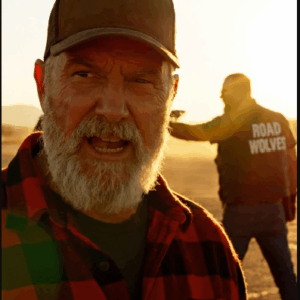
They Thought He Was Just A Frail Old Man Alone At A Truck Stop. But When The Gang Leader Spat In His Coffee, He Didn’t Flinch—He Just Made One Phone Call That Unleashed A Trap 20 Years In The Making.
Chapter 1: The Wolf at the Door The evening sun cast long, amber shadows across the cracked pavement of the Crossroads Truck Stop. It was a place out of time, situated on a lonely stretch of Interstate 40 where…

Navy Admiral Mocked A Single Dad Janitor In Front Of Everyone—Then He Learned The Man’s “Call Sign” And The Whole Base Froze.
Chapter 1: The Ghost of Coronado The morning fog still clung to the coastline of Coronado, a thick gray blanket that muffled the roar of the Pacific Ocean. Inside the primary administrative building of the Naval Base, the silence…
End of content
No more pages to load