PART 1: THE GHOST IN THE MACHINE
CHAPTER 1: A Message Carved in Skin
The sun rose over Naval Station Norfolk like a spotlight, hard and merciless. It didn’t bring warmth; it brought exposure. It lit up the steel-gray flight deck, exposing every tension line carved into the metal and every crack in my composure.
My name is Officer Elena Ward, and to the casual observer, I looked like any other hardened Navy officer. My posture was rigid, my stride even, my expression locked behind a mask of indifference. But if you looked closer—really looked—you would see the vibration beneath my skin.
My shoulders were pulled too tight, like a bowstring about to snap. My breathing was too controlled, a manual rhythm I had to force my lungs to follow. Exhaustion clung to my movements like invisible lead weights. It had been three days since I last slept properly. Maybe four. Time had become a blurred loop of caffeine, adrenaline, and the ceiling of my quarters staring back at me in the dark.
But fatigue was a luxury I couldn’t afford. Not today.
As I marched across the deck, the usual morning banter of the crew died out. It happened in a wave, rippling outward from my path. Sailors who had been joking about their weekend leave stiffened, lowering their voices or suddenly finding a very interesting spot of rust to scrub. Their eyes followed me, tracking me like I was a storm cloud rolling in against the wind.
“That’s her,” a whisper drifted from behind a crate of loading gear. “From the Gulf Op. You know the mission.”
“Did you see the reports? Half of it was redacted.”
“Why is she meeting the Admiral so early? And looking like that?”
“Shut up before she hears you.”
The words stabbed the air like needles, but I didn’t flinch. Gossip was nothing. Rumors were smoke. Compared to the truth I was carrying—literally carrying on my body—their whispers were feathers against steel.
Ahead of me stood the man who held the fate of this fleet in his hands. Admiral Reev Dalton.
He belonged on a recruitment poster. Tall, composed, with silver hair that caught the sunlight and an aura of authority that hit you from twenty feet away. He didn’t just command respect; he generated it like a force field. Officers straightened their spines when he walked past. New recruits whispered his name like it was a legend from the history books.
He was the kind of man the Navy carved statues of. Unshakable. Unbreakable.
But as I approached him, the statue cracked.
It was subtle. A slight tightening of his jaw. A flicker of concern in his slate-gray eyes. He felt the gravity of what was coming before I even opened my mouth.
“Officer Ward,” he said as I reached him. His voice was low, rough like gravel dragged across a steel hull.
“Sir,” I replied, snapping to attention. My salute was crisp, but my hand trembled on the way down.
“Walk with me.”
It wasn’t a request. We began to walk toward the far edge of the deck, away from the prying ears of the deckhands and the roar of the fuel pumps. Our steps were swallowed by the crashing of the ocean below and the metallic clank of distant machinery. Overhead, a pair of F-18s shot into the sky with a teeth-rattling roar, but neither of us looked up. The world went on, oblivious to the bomb I was about to drop.
My pulse was hammering in my ears, drowning out the ocean. Every step brought me closer to a moment I wasn’t sure I could survive.
Finally, the Admiral halted near the overlook, where the horizon stretched endless and blue. He turned, his back to the sea, his eyes settling on me with heavy expectation.
“You requested this meeting, Elena. You said it was urgent.”
“Yes, sir.”
“And you insisted on Level Black confidentiality. No aides. No recordings.”
I swallowed, my throat clicking dryly. “Yes, sir.”
“This is the point of no return, Ward,” he said softly, his eyes searching my face. “Start talking. Tell me what’s going on.”
I tried to speak. I tried to formulate the sentence I had rehearsed in the mirror a hundred times. Admiral, we have a problem. Admiral, the intelligence was wrong.
But words weren’t enough. Not for this.
My hands twitched at my sides. I hadn’t planned on showing him like this, out in the open air where the salt spray bit and the sun exposed every flaw. But fate wasn’t something I bargained with anymore.
I reached down to the hem of my shirt.
The Admiral’s brow furrowed deep. “Elena? What are you—”
My fingers tightened around the fabric. For a heartbeat, I hesitated. Shame, fear, and trauma fought a war in my mind. But then, the image of him—the man who did this—flashed in my brain.
I lifted the shirt.
The navy-blue fabric rose, exposing my midsection. The cold ocean wind hit my skin, goosebumps rising instantly.
The Admiral froze. His breath caught mid-inhale with a sharp hiss.
The scars weren’t random. They weren’t the messy, chaotic burns of an IED or the jagged tear of shrapnel.
They ran in brutal, deliberate stripes across my ribs. Symmetrical. Deep. Carved with a scalpel’s precision. There were twelve of them. Six on the left. Six on the right. Tally marks.
It looked like someone had taken their time. It looked like an artist signing their work.
Admiral Dalton stepped back, his boot scuffing the non-slip deck. Horror slowly overtook his discipline.
“Ward… My God,” his voice cracked, just barely, but enough to make my world shift. “What happened to you?”
I lowered the shirt, tucking it back in with trembling fingers. The fabric snapped in the wind. I lifted my eyes to his, and in that moment, I let the soldier mask fall away.
“Sir, I didn’t get these in the Gulf,” I said. My voice wasn’t shaky; it was dead. It was the voice of a woman who had already died once.
The Admiral blinked, confusion sliding into dread. “Then where? Who did this?”
“Not who, sir. But who is back.”
I took a step closer, invading his personal space, lowering my voice to a whisper that carried more weight than a scream.
“I got them from the man you thought died twelve years ago.”
Silence swallowed us. The ocean, the jets, the crew—it all faded.
The Admiral’s expression shattered. Color drained from his face, leaving him looking older, frailer. His jaw slackened, then clenched so tight a muscle in his cheek twitched violently.
“Elena,” he whispered, his voice hoarse. “That’s impossible.”
I didn’t blink. I didn’t breathe.
“He’s alive, Admiral.”
CHAPTER 2: The Ghost Returns
Admiral Dalton gripped the railing beside him, his knuckles turning bone-white. His gaze shifted, unfocused, staring past me, through me, as if he were suddenly looking back through time.
Twelve years ago.
It was a chapter the Navy never reopened. It was too dangerous, too haunting, too classified. The file on Lieutenant Commander Marcus Vy was buried so deep in the Pentagon archives that you needed clearance above the President just to acknowledge it existed.
“Twelve years…” Dalton muttered, shaking his head. “I saw the reports, Elena. I saw the wreckage. The satellite feed confirmed the explosion. No one survived that safehouse. No one.”
“He didn’t just survive,” I said, the anger finally bubbling up through the exhaustion. “He planned it. He staged it.”
“Do you realize what you’re saying?” Dalton’s voice hardened, the Commander in him trying to wrestle control back from the shock. “Marcus Vy was one of the finest minds this Navy ever produced. If he were alive… if he were out there…”
“He is out there,” I cut him off. “And he’s not alone.”
Before he could respond, a sound ripped through the air—a sound that makes every sailor’s blood turn to ice.
KLAXON. KLAXON. KLAXON.
The General Quarters alarm blared across the deck, jarring and urgent. The PA system crackled to life.
“ADMIRAL DALTON, REPORT TO COMMAND IMMEDIATELY. PRIORITY BLACK ALERT. REPEAT. PRIORITY BLACK.”
The deck erupted into chaos. Every sailor snapped into motion, sprinting toward battle stations. It was a storm of activity, a choreographed panic. But the Admiral didn’t move. Not yet.
He turned to me, fear and confusion warring with something darker in his eyes.
“Ward,” he snapped. “What did you just set in motion?”
I didn’t answer. I couldn’t. I just looked at the horizon where the storm clouds were gathering.
“It wasn’t me, sir,” I whispered, my voice carried away by the wind. “It’s already begun.”
He grabbed my arm—not roughly, but with the urgency of a man whose world had just been ripped open. “My office. Now.”
We moved. We cut through the interior hatches, moving from the blinding sun into the red-lit corridors of the ship. The alarm wailed overhead, a rhythmic pulse of impending doom.
We reached his office. The heavy steel door slammed shut, cutting off the noise of the ship, leaving us in a sudden, ringing silence. The room smelled of polished wood, old leather, and faint traces of stress.
Dalton moved to the side of his massive oak desk, gesturing for me to sit. I remained standing. We were equals now in this nightmare.
“Start from the beginning,” he commanded, leaning against his desk, his hand rubbing his temples. “Who did this to you? How do you know it’s him?”
I reached into the inner pocket of my jacket. My hand brushed against the scars on my ribs, a phantom pain shooting through me. I pulled out a small, metallic device. It was no bigger than a flash drive, but it felt heavier than a brick.
“It wasn’t just one person,” I began, my voice steadying. “It was a network. A program. They’ve been watching me since before I even knew what danger was.”
Dalton’s eyes narrowed, fixing on the drive. “A program?”
“I was recruited after the Gulf disaster, sir. Not by the Navy. Not officially. You remember the gap in my service record? The six months I was ‘recovering’?”
He nodded slowly.
“I wasn’t recovering. I was being tested. By him.”
“Vy?”
“Yes. He’s built something, Admiral. A shadow fleet. Operatives trained to be invisible, lethal, and loyal only to him. He calls it Project Resurrection.”
Dalton ran a hand through his hair, looking like he might be sick. “And the scars?”
“I tried to leave,” I said simply. “I tried to break contact. He wanted to make sure I never forgot who owned me. He wanted to make sure that if I ever came to you, I would have proof.”
I tossed the drive onto his desk. It clattered loudly on the wood.
“Everything is on there. Locations. Operatives. Funding routes. He’s building an army, sir. And he’s planning something massive. Something that will strike the Navy—and this country—where it hurts most.”
Dalton stared at the drive. For a long moment, the only sound was the hum of the ventilation system.
“If this is true…” he whispered. “If Marcus Vy has turned… with his knowledge of our protocols, our nuclear safeguards…”
“He hasn’t just turned, Admiral. He’s evolved.”
Dalton snatched up the drive and plugged it into his secure terminal. His fingers flew across the keyboard. As the files decrypted, his face went pale in the glow of the monitor.
Maps. Blueprints. A target list that included the Pentagon, the power grid, and the very naval station we were standing on.
“My God,” Dalton breathed. “He’s… he’s everywhere.”
“Yes,” I said, stepping closer. “And he’s been waiting for the right moment. The right opportunity.”
The computer screen flashed red. A proximity warning.
INTRUSION DETECTED. SECTOR 4.
Sector 4 was the mountain training facility. A classified black site. The place where our special ops teams trained.
Dalton looked up at me, his eyes wide. “He knows.”
“He knows I’m here,” I said, feeling the cold certainty settle in my bones. “He knows I gave you the drive.”
“The alarm on the deck…” Dalton realized. “That wasn’t a drill.”
“No, sir.”
A heavy thud shook the door to the office. Then another. Someone was trying to get in. Or keep us in.
Dalton reached into his desk drawer and pulled out his service pistol. He racked the slide, the sound sharp and deadly in the quiet room.
“Ward,” he said, his voice transforming. The shock was gone, replaced by the cold steel of the Admiral I knew. “Do you know what it means to go up against him? To confront Marcus Vy?”
“I know better than anyone,” I said, checking my own sidearm.
“He’s a ghost. A strategist who thinks in decades. He’s unstoppable if we aren’t careful.”
“I’ve faced worse,” I lied. I hadn’t faced anything like him. But I had survived him once. That had to count for something.
The pounding on the door stopped. Silence returned, heavy and suffocating.
“We need to move,” Dalton said. “Get to the Joint Operations Center. If he’s hitting Sector 4, that’s just a distraction. He’s coming for the intel.”
He looked at me one last time before opening the door.
“Are you ready to kill a dead man, Elena?”
I touched my ribs one last time.
“I’m not here to kill him, sir,” I said, stepping into the corridor. “I’m here to bury him for good.”
PART 2: THE HUNTER AND THE PREY
CHAPTER 3: The War Room
The elevator descended into the bowels of the base with a low, vibrating hum that felt like it was rattling my teeth. Admiral Dalton stood beside me, staring at the digital floor indicator as the numbers dropped. B1. B2. B3.
“You realize,” he said, not looking at me, “that if we go down there and announce Marcus Vy is alive, half the Joint Chiefs will think I’ve lost my mind. The other half will want to nuke the site just to be sure.”
“Let them think what they want,” I replied, checking the magazine of my sidearm. “But if we don’t act tonight, there won’t be a Navy left to command.”
The doors slid open.
The Joint Operations Center (JOC) was a hive of controlled chaos. It was a massive, windowless room bathed in the blue glow of a hundred monitors. Rows of analysts sat at consoles, typing furiously, headsets on, voices overlapping in a cacophony of acronyms and coordinates.
“Admiral on deck!” a Master Chief barked.
The room didn’t go silent—it couldn’t, not during a Priority Black alert—but the energy shifted instantly. Heads turned. Spines straightened. Dalton marched to the central command dais, the “Bridge,” with me right on his heels.
“Report,” Dalton ordered, his voice cutting through the noise.
“Sir,” a frantic intelligence officer stammered, pulling up a main feed on the massive wall-sized screen. “We have a perimeter breach at Sector 4. The Mountain Training Facility. Multiple hostiles. They bypassed the thermal sensors and the motion grids.”
“How?” Dalton asked.
“We don’t know, sir. It’s like they had the bypass codes. They just… walked in.”
I stepped forward, looking at the grainy night-vision footage. “They didn’t just have the codes. They wrote them.”
The officer looked at me, confused. “Excuse me, Officer?”
“Zoom in on the north quadrant,” I instructed. “Freeze frame at timestamp 21:04.”
The officer hesitated, looking to Dalton. The Admiral nodded sharply. “Do it.”
The screen flickered and zoomed. The image was grainy, green and black, showing a figure moving along the perimeter fence. It was a shadow, fluid and fast.
“Enhance,” Dalton said.
The image sharpened. The figure wasn’t running; he was gliding. Tactical gear, no insignia, face obscured by a mask. But I recognized the movement. I recognized the way he held his weapon—tight to the chest, barrel down, finger indexing the trigger guard.
It was the stance of a predator.
“That’s him,” I whispered.
“Who?” the officer asked.
“The man who built this facility,” Dalton answered grimly. He turned to the room. “Listen up! We are initiating Protocol Ghost. I want a strike team ready for extraction and engagement in ten minutes. Wheels up in fifteen.”
“Sir,” a General from the Army liaison desk stood up. “Protocol Ghost? That’s for nuclear threats. We’re dealing with a trespasser.”
“We are dealing with a Tier One threat that knows every weakness in this room,” Dalton snarled. “You want to debate protocol, or do you want to live to see tomorrow?”
The General sat down.
Dalton turned to me. “Can you lead the team?”
I looked at the screen, at the shadow of Marcus Vy haunting the place he once commanded. My ribs ached. My hands wanted to shake, but I clenched them into fists.
“I’m the only one who can, sir.”
“Then get your gear. We move tonight.”
As I turned to leave, the screen flickered violently. The feed from Sector 4 cut out, replaced by static. Then, for a split second, a single word flashed across the giant monitor in bright, mocking green text:
HELLO.
The entire room gasped.
“He’s not just attacking,” I said, a cold chill running down my spine. “He’s inviting us in.”
CHAPTER 4: Into the Dead Zone
The helicopter ride was a blur of noise and vibration. We were flying low, hugging the tree line to avoid radar detection—though I knew it was pointless. Vy knew we were coming. He had practically sent the invitation.
I sat near the open bay door, my legs dangling over the edge, watching the dark landscape rush by. The wind was freezing, biting at my exposed skin, but it helped keep me focused.
My team sat opposite me. Six of the best operators the Navy had. SEALs, mostly. Tough, bearded, silent men who had seen hell in a dozen different countries. But they hadn’t seen him.
“Officer Ward,” the team leader, a massive guy named Miller, shouted over the rotor noise. “Intel says we’re looking for a splinter cell. Do we have a name on the HVT (High Value Target)?”
I looked at him. “The target is Marcus Vy.”
Miller frowned, his brow furrowing under his helmet. “Vy? The ghost story? I thought he was dead.”
“He was,” I said. “Now he’s the enemy.”
The pilot’s voice crackled in our headsets. “Two minutes to LZ. We’re dropping you on the northern ridge. It’s steep, but it’s the only blind spot the satellites found.”
“It’s not a blind spot,” I muttered to myself. “It’s a funnel.”
The bird flared, hovering just above the rocky ground. “Go! Go! Go!”
We dropped.
My boots hit the frozen earth, and I immediately dropped to a knee, weapon raised, scanning the darkness through my night-vision goggles. Green-tinted trees, green-tinted rocks. Nothing moved.
“Perimeter clear,” Miller whispered over the comms.
We moved out, a silent column of shadows moving through the forest. The air was thin here, and every breath burned. The silence was heavy, oppressive. No crickets. No wind in the trees. Just the sound of our own heartbeats.
We reached the outer fence of the compound. It had been cut. Precision work.
“Too easy,” Miller whispered. “This feels wrong.”
“Stay sharp,” I ordered. “Watch the tree line. Watch the roofs.”
We slipped through the fence, entering the compound. It was a ghost town. The barracks were dark. The training grounds were empty. But the lights in the main administrative building—the “Inner Sanctum”—were blazing.
“He’s in the main building,” I said. “He’s waiting for us.”
We advanced across the open courtyard. I felt exposed, naked. I knew there were eyes on us. I could feel them.
Then, I saw it.
In the middle of the courtyard, sitting on a wooden crate, was a single, old-fashioned radio. It was crackling with static.
I signaled for the team to halt. “Hold.”
I approached the radio slowly, my rifle trained on it as if it might bite. As I got within ten feet, the static cut out.
A voice—calm, cultured, and terrifyingly familiar—drifted from the speaker.
“Elena. You brought friends. How… predictable.”
My blood turned to ice. It was him.
“Cut the chatter,” Miller hissed. “Is that a recording?”
“Not a recording, Lieutenant Miller,” the voice replied. “And you should tell your point man to watch his step. He’s standing on a pressure plate.”
We all froze. The point man, a kid named Rodriguez, looked down. His boot was resting on a loose paver stone. He hadn’t put his full weight on it yet.
“Do I have your attention now?” Vy asked.
I grabbed the radio. “What do you want, Marcus?”
“I want to see if you remember the lessons, Elena. Lesson one: Never walk into a room without knowing the exit. Lesson two…”
A high-pitched whine started from the perimeter of the courtyard.
“…Lesson two: The trap is never where you look.”
“Move!” I screamed. “Take cover!”
The explosion didn’t come from the ground. It came from the guard towers above us.
CHAPTER 5: The Kill Box
The world turned white.
Flashbangs. Dozens of them, rigged along the catwalks of the guard towers, detonated simultaneously. The sound was deafening, a physical blow that scrambled my equilibrium.
I hit the dirt, rolling instinctively toward a concrete barrier. My vision was a wash of blinding spots, my ears ringing like church bells.
“Status! Sound off!” I yelled, but I couldn’t even hear my own voice.
Gunfire erupted.
It was suppressed, rhythmic, and accurate. Thwip-thwip-thwip.
I saw dust kicking up inches from my face. They had the high ground. We were fish in a barrel.
“Miller! Get suppression fire on those towers!” I roared, my hearing slowly fading back in.
Miller was already moving, his SAW (Squad Automatic Weapon) chugging as he sprayed the catwalks with lead. The rest of the team scrambled for cover behind vehicles and crates.
But the fire coming down at us wasn’t random. It was surgical. They were pinning us, herding us toward the main building.
“They’re not trying to kill us,” I realized, watching the bullet impacts. “They’re pushing us.”
“Pushing us where?” Miller shouted, reloading.
“Inside,” I said, looking at the blazing lights of the Inner Sanctum. “He wants an audience.”
“Well, screw his invite,” Miller spat. “We breach the east wall. Flank them.”
“No!” I grabbed his shoulder. “That’s what he expects. The east wall is rigged. I know his playbook. If we go east, we die.”
“Then what do we do?”
I looked at the chaos around us. We were trapped in the open, pinned by snipers, with a maniac controlling the board.
“We do the one thing he thinks we’re too afraid to do,” I said, checking my weapon. “We go straight up the middle.”
“That’s suicide,” Rodriguez yelled from behind a tire.
“No,” I said, eyes locking on the main doors. “That’s a distraction.”
I tapped my comms. “Admiral, do you read me?”
Static. Then, Dalton’s voice, faint and choppy. “Ward… report… heavy interference…”
“We’re engaged. It’s an ambush. I need you to trigger the fail-safe.”
There was a pause. The fail-safe was a drone strike protocol. A localized EMP (Electromagnetic Pulse) designed to disable electronics in the facility. It would blind us, kill our comms, and kill our night vision. But it would kill theirs too.
“Ward… that will leave you blind,” Dalton warned.
“Better blind than dead. Do it! On my mark!”
I looked at my team. “Goggles off! Prepare for blackout!”
They hesitated for a fraction of a second, then trusted me. They ripped their night-vision goggles off.
“Three… two… one… MARK!”
I squeezed my eyes shut.
Even through my eyelids, the flash was bright. Above us, a silent detonation rippled through the air. The drone fired the EMP.
Instantly, the floodlights died. The muzzle flashes from the towers stopped. The electronic hum of the facility vanished. The radio on the crate went dead.
Absolute, crushing darkness fell over the mountain.
“Now!” I screamed. “Move! Go! Go!”
We sprinted into the black void. I counted the steps in my head, memorizing the layout from the satellite photos. Twenty meters straight. Hard left. Door.
I hit the heavy metal doors of the main building with my shoulder, bursting through.
We spilled into the lobby, weapons raised. It was pitch black inside, the emergency lights fried by the EMP.
“lights,” Miller whispered, cracking a chem-light. A sickly green glow illuminated the room.
The lobby was empty. No guards. No reception.
Just a single chair in the center of the room. And sitting in it, illuminated by the fading green glow of a dying battery backup, was a laptop that shouldn’t have been working. Shielded. Hardened.
On the screen was a live video feed of me, entering the room just seconds ago.
And a voice came from the laptop speakers, unaffected by the EMP.
“Clever, Elena. Very clever. You blinded my pawns.”
I walked up to the laptop. “Where are you, Vy?”
The camera on the screen panned up. It showed a view from a high balcony, looking down into the very lobby we were standing in.
I looked up.
Standing on the mezzanine, three floors above us, illuminated by a flare he had just struck, was Marcus Vy.
He looked exactly like the photos, but harder. Leaner. The scars on his face matched the ones on my ribs—mirrors of pain.
He held the red flare out over the railing, casting long, dancing shadows across the room.
“Welcome home, Officer Ward,” he said, his voice echoing in the cavernous space.
He dropped the flare.
It fell in slow motion, spiraling down toward us.
As it hit the floor, it ignited a line of fuel we hadn’t smelled.
WHOOSH.
A wall of fire erupted between me and the exit. We were inside. And he had just locked the door with flames.
“End of Chapter 5,” he whispered from the darkness above. “Now the real test begins.”
PART 3: THE SCARS OF VICTORY
CHAPTER 6: The Architect of Pain
The heat in the lobby was suffocating. The ring of fire Vy had ignited was consuming the oxygen, turning the air into a shimmering haze.
“Miller!” I shouted over the roar of the flames. “Find a breach point! Get the team out!”
“We’re not leaving you!” Miller yelled back, coughing as smoke filled the lower level.
“You’re not leaving me,” I said, eyeing the staircase that led up to the mezzanine. “You’re securing the perimeter. This ends between me and him. Go!”
I didn’t wait for an answer. I vaulted over the reception desk, shielding my face from the searing heat, and sprinted for the stairs.
Every step was a battle. My lungs burned. My ribs, the canvas of Vy’s cruelty, throbbed in rhythm with my heartbeat. But I wasn’t running away from the pain anymore. I was running toward its source.
I reached the mezzanine.
It was a wide, open observation deck lined with glass offices. And there, standing in the center like a conductor waiting for the orchestra to quiet down, was Marcus Vy.
He wasn’t holding a weapon. His hands were clasped behind his back.
“You came up,” he said, sounding disappointed. “I thought you might try to save your team first. Sentimental.”
“I am saving them,” I panted, raising my pistol. “By taking the head off the snake.”
“Am I the snake, Elena? Or am I the gardener?”
He stepped closer, ignoring the gun pointed at his chest.
“Twelve years ago, you were soft. Talented, yes, but fragile. You trusted too easily. You believed in the chain of command.”
“I believed in you,” I spat.
“Exactly,” he smiled. It was a cold, terrifying expression. “And that was your weakness. So I broke it. I took you into the dark. I carved the lessons into your skin so you would never forget them.”
He gestured to the wall of monitors behind him. They flickered to life, running on backup power.
I froze.
The screens weren’t showing tactical data. They were showing me.
Photos from twelve years ago. Videos of my recovery in the hospital. Surveillance footage of me at the grocery store, at the gym, sleeping in my quarters.
And in the center of it all, a digital file labeled: PROJECT WARD: PHASE 2.
“You weren’t a victim, Elena,” Vy said softly. “You were a prototype. I didn’t want to kill you. I wanted to see if I could forge the perfect operative. One who operates on pure survival instinct.”
My hand shook. The betrayal wasn’t just in the past. It was ongoing. My entire life since the Gulf had been a petri dish, and he was the scientist watching through the glass.
“I’m not your project,” I whispered, the rage turning cold and sharp.
“Look at you,” he countered. “You found me. You breached my fortress. You blinded my defenses. You are exactly what I made you.”
“No,” I said, steadying my aim. “I’m the one who’s going to delete the file.”
I pulled the trigger.
CHAPTER 7: The Final Move
Click.
My stomach dropped. A misfire? No. The slide was locked back. Empty.
I had fired my last rounds during the breach.
Vy laughed. It was a dry, humorless sound. “Lesson three, Elena. Always count your rounds.”
He moved then. fast. Inhumanly fast.
Before I could reload, he was on me. He didn’t strike to kill; he struck to disable. A palm strike to my chest that sent me stumbling back. A sweep of the leg that put me on the floor.
I hit the concrete hard, my weapon sliding away across the floor.
Vy stood over me, looking down with that same clinical detachment he had twelve years ago.
“Disappointing,” he murmured. “I expected… more.”
He reached for a knife strapped to his boot. The blade gleamed in the firelight.
“Phase 2 is a failure,” he said. “Time to scrap the asset.”
He lunged.
But he had made a mistake. He thought I was fighting like a soldier. He thought I was fighting by the rules he taught me.
I wasn’t. I was fighting like a survivor.
As he came down, I didn’t block. I didn’t roll. I reached into my vest and pulled the pin on the only thing I had left.
A flashbang.
I didn’t throw it. I held it.
BANG.
The explosion happened right between us.
It was like getting hit by a freight train. My ears shattered. My vision went white. The concussive force threw us both apart.
I landed in a heap of broken glass, gasping, blind, deaf, my body screaming in agony. But I knew one thing: He was closer to the blast.
I forced my eyes open. The world was spinning, blurry and gray.
Vy was on his knees, clutching his face, blood trickling from his ears. He was disoriented. The “Ghost” was mortal.
I scrambled up. My legs felt like jelly. I grabbed a shard of heavy glass from the shattered office partition—a jagged, six-inch dagger.
I crashed into him.
We went down, rolling across the mezzanine. He was strong, thrashing blindly, landing punches that cracked my ribs. But I didn’t feel it. I was fueled by twelve years of nightmares.
I pinned him. My knee on his chest, the shard of glass pressed against his throat.
He froze. His eyes were bloodshot, blinking rapidly, trying to clear the concussion.
He saw me. He saw the glass. And for the first time in twelve years, I saw it.
Fear.
“Do it,” he rasped, blood on his teeth. “Finish the mission. Prove me right. Become the killer I made.”
My hand trembled. The glass dug into his skin, drawing a single drop of blood. It would be so easy. One motion. The nightmare ends.
I looked at his face. Then I looked at the scars on my own ribs, hidden beneath my uniform.
If I killed him now, out of anger, out of vengeance… he won. I would be his creation.
I took a breath. A long, shaky inhale of smoke and victory.
“No,” I whispered.
I pulled the glass away.
“I’m not your creation, Marcus. I’m your consequence.”
I grabbed his wrist, twisted it until the bone snapped, and slammed his head into the concrete floor.
He went limp.
“Admiral,” I croaked into my dead comms, hoping the EMP effect had worn off. “target… is neutralized.”
Static. Then, a voice like an angel.
“Copy that, Ward. Extraction team is breaching the roof. Hold on.”
I slumped back against the wall, staring at the unconscious man who had defined my life.
“Game over,” I said to the silence.
CHAPTER 8: I Control the Future
The sunrise over the mountain was spectacular. Or maybe it just looked that way because I was alive to see it.
The Blackhawk helicopter sat on the roof, its rotors chopping the morning air. My team—battered, scorched, but all alive—was loading up.
Miller walked over to me. He had a bandage wrapped around his head and soot covering his face.
“You okay, boss?” he asked.
I looked down at my hands. They were covered in ash and dried blood.
“I’m still here, Miller.”
Two MPs dragged Marcus Vy past us. He was conscious now, handcuffed, shackled, and gagged. He didn’t fight. He just watched me.
As they shoved him into the chopper, our eyes met one last time. He didn’t look defeated. He looked… proud? Or maybe he was just calculating his escape. It didn’t matter. He was in a cage now.
I climbed into the chopper, sitting near the open door. Admiral Dalton was on the comms from the base.
“Ward,” his voice was heavy with relief. “We have him. The intel you secured from the server room… it’s everything. The entire network. We’re rolling them up as we speak.”
“Good,” I said, leaning my head back against the vibration of the fuselage.
“You did the impossible, Elena. You should be proud.”
I looked out at the horizon. The sun was burning off the mist, revealing the jagged peaks below.
I touched my side. The scars were there. They would always be there. They were ugly, brutal, and painful.
But they weren’t a barcode anymore. They weren’t a mark of ownership.
They were a map. A map of where I had been, and a reminder of what it took to get here.
“Admiral?”
“Go ahead.”
“He said he made me. He said I was his project.”
“He was a narcissist and a psychopath, Ward. Don’t listen to him.”
“I know,” I said, watching the ruined compound disappear beneath us. “He didn’t make me. He just broke the parts of me that were weak. The rest? The part that survived? That was all me.”
I closed my eyes. For the first time in four days, the adrenaline faded. For the first time in twelve years, the ghost was gone.
The helicopter banked, turning toward home.
“Do you think it’s really over?” Miller asked over the headset, looking at the prisoner.
I opened my eyes. I looked at the sun. I looked at the future.
“The game is over, Miller,” I said, a small, genuine smile touching my lips. “Now, we start living.”
[END OF STORY]
News
I Hid 20 Freezing Bikers From a Blizzard. The Next Morning, I Woke Up to a Roar That Shook My Entire House.
Chapter 1: The Invisible Woman The wind didn’t just blow that night; it screamed. It was a sound that tore through the cracks in the walls and settled deep in your bones. I stood by the kitchen window, watching…

I Fixed A Billionaire’s Broken Prototype With A Wrench. The Next Morning, A Black Hawk Helicopter Landed In My Trailer Park.
Chapter 1: The Ghost in the Machine The copper-colored sun was dying behind the thick clouds, casting long, bruising shadows across Woodbury Meadows. It was the kind of light that made everything look old. The trailer park smelled of…
They Thought She Was Just A Lonely Customer. When The Biker Touched The Waitress, The Navy Commander Broke Her Silence—And His Arm.
Chapter 1: The Ghost in the Corner The morning fog rolled thick off the Atlantic, blanketing the streets of Port Haven in a ghostly shroud. It was the kind of heavy, wet mist that muffled sound and made the…
They Mocked A Paralyzed Veteran And Kicked Her Wheelchair, Unaware They Just Woke Up The Most Dangerous Assassin The Military Ever Created.
CHAPTER 1: THE GHOST OF PINE VALLEY The phantom pain was bad today. It felt like fire was licking at ankles that hadn’t been there for three years. Alex Winters adjusted her position in the wheelchair, her face remaining…
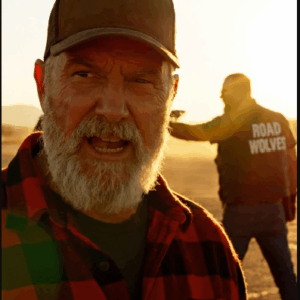
They Thought He Was Just A Frail Old Man Alone At A Truck Stop. But When The Gang Leader Spat In His Coffee, He Didn’t Flinch—He Just Made One Phone Call That Unleashed A Trap 20 Years In The Making.
Chapter 1: The Wolf at the Door The evening sun cast long, amber shadows across the cracked pavement of the Crossroads Truck Stop. It was a place out of time, situated on a lonely stretch of Interstate 40 where…

Navy Admiral Mocked A Single Dad Janitor In Front Of Everyone—Then He Learned The Man’s “Call Sign” And The Whole Base Froze.
Chapter 1: The Ghost of Coronado The morning fog still clung to the coastline of Coronado, a thick gray blanket that muffled the roar of the Pacific Ocean. Inside the primary administrative building of the Naval Base, the silence…
End of content
No more pages to load