The cry was thin, a new thread in the sterile weave of Room 212. It was 3:14 AM. The fluorescent light overhead hummed, a flat, electric note against the rhythmic beep of the fetal monitor, now silent. Outside, the halls of Saint Mercy Medical Center were dimmed, a world reduced to the whisper of nurses’ shoes on polished linoleum.
Inside, Camila Herrera was trying to breathe. Fourteen hours. Fourteen hours of a pain so total it had remade her, pulling her apart and putting her back together as someone new. She was pale, her dark hair stuck to her temples with sweat, her body trembling with an exhaustion that felt deeper than bone.
But in her arms, he was finally here. Leonardo.
“He’s perfect,” she whispered, her voice cracking. The words were for her husband, who stood near the foot of the bed. “He’s beautiful, Ricardo. He looks just like you.”
Ricardo Mendoza didn’t move. He was a broad-shouldered man, built by long days under the sun, and he seemed to fill the small room with a heavy, restless energy. His eyes—dark, and usually impossible to read—flickered from the baby to his wife. His calloused hands, hanging loose at his sides, slowly, almost unconsciously, tightened into fists.
“What took you so long?”
His voice was flat. It wasn’t a question. It was an accusation.
The nurse, Sofia Ramirez, paused, her hand halfway to the IV drip. She was young, but she’d been doing this long enough to know the sound of a match being struck. She glanced from Ricardo’s rigid posture to Camila’s face. The new mother flinched, a small, barely perceptible movement, as if bracing for a blow that hadn’t yet landed.
“Mr. Mendoza,” Sofia said, keeping her voice calm, professional. “Every birth is different. Your wife has done an incredible job. Labor is unpredictable.”
Ricardo scoffed, a short, sharp sound of contempt. He turned toward the window, but his reflection stared back at them, jaw tight. “She always exaggerates. My mother had five children at home. She never made such a show.”
“Ricardo, please,” Camila whispered. She was too tired for this, too raw. “I’m just… I’m so tired.”
“Tired?” He spun around, the word a weapon. “You’ve been lying here all day while I’ve been working. You get one job from nature, one thing you’re supposed to be able to do, and you call it suffering.”
As if summoned by the anger in the room, Leonardo’s tiny face crumpled. He let out a thin, fragile wail. The sound was small, but in the tense silence, it felt like a siren.
“Make him stop,” Ricardo snapped. “I can’t even think with that noise.”
“He’s just hungry, Ricardo. That’s all,” Camila said, her hands trembling as she tried to adjust her gown, to rock him, to soothe him. But she was clumsy with exhaustion, and the baby’s cries only grew more frantic.
“You can’t even do that right!” Ricardo stepped forward, his shadow falling over the bed, over both of them.
What happened next split the air.
It wasn’t a shout. It was a sound. Sharp, wet, and final. The sound of his open palm connecting with her cheek.
It was so loud, so sudden, that the baby startled, his cry cutting off in a sharp gasp.
Camila’s head whipped to the side, her hair flying across her face. Her body instinctively curled, a shield over the infant. A single, bright drop of blood welled where his ring had cut her skin.
Time stopped. The hum of the lights, the beep of the machines, the quiet hallway outside—it all faded. There was only the ringing in her ears and the sudden, searing heat on her face.
Sofia gasped, her clipboard clattering to the floor. “Sir! What did you do?” she shouted, rushing to the bedside. “You just hit your wife!”
Ricardo froze. For a split second, pure, unfiltered rage was on his face. Then he saw Sofia, the witness. And just like that, the mask snapped back into place. His expression shifted to one of false concern, of practiced alarm.
“It was an accident,” he said, his voice suddenly smooth, reasonable. “She lost her balance. She was fainting. I just tried to catch her—my hand slipped.”
“I saw you,” Sofia said, her voice shaking with a fury she was trained to suppress. “You struck her. You hit her in the face.”
He smiled then. A slow, patronizing smile that didn’t reach his eyes. “Nurse, you’re hysterical. I think you’re mistaken. My wife is weak after the labor. She gets dizzy. Tell her, Camila.”
He looked at his wife. It wasn’t a request. It was a command.
Camila’s lips parted, but no sound came out. Her cheek throbbed. Her baby was silent in her arms, watching. All the old scripts, the lessons she had learned in silence and fear, flashed through her mind. How to survive. How to de-escalate. How to keep the peace.
“It was… an accident,” she murmured, not looking at the nurse, her gaze fixed on the white hospital blanket. “I got dizzy. He just… he caught me.”
Sofia’s throat tightened until it ached. She’d heard that lie before. The lie that fear tells. The lie that protects the monster.
Ricardo’s smirk was triumphant. “See? She’s fine. Now, if you don’t mind, we’d like to be alone with our son.”
But they weren’t alone.
Outside the door, through the narrow, vertical pane of glass, someone had been standing motionless. Someone Ricardo hadn’t seen.
A man with squared shoulders and graying temples, his arms crossed over his chest, his jaw locked so tight a muscle pulsed beneath the skin. He had watched the whole thing. The words. The step forward. The swing. The lie.
Retired Sergeant Miguel Mendoza had served twenty-eight years in the Mexican army. He had seen the worst kinds of cruelty men were capable of. He just never thought he’d see it wearing his own last name.
He didn’t burst in. He didn’t shout. He just turned, his eyes burning with a cold, patient fire, and walked silently down the hall. The war had just begun.
Three days later, the world had shrunk to the four walls of their small house in the Constitución district of Guadalajara. The sky outside was a bruised, heavy gray, pressing down on the city. Camila sat by the window, rocking Leonardo. His soft, rhythmic breathing was the only proof that anything in the world was still gentle.
The bruise on her cheek had bloomed into a sickening masterpiece of violet and yellow. She held a small, cracked makeup mirror, her hand steady as she layered foundation and concealer. It was a ritual she knew well, a kind of painting where the goal was to make herself disappear.
The sound of a key scraping in the front door lock sent a jolt of ice through her veins. Her hand jumped, smearing the concealer. She quickly tried to fix it, her heart hammering against her ribs.
Ricardo’s boots scraped the tile. He didn’t greet her. He didn’t ask about the baby.
“Why isn’t dinner ready?” he said. He walked to the refrigerator, opened it, and slammed it shut.
“The baby,” Camila said, her voice barely a whisper. “He’s been crying all day. I couldn’t put him down.”
“Excuses. It’s always excuses with you.” He turned to face her, and his eyes narrowed on her face. “You embarrassed me at the hospital. And my boss saw you today. He asked me if you’d been hit. You made me look like a fool.”
Her blood ran cold. “What… what did you tell him?”
“I told him the truth,” he sneered. “That you’re clumsy. That you bruise if the wind blows on you. That you’re fragile.” He stepped closer, invading her space, forcing her to tilt her head back to look at him. His voice dropped to the low, threatening hum she knew better than her own name. “Don’t you ever make me look bad like that again. Do you understand me?”
“Yes, Ricardo.”
He frowned. “Yes what?”
“Yes, my love.”
The lie tasted like ash.
Then, a knock.
Three solid strikes on the front door. Not the light tap of a neighbor. Not the hurried rap of a delivery. This was deliberate. Measured. An punctuation of authority.
Ricardo stiffened instantly. “Who is that? Are you expecting someone?”
“No,” she whispered, clutching Leonardo tighter.
Ricardo yanked the door open. Standing on the threshold was Miguel. He wore a simple worn leather jacket, but his posture was ramrod straight, as if still in uniform.
“Dad,” Ricardo said, forcing a smile that looked more like a grimace. “What a surprise. We didn’t know you were coming.”
“I came to meet my grandson,” Miguel replied. His tone was flat, his gaze sharp as honed steel. He stepped inside without waiting for an invitation, his eyes finding Camila instantly.
He took one look at her and saw everything. He saw the expertly hidden discoloration on her cheekbone. He saw the faint, tell-tale swelling near her temple. But more than that, he saw the way she held her breath, the way she flinched when Ricardo moved too quickly, the stiffness in her shoulders that wasn’t from holding a baby, but from holding the weight of constant fear.
Miguel had interrogated men who thought they were masters of deception. He knew guilt when he saw it. He knew terror when he saw it.
“How are you feeling, daughter?” he asked, his voice softening just for her.
Camila’s eyes flickered to Ricardo before she answered. “Better, thank you, Mr. Miguel. Just tired.”
He nodded slowly, his gaze lingering on the faint red line just below the powder. He turned back to his son. “You look nervous, Ricardo. Something wrong?”
Ricardo forced a laugh. “No, why? Just tired from work. You know how it is.”
“Uh-huh,” Miguel said. He held his arms out to Camila. “May I? May I hold my grandson?”
She glanced at Ricardo again. A tiny, almost imperceptible nod from her husband. She crossed the room and carefully transferred the sleeping bundle.
Miguel’s large, scarred hands cradled Leonardo with a surprising, practiced gentleness. He looked down at the tiny, perfect face, and a profound sadness crossed his own. This was his blood. His legacy. And it had been born into a warzone.
But as he held the baby, his eyes drifted back to Camila. He saw her hands, clasped nervously in front of her. And he saw them. Faint, circular bruises on her wrists. The exact size and shape of fingertips. The marks of someone who had gripped her, hard, to silence her or hold her down.
He felt the familiar click in his mind—the internal shift from observer to soldier. He took a slow breath, kissed his grandson’s forehead, and handed him back to Camila.
“Ricardo,” he said, his voice quiet but carrying an unmistakable weight. “Get me a glass of water.”
Ricardo, already annoyed by the intrusion, waved a hand toward his wife. “Ask Camila. That’s her job.”
That was the mistake.
“I told you,” Miguel said, his voice dropping an octave, “to get it. Now.”
The steel in his father’s voice was something Ricardo hadn’t heard since his rebellious teenage years. It shocked him into obedience. He grumbled, but he turned and went to the kitchen.
The second he was out of sight, Miguel turned to Camila. His voice was urgent, low.
“How long?”
Camila blinked, her body rigid with terror. “What… what do you mean?”
“You don’t have to lie to me, daughter. Not anymore. I was outside the hospital room. I saw it all.”
Her face crumpled. The blood drained from it, leaving her a ghostly pale. “You saw?”
“I saw him hit you. I saw you lie for him.”
The tears she had held back for days, for months, filled her eyes. “He didn’t mean it. He just… he gets so angry. He’s under so much stress.”
Miguel shook his head, his expression a mix of pity and iron. “Angry men shout. Cowards leave marks shaped like their own hands. Cowards make women afraid to breathe in their own homes.”
Footsteps. Ricardo returned, slamming the glass of water down on the small table. Miguel didn’t even look at it.
“Son,” Miguel said calmly. “Step outside with me. We need to talk.”
“Talk about what?” Ricardo said, defensive.
“About the man you’ve become.”
The small backyard was damp and smelled of wet earth. The two men faced each other, the fading light casting long, distorted shadows.
“I saw you hit her at the hospital,” Miguel said. No accusation. Just a flat statement of fact.
Ricardo’s face hardened. “You saw wrong. She was falling. I caught her.”
“No,” Miguel said, his voice dangerously quiet. “I saw your arm pull back. I saw you strike her. And I see her wrists today. I see her face.”
Ricardo’s jaw twitched. “It’s not your business, old man. She’s my wife.”
“It became my business,” Miguel said, “when you raised your hand to a woman holding my grandson. It became my business when you brought shame to my name.”
“You don’t understand!” Ricardo suddenly yelled, his composure cracking. “She provokes me! She whines, she complains, she can’t do anything right! You know what women are like. You have to show them who is in charge!”
“Stop.” Miguel’s voice cut through Ricardo’s rant like a razor. “Stop right there.”
The silence that followed was absolute.
“Do you think this is strength?” Miguel asked, his voice laced with a contempt that made Ricardo flinch. “Being a man isn’t about the power to destroy. It’s about the strength to protect. I taught you discipline. I taught you honor. Where is it?”
“You taught me discipline?” Ricardo sneered, emboldened by his own anger. “You hit us! I remember! You call that honor?”
The words landed. Miguel’s face tightened, a flicker of old guilt in his eyes. “I raised my voice, and yes, I used a belt when I shouldn’t have. And I have regretted it every day of my life. But I never made your mother bleed. I never made her afraid to wake up in the morning. I never broke her. There is a line between a flawed father and a monster. You, son, have crossed it.”
“Times are different,” Ricardo muttered.
“Cowardice is timeless. And I see it standing right in front of me.”
Ricardo’s fists clenched. “Don’t call me that.”
“Then stop being one.”
Miguel turned his back on his son—a gesture of finality—and walked back inside. Camila was standing exactly where he’d left her, frozen, clutching Leonardo, her eyes wide with terror.
Miguel spoke to her, his voice calm and resolute. “Go pack a bag for you and the baby. Just the essentials. You’re not staying here tonight.”
“What? No, I can’t,” she stammered, looking past him to where Ricardo was now storming back inside, his face purple with rage. “He’ll be angry—”
“Let him be angry,” Miguel said. “You’re coming with me.”
“You can’t take her!” Ricardo shouted, grabbing Camila’s arm.
Miguel moved. He was older, but his training was etched into his bones. He didn’t touch his son. He simply stepped between them, breaking Ricardo’s grip on Camila. He planted his feet, a wall of pure, immovable resolve.
“You will not touch her again,” Miguel said.
Ricardo looked at his father—at the cold, dead certainty in his eyes—and for the first time, he realized this wasn’t a debate. It was an order. He hesitated, and in that hesitation, he lost.
“Go, Camila. Now,” Miguel commanded.
She fled to the bedroom. Ten minutes later, she emerged with a single diaper bag. Miguel nodded, took the bag from her, and ushered her toward the front door.
“If you walk out that door, Camila, don’t ever come back!” Ricardo roared from behind them.
Miguel paused at the threshold. He turned, looked his son dead in the eye.
“I’ll make sure of that.”
That night, Miguel took them to a small, clean apartment belonging to a friend of a friend—a social worker named Carmen. She was a woman with kind eyes and a strong spine, and she hugged Camila as if she’d known her for years.
“You’re safe here,” Carmen said, taking the sleeping baby. “He will not find you.”
For the first time in weeks, Camila cried. Not silent, fearful tears, but great, gulping sobs of grief and release.
Miguel didn’t stay. He left them with Carmen and made a phone call. He called a friend from his old unit, now a detective in the Guadalajara police. He told him everything. He told him about Nurse Sofia. He told him about the bruise. He told him about the wrists.
“Men like him count on our silence,” Miguel told his friend. “That’s how they win. Tonight, we start being louder than he is.”
The next morning, Carmen and Miguel escorted Camila to the prosecutor’s office. They already had a file waiting, thanks to Miguel’s friend. They had a statement from Nurse Sofia, who had reported the incident to hospital security immediately after her shift. They had the photos Miguel had taken of Camila’s face and wrists with his phone.
“The judge will issue the emergency protection order,” a prosecutor named Teresa Morales told them. “He’s forbidden from coming within 500 meters of you or the child. The police will serve him this afternoon.”
Camila looked down at her hands. “And if he… if he doesn’t obey?”
Teresa’s face was grim. “Men like him rarely surrender quietly. But Sergeant Mendoza,” she said, looking at Miguel, “I trust you know how to handle this.”
“I do,” Miguel said.
They underestimated how fast Ricardo would move. He didn’t wait to be served. Furious at his father’s betrayal and his wife’s “disloyalty,” he’d spent the day drinking and calling his own contacts. He found out the name of Carmen, the social worker. He found the address.
That night, the storm that had been threatening finally broke over the city. Rain lashed against the windows of the small apartment. Camila was trying to get Leonardo to sleep when the pounding began.
It wasn’t a knock. It was the sound of a fist hitting the door.
“CAMILA! I KNOW YOU’RE IN THERE! OPEN THIS DOOR! YOU CAN’T STEAL MY SON!”
Carmen and Camila froze. Miguel, who had been sitting in a chair in the corner, stood up slowly.
“Stay in the back room. Lock the door. Call the police. Tell them he’s here,” he said, his voice perfectly calm.
“Miguel, no, he’s drunk, he’s violent!” Camila cried.
“Go. Now.”
He waited until he heard the bedroom lock click. The pounding on the front door grew more violent. The wood was starting to splinter.
“CAMILA!”
Miguel unlocked the door and opened it.
Ricardo stumbled in, drenched from the rain, his eyes wild with whiskey and rage. He saw his father, and a snarl twisted his face. “Old man. Get out of my way.”
“Go home, Ricardo,” Miguel said, blocking the hallway. “It’s over.”
“It’s over when I say it’s over!” Ricardo lunged, trying to push past.
Miguel didn’t flinch. He simply used his son’s own momentum against him, shoving him back against the wall. The struggle was short, ugly. Ricardo was younger, stronger, but he was drunk and sloppy. Miguel was old, but he was sober, and he was fighting for a different reason.
“You’re done hurting people,” Miguel grunted, pinning his son’s arms.
“She’s mine!” Ricardo roared, and with a surge of adrenaline, he broke free and his hand darted into his jacket pocket.
He pulled out a small, cheap pistol.
He pointed it, his hand shaking, at his father’s chest.
“You took them from me,” he spat, tears of self-pity and rage streaming down his face. “You betrayed your own blood.”
“Put the gun down, son. You don’t want to do this.”
“She’s my wife!”
“She’s not your property.”
From the back room, they could hear the baby’s terrified screams. The sound seemed to enrage Ricardo more. He raised the gun, his finger tightening on the trigger.
The front door burst open.
Two uniformed officers, guns drawn, flooded the apartment. “POLICE! DROP THE WEAPON! DROP IT NOW!”
Ricardo froze, his eyes wide, caught between two impossible futures. He looked at his father, at the police, at the gun in his hand. For a second, he seemed to collapse. The gun clattered to the floor.
They were on him in an instant, cuffs snapping shut, hauling him to his feet.
“You’re under arrest,” one officer said, “for assault, violation of a protective order, and aggravated menacing.”
As they dragged him out into the rain, Ricardo was still shouting. “She lied! They’re all lying! You can’t do this!”
The apartment was suddenly, profoundly quiet, except for the sound of the rain and the baby’s crying. The bedroom door opened. Camila peaked out, her face paper-white.
Miguel leaned against the wall, breathing heavily, the adrenaline fading. He looked at her.
“It’s over, daughter,” he said. “This time, for good.”
The trial was six months later. Ricardo, sober and suited, tried to play the part of the remorseful husband, the victim of a vindictive wife and a meddling father.
It didn’t work.
Nurse Sofia testified, her voice clear and steady. The prosecutor showed the photos of Camila’s face from the hospital. They showed the photos of her wrists. They played the recording of Carmen’s 911 call, the sound of Ricardo’s voice screaming and the baby’s cries filling the courtroom.
But the final blow was Miguel.
He took the stand, in his old, pressed uniform. He told the story from the beginning. He spoke of the sound of the slap in Room 212. He spoke of the fear in his daughter-in-law’s eyes. He spoke of the gun in his son’s hand.
When the defense lawyer tried to paint him as a bitter old man, Miguel just looked at him. “My son is a coward. He preyed on the weak because it made him feel strong. There is no honor in that. He is my blood, and I am ashamed of him.”
The verdict was four years. Four years, and a permanent, binding order of protection.
Camila watched him be led away. She felt no hatred. No satisfaction. She just felt… empty. And then, for the first time, she felt the emptiness fill with something new. Peace.
One year later, the sun was bright over El Paso, Texas. Camila stood on the porch of a small, neat house, watching Leonardo, now walking, chase a butterfly on the lawn. She had moved north with Carmen’s help, found a job at a local bakery, and built a new life, one quiet morning at a time.
Miguel sat in a rocking chair beside her, visiting for the week. He watched his grandson tumble and laugh.
“He’s happy,” Miguel said.
“We both are,” Camila said softly. “You saved us, Miguel.”
He reached over and patted her hand. “No, daughter. You saved yourself. You were brave enough to speak. I just opened the door.”
A letter had arrived that morning. No return address, but she knew the handwriting. It was from Ricardo, from prison. She hadn’t opened it.
She held it now. She looked at it for a long moment, then stood up, walked to the small barbecue grill on the patio, and struck a match. She held the letter to the flame, watching the corners curl and blacken, the words turning to smoke and ash, rising into the bright, clear Texas sky.
She didn’t need to read it. She didn’t need his apologies or his excuses. The past was finally done with her.
She turned back to her father-in-law and her son, a real smile, bright and unforced, on her face. She was free.
News
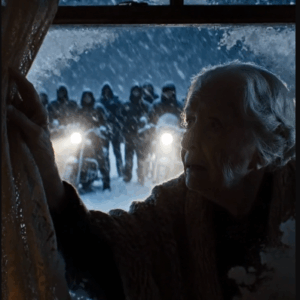
I Hid 20 Freezing Bikers From a Blizzard. The Next Morning, I Woke Up to a Roar That Shook My Entire House.
Chapter 1: The Invisible Woman The wind didn’t just blow that night; it screamed. It was a sound that tore through the cracks in the walls and settled deep in your bones. I stood by the kitchen window, watching…

I Fixed A Billionaire’s Broken Prototype With A Wrench. The Next Morning, A Black Hawk Helicopter Landed In My Trailer Park.
Chapter 1: The Ghost in the Machine The copper-colored sun was dying behind the thick clouds, casting long, bruising shadows across Woodbury Meadows. It was the kind of light that made everything look old. The trailer park smelled of…
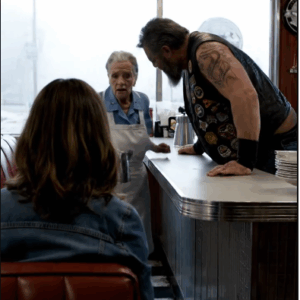
They Thought She Was Just A Lonely Customer. When The Biker Touched The Waitress, The Navy Commander Broke Her Silence—And His Arm.
Chapter 1: The Ghost in the Corner The morning fog rolled thick off the Atlantic, blanketing the streets of Port Haven in a ghostly shroud. It was the kind of heavy, wet mist that muffled sound and made the…
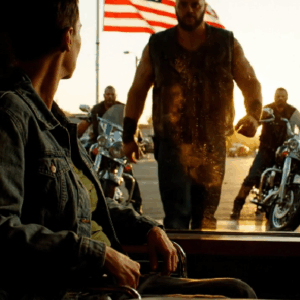
They Mocked A Paralyzed Veteran And Kicked Her Wheelchair, Unaware They Just Woke Up The Most Dangerous Assassin The Military Ever Created.
CHAPTER 1: THE GHOST OF PINE VALLEY The phantom pain was bad today. It felt like fire was licking at ankles that hadn’t been there for three years. Alex Winters adjusted her position in the wheelchair, her face remaining…
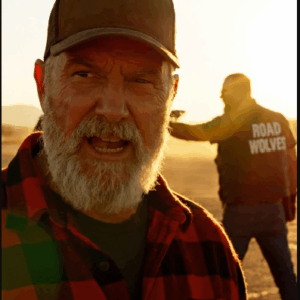
They Thought He Was Just A Frail Old Man Alone At A Truck Stop. But When The Gang Leader Spat In His Coffee, He Didn’t Flinch—He Just Made One Phone Call That Unleashed A Trap 20 Years In The Making.
Chapter 1: The Wolf at the Door The evening sun cast long, amber shadows across the cracked pavement of the Crossroads Truck Stop. It was a place out of time, situated on a lonely stretch of Interstate 40 where…

Navy Admiral Mocked A Single Dad Janitor In Front Of Everyone—Then He Learned The Man’s “Call Sign” And The Whole Base Froze.
Chapter 1: The Ghost of Coronado The morning fog still clung to the coastline of Coronado, a thick gray blanket that muffled the roar of the Pacific Ocean. Inside the primary administrative building of the Naval Base, the silence…
End of content
No more pages to load