In the high-stakes world of professional sports, the currency of leadership is trust. For WNBA Commissioner Cathy Engelbert, that currency is rapidly losing its value. A recent press conference, intended to clear the air, has instead plunged the league into a deeper crisis of confidence, leaving players, analysts, and fans questioning her fitness to lead. The controversy exploded when Napheesa Collier, a forward for the Minnesota Lynx and a prominent voice in the players’ union, revealed the shocking details of a private conversation with Engelbert.

Collier alleged that Engelbert told her players “should be on their knees thanking their lucky stars” for the media rights deal she had secured. It was a comment so dismissive, so profoundly out of touch with the athletes who are the heart of the league, that it demanded an immediate and unequivocal response.
When the moment came, however, Engelbert faltered. Faced with a direct, yes-or-no question from a reporter—”Did you in fact say that?”—the Commissioner launched into a masterclass of evasion. There was no firm denial. There was no confident rebuttal. Instead, she offered a meandering response about “inaccuracy out there through social media,” mentioned that she and Collier had exchanged texts, and then, in a move that drew widespread criticism, invoked her family’s devastation over the comments. “I’m a human too,” she stated, seemingly positioning herself as the victim.
For many, the non-answer was more damning than a confession. As commentators quickly pointed out, if you didn’t say it, you simply say, “No, I did not say that.” Engelbert’s refusal to do so was seen not as a diplomatic sidestep, but as a tacit admission of guilt. Her words were dissected in real-time by analysts like Chiney Ogwumike and Andraya Carter, who expressed a complete lack of confidence in the Commissioner’s leadership. Ogwumike noted, “When you were asked a question, you should probably answer that question… you didn’t say ‘No I didn’t say that,’ and I think that should be the first thing.” The sentiment was clear: her response felt hollow and evasive.
The situation escalated when Engelbert was asked a follow-up question about the growing feeling among players that the right leadership isn’t in place. Again, she failed to provide the strong, reassuring “yes” the moment required. She spoke of her 40-year business career and her resolve as “never a quitter,” but she never directly affirmed her belief that she is the right person for the job. This consistent pattern of deflecting tough questions has created what many now see as a great divide between the league office and its players.
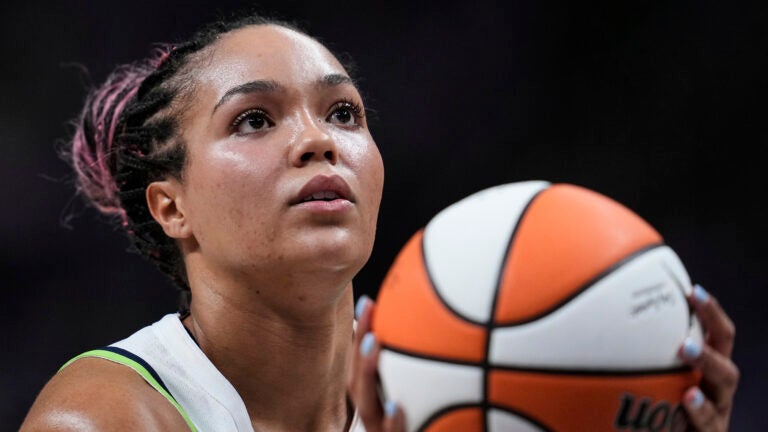
This entire firestorm is raging against the backdrop of contentious Collective Bargaining Agreement (CBA) negotiations. The players are not just fighting for better salaries; they are fighting for a fair share of the league’s burgeoning revenue, for respect, and for a partnership that honors their contribution to the WNBA’s unprecedented growth. They see Engelbert’s alleged comments and subsequent evasiveness as proof that the league office doesn’t view them as true partners. As Ogwumike articulated, the players aren’t demanding the same revenue share as their NBA counterparts; they simply want a fair share that outpaces inflation and grows as the business grows.
The WNBA players have a long history of strategic, unified activism. Their decisions are calculated and collective. Collier’s statement was not an isolated outburst; it was a strategic move by members of the WNBPA Executive Committee to hold leadership accountable. They understand the gravity of this moment, especially during the WNBA Finals, a time that should be a celebration of the sport. Instead, the focus has shifted from the incredible talent on the court to the glaring leadership vacuum in the commissioner’s office.
Ultimately, this crisis will not be resolved by carefully crafted statements or dodged questions. It will be resolved at the negotiating table. The only way for Cathy Engelbert to rebuild the shattered trust is to deliver a CBA that tangibly respects the players’ value. It’s no longer about what she says or denies. It’s about what the final contract looks like. The players have made their move, standing on business both on and off the court. Now, the ball is in the commissioner’s court, and her next move will determine not only her own future but the future of the league itself.
News
I Hid 20 Freezing Bikers From a Blizzard. The Next Morning, I Woke Up to a Roar That Shook My Entire House.
Chapter 1: The Invisible Woman The wind didn’t just blow that night; it screamed. It was a sound that tore through the cracks in the walls and settled deep in your bones. I stood by the kitchen window, watching…

I Fixed A Billionaire’s Broken Prototype With A Wrench. The Next Morning, A Black Hawk Helicopter Landed In My Trailer Park.
Chapter 1: The Ghost in the Machine The copper-colored sun was dying behind the thick clouds, casting long, bruising shadows across Woodbury Meadows. It was the kind of light that made everything look old. The trailer park smelled of…
They Thought She Was Just A Lonely Customer. When The Biker Touched The Waitress, The Navy Commander Broke Her Silence—And His Arm.
Chapter 1: The Ghost in the Corner The morning fog rolled thick off the Atlantic, blanketing the streets of Port Haven in a ghostly shroud. It was the kind of heavy, wet mist that muffled sound and made the…
They Mocked A Paralyzed Veteran And Kicked Her Wheelchair, Unaware They Just Woke Up The Most Dangerous Assassin The Military Ever Created.
CHAPTER 1: THE GHOST OF PINE VALLEY The phantom pain was bad today. It felt like fire was licking at ankles that hadn’t been there for three years. Alex Winters adjusted her position in the wheelchair, her face remaining…
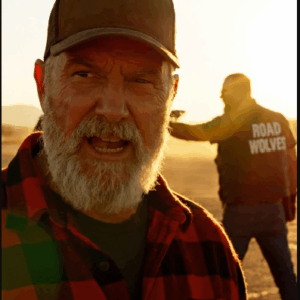
They Thought He Was Just A Frail Old Man Alone At A Truck Stop. But When The Gang Leader Spat In His Coffee, He Didn’t Flinch—He Just Made One Phone Call That Unleashed A Trap 20 Years In The Making.
Chapter 1: The Wolf at the Door The evening sun cast long, amber shadows across the cracked pavement of the Crossroads Truck Stop. It was a place out of time, situated on a lonely stretch of Interstate 40 where…

Navy Admiral Mocked A Single Dad Janitor In Front Of Everyone—Then He Learned The Man’s “Call Sign” And The Whole Base Froze.
Chapter 1: The Ghost of Coronado The morning fog still clung to the coastline of Coronado, a thick gray blanket that muffled the roar of the Pacific Ocean. Inside the primary administrative building of the Naval Base, the silence…
End of content
No more pages to load