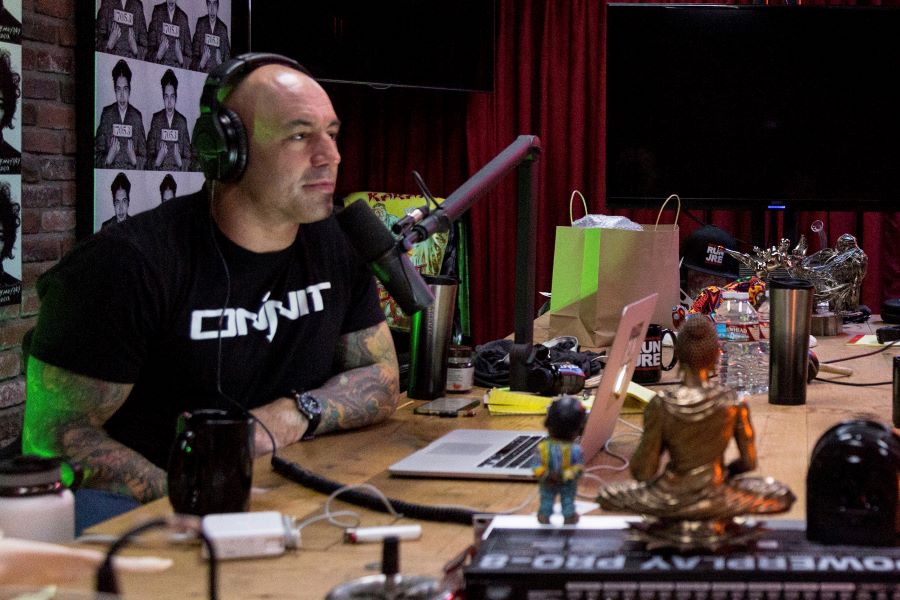
The eulogy for the California Dream is being delivered, not from a political podium, but from a podcast studio in Texas. Joe Rogan, once a California resident himself, has become one of the most powerful voices chronicling the spectacular collapse of the Golden State. In a recent, blistering conversation with comedian Joey Diaz, the two painted a devastating picture of a state brought to its knees by a toxic combination of ideological purity, stunning incompetence, and the monumental egos of its leaders, chief among them Governor Gavin Newsom. This isn’t just a critique; it’s an autopsy of a failed state, a warning of what happens when virtue signaling replaces governance.
For decades, California was the shimmering beacon of American aspiration—a place of endless sunshine, opportunity, and innovation. Now, as Rogan bluntly states, it’s a place people are desperate to escape. The reasons are plastered across headlines every day: rampant, unchecked crime, from brazen smash-and-grab robberies to a homelessness crisis that has turned city streets into dangerous, unsanitary encampments. This is compounded by a tax burden so exorbitant and a bureaucracy so stifling that it’s actively driving out the very people and industries that once made the state thrive. The exodus is not a right-wing talking point; it’s a verifiable fact. Rogan himself fled to Austin, Texas, followed by other major media figures like Ben Shapiro and his entire Daily Wire operation. Hollywood, the state’s most iconic industry, is increasingly choosing to film in more business-friendly states like Georgia and Texas.
At the heart of this decline, Rogan and Diaz argue, is a political class, led by Newsom, that is completely insulated from the consequences of its own disastrous policies. They are practitioners of what can only be described as “woke” governance, an ideology that prioritizes abstract social agendas over the tangible needs of its citizens. The examples are as absurd as they are alarming. The state legislature has passed laws mandating gender-neutral toy sections in department stores and, even more controversially, a law that allows children to conceal their decision to medically transition from their parents. These are not the actions of a government grappling with crime, failing schools, or a mass exodus; they are the pet projects of an elite class more concerned with appearing progressive than with actually governing.
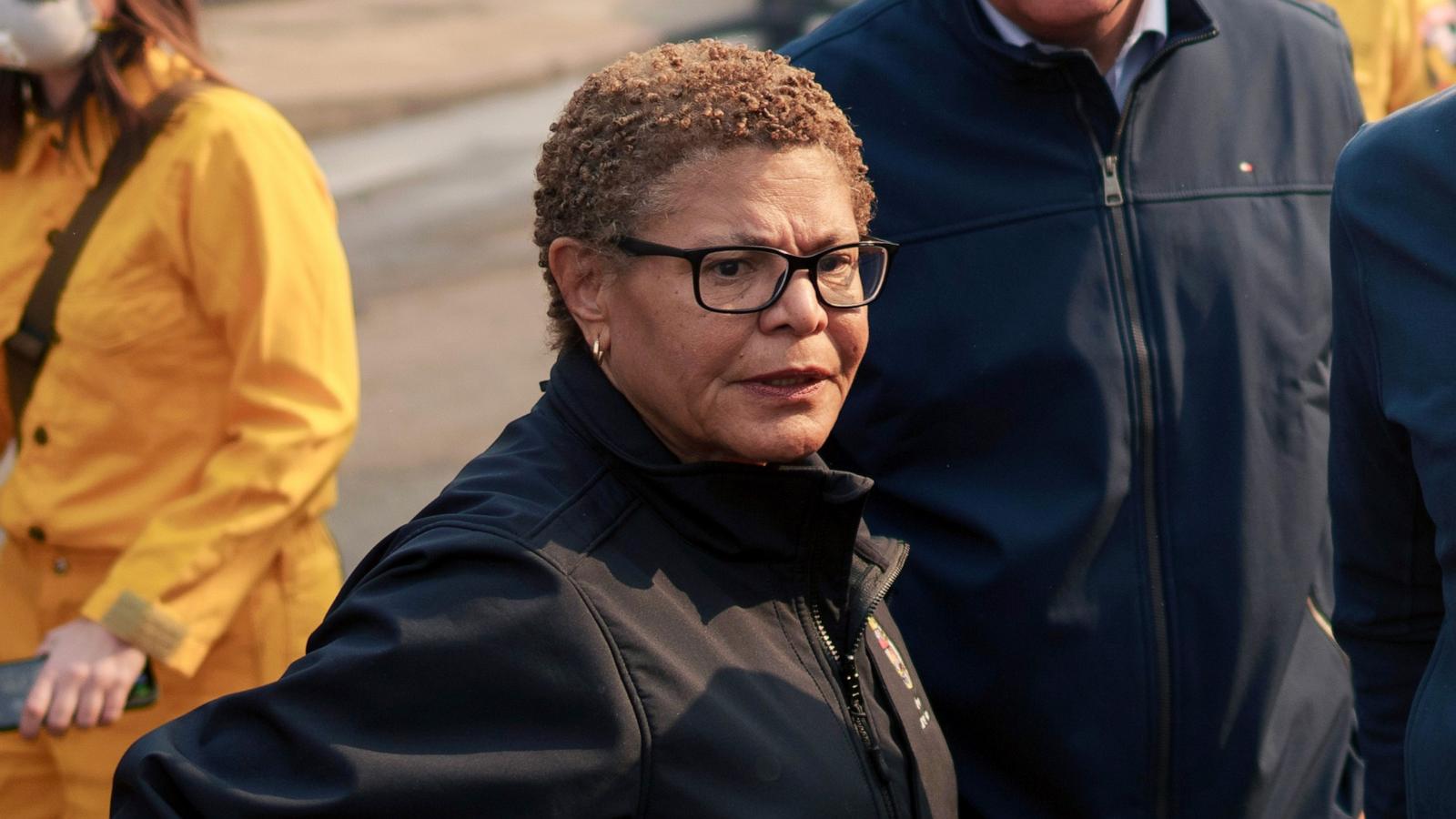
Comedian Joey Diaz provided a visceral, on-the-ground perspective, recalling the recent Palisades fires. While homes were threatened and citizens were terrified, he accused Newsom and Los Angeles Mayor Karen Bass of prioritizing polished press conferences and carefully staged photo opportunities over an effective, coordinated response. It was, in his words, a masterclass in political theater, a performance of leadership that utterly failed to deliver actual public safety. This, the conversation suggests, is the defining characteristic of California’s leadership: an unshakeable belief in their own good intentions, completely divorced from the disastrous results of their policies.
This disconnect is enabled by what Rogan describes as a culture that rewards ego and forbids course correction. To admit that a policy has failed—especially one designed to help a “protected class”—is to admit a flaw in the ideology itself, something California’s leaders seem incapable of doing. This is most evident in their handling of the homelessness crisis. Newsom’s approach, they argue, has “practically turned the homeless into a protected species,” where any honest criticism of the strategy is shouted down as cruel or bigoted. A culture of entitlement has been fostered, rewarding a lack of responsibility with taxpayer-funded programs that have only exacerbated the problem, turning a crisis into a permanent, intractable feature of California life.
Perhaps the most damning critique leveled by Rogan is the assertion that the Democratic party, at both the state and national level, has abandoned competence in favor of “woke DEI programs.” The focus is no longer on finding the most qualified person for a job, but on “forcing squares into round holes” to satisfy diversity quotas and virtue signal to their political base. This trend becomes downright dangerous when applied to critical professions. The conversation highlighted the example of a firefighter who claimed she wouldn’t be required to carry a burning man out of a building, a statement that calls into question the physical standards of the job. For professions like firefighting, surgery, airline piloting, and military command, strength, intelligence, and capability are not optional—they are essential. Lowering these standards for political purposes, Rogan argues, is a reckless gamble that will inevitably cost lives.

As a stark contrast, Rogan holds up his new home of Austin, Texas. He describes it as a “blue city in a red state” that has found a crucial balance, embracing progressive values “without being suffocating.” It’s a place where innovation and culture can thrive without the oppressive regulations and extreme policies that are choking California. Austin’s success is a living rebuke to the idea that the only alternative to California’s brand of progressivism is hard-right conservatism. It proves that there is a middle ground, a way to be modern and forward-thinking without declaring war on common sense.
The conversation serves as a powerful indictment of a political ideology that has failed on every conceivable metric. California, once the crown jewel of America, is now a cautionary tale. Its leaders, blinded by ego and insulated from reality, continue to double down on the very policies that are driving their state into the ground. They are fiddling with gender-neutral toys while their cities burn, and as Rogan and Diaz make painfully clear, the people are paying the price.
News
I Hid 20 Freezing Bikers From a Blizzard. The Next Morning, I Woke Up to a Roar That Shook My Entire House.
Chapter 1: The Invisible Woman The wind didn’t just blow that night; it screamed. It was a sound that tore through the cracks in the walls and settled deep in your bones. I stood by the kitchen window, watching…

I Fixed A Billionaire’s Broken Prototype With A Wrench. The Next Morning, A Black Hawk Helicopter Landed In My Trailer Park.
Chapter 1: The Ghost in the Machine The copper-colored sun was dying behind the thick clouds, casting long, bruising shadows across Woodbury Meadows. It was the kind of light that made everything look old. The trailer park smelled of…
They Thought She Was Just A Lonely Customer. When The Biker Touched The Waitress, The Navy Commander Broke Her Silence—And His Arm.
Chapter 1: The Ghost in the Corner The morning fog rolled thick off the Atlantic, blanketing the streets of Port Haven in a ghostly shroud. It was the kind of heavy, wet mist that muffled sound and made the…
They Mocked A Paralyzed Veteran And Kicked Her Wheelchair, Unaware They Just Woke Up The Most Dangerous Assassin The Military Ever Created.
CHAPTER 1: THE GHOST OF PINE VALLEY The phantom pain was bad today. It felt like fire was licking at ankles that hadn’t been there for three years. Alex Winters adjusted her position in the wheelchair, her face remaining…
They Thought He Was Just A Frail Old Man Alone At A Truck Stop. But When The Gang Leader Spat In His Coffee, He Didn’t Flinch—He Just Made One Phone Call That Unleashed A Trap 20 Years In The Making.
Chapter 1: The Wolf at the Door The evening sun cast long, amber shadows across the cracked pavement of the Crossroads Truck Stop. It was a place out of time, situated on a lonely stretch of Interstate 40 where…

Navy Admiral Mocked A Single Dad Janitor In Front Of Everyone—Then He Learned The Man’s “Call Sign” And The Whole Base Froze.
Chapter 1: The Ghost of Coronado The morning fog still clung to the coastline of Coronado, a thick gray blanket that muffled the roar of the Pacific Ocean. Inside the primary administrative building of the Naval Base, the silence…
End of content
No more pages to load