The memorial gathering was over. The guests who had come to say their goodbyes—to offer their sympathies and their plates of store-bought cookies—had gradually gone home. The neighbors, bless them, along with Marina’s mother, put everything in order. The low hum of their voices, the clearing of the table, the wiping of the floor, the rustle of trash bags… it was a buffer against the silence.
But now, they were gone, too. The house grew deathly quiet. The silence was a physical weight, pressing down on her.
Only Marina remained where she was—motionless, as if frozen in time. Leaning on the heavy oak dining table, she stared at a single point in the wood grain, as if trying to find the answers to a million screaming questions in the swirl of the varnish.
“Sweetheart, come stay with me tonight,” Antonina Vasilievna, her mother, suggested gently, her voice thick with a grief that was both for her daughter and for the son-in-law she had adored. She sat down beside her, her warm, wrinkled hand touching Marina’s cold one.
“Mom, please. Take Seryozha and go… I just… I want to be alone for a bit. I need the quiet, okay?” Marina answered, her voice a dry rasp. Her eyes never left the table.
Her mother didn’t give in right away. She coaxed. She pleaded. She repeated that she couldn’t leave calmly, that her heart couldn’t bear to leave her daughter alone in this house of ghosts.
But Marina, softly yet firmly, cut her off. “I’m all right, honestly. I just need to sit here. I need to process everything. I’m not alone. I’m… I’m with him. In my thoughts.”
Antonina Vasilievna hugged her daughter tightly, a fierce, protective embrace that was meant to ward off the world. She kissed her head, took her grandson by the hand, and, saying nothing more, left, carefully locking the front door with her own key.
And so Marina was left alone.
Alone in the house where his deep, kind voice had sounded only a week ago. Alone in the space where the faint, spicy scent of his cologne still clung to the curtains. Alone where every single object—the scuff on the floor, the remote on the armchair, the coffee mug in the sink—reminded her of him.
Voices from the memorial still rang in her head. Kind, sincere words about a man everyone had loved. About Vadim.
Honest. Good. Reliable. A caring husband. A loving father. A workhorse on whose shoulders you could lay any burden.
Marina knew—it wasn’t just polite praise said over funeral potatoes. No, her Vadim really had been like that. The real thing. A rock. He was the man she had clung to in every storm, the man who had been her anchor in the chaotic sea of life.
They had met at the end of winter, that strange, magical time when spring is still just a promise in the air. The sun had a bit of warmth to it, the snow was beginning to melt, and the first puddles appeared. But by evening, the temperature would drop, and the sidewalks would turn into a slick, treacherous trap.
Marina was coming home from work. She already regretted wearing new stiletto boots—a moment of vanity just to impress her colleagues. Now, she was inching along carefully, arms out for balance, trying desperately not to fall.
But she couldn’t keep her footing. Her legs flew out from under her. Her bag went flying, its contents scattering. A heel snapped with a sickening crack. The pain wasn’t in her leg—it was in her pride, in the hot, stinging humiliation of being seen like that, a mess on the dirty ice.
There was hardly anyone on the street. Only one passerby was approaching—a tall guy in a heavy-duty work jacket and a simple knit cap. He didn’t laugh. He didn’t smirk. He just… came up, helped her to her feet with a strong, steady hand, and began gathering her things.
“Are you all right? You hit that pretty hard. Should I call a doctor?” His voice was deep, calm, and reassuring.
Home was just a block away, but in that state, with a broken heel and a throbbing ankle, it would be hard to make it on her own. So Marina, embarrassed but grateful, accepted the stranger’s help. He turned out to be attentive, tactful, not one for needless chatter. Leaning on his solid arm, she made it to her door… And from that day, it was asif she had stepped into a new life. That’s how their story began.
They married in the summer. Vadim lived in an old house he had inherited from his grandparents. It was small, but warm, with a sprawling garden and a wooden veranda that smelled of pine. That’s where they moved, to build their nest.
He was a long-haul trucker—that’s what he’d told her. He was often on the road, sometimes gone for weeks at a time. But when he came back, he always, always, tried to spend time with the family. He’d bring her flowers, or some unusual, quirky souvenir from another city. He did the repairs on the house himself, fixed the leaky faucet, built shelves, painted the baby’s room. And when their son, Seryozha, was born—he became a true helper, a hands-on dad, and the boy’s best friend.
Her girlfriends sometimes joked enviously:
“Now that is a father! On the rides at the park with the kid instead of on the couch with a beer. You hit the jackpot, Marina.”
Marina knew she was lucky. Vadim wasn’t just her husband—he was her support, her other half, the person without whom she couldn’t imagine herself.
And now, he was gone.
Sitting in the dark, Marina didn’t turn on the light. It had long since grown dark outside. She just sat there, afraid to disturb the silence, as if any sound might scatter the precious, fading memories. Then the tears poured like a river. She sobbed, a raw, animal sound in the empty house. She hiccuped, whispered incoherent words, her face buried in her hands.
“Why?.. For what?.. What for?..”
It all happened so quickly, so unexpectedly, so horribly. A completely healthy, strong forty-year-old man—dead from a congenital heart defect. No one knew. He hadn’t known. He was simply walking down the street… and fell. No pain, no goodbyes, no warnings.
He had plans. They had plans. So much to do. And in a single, silent instant—nothing.
Marina understood that she had to go on living. A new school year had begun; Seryozha had just started fifth grade. She went back to her part-time job at the library, did homework with her son, cooked, cleaned, did the laundry—she found time for everything. She filled the gaping emptiness with routine as best she could.
For a long time, she couldn’t bring herself to touch his things. Everything remained as he had left it. His boots by the door. His razor on the bathroom sink. As if he had just stepped out and would be back soon. After a few weeks, she finally mustered the strength to sort his clothes, folding them neatly, her tears soaking into the fabric of his favorite flannel shirts. She took out the photographs—so familiar, so happy. She reread the simple, clumsy cards he had written her for every holiday. Simple, warm lines filled with a love she had never, ever questioned.
But there was one thing Marina had never touched—the small, metal safe behind the painting in their bedroom.
She didn’t know exactly when it had appeared in the house. She only remembered that it hadn’t been there during the first few years of their life together. In the frame hung an ordinary, tacky landscape—a forest, a river, nothing special. But one day, about five years ago, she’d been dusting and accidentally knocked the painting askew. Behind the canvas, she’d seen the flat, gray door of a built-in safe.
“When did he manage that?” she had wondered then. Most likely during one of those long stretches when she and Seryozha had gone to visit her parents for a week.
But more than the safe itself, it was Vadim’s reaction that had stunned her when she mentioned it in passing that evening.
“Hey, when did you put a safe in the bedroom?” she’d asked, laughing. “What are you hiding in there, gold bars?”
Vadim, who was usually so calm, so even-tempered, had suddenly flared up. His face darkened in a way she had never seen.
“Stay out of there, Marina!” he’d snapped, his voice sharp and cold. “It’s none of your business! Don’t you dare touch it! That’s mine, got it?”
Marina was stunned into silence. He had never, ever, spoken to her like that. They quarreled, a rare, tense fight that left a bitter taste in her mouth. The evening passed in icy silence. But after a couple of days, Vadim came back from a short run, and he was Vadim again—tender, joking, bringing her favorite pastries and speaking words of love. And Marina, tired of the tension, had decided not to ask questions. “In the end, everyone has their little secrets,” she had thought then, pushing the incident away.
And the safe disappeared from her thoughts for a long time. Until now. Until his death had forced it back into her life.
What had he guarded so carefully? Why had he been so afraid she would find out?
And so, in the complete, heavy silence of the night, Marina walked into the bedroom. She turned on the lamp. She walked up to the painting. Carefully, her hands trembling, she took it down from the wall and set it on the floor. She froze before the safe—massive, heavy, with a combination lock. Opening it without experience would be nearly impossible.
Marina didn’t hesitate long. She found a locksmith online. The next day, a man of about fifty arrived with a heavy-duty toolbox. He worked quietly, intently, his ear pressed to the metal, trying keys, testing combinations. An hour later, he wiped his forehead and said: “All set. You can open it.”
After seeing the locksmith out, Marina returned to the bedroom. Her heart was pounding so hard it felt like a bird trapped in her ribs, about to leap out. Taking a deep, shuddering breath, she grabbed the small handle, pulled…
The heavy door gave way with a soft whoosh.
She looked inside… and nearly recoiled. She barely stifled a scream, her hand flying to her mouth.
Inside, it wasn’t gold. It wasn’t cash. It was… life. A whole other life.
It was laid out in neat, precise order. Folders with documents. Some personal items. A stack of papers… and a small, colorful pile of children’s drawings.
Her hands shook so badly she could hardly pull the first folder out. She opened it. What she read knocked the ground from under her feet: Vadim was the owner of his own transport company. “Malinovsky Logistics.” A dozen trucks. An office in the neighboring city—only twenty kilometers from their home.
He wasn’t just a trucker. He was a CEO. He had lied to her, for years, about the very nature of his work. “I’ll go there tomorrow,” Marina decided, her mind numb.
Next came a will. A formal, legally binding document. She read it once. Twice. Three times, before the meaning sank in. Two heirs were listed. To my son, Sergei Vadimovich Malinovsky… …and to my daughter, Darya Vadimovna.
“Who?” she whispered, her voice cracking. “What Darya? What Darya Vadimovna?” she whispered, as if hoping the document was a mistake, a typo.
Then—a life insurance policy. Bank statements. Invoices… And at the very bottom—that pile of drawings.
She picked them up. They were in a child’s hand. Pencil houses with squiggly smoke. Bright green trees. A huge, smiling sun. And under each one, in uneven, penciled letters: “To Dad from Dasha.”
“No… this can’t be,” Marina muttered, sinking to the floor, feeling her head spin. “He would have told me… He couldn’t have… My Vadim… He couldn’t.”
But the facts were ironclad. Besides his family, Vadim had another life. A complete, secret, parallel life. And in that life—another woman. And another child.
In the back corner of the safe lay an old, black button phone. A simple, sturdy “burner” phone. Marina had never seen it before. The battery was, of course, dead. She found a universal charger in a kitchen drawer. Plugging it in, she sat on the floor, her back against the bed, and waited.
When the phone turned on, Marina’s fingers fumbled. No password was required. The screen filled with notifications: 27 Missed Calls from a single contact named “Irishka.”
Her hands trembled so violently she almost dropped it. Marina opened the photo gallery.
The photos hurt more than any words. More than any betrayal. A woman, pretty, around thirty, smiling by a flowering apple tree. A little girl, about six or seven, on a carousel, her face bright with laughter. The same little girl, holding a fluffy orange kitten. Then—Vadim. Vadim, his arm around that woman, “Irishka.” Vadim, with the child on his shoulders. Vadim, Irina, and Dasha, all three of them, holding the cat, smiling for the camera. Family shots. Real. Alive. Happy.
Marina dropped the phone as if it had burned her.
That night turned out to be the longest, most agonizing of Marina’s life. Her thoughts fluttered like a flock of frightened, screaming birds. One moment, the hot, choking tears of betrayal engulfed her. The next, a cold, sharp anger swelled in her chest.
“How could you? How could you? I trusted you! I loved you!” “You played soccer with Seryozha, you went to the park with us, you kissed me goodnight… and then you drove twenty kilometers away… to her… to that Irishka… to another family… to another daughter…” she almost shouted into the darkness.
In the morning, her eyes swollen and red, Marina picked up the burner phone. She dialed the number that had appeared so often on the screen. “We need to meet. Today. At the café on the main square in Poltava. Come. It’s important.”
The city was very close—about twenty kilometers away. That was where Vadim’s company was located. Marina decided to start there.
She was shown into the director’s office. The man introduced himself simply—Denis. He turned out to be an old acquaintance of Vadim’s. Their friendship went back years. Denis explained that Vadim had trusted him completely. As the company grew, Denis became the de facto manager. But beyond business, they shared personal things too—the kind you don’t tell just anyone.
“I knew everything, Marina,” he said quietly, his eyes full of pity, as if afraid to wound her further. “About Ira. About Dasha. He… he didn’t want to deceive anyone, but… he couldn’t choose. He was trapped by his own heart.” Denis sighed, leaning forward. “He told me once: ‘I love Marina, I love Seryozha. They are my life. But Dasha is my blood, too. I can’t turn my back on that. How can you choose between your right and left hand? If you cut one off—I’ll stop living.’”
Marina listened. She didn’t cry. She didn’t shout. She just felt… hollowed out. Only inside, everything was collapsing, turning to ash.
“He really suffered, Marina,” Denis continued softly. “I saw it. He didn’t want to deceive anyone… he was just afraid to cause pain to everyone. He kept saying, ‘I love Marina, I love Seryozha. But I love Dasha… and Ira, too. How can I choose just one? It’s like deciding which hand to live with. If I cut one off, I won’t survive.’”
Marina exhaled slowly, a long, shuddering breath, as if trying to stay afloat in a raging sea. “I know how hard this is to hear…” Denis said. “But he loved you all. Truly. He just didn’t know how to set everything right. He didn’t have the courage. Forgive him if you can…”
A year passed. Two women stood before the granite monument with Vadim’s black-and-white portrait. In their hands—identical red carnations. Silently, they laid the flowers on the cold stone. In the photo, Vadim seemed to be smiling—not falsely, but genuinely, with a kind, slightly wistful warmth in his eyes. Over that year, Marina and Ira had become… not friends, no. That was impossible. But they were no longer enemies.
At first, they were connected only by formalities: processing paperwork, dividing property, legal procedures. In his will, Vadim had divided everything equally between the children. Their communication began strictly on business, mediated by lawyers. “Only on business,” Marina had said then, promising herself not to cross paths more than necessary with the woman who had stolen her life.
But over time, their tones softened. They discovered, through halting, awkward conversations in waiting rooms, that they had a lot in common: views on raising children, an attitude toward simple living, even their taste in films matched. A cautious, strange respect grew between them. And then—understanding. Subtle, almost invisible, but real. They were the only two people on earth who understood the precise, complex shape of the man they had both loved, and the man who had betrayed them both.
Seryozha took the news of having a sister more calmly than Marina had imagined. “So that means I’m the older brother now,” he said one day, his voice serious. “I’ll have to protect her.” With each year he became more and more like Vadim: calm, thoughtful, with a character that was hard to break. And the stubbornness, of course, he inherited from his father.
Dasha, for her part, adored drawing. Each of her pictures was like a small letter, filled with light and love. She especially often drew a fluffy orange cat named Baton—the very one Vadim had brought her when the girl was ill. He had said then: “If he stays with you, you’re sure to get well.” And she did. The very next day she was running around the house like before.
Life, as it turned out, isn’t divided into black and white. It’s more like watercolor—with blurred edges, soft transitions, half tones. Vadim lied. Yes, he hid a whole part of himself. But not out of a desire to betray. He simply didn’t know how to be otherwise. He was a coward who loved too much. And two women who truly loved him managed to understand that complexity.
They had met in a situation you could call a tragedy. But it was precisely his death that became the boundary that untied the knot Vadim had never dared to cut while alive.
Antonina Vasilievna, Marina’s mother, could not accept such a turn of events. “How can you talk to her?!” she protested, her face red with indignation. “Have some self-respect, daughter! She was his mistress! She took your husband, bore him a child, and lived in peace. And now you greet her as if nothing happened?” Marina didn’t argue. She only smiled gently and replied: “Mom, our children have the same father. They are brother and sister. They should know each other. Everything else… it isn’t the main thing anymore.” “It’s not right. You’re too soft,” Antonina sighed, shaking her head. But Marina walked her own path. She made her choice consciously.
And which of them is right—no one dares to judge. Because everyone decides for themselves. And no one knows what they would do in her place. A place where no decision seems right. Where the heart is torn in two, yet you choose not revenge—but understanding. Because that isn’t weakness. It’s the most difficult strength of all.
News
I Hid 20 Freezing Bikers From a Blizzard. The Next Morning, I Woke Up to a Roar That Shook My Entire House.
Chapter 1: The Invisible Woman The wind didn’t just blow that night; it screamed. It was a sound that tore through the cracks in the walls and settled deep in your bones. I stood by the kitchen window, watching…

I Fixed A Billionaire’s Broken Prototype With A Wrench. The Next Morning, A Black Hawk Helicopter Landed In My Trailer Park.
Chapter 1: The Ghost in the Machine The copper-colored sun was dying behind the thick clouds, casting long, bruising shadows across Woodbury Meadows. It was the kind of light that made everything look old. The trailer park smelled of…
They Thought She Was Just A Lonely Customer. When The Biker Touched The Waitress, The Navy Commander Broke Her Silence—And His Arm.
Chapter 1: The Ghost in the Corner The morning fog rolled thick off the Atlantic, blanketing the streets of Port Haven in a ghostly shroud. It was the kind of heavy, wet mist that muffled sound and made the…
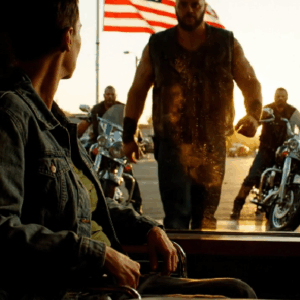
They Mocked A Paralyzed Veteran And Kicked Her Wheelchair, Unaware They Just Woke Up The Most Dangerous Assassin The Military Ever Created.
CHAPTER 1: THE GHOST OF PINE VALLEY The phantom pain was bad today. It felt like fire was licking at ankles that hadn’t been there for three years. Alex Winters adjusted her position in the wheelchair, her face remaining…

They Thought He Was Just A Frail Old Man Alone At A Truck Stop. But When The Gang Leader Spat In His Coffee, He Didn’t Flinch—He Just Made One Phone Call That Unleashed A Trap 20 Years In The Making.
Chapter 1: The Wolf at the Door The evening sun cast long, amber shadows across the cracked pavement of the Crossroads Truck Stop. It was a place out of time, situated on a lonely stretch of Interstate 40 where…

Navy Admiral Mocked A Single Dad Janitor In Front Of Everyone—Then He Learned The Man’s “Call Sign” And The Whole Base Froze.
Chapter 1: The Ghost of Coronado The morning fog still clung to the coastline of Coronado, a thick gray blanket that muffled the roar of the Pacific Ocean. Inside the primary administrative building of the Naval Base, the silence…
End of content
No more pages to load