The sound of tearing silk was louder than a gunshot in the grand ballroom. It was a sharp, violent rip that severed the last thread of my composure. One moment, I was Emily Mitchell, wife of Daniel, trying desperately to navigate the treacherous, glittering world of New York’s elite. The next, I was a spectacle. A quarry surrounded by a pack of impeccably dressed wolves, their laughter like the baying of hounds.
“Let’s see if it’s real silk!” a woman with diamonds dripping from her ears had shrieked, yanking the strap of my emerald gown. The fabric gave way, exposing my shoulder, and the crowd roared with derisive laughter. My husband, Daniel, stood just a few feet away, his face a pale mask of shock, his feet seemingly bolted to the floor. He was frozen, a statue of a man, while his family and their friends publicly dismembered his wife.
This was the Mitchell Charity Gala, the pinnacle of their social calendar, and I was the evening’s entertainment. It had all started with a toast from my mother-in-law, Eleanor. She’d stood on stage, a vision in Chanel, and spoken of “gold diggers” who attach themselves to wealthy families. Her eyes had pinned me in place from across the room, and in that instant, she had painted a target on my back. Now, her daughter, Victoria, was leading the assault, her friends tugging at my dress, their polished nails like claws.
My face burned with a shame so profound it felt like it was scorching me from the inside out. Tears welled, hot and traitorous, but I refused to let them fall. I would not give them the satisfaction. I tried to back away, to escape the suffocating circle, but they pressed in closer. Through a blur of faces twisted with scorn, I looked past the glittering chandeliers, up to the shadowed recesses of the upper balcony. And I saw a figure. A man standing perfectly still in the darkness, watching the entire grotesque spectacle unfold. There was no mockery in his posture, only a chilling, controlled stillness. I didn’t know who he was, but I felt his gaze like a physical force, and for a split second, the raucous noise of the ballroom seemed to fade.
It was Daniel who finally broke through his paralysis. He lunged forward, pushing the women away and pulling me into his arms. “Stop it! Are you all insane?” he yelled, his voice cracking. But the damage was done. The laughter subsided into a symphony of scandalized whispers. He wrapped his suit jacket around my shoulders, but it couldn’t cover the humiliation that clung to me like a second skin. He guided me through the crowd of gawking faces, his apologies a frantic, desperate murmur against my ear. “Emily, I’m so sorry, I… I didn’t know what to do.” His words were hollow. The one moment I needed him to be my husband, my protector, he had been a bystander.
As we reached the edge of the ballroom, a man stepped into our path, moving with a quiet authority that made people instinctively part for him. It was the man from the balcony. He was dressed in a simple, impeccably tailored dark suit, his face was one I knew better than my own, though it was a face the world rarely saw. He ignored Daniel completely. His eyes, full of a pain that mirrored my own, were fixed on me.
“You have endured enough,” he said, his voice a low, steady rumble. He gently took Daniel’s jacket from my shoulders and replaced it with his own. It was warmer, heavier, a mantle of absolute protection.
I looked up at him, my breath catching in my throat. “Dad?” I whispered.
The name rippled through the nearest onlookers. My father, Richard Parker, the reclusive founder of Parker Technologies and a billionaire many times over, had a famous aversion to the spotlight. I had honored his privacy, never using his name or fortune, determined to build my own life as an art teacher. The Mitchells knew I came from a comfortable background, but they had no idea of its true scope. They had no idea who they had just declared war on.
My father turned from me and walked toward the stage, his every step deliberate and heavy with purpose. A wave of recognition and frantic whispers followed him. Phones were raised, cameras flashing. On stage, Eleanor and Victoria’s faces went from confused to ashen as they finally realized who was approaching them.
Richard took the microphone from Eleanor’s trembling hand. He didn’t raise his voice. He didn’t have to. The room was utterly silent, hanging on the words of a man whose silence was rumored to move markets.
“Good evening,” he began, his voice carrying a cold, clear authority. “My name is Richard Parker. And that young woman you just saw fit to humiliate is my daughter.” A collective gasp swept through the ballroom. “Tonight, I came here hoping to see my daughter happy. Instead, I witnessed an act of such profound cruelty and vulgarity, it has stripped away any illusion of class or dignity this family pretends to possess.”
He paused, his piercing gaze sweeping over the Mitchells, who looked as if they had been turned to stone. “You stand here tonight, asking for donations in the name of charity. But what charity is in your hearts? You pride yourselves on your name, your lineage, your wealth. Yet what I saw tonight was not the behavior of the wealthy, but of the bankrupt. Morally bankrupt. Spiritually bankrupt.”
He turned his attention to the wider audience. “For those of you who called her a gold digger, let me be unequivocally clear. My daughter, Emily Parker, has never taken a single dollar from me that she did not earn. She has more integrity in her little finger than the entire Mitchell family has in their bloodline. She became a teacher because she believes in the power of art and knowledge, not because she needed a job. She chose to marry for love, and for that, you tried to crucify her.”
He let the words hang in the air before delivering the final, devastating blow. “You did not strip my daughter of her dignity tonight. You only revealed your own appalling lack of it. Shame on you. Shame on you all.”
With that, he set the microphone down and walked back to me, ignoring the eruption of noise, the frantic flashing of cameras, and Eleanor’s choked cry. He put his arm around me. “Let’s go home,” he said softly. For the first time all night, I let the tears fall—not of shame, but of a profound, overwhelming relief. As my father led me out of that room, leaving the ruins of the Mitchell family’s reputation behind us, I knew one thing for certain. They had underestimated the art teacher from Boston. But their gravest mistake was underestimating the quiet man who had been watching from the balcony.
The fallout was immediate and catastrophic. By morning, the story was on every major news outlet. #MitchellShame was trending online. Video of my father’s speech went viral. The Mitchell family’s carefully constructed world of prestige and influence imploded. Sponsors pulled out of their foundation. Long-time business partners distanced themselves. The social shunning was absolute.
Daniel, finally grasping the magnitude of the disaster, confronted his mother and sister. The screaming match, I was later told, could be heard throughout their mansion. He came to me, begging for forgiveness, promising to cut them out of our lives. But the image of him standing frozen while I was being torn apart was burned into my memory. “Daniel, your family’s hatred is one thing,” I told him, my voice quiet but firm. “But your silence when I needed you most… I don’t know if I can ever forget that.”
I didn’t need to. In the weeks that followed, I found my own strength, buoyed by my father’s unwavering support. He never once said, “I told you so.” He simply created a safe harbor for me to heal, reminding me of the woman I was before I had tried to shrink myself to fit into their world. I returned to teaching, finding solace in the bright, honest creativity of my students.
Months later, the Mitchells were a shadow of their former selves. Daniel, heartbroken and humbled, continued to reach out, not with excuses, but with a quiet, patient hope. Our future was uncertain, but for the first time, it was on my terms. I had walked into that gala as a wife trying to prove her worth. I walked out as a woman who finally understood her own value—a treasure far greater than any fortune. I was Emily Parker. And I was finally free.
News
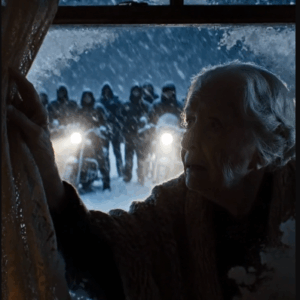
I Hid 20 Freezing Bikers From a Blizzard. The Next Morning, I Woke Up to a Roar That Shook My Entire House.
Chapter 1: The Invisible Woman The wind didn’t just blow that night; it screamed. It was a sound that tore through the cracks in the walls and settled deep in your bones. I stood by the kitchen window, watching…

I Fixed A Billionaire’s Broken Prototype With A Wrench. The Next Morning, A Black Hawk Helicopter Landed In My Trailer Park.
Chapter 1: The Ghost in the Machine The copper-colored sun was dying behind the thick clouds, casting long, bruising shadows across Woodbury Meadows. It was the kind of light that made everything look old. The trailer park smelled of…
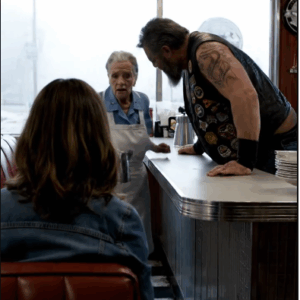
They Thought She Was Just A Lonely Customer. When The Biker Touched The Waitress, The Navy Commander Broke Her Silence—And His Arm.
Chapter 1: The Ghost in the Corner The morning fog rolled thick off the Atlantic, blanketing the streets of Port Haven in a ghostly shroud. It was the kind of heavy, wet mist that muffled sound and made the…
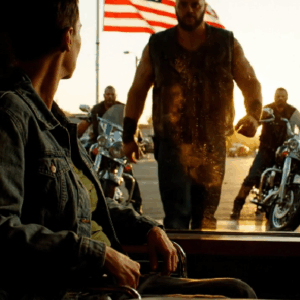
They Mocked A Paralyzed Veteran And Kicked Her Wheelchair, Unaware They Just Woke Up The Most Dangerous Assassin The Military Ever Created.
CHAPTER 1: THE GHOST OF PINE VALLEY The phantom pain was bad today. It felt like fire was licking at ankles that hadn’t been there for three years. Alex Winters adjusted her position in the wheelchair, her face remaining…
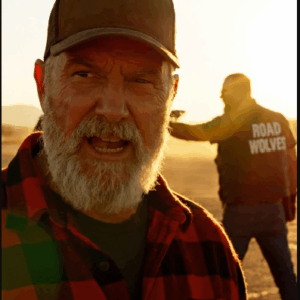
They Thought He Was Just A Frail Old Man Alone At A Truck Stop. But When The Gang Leader Spat In His Coffee, He Didn’t Flinch—He Just Made One Phone Call That Unleashed A Trap 20 Years In The Making.
Chapter 1: The Wolf at the Door The evening sun cast long, amber shadows across the cracked pavement of the Crossroads Truck Stop. It was a place out of time, situated on a lonely stretch of Interstate 40 where…

Navy Admiral Mocked A Single Dad Janitor In Front Of Everyone—Then He Learned The Man’s “Call Sign” And The Whole Base Froze.
Chapter 1: The Ghost of Coronado The morning fog still clung to the coastline of Coronado, a thick gray blanket that muffled the roar of the Pacific Ocean. Inside the primary administrative building of the Naval Base, the silence…
End of content
No more pages to load