THE BREAKING POINT: Inside the Crisis That Has Cathy Engelbert’s WNBA Leadership ‘On Life Support’
The WNBA is experiencing a phenomenon unique in the history of professional sports: its financial value is soaring, attendance records are shattered almost weekly, and cultural visibility is at an all-time high. Yet, amidst this golden age, the league’s top executive, Commissioner Cathy Engelbert, finds her leadership position under extreme duress, described by insiders as being “on life support.”
The internal struggle has reached a fever pitch, moving from a standard executive challenge to a full-blown crisis requiring the rare, public, and forceful intervention of NBA Commissioner Adam Silver. The core issue is a fundamental schism: the league’s executive office appears profoundly disconnected from the financial reality and cultural weight of the superstar players who are driving this boom, namely Caitlin Clark.

The Player Revolt: Disconnect at the Highest Level
The most immediate danger to Engelbert’s tenure is the complete breakdown of trust and communication with the athletes she is tasked with leading. This simmering discontent exploded into the public arena thanks to pointed criticism from some of the league’s most respected veterans.
The most damning quote came from WNBPA Vice President and Minnesota Lynx star Napheesa Collier, who openly lashed out at the executive structure, stating the league has the “worst leadership in the world.” This was not an isolated incident; it was the public crystallization of a widespread feeling among the players and coaches that the Commissioner’s office is failing to recognize their contribution and properly manage the league’s operational transition into a massive commercial entity.
The criticism is often focused on the lack of resources, disjointed travel logistics, and an overall failure to capitalize operationally on the sudden influx of attention. Players argue the league’s leadership is still operating with a “small business” mentality, even as their performance and star power demand a “major league” execution.
The Clark Effect Backlash: The Gratitude Controversy
The turning point that transformed player frustration into a full-scale crisis was the controversy surrounding Caitlin Clark. Clark, the undisputed catalyst for the WNBA’s commercial surge, has brought millions of new viewers, massive sponsorship deals, and unprecedented media coverage. She is, quite simply, the engine that is fueling the league’s potential billion-dollar future.
However, a highly controversial anecdote, allegedly stemming from the Commissioner’s office and later denied by Engelbert, suggested that Clark should be “grateful” for the WNBA platform, despite her reported eight-figure endorsement deals.
This suggestion—that the league’s highest-paid player, whose celebrity is driving the entire league’s valuation, should be simply grateful—was viewed by many in the WNBA and the media as being profoundly tone-deaf. It cemented the image of a Commissioner whose focus on the bottom line was overshadowing the primary sources of that revenue. The players and public recognized the reality: Clark doesn’t need the WNBA; the WNBA needs Clark. As one analyst noted, “If Clark ever said ‘I’m done,’… it’s over.”
This crisis of confidence has now become entangled with the urgent need to negotiate a new Collective Bargaining Agreement (CBA). The players are demanding that their compensation and working conditions reflect the massive new influx of revenue, and the pervasive climate of distrust with the Commissioner makes those high-stakes negotiations even more adversarial.
The NBA Boss Steps In: Adam Silver’s Intervention
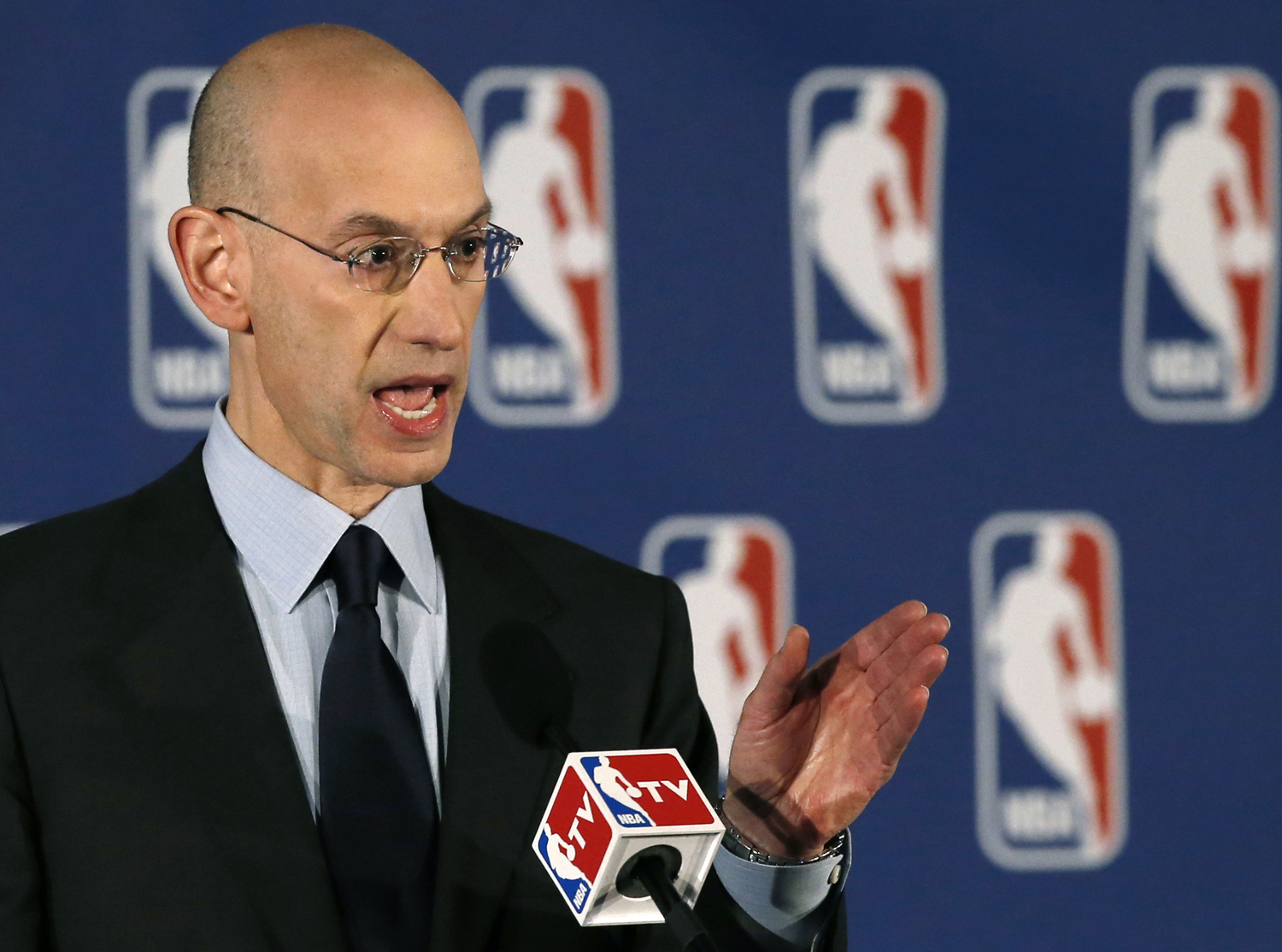
The dysfunction within the WNBA has grown so severe that it has finally forced the hand of the league’s ultimate authority, NBA Commissioner Adam Silver. Silver’s intervention signals that the crisis has escalated from an internal WNBA matter to an NBA-level financial threat.
Silver, who is currently navigating multi-billion-dollar media rights deals that often include the WNBA, publicly acknowledged the seriousness of the situation. In his statement, Silver was candid about the underlying executive failure, saying, “Cathy Engelbert has presided over six years of some of the strongest growth we’ve not only seen in the WNBA but any sports league in history. But it’s become too personal and we’re going to have to work through those issues.”

This statement is a stunning admission that the personal “relationship issues” between the Commissioner and her players are now the biggest hurdle to the league’s success. It puts the NBA on notice that the instability is threatening to undermine the entire basketball enterprise.
Protecting the Golden Goose
The WNBA’s escalating crisis is a direct threat to the massive financial value that the WNBA, primarily through Clark, is generating. When a Commissioner’s actions—such as the alleged “grateful” comments or the failure to lobby effectively for Clark’s inclusion in the Paris Olympics, which would have guaranteed massive NBC ratings—put the league’s commercial leverage at risk, the NBA owners take notice.
Silver has confirmed he is now working directly with NBA owners to address the league’s operations and financial structure. The focus is on two key areas:
- Valuation: Evaluating the precise “right valuation” of WNBA teams going forward.
- Operation: Determining the “best way to operate the league” moving ahead, hinting at potential organizational or executive restructuring.
Silver’s decision to intervene is a clear signal that the NBA cannot afford to let WNBA dysfunction undermine its multi-billion dollar business model. The boss of bosses has stepped in to stabilize a critical piece of his financial empire.
Conclusion: The Defining Moment
The crisis facing Cathy Engelbert is a defining moment for the WNBA. The league has crossed the threshold into the big-time, but its leadership is struggling to make the transition.
The WNBA requires an executive capable of navigating complex collective bargaining and media deals while simultaneously earning the trust and respect of the generational talents who are currently driving the revenue. With Adam Silver and the NBA owners now actively involved in assessing the league’s operational fitness, the clock is ticking for Commissioner Engelbert. If she cannot rapidly repair the fractured relationships and prove she can effectively shepherd the league into its new billion-dollar future, a forced change at the top is quickly becoming an inevitability to save the league from itself.