In the aftermath of the tragic shooting death of conservative figure Charlie Kirk, the nation has been grappling with a complex mix of grief, political division, and a fervent debate over his legacy. As flags were ordered to half-staff and conservative leaders hailed Kirk as a martyr for free speech, a powerful counter-narrative emerged from an unexpected source: the pulpit of the historic Alfred Street Baptist Church in Alexandria, Virginia. There, in a sermon that has since gone viral, Reverend Dr. Howard-John Wesley delivered a message that has forced America to confront its “selective rage” and the uncomfortable truth that, as he so pointedly put it, “How you die does not redeem how you lived.”
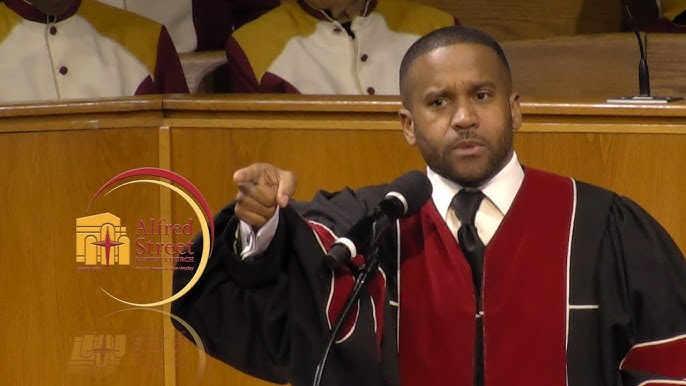
Reverend Wesley, a respected and influential figure in the Black church community, has long been known for his willingness to address pressing social and political issues from the pulpit. His church, which dates back to the early 19th century, has a deep-rooted history of advocacy for civil rights and social justice. In the days following Kirk’s death, as the political right mobilized to mourn and memorialize him as a victim of political violence, Wesley chose to offer a different perspective—one that, while condemning the act of violence, refused to turn a blind eye to the life that was lost.
He began his sermon by making his stance on the assassination unequivocally clear. “Charlie Kirk did not deserve to be assassinated,” Wesley said. This opening line was a critical foundation, establishing that his message was not about condoning violence in any form. But from there, the sermon took a sharp turn, pivoting to a searing critique of the national response.
Wesley spoke of the hypocrisy he saw in the widespread public mourning for Kirk, contrasted with the silence surrounding other victims of gun violence. He specifically referenced the recent deaths of Minnesota House Speaker Melissa Hortman and her husband, who were gunned down in their home, and whose deaths did not elicit the same national outpouring of grief or official tributes. This comparison resonated deeply, laying bare the deeply political nature of who America decides to mourn and how it chooses to do so.

“But I am overwhelmed seeing the flags of the United States of America at half-staff, calling this nation to honor and venerate a man who was an unapologetic racist and spent all of his life sowing seeds of division and hate into this land,” Wesley declared, his voice rising with a controlled passion.
The words were a direct challenge to the narrative being pushed by Kirk’s allies, who were portraying him as a victim and a hero. Wesley’s sermon was not just a reaction to a single event; it was a broader indictment of a society that he sees as honoring those who spread division while ignoring those who suffer from violence on a daily basis. He pointed out the irony of political leaders using the murder of a man who once said “a few gun deaths every year were an acceptable price to pay for the right to own guns” as a rallying cry against political violence.
To provide context for his powerful statements, Wesley’s sermon directly and indirectly referenced Kirk’s long history of controversial rhetoric. Kirk, through his media empire, built a brand on provocative and often inflammatory commentary. He had, in the past, referred to the landmark Civil Rights Act of 1964 as a “huge mistake.” He had also called civil rights icon Martin Luther King Jr. “awful,” a statement that has particularly angered Black clergy across the nation.
Wesley’s sermon was part of a larger, collective pushback from prominent Black pastors, who, in the days after Kirk’s death, used their pulpits to offer a moral clarity that they felt was missing from the national discourse. From New Birth Missionary Baptist Church’s Rev. Jamal Bryant to Friendship-West Baptist Church’s Rev. Freddy Haynes III, a chorus of voices echoed Wesley’s sentiment. They condemned the violence while rejecting the “martyr” label. They insisted that Kirk’s killing, while tragic, did not transform him into a symbol of faith or national heroism.
“How dare you compare him to Martin Luther King,” Rev. Bryant stated in a sermon, “The only thing they got in common is both of ’em was killed by a white man. After that, they got nothin’ else in common.” This sentiment, raw and uncompromising, captured the frustration felt by many who watched Kirk’s controversial legacy be sanitized in the wake of his death.
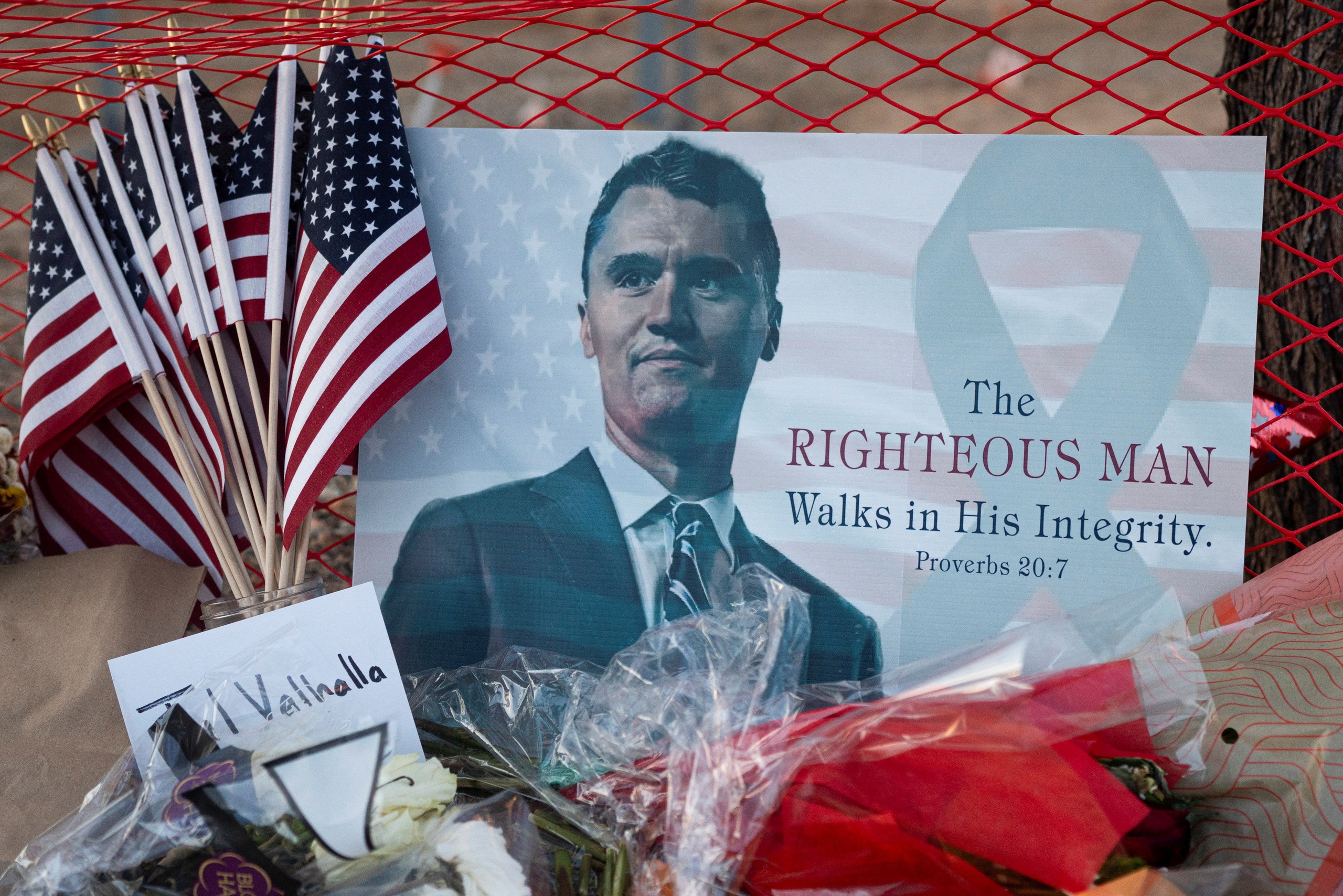
The sermons have gone viral online, sparking heated debates and becoming a major fault line in America’s racial and political divide. They have forced people to confront a difficult question: how should a nation mourn a figure whose life was dedicated to divisive rhetoric and political confrontation? Wesley’s answer was both compassionate and uncompromising. “I can be sorry about your death and not celebrate your life,” he said. It was a message that resonated with many, providing a framework for navigating a tragedy that is anything but simple.
In the end, Rev. Howard-John Wesley’s sermon was more than just a religious address. It was a profound statement on the moral hypocrisy of a nation, a challenge to its selective memory, and a powerful reminder that the true measure of a person is not found in how they die, but in how they live.
News
THEY LAUGHED WHEN THE “COFFEE GIRL” ASKED TO SHOOT — BUT WHEN SHE TOUCHED THE GUN OF THAT DIFFICULT RIFLE, A GENERAL CAME UP AND SALUTED HER.
CHAPTER 1: THE INVISIBLE WOMAN Dawn cracks over the Arizona desert like a bruised knuckle—purple, orange, and violent. Captain Emily Brooks woke without an alarm at 0400. She always did. Her body was tuned to a rhythm that didn’t exist…
They Called Her “De3d Weight” And Mocked Her “PTSD” — But When The Commander Whispered Two Words, The “BROKEN” Soldier Didn’t Just Wake Up… She Became The Most Dangerous Person In The Room
Chapter 1: The Dead Weight The brake lights of the transport van burned red against the bleaching sun of the Nevada desert. Staff Sergeant Olivia Harper stepped onto the cracked asphalt, her boots crunching on the grit. She favored her…
MY FATHER ACCUSED ME OF BEING A TRAITOR AND HE TOASTED HIS GLASS FOR IT. BUT UNFORTUNATELY HE CELEBRATED TOO SOON, BECAUSE RIGHT THERE, MY SEAL TEAM BURST IN SAYING, “ADMIRAL, WE’VE ARRIVED”
PART 1: THE ACCUSATION Chapter 1: The Sound of Steel The applause was polite, measured, the kind of sound that fills a room but never actually reaches the heart. It was the sound of Charleston high society pretending to care…
THEY LAUGHED AT THE “OFFICE GIRL” WHO SAID SHE COULD DISARM THE NUKE… UNTIL SHE TYPED IN A CODE THAT DOESN’T EXIST?
PART 1: THE INVISIBLE WOMAN Chapter 1: The Dead Man’s Switch The radio crackles with the sound of a man dying. Then, static. Then, the terrified voice of a corporal screaming into the void. “All units, code black! I repeat,…
THEY RIPPED HER FACE APART TO “SAVE THE UNIVERSE” — The horrifying truth about ancient Egypt’s most terrifying, censored fears that they hid from textbooks that you never knew existed.
PART 1: THE PURIFICATION Chapter 1: The Weight of the Placard The year is 1473 Before Christ. The location is the west bank of the Nile, just outside the sprawling, golden city of Thebes. Dawn is breaking, but it brings…
Jon Stewart SLAMS Desk, Calls Out 25 Hollywood Names on Live TV; The One Line That Sent Panic Across Los Angeles Studios
THE NIGHT THE DAILY SHOW STOPPED LAUGHING: How Eight Heavyweights, One Line, and Twenty Minutes Ignited a National Reckoning On most nights, late-night television functions as America’s unofficial cultural therapy, an escape valve where comedy dilutes the severity of the…
End of content
No more pages to load