The Filthy Truth: Walking into the Real Saloon
The image is ingrained in our collective memory: the lone rider, the swinging doors, the immediate silence, and the promise of a legendary showdown. It’s the Wild West Saloon, a pillar of American mythology. But if a time machine dropped you into the real 1880s equivalent, the shock wouldn’t come from a bullet—it would come from the smell.
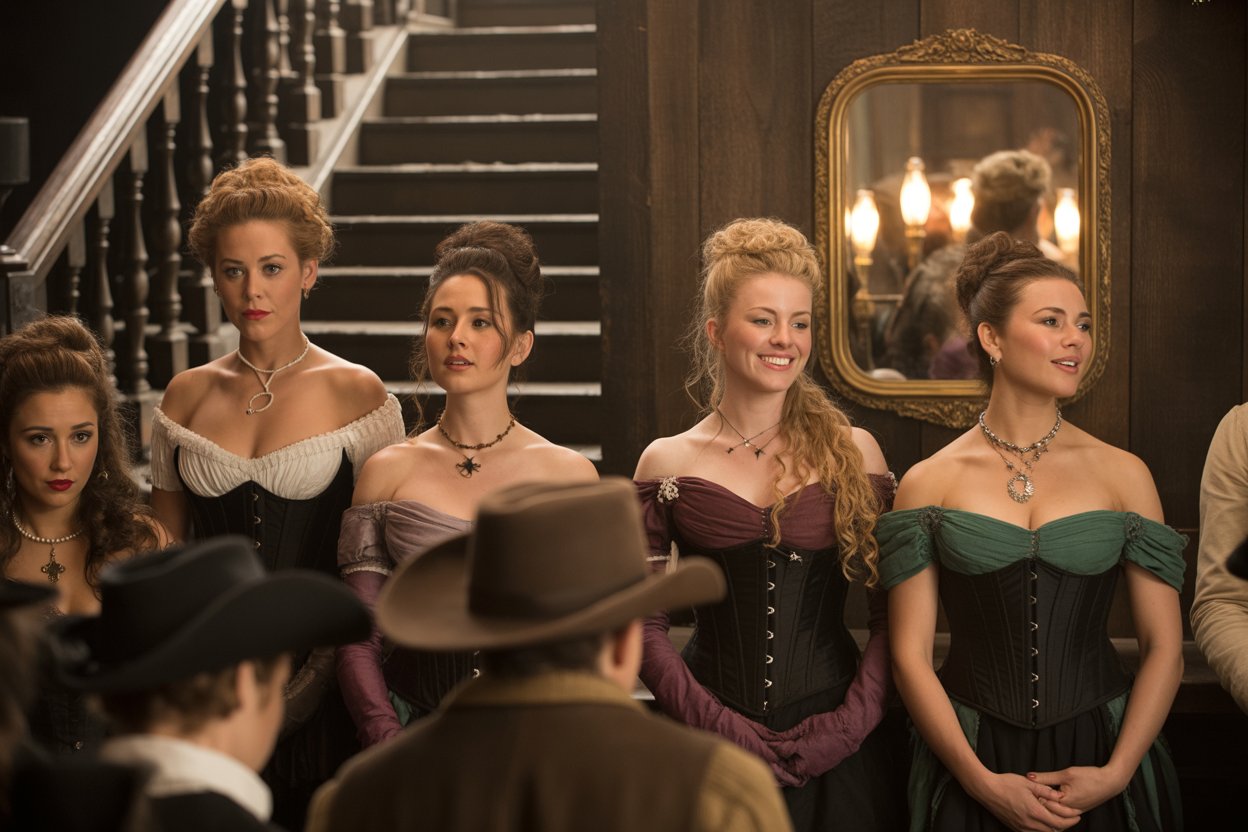
We’re stripping away the romance of the movies to confront a far more compelling historical truth: the frontier saloon was a raw, unsanitary, and often deadly place where filth, not fame, reigned supreme.
1. The Building: A False Front for a Foul Reality
Forget the elaborate mahogany and brass of the modern Western film set. The very first saloons were born of desperation and expediency. In a new mining claim or a booming railroad town, speed was everything. The saloon was always the first business to appear, sometimes existing only as a crude tent, a makeshift lean-to, or a shoddy shack built from whatever scrap wood or sod was available.
As towns grew, these would be replaced by simple wooden structures, often featuring a “false front.” This facade was a purely theatrical trick—a tall, elaborate front wall built onto a single-story box structure to make the building look grander and more substantial than it actually was. It was an attempt to project stability in a world defined by chaos. Only in established, wealthy centers like Deadwood or Tombstone would you find genuinely elaborate saloons, but even these struggled against the overwhelming tide of frontier grime.
The experience of entering the saloon was immediate and assaulting to the senses. The smell was the first thing that hit you: a thick, sickening cocktail of stale beer, the chemical bite of cheap liquor, the pervasive stench of unwashed bodies, and the dense cloud of tobacco smoke. With unpaved streets outside, every time the iconic batwing doors—which were truly there primarily for ventilation, not drama—swung open, a fresh wave of dust and manure blew in.
The main soundtrack wasn’t a piano (music was a costly luxury) but the low, rough murmur of voices, punctuated by the hacking coughs of sick men. Visually, the place was just dark and perpetually grimy. The floors were rough planks, covered in a perpetually damp layer of sawdust meant to absorb spills and tobacco spit, creating a sticky, filthy surface. The bar itself was slick, the glassware was poorly washed, and the whole interior was dimly lit by flickering, smoky kerosene lamps.
2. A Breeding Ground for the Invisible Killer
The dirt was more than aesthetic; it was lethal. The Wild West saloon wasn’t just unsanitary—it was a biological time bomb. The threats inside were invisible and far more dangerous than any quick-draw duel.
Frontier Hygiene: For the average person, bathing was a huge and infrequent chore. Water had to be hauled by hand and heated over a fire, making a daily wash impossible. It was common for a family to share the same small tub of water, with the father washing first and the youngest child last, leaving the water cold and thick with filth. Dental hygiene was just as poor. If a tooth became infected, the only recourse was a painful extraction by the local barber or blacksmith, often assisted only by a shot of rotgut for the pain.
Municipal Filth: The towns themselves were no better. There were no sewer systems; human and animal waste was simply dumped into open pits or collected in outhouses outside of town. This overwhelming filth was constantly tracked into the crowded saloon, a paradise for pests like lice, flies, and roaches.
This confluence of poor personal hygiene, total lack of public sanitation, and pest infestation turned the saloon into an incredibly efficient engine for spreading disease. You were far more likely to die from something you caught here than from a bullet:
- Cholera could rip through a saloon from shared, unwashed glasses and contaminated water used to cut the whiskey.
- Tuberculosis (or consumption) spread easily in the close, smoky, ill-ventilated rooms.
- Smallpox would have spread like wildfire among a transient and often unvaccinated clientele.
In the final accounting of frontier mortality, disease was the single greatest killer, overwhelmingly eclipsing the highly romanticized violence.
3. The Poison in the Glass: Rotgut and Coffin Varnish
Beyond the physical and biological filth, a third, insidious kind of contamination flowed freely: the liquor itself. The whiskey consumed by cowboys and miners was rarely the smooth, aged bourbon we imagine. It was a cheap, disgusting, and often outright poisonous concoction known by descriptive names like “Coffin Varnish,” “Tarantula Juice,” or “rotgut.”
True, aged whiskey was a rare and costly luxury, far beyond the means of the average working man whose daily wage might only be around a dollar. To meet the insatiable demand for cheap liquor, saloonkeepers became makeshift chemists, creating fake spirits on the premises.
The recipe for “whiskey” was horrifying:
- Base: Cheap, raw grain alcohol.
- Color and Kick: Burnt sugar or molasses was added for color, and a plug of chewing tobacco might be steeped in the mix to give it a rough “kick” with a dose of nicotine.
- The Poison: The most alarming ingredients included actual industrial chemicals. Recipes for fake bourbon sometimes called for additives like turpentine (a strong solvent) and creosote (a wood preservative).
The final product was a harsh liquid that could cause violent illness and literal damage. The name “rotgut” wasn’t hyperbole; it was a literal description of its corrosive effect on the digestive tract. This dangerous practice was a widespread industry with virtually no government regulation.
Even the beer was a disappointment. Without refrigeration, it was served at room temperature, usually flat and stale. And just like the whiskey, it was sometimes doctored with narcotics to make it seem stronger or more addictive, ensuring repeat business.
4. Violence and Vice: Less Drama, More Lethality
The saloon’s reputation as a den of vice was certainly earned, but the reality was far less cinematic.
Real Violence: The classic bar brawl—the massive, chaotic free-for-all—is a movie invention. Real saloon violence was sporadic, deeply personal, and much more lethal. It was typically a quick, brutal, and deadly encounter between two or three men over a gambling dispute or a perceived insult. Many towns, recognizing this danger, implemented a simple form of gun control, forcing patrons to check their firearms at the door. This ensured that most disputes were settled with fists or knives, not bullets, making the risk of a spectacular gunfight surprisingly low.
Gambling: This was the main event. There was a clear distinction between the respected “square dealers” who built reputations for honesty and the traveling cardsharps who preyed on newcomers using marked cards, mirrored rings, and other quick-handed tricks.
The Role of Women: The women in saloons also had nuanced roles. “Saloon girls” were entertainers—their job was to sing, dance, and converse with lonely patrons to encourage them to buy more drinks. For many women, this was a difficult but viable path to financial independence. Prostitution was a separate, much more dangerous, and marginalized line of work.
5. Rigid Rules and Hard Lines of Exclusion
Contrary to the image of a chaotic free-for-all, the saloon was a highly structured environment governed by rigid, unwritten rules and stark lines of exclusion. It was the social center of the white male frontier, a space where cowboys, miners, lawmen, and outlaws could mix, often blurring the lines between authority and criminal.
However, the “melting pot” had firm boundaries:
- Respectable Women were strictly excluded. A “respectable” woman would never set foot inside a saloon.
- Racial Exclusion was the rule. Native Americans and Chinese immigrants were generally barred. While Black men were a significant part of the West (historically making up a substantial portion of the population in states like Texas and Kansas, often 5% to over 15%), they were generally excluded from white-owned saloons and instead established their own social centers.
- U.S. Army Soldiers were often unwelcome, as many patrons felt a deep-seated disdain for the uniform and the federal authority it represented.
Within the accepted group of white male patrons, behavior was governed by a strict code. Privacy was paramount—you never asked a man personal questions about his past. And the powerful custom of buying a round of drinks was a social requirement. Refusing a drink offered to you was a grievous insult that could quickly escalate into violence.
The historical truth of the Wild West saloon is a powerful symbol of the American West. It was a raw, filthy, disease-ridden hub that served poisonous liquor to a select clientele governed by rigid social codes. This grimy reality is a more accurate, and ultimately more compelling, picture of real people struggling to survive in a harsh and unforgiving world than any movie myth could ever be.
What part of this grim reality—the poisonous whiskey, the rampant diseases, or the strict social rules—did you find the most shocking?
News
THEY LAUGHED WHEN THE “COFFEE GIRL” ASKED TO SHOOT — BUT WHEN SHE TOUCHED THE GUN OF THAT DIFFICULT RIFLE, A GENERAL CAME UP AND SALUTED HER.
CHAPTER 1: THE INVISIBLE WOMAN Dawn cracks over the Arizona desert like a bruised knuckle—purple, orange, and violent. Captain Emily Brooks woke without an alarm at 0400. She always did. Her body was tuned to a rhythm that didn’t exist…
They Called Her “De3d Weight” And Mocked Her “PTSD” — But When The Commander Whispered Two Words, The “BROKEN” Soldier Didn’t Just Wake Up… She Became The Most Dangerous Person In The Room
Chapter 1: The Dead Weight The brake lights of the transport van burned red against the bleaching sun of the Nevada desert. Staff Sergeant Olivia Harper stepped onto the cracked asphalt, her boots crunching on the grit. She favored her…

MY FATHER ACCUSED ME OF BEING A TRAITOR AND HE TOASTED HIS GLASS FOR IT. BUT UNFORTUNATELY HE CELEBRATED TOO SOON, BECAUSE RIGHT THERE, MY SEAL TEAM BURST IN SAYING, “ADMIRAL, WE’VE ARRIVED”
PART 1: THE ACCUSATION Chapter 1: The Sound of Steel The applause was polite, measured, the kind of sound that fills a room but never actually reaches the heart. It was the sound of Charleston high society pretending to care…

THEY LAUGHED AT THE “OFFICE GIRL” WHO SAID SHE COULD DISARM THE NUKE… UNTIL SHE TYPED IN A CODE THAT DOESN’T EXIST?
PART 1: THE INVISIBLE WOMAN Chapter 1: The Dead Man’s Switch The radio crackles with the sound of a man dying. Then, static. Then, the terrified voice of a corporal screaming into the void. “All units, code black! I repeat,…
THEY RIPPED HER FACE APART TO “SAVE THE UNIVERSE” — The horrifying truth about ancient Egypt’s most terrifying, censored fears that they hid from textbooks that you never knew existed.
PART 1: THE PURIFICATION Chapter 1: The Weight of the Placard The year is 1473 Before Christ. The location is the west bank of the Nile, just outside the sprawling, golden city of Thebes. Dawn is breaking, but it brings…

Jon Stewart SLAMS Desk, Calls Out 25 Hollywood Names on Live TV; The One Line That Sent Panic Across Los Angeles Studios
THE NIGHT THE DAILY SHOW STOPPED LAUGHING: How Eight Heavyweights, One Line, and Twenty Minutes Ignited a National Reckoning On most nights, late-night television functions as America’s unofficial cultural therapy, an escape valve where comedy dilutes the severity of the…
End of content
No more pages to load