The Texas sun beat down on a hidden barn, where the sound of chains and the crack of a whip were the only laws. Four years after the Civil War ended, the market for human despair still thrived in the shadows.
On a rough wooden platform stood a young girl, barefoot, her wrists bound by rusted iron. She was seventeen, her dress in tatters, her face bruised. Her name was Lena Cartwright.
“Next one. 17. No husband, no family. Been sold three times already. Won’t talk, won’t work. $5 to start.”
In a time when brute labor was valued, a silent, broken girl was useless. The bidding stagnated. A man in the front spat in the dirt. Not worth a single dime. Lena stared at the ground, unmoving. Crying never changed anything here. She had learned silence was the only shield left.
Then, a voice cut through the oppressive heat—calm, deep, steady.
“I’ll pay $20.”
All heads turned to the back of the crowd. Grant McCade, 56, stood there, a handful of crumpled bills in his hand. He looked like a man carrying the weight of a decade of regret. The auctioneer blinked, shocked, then the gavel slammed down. Sold.
As Grant stepped closer, pulling off his worn hat, his heart stopped. He saw the scar—a small crescent on her wrist. He had wrapped that wound himself eight years ago. He remembered the little girl hiding behind her father’s leg, asking if it would leave a mark. He had lied.
The auctioneer shoved Lena forward. Grant caught her before she fell. Her skin was burning hot with fever. She looked up at him for the first time, her green eyes hollow and empty. He whispered her name, “Lena.” A flicker of some half-buried memory crossed her eyes, but she pushed it down. Folks in her shoes learned fast not to trust old faces. She didn’t remember him.
Grant counted his last coins into the auctioneer’s palm. He walked away with the girl who hadn’t spoken in years, the past breathing down his neck with every step.
Eight years ago, his father’s greed had condemned the Cartwright family. Now, the last piece of that family walked beside him, silent, broken, and alive.
The dirt road stretched under a merciless sky. Grant stopped the horses, pulled a key from his pocket, and unlocked the chains on her ankles.
“No one should wear these in a free country,” he muttered. Lena’s fear was a palpable heat, and every time he looked back at her on the smaller mare, her head was bowed.
They stopped near a big oak tree, the shade a blessed relief. Grant handed her his canteen, careful not to get too close. She gripped it tight, her eyes narrowed like she was sizing him up, used to assessing every false kindness.
She took a sip, wiped her mouth, and then looked straight at him, her voice quiet but sharp enough to cut through bone.
“Guess you got what you paid for. Do what you want.”
Grant froze. The words stung worse than a bullet. He knelt slowly, hands empty.
“I didn’t buy you to own you,” he said.
“I just didn’t want to see them sell you again.”
She let out a short, dry, bitter laugh.
“You think that makes it better?”
There was no answer that would sound right. He stared at his boots, sweat mixing with the dust on his hands.
“I knew your family,” he finally said.
“Your father was a good man. I should have done more when they came for him.”
Lena turned her face away.
“Everybody says that after it’s too late.”
Grant put his hat back on and followed her back onto the road. He wondered how many miles it would take before she stopped seeing him as the enemy, or if she ever would.
And somewhere in that silence, one thought kept burning: What would she do when she learned the truth?
They reached his remote ranch as the sun dipped behind the hills. Lena worked without a word for the next few days, feeding the horses and hauling water. They lived like two ghosts sharing the same ground, their silence a heavy shroud.
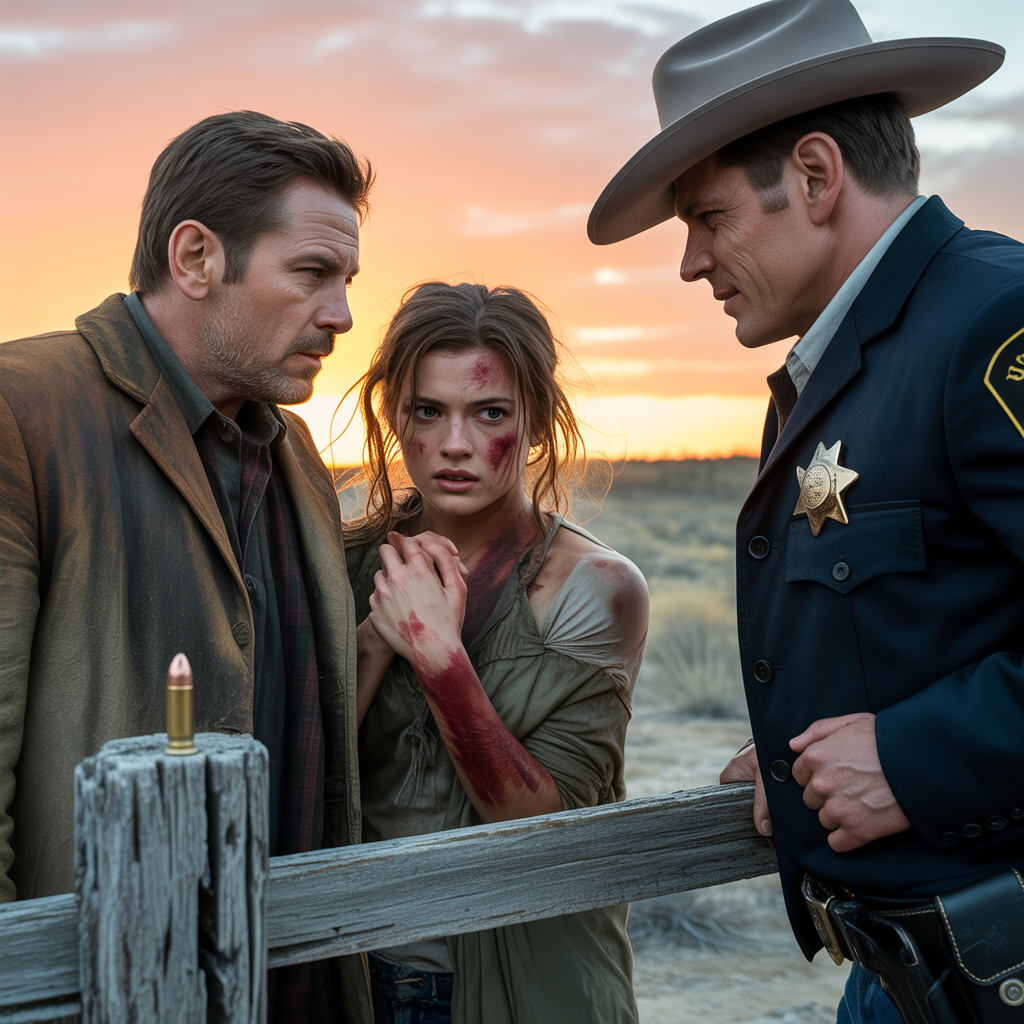
But out here, silence never lasted long. On the third day, the dust plume of three riders appeared. Grant immediately recognized the glint of a badge.
Sheriff Dalton, the man who had once called himself a protector of justice, the very man who had led the raid to burn the Cartwright farm to ash.
Dalton dismounted, his smirk fading for a split second as his eyes landed on Lena and the small crescent scar on her wrist.
“Now that’s a face I thought I’d never see again,” he drawled.
“Old secrets from the war days don’t stay buried easy in these parts.”
Grant stepped between them.
“You’ve had your look.”
Dalton laughed, a cruel, rattling sound.
“You buying lost girls now, Grant? Were she here to keep you warm at night?”
“I paid for her freedom,” Grant said, his voice low and steady.
“Not her body.”
Dalton’s hand rested on the gun at his hip.
“Well, that’s mighty noble of you, but you see, I remember that name, Cartwright. Her daddy was a traitor.” The same old lie he’d spun to justify the raid, calling honest farmers traitors to seize their land in the chaos after the war.
Lena froze, her mind flashing back to the flames. She wanted to scream the truth, but years of survival taught her silence.
“She’s under my protection,” Grant stated.
Dalton chuckled, then reached into his pocket and placed a single bullet on the fence post between them.
“A reminder, Grant,” he said softly.
“Some ghosts don’t stay buried.”
That night, the wind howled, carrying the smell of rain and old memories. Grant sat by the small fire in the cabin. Lena finally broke the tense silence, placing a small, worn silver pocket watch on the rough wooden table. The initials R.C. were faintly carved on its back.
“Recognize it?” she asked quietly.
Grant’s hand froze. He did. Robert Cartwright. Her father.
“I found it in a bag left behind after the raid,” she said.
“It was the last thing he gave me before the soldiers came… ‘Keep this safe, Lena.'” She looked up at him, her eyes sharp but wet.
“You knew him, didn’t you? Then tell me the truth. What really happened that night?”
Grant stared at the flames, which flickered and twisted like dancing ghosts. Finally, he spoke, each word slow and heavy.
“My father sold out your family for their land after the war. I overheard him telling the soldiers. I rode to warn your pa, but it was too late. Everything was burning. I was a coward. I lived, and they didn’t.”
Lena reached for the watch, her fingers shaking as she closed her hand around it.
“You think telling me this makes it better?” she asked, her voice broken.
“No,” he said softly.
“It doesn’t. But you deserve to know who you’re standing next to.”
The fire hissed between them. Lena finally spoke again, voice almost a whisper.
“If your father did all that, why are you the one carrying the guilt?”
“Cuz I was there. Cuz I did nothing. And because I’m still breathing when they’re not,” he said, his eyes tired but steady.
For the first time since they met, Lena’s anger seemed to falter. Not gone, but cracked. Like something inside her was trying to understand.
The next morning, the storm was gone. Grant went out to fix the broken fence, his back aching with years of physical work and emotional regret. He didn’t hear Lena until she spoke behind him.
“You’re doing it wrong.”
He turned. She was holding the hammer, her hair messy, her eyes clear. Without another word, she came over and started helping him. They worked side by side for hours, the only sounds the hammer and the wind. In that quiet rhythm, something began to change.
Not love, not yet, but something that felt close to peace.
Later that evening, Grant built two small wooden crosses near the fence line, carving the names by hand. One for Robert Cartwright, one simply marked ‘family.’ Lena knelt beside them, tracing the letters. Then she stood, walked up to Grant, and placed the watch back into his hand.
“I think it’s time you keep it,” she said softly.
He shook his head.
“No. It belongs to them.”
She smiled, a small, tired, but real expression.
“Then let it stay here.”
That night, she didn’t sleep in the corner by the door. She sat by the window, watching the stars. And Grant, sitting across the room, finally felt like he could breathe again.
Days turned into weeks. Lena stayed. She mended clothes and planted seeds. The ghost that haunted the ranch began to fade.
Maybe forgiveness doesn’t come in a single moment of grand confession. Maybe it grows the way grass pushes through burned soil, quiet and slow. And maybe healing is simply the courage to make it right, even when you know you can never make it go away.
News
THEY LAUGHED WHEN THE “COFFEE GIRL” ASKED TO SHOOT — BUT WHEN SHE TOUCHED THE GUN OF THAT DIFFICULT RIFLE, A GENERAL CAME UP AND SALUTED HER.
CHAPTER 1: THE INVISIBLE WOMAN Dawn cracks over the Arizona desert like a bruised knuckle—purple, orange, and violent. Captain Emily Brooks woke without an alarm at 0400. She always did. Her body was tuned to a rhythm that didn’t exist…
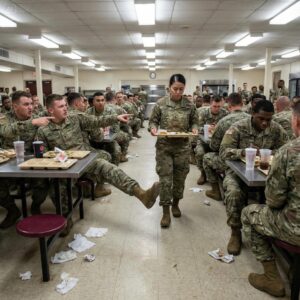
They Called Her “De3d Weight” And Mocked Her “PTSD” — But When The Commander Whispered Two Words, The “BROKEN” Soldier Didn’t Just Wake Up… She Became The Most Dangerous Person In The Room
Chapter 1: The Dead Weight The brake lights of the transport van burned red against the bleaching sun of the Nevada desert. Staff Sergeant Olivia Harper stepped onto the cracked asphalt, her boots crunching on the grit. She favored her…
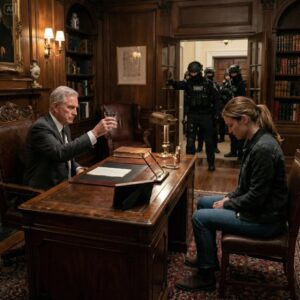
MY FATHER ACCUSED ME OF BEING A TRAITOR AND HE TOASTED HIS GLASS FOR IT. BUT UNFORTUNATELY HE CELEBRATED TOO SOON, BECAUSE RIGHT THERE, MY SEAL TEAM BURST IN SAYING, “ADMIRAL, WE’VE ARRIVED”
PART 1: THE ACCUSATION Chapter 1: The Sound of Steel The applause was polite, measured, the kind of sound that fills a room but never actually reaches the heart. It was the sound of Charleston high society pretending to care…
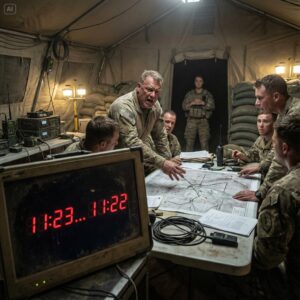
THEY LAUGHED AT THE “OFFICE GIRL” WHO SAID SHE COULD DISARM THE NUKE… UNTIL SHE TYPED IN A CODE THAT DOESN’T EXIST?
PART 1: THE INVISIBLE WOMAN Chapter 1: The Dead Man’s Switch The radio crackles with the sound of a man dying. Then, static. Then, the terrified voice of a corporal screaming into the void. “All units, code black! I repeat,…

THEY RIPPED HER FACE APART TO “SAVE THE UNIVERSE” — The horrifying truth about ancient Egypt’s most terrifying, censored fears that they hid from textbooks that you never knew existed.
PART 1: THE PURIFICATION Chapter 1: The Weight of the Placard The year is 1473 Before Christ. The location is the west bank of the Nile, just outside the sprawling, golden city of Thebes. Dawn is breaking, but it brings…

Jon Stewart SLAMS Desk, Calls Out 25 Hollywood Names on Live TV; The One Line That Sent Panic Across Los Angeles Studios
THE NIGHT THE DAILY SHOW STOPPED LAUGHING: How Eight Heavyweights, One Line, and Twenty Minutes Ignited a National Reckoning On most nights, late-night television functions as America’s unofficial cultural therapy, an escape valve where comedy dilutes the severity of the…
End of content
No more pages to load