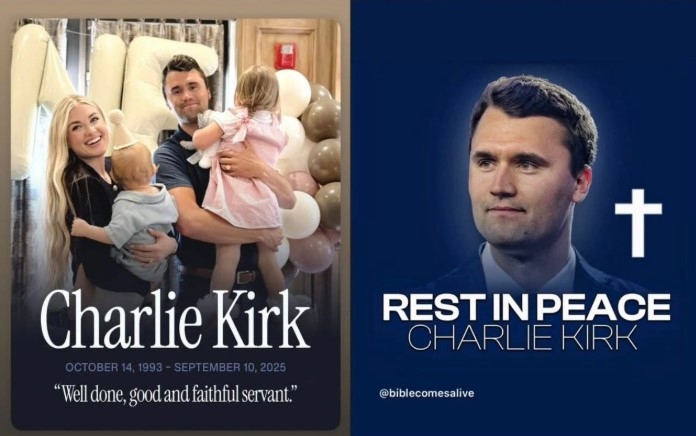
In a nation increasingly defined by its sharp political divides, a public assassination has once again ripped a hole in the fabric of civil discourse. The shocking news of Charlie Kirk’s death at Utah Valley University has sent a profound jolt through the country, prompting a wave of grief, outrage, and sober reflection. Amidst the immediate shock, one of the most poignant responses has come from Robert F. Kennedy Jr., a figure whose family history is tragically intertwined with the very concept of political assassination. His words, delivered with a sense of historical weight and personal sorrow, have framed this act not just as a tragedy, but as a stark warning about the path the country is on.
The incident unfolded on a campus stage, a place traditionally reserved for the free exchange of ideas. Kirk, a prominent and often provocative figure in conservative media and the founder of Turning Point USA, was a familiar presence in the public square, known for his unfiltered commentary and a relentless defense of what he saw as core American principles. His public appearances were often met with both fervent support and fierce opposition, embodying the high-stakes nature of modern political debate. It was in this very forum, in the midst of a planned event, that the discourse was silenced by a violent act, a moment that has been described as a brutal and unthinkable end to a life dedicated to public speech.
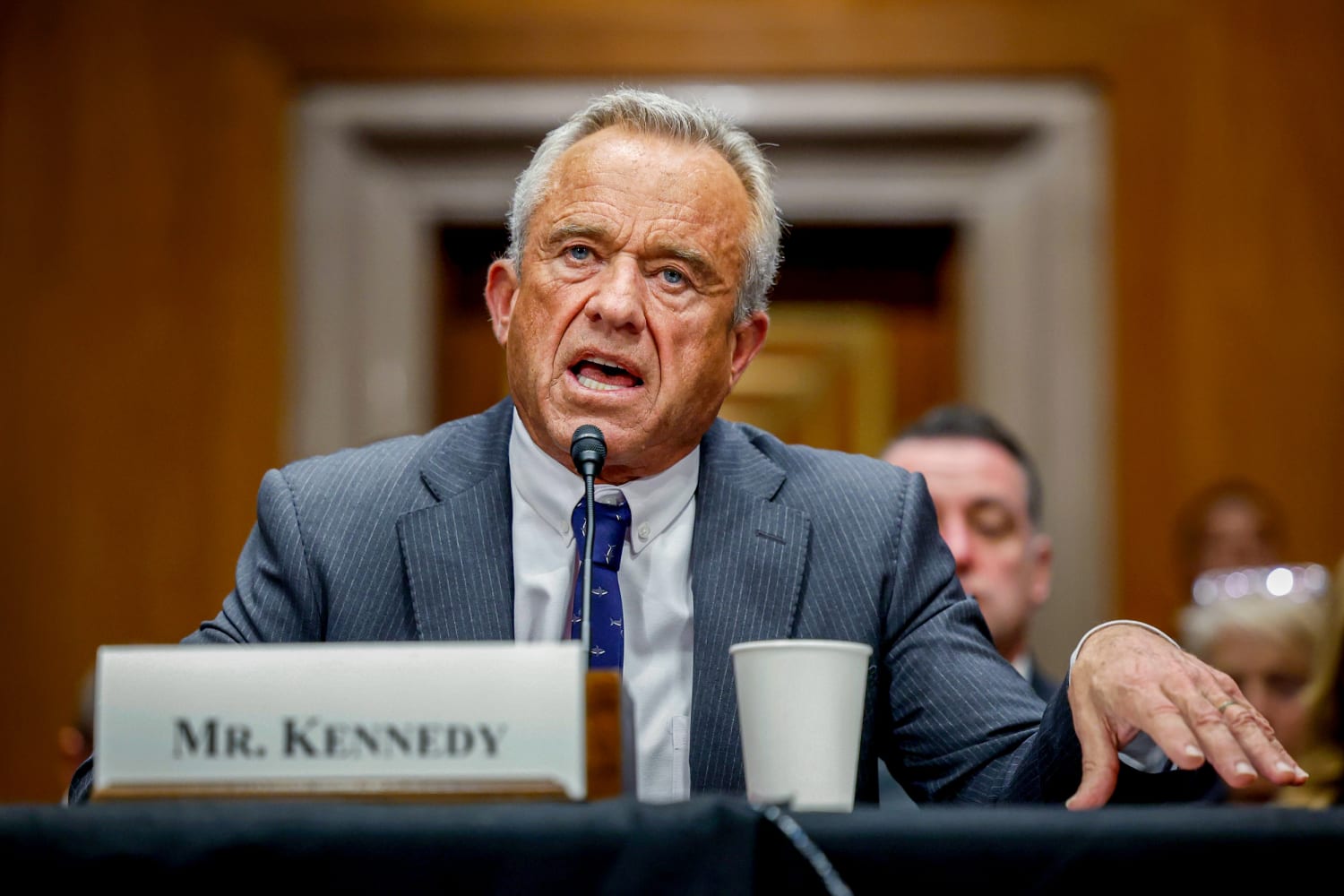
Immediately following the news, Robert F. Kennedy Jr. issued a statement that resonated deeply with the national mood. In his message, he honored Kirk not just as a political opponent or a fellow public figure, but as a symbol of something larger. Kennedy stated, “Charlie Kirk was our country’s relentless and courageous crusader for free speech.” This description, coming from a voice that has often been at odds with Kirk’s own, highlighted a shared commitment to a fundamental democratic value. He continued, reflecting on a bitter truth that has haunted his own family, saying that “once again, a bullet has silenced the most eloquent truth teller of an era.”
This particular phrase, “the most eloquent truth teller of an era,” is not one to be taken lightly. It bestows upon Kirk a mantle of profound importance, elevating his life’s work to a critical role in the national dialogue. For Kennedy, whose father and uncle were both felled by assassins’ bullets, the experience is not just an abstract tragedy. It is a part of his personal narrative, a lived history of loss and political violence. His empathy in this moment is both genuine and historically informed. The statement went on to offer prayers for Kirk’s family, a gesture of simple human kindness in the face of an incomprehensible loss. He also made a plea for unity, urging Americans to seek a different way forward.

Kennedy’s call to action is particularly striking. He urged Americans to “seek unity in light of increasing political violence.” This is more than a simple platitude; it is a recognition of a dangerous trend that has been escalating in recent years. The political climate has become so charged, the rhetoric so inflammatory, and the divides so deep that the potential for violence feels ever-present. This assassination, in a public setting and in a public manner, serves as a grim and immediate manifestation of that potential. It highlights how the seemingly abstract divisions in political thought can boil over into real-world tragedy, with irreversible consequences.
The assassination of a figure like Charlie Kirk is more than just the loss of a single life. It is a blow to the very foundation of public discourse. When a person can be struck down for expressing their beliefs, it sends a chilling message to everyone else. It makes people question the safety of speaking out, of holding rallies, of engaging in public debate. It can lead to a climate of fear, where self-censorship becomes a form of self-preservation. In a healthy democracy, ideas are meant to be debated, challenged, and refined in the open. They are not meant to be silenced by violence.
The tragedy also brings to light the role of universities and public spaces in a polarized world. Utah Valley University, like many campuses, is a place where a wide range of speakers are invited to present their views. The intent is to foster a marketplace of ideas, to encourage students to think critically and to engage with different perspectives. But when an event on campus can end in violence, it challenges the very notion of a safe space for dialogue. It forces institutions and individuals alike to grapple with the security implications of free speech in an increasingly hostile environment.
In the wake of this tragedy, there is a clear and urgent need for a national conversation—one that moves beyond simple finger-pointing and seeks a deeper understanding of the forces at play. Robert F. Kennedy Jr.’s response, with its focus on unity and his acknowledgment of the shared history of political assassination, provides a powerful starting point. He is calling on the nation to look inward, to confront the roots of its division, and to find a way to honor the legacy of those who have been silenced, not by escalating the conflict, but by seeking a path of peace and reconciliation. The assassination of Charlie Kirk is a devastating loss, but perhaps it can also serve as a tragic catalyst for a much-needed change in how we, as a nation, engage with one another.
News
THEY LAUGHED WHEN THE “COFFEE GIRL” ASKED TO SHOOT — BUT WHEN SHE TOUCHED THE GUN OF THAT DIFFICULT RIFLE, A GENERAL CAME UP AND SALUTED HER.
CHAPTER 1: THE INVISIBLE WOMAN Dawn cracks over the Arizona desert like a bruised knuckle—purple, orange, and violent. Captain Emily Brooks woke without an alarm at 0400. She always did. Her body was tuned to a rhythm that didn’t exist…
They Called Her “De3d Weight” And Mocked Her “PTSD” — But When The Commander Whispered Two Words, The “BROKEN” Soldier Didn’t Just Wake Up… She Became The Most Dangerous Person In The Room
Chapter 1: The Dead Weight The brake lights of the transport van burned red against the bleaching sun of the Nevada desert. Staff Sergeant Olivia Harper stepped onto the cracked asphalt, her boots crunching on the grit. She favored her…
MY FATHER ACCUSED ME OF BEING A TRAITOR AND HE TOASTED HIS GLASS FOR IT. BUT UNFORTUNATELY HE CELEBRATED TOO SOON, BECAUSE RIGHT THERE, MY SEAL TEAM BURST IN SAYING, “ADMIRAL, WE’VE ARRIVED”
PART 1: THE ACCUSATION Chapter 1: The Sound of Steel The applause was polite, measured, the kind of sound that fills a room but never actually reaches the heart. It was the sound of Charleston high society pretending to care…
THEY LAUGHED AT THE “OFFICE GIRL” WHO SAID SHE COULD DISARM THE NUKE… UNTIL SHE TYPED IN A CODE THAT DOESN’T EXIST?
PART 1: THE INVISIBLE WOMAN Chapter 1: The Dead Man’s Switch The radio crackles with the sound of a man dying. Then, static. Then, the terrified voice of a corporal screaming into the void. “All units, code black! I repeat,…
THEY RIPPED HER FACE APART TO “SAVE THE UNIVERSE” — The horrifying truth about ancient Egypt’s most terrifying, censored fears that they hid from textbooks that you never knew existed.
PART 1: THE PURIFICATION Chapter 1: The Weight of the Placard The year is 1473 Before Christ. The location is the west bank of the Nile, just outside the sprawling, golden city of Thebes. Dawn is breaking, but it brings…
Jon Stewart SLAMS Desk, Calls Out 25 Hollywood Names on Live TV; The One Line That Sent Panic Across Los Angeles Studios
THE NIGHT THE DAILY SHOW STOPPED LAUGHING: How Eight Heavyweights, One Line, and Twenty Minutes Ignited a National Reckoning On most nights, late-night television functions as America’s unofficial cultural therapy, an escape valve where comedy dilutes the severity of the…
End of content
No more pages to load