
The lights were on. The stakes were at their highest. For the Indiana Fever, a do-or-die playoff game against the Atlanta Dream was all that stood between them and a premature end to a season that had been defined by crushing blows. Fans watched with bated breath, but a key figure was missing from the action on the court: Sophie Cunningham. As her teammates fought for their season, Cunningham was locked in a battle of her own, a war against the physical and mental torment of rehabilitation. It was from the quiet desperation of her rehab table that she sent a message, a raw, unfiltered cry that was both comically relatable and deeply heartbreaking: “rehab will be the death of me,” Cunningham posted. “go fever girlies tho.”

This single, poignant post was not a simple vent; it was a window into the unseen world of a professional athlete. The public sees the glory, the highlights, and the triumphant return from injury. What they don’t see is the grinding, monotonous, and often soul-crushing process of getting back to the game. Cunningham’s knee injury was not a sprain or a minor setback; it was a season-ending torn MCL, a severe and painful wound that signaled the end of her debut year with the Fever. This injury, which occurred during a game against the Connecticut Sun, was a devastating blow not only to her personally but to a Fever squad already reeling from an unprecedented series of setbacks.
Cunningham’s injury was the latest chapter in what many have called a “season from hell” for the Indiana Fever. The team had already lost a number of its key players to season-ending injuries, including the sensational Caitlin Clark, Sydney Colson, and Aari McDonald. The team, once brimming with championship expectations, was now a shell of itself, limping toward the finish line with a battered and bruised roster. Cunningham, known for her toughness and leadership, had become a pivotal figure in the post-Clark era, a steady hand who averaged 8.6 points and shot a blistering 43.2% from beyond the arc. Her absence was a gaping hole that the team could not afford.
The physical and mental toll of rehabilitation is a story rarely told. It is a world of repetitive exercises, painful stretches, and endless hours of icing and rest. For an elite athlete, whose life is defined by movement, speed, and competition, being confined to a rehab table is a kind of purgatory. The phrase “rehab will be the death of me” is not just a joke; it is a profound expression of this reality. It’s the frustration of knowing that your body, the very instrument of your craft, has betrayed you. It’s the agony of watching your teammates, your “girlies,” fighting on the court while you are powerless to help. “We mean business. @caitlinclark22”
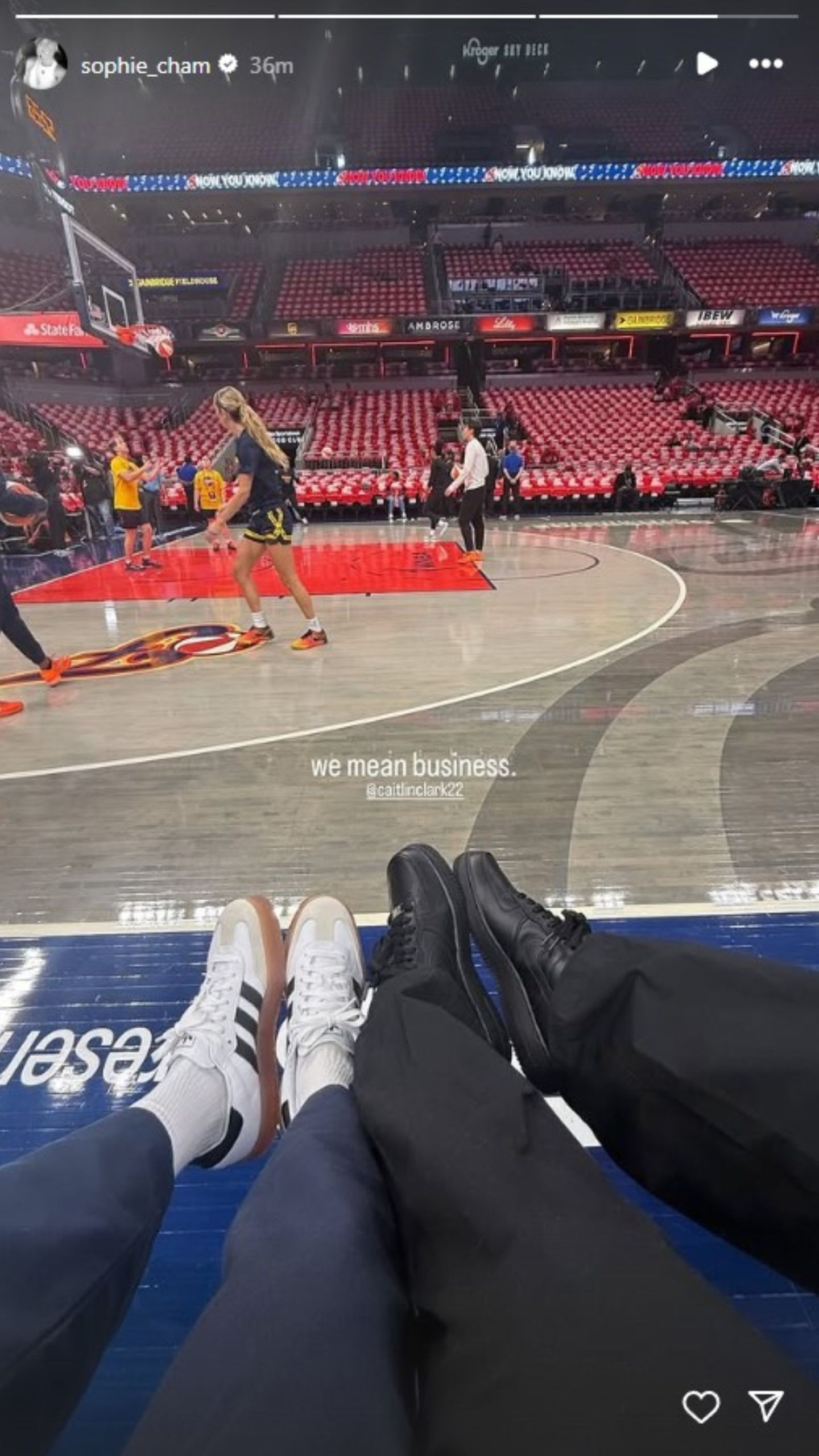
Yet, even in her moment of raw vulnerability, Cunningham’s true nature shined through. The post, which carried the weight of her suffering, also had a touch of her signature wit. The “go fever girlies tho” was a defiant show of support, a testament to her unwavering loyalty to her team. This paradox—the humor in the face of despair, the support for her team in the face of her own isolation—is what has made her a fan favorite. She has always been a fighter, not just on the court but in her public persona, and her willingness to be real with her fans has only deepened their admiration.
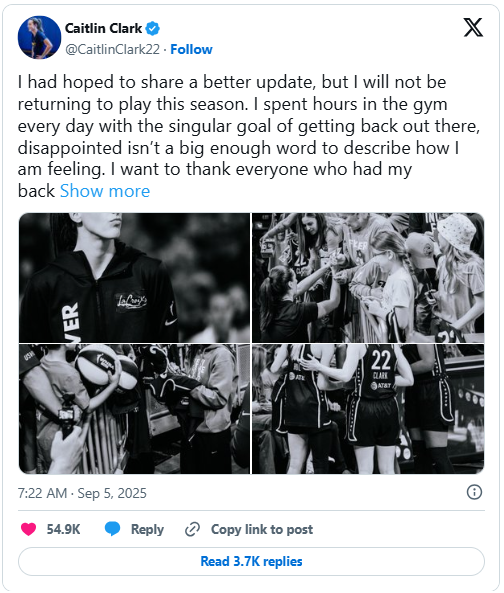
“I had hoped to share a better update, but I will not be returning to play this season. I spent hours in the gym every day with the singular goal of getting back out there, disappointed isn’t a big enough word to describe how I am feeling. I want to thank everyone who had my back through all the uncertainty. This has been incredibly frustrating, but even in the bad, there is good,” Clark posted.
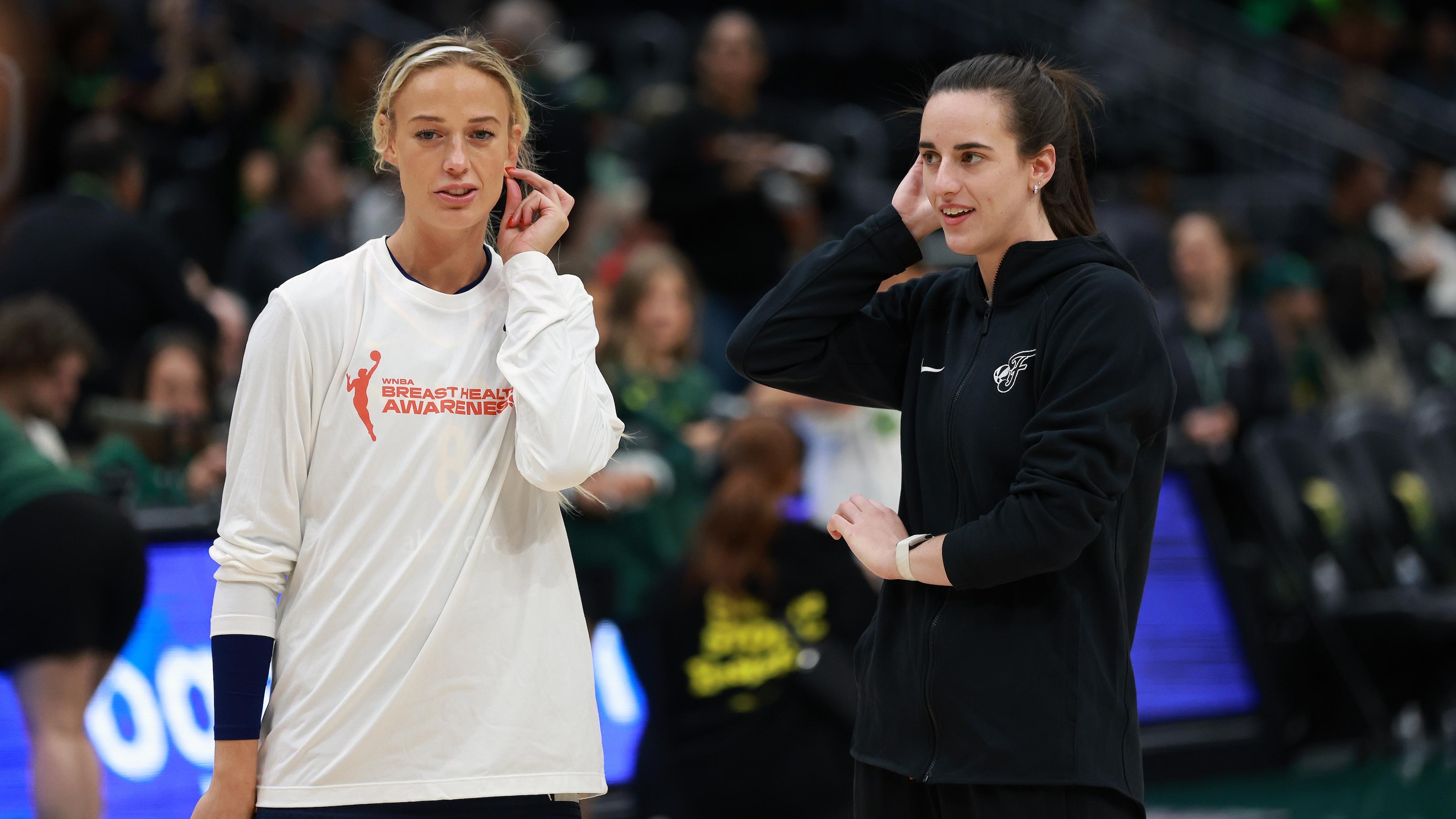
In the weeks leading up to the playoff game, Cunningham gave fans brief glimpses of her recovery, some of which were surprisingly upbeat. There were moments of levity, like her video with fellow injured stars Caitlin Clark and Sydney Colson where they joked about being left to their own devices in rehab. There were also moments of defiance, like the glamorous photos she posted on social media, with her knee brace on full display, a glamorous symbol of her resilience. These posts were a curated version of her rehab, a testament to her professionalism. But the playoff post, with its unfiltered frustration, was the truth.
Cunningham’s story is a powerful reminder that the lives of professional athletes are far more complex than their on-court performance suggests. Behind every highlight reel and every record-breaking game, there is a person fighting their own battles. Her candidness has opened up a much-needed conversation about the mental and physical health of players and the invisible struggles they endure. The WNBA, a league built on the grit and determination of its athletes, must now reckon with the emotional toll of a season marked by devastating injuries. Sophie Cunningham’s battle may be off the court, but her cry from the sidelines is a powerful testament to the warrior spirit that defines the game.
News
THEY LAUGHED WHEN THE “COFFEE GIRL” ASKED TO SHOOT — BUT WHEN SHE TOUCHED THE GUN OF THAT DIFFICULT RIFLE, A GENERAL CAME UP AND SALUTED HER.
CHAPTER 1: THE INVISIBLE WOMAN Dawn cracks over the Arizona desert like a bruised knuckle—purple, orange, and violent. Captain Emily Brooks woke without an alarm at 0400. She always did. Her body was tuned to a rhythm that didn’t exist…

They Called Her “De3d Weight” And Mocked Her “PTSD” — But When The Commander Whispered Two Words, The “BROKEN” Soldier Didn’t Just Wake Up… She Became The Most Dangerous Person In The Room
Chapter 1: The Dead Weight The brake lights of the transport van burned red against the bleaching sun of the Nevada desert. Staff Sergeant Olivia Harper stepped onto the cracked asphalt, her boots crunching on the grit. She favored her…

MY FATHER ACCUSED ME OF BEING A TRAITOR AND HE TOASTED HIS GLASS FOR IT. BUT UNFORTUNATELY HE CELEBRATED TOO SOON, BECAUSE RIGHT THERE, MY SEAL TEAM BURST IN SAYING, “ADMIRAL, WE’VE ARRIVED”
PART 1: THE ACCUSATION Chapter 1: The Sound of Steel The applause was polite, measured, the kind of sound that fills a room but never actually reaches the heart. It was the sound of Charleston high society pretending to care…

THEY LAUGHED AT THE “OFFICE GIRL” WHO SAID SHE COULD DISARM THE NUKE… UNTIL SHE TYPED IN A CODE THAT DOESN’T EXIST?
PART 1: THE INVISIBLE WOMAN Chapter 1: The Dead Man’s Switch The radio crackles with the sound of a man dying. Then, static. Then, the terrified voice of a corporal screaming into the void. “All units, code black! I repeat,…

THEY RIPPED HER FACE APART TO “SAVE THE UNIVERSE” — The horrifying truth about ancient Egypt’s most terrifying, censored fears that they hid from textbooks that you never knew existed.
PART 1: THE PURIFICATION Chapter 1: The Weight of the Placard The year is 1473 Before Christ. The location is the west bank of the Nile, just outside the sprawling, golden city of Thebes. Dawn is breaking, but it brings…

Jon Stewart SLAMS Desk, Calls Out 25 Hollywood Names on Live TV; The One Line That Sent Panic Across Los Angeles Studios
THE NIGHT THE DAILY SHOW STOPPED LAUGHING: How Eight Heavyweights, One Line, and Twenty Minutes Ignited a National Reckoning On most nights, late-night television functions as America’s unofficial cultural therapy, an escape valve where comedy dilutes the severity of the…
End of content
No more pages to load