A nation was still reeling from the shock of a single gunshot that had stolen a life at a college campus event. The air was thick with grief, fear, and a sense of collective disbelief. But even as the search for answers was just beginning, a new and equally shocking narrative was already taking shape. It was not a tale of the crime itself, but of its aftermath: a rapid, visceral, and deeply controversial response from a powerful segment of the media that seemed to bypass any period of mourning and reflection. It was, in a word, unprecedented.
In the hours following the tragedy, while police were still processing the scene and a community was grappling with its loss, a chorus of voices from certain influential media outlets began to tell their own version of the story. These weren’t traditional news reports; they were pronouncements, declarations that immediately pointed fingers and assigned blame. The raw emotion of a nation in shock was met with a swift and calculated narrative that framed the event not as a solitary act of violence, but as the inevitable outcome of a deeply fractured society.
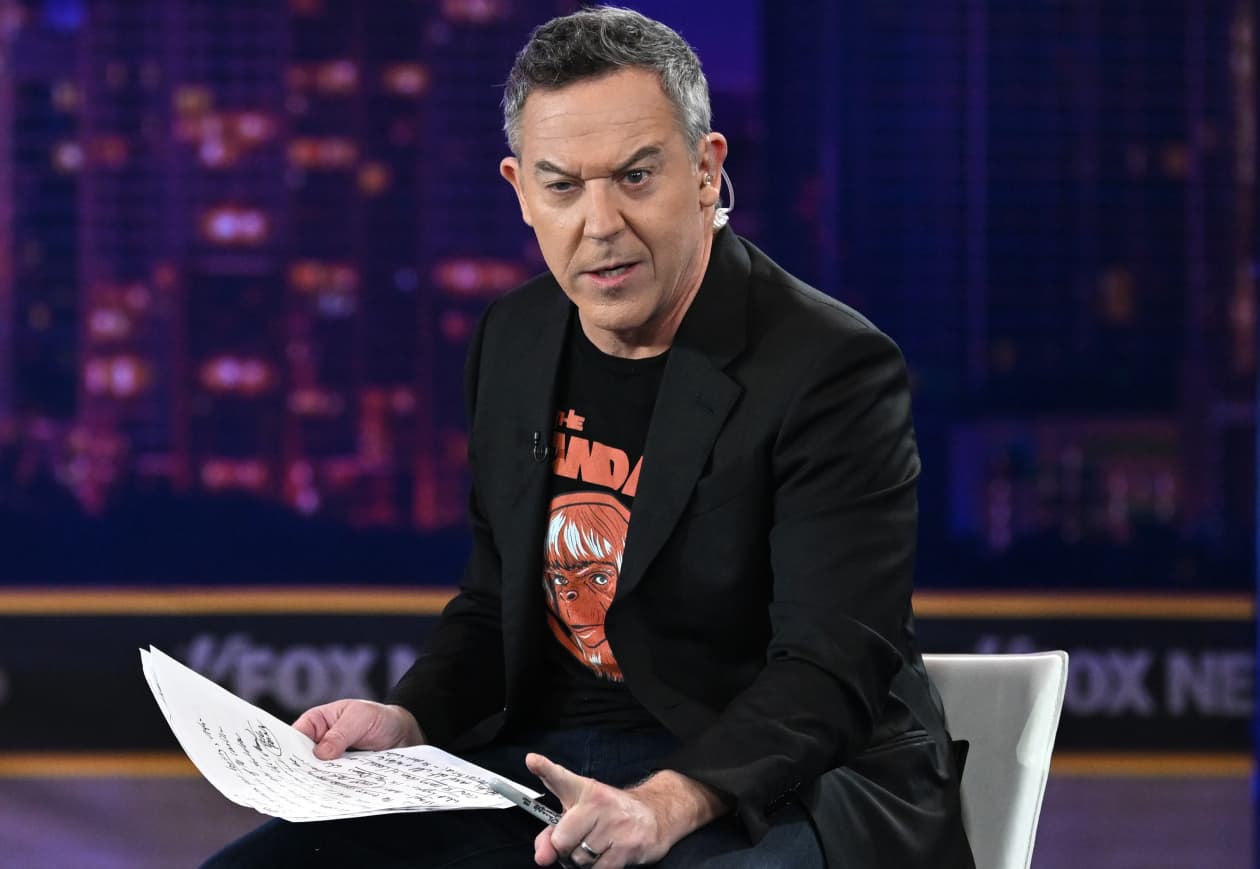
Greg Gutfeld, the prominent Fox News host, was among the first at the network to issue an angry on-air response. “If they could do this, they are capable of anything. I think that was the message. I believe that was the message,” he said.
“It’s really hard to radicalize Republicans. You know, it’s – we’re not the radical type. But if you thought that you were going to shut a movement down, you’re going to get a rude awakening. You woke us the fuck up.”
This approach, driven by a desire to be the first to interpret a tragedy, ignited a furious backlash from other media figures and a public still processing the human toll. Critics were quick to point out the perceived hypocrisy of those who had previously called for unity in the face of other tragedies but now seemed to be stoking division. The outrage was palpable. How could a moment of national sorrow be so quickly transformed into a public spectacle? The question hung in the air, a testament to the chasm that now separates public discourse from human empathy.
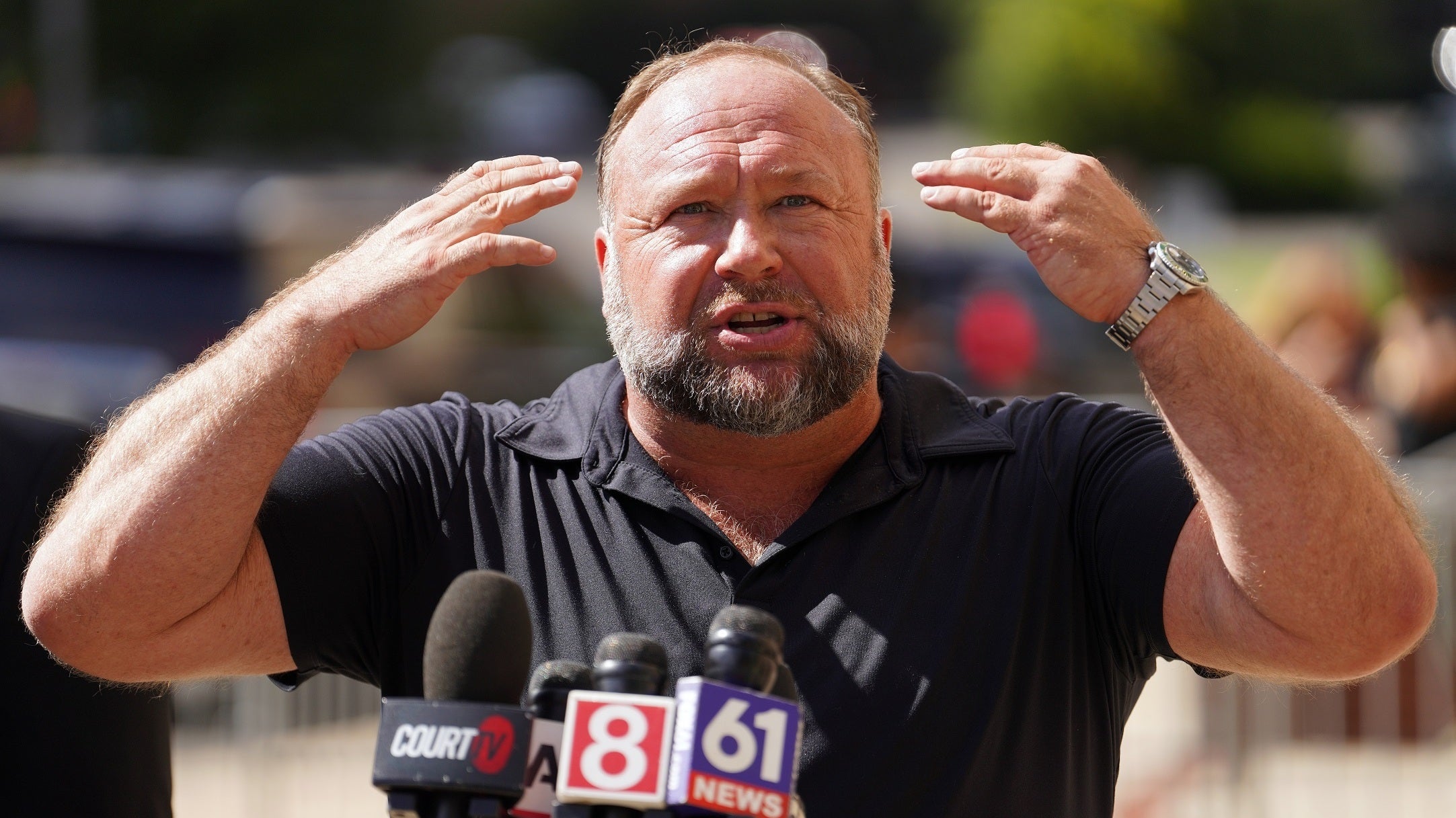
“We’re in a war,” Alex Jones, the far-right conspiracy theorist and podcast host, said in a live stream. “The left has been saying: ‘Put a bullseye on Trump, a bullseye on his supporters.’ They’ve been calling for violence.” Jones offered no evidence for his claims. He later added: “This is dangerous. This is a war, this is a war, this is a war. This is the war. This is it, get ready. They’re terrorists, they mean business.”
Trump echoed much of the same sentiment in an address on Wednesday night, as he described the act as “political violence”. “Violence and murder are the tragic consequences of demonising those you disagree with,” Trump said. “For years, those on the radical left have compared wonderful Americans like Charlie to Nazis and the world’s worst mass murderers and criminals.”

“We have to have steely resolve. Charlie Kirk’s a casualty of war. We’re at war in this country. We are,” Steve Bannon said on his podcast. “We’re not gonna back off an inch. If you’re gonna back off, then this is not for you. Charlie Kirk gave his life for his country, he’s on the battlefield of political combat, OK. And they cut him down with an assassin’s bullet. Let’s be blunt about this, they cut him down with an assassin’s bullet.”
Bannon’s co-host, the far-right activist Jack Posobiec, went even further, promising “retribution” for Kirk’s death. “There’s never going to be another Charlie Kirk. But you know what else is going to happen: there’s never going to be another assassin to take out someone like the way they did, because of what comes next. Because what comes next will be swift, it will be quick and it will be retribution,” Posobiec said.
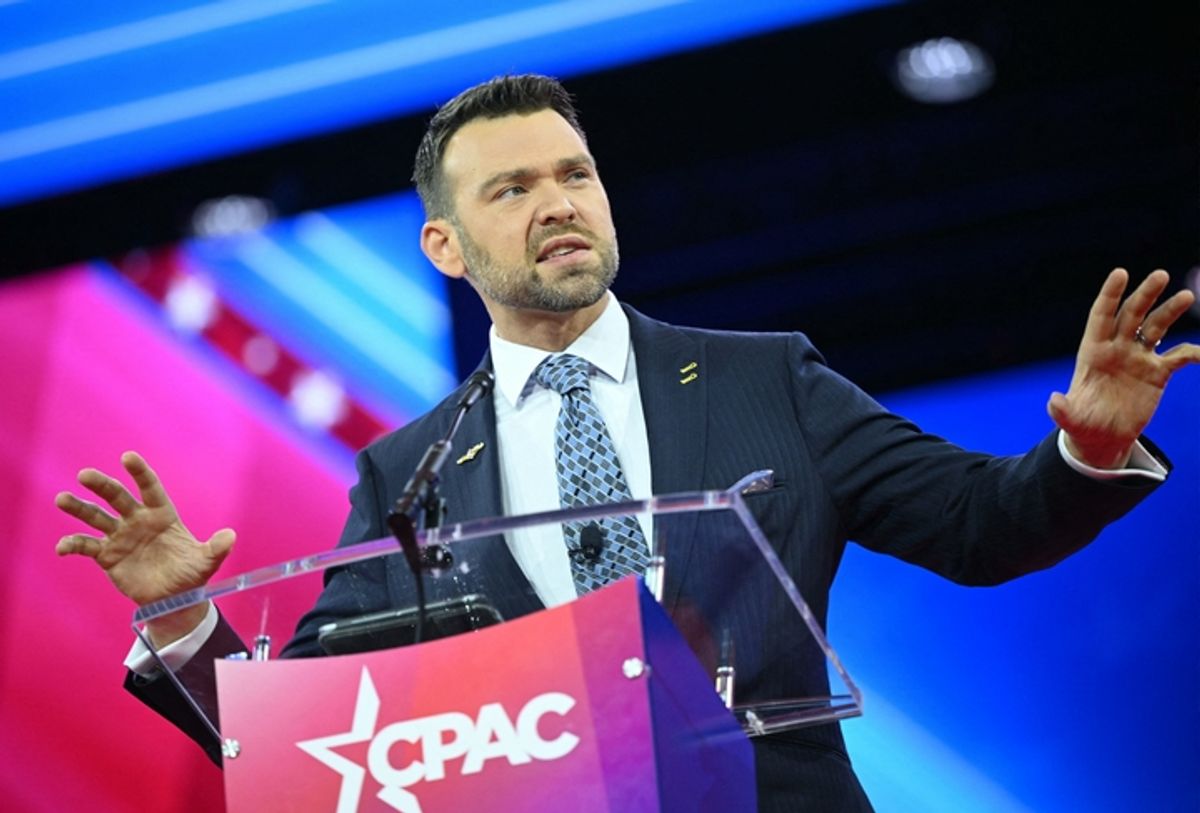
The reaction, in many ways, revealed more about the state of our media landscape than it did about the crime itself. It showed a world where every event, no matter how tragic, is immediately funneled through a pre-existing lens, stripped of its human elements, and used as ammunition in a never-ending conflict. It was a stark reminder of the immense power that media figures hold and the responsibility that comes with that power. Their words, delivered with a sense of certainty and finality, shape not only the public’s understanding of an event but also its emotional response to it.

On her YouTube channel, Megyn Kelly, the former Fox News host, appeared to be in tears as she broke the news, while Laura Loomer, the rightwing conspiracy theorist who has become a close adviser to Trump, wrote on social media: “This has been a very radicalizing week. A message to the left: debate time is over. You ended it.”

Benny Johnson, the rightwing political commentator, tweeted on Thursday morning: “Charlie Kirk is a martyr. And martyrs only become more powerful. We must all, in our own poor and inadequate ways, seek to carry on Charlie’s mission.” He added: “For Charlie. American Martyr. Christian Soldier. May we defeat the evil that stole him from us. So help us, God.”
Jesse Watters was among those to use the phrase, suggesting to his audience in a lengthy monologue that the left “are at war with us”. Watters said more: “And what are we going to do about it? How much political violence are we going to tolerate and that’s the question we’re just going to have to ask ourselves.” Watters had earlier told the audience: “We are sick. We are sad. We are angry. And we are resolute.” He added: “And we are going to avenge Charlie’s death in the way that Charlie wanted to be avenged.”

The consequences of this media firestorm were not just limited to a heated debate. It had a real, human cost. For the family and friends of the victim, who were in the midst of unimaginable grief, the public spectacle was an added layer of pain. While they were mourning a private loss, their tragedy was being used as a pawn in a larger game. It forced them to navigate not only their personal sorrow but also the relentless churn of a public debate that had nothing to do with them.
In the end, the story of the Charlie Kirk shooting is not just about a crime and a trial. It is also about the second crime—the one committed against the very idea of a shared public space where grief can be processed without judgment or an agenda. It is a story about how our media landscape, in its relentless pursuit of a narrative, is making it harder and harder for us to come together as a community, even in the face of shared tragedy.
The lesson from this unprecedented aftermath is a somber one. It is a reminder that in a world where every moment is a potential battleground, we have lost the ability to simply mourn. The media, once a tool for information and understanding, has become a tool for division. And in the wake of a tragedy, it is often the most tragic victim of all.
News
THEY LAUGHED WHEN THE “COFFEE GIRL” ASKED TO SHOOT — BUT WHEN SHE TOUCHED THE GUN OF THAT DIFFICULT RIFLE, A GENERAL CAME UP AND SALUTED HER.
CHAPTER 1: THE INVISIBLE WOMAN Dawn cracks over the Arizona desert like a bruised knuckle—purple, orange, and violent. Captain Emily Brooks woke without an alarm at 0400. She always did. Her body was tuned to a rhythm that didn’t exist…
They Called Her “De3d Weight” And Mocked Her “PTSD” — But When The Commander Whispered Two Words, The “BROKEN” Soldier Didn’t Just Wake Up… She Became The Most Dangerous Person In The Room
Chapter 1: The Dead Weight The brake lights of the transport van burned red against the bleaching sun of the Nevada desert. Staff Sergeant Olivia Harper stepped onto the cracked asphalt, her boots crunching on the grit. She favored her…
MY FATHER ACCUSED ME OF BEING A TRAITOR AND HE TOASTED HIS GLASS FOR IT. BUT UNFORTUNATELY HE CELEBRATED TOO SOON, BECAUSE RIGHT THERE, MY SEAL TEAM BURST IN SAYING, “ADMIRAL, WE’VE ARRIVED”
PART 1: THE ACCUSATION Chapter 1: The Sound of Steel The applause was polite, measured, the kind of sound that fills a room but never actually reaches the heart. It was the sound of Charleston high society pretending to care…
THEY LAUGHED AT THE “OFFICE GIRL” WHO SAID SHE COULD DISARM THE NUKE… UNTIL SHE TYPED IN A CODE THAT DOESN’T EXIST?
PART 1: THE INVISIBLE WOMAN Chapter 1: The Dead Man’s Switch The radio crackles with the sound of a man dying. Then, static. Then, the terrified voice of a corporal screaming into the void. “All units, code black! I repeat,…

THEY RIPPED HER FACE APART TO “SAVE THE UNIVERSE” — The horrifying truth about ancient Egypt’s most terrifying, censored fears that they hid from textbooks that you never knew existed.
PART 1: THE PURIFICATION Chapter 1: The Weight of the Placard The year is 1473 Before Christ. The location is the west bank of the Nile, just outside the sprawling, golden city of Thebes. Dawn is breaking, but it brings…

Jon Stewart SLAMS Desk, Calls Out 25 Hollywood Names on Live TV; The One Line That Sent Panic Across Los Angeles Studios
THE NIGHT THE DAILY SHOW STOPPED LAUGHING: How Eight Heavyweights, One Line, and Twenty Minutes Ignited a National Reckoning On most nights, late-night television functions as America’s unofficial cultural therapy, an escape valve where comedy dilutes the severity of the…
End of content
No more pages to load