The landscape of American late-night television has always been a battleground—a nightly clash of wit, celebrity, and, increasingly, political commentary. But what unfolded in the wake of the latest controversy involving ABC’s flagship host, Jimmy Kimmel, was not merely a battle; it was a watershed moment, a cultural and commercial phenomenon that has fundamentally reshaped the dynamics of celebrity, censorship, and viewership in the digital age.
Following a highly contentious—and ultimately ill-timed—monologue that drew the ire of powerful conservative media groups, the Federal Communications Commission (FCC), and a significant number of affiliate stations, Jimmy Kimmel Live! was briefly yanked off the air, suspended indefinitely by its own parent network. The suspension was widely viewed by the public as a dangerous capitulation to external political pressure and a clear threat to free speech in comedy.
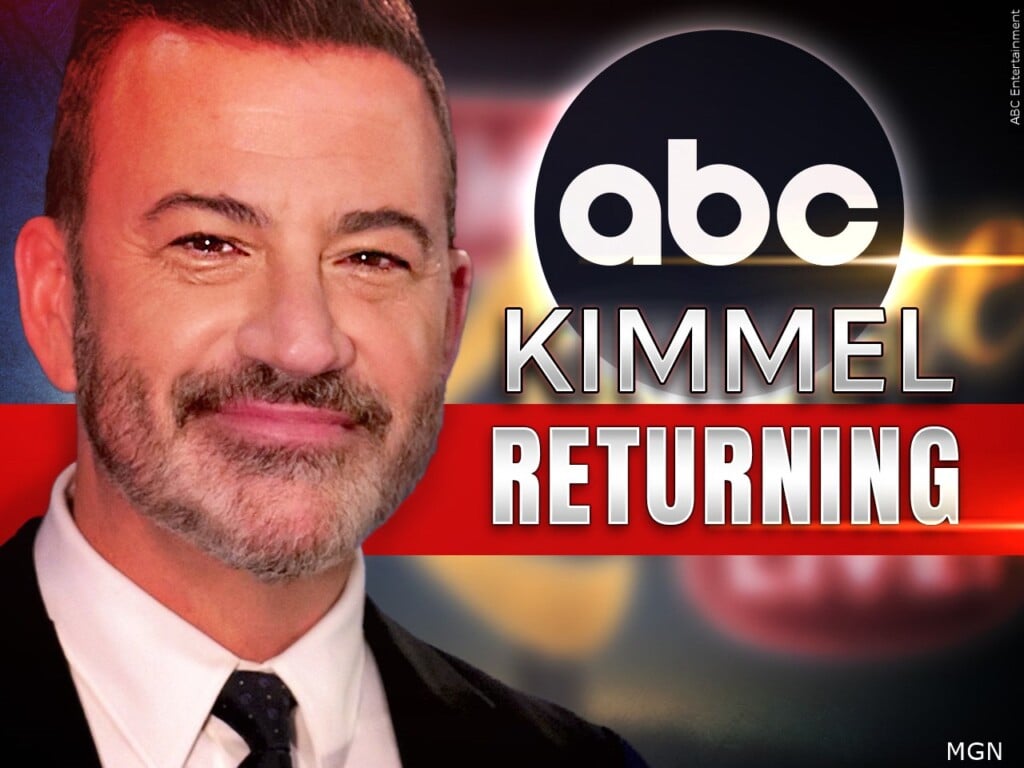
Yet, when the show triumphantly returned, what was intended as a career-damaging silence proved to be the most potent commercial catalyst in the show’s history. The resulting audience surge was not just large—it was historic, providing Kimmel with the ultimate, quantifiable victory in a highly public culture war.
The Numbers Game: A Decade of Dominance Overnight
The Nielsen ratings data for Kimmel’s return broadcast has been dissected and analyzed, and the figures are nothing short of spectacular. On the night of his comeback, the late-night host landed 6.3 million total viewers, according to figures released by ABC. This number is a devastating piece of data for his critics and a stunning validation of the intense public interest generated by the conflict. To put this massive viewership into perspective, that single episode’s haul marks the show’s largest regularly scheduled audience in more than 10 years, with the previous high water mark dating back to March 12, 2015.
The growth was not incremental; it was exponential. For the second quarter of the year, Jimmy Kimmel Live! had been averaging approximately 1.77 million viewers per episode. The return thus generated an audience more than three times its average, essentially capturing the viewership of a major primetime drama or reality finale, and doing so in the hyper-competitive 11:35 p.m. time slot.
The demographics, which drive advertising revenue, told an equally compelling story of total market saturation. Among the crucial adults age 18-49 demographic, the show scored a 0.87 rating, also its highest since 2015. This represents a staggering increase of over seven-fold from the week prior, indicating that the controversy did not just bring back previous viewers; it drew in millions of young, digital-first viewers who had perhaps never tuned into a traditional linear late-night broadcast before. The figures confirmed what industry insiders had long suspected: nothing generates viewership quite like high-stakes public drama and the perception of a celebrity underdog fighting against powerful forces.
The Blackout that Backfired
Perhaps the most astonishing aspect of this ratings victory is that the massive audience was achieved in the face of an unprecedented media blockade. The show was actively being suppressed across a wide swath of the country. An estimated 23% of U.S. households were preempted from viewing the broadcast due to a coordinated decision by two major affiliate owners, Nexstar Media Group and Sinclair Broadcast Group, to pull the program from their local ABC stations indefinitely.
These preemptions effectively blacked out Kimmel’s show in countless smaller cities and critical media markets across the nation. This calculated attempt to punish the host and placate political opposition was intended to kneecap his return ratings, sending a clear financial message to ABC and Disney about the risks of politically charged comedy. Instead, the boycott acted as a giant, free marketing campaign, creating an atmosphere of forbidden fruit that drove viewers to find the program by any means necessary.
The irony of the situation was not lost on the host himself. In his highly anticipated monologue—the very kind of commentary that had sparked the furor—Kimmel openly mocked his political detractors. He recalled how critics, including prominent political figures, had dismissed him as a no-talent host whose program was failing and got “no ratings.” Kimmel then delivered the punchline that perfectly encapsulated the entire saga: “Well, I do tonight!” He joked that the combined effort to cancel him had resulted in a massive, backfiring publicity stunt: “He tried his best to cancel me. Instead, he forced millions of people to watch the show. That backfired bigly.”
The Digital Tidal Wave and The Future of Late-Night
The narrative of Kimmel’s triumph extends far beyond the linear television set. The true measure of modern celebrity influence lies in the digital sphere, and here, the numbers are even more colossal. The host’s return monologue became an instant global viral phenomenon, racking up over 26 million views across YouTube and other social media platforms within the first 48 hours. This digital tidal wave confirms that the controversy successfully translated into cultural currency, appealing to a massive, politically engaged, and media-savvy audience who bypass traditional viewing models entirely.
The industry is now grappling with the implications. Kimmel’s competitors, who had seen steady but unspectacular viewership, must look at these figures and recognize the new paradigm. The data revealed that many of the 6.3 million viewers were not regular late-night watchers, suggesting the show’s controversy successfully drew from the general population—a feat usually reserved for live sports or major awards ceremonies.
For the traditional networks, the episode provides a terrifying lesson in the boomerang effect of censorship. The attempt to remove a popular host from the air, whether for political or commercial reasons, created the biggest television event of the year, providing a direct example of what happens when a culture war becomes a ratings magnet. Jimmy Kimmel’s return did more than just boost his show; it proved that in the polarized, highly-engaged environment of 2025, being at the center of a national firestorm can be the ultimate formula for television dominance. The battle for late-night has become the battle for the attention of a divided nation, and in this fight, controversy is king.
News
THEY LAUGHED WHEN THE “COFFEE GIRL” ASKED TO SHOOT — BUT WHEN SHE TOUCHED THE GUN OF THAT DIFFICULT RIFLE, A GENERAL CAME UP AND SALUTED HER.
CHAPTER 1: THE INVISIBLE WOMAN Dawn cracks over the Arizona desert like a bruised knuckle—purple, orange, and violent. Captain Emily Brooks woke without an alarm at 0400. She always did. Her body was tuned to a rhythm that didn’t exist…
They Called Her “De3d Weight” And Mocked Her “PTSD” — But When The Commander Whispered Two Words, The “BROKEN” Soldier Didn’t Just Wake Up… She Became The Most Dangerous Person In The Room
Chapter 1: The Dead Weight The brake lights of the transport van burned red against the bleaching sun of the Nevada desert. Staff Sergeant Olivia Harper stepped onto the cracked asphalt, her boots crunching on the grit. She favored her…
MY FATHER ACCUSED ME OF BEING A TRAITOR AND HE TOASTED HIS GLASS FOR IT. BUT UNFORTUNATELY HE CELEBRATED TOO SOON, BECAUSE RIGHT THERE, MY SEAL TEAM BURST IN SAYING, “ADMIRAL, WE’VE ARRIVED”
PART 1: THE ACCUSATION Chapter 1: The Sound of Steel The applause was polite, measured, the kind of sound that fills a room but never actually reaches the heart. It was the sound of Charleston high society pretending to care…
THEY LAUGHED AT THE “OFFICE GIRL” WHO SAID SHE COULD DISARM THE NUKE… UNTIL SHE TYPED IN A CODE THAT DOESN’T EXIST?
PART 1: THE INVISIBLE WOMAN Chapter 1: The Dead Man’s Switch The radio crackles with the sound of a man dying. Then, static. Then, the terrified voice of a corporal screaming into the void. “All units, code black! I repeat,…
THEY RIPPED HER FACE APART TO “SAVE THE UNIVERSE” — The horrifying truth about ancient Egypt’s most terrifying, censored fears that they hid from textbooks that you never knew existed.
PART 1: THE PURIFICATION Chapter 1: The Weight of the Placard The year is 1473 Before Christ. The location is the west bank of the Nile, just outside the sprawling, golden city of Thebes. Dawn is breaking, but it brings…
Jon Stewart SLAMS Desk, Calls Out 25 Hollywood Names on Live TV; The One Line That Sent Panic Across Los Angeles Studios
THE NIGHT THE DAILY SHOW STOPPED LAUGHING: How Eight Heavyweights, One Line, and Twenty Minutes Ignited a National Reckoning On most nights, late-night television functions as America’s unofficial cultural therapy, an escape valve where comedy dilutes the severity of the…
End of content
No more pages to load