The Boiling Point: Inside the WNBA Officiating Controversy That Has the League on Edge
The air in a professional sports arena during the playoffs is thick with more than just anticipation; it’s a high-pressure environment where every call, every play, and every decision is magnified a thousand times over. For the WNBA, a league experiencing explosive growth and unprecedented attention, the semifinals are the ultimate crucible. It was in this intense setting that a long-simmering issue finally boiled over, creating a WNBA officiating controversy that has sent shockwaves through the sport. The incident involved not just one impassioned coach, but a chorus of respected leaders who decided that silence was no longer an option. At the center of it all was Cheryl Reeve, the decorated head coach of the Minnesota Lynx, whose fiery outburst against the officiating became the catalyst for a much larger, and arguably long-overdue, conversation about the state of the game. Her actions, and the subsequent support from her peers, have pulled back the curtain on systemic issues that players and coaches say have been ignored for too long, forcing the league into a difficult and very public crossroads.
The Spark: A Detailed Look at Cheryl Reeve’s Ejection
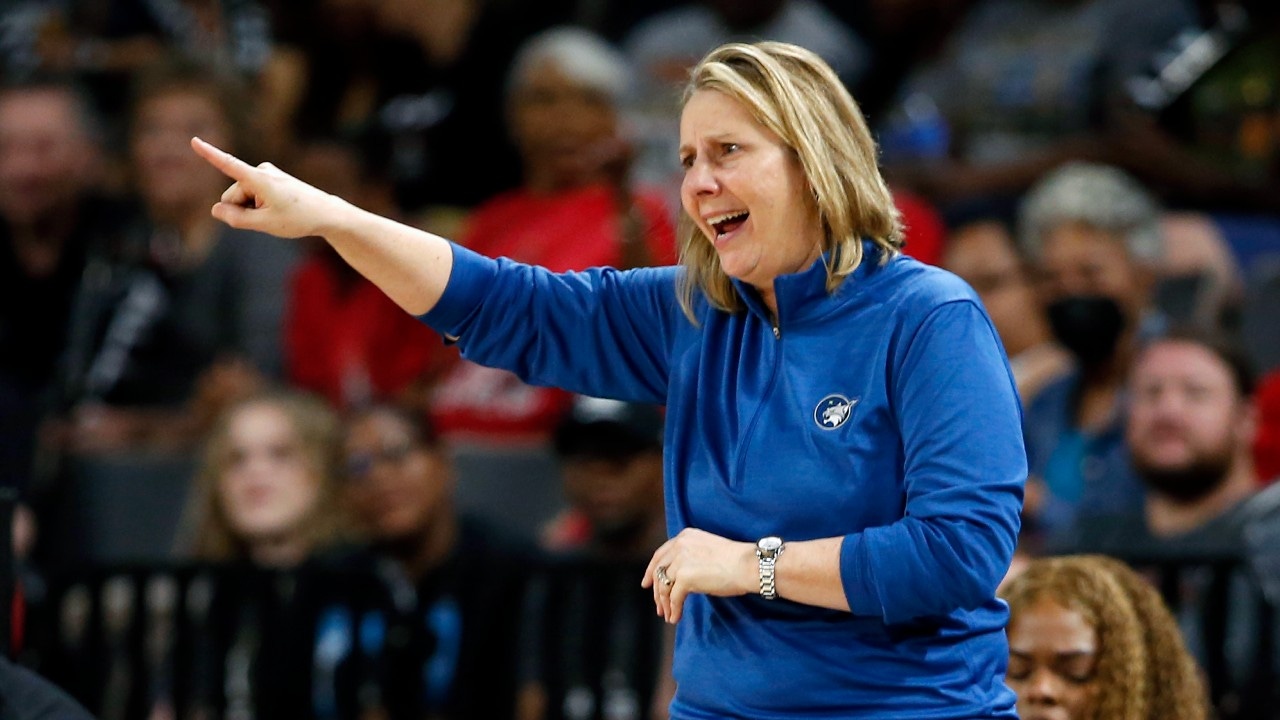
The moment that ignited the firestorm came in the final minute of Game 3 of the semifinals series between the Minnesota Lynx and the Phoenix Mercury. The Lynx were on their way to an 84-76 loss, a defeat that would put them on the brink of elimination. But it wasn’t the score that sent Reeve over the edge; it was the safety of her star player, Napheesa Collier. After Collier was hurt on a steal, Reeve exploded. She charged onto the court, her voice cutting through the arena noise as she berated the officials. The scene was chaotic and raw. Coaches and players had to physically restrain Reeve as she tried to confront the referees, her fury palpable to everyone watching.
She was swiftly ejected, but her tirade didn’t end there. As she was escorted off the court, she gestured and shouted at Mercury fans in the Arizona arena, her frustration spilling over in every direction. It was a raw display of emotion from one of the league’s most successful figures—a four-time WNBA champion and the winningest coach in the league’s history. But the most damning comments were yet to come.

The Post-Game Press Conference That Shook the League
If her on-court actions were the spark, Reeve’s post-game press conference was the explosion. She didn’t hold back, delivering a scathing critique of the officiating crew and the league’s leadership. “This is the look that our league wants, for some reason,” she began, her voice laced with anger. Reeve pointed out that Collier, one of the league’s premier players, shot zero free throws despite taking a physical beating throughout the game. “Got her shoulder pulled out and finished the game with her leg being taken out, and probably has a fracture. And so this is what our league wants,” she stated grimly.
She then called for a change in leadership at the league level regarding officiating, labeling the crew for that critical playoff game as “fing malpractice.” Her words were a direct challenge to the league’s authority and integrity. “They’re fing awful,” she concluded, a statement that guaranteed a response from the WNBA front office. The league’s reaction was swift. Reeve received a hefty $15,000 fine and a one-game suspension, which forced her to miss the decisive Game 4. Her team lost, and their season came to an end, with the Mercury advancing to the WNBA Finals. The Cheryl Reeve fine became a symbol of the league’s attempt to quell the dissent, but it only amplified the voices of those who agreed with her.
A United Front: Why Becky Hammon and Stephanie White Spoke Out
In the highly competitive world of professional coaching, it’s rare to see rivals publicly defend one another, especially when they are in the midst of their own high-stakes playoff battle. Yet, that’s exactly what happened. Las Vegas Aces head coach Becky Hammon and Indiana Fever head coach Stephanie White, whose teams were locked in a 2-2 series tie, both came out in public support of Reeve. Their willingness to risk league discipline highlighted the depth of the frustration with the WNBA officiating controversy.
Analyzing the Becky Hammon Comments
Becky Hammon, another widely respected figure in the league, was unequivocal in her support. Speaking to the media, she didn’t mince words. “From what I heard, she did not tell a lie,” Hammon said on Sunday. “She said the truth.” This simple yet powerful statement served as a major endorsement of Reeve’s claims. The Becky Hammon comments signaled that this wasn’t just one coach’s isolated outburst but a shared sentiment among the league’s top minds. By backing Reeve, Hammon was implicitly criticizing the league’s officiating standards and aligning herself with the call for accountability. The league responded by fining her $1,000, a clear message that dissent, even when calmly stated, would not be tolerated.
Understanding Stephanie White Support
Stephanie White echoed Hammon’s sentiment, providing further context to the coaches’ collective frustration. “I think she made a lot of valid points,” White said of Reeve’s comments. “I think at some point there has to be some accountability.” The Stephanie White support was crucial because she elaborated on the systemic nature of the problem. White acknowledged that while every part of the WNBA has grown and improved, the officiating has “lagged behind.” Her comments pointed to a lack of resources and infrastructure as a root cause. Like Hammon, White was fined $1,000 for her remarks, making it clear that a trio of WNBA coaches fined for speaking out was now the dominant headline.
The Deeper Problem Fueling the WNBA Officiating Controversy
The fines and suspension were the league’s immediate response, but they did little to address the core issue that Reeve, Hammon, and White were all pointing to. The problem isn’t just a few bad calls in a playoff game; it’s about a system that many believe is not equipped to handle the elite level of talent and the rapid growth of the WNBA. The officiating infrastructure has not kept pace with the on-court product, leading to inconsistencies that frustrate players, coaches, and fans alike.
One of the key issues is that WNBA officials are part-time employees. Many of them work other jobs or are in the development pipeline for the NBA. This structure inherently creates challenges in maintaining a consistent, high-level pool of referees solely dedicated to the WNBA. Furthermore, the league lacks some of the accountability mechanisms seen in the NBA, such as the “last two-minute” report, which publicly reviews calls made in the final minutes of close games, or a centralized review center for instant replays. As Stephanie White noted, it’s an issue of resources. “We all know that when you are trying to invest in an area of business or of sport or whatever, it comes down to resources,” she explained. The players, she argued, “deserve growth in that area” too.
In conclusion, the events that transpired during the WNBA semifinals were more than just a dramatic outburst and a series of fines. They represent a critical turning point for the league. The WNBA officiating controversy has brought a long-standing issue out of the shadows and into the national spotlight, forcing a conversation that the league can no longer ignore. Cheryl Reeve’s impassioned, costly stand, bolstered by the solidarity of Becky Hammon and Stephanie White, may have cost them financially, but it has ignited a movement for change. For a league on a trajectory of unprecedented growth, addressing these fundamental issues of game integrity and player safety is not just important—it is essential for its future success. The world is watching, and how the WNBA responds will define its next chapter.
News

The gavel fell, sealing the one-armed veteran’s fate. But from the back of the courtroom, a single, mournful howl became the first shot in a new war—one fought by a dog who remembered everything they buried.
Courtroom 3 of the Hamilton District Court was a vessel of held breath. The morning light, strained through tall, dusty windows, seemed to congeal in the air, thick and heavy as the silence itself. On the polished wooden benches, people…

He went to an Alaskan cabin to silence the echoes of war. But in the heart of a blizzard, his dog sensed a secret the storm was sent to bury—a secret that would force him into one last fight.
The wilderness beyond Anchorage doesn’t ask for permission; it simply takes. It swallows roads, erases landmarks, and devours the faint, tinny signal of a cell phone until the only voice left is the wind. It was in this vast, unforgiving…

He told the quiet woman she didn’t belong on his elite sniper range. But when her backpack split open, a single photo fell out that made every decorated Marine in the room snap to a salute in shame.
The crack of a rifle shot was the only sound that made sense anymore. It split the dry California air over Marine Corps Base Camp Pendleton, a clean, percussive thunder that echoed off the brown hills and settled in your…

As the young officer moved to detain the 89-year-old man, she was blind to the truth. The very name of the warship she guarded was a whisper of the 70-year-old secret hidden on his faded patch.
The voice sliced through the humid air of the naval pier, a sharp tool meant to carve out immediate compliance. “Sir, I’m going to have to ask you to step away from the gangway. This area is for authorized personnel…

They chose a desolate mountain to be her grave, thinking a thousand-foot drop was the perfect, silent crime. But as she fell into the void, they made a fatal miscalculation about the kind of woman they just betrayed.
The mountain didn’t make a sound when it happened. There was no grand echo to mark the moment, no sympathetic rumble from the ancient stone. There was only the sharp, scattering kick of gravel, a sudden, violent silence where a…

In a circle of 282 elite soldiers, two men decided to humiliate the quiet medic during a demonstration. They intended to break her spirit. Instead, in seven brutal seconds, they discovered a truth that broke them completely.
The wind that came off the Atlantic that morning had teeth. It wasn’t a breeze; it was a hard, scouring force that snapped across the open-air corridors of Naval Special Warfare Command Unit 7, carrying the briny scent of the…
End of content
No more pages to load