Turning Point USA’s Super Bowl Counter-Programming Ignites Widespread Social Media Discussion
A planned tribute to the late Charlie Kirk, scheduled to air opposite the official NFL Super Bowl halftime show, has ignited a significant cultural conversation, with supporters framing the event as a statement on American values that transcends sport. Organized by Turning Point USA, the “All-American Halftime Tribute” has mobilized a substantial online following, prompting widespread discussion about media, culture, and national identity.
The announcement of the alternative halftime show quickly gained traction on social media platforms. Supporters began using hashtags such as #ThisIsAboutAmerica, #RealHalftimeShow, and #ForCharlie on X and Instagram, transforming the event from a niche broadcast into a trending topic. The sentiment was encapsulated in a viral post that stated, “Football doesn’t even matter anymore. This is about who we are as a country.” This perspective suggests that for many, the tribute’s importance extends far beyond its role as simple counter-programming to a major sporting event.
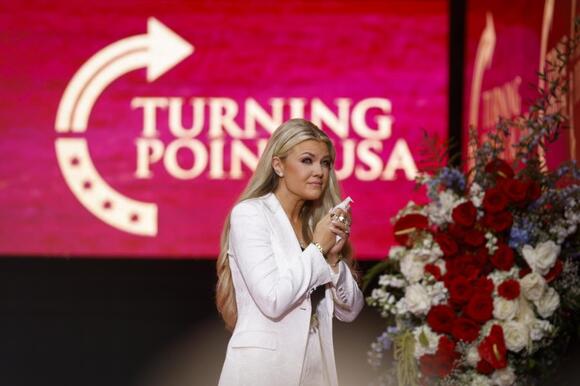
A Tribute Described as “Half Memorial, Half Movement”
The tribute is being spearheaded by Erika Kirk, the widow of Charlie Kirk. In a recent interview, she articulated the broadcast’s purpose, stating, “Charlie believed culture shapes the future. He gave his life to that truth. This is how we keep it alive.” Her words have been widely shared by supporters, who see the event as a continuation of Kirk’s work.
Insiders familiar with the production have described the show as “half memorial, half movement.” The program is set to include a mix of live performances, archival footage of Charlie Kirk, and messages centered on themes of freedom, conviction, and loss. This combination of reflective content and forward-looking messaging aims to honor Kirk’s legacy while also galvanizing viewers around a specific set of principles. The tribute seeks to offer a stark contrast to the traditional Super Bowl halftime show, which is typically a high-production, celebrity-driven performance.

Grassroots Mobilization and Distribution Strategy
The promotional efforts for the tribute have been highly effective. A teaser clip released online, which featured images of American flags and a lone microphone on a stage, has already accumulated millions of views. The clip includes an audio segment of Charlie Kirk’s voice saying, “Never bow to fear.” This message has resonated deeply with the event’s target audience.
In response to the growing interest, supporters have started a campaign demanding that major television networks broadcast the tribute live. “A regular network should have the courage,” one fan commented online. “If NBC won’t, the people will.” While the NFL and its broadcast partner, NBC, have remained silent on the matter, organizers have established a robust independent distribution plan. The tribute is scheduled to stream on Turning Point USA’s official app, as well as on the platforms Rumble and X.
Furthermore, a grassroots network of supporters is organizing in-person “watch parties” across the country. These gatherings are reportedly being planned at a variety of locations, including churches, university campuses, and even military bases, indicating a broad and diverse base of support for the event.
A Symbol of the Cultural Divide
Entertainment industry analysts have noted the significance of this event, labeling it one of the most dramatic instances of “counter-programming” in recent American media history. The tribute has become a focal point for a broader cultural debate, with many viewers seeing it as a choice between two competing visions of society. This sentiment is reflected in online comments, such as one that read, “They’re giving us celebrities. Turning Point’s giving us a conscience.”
The contrast between the two halftime events is a recurring theme among the tribute’s supporters. While the official NFL show is known for its elaborate choreography and pyrotechnics, the Kirk tribute is being promoted as an event centered on reflection and a message of perseverance. As one supporter put it, “They’ve got fireworks. We’ve got fire.”
For those tuning in, the event is being positioned as a deeply personal statement of values. One viewer posted, “This isn’t rebellion. It’s redemption.” The broadcast is seen not as a protest against football itself, but as an affirmation of priorities. It taps into a feeling that the tribute offers a way to reclaim something meaningful in the cultural landscape. The final segment of the show is rumored to be particularly powerful, with speculation that it will feature a candlelit crowd singing “God Bless America,” an image intended to be a moving symbol of unity. As a widely shared comment summarized the prevailing mood: “Football doesn’t even matter. America does.”
News

The gavel fell, sealing the one-armed veteran’s fate. But from the back of the courtroom, a single, mournful howl became the first shot in a new war—one fought by a dog who remembered everything they buried.
Courtroom 3 of the Hamilton District Court was a vessel of held breath. The morning light, strained through tall, dusty windows, seemed to congeal in the air, thick and heavy as the silence itself. On the polished wooden benches, people…
He went to an Alaskan cabin to silence the echoes of war. But in the heart of a blizzard, his dog sensed a secret the storm was sent to bury—a secret that would force him into one last fight.
The wilderness beyond Anchorage doesn’t ask for permission; it simply takes. It swallows roads, erases landmarks, and devours the faint, tinny signal of a cell phone until the only voice left is the wind. It was in this vast, unforgiving…

He told the quiet woman she didn’t belong on his elite sniper range. But when her backpack split open, a single photo fell out that made every decorated Marine in the room snap to a salute in shame.
The crack of a rifle shot was the only sound that made sense anymore. It split the dry California air over Marine Corps Base Camp Pendleton, a clean, percussive thunder that echoed off the brown hills and settled in your…

As the young officer moved to detain the 89-year-old man, she was blind to the truth. The very name of the warship she guarded was a whisper of the 70-year-old secret hidden on his faded patch.
The voice sliced through the humid air of the naval pier, a sharp tool meant to carve out immediate compliance. “Sir, I’m going to have to ask you to step away from the gangway. This area is for authorized personnel…

They chose a desolate mountain to be her grave, thinking a thousand-foot drop was the perfect, silent crime. But as she fell into the void, they made a fatal miscalculation about the kind of woman they just betrayed.
The mountain didn’t make a sound when it happened. There was no grand echo to mark the moment, no sympathetic rumble from the ancient stone. There was only the sharp, scattering kick of gravel, a sudden, violent silence where a…

In a circle of 282 elite soldiers, two men decided to humiliate the quiet medic during a demonstration. They intended to break her spirit. Instead, in seven brutal seconds, they discovered a truth that broke them completely.
The wind that came off the Atlantic that morning had teeth. It wasn’t a breeze; it was a hard, scouring force that snapped across the open-air corridors of Naval Special Warfare Command Unit 7, carrying the briny scent of the…
End of content
No more pages to load